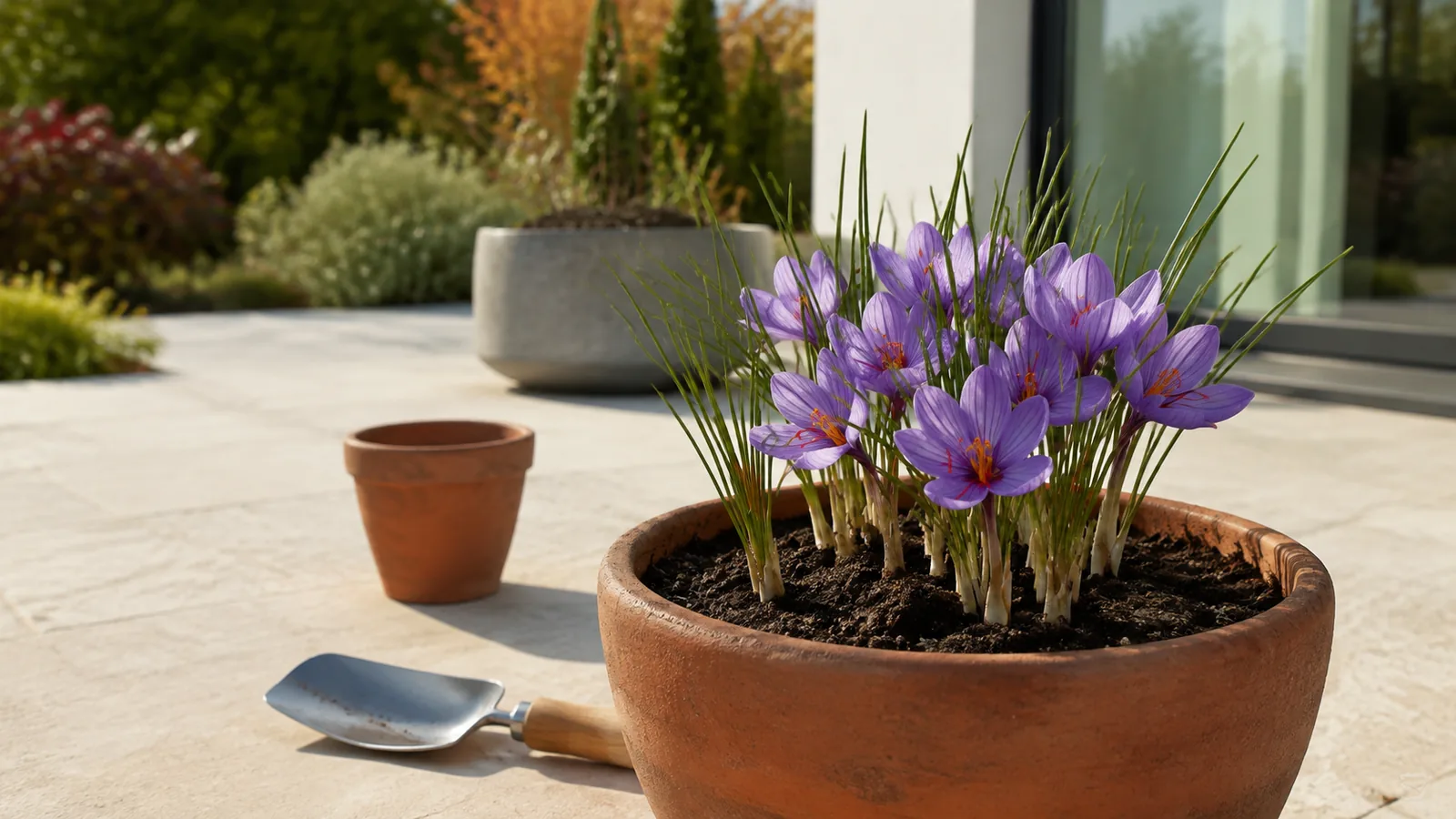
You can grow saffron at home from healthy Crocus sativus corms if you can provide full sun, fast-draining soil and a seasonal cycle. Plant in late summer or early autumn for your region, water in without leaving the corms wet, harvest the three red stigmas from each flower, and keep the leaves growing until they die back naturally.
Can you grow saffron at home?
Yes. Home-grown saffron can come from an in-ground bed, a raised bed or a deep container. A large garden is not essential, but drainage is. Standing water and persistently wet compost can rot the corms before they have a chance to flower.
Saffron is a perennial autumn-flowering crocus, not a seed-grown annual. The structure sold for planting is a corm, although shops often call it a saffron bulb. Buy firm, healthy Crocus sativus corms from a traceable nursery. Do not confuse them with Colchicum, which is also called autumn crocus but is a different and poisonous plant.
Choose the right place
Select the sunniest practical position. Penn State Extension recommends full sun and at least five hours of direct light in its home saffron growing guide. A south-facing site often works well in the Northern Hemisphere, provided nearby plants and buildings do not shade it during autumn growth.
The soil should drain promptly after rain. Light to moderate loam with organic matter is suitable; heavy clay needs improvement or a raised bed rather than repeated watering. Compost can support soil structure and fertility, but more is not automatically better. Avoid a rich, water-retentive mix that stays soggy around the corm.
How to grow saffron in a container
Choose a pot with drainage holes and enough depth for soil beneath and above the corms. A container around 8–12 inches deep is a practical starting range; broader pots accommodate more corms at useful spacing. Fill it with a free-draining potting mix and keep the drainage holes clear.
A container on a sunny balcony, terrace or patio usually receives a more natural seasonal cycle than one kept in a warm living room. For anyone growing saffron indoors, a bright window may still provide too little direct light, and the corms need a cool seasonal rhythm and summer dormancy. Treat indoor growing as a controlled container project, not as an ordinary year-round houseplant.
In a cold climate, an exposed pot loses heat faster than the ground. Keep it low, shelter or insulate the sides where local guidance calls for it, and avoid a position where winter rain collects. In very hot or wet climates, use the container to control drainage and move dormant corms away from prolonged summer moisture.
Plant saffron corms step by step
- Time the planting locally. Late summer to early autumn is usual in the Northern Hemisphere. Plant promptly after delivery rather than holding sprouting corms until spring.
- Inspect each corm. Keep firm, plump material. Reject corms that are soft, badly shrivelled, mouldy or visibly diseased.
- Set the growing tip upward. The pointed side faces up and the flatter, hairy basal area faces down.
- Use suitable depth and spacing. Home guidance commonly ranges from about 3 to 6 inches deep, depending on climate and growing system, with corms roughly 3–4 inches apart. Follow proven local advice rather than forcing one depth on every soil and winter.
- Cover gently and water in. Settle the soil around the corms, then let excess water drain. Do not establish a schedule that keeps the bed constantly moist.
The University of Vermont’s saffron planting guide for home gardeners documents beds and containers, 3–4-inch spacing and successful cultivation in cold climates. Its work also corrects a common myth: saffron is not universally unable to withstand freezing.
Watering and care through the year
Water needs depend on rainfall, soil and temperature. After the initial watering, an outdoor bed in an autumn-rainfall climate may need little or no irrigation. If conditions stay dry during active growth, water enough to moisten the root zone and then allow drainage. Never leave a saucer full of water under a container.
Flowers and narrow grass-like leaves emerge in autumn. After flowering, the leaves continue growing through winter and spring and feed the daughter corms that will support future seasons. Do not cut green foliage. Let it yellow and die back on its own as the plant enters summer dormancy.
During dormancy, sharply reduce moisture. Keep the site weed-free and watch for rodents that dig up corms or animals that browse leaves. Hardware cloth or suitable netting may be useful where local pests are a known problem.
When will home-grown saffron flower?
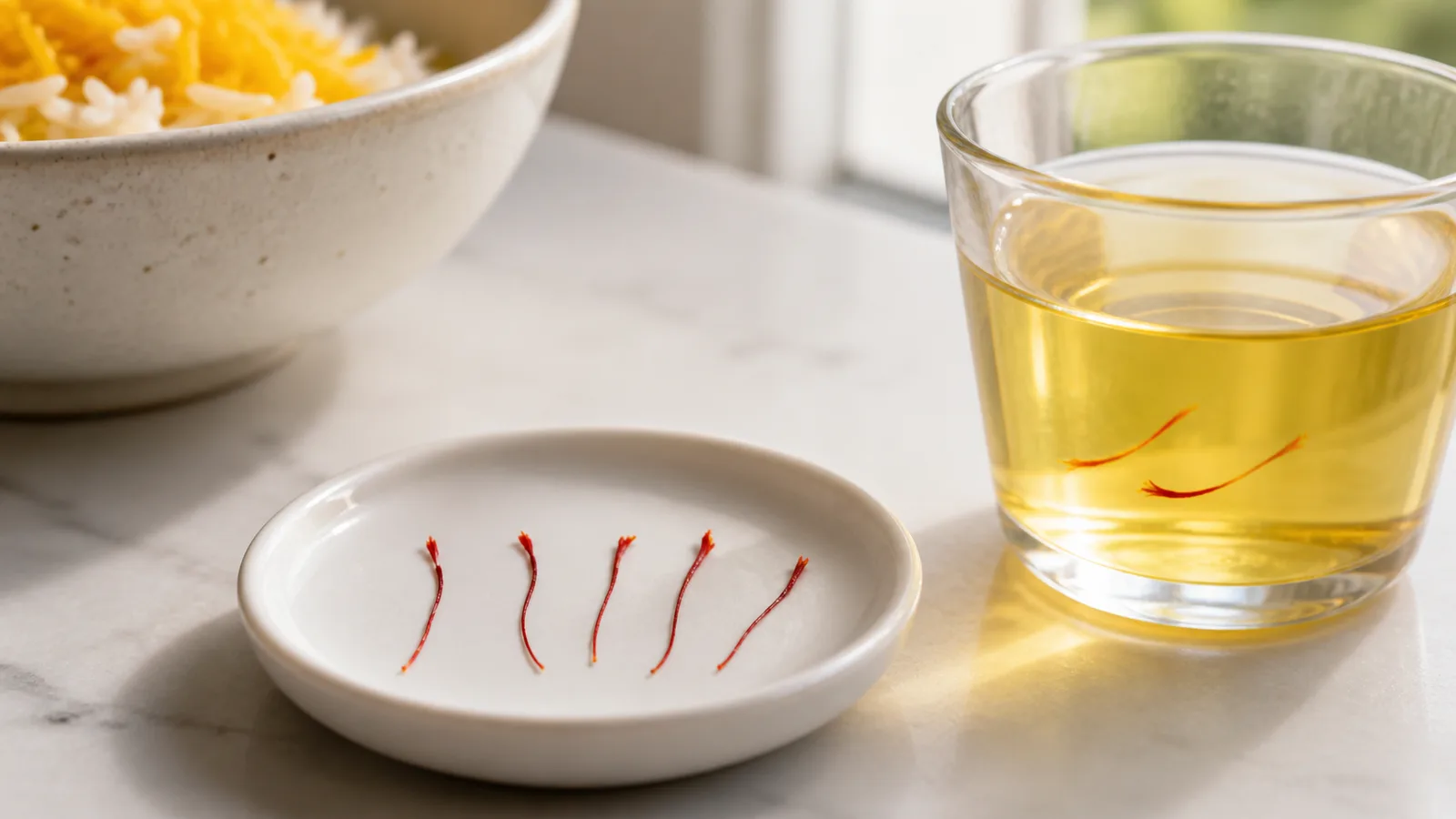
A flowering-size corm planted at the right time can bloom in its first autumn, sometimes within six to eight weeks. Smaller corms or late planting may produce leaves without flowers. First-year yield is modest: each flower has only three red stigma branches, and one corm may produce just one flower in its first season.
Production can improve as daughter corms mature. After several years, lift and divide a crowded clump during dormancy, then replant sound corms with adequate space. Our saffron planting guide covers the wider garden-planning questions.
How to harvest and dry saffron
Check the planting daily when buds appear. Harvest clean flowers on a dry morning after dew or frost has gone, ideally just before or as they open. Indoors, separate the red stigmas from the purple petals and yellow stamens with clean, dry tools.
Dry the stigmas promptly using a controlled method appropriate to the small quantity. The goal is fully dry threads with no scorching or retained dampness. Once cooled, transfer them to a clean airtight glass or metal container and keep it in a dark, dry place. Freshly dried saffron benefits from a resting period before its aroma is judged.
Common home-growing problems
- No flowers: corms may be too small, planted late, shaded, overcrowded or held in unsuitable seasonal conditions.
- Soft or missing corms: poor drainage, excessive moisture, disease or animal damage are likely causes.
- Leaves but no autumn bloom: leave the foliage intact; it is building daughter corms even when the first harvest fails.
- Weak container growth: check direct light, drainage, pot depth and whether the pot remained warm and wet during dormancy.
- Few threads: this is normal at small scale. Three stigmas per flower means a useful jar requires many blooms over time.
Growing saffron at home is less about constant attention than about getting the site and seasonal rhythm right. Begin with genuine healthy corms, protect drainage, preserve the post-flowering leaves and expect a small first harvest. Those habits give the planting a better chance to return with more mature daughter corms in later years.