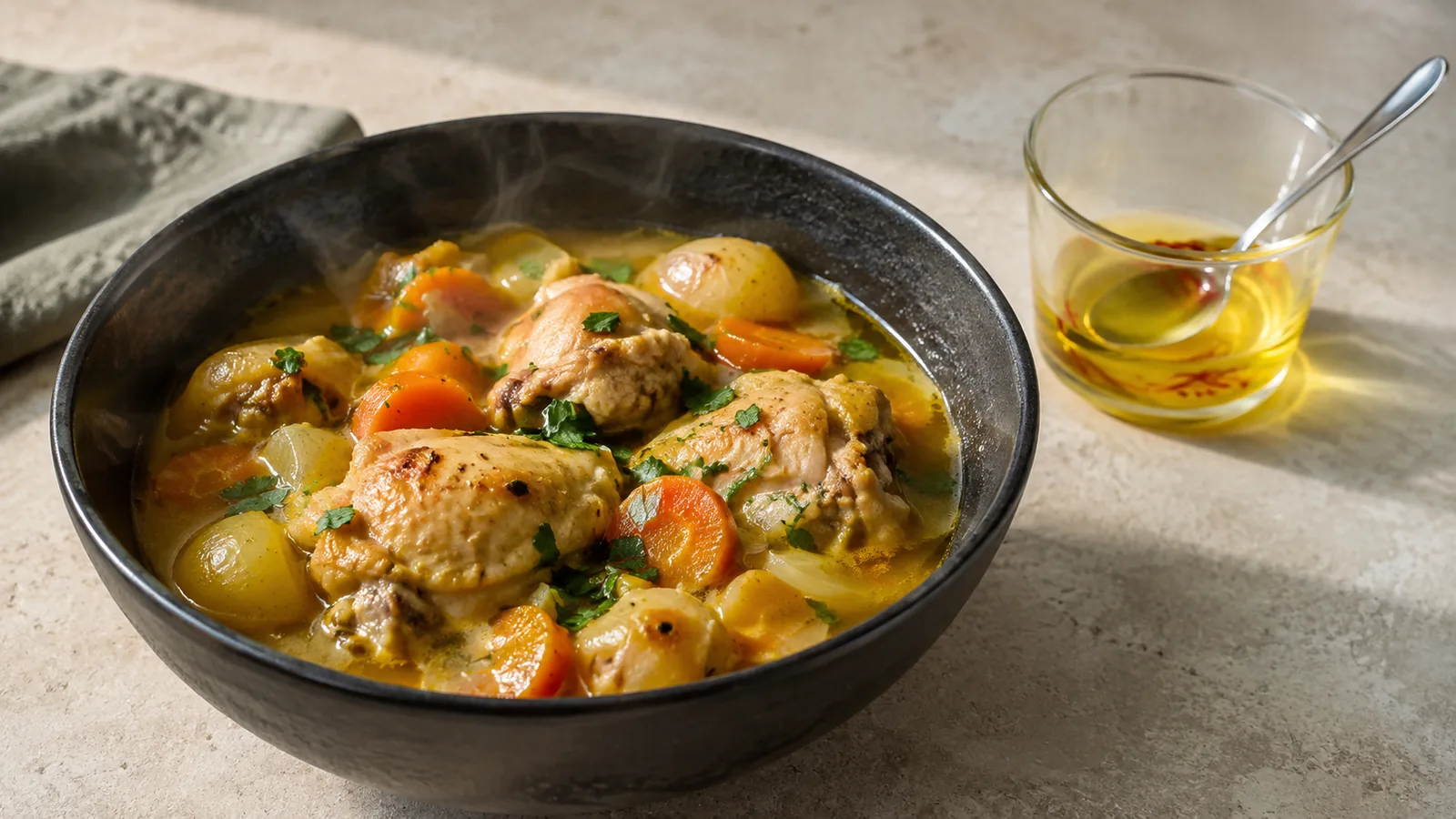
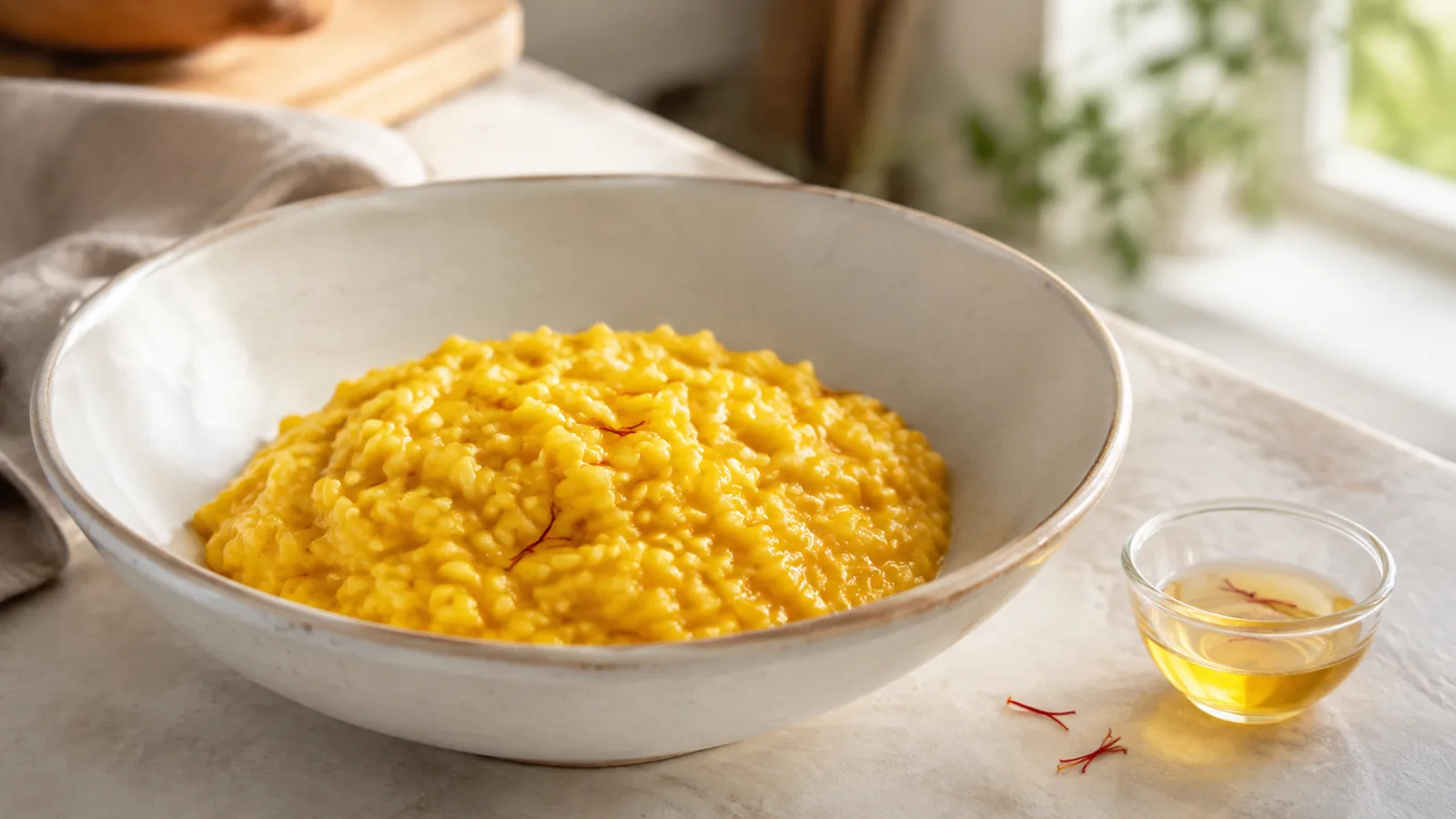
You soak saffron in water to draw its color, flavor and aroma into a liquid that can spread evenly through a dish. Soaking saffron in water—often called blooming or infusing—also gives a small pinch time to develop before it meets a large pan of food.
Why soaking saffron works
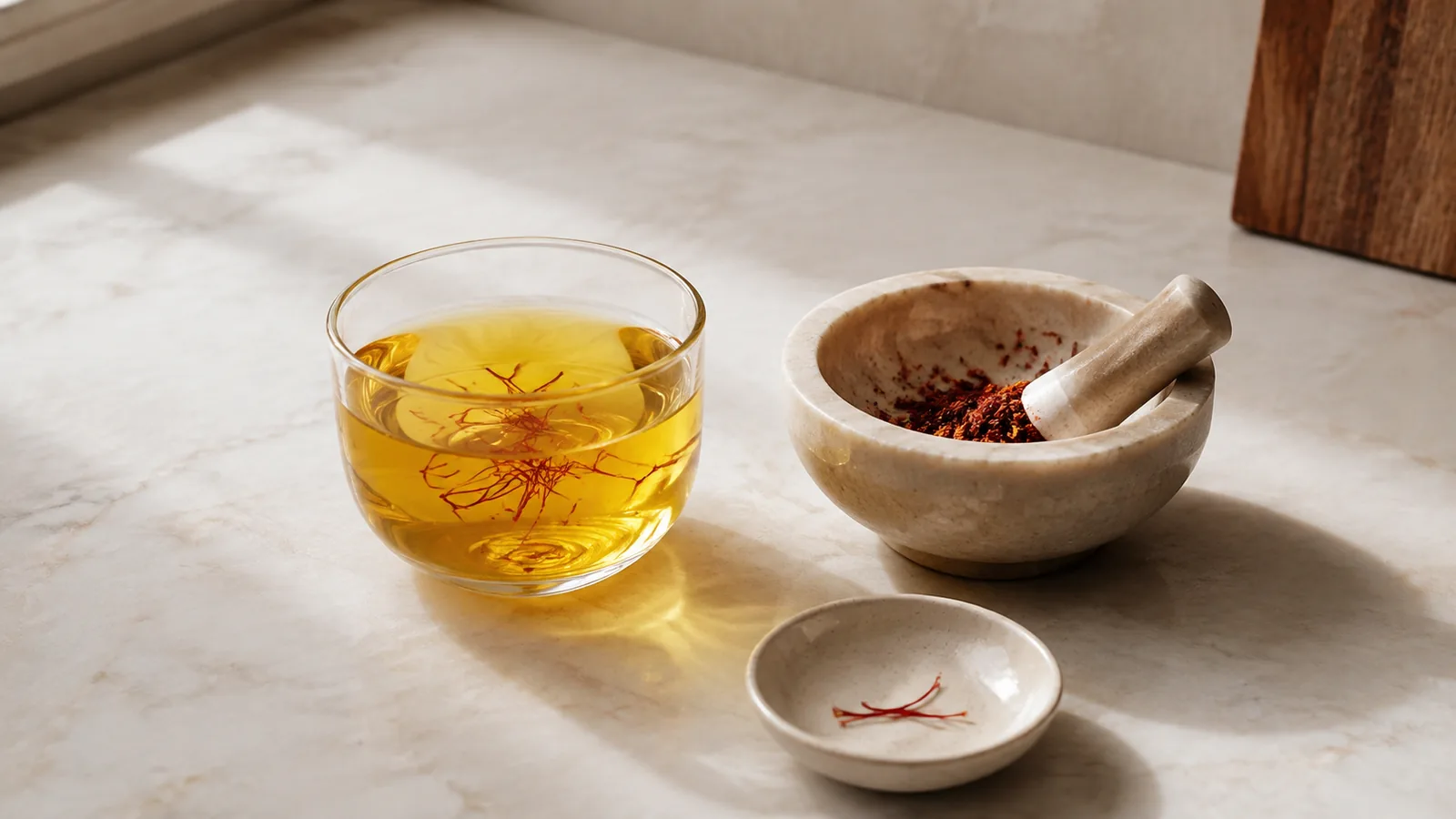
Soaking saffron threads in water works because a thread contains several groups of compounds. Water-soluble crocins provide much of its golden colour, picrocrocin contributes bitterness, and volatile compounds including safranal help form its aroma. Crushing and wetting the threads exposes more surface area, while a warm rest allows those components to move into the liquid.
Research comparing saffron infusions at different temperatures, times and water-oil mixtures found that these compounds do not extract or distribute in exactly the same way. In its water tests, measured crocin enrichment was strongest at 60°C after 20 minutes and declined at higher temperatures or longer exposure. The study was a controlled experiment rather than a test of every home recipe, but it supports a simple point: moderate warmth and time can work better than forcing the process with prolonged boiling.
How to soak saffron in water
- Measure the saffron. Use the quantity required by your recipe. A small pinch is easier to adjust than an oversized dose that makes the food bitter.
- Crush it lightly. Use a clean, dry mortar and pestle. Break the threads into smaller pieces without grinding them into an unrecognisable powder.
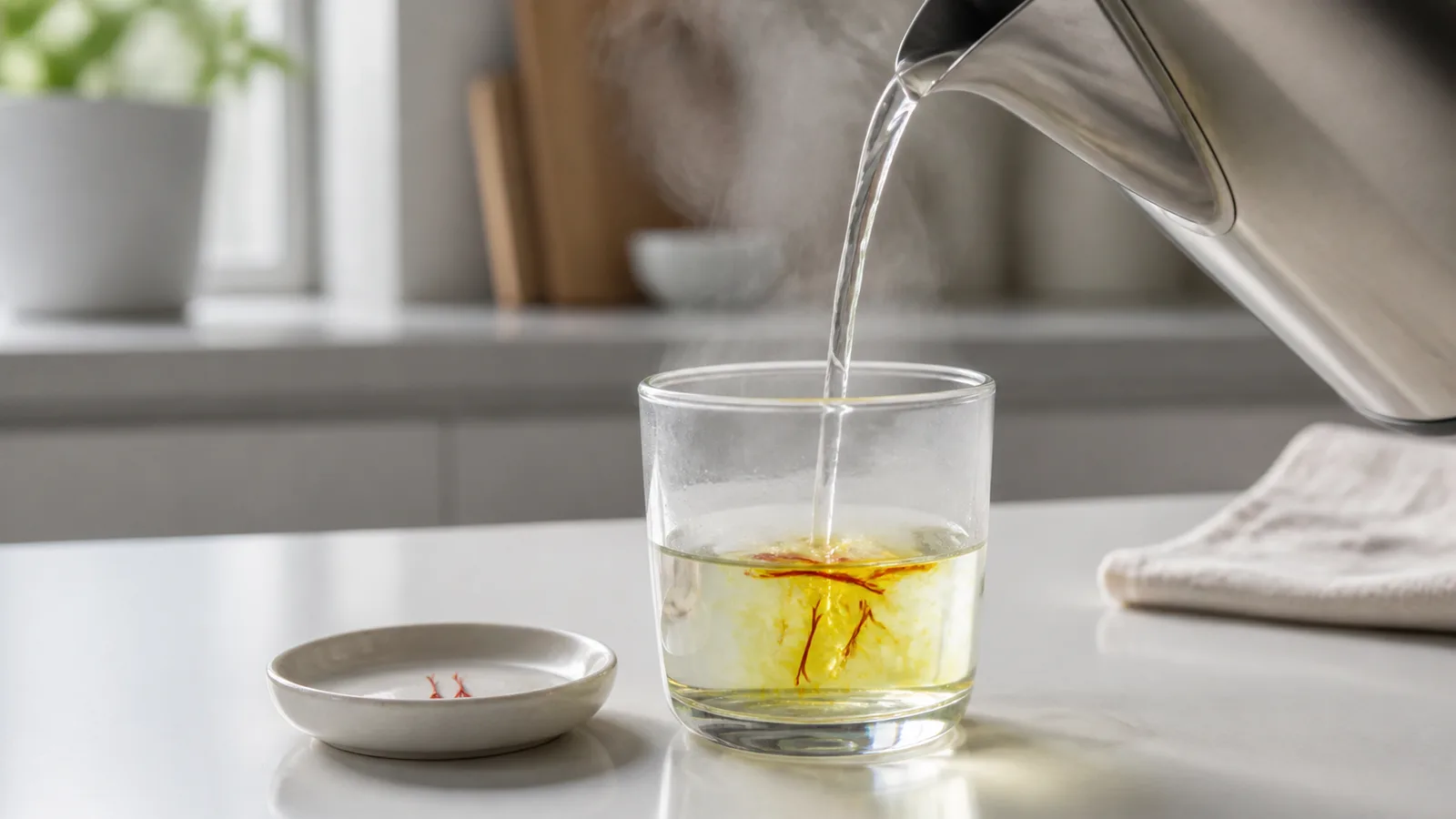
- Add a small amount of water. Pour hot or very warm water over the saffron. There is no need to keep the cup at a rolling boil.
- Cover and wait. Let it soak for about 10 to 15 minutes. A slightly longer rest is reasonable when the infusion still appears pale.
- Use the whole infusion. Add the golden liquid and the softened thread material to the dish unless its texture requires straining.
A small volume makes a concentrated saffron water that is easy to divide across rice, sauce, soup or dessert. If you use a large mug of water for a tiny pinch, the same compounds may be present but the result will look and taste weak.
Does saffron dissolve in water?
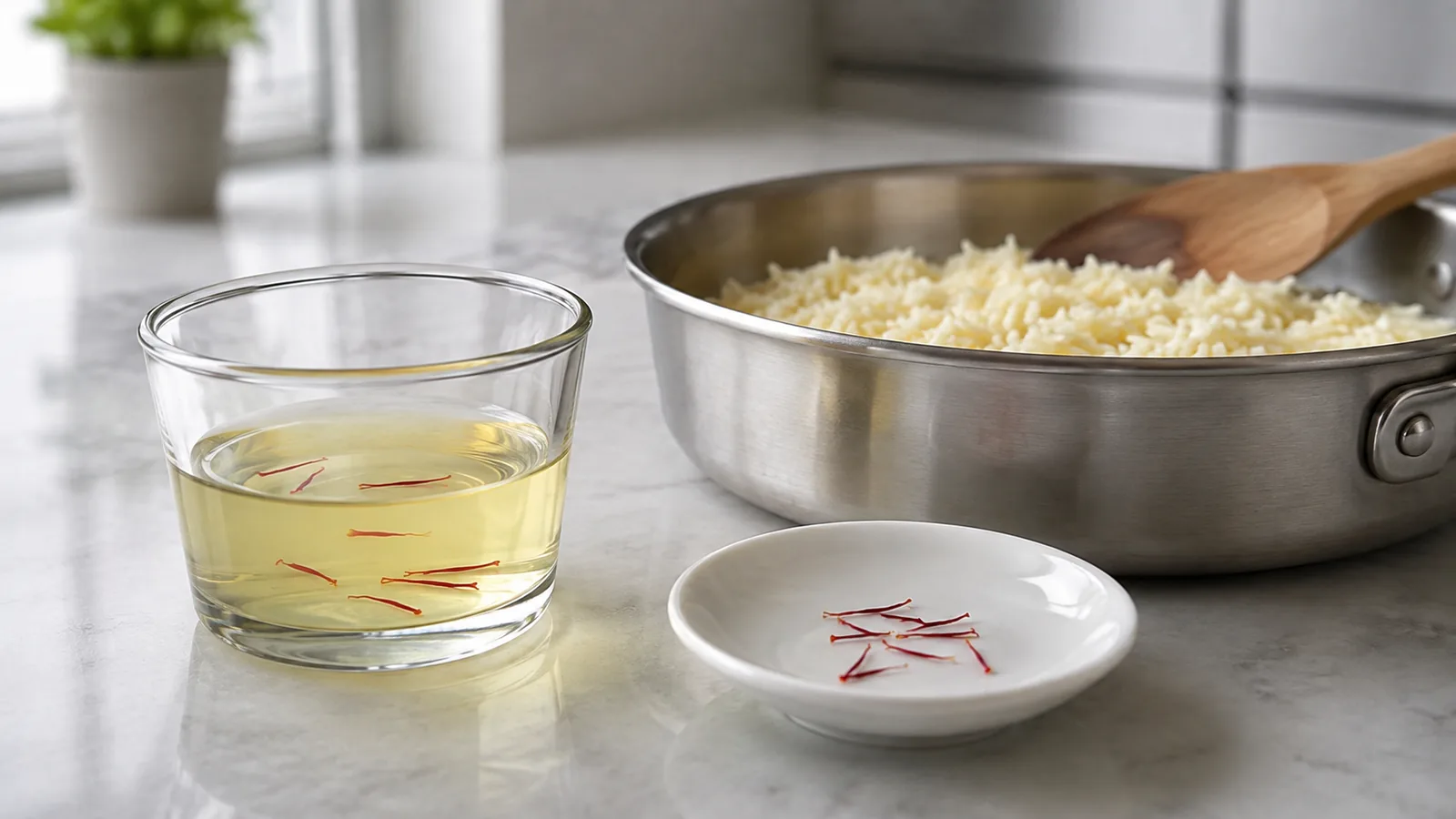
Saffron does not dissolve like salt or sugar. Some of its soluble compounds leave the threads and disperse through the water, but the plant fibres remain. Genuine threads usually soften while still leaving visible red material in the cup.
The answer is the same for kesar: it releases colour and flavour into water, but the entire thread does not have to vanish. “Does real saffron dissolve in water?” is therefore the wrong purity test on its own. Added dyes can colour water quickly, while genuine saffron varies with freshness, thread size, dose, temperature and time.
Warm water, hot water or cold water?
Saffron in warm water is the most practical choice when you need an infusion for cooking soon. It encourages extraction without a long wait. Saffron in hot water also works; very cold water can work more slowly, but it is not necessary to use ice to protect the spice.
Freshly boiled water can be poured into a suitable cup and allowed to settle before or after the saffron is added. What matters more in an ordinary kitchen is avoiding an extended hard boil. The detailed comparison of cold and hot water for soaking saffron explains why temperature claims should not be treated as absolutes.
How long should saffron soak?
Ten to 15 minutes is a useful starting point for lightly crushed threads in warm water. The exact time is not a quality law. A larger pinch, cooler water or whole threads may develop more slowly; finely crushed saffron in warmer water may colour the liquid sooner.
Look for a fragrant golden infusion rather than a stopwatch-perfect result. Waiting longer than 15 minutes is not automatically harmful, but leaving the cup at room temperature indefinitely adds no culinary advantage. Prepare it while the rest of the recipe is underway and use it promptly.
Is soaking saffron necessary?
It is recommended for even distribution, not mandatory in every recipe. You can add threads directly to a moist dish and still extract saffron as it cooks. The drawback is control: a tiny dry pinch may clump in one area, and you cannot judge the infusion before it enters the food.
Direct addition suits a dish with enough warm liquid and cooking time. Blooming is especially useful for rice, a pale sauce, a drink or any recipe where an even colour matters. Our broader guide to using pure saffron in cooking shows how the choice changes with the dish.
When to add saffron water to food
- Rice: mix the infusion with part of the cooked rice for a defined golden layer, or distribute it more widely for an even colour.
- Stews and soups: add it during the later part of a long simmer so it has time to spread without spending the whole cook over heat.
- Sauces: stir it into the liquid phase and allow enough time for the flavour to integrate.
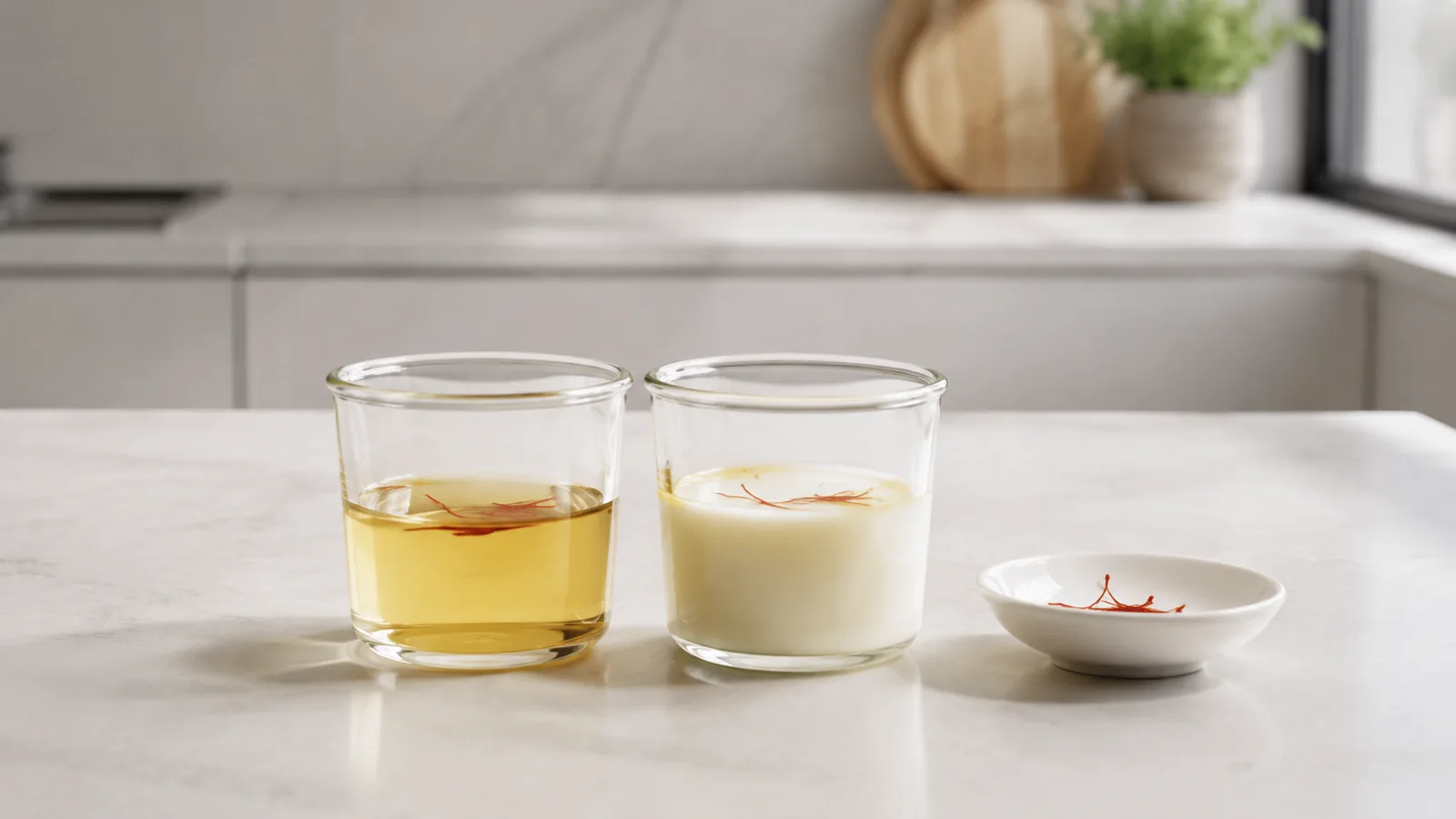
- Milk desserts: bloom in warm milk or water, depending on the recipe, then add it after the base has completed most of its cooking.
- Baking: prepare a concentrated infusion and account for that liquid in the recipe rather than pouring in an unmeasured extra amount.
If heat is your concern, see the explanation of what cooking temperature does to saffron.
Can you drink saffron water?
Saffron water is simply an infusion. It can be used in a drink when it is made with potable water, clean utensils and a sensible culinary amount. The threads may remain at the bottom; they do not need to dissolve completely.
Do not assume that soaking makes medicinal compounds “better absorbed” or turns the drink into a treatment. Culinary extraction and clinical effectiveness are different questions. People who are pregnant, take medication, have a health condition or plan to use concentrated amounts should seek individual advice from a qualified healthcare professional rather than relying on a food article.
Common soaking mistakes
- Using too much water: the infusion becomes unnecessarily dilute and may alter the recipe.
- Boiling it for a long time: more heat is not a shortcut to better aroma.
- Skipping the light crush: whole threads can release more slowly and unevenly.
- Leaving the cup uncovered: a cover helps keep aromatic compounds with the infusion.
- Expecting every thread to disappear: softened plant material remaining in the cup is normal.
- Using release speed as a purity verdict: colour behaviour is one observation, not a complete authenticity test.
Questions about saffron soaked in water
Do you soak saffron before using it?
Usually, yes, when even colour and controlled flavour matter. Lightly crush it, add warm water, cover and wait 10 to 15 minutes. Direct addition can still work in a moist dish that cooks long enough.
Does saffron dissolve in hot water?
Its soluble colour and flavour compounds disperse in hot water, but the fibres of the threads remain. The water becoming golden is extraction, not the whole spice melting away.
Can saffron soak for too long?
A little extra time is unlikely to ruin a covered infusion, but hours at room temperature are unnecessary. Make only what you need, use clean water and utensils, and add it to the recipe once it has developed.
Should I strain saffron water?
Not for most dishes. The softened threads are edible and can continue contributing colour. Strain only when a perfectly smooth texture or presentation calls for it.
The practical answer
Soaking makes a small quantity of saffron easier to extract, inspect and distribute. Crush the threads lightly, cover them with a little warm or hot water, wait 10 to 15 minutes, then use the liquid and threads together. It is a reliable cooking technique, not a requirement for the saffron to “activate” or a guarantee of health benefits.
For a fuller brewing comparison, read the best way to brew saffron. You can also browse our saffron products or ask about using saffron in a particular dish.