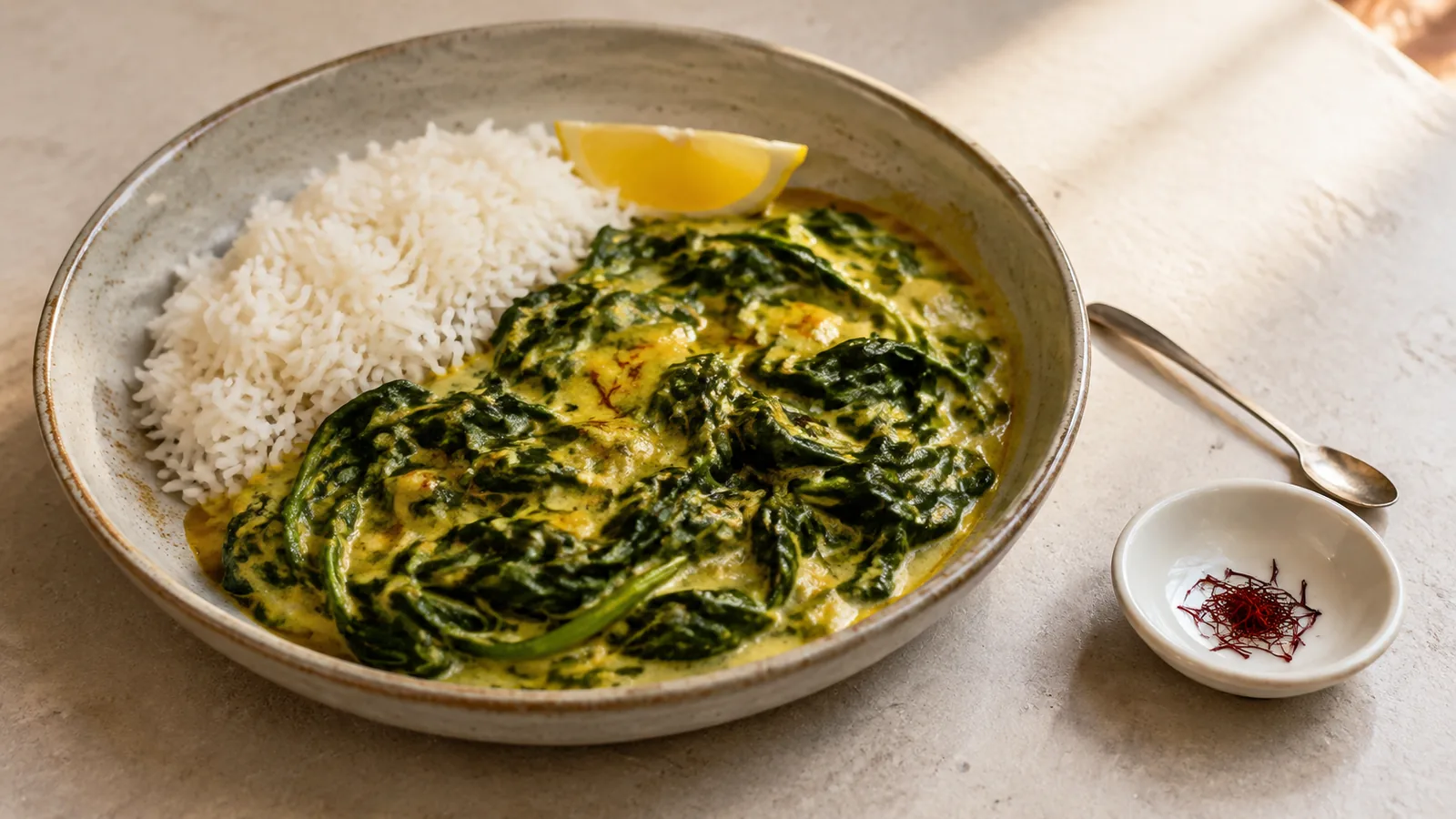
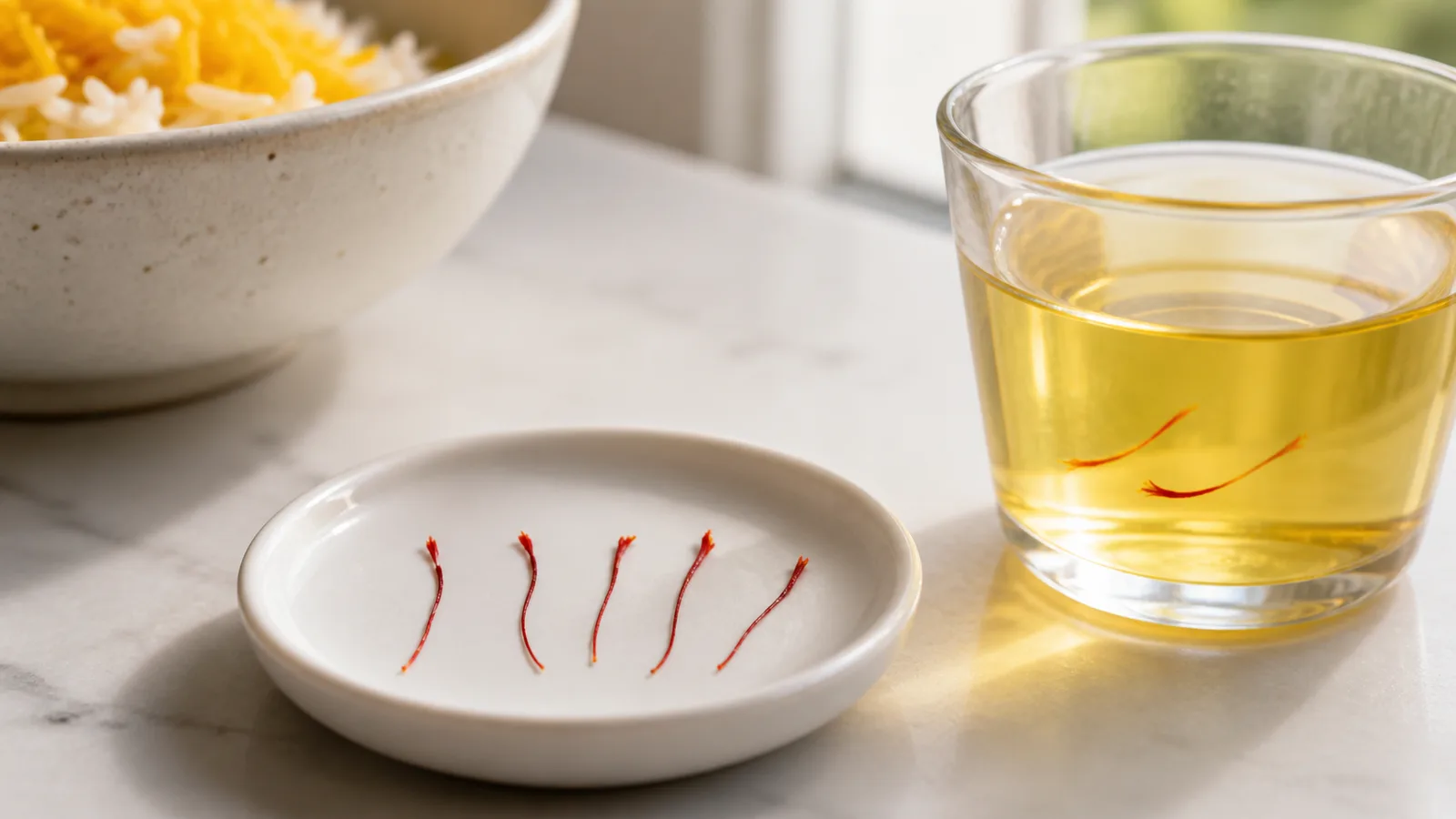
Heat does not instantly destroy saffron. The heat effects on saffron depend on temperature, time and the liquid or food around it. Brief, moist cooking is usually fine; prolonged hard boiling or dry frying can cost you aroma and some colour.
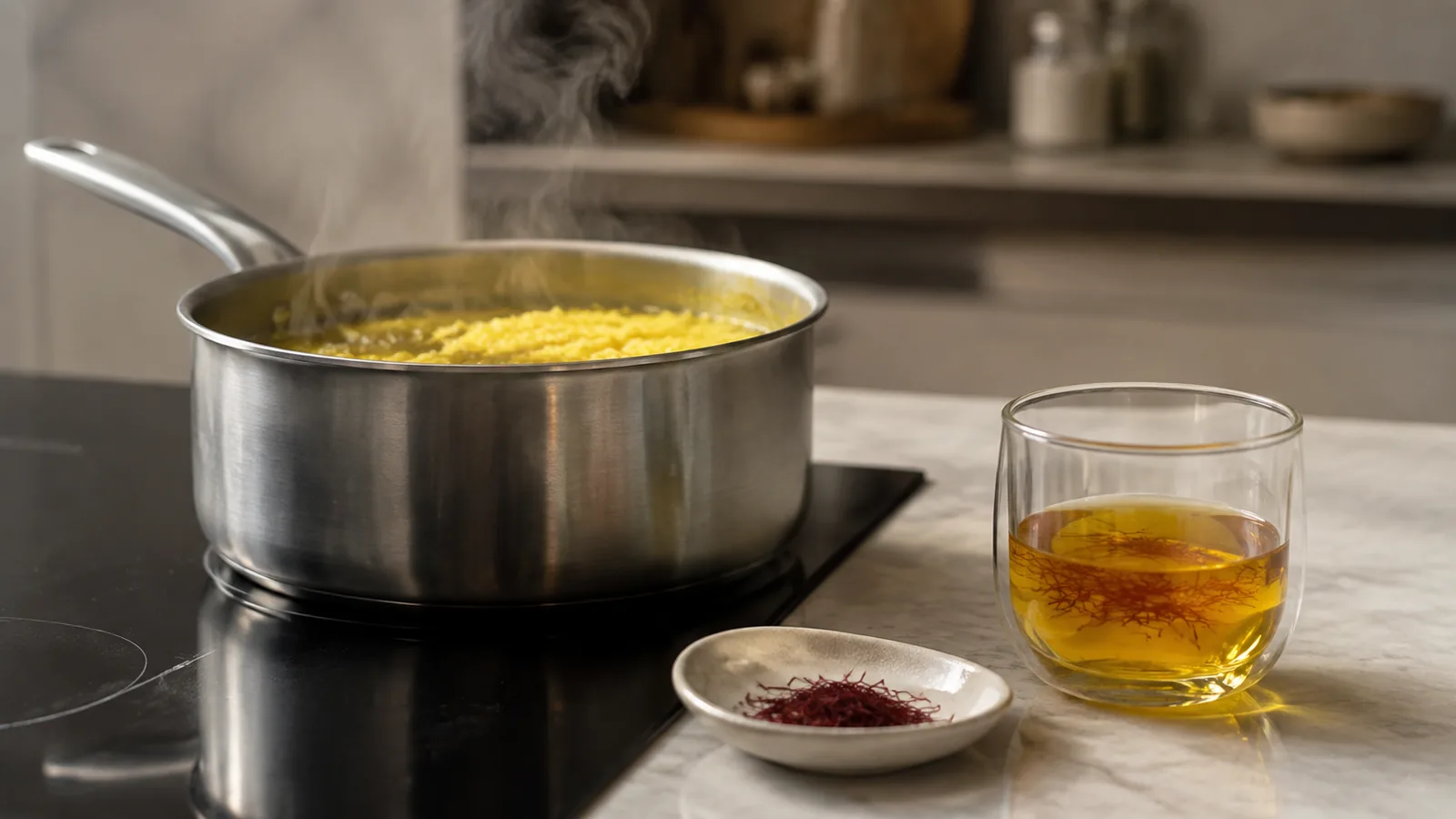
Effect of heat on saffron
Saffron is not one heat-sensitive substance. Its colour comes mainly from crocins, picrocrocin contributes bitterness, and volatile compounds including safranal shape its aroma. These components behave differently as the spice is soaked, heated and cooked.
A 2024 experiment examined saffron infusion at 60°C, 80°C and 100°C in water, oil and mixed systems. In water, the measured crocin enrichment was strongest at 60°C after 20 minutes and fell with higher temperatures or a longer 30-minute exposure. Picrocrocin was more heat-stable, while the compounds distributed differently when oil was present.
That laboratory result is useful, but it is not a universal recipe. It did not compare every rice dish, stew, cake or cup of milk. The practical conclusion is more modest: saffron can tolerate cooking heat, but hotter and longer are not automatically better. Give the threads enough warmth and time to release their character without treating them like an ingredient that must be boiled aggressively.
Would it be possible to steep saffron in hot water, or would that ruin it?
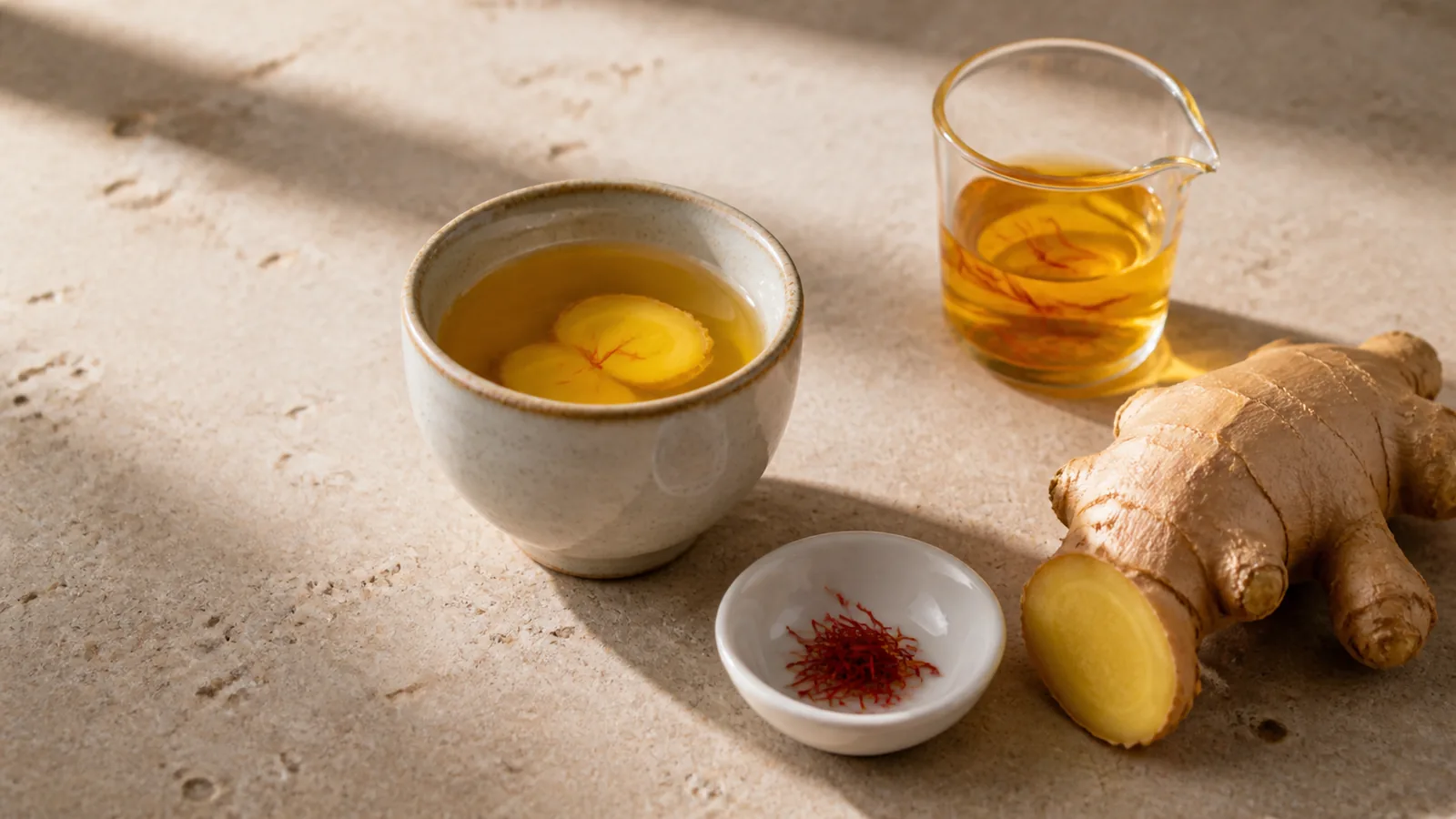
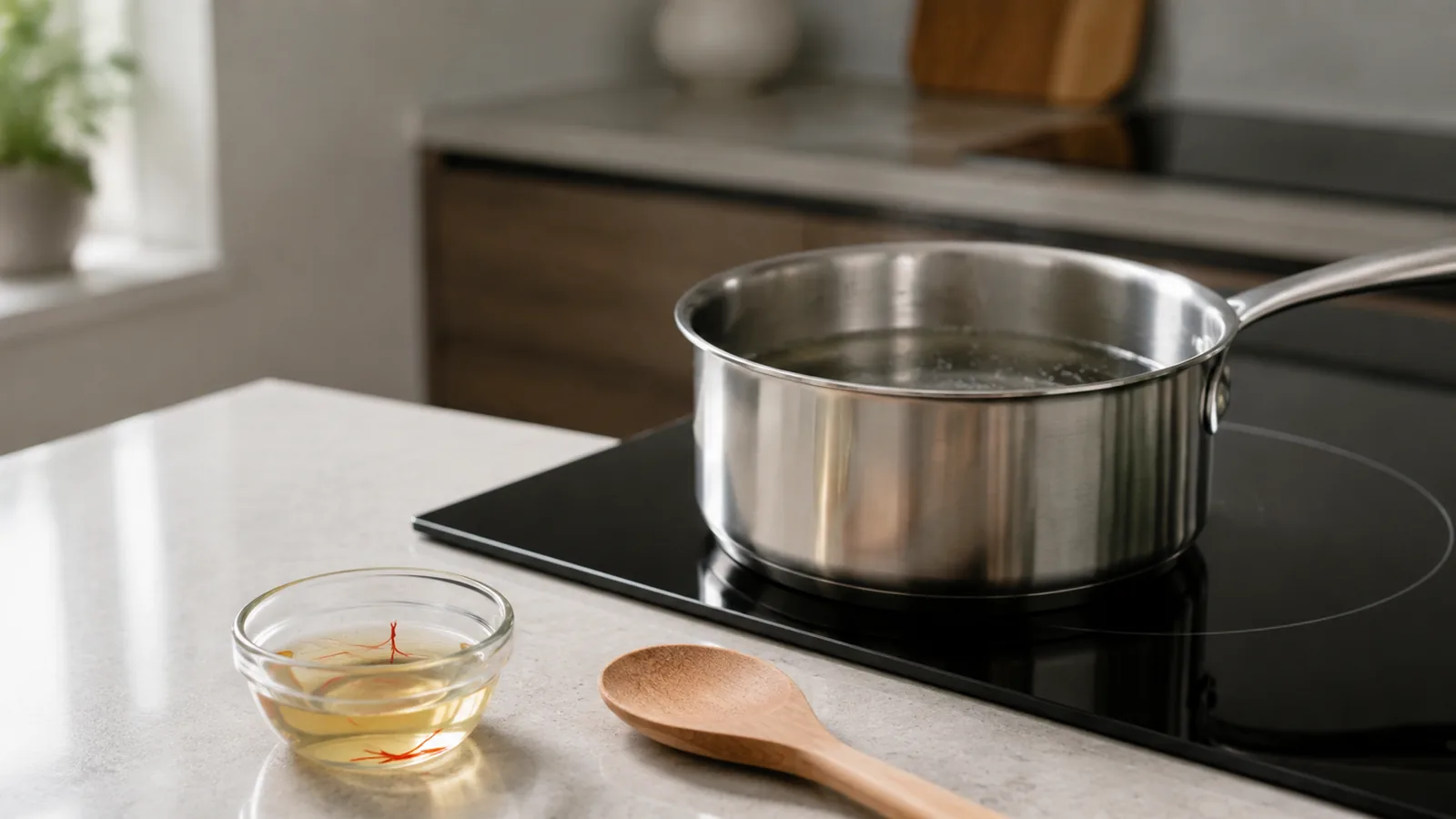
Yes, you can steep saffron in hot water. It will not be ruined simply because the water is hot. For a small infusion, use hot or very warm water rather than keeping the threads at a rolling boil. Lightly crush the saffron, pour over the water, cover it and leave it for about 10–15 minutes. A deeper infusion may benefit from a little longer.
Saffron in hot water should develop gradually. The liquid can become golden while the threads soften and retain some red colour. An immediate, unnaturally bright release is not proof of quality, and a pale first minute does not mean the spice has failed.
Our guide to the best way to brew saffron gives a complete water-infusion method.
Cooking with saffron: proper methods
Bloom it before adding it to the dish
For rice, sauces, soups and many desserts, lightly crush the threads and steep them in a small amount of warm water, milk or suitable cooking liquid. Cover the cup so the aroma stays with the infusion, then add both the liquid and the softened saffron to the food.
This method spreads a tiny quantity of spice more evenly than scattering dry threads across a large pan. It also lets you see and smell the infusion before it is diluted by the rest of the recipe.
Add it later in long-cooked food
If a stew or stock must simmer for an hour, the saffron does not necessarily need that full hour. Prepare the infusion while the dish cooks, then stir it in during the later stage. There should still be enough time for the flavour and colour to move through the food.
The exact moment depends on the recipe. A rice dish may use saffron at more than one point, while a delicate sauce may need it near the finish. The guide to adding saffron before or after cooking explains those choices in more detail.
Use a split addition when aroma matters
Some cooks add part of the infusion early for an even base colour and reserve the rest for the final minutes. This is useful in a large rice dish or sauce: the first portion integrates with the food, while the later portion keeps a fresher aromatic note. It is a technique, not a requirement, and it works best when the recipe can accept the extra liquid.
Boiling vs. cooking with saffron
Boiling and cooking are not the same question. A dish can cook at high temperature while the saffron sits in a moist mixture, or a tiny saffron infusion can be boiled until most of its water disappears. Those conditions expose the spice to heat in very different ways.
A brief simmer will not make saffron useless. If the recipe needs to boil, such as a syrup, soup or milk dessert, there is no need to panic. Avoid boiling a small saffron infusion for a long time merely to force faster colour. The shrinking liquid and prolonged heat can flatten the aroma without improving the dish.
Do not dry-fry saffron threads in a hot empty pan. Direct contact with very hot metal is harder to control than moist cooking and can scorch such a small ingredient quickly. Add the spice through an infusion or into food that already contains liquid or fat.
What heat changes: color, flavor and aroma
Colour, taste and aroma do not rise and fall together. Crocins are water-soluble pigments, so warm water can draw their golden colour into an infusion. Picrocrocin and safranal follow different chemical paths. A scientific review of saffron’s crocins, picrocrocin and aroma chemistry describes how drying, storage and heating can alter their balance.
That helps explain a familiar kitchen result: a dish may still look richly coloured after long cooking yet smell less vivid when it reaches the table. Colour alone cannot tell you how much aroma remains, nor can it prove that the saffron is genuine.
How to protect saffron during common cooking methods
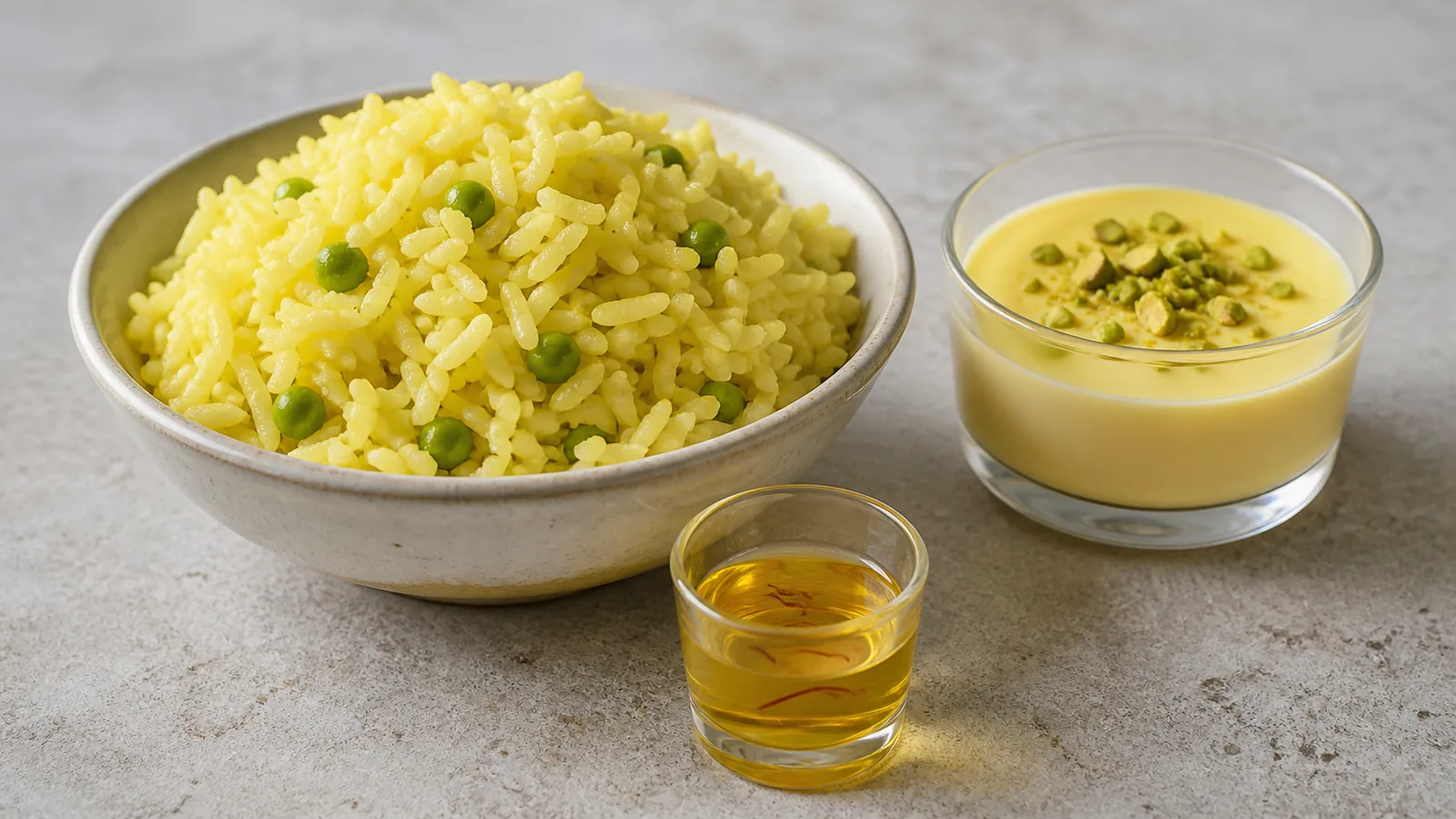
- Rice: bloom the saffron separately and distribute it through part or all of the cooked rice. Reserve a little infusion for the top if you want a more pronounced aroma.
- Stews and soups: add the infusion late enough to protect its character, but early enough for it to disperse through the pot.
- Milk and custards: warm the liquid gently and steep the saffron; a rolling boil is not required for extraction. Read whether saffron needs to be boiled in milk for the milk-specific method.
- Baking: heat is unavoidable, so distribute a concentrated infusion evenly through the batter or dough. Follow a tested recipe rather than adding extra liquid by guesswork.
- Syrups: finish the syrup’s main boil first, lower the heat, then add the saffron or its infusion unless the recipe specifies a different tested sequence.
For broader preparation guidance, see how to use pure saffron in cooking.
Common mistakes that waste saffron
- Heating dry threads over a flame or bare pan: this can burn them before they have a chance to infuse.
- Boiling for colour: time, crushing, dose and ingredient quality matter as much as temperature.
- Using a large volume for the initial infusion: a small concentrated bloom is easier to distribute and does not water down the dish.
- Leaving the cup uncovered: covering a warm infusion helps keep its aroma with the liquid.
- Adding more before waiting: saffron develops over minutes, not seconds. Let the first amount infuse before deciding that the recipe needs more.
- Judging only by appearance: strong yellow colour cannot, by itself, establish freshness, purity or flavour.
Heat questions about saffron
Does saffron increase body heat?
Cooking temperature and the traditional description of a food as “hot” or “cold” are different ideas. This article addresses what kitchen heat does to saffron, not a medical effect on body temperature. Do not use a culinary preparation method as evidence that saffron raises body temperature or treats a health condition.
Is kesar hot or cold?
Kesar is another name for saffron. Traditional systems may classify it using “hot” and “cold” qualities, but those categories are not measurements of the spice’s temperature in a recipe. For cooking, manage the actual heat and exposure time as described above.
Can I add saffron directly to a boiling pot?
You can, and a brief boil will not destroy it at once. For better control, add a prepared infusion during the later part of a long cook. If the recipe is nearly finished, stir it in thoroughly and allow enough time for the colour and flavour to spread.
Does heating saffron remove its health benefits?
A cooking experiment cannot establish what health effect a finished dish will have. Heat and time can change individual saffron compounds, but that is not the same as proving a clinical benefit has been preserved or lost. Treat health questions separately from culinary technique and rely on qualified medical guidance where it is relevant.
The practical answer
Use warmth to help saffron infuse, then avoid more heat than the dish requires. A covered 10–15 minute bloom, moist cooking and a later addition in long-simmered recipes will usually protect the balance of color, flavor and aroma. Brief boiling is workable; prolonged boiling and dry scorching are the conditions worth avoiding.
You can browse our saffron products or ask us about choosing saffron for a recipe.