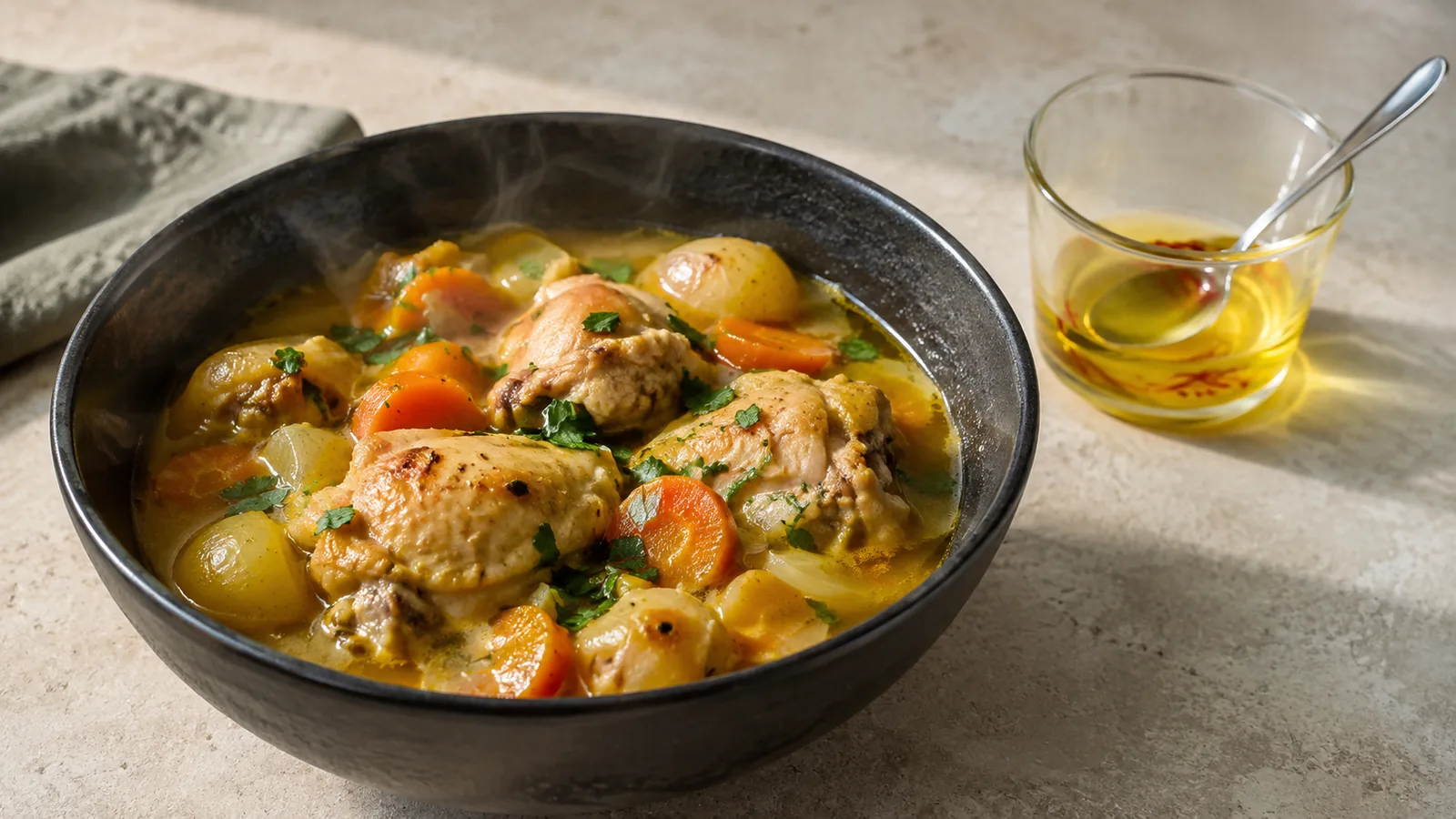
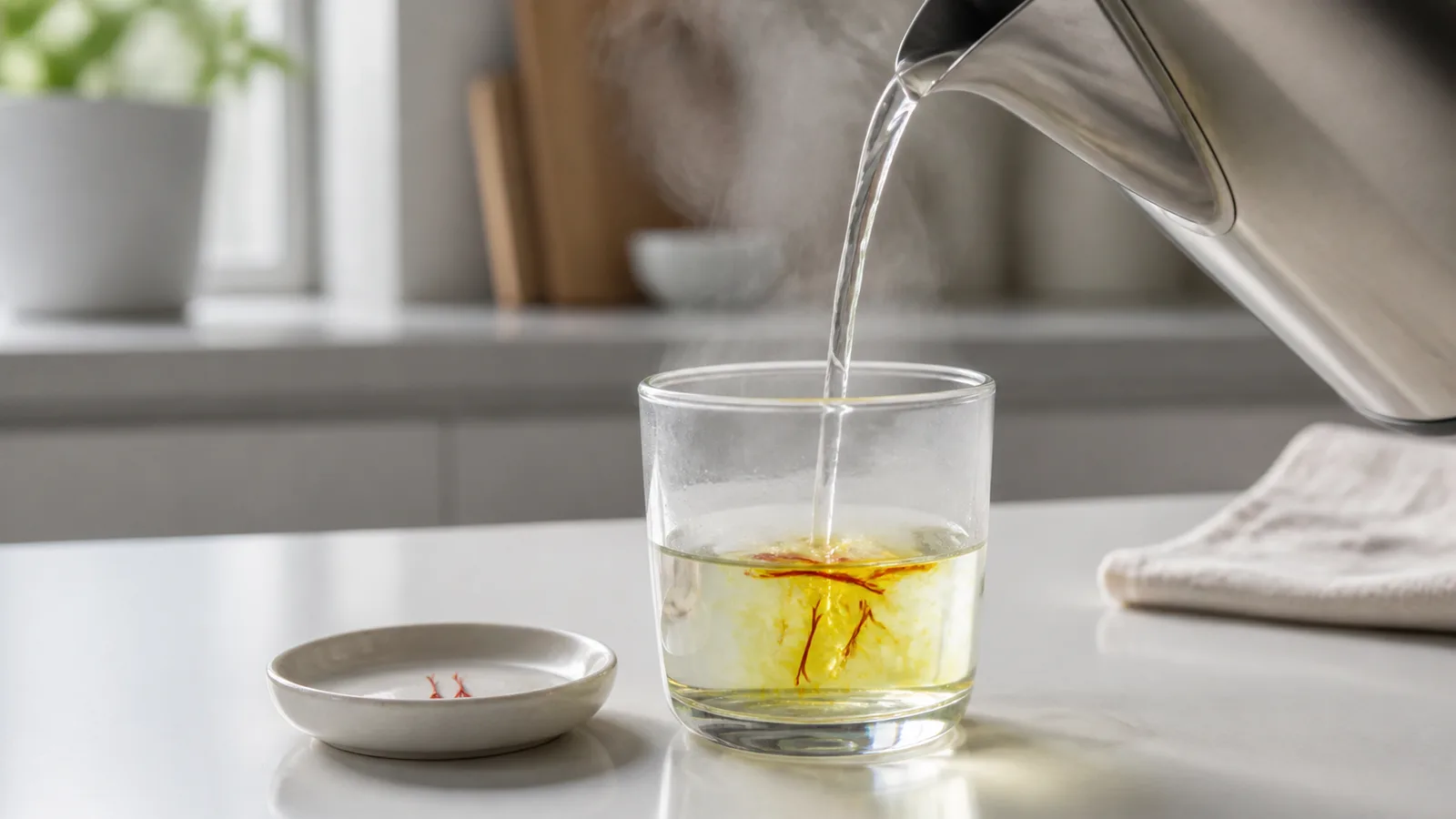
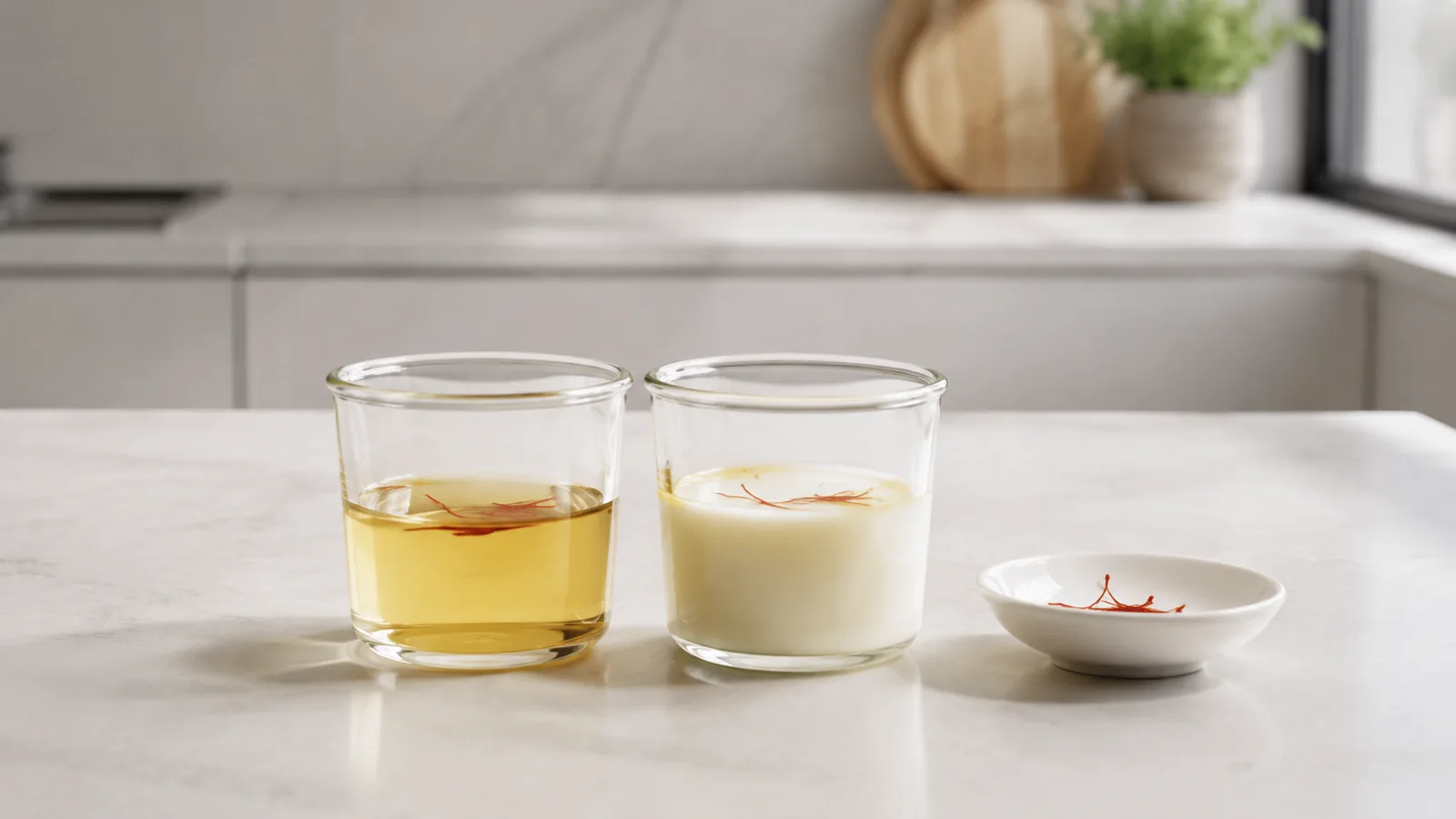
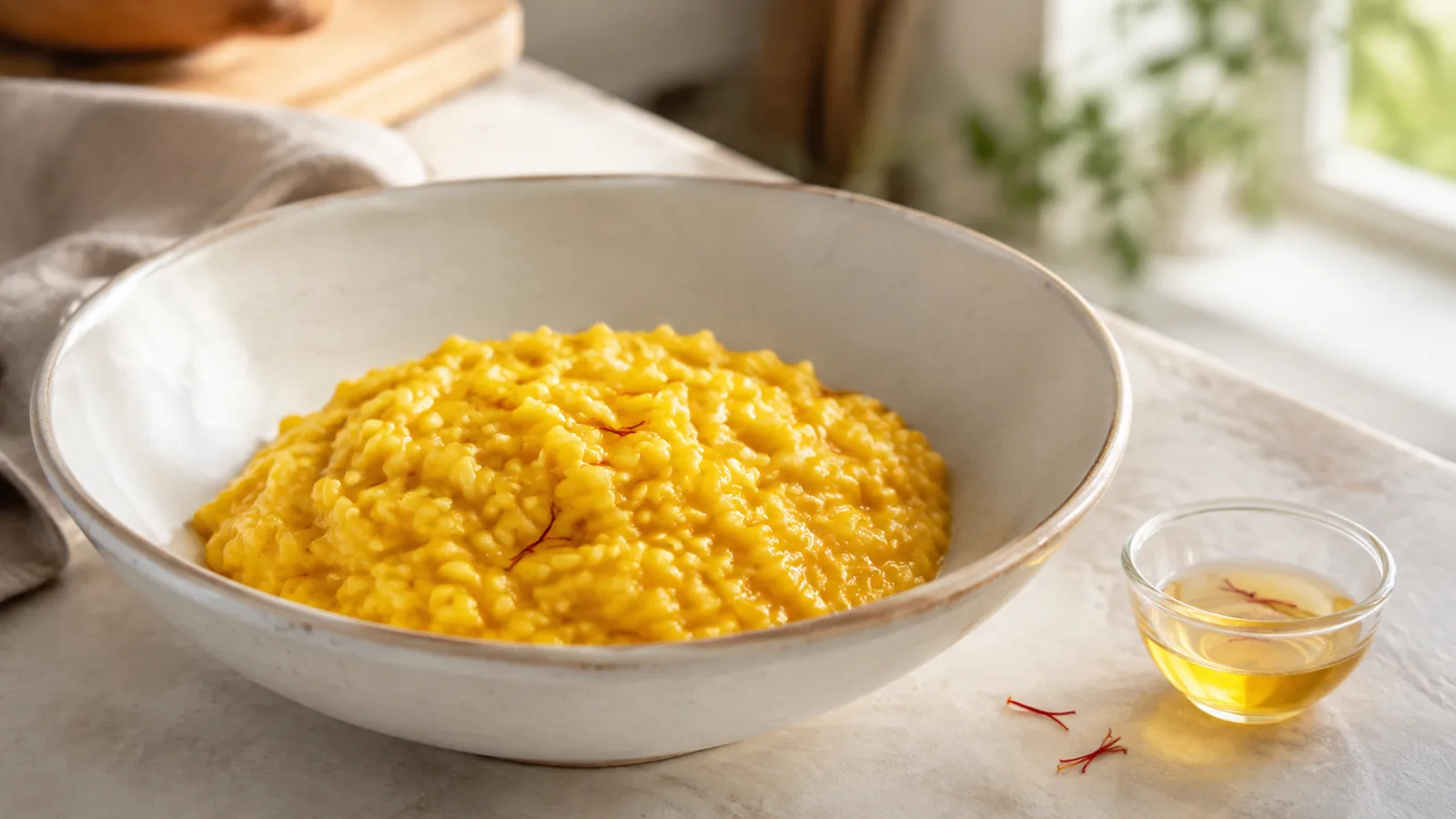
No, you do not need to boil saffron in milk. Warm the milk until it is steaming but not at a rolling boil, remove it from the heat, add gently crushed saffron and let it stand for 10–20 minutes. This saffron infusion method develops colour and aroma without asking the milk or the spice to endure unnecessary boiling.
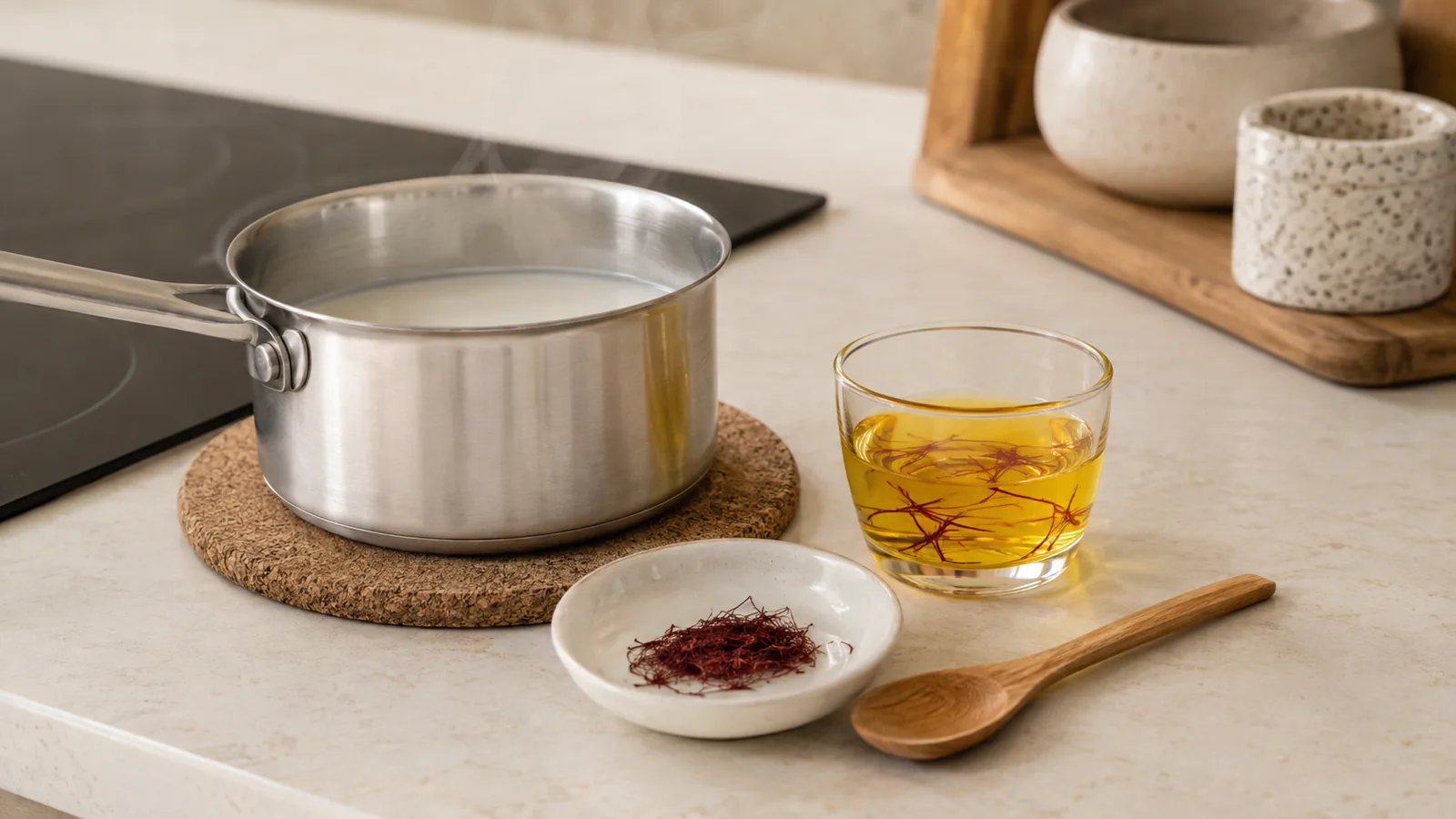
The simple method for saffron milk
- Measure the saffron. Use the amount in your recipe. For one mug, a small pinch of genuine threads is usually more sensible than a large heap.
- Crush it lightly. A mortar and pestle exposes more surface area. Stop before turning the saffron into an unrecognisable dust.
- Warm the milk gently. Use low to medium heat and stir so the base does not catch. Small bubbles around the edge are enough.
- Take the pan off the heat. Stir in the saffron, cover and steep for 10–20 minutes.
- Use the whole infusion. Add both the coloured milk and the softened threads to the drink or dish unless the recipe specifically calls for straining.
The milk takes on saffron’s color and flavor gradually as it rests. A pale first minute does not mean the saffron has failed, and an instant fluorescent burst is not a quality test.
Why warm milk works without boiling
Saffron contributes different compounds to a recipe. Crocins supply much of its golden colour, picrocrocin is associated with bitterness, and volatile compounds including safranal contribute to its aroma. These do not all respond to temperature and cooking medium in exactly the same way.
A 2024 culinary experiment studied saffron infusion across water, oil and mixed systems at different temperatures. In its water tests, crocin enrichment was strongest at 60°C after 20 minutes and declined at higher temperatures or longer exposure. The paper also found that the components divided differently between water and oil.
That study did not test ordinary drinking milk, so it should not be turned into a precise milk recipe or a universal “perfect temperature.” Milk contains both water and fat, and its composition varies. The useful kitchen lesson is narrower: good extraction does not require a prolonged rolling boil, and a warm rest gives the spice time to disperse.
Boiling vs soaking saffron in milk
Can we boil saffron in milk?
Yes. Boiling saffron with milk is not automatically unsafe or a ruined recipe. Many milk desserts require cooking to thicken rice, reduce liquid or dissolve sugar. The question is whether the saffron itself needs the entire boil. Usually it does not.
When the milk must cook for a while, complete most of that cooking first. Lower the heat, add the saffron infusion near the end, and simmer only as long as the dish needs. This gives you control over both the milk and the spice. Keep stirring: milk can foam over or scorch well before the saffron becomes the main problem.
Can I boil milk with saffron from the start?
You can, but it offers little advantage for a simple drink and makes the result harder to control. A long boil can reduce the milk, form a skin, catch on the base of the pan and soften the aroma. If a traditional recipe specifically adds saffron early, follow that tested recipe and watch the heat; otherwise, add it later.
Do not judge success by how violently the milk boils. Temperature, time, saffron quantity, thread size, freshness and the milk itself all affect the final colour.
Two reliable ways to add saffron
Infuse directly in the milk
This is the easiest choice for a mug of saffron milk, hot chocolate, custard or a dessert in which all the milk will be used. Warm a small portion or the full amount, steep the crushed threads, then continue with the recipe.
Prepare a separate saffron infusion
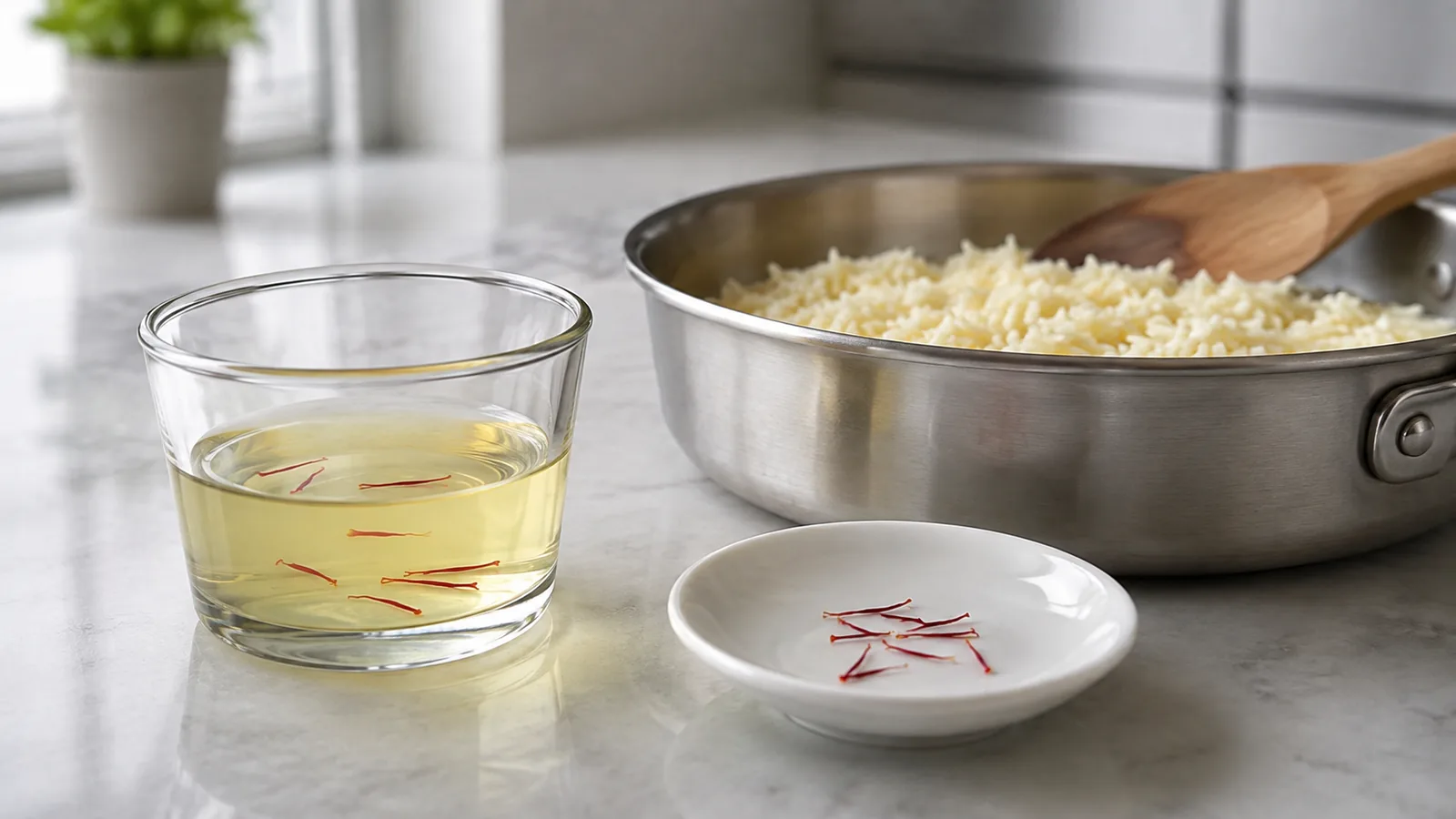
For rice pudding, kheer or a large milk dessert, bloom the saffron separately in a few spoonfuls of warm milk or water. Add that concentrated liquid near the end. A separate infusion spreads through a large pan more evenly and lets you see what the saffron has released before it enters the dish.
Our guide to the best way to brew saffron compares the broader water-infusion methods.
Whole threads or ground saffron?
Whole threads are easier to inspect, but a light crush helps them release colour evenly. Use a clean dry mortar. If the quantity is too small for the pestle to catch, grind it with a pinch of the recipe’s sugar; the grains help break the threads and all of the mixture can go into a sweet dish.
Powdered saffron disperses quickly, but only use it when the product is traceable. Powder hides the structure of the threads and is harder to assess by sight. A dramatic colour change cannot confirm purity.
How much heat is too much?
There is no single household temperature at which saffron suddenly becomes useless. The effect depends on the compound, medium and exposure time. Research on saffron’s chemistry describes crocins, picrocrocin and safranal as distinct components and notes that processing and storage alter their balance; a scientific overview explains the formation and thermal behaviour of saffron compounds.
In practice, avoid leaving a tiny pinch of saffron at a hard boil for a long time when a warm steep will do. Brief simmering within a recipe is different from boiling a small saffron infusion until much of its liquid disappears.
Adjust the method to the dish
- A mug of saffron milk: warm, steep off the heat and drink once it reaches a comfortable temperature.
- Kheer or rice pudding: cook the base, then stir in a separate infusion during the later stage.
- Custard: infuse the dairy before tempering the eggs so the colour and aroma distribute evenly.
- Cold milk or a chilled drink: make a warm concentrated infusion first, cool it safely, then combine.
- Plant-based milk: use the same gentle approach, but expect the result to vary with water, fat, stabilisers and added flavour.
For a complete drink method, follow the recipe for making saffron milk. When preparing savoury food, the guide to using pure saffron in cooking shows where an infusion fits into a wider recipe.
Common mistakes
- Using too much: more saffron can bring pronounced bitterness rather than a better drink.
- Boiling to force instant colour: give the infusion time instead of treating speed as proof of quality.
- Heating milk unattended: use a suitable pan and stir to prevent scorching or overflow.
- Adding threads to cold milk at serving time: the aroma and colour will develop slowly and unevenly.
- Relying on colour alone: genuine saffron varies, while added colour can imitate a fast release.
- Making a large batch and leaving it out: milk is perishable; cool and refrigerate any make-ahead infusion promptly and follow the milk product’s storage guidance.
Questions about boiling saffron and milk
Should saffron be boiled before drinking?
No. For an ordinary saffron drink, a warm infusion is enough. If the milk needs pasteurisation or cooking for another reason, follow the product or recipe instructions; that is separate from extracting saffron.
Can I add saffron after boiling milk?
Yes. Let the vigorous bubbling stop, stir in lightly crushed threads, cover the milk and steep. This is often the easiest method because the pan is already warm and the milk is less likely to foam over while you wait.
Does saffron dissolve completely in milk?
No. Its soluble compounds disperse into the milk, but softened thread material can remain. That is normal. You may leave the threads in the drink or strain them for texture.
Why is my saffron milk not yellow?
It may need more time, a lighter crush or a little more saffron. Old or poorly stored material can be weak. Milk colour and lighting also change what you see. Do not keep boiling indefinitely; assess the ingredient and dose instead.
Can saffron milk be reheated?
Yes, when it has been stored safely. Reheat it gently while stirring and stop when it is hot enough for your use. Repeated boiling is unnecessary.
The practical answer
For most drinks and desserts, warm the milk, remove it from the heat and steep lightly crushed saffron for 10–20 minutes. If the recipe needs a long milk boil, add a separate infusion later. Boiling is an available cooking step, not a requirement for saffron extraction.
You can review our saffron products or ask about choosing saffron for a milk recipe.