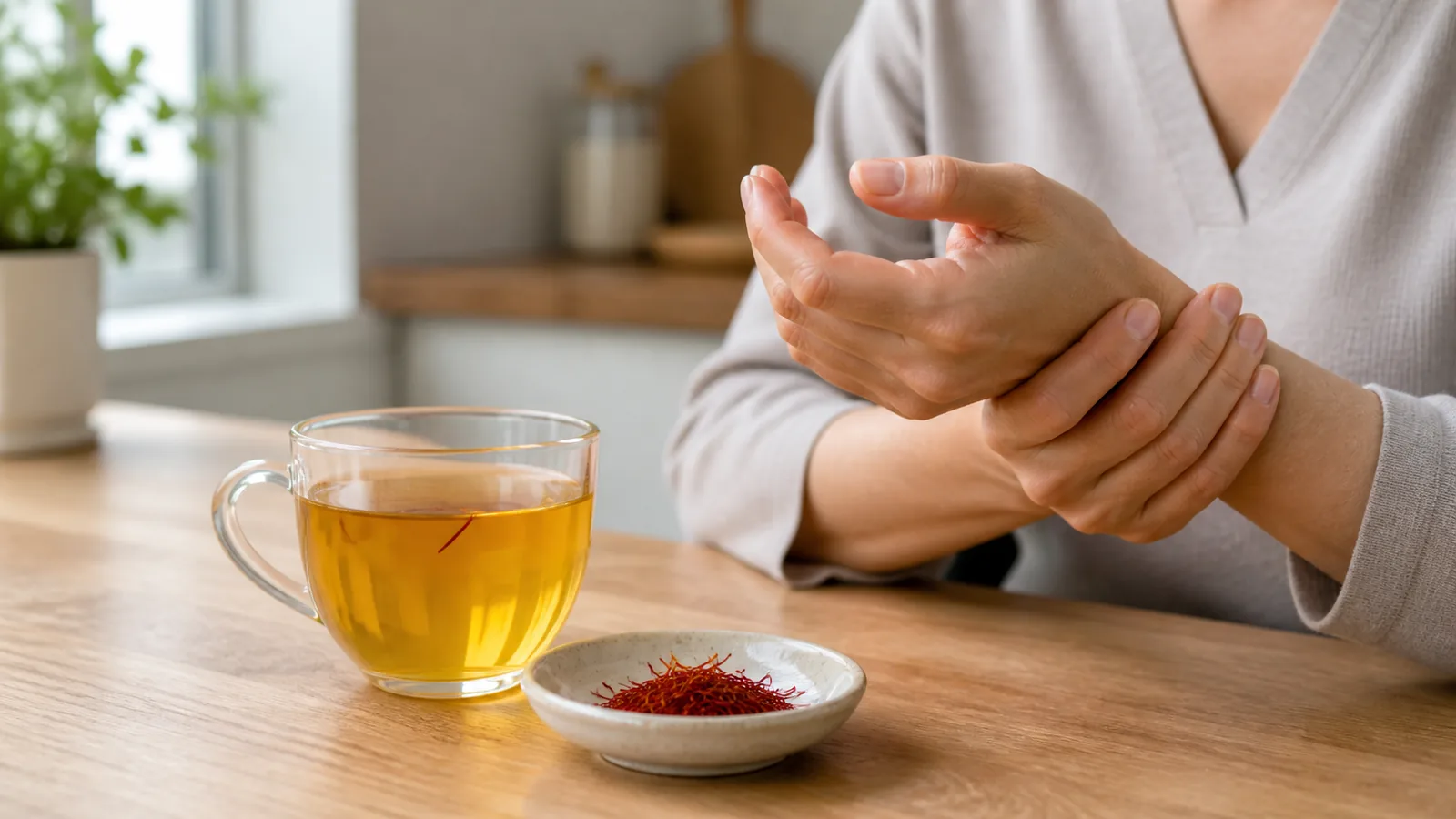
Who should avoid saffron? Anyone with a known saffron allergy should avoid it. People who are pregnant, breastfeeding, giving it to a child, taking regular medication, preparing for surgery or living with a medical condition should get individual advice before using saffron as a supplement or in repeated concentrated amounts. A small culinary pinch and a standardised extract are not the same exposure.
Saffron consumption risks depend on the person, product, amount and purpose. A useful safety answer must keep those differences visible instead of treating every meal and supplement as the same event.
Who Should Avoid Saffron?
Most safety questions become confusing because “using saffron” can mean three very different things: a few threads distributed through a meal, a strongly concentrated homemade preparation, or a capsule/extract taken every day. A person may tolerate the first and still need professional advice about the others.
A 2026 systematic review of human saffron safety evidence found saffron preparations generally well tolerated in studied settings, but adverse events did occur and gastrointestinal problems were the most common. The authors called for extra caution and monitoring with higher-dose or prolonged medicinal use. That evidence does not create one safe dose for every product and person.
People With a Known Saffron Allergy
Can you be allergic to saffron? Yes. A person who has previously had an allergic reaction to saffron should not test it again without medical direction. Check mixed spice blends, teas, extracts and supplements because the ingredient may not be obvious from the front of the package.
An allergic reaction to saffron can involve itching, hives, rash, swelling, wheezing, vomiting or breathing difficulty. These symptoms are not unique to saffron, so another food, additive or contaminant may be responsible. Keep the ingredient list for the clinician rather than trying to diagnose the cause at home.
Call emergency services for swelling of the mouth or throat, severe breathing difficulty, collapse, confusion or another sign of anaphylaxis. The NHS anaphylaxis guidance explains that this severe allergic reaction needs immediate hospital treatment.
Pregnancy and Breastfeeding
Pregnancy needs a clear food-versus-supplement distinction. A trace culinary amount in a shared dish is not equivalent to capsules, extracts or gram-level intake. Do not use saffron medicinally during pregnancy unless the obstetric clinician responsible for your care has assessed the exact product and purpose.
A 2026 systematic review of saffron exposure in pregnancy found the clinical evidence limited and heterogeneous. It does not justify a universal claim that every saffron-containing food causes miscarriage, nor does it establish concentrated self-use as safe. If you are pregnant or trying to conceive, discuss non-culinary use rather than relying on an online threshold.
There is also too little dependable information to promise that supplement-style saffron use is safe while breastfeeding. A clinician or pharmacist can consider the infant’s age, the product, the amount and other medicines.
People Taking Medication
Who should not use saffron alongside medicine cannot be reduced to a reliable universal drug list. Interaction databases may contain theoretical warnings, while products differ in concentration and human evidence is incomplete. Do not stop a prescribed drug because of a blog post.
Ask a clinician or pharmacist before concentrated or repeated use if you take:
- anticoagulant or antiplatelet medicine;
- medicine for blood pressure;
- antidepressant or other psychiatric medicine;
- cancer treatment, immunosuppressive medicine or any drug with a narrow safety range;
- several prescription medicines whose combined effects need review.
This list signals where individual review is prudent; it does not claim that a clinically important interaction occurs with every listed medicine or with a few threads in food. Bring the exact saffron label and supplement facts to the consultation.
Medical Conditions and Planned Surgery
People with a bleeding disorder, persistently low blood pressure, significant liver or kidney disease, a complex mental-health condition or another illness under active treatment should not self-prescribe concentrated saffron. Existing research does not let a general article predict the effect in each condition.
Tell the surgical team about all supplements and extracts before an operation. They can say when a particular product should be stopped. Do not use saffron to replace established treatment for mood, sleep, pain, blood pressure or any other condition.
Children and Older Adults
A normal family recipe may contain a very small amount spread across several portions. That is different from giving a child a saffron capsule, daily concentrate or adult-sized preparation. Paediatric use requires age- and product-specific guidance.
Older age alone does not make culinary saffron forbidden. The relevant questions are medication, allergy, swallowing ability, medical conditions and the concentration being considered. A pharmacist can often perform the medication review.
When the Product Itself Is the Risk
Avoid any product whose botanical identity, ingredients, dose or seller cannot be verified. Powder and mixed supplements can conceal other substances. “Natural” does not guarantee purity, and a common name containing saffron does not prove that the ingredient is edible Crocus sativus.
Choose traceable food-grade threads for cooking and keep supplements in their original labelled container. If an unexpectedly large or unknown amount has been swallowed, follow the urgent steps in our guide to possible saffron toxicity rather than waiting for a symptom threshold.
A Practical Safety Rule
Avoid saffron completely after a confirmed allergy. For pregnancy, breastfeeding, children, regular medication, surgery or significant illness, separate ordinary culinary exposure from concentrated use and obtain advice for the exact product. That approach is more accurate than declaring saffron universally safe or universally forbidden.