Is Spanish saffron the best? Some Spanish saffron is excellent, especially certified Azafrán de La Mancha PDO, but country name alone does not make one pack better than every Iranian, Kashmiri, Greek, Afghan or Moroccan saffron. The useful comparison is between verified origin, laboratory quality, freshness, thread content and the flavour a cook wants.
Is Spanish Saffron the Best?
There is no universal “best” origin for every recipe and buyer. Saffron quality can vary between farms, harvests, drying methods, grades, storage conditions and sellers within the same country. A carefully handled Spanish product may outperform a poorly stored sample from elsewhere, and the reverse can also be true.
Spanish saffron quality deserves its reputation when the product is genuine and properly identified. What should be avoided is turning that reputation into a blanket claim. A Spanish flag, Spanish-language packaging or a reference to paella is not the same evidence as a protected designation or a credible test report.
Why Is Spanish Saffron Highly Regarded?
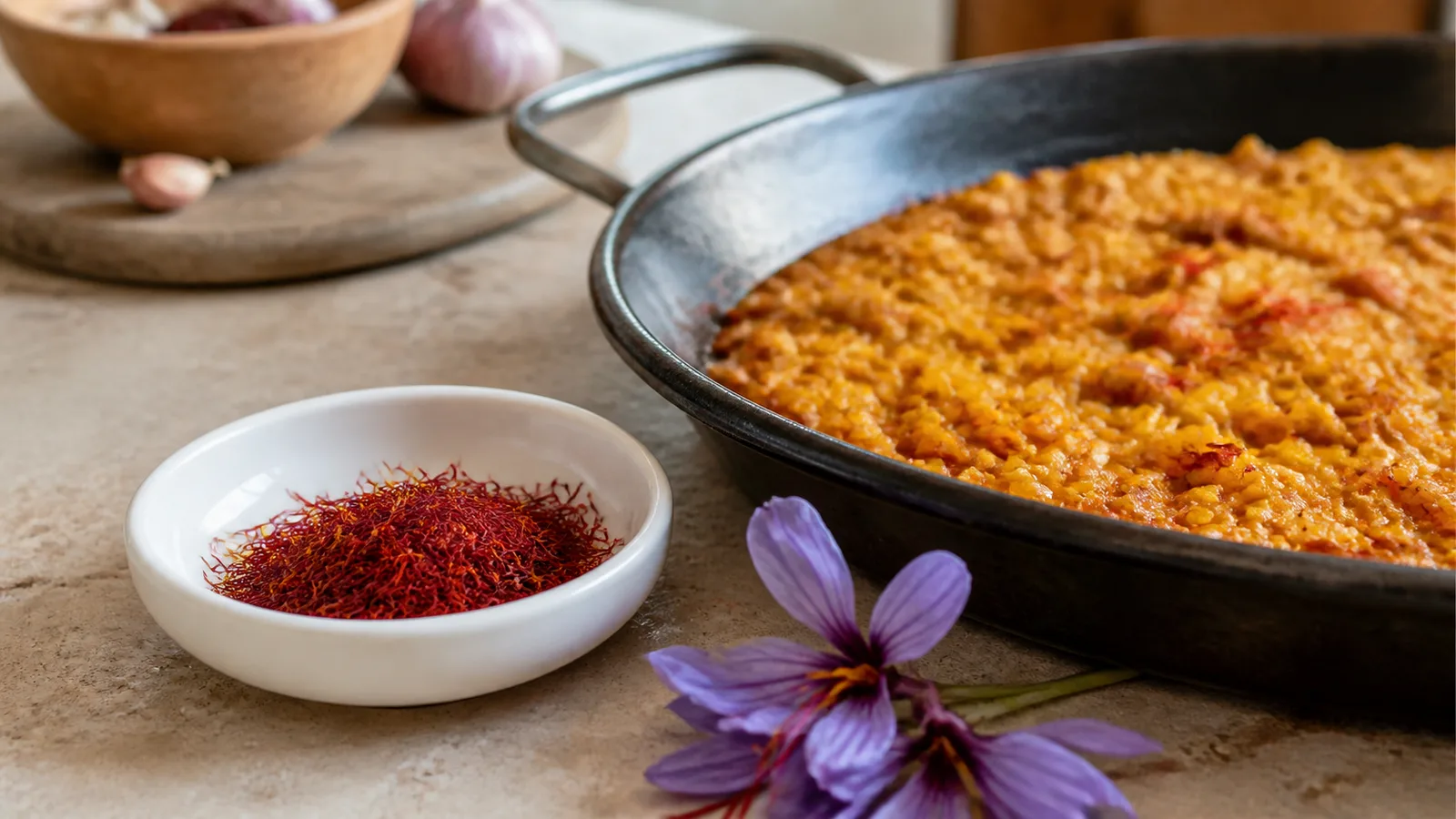
Saffron has a long place in Spanish cooking, particularly in rice, seafood, stew and sauce traditions. La Mancha is the best-known producing area. The protected name Azafrán de La Mancha applies to a specific product from a defined region, not to every saffron packet associated with Spain.
The current official EU product specification for Azafrán de La Mancha PDO describes roasted Crocus sativus stigmas and sets measurable requirements for purity, thread dimensions, moisture, colouring power, flavouring power and bittering power. It also describes shiny red threads and a mild but intense, sharp aroma with roasted notes.
Those controls are a stronger reason for confidence than a vague “premium Spanish” phrase. The protected name can be used only for saffron that complies with the specification and is certified by the inspection body.
What Makes Saffron High Quality?
Good saffron should be judged on evidence that travels with the product:
- Botanical identity: genuine saffron is obtained from Crocus sativus.
- Thread composition: the pack should contain the grade and proportion of stigma/style claimed.
- Purity: no dyes, unrelated fibres, excess floral waste or other foreign material.
- Measured strength: recognised testing assesses colour, aroma-related and bittering characteristics.
- Condition: threads should be properly dried and protected from moisture, heat, air and light.
- Traceability: origin, producer or packer, lot and certification claims should be specific enough to verify.
The ISO 3632-1:2025 specification covers dried saffron in filament, cut-filament and powder forms. ISO’s guidance explains that its standards help evaluate flavour, aroma, colour, purity and moisture. None of those measurements awards one country a permanent first place.
Comparing Spanish Saffron With Other Origins
Iran produces a large share of the world’s saffron and offers several commercial grades, from threads with some style attached to all-red stigma formats. Kashmir has its own protected and geographically distinctive production, while Greece, Afghanistan, Morocco and other regions also supply genuine Crocus sativus.
Descriptions such as “Spanish is balanced,” “Iranian is sweeter” or “Kashmiri is strongest” are too broad to apply to every sample. Sensory character depends on cultivar material, environment, harvest timing, separation, drying, storage and age. Compare two actual products rather than two national stereotypes.
Protected origin and grade answer different questions
A PDO verifies that a product meets the protected origin’s specification. An ISO category or laboratory result describes measured properties. One is not a substitute for the other: origin protection does not mean every cook must prefer the flavour, and a strong test result does not make a product Spanish.
Is Spanish Saffron Best for Paella?
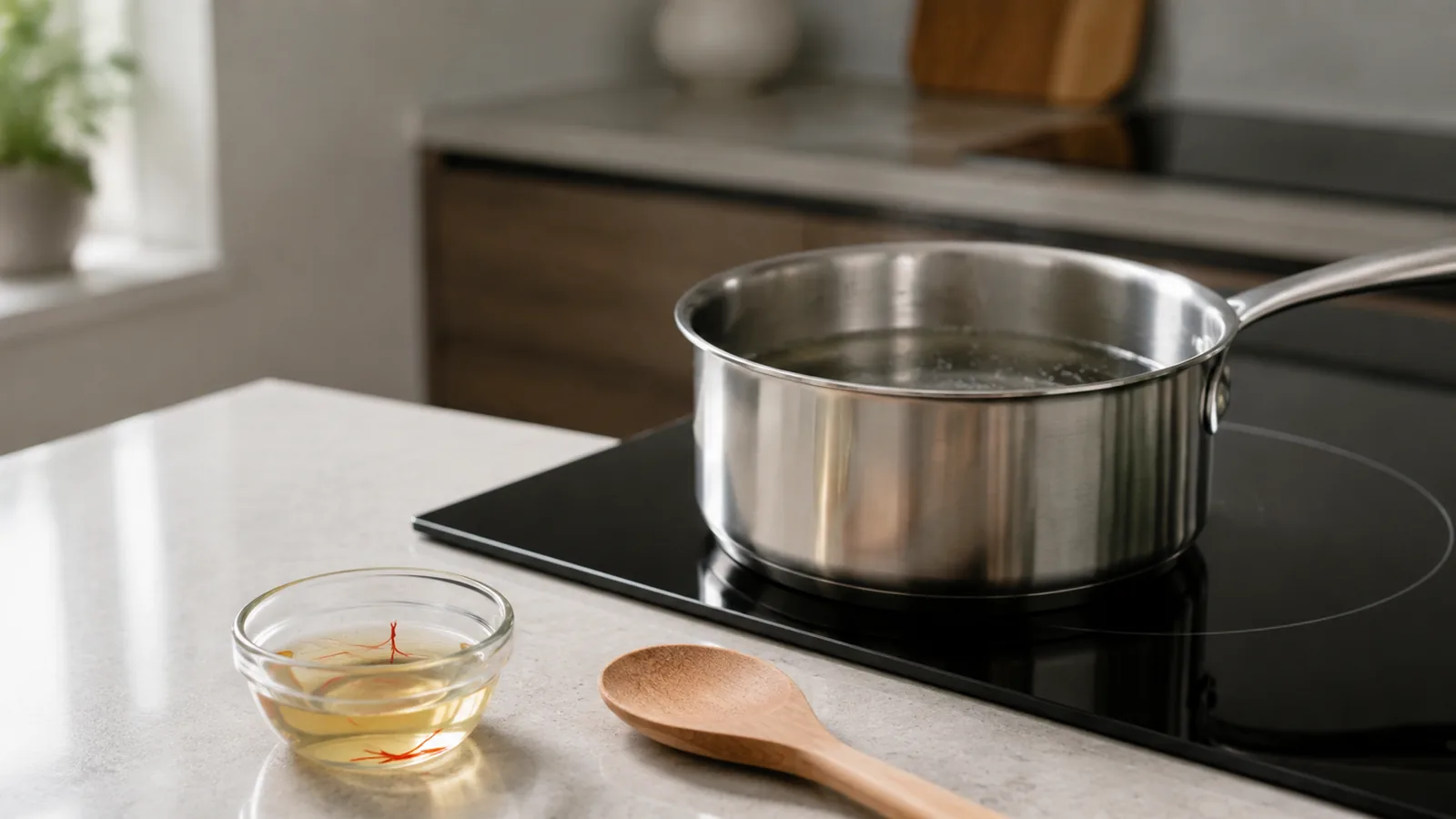
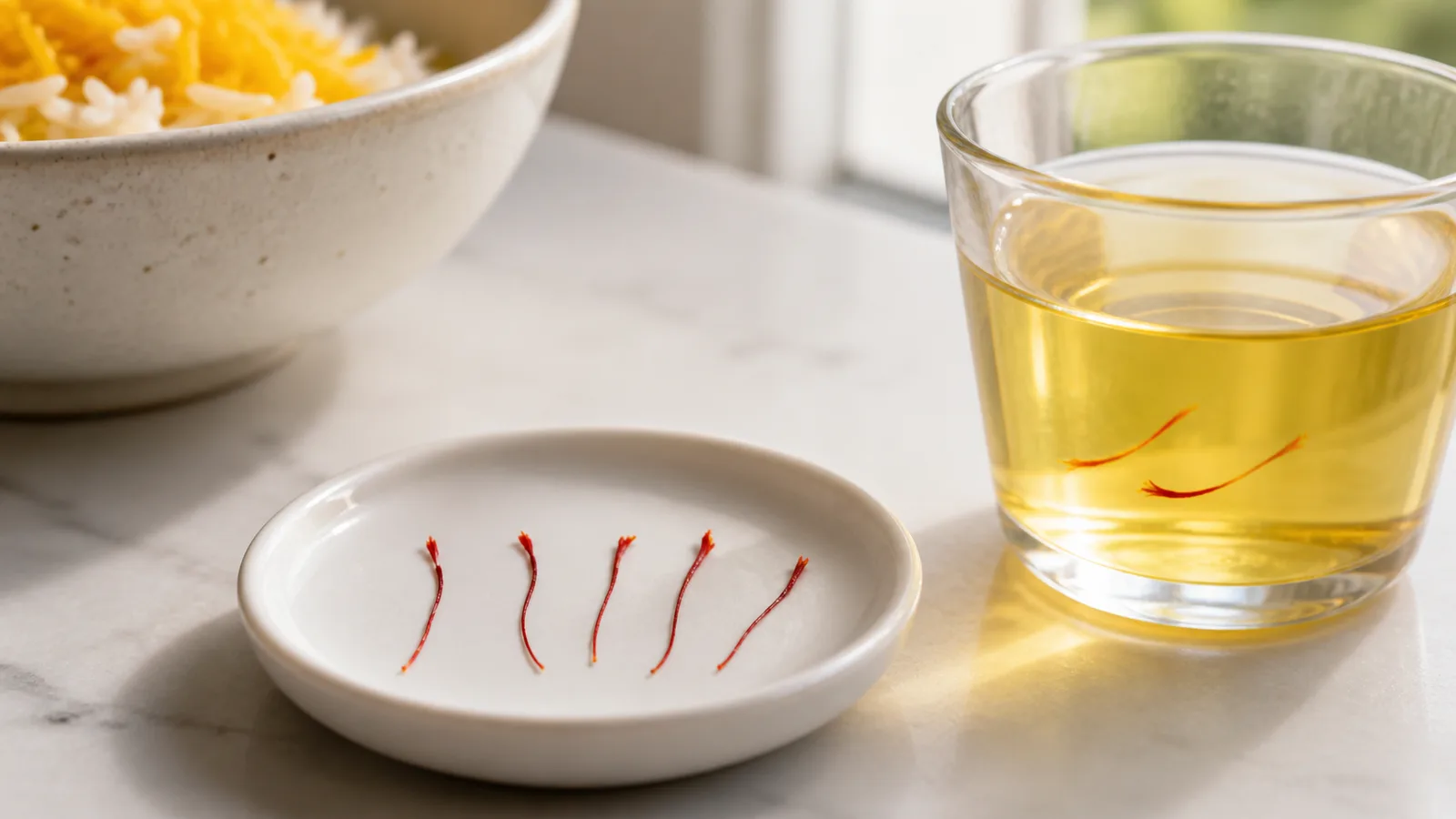
Certified La Mancha saffron is an authentic and fitting choice for Spanish rice dishes, but a recipe will still work with good genuine saffron from another origin. Technique matters. Bloom a modest pinch in warm water or stock, add the infusion to the dish and avoid judging strength solely by how red the dry threads look.
If you want the characteristic roasted profile in the PDO specification, choose the certified product. If the priority is strong colouring power, a particular aroma or price, compare current product evidence rather than assuming the origin settles the decision.
How to Check a Spanish Saffron Claim
- Read the exact origin wording; do not infer it from packaging design.
- If the label claims Azafrán de La Mancha PDO, look for the protected name and certification details.
- Prefer whole threads when visual structure matters; powder conceals the original material.
- Ask for a current specification or test result if colouring strength and category affect the purchase.
- Check the lot, packing information, freshness and storage, not just the country.
Our guide to recognising real saffron explains useful visual and aroma checks without pretending a home test can certify origin or grade.
The Best Choice Is a Verifiable One
Spanish saffron can be among the best, and Azafrán de La Mancha PDO has a meaningful official specification behind its name. It is not automatically superior to every other origin. Choose the pack whose identity, quality, freshness and sensory profile are supported—and whose character suits the dish you intend to cook.
Browse our saffron products, or contact us if you need help comparing the information shown for a particular lot.