What is the difference between white saffron and red saffron? Red saffron is the familiar culinary spice: the dried red stigma of Crocus sativus. “White saffron” is not a standard equivalent variety. In saffron trading, the name may describe the pale style attached below the stigma, sometimes sold separately; elsewhere it may be an unclear marketing name for a different plant. Check the botanical identity before buying or eating it.
What Is the Difference Between White Saffron and Red Saffron?
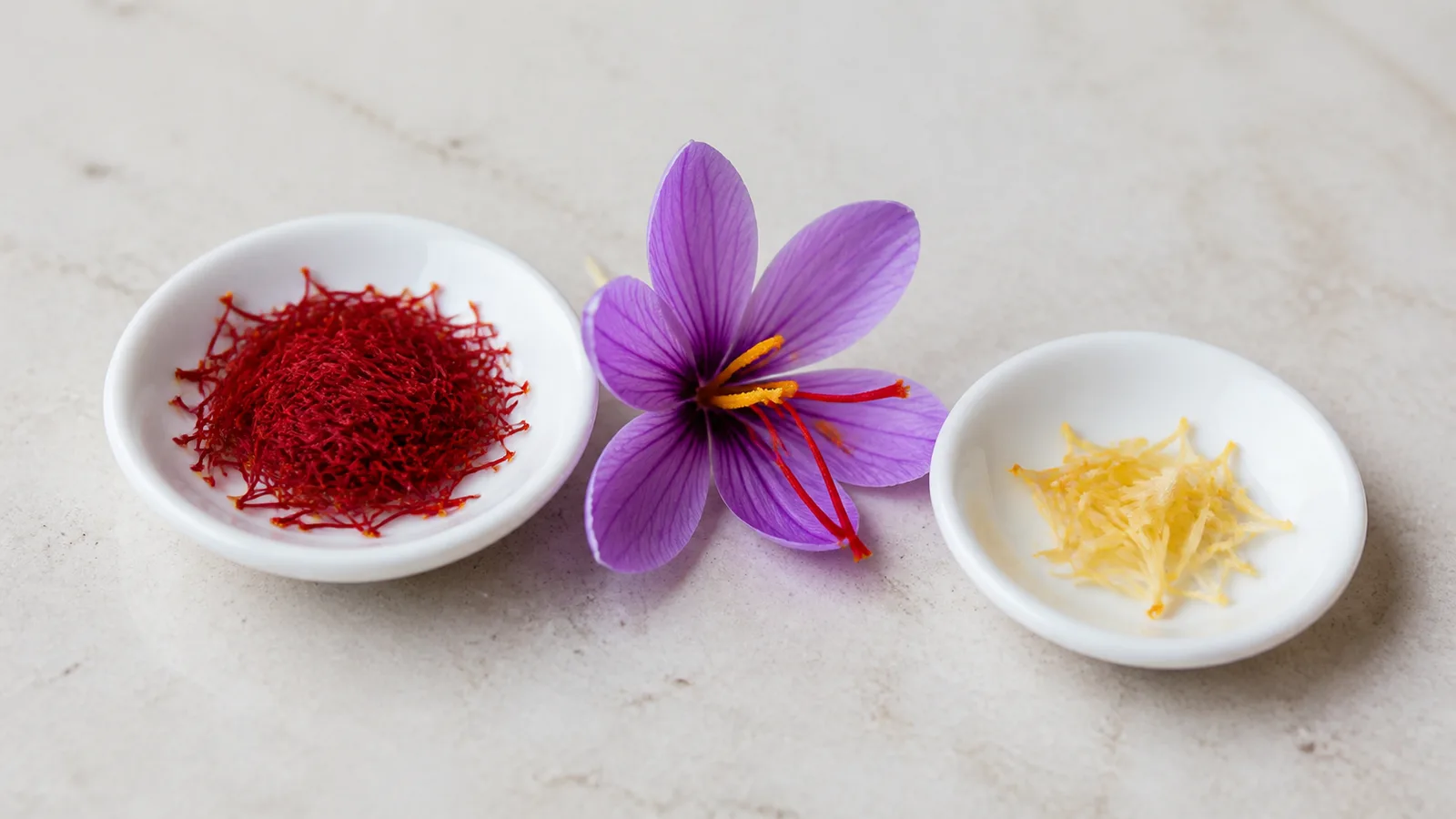
One saffron flower has three red-to-orange stigma branches joined to a paler style. Commercial culinary saffron is valued for the dried stigma. An FAO/WHO Codex project document describes commercial saffron as dried red stigma with a small portion of yellowish style attached.
That anatomy is the key distinction. Red stigma and pale style are connected parts of the same pistil, not two culinary saffron species with comparable strength. The former article’s claim that white saffron is pale stigma harvested earlier was misleading; an immature stigma may change colour during flower development, but it is not the usual commercial product meant by culinary saffron.
What Does “White Saffron” Mean?
The name is used inconsistently. Before comparing products, find out which of these a seller means:
- Pale saffron style: the cream, yellow or pale-orange tissue below the red stigma. In Persian trade it may be called konj or white saffron.
- Threads with much style attached: genuine Crocus sativus, but with a larger non-red portion than an all-red grade.
- A different plant or vague product: some common names use “saffron” for unrelated flowers. A common name alone does not establish that a product is edible Crocus sativus.
“White kesar” can carry the same ambiguity. Kesar is a word for saffron in South Asia, but adding “white” does not create an internationally defined grade. Ask for the botanical name, plant part and a clear photograph rather than assuming the phrase identifies a particular spice.
Red Saffron
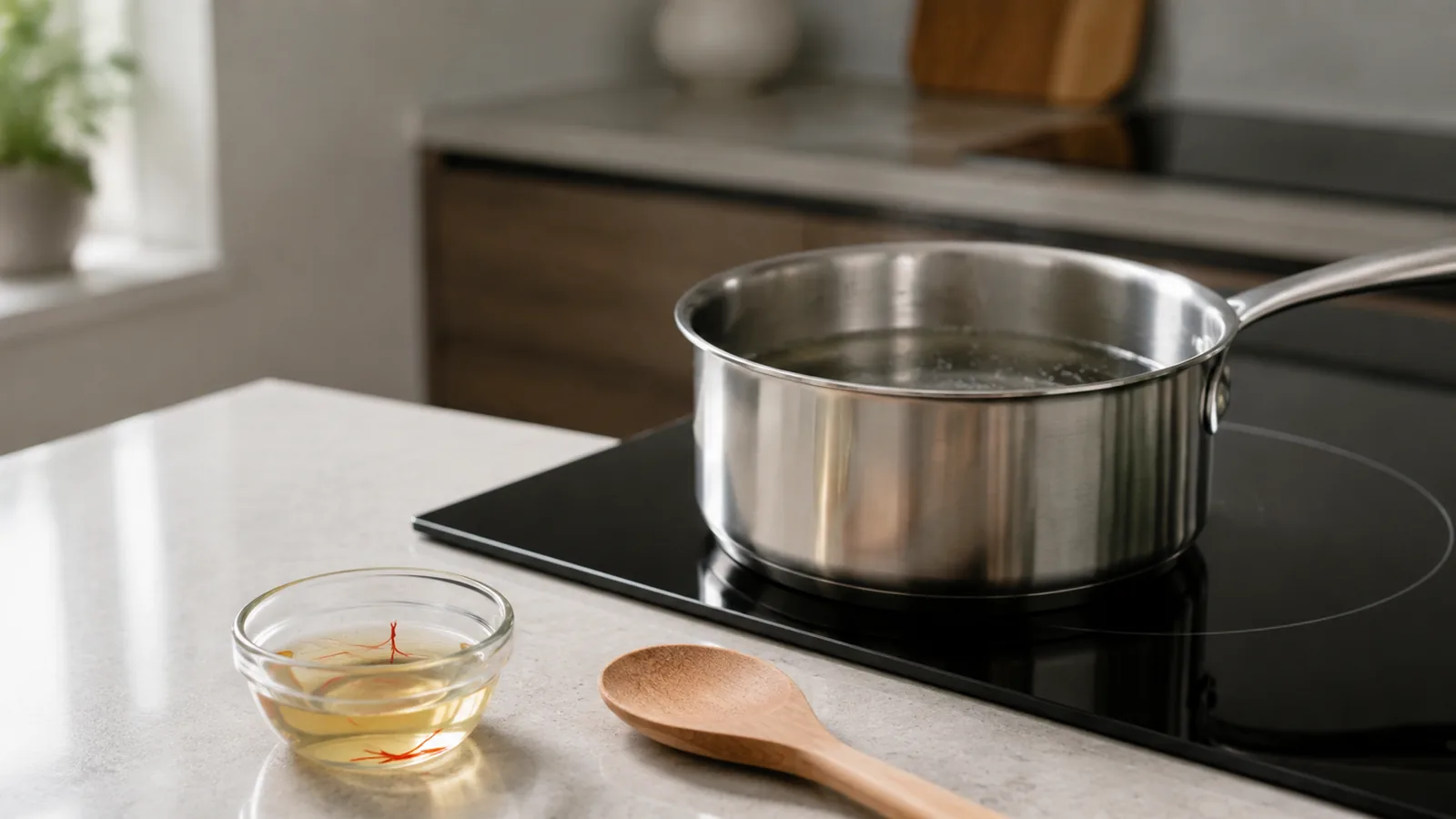
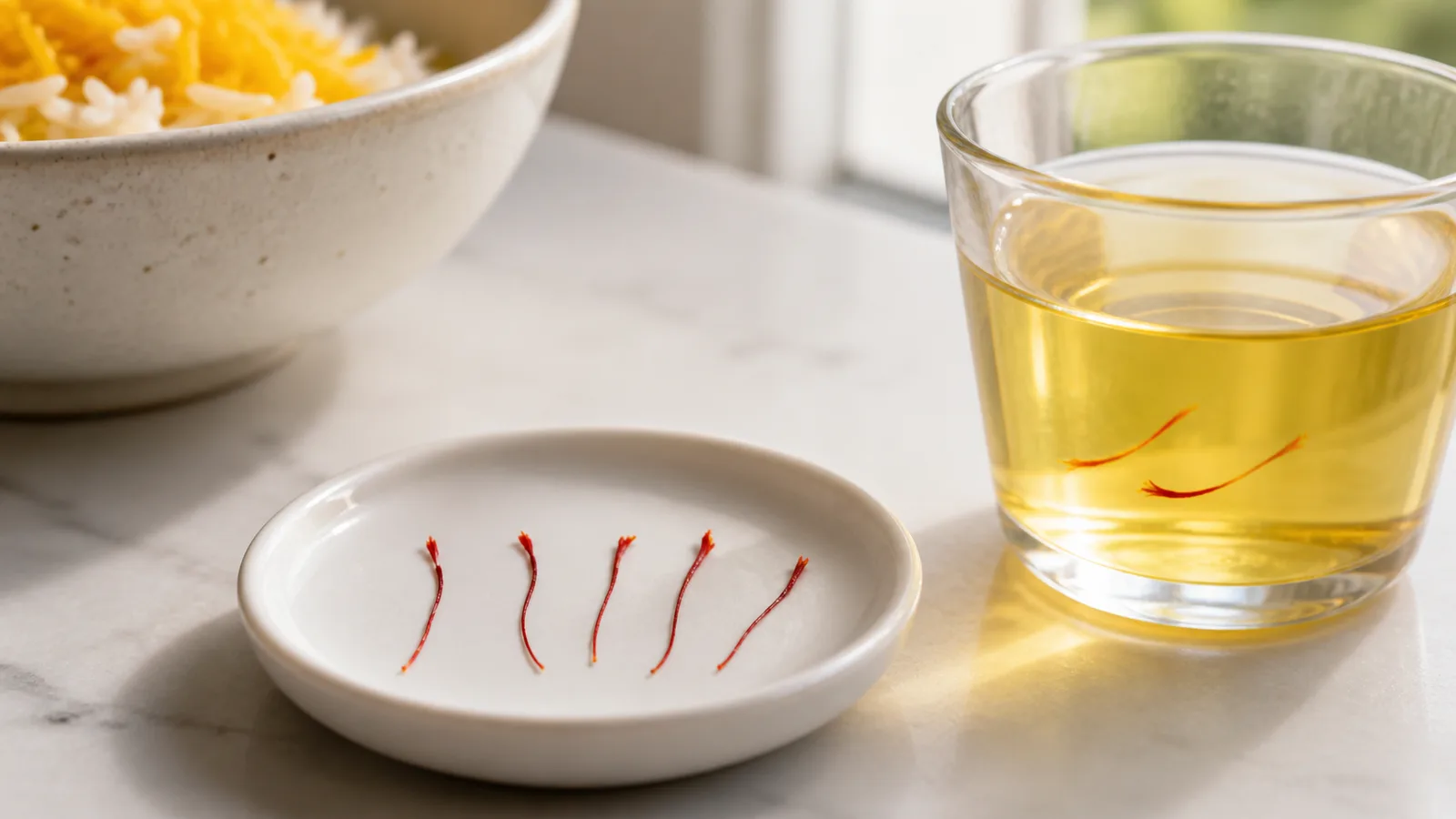
Red saffron consists predominantly of dried crimson stigma. The threads have an irregular shape and broaden at the end, a feature examined in a peer-reviewed microscopy study of saffron and look-alike adulterants. When bloomed, genuine threads gradually produce a transparent golden-yellow infusion with the characteristic saffron aroma and a mildly bitter taste.
A review of saffron’s principal compounds and commercial quality identifies the dried red stigmas as the commercial spice and explains that crocins, picrocrocin and safranal contribute to colour, taste and aroma. Their levels must be measured; redness in a photograph alone cannot establish grade.
Does Pale Style Have the Same Colour, Aroma and Flavour?
No. The pale style is part of the genuine saffron flower, but it is not equivalent to the red stigma by weight. A pack with a high proportion of pale style generally offers less colouring strength and a weaker sensory contribution than one dominated by red stigma.
That does not mean every thread with a small yellow base is fake. Some commercial forms deliberately retain part of the style, while all-red grades remove more of it. The useful question is not whether one pale tip exists, but how much of the pack is red stigma and whether the product meets the specification its seller claims.
Can You Cook With White Saffron?
If “white saffron” has been verified as the pale Crocus sativus style, it is plant tissue from the saffron flower, but it will not replace red stigma gram for gram for colour, aroma or flavour. A recipe developed for red saffron may taste flat if most of the material is pale style.
Do not cook with a mystery product solely because its common name contains “saffron” or “kesar.” Confirm that it is food-grade Crocus sativus from a traceable seller. This matters because unrelated plants can share confusing common names.
Price and Quality
All-red stigma commonly costs more than pale style because more sorting is required and the buyer receives a greater proportion of the valued spice tissue. Price still does not prove authenticity. Origin, harvest, drying, storage, laboratory grade, packaging and retail quantity all affect the final amount.
Use the current saffron pricing page for the seller’s actual offers rather than treating a general red-versus-white rule as a quotation. For quality checks, see how to recognise real saffron and the limits of home tests.
How to Choose Between Them
For cooking, choose food-grade saffron that is clearly identified as Crocus sativus and predominantly red stigma. If a seller offers “white saffron,” ask:
- Is this the pale style of Crocus sativus or another plant?
- What proportion of the product is red stigma?
- Is it sold as a culinary ingredient, and is testing information available?
- What colour, aroma and flavour strength should the buyer expect?
So, white saffron vs red saffron is not a contest between two equal varieties. Red stigma is the recognised culinary spice. “White saffron” needs clarification and, when it means pale style, supplies much less of what cooks normally buy saffron to provide.