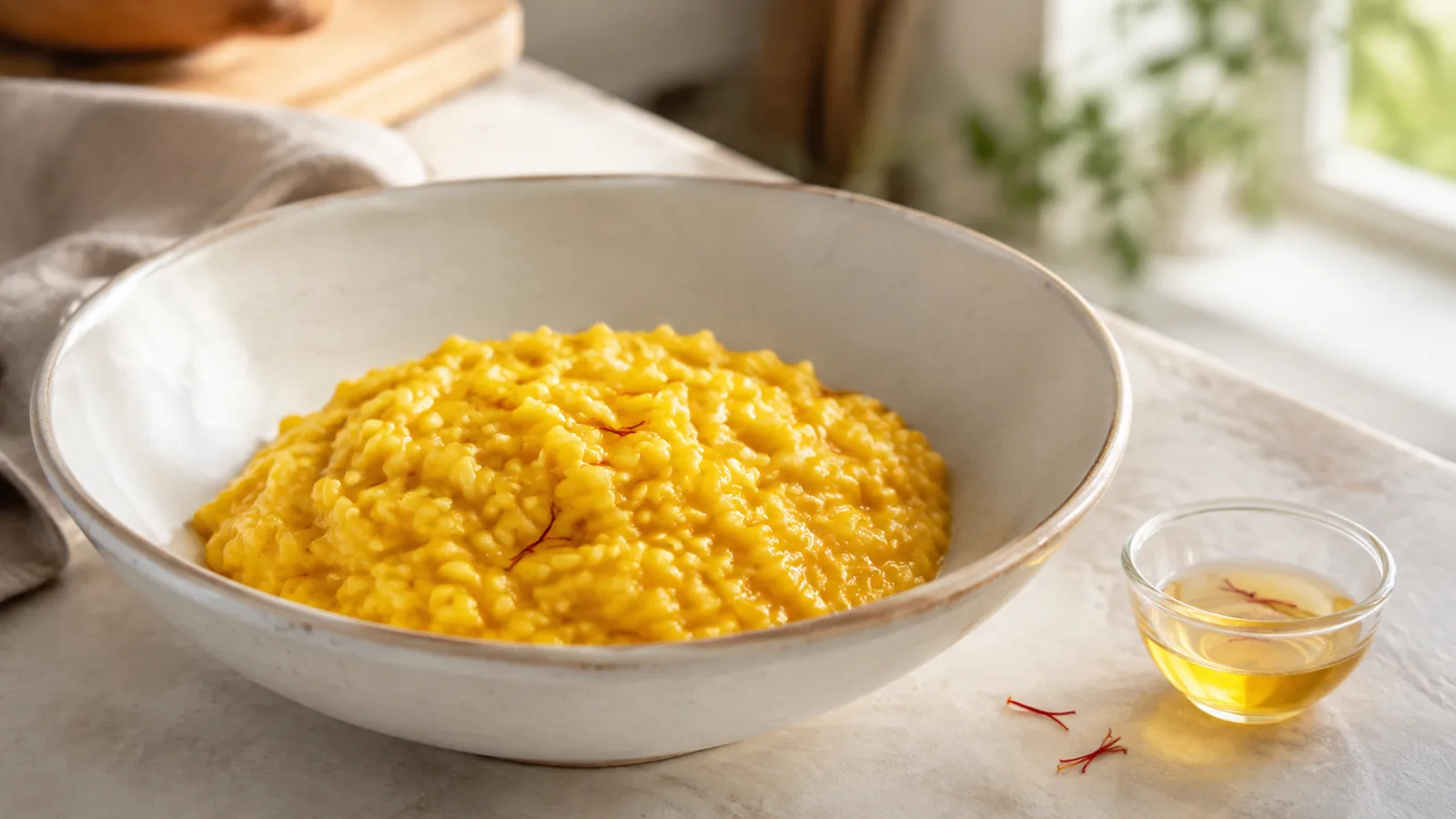
For a quick saffron infusion, use hot or comfortably warm water and keep the cup covered while it steeps. Cold water also works, but it needs much longer. The best saffron soaking method is therefore less about choosing one “correct” temperature and more about matching time and temperature to the dish.
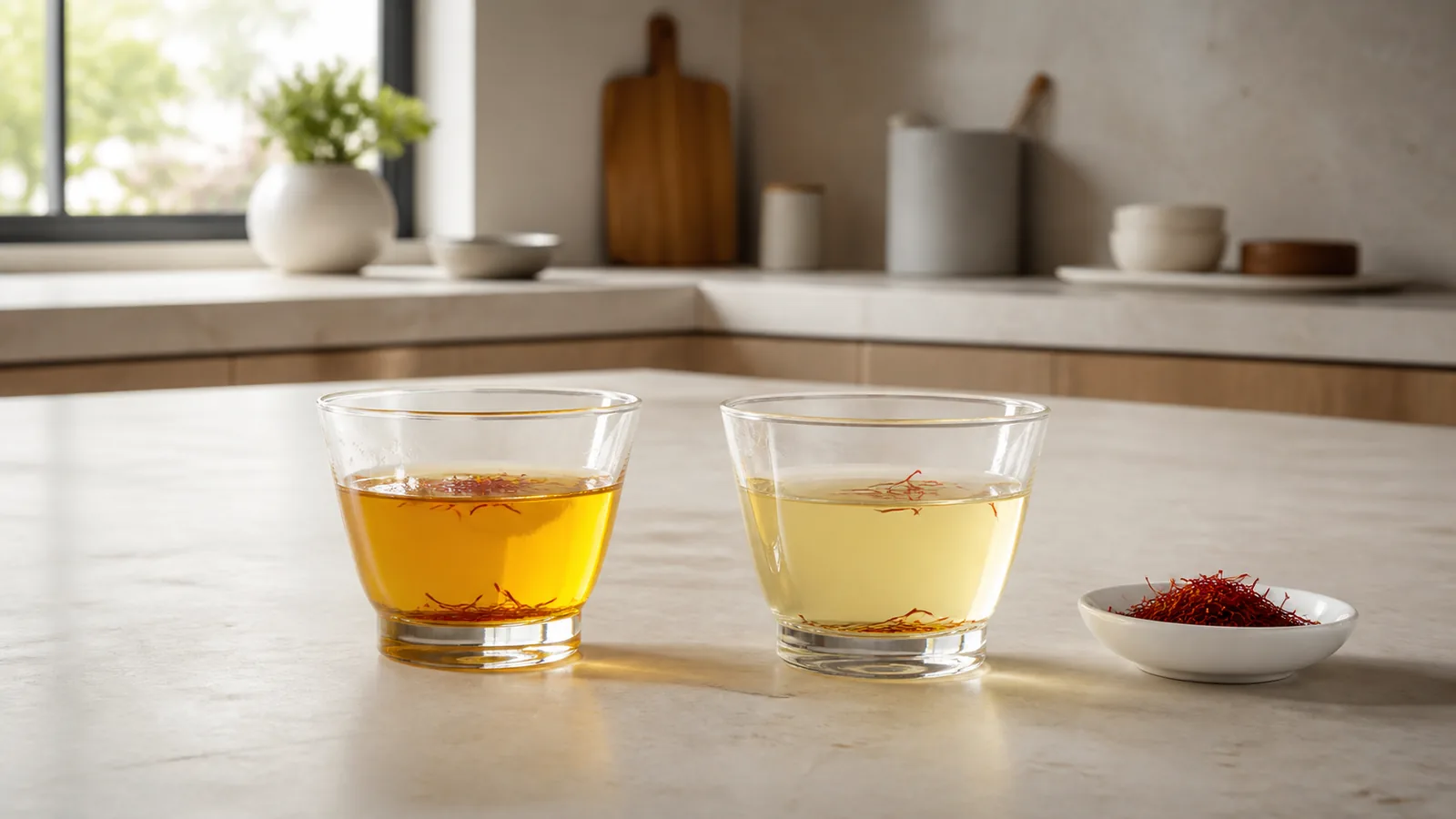
Best way to soak saffron: hot vs cold water
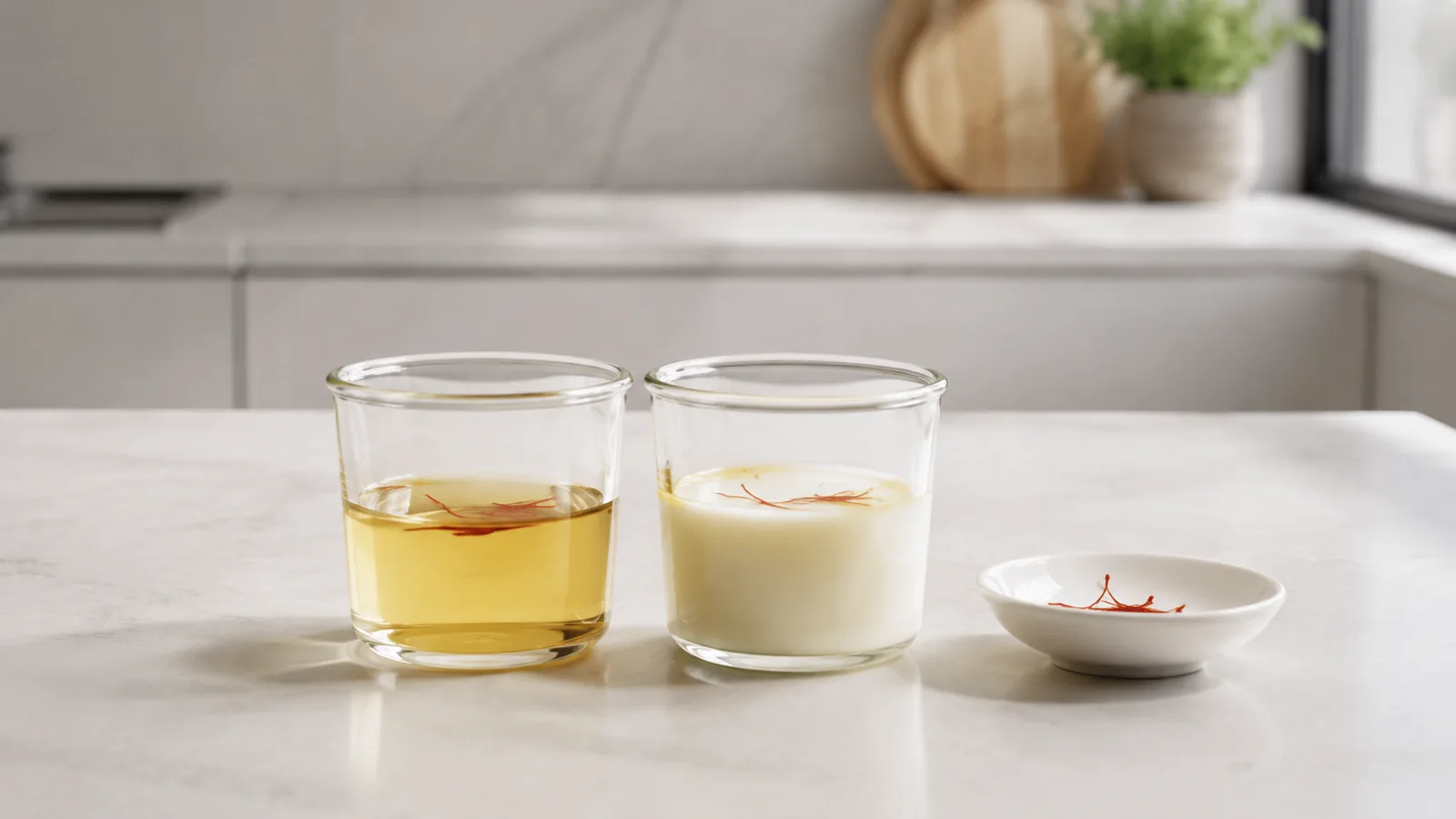
Should saffron be soaked in cold or hot water? Both methods work. Put another way, do you soak saffron in hot or cold water? Use warm or hot water when you want the colour and flavour within minutes; use cold water when you can prepare the infusion several hours ahead and refrigerate it.
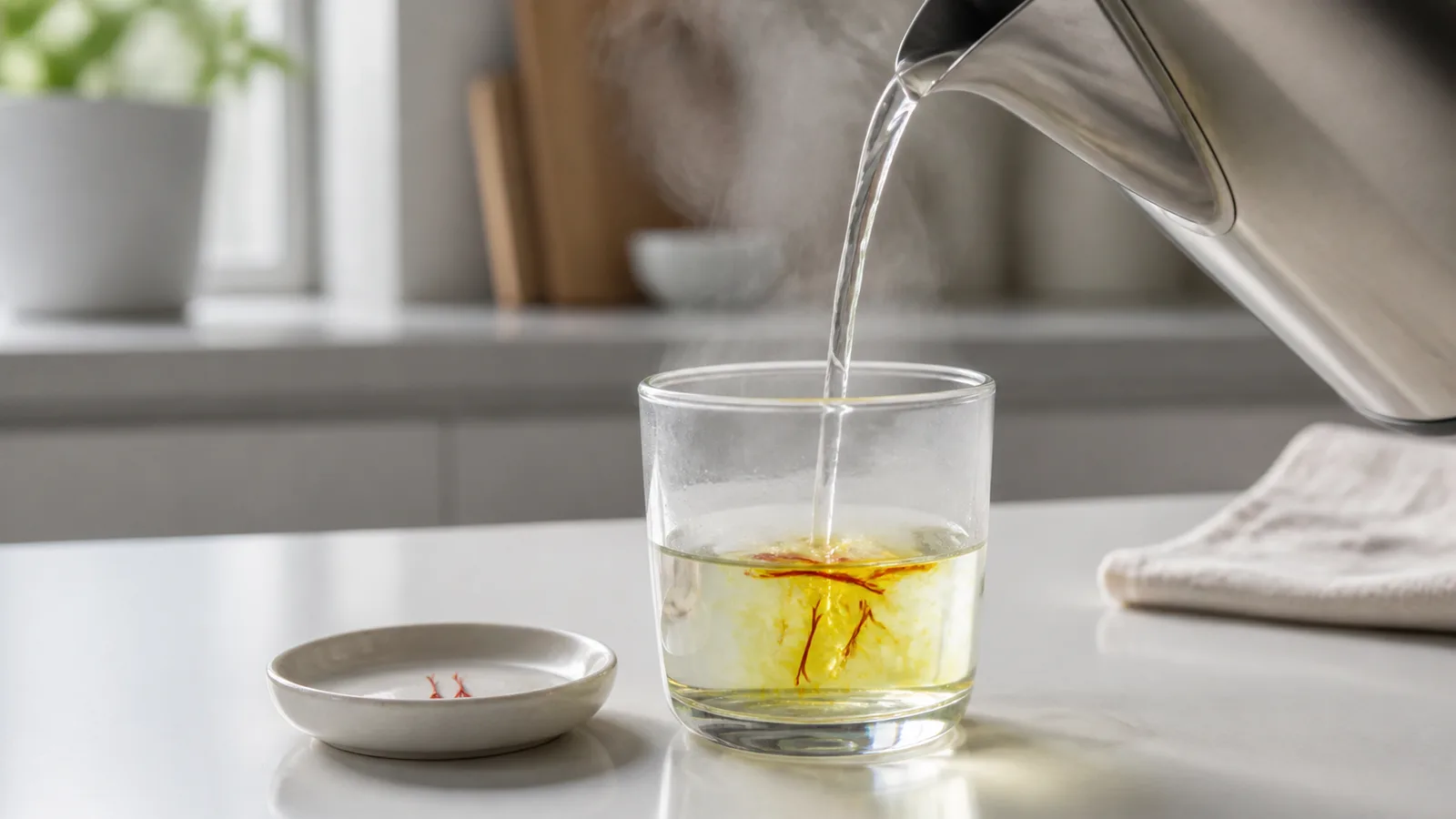
Neither method requires a rolling boil. Prolonged cooking can flatten delicate aromas, while water that is merely lukewarm may take longer than expected. For most recipes, pour hot water over lightly crushed threads, cover the vessel, wait 10–15 minutes, and add both the liquid and the saffron to the dish.
How to soak saffron in warm or hot water
- Measure the threads. Use the amount your recipe calls for rather than guessing from the strength of the colour.
- Crush them lightly. Press the threads in a small mortar or between clean fingertips. A coarse crush exposes more surface without turning the spice into an unrecognisable dust.
- Add hot water. Place the saffron in a small heatproof cup and pour in enough water to disperse through the recipe. The water may be hot, but it does not need to be actively boiling.
- Cover and wait. Let it steep for about 10–15 minutes. Covering helps retain aroma while the water turns golden.
- Use everything. Add the infusion and the softened threads unless the texture is unsuitable for the finished dish.
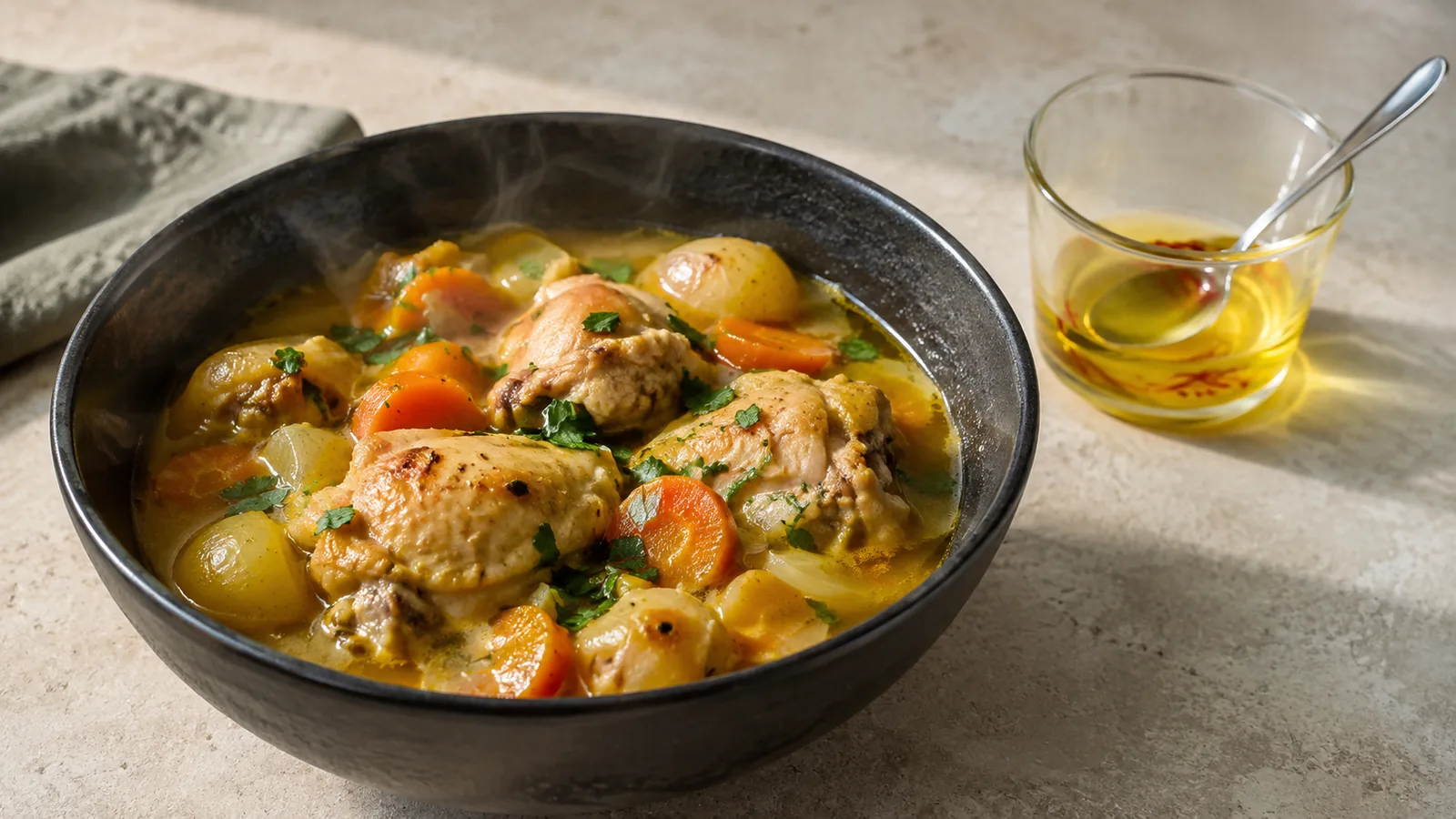
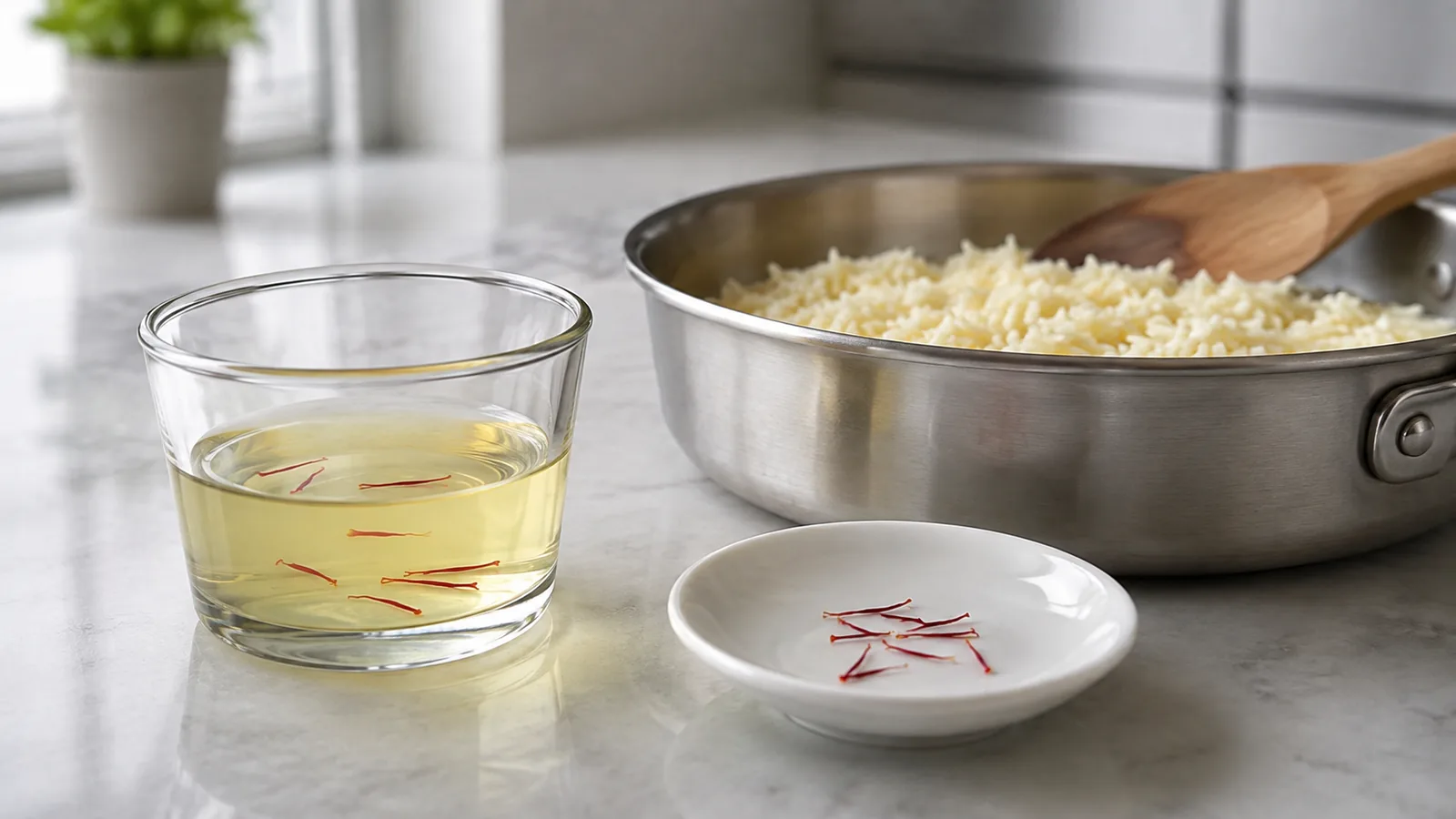
This approach is convenient for rice, soups, sauces, stews, and baking liquids. If the dish cooks for a long time, add the infusion at the point that makes sense for the recipe rather than repeatedly boiling it on its own. Our broader guide to using saffron in food explains how the infusion fits into different dishes.
Will hot water ruin saffron?
Would it be possible to steep saffron in hot water, or would that ruin it? Brief contact with hot water does not automatically ruin saffron. In one peer-reviewed study of saffron infusion preparation, water at 90°C extracted most of the measured crocetin sugar esters within five minutes and reached complete recovery under that test after ten minutes. Cold water recovered far less during the same short period.
That laboratory result is useful evidence about colour compounds, not a command to boil every recipe. Aroma, taste, dose, water volume, and the rest of the dish also matter. A covered cup and a short steep are sensible safeguards; simmering a few threads in a large uncovered pan for a long time is unnecessary.
So, can I put saffron in hot water? Yes. Hot water releases colour quickly, and a short covered infusion is unlikely to destroy the spice. If you have previously soaked saffron in warm water around 40–50°C for 10–15 minutes, that remains a gentle option—it will simply extract more slowly than hotter water.
Can I put saffron in cold water?
Yes. Saffron in cold water gradually releases colour and flavour, but a five-minute soak is too short. Allow several hours, keep the covered infusion in the refrigerator, and use it promptly. This can be convenient for chilled drinks, yogurt, desserts, or any recipe where a cool liquid is easier to incorporate.
Cold infusion is not automatically better or more delicate; it is simply slower. If the liquid is still pale after a short wait, the spice may need more time rather than more threads. Lightly crushing the saffron before soaking helps either method.
A slower warm-water method
There is also a middle path. The Royal Horticultural Society’s saffron preparation advice recommends warm water in a covered porcelain cup and an overnight infusion. That long, gentle method is useful when you plan ahead.
It does not mean every saffron dish must wait overnight. The scientific hot-water test and the RHS kitchen guidance use different conditions and answer different questions. Together they show the basic trade-off: hotter water works faster, while cooler water needs more time.
Is saffron hot or cold for the body?
Searches such as “saffron hot or cold,” “saffron heat or cold,” and “is kesar hot or cold” often refer to traditional systems of food classification, not the temperature of the soaking water. Kesar is another name for saffron. Traditional descriptions usually place it in the warming category. That is the context behind wordings such as “kesar is hot or cold” or “saffron is heat or cold”; neither phrase is a scientific measure, serving temperature, or modern medical diagnosis.
Whether saffron is called “hot” in that traditional sense does not decide whether you should infuse it in hot or cold water. It also does not establish a health benefit, treatment, or safe medicinal dose. For cooking, choose the infusion method by extraction time and the needs of the recipe. Anyone using a concentrated saffron supplement or managing a medical condition should follow qualified clinical advice rather than a hot-versus-cold label.
Common saffron-soaking mistakes
- Using too much liquid: a very dilute infusion is harder to fit into a recipe without changing its texture.
- Leaving the cup uncovered: cover it while steeping to retain aroma.
- Expecting cold water to work in minutes: refrigerate it and allow several hours.
- Boiling the infusion for a long time: a short steep is enough; extended separate cooking adds no useful control.
- Discarding the threads automatically: the softened saffron can usually go into the dish with its liquid.
- Judging quality by colour alone: dyed substitutes can release colour too. Check thread shape, aroma, packaging, and seller information together.
If an infusion behaves strangely, begin by checking the spice itself. Our guide to telling real saffron from fake saffron explains why one water test cannot prove authenticity.
Which soaking method should you choose?
Choose hot or warm water when you need saffron soon; 10–15 minutes in a covered cup is a practical starting point. Choose cold water when the recipe is chilled and you can infuse the threads for several hours in the refrigerator. Choose a longer warm-water steep when you can prepare it well in advance.
The colour should develop from golden yellow toward orange as the infusion strengthens, not become an opaque red dye bath immediately. Add both the liquid and threads, taste the finished dish, and adjust the next batch rather than trying to force every recipe into one rigid temperature rule.