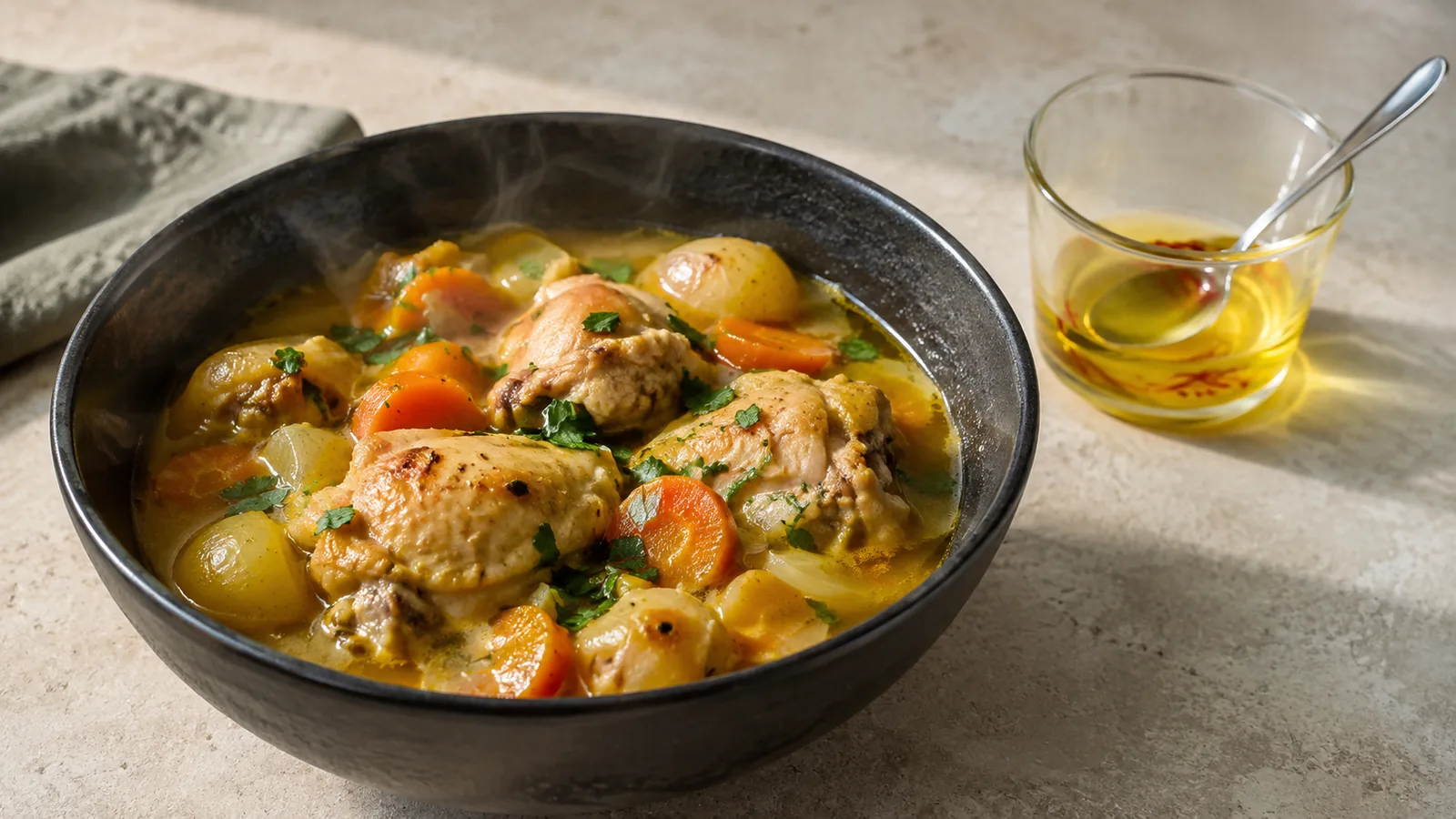
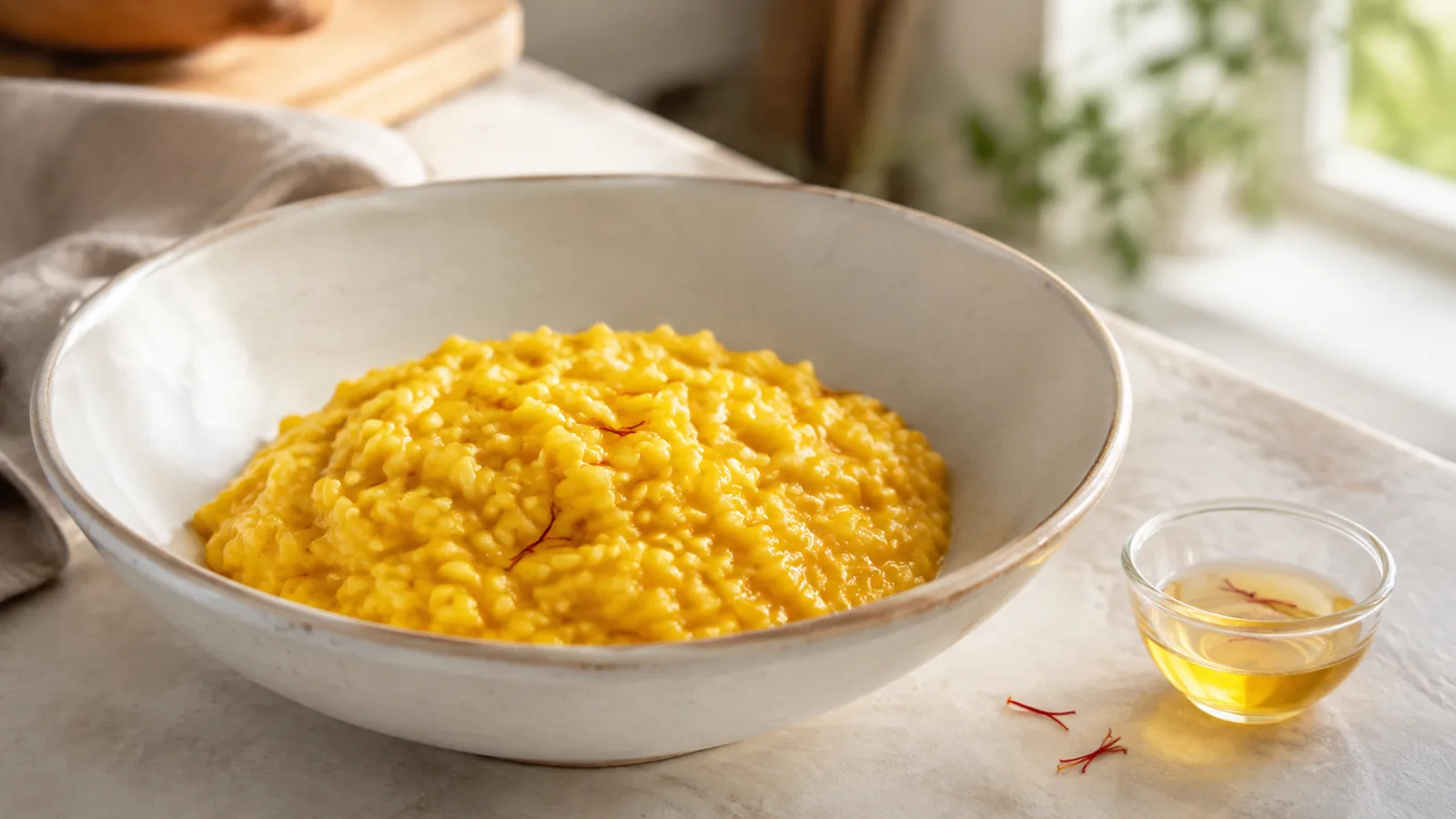
No, saffron does not always need to be soaked before cooking. Soaking saffron before cooking is a reliable way to distribute its color, flavor and aroma, but direct addition can work when the dish already contains enough warm liquid and time for the threads to infuse.
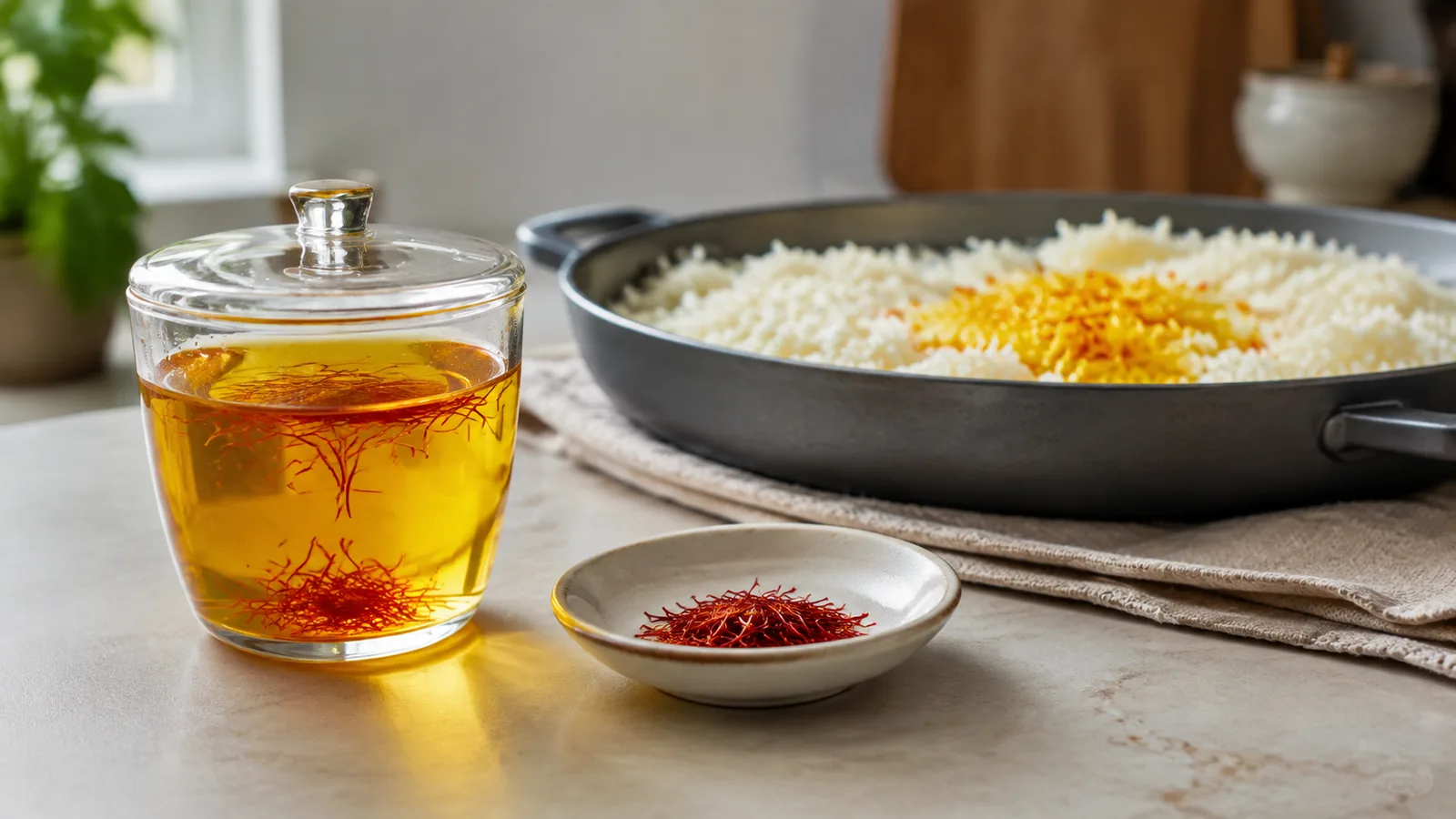
When soaking saffron is worth doing
Bloom saffron separately when you want control. A small cup lets you see the colour develop, smell the infusion and spread it through a large dish without leaving one intensely flavoured patch. It is especially useful for:
- rice that needs an even golden layer;
- a pale sauce where streaks would be obvious;
- cold drinks or desserts that offer little extraction time;
- a long-cooked dish where you want to add saffron later; and
- an unfamiliar recipe in which you want to judge the spice before mixing it in.
Soaking is less important when saffron will already sit in warm broth, milk or another moist ingredient for long enough to release. The method serves the recipe; it is not a ritual that “activates” the spice.
When you can add saffron directly
Direct addition works in a soup, sauce, stew or rice dish with sufficient liquid and cooking time. Crush the threads lightly first, scatter them evenly and stir. Avoid dropping a tight clump into one spot.
A few visible threads may also be used as a garnish, but garnish is not the same as extraction. Dry threads added at the final second can taste sharply bitter when bitten and contribute little colour to the rest of the food.
For a broad method covering both choices, read how to use pure saffron in cooking.
Why bloom saffron in warm water before cooking?
Saffron contains several groups of compounds. Water-soluble crocins provide much of its golden colour, picrocrocin contributes bitterness, and volatile compounds including safranal help shape its aroma. Light crushing exposes more of the thread, while warm liquid gives these components a head start before the saffron enters the full dish.
A 2024 experiment studied saffron infusion at different temperatures and times in water, oil and mixed systems. Measured crocin enrichment in water was strongest at 60°C after 20 minutes and declined at higher temperatures or longer exposure. Other components behaved differently, and the medium mattered.
That research does not make 60°C and 20 minutes compulsory for every kitchen. It does show why the saffron bloom in warm water before cooking recommendation is sensible: moderate warmth and a short rest can extract effectively without a prolonged hard boil.
How to soak saffron before cooking
- Measure a modest amount. Follow the recipe when possible; otherwise, start with a small pinch.
- Crush the threads lightly. Use a clean dry mortar and pestle to make short pieces, not an unrecognisable powder.
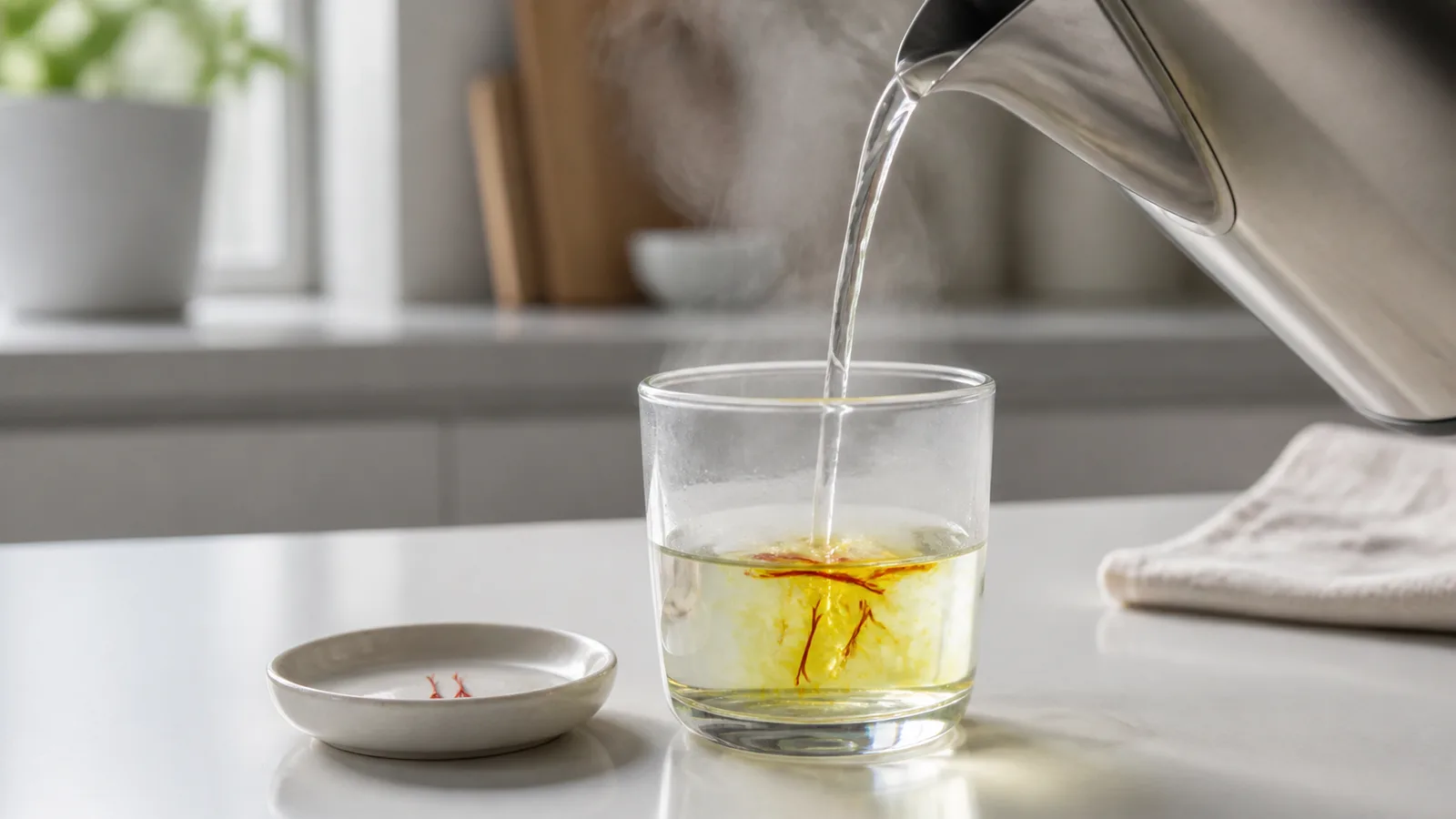
- Add a little warm liquid. Water is neutral. Milk or broth can work when it belongs in the dish.
- Cover for 10 to 15 minutes. The infusion should turn golden and fragrant. Slightly longer is fine if the threads were whole or the liquid was cooler.
- Add everything. Pour in the saffron water and softened threads, then stir or distribute them according to the recipe.
Use a small cup rather than a full mug. A concentrated infusion is easier to add without changing the food’s intended liquid ratio.
Does saffron dissolve in hot water?
Does saffron dissolve in water? Not completely. Saffron in hot water releases soluble compounds into the liquid, but the plant fibres remain. The threads soften and may fade somewhat while visible red material stays in the cup.
This is normal for real saffron. Salt-like disappearance is not required, and release speed alone cannot establish authenticity. Added colour can produce an instant bright result, while genuine saffron varies with dose, freshness, temperature, thread size and time.
For the detailed distinction between extraction and dissolving, see why saffron is soaked in water.
Warm water, milk or broth?
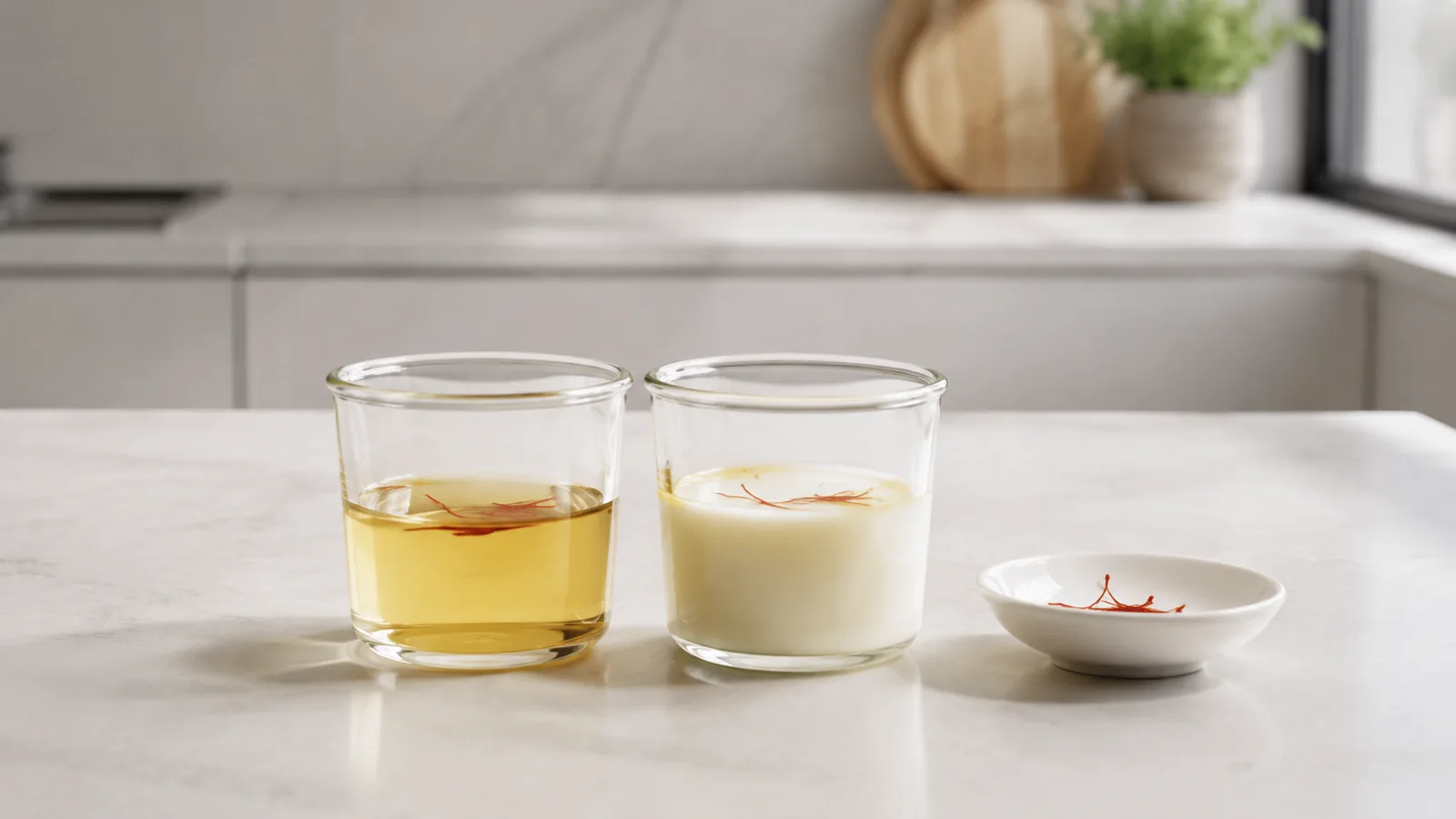
Warm water is the safest all-purpose choice because it introduces little flavour and suits sweet or savoury food. Milk works for custards, puddings and drinks. Broth works in soups, risotto and stews when its seasoning belongs in the final dish.
Do not assume cold liquid “will not work.” It generally works more slowly. Nor is boiling required. Choose a temperature that suits the time available and the recipe; the comparison of cold and hot water for soaking saffron explains the trade-offs.
When to add the infusion
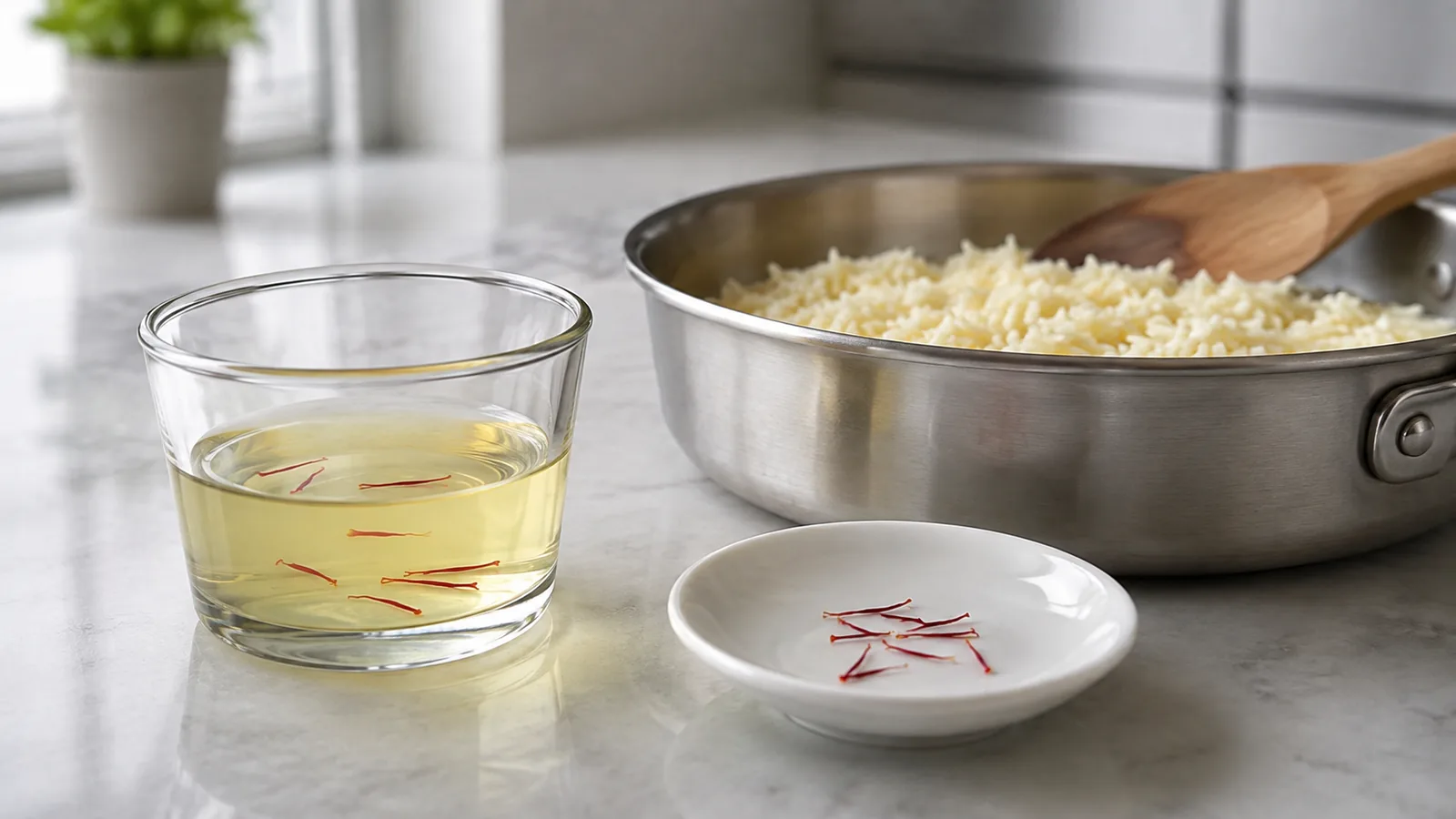
- Rice: add it with the measured cooking liquid for even colour, or mix it into part of the cooked rice for a separate golden layer.
- Soup or a short-cooked sauce: stir it in once the liquid base is ready and give it several minutes to spread.
- Stew: add it during the later stage of a long simmer, not automatically at the beginning.
- Custard or pudding: infuse part of the recipe’s milk, then follow the recipe’s egg and thickening sequence.
- Cold drink: prepare a concentrated warm infusion, cool it safely, then combine it with the chilled ingredients.
Brief moist cooking will not instantly ruin saffron. What deserves caution is unnecessary prolonged boiling or dry-frying on a hot surface. The article on heat effects on saffron covers that distinction.
What soaking improves—and what it does not
Soaking improves control and distribution. It can help a small amount colour a larger area and keeps dry threads from clustering. It also gives you a chance to notice the ingredient’s aroma before other food masks it.
It does not guarantee that the saffron is pure, turn poor saffron into good saffron, or ensure “maximum” flavour under every condition. It does not make a culinary amount medically effective. Those are separate questions that a cup of warm water cannot answer.
Common mistakes
- Calling soaking mandatory: direct addition is valid in the right moist dish.
- Using too much liquid: a weak bloom may disturb the recipe without improving extraction.
- Grinding to dust without knowing the source: powder is harder to assess visually.
- Boiling the small infusion for a long time: heat is not a substitute for a light crush and adequate rest.
- Discarding the threads automatically: they are edible and usually belong in the dish.
- Expecting identical colour every time: saffron, water, dose, storage and food all vary.
Questions about soaking before cooking
How long should saffron soak in water?
Ten to 15 minutes in warm water is a practical starting point. Whole threads or cooler liquid may need longer. Judge the fragrant golden infusion as well as the clock.
Can I put saffron straight into rice?
Yes. It can extract in the rice’s hot liquid, although a separate bloom makes even distribution easier and protects the measured water ratio.
Should soaked saffron be strained?
Usually not. Add the softened threads with the liquid. Strain only when a perfectly smooth sauce or drink requires it.
Can I prepare saffron water in advance?
It is best prepared close to cooking. If you must make it ahead, use clean utensils, cover it, refrigerate it promptly and use it soon rather than leaving it at room temperature.
The decision in one sentence
Soak saffron when you want even color, flavor and aroma or need to control a late addition; add it directly when a moist dish already provides enough extraction time. Either method can work when it fits the recipe.
You can browse our saffron products or ask about using saffron in a specific dish.