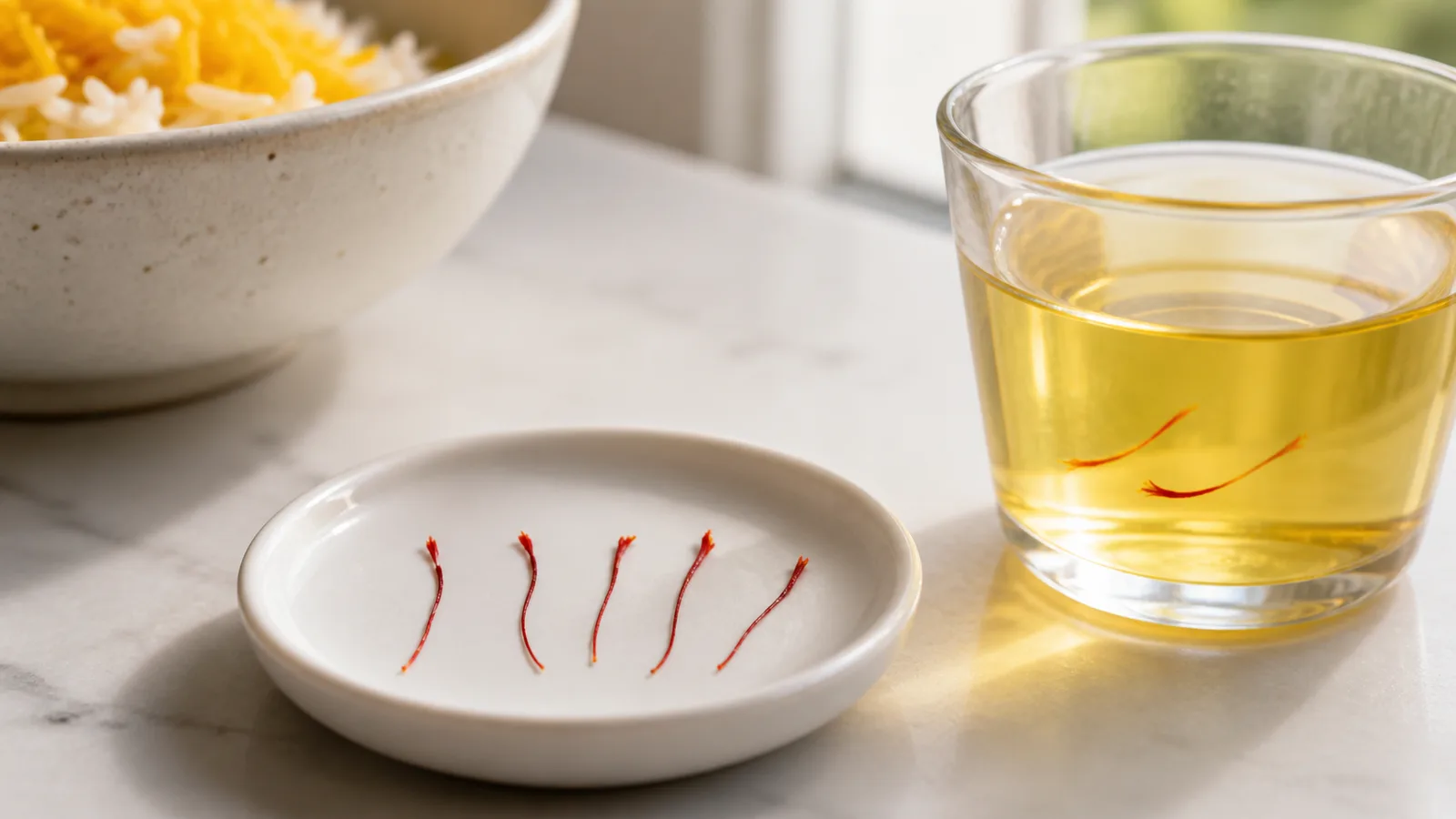
Yes, saffron can go bad, although quality loss is more common than obvious spoilage. Old saffron gradually loses aroma, flavour, and colouring strength. If it becomes damp, mouldy, infested, or develops an unusual odour, discard it rather than treating age as the only concern.
Saffron shelf life: how long does saffron last?
There is no single shelf life that applies to every jar. Whole threads often retain useful quality for roughly two to three years when they are packaged well and kept cool, dark, and dry. That range is a practical rule of thumb, not a guarantee or a universal expiry date. The original packaging, processing, moisture level, opening date, and storage conditions all matter.
Ground saffron usually loses aroma faster because more surface area is exposed to air. A small, frequently opened container may also fade sooner than a sealed package. Buy an amount you can reasonably use, and follow any storage instructions or date supplied by the producer.
Does saffron expire on the date printed on the package?
A saffron expiry date and a best-before date are not interchangeable. The Canadian Food Inspection Agency’s date-label guidance explains that a best-before date describes the expected quality of a properly stored, unopened product; it is not a food-safety guarantee before or after that date. Once a package has been opened, its useful life may be shorter.
For saffron, the printed date is a useful starting point. Also consider when the container was opened and how it was stored. If your label specifically gives an expiry or use-by instruction, follow the wording on that product rather than replacing it with a general internet estimate.
What changes when saffron gets old?
First, its aroma becomes faint
Fresh, well-kept threads should have a noticeable characteristic fragrance when the container is opened. With time, volatile aroma compounds decline. A jar that smells flat may still be dry and free of visible spoilage, but it will contribute less to a recipe.
Then colour and flavour weaken
An infusion made from older threads may take longer to develop and may look paler than expected. The taste can become less defined. This is a quality problem: adding more weak saffron may increase cost without restoring the balance of a fresher batch.
Moisture creates a different problem
Dry spices are not immune to deterioration. The FDA’s laboratory manual notes that storage fungi can grow in spices under favourable temperature and humidity conditions, and that pockets of moisture can promote mould. This is why the old blanket statement “saffron will never become unsafe” is not a sound rule.
Signs that saffron should be discarded
Do not use the saffron if you find visible mould, damp clumps that cannot be explained by normal compression, insects or webbing, a water-damaged container, or an odour that is musty or otherwise unlike the spice. Discard it as well if the product is subject to a recall or if the package has been compromised and its history is uncertain.
A faded aroma alone usually signals lost quality rather than proving contamination. Likewise, rubbing threads between your fingers is not a complete safety or authenticity test. It can tell you something about aroma, but it cannot rule out moisture damage, adulteration, or microbial contamination.
How to keep saffron fresh for longer
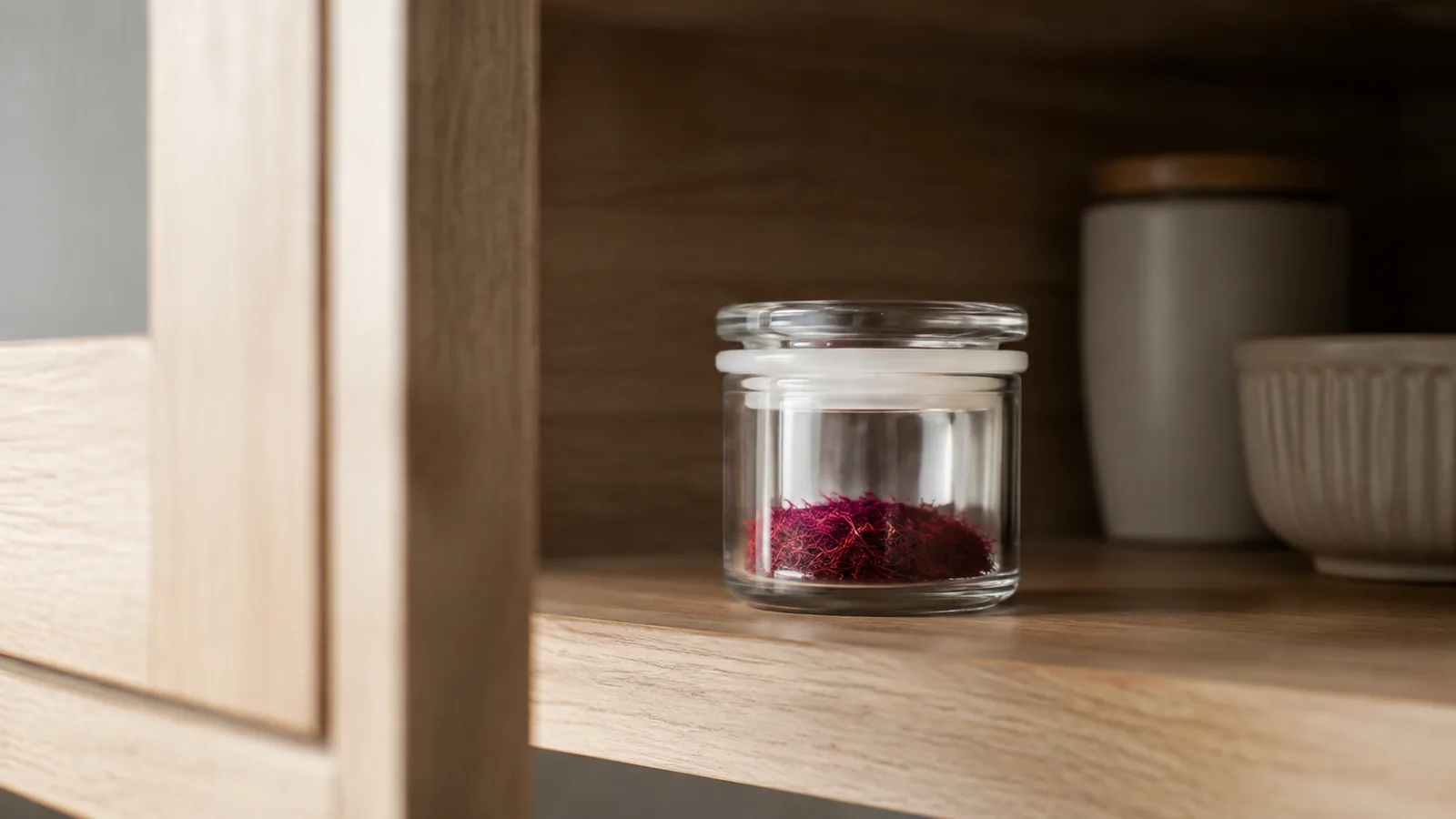
Transfer the threads to a clean, dry, airtight container if the original package cannot be resealed. A small container limits the amount of air inside. Keep it in a dark cupboard away from direct sunlight and from the cooker, dishwasher, or kettle. Open it only as long as needed, and use a dry utensil.
Room-temperature cupboard storage is usually simpler than refrigeration because repeated trips in and out of a cold environment can introduce condensation. If your climate or package instructions call for refrigeration, keep the saffron thoroughly sealed and allow the closed container to reach room temperature before opening it. Our detailed guide to the best methods for storing saffron covers containers, light, heat, and humidity; the separate refrigerator guide explains the condensation trade-off.
How to check whether old saffron still has culinary value
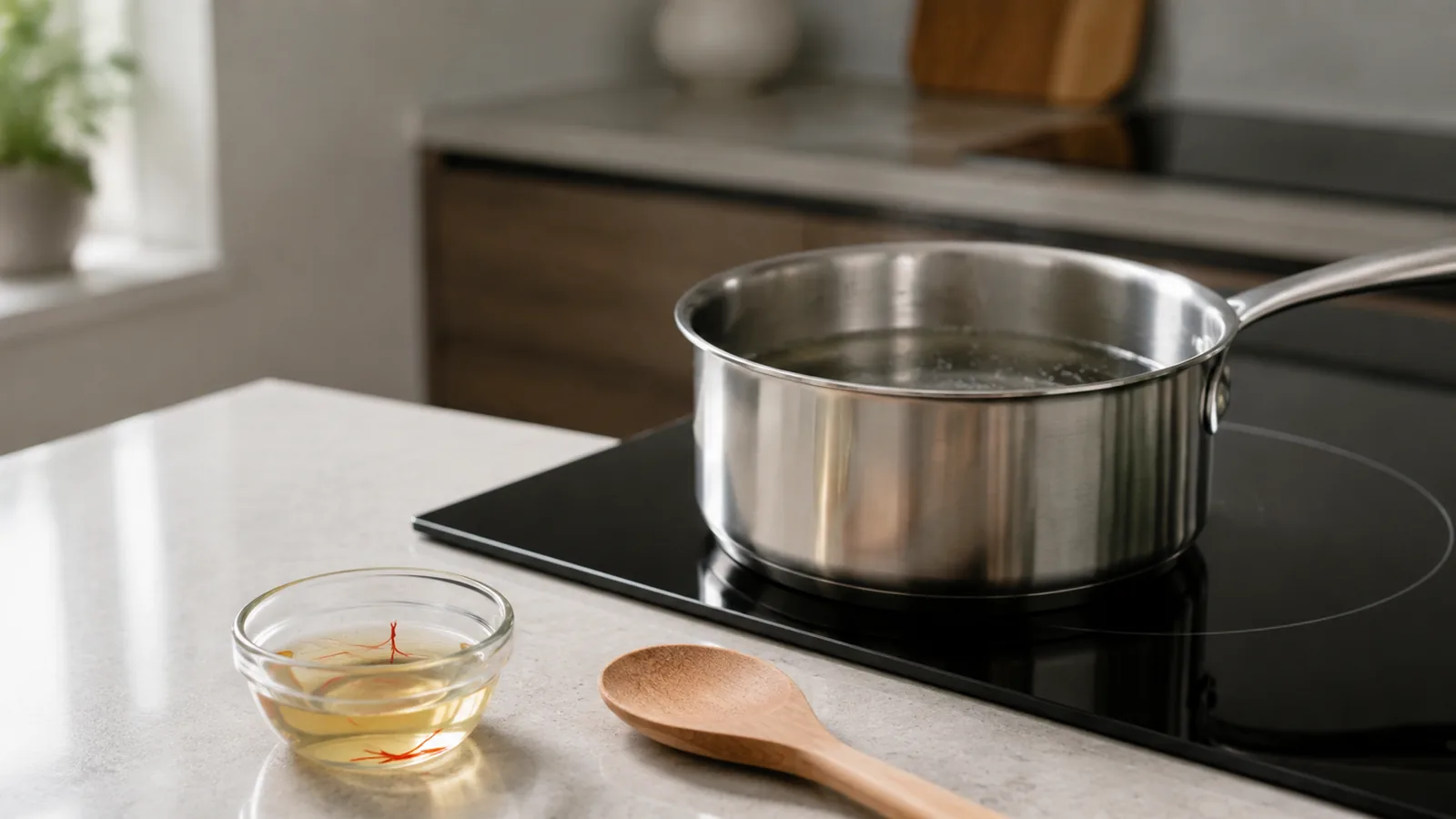
Inspect the dry threads first. If there are no discard signs, crush a small measured pinch and steep it in warm water. Compare the aroma, colour release, and taste with what you normally expect. A weak infusion suggests that the saffron has passed its prime, but it is not a stand-alone authenticity test.
If the threads are simply old and faint, using them sooner in a strongly saffron-focused dish may be reasonable. Do not try to rescue damp or mouldy material by drying, heating, or mixing it into food. For the broader distinction between quality dates, deterioration, and safety, see whether pure saffron expires.
Can saffron go bad even when it looks normal?
It can lose much of its aroma and colouring power without a dramatic visual change. That is why storage history and a small controlled infusion are more informative than colour alone. “Does kesar expire?” has the same answer: the spice may remain dry for a long time, but its sensory quality declines, and poor storage can create reasons to discard it.
When replacing a tired jar, choose a quantity that fits your cooking habits. The current Sargol saffron listing shows available pack sizes, so the purchase can be matched to likely use rather than stored indefinitely.