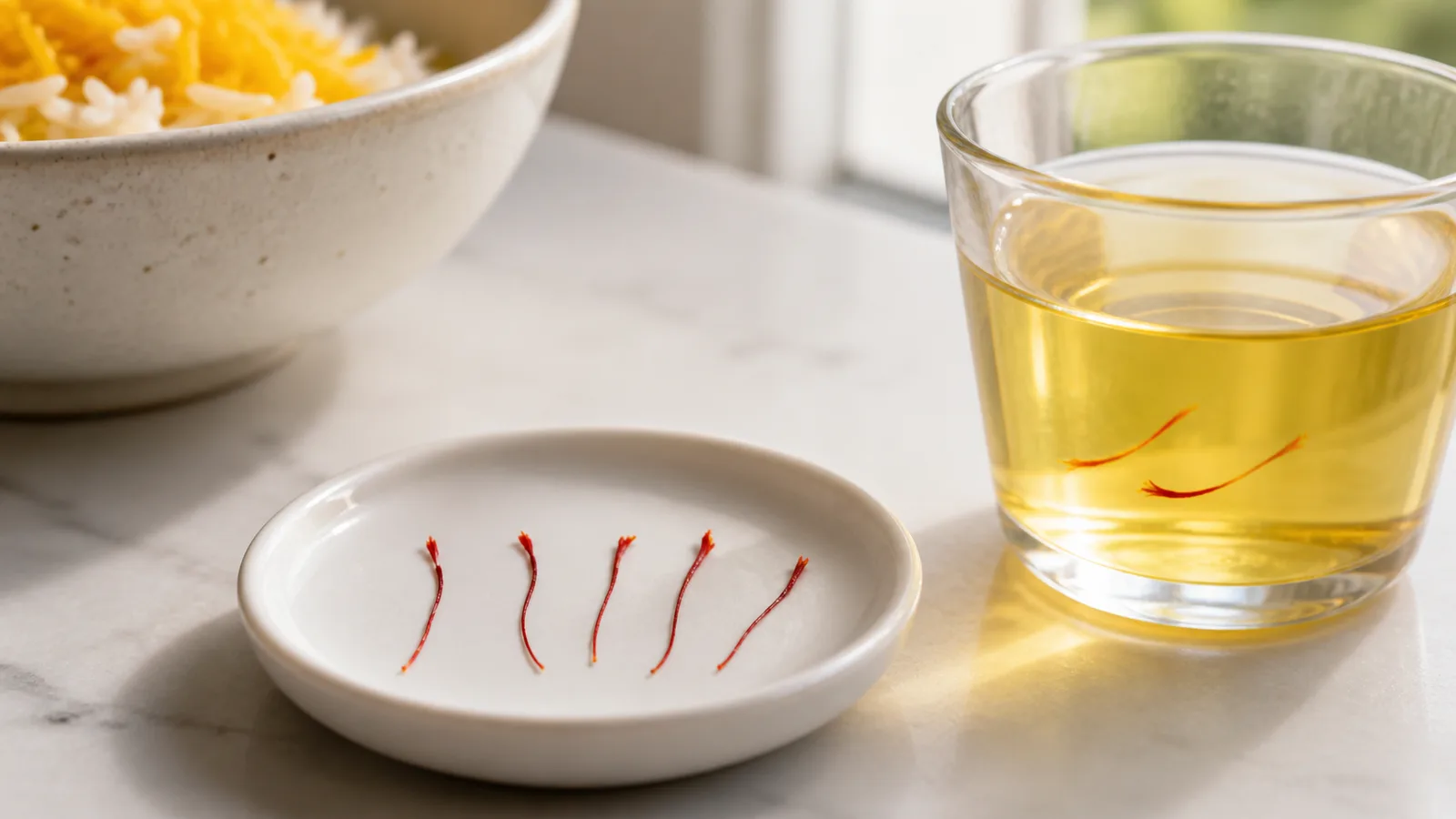
Yes, you can make your own saffron by growing true Crocus sativus, harvesting the three red stigmas from each flower, drying them, and storing the finished threads correctly. Growing saffron at home is realistic on a small scale, but one pot produces a personal harvest rather than a commercial jarful.
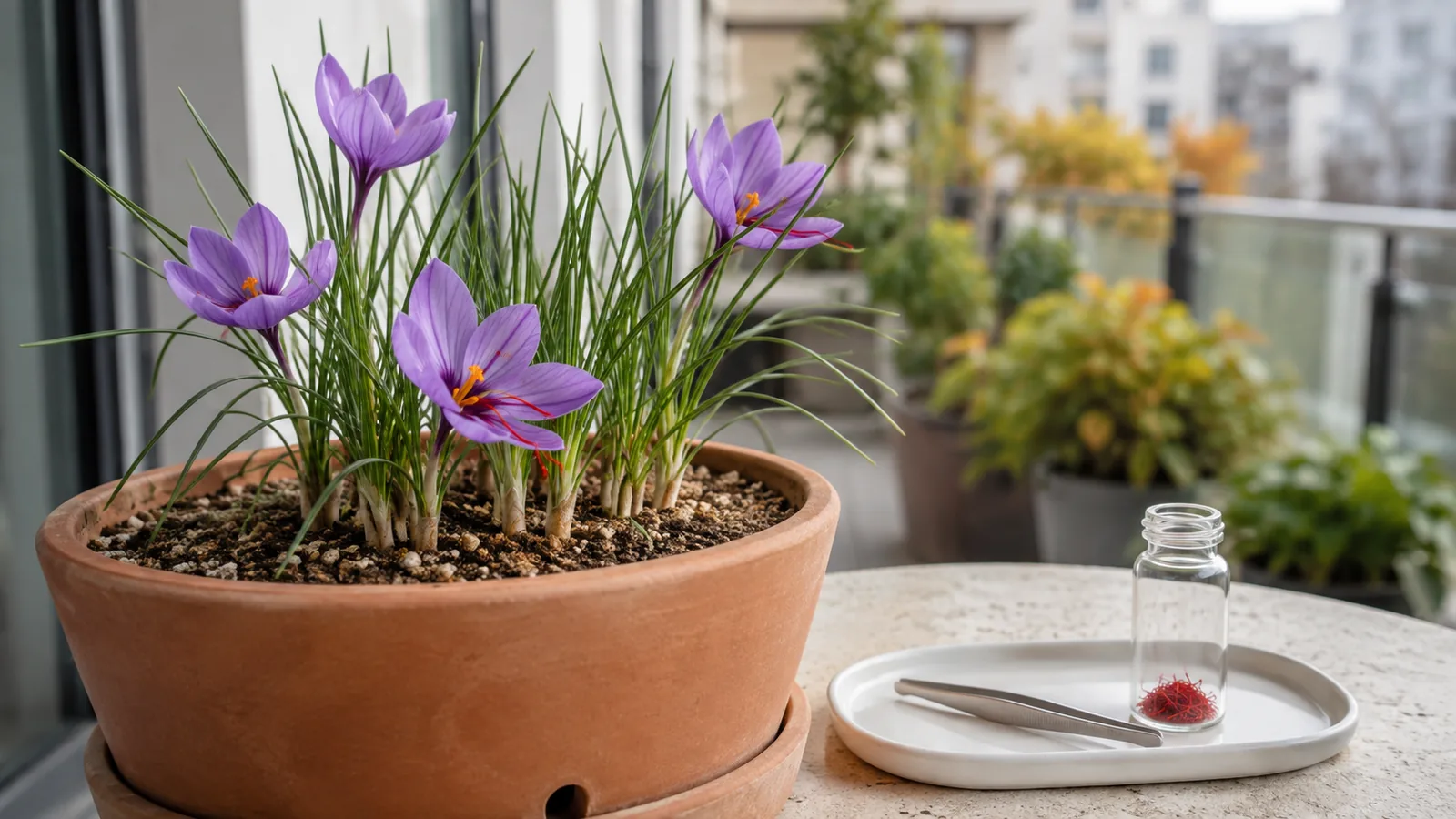
What does “making your own saffron” mean?
Saffron is a plant part, not a spice blend that can be copied from kitchen ingredients. The culinary threads are the dried red stigma branches of the saffron crocus. Purple petals, yellow stamens, coloured fibres, and other flowers do not become saffron when dried or mixed together.
Each Crocus sativus flower has three red stigmas. Making homegrown saffron therefore means completing a short chain carefully: identify the right plant, grow it to flower, separate only those stigmas, dry them fully, and keep them away from light and moisture.
Choose a growing method that suits your home
A sunny, freely draining garden bed is the simplest option where the climate and soil suit saffron. Containers are useful when the ground stays wet, space is limited, or the corms need seasonal protection. Indoor growing can work too, but the pot needs strong light and a real seasonal cycle rather than constant warmth.
The Royal Horticultural Society recommends a bright, sunny site with rich but well-drained soil in its saffron growing guide. Its Crocus sativus profile describes neutral-to-alkaline soil. The growing guide advises planting corms in late summer, about 10–15 cm (4–6 in) deep and around 10 cm (4 in) apart.
If a container will live under cover, our detailed guide to growing saffron inside a house explains light, drainage, watering, dormancy, and no-flower troubleshooting.
Plan for the plant’s seasonal timetable
Plant firm saffron corms in late summer. Mature corms may flower in autumn that year, although first-year flowers can be later or sparse. After flowering, narrow leaves continue growing and feeding replacement corms. Let them yellow naturally in late spring; cutting green foliage early can weaken a future crop.
The plant then rests. A dormant summer pot is not dead simply because no leaves are showing. Keep it on the dry side and mark the container so it is not watered like an active houseplant or discarded as empty.
Healthy corms multiply underground over time. That can give a fuller display in later seasons, but crowded clumps eventually need dividing. No seller can responsibly guarantee a fixed number of flowers from every corm because size, maturity, site, weather, and care all matter.
From flower to a small home batch
- Confirm the plant. Use labelled Crocus sativus from a reputable supplier. Do not rely on the loose name “autumn crocus.”
- Pick clean flowers. Harvest as flowers begin to open, after rain or dew has dried, and handle them in a shallow clean tray.
- Separate the stigmas. Open each bloom and remove the three long red branches with clean fingers or tweezers. Leave out petals and yellow stamens.
- Dry the threads. Spread them in a sparse single layer. Use a documented air-drying or controlled low-batch method; do not leave damp stigmas in a heap.
- Cool and store. Put fully dry, room-temperature threads in a small airtight container away from heat, steam, sunlight, and strong odours.
Penn State Extension describes container growing and home air-drying in its guide to producing your own saffron. For exact picking, drying, hygiene, and storage details, use our separate step-by-step article on harvesting saffron at home.
How much saffron can you make?
A first home harvest is usually measured in threads, not grams. The RHS estimates about 150 flowers for 1 g of dry saffron. A container with a handful of flowers may yield enough for one modest dish or infusion. That small yield is normal, and it is still a useful way to learn how genuine saffron looks and smells.
At commercial scale, a practical planning range is roughly 150,000 to 200,000 flowers for 1 kg, with published estimates varying by grade and production conditions. The comparison in our article on saffron flower yield explains those differences.
Do not estimate future income by multiplying a claimed flowers-per-corm figure by a retail jar price. Some corms will not flower, harvest weight falls during drying, and retail price includes testing, packaging, compliance, distribution, and business costs that a garden calculation leaves out.
How to protect the quality of homegrown saffron
Clean handling begins before the flower is picked. Use dry hands, clean tools, a food-safe work surface, and containers without odours. Discard flowers that are mouldy, badly soiled, or decaying. Separate the crop promptly instead of leaving damp blooms in a closed bag.
Dryness cannot be judged by colour alone. Threads should not be packed while warm or flexible with retained moisture. Check a newly closed jar for fogging or softening during the first few days; either sign means the batch needs to come out and dry further.
Label the container with the harvest date and keep it in a cool, dark cupboard. A small jar that fits the batch is better than a large half-empty one that exchanges more air whenever it is opened.
Do not confuse saffron crocus with a toxic lookalike
Plants called autumn crocus or meadow saffron may belong to the genus Colchicum, which is poisonous. They are not substitutes for Crocus sativus. If the original label has been lost or the plant’s identity is uncertain, do not taste or sell any part of it.
Do I need a license to sell saffron?
Possibly. The answer depends on where the saffron is grown, processed, packed, advertised, and delivered. Selling saffron online does not turn a food product into an unregulated hobby, and a rule for one country or state should not be copied to another.
In the United States, the FDA’s food-business starting guide says federal, state, and local requirements may apply, including licenses or permits, and directs home-based businesses to their state and local health departments. It also explains that facility-registration duties have exemptions and depend on the operation; do not assume that one exemption settles every requirement.
In the United Kingdom, the Food Standards Agency’s food-business registration service says a new food business must register with its local authority before trading. In the European Union, the European Commission’s distance-selling guidance explains that mandatory food information generally has to be available before an online purchase is concluded.
Before joining the saffron trade, ask the food authority that governs your actual location about registration, home-processing rules, hygiene, net quantity, labels, traceability, tax, claims, shipping, and any import or export duties. This article is a checklist for that conversation, not a country-specific legal approval.
Is making your own saffron worthwhile?
It is worthwhile when the aim is to understand the crop, enjoy the flowers, and produce a small traceable batch for personal cooking. It is not a quick route to large quantities or effortless online sales. Begin with a manageable number of correctly identified corms and learn the complete cycle before expanding.
If you want saffron for cooking while your corms mature, compare the formats in our saffron shop. For a product or trade question, use the contact page.