Some saffron is cheap for perfectly ordinary reasons: a larger pack, simpler packaging, an older harvest, more broken threads or a shorter supply chain can all lower the price. Sometimes, though, an unusually low figure reflects weak quality, misleading weight or adulteration. Price is a useful prompt to look closer, not proof on its own.
Cheap saffron reasons that are not necessarily a problem
Saffron prices are often compared without comparing the same product. A one-gram retail jar carries different packaging and handling costs from a 10-gram pouch. A wholesaler and a gift shop may also be selling at very different points in the supply chain.
- Pack size: the cost per gram usually falls when more saffron is sold in one container.
- Packaging: a plain, protective pouch can cost less than a heavy glass jar or presentation box.
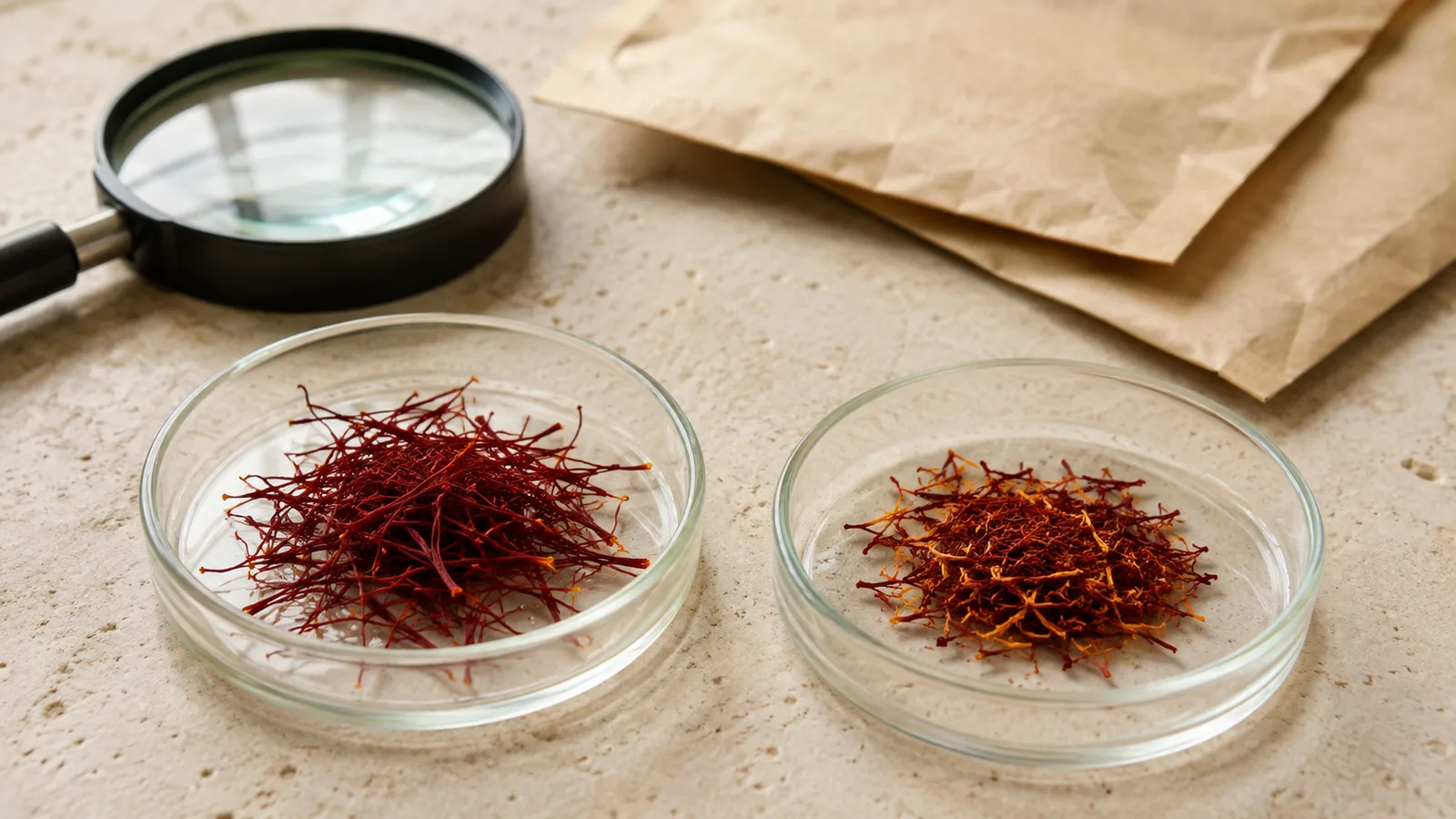
- Thread cut: whole deep-red stigmas command a premium, while a batch with more yellow or white style, shorter pieces or broken threads may cost less.
- Harvest and storage: a correctly stored but older batch may be discounted as the next harvest arrives.
- Route to market: currency, transport, import charges, retail rent and the number of intermediaries all affect the final price.
- Promotion or overstock: a genuine temporary sale is possible, provided the seller still gives clear product details.
Compare the delivered cost per gram, not the headline pack price. Check whether tax and shipping are included and whether the stated weight refers to saffron alone. This simple calculation explains many apparent bargains.
Harvesting saffron is still labour-intensive because each flower yields only three culinary stigmas, which are separated and dried carefully. A low retail price can reflect lower business costs, but it cannot remove that underlying harvest work.
Quality differences that affect price
High-quality threads are typically deep red, with a characteristic aroma and strong colouring power when infused. More pale style lowers the concentration of the red stigma material, so a mixed-looking batch can be cheaper and may require more threads in a recipe. That does not make every pale-tipped thread fake; the important question is how much non-red material is present and whether the product was described honestly.
Commercial quality also depends on measurable compounds associated with colour, aroma and flavour. Crocin is closely linked with colouring strength, while safranal and picrocrocin contribute to aroma and bitterness. Those values vary with the crop and post-harvest handling. Country of origin alone cannot prove a particular grade or crocin result.
Iranian saffron can be excellent, but an Iranian origin statement is not a substitute for batch information, careful drying or testing. If grade is your main concern, our guide to the highest grade of saffron explains what the familiar cut names do—and do not—tell you.
When a low price deserves more scrutiny
Saffron’s high value makes it a target for fraud. A peer-reviewed review of saffron quality and authentication describes several practices, including adding other plant material, artificial colour, extra moisture or spent threads. Turmeric, safflower and dyed plant fibres are among the materials that have been reported in adulterated products.
The risk is not limited to visibly strange threads. False origin claims, inaccurate net weights and old material sold as a fresh premium grade can also distort the comparison. In 2025, the UN Food and Agriculture Organization highlighted both adulteration and inconsistent post-harvest handling when announcing work on stronger saffron authenticity testing.
Be cautious when several warning signs appear together:
- the price is far below comparable offers, with no credible explanation;
- the seller omits net weight, origin, ingredients, batch or contact information;
- the product is powder, which hides the shape of the original material;
- threads have a flat, uniform or obviously cut-paper appearance;
- loose colour rubs off immediately or the aroma seems harsh and artificial;
- the listing promises guaranteed medical effects or uses grand claims instead of verifiable details.
One sign is not a laboratory result. For example, broken genuine threads can look untidy, and a good discount can be real. What matters is whether the product, price and seller’s explanation make sense together.
Can a water test identify fake saffron?
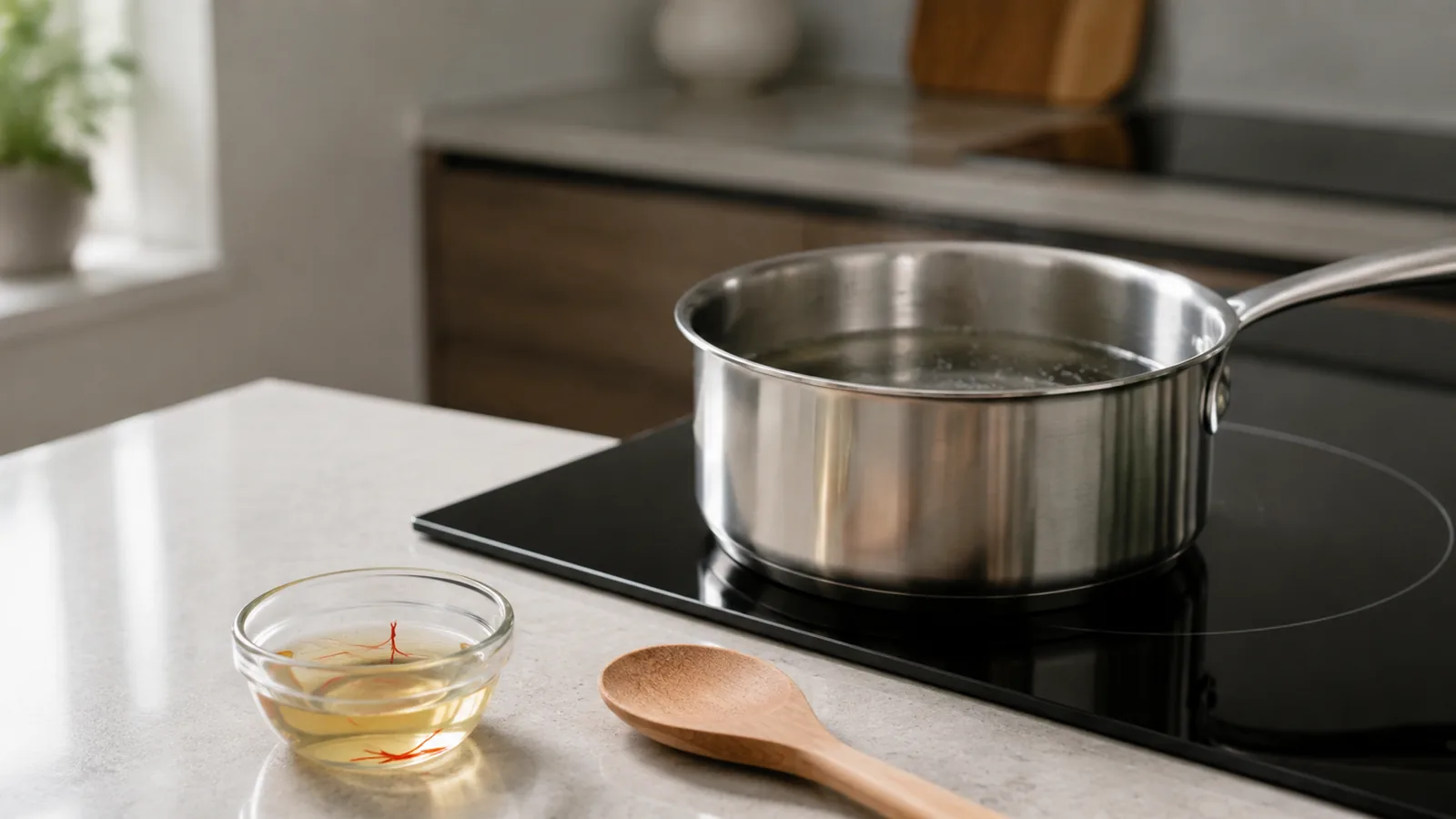
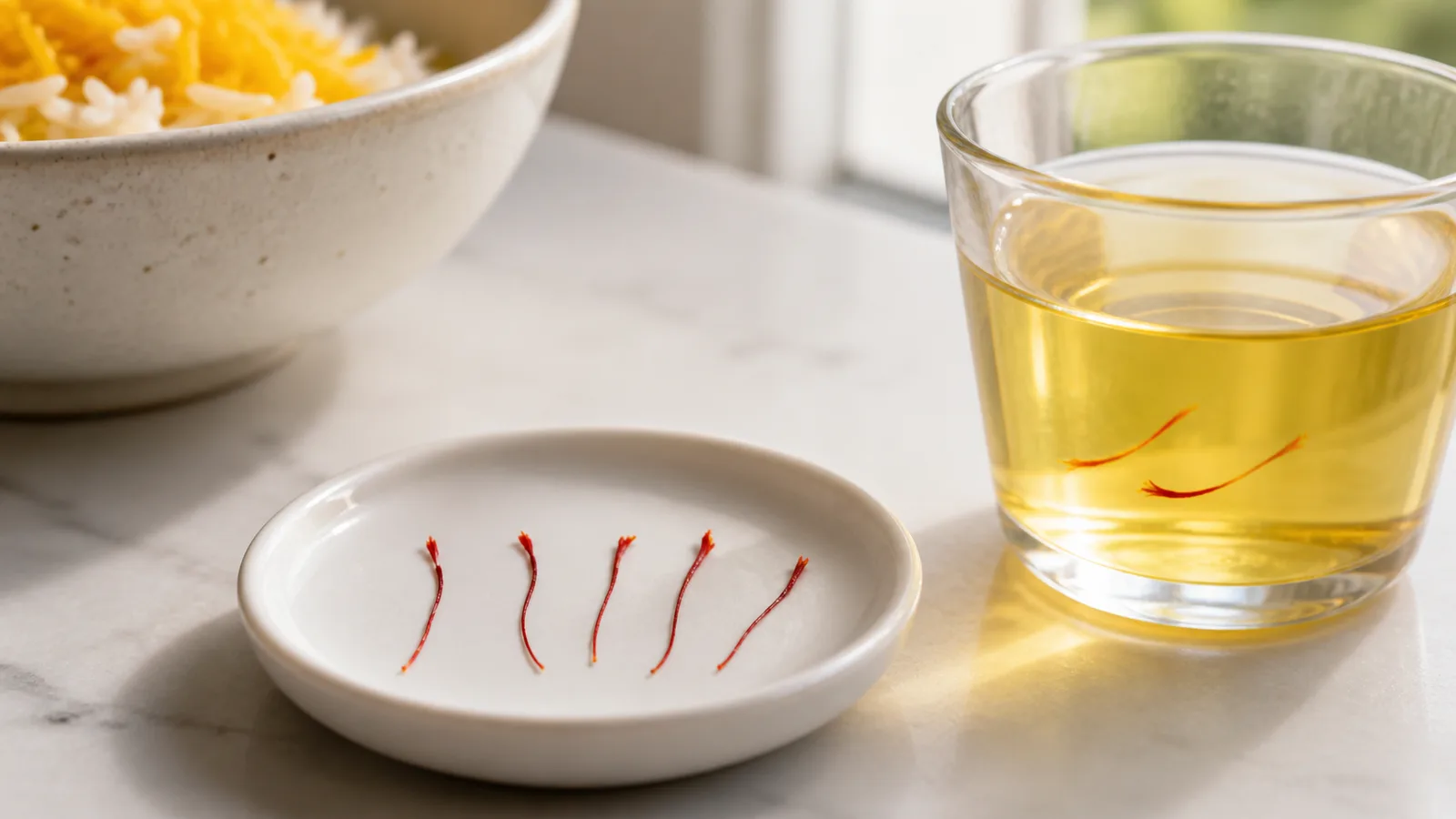
A warm-water infusion can reveal an obvious problem, but it cannot certify authenticity. Genuine saffron normally releases colour progressively while the threads remain visible, and its aroma develops as it steeps. A sample that dumps intense colour instantly or disintegrates deserves caution.
Even so, a clever adulterant can imitate colour release, and weak colour may also result from age or poor storage. Do not rely on one home trick or a social-media “test.” Visual inspection, aroma and infusion are screening checks; analytical testing and traceable sourcing provide stronger evidence.
How to buy affordable saffron with less risk
- Compare like with like. Match the form, cut, net weight, harvest information and delivered price per gram.
- Prefer threads for a first purchase. Their shape gives you more to inspect than powder does.
- Read the product details. Look for a trusted, accountable supplier, clear origin and storage information rather than vague “premium” language.
- Buy a small pack first. Brew a measured amount and judge its aroma, flavour and colouring performance before ordering more.
- Store it properly. Keep the closed container away from heat, light and moisture so a sensible purchase does not become a weak one.
Our guide to checking whether saffron is real goes further into thread shape, aroma and the limits of home checks. If you are ready to compare current sizes and prices, the products page shows the packs available now.
So, why is some saffron so cheap?
The fairest answer is that cheap saffron reasons fall into two groups. Some reduce cost without changing what is in the pack: scale, packaging, distribution or a genuine sale. Others reduce value or misrepresent it: extra style, weak handling, false labelling or adulteration. Compare the price per gram, inspect the information behind the offer and treat absolute guarantees as a warning. Affordable saffron can be genuine; unexplained cheapness is what deserves care.