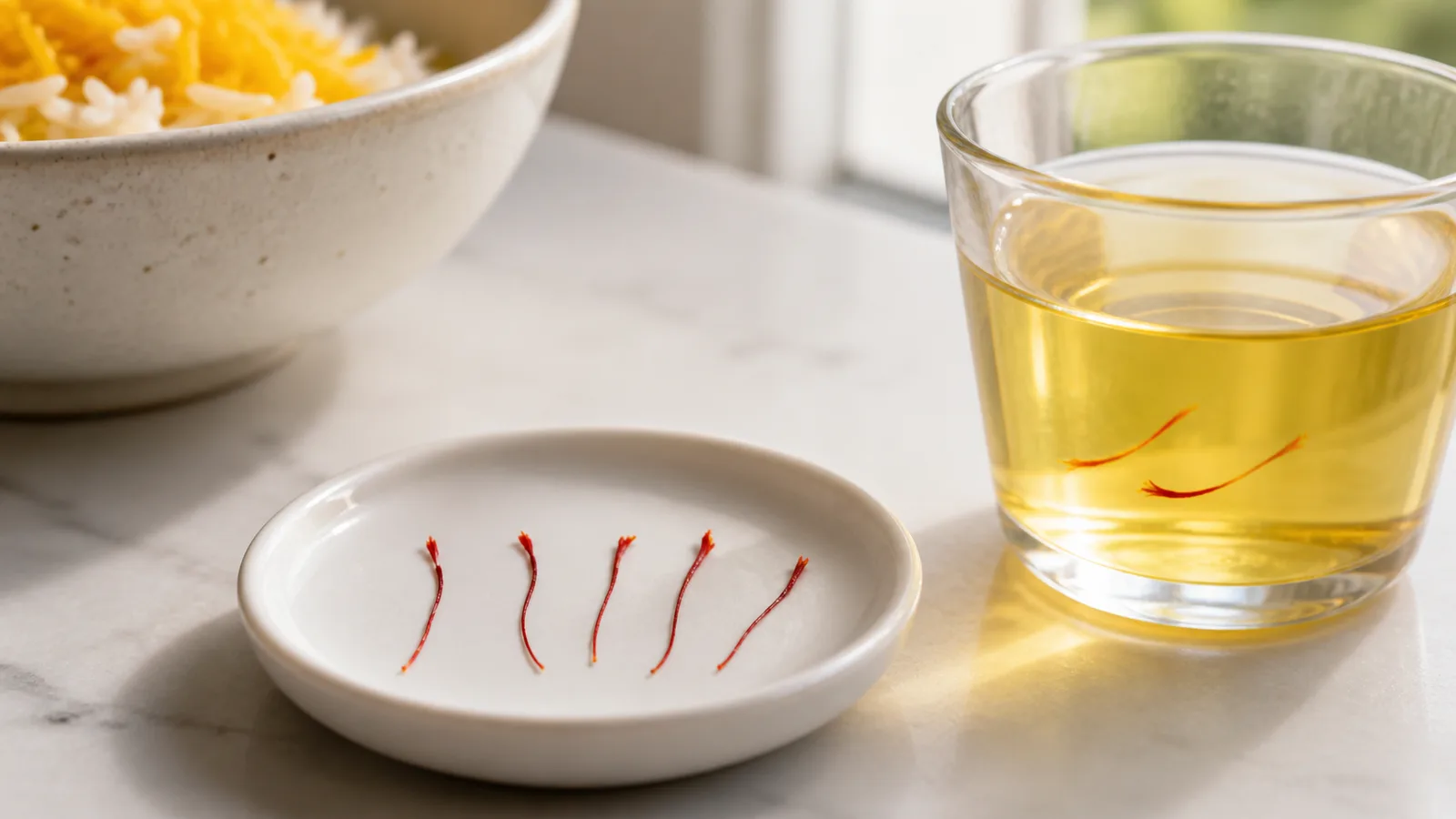
Spanish saffron is not automatically better than Kashmiri saffron, and Kashmiri saffron is not automatically stronger. Both can be outstanding. A useful saffron quality comparison looks at the particular batch—its authenticity, thread cut, aroma, colouring strength, age and storage—not only the country named on the label.
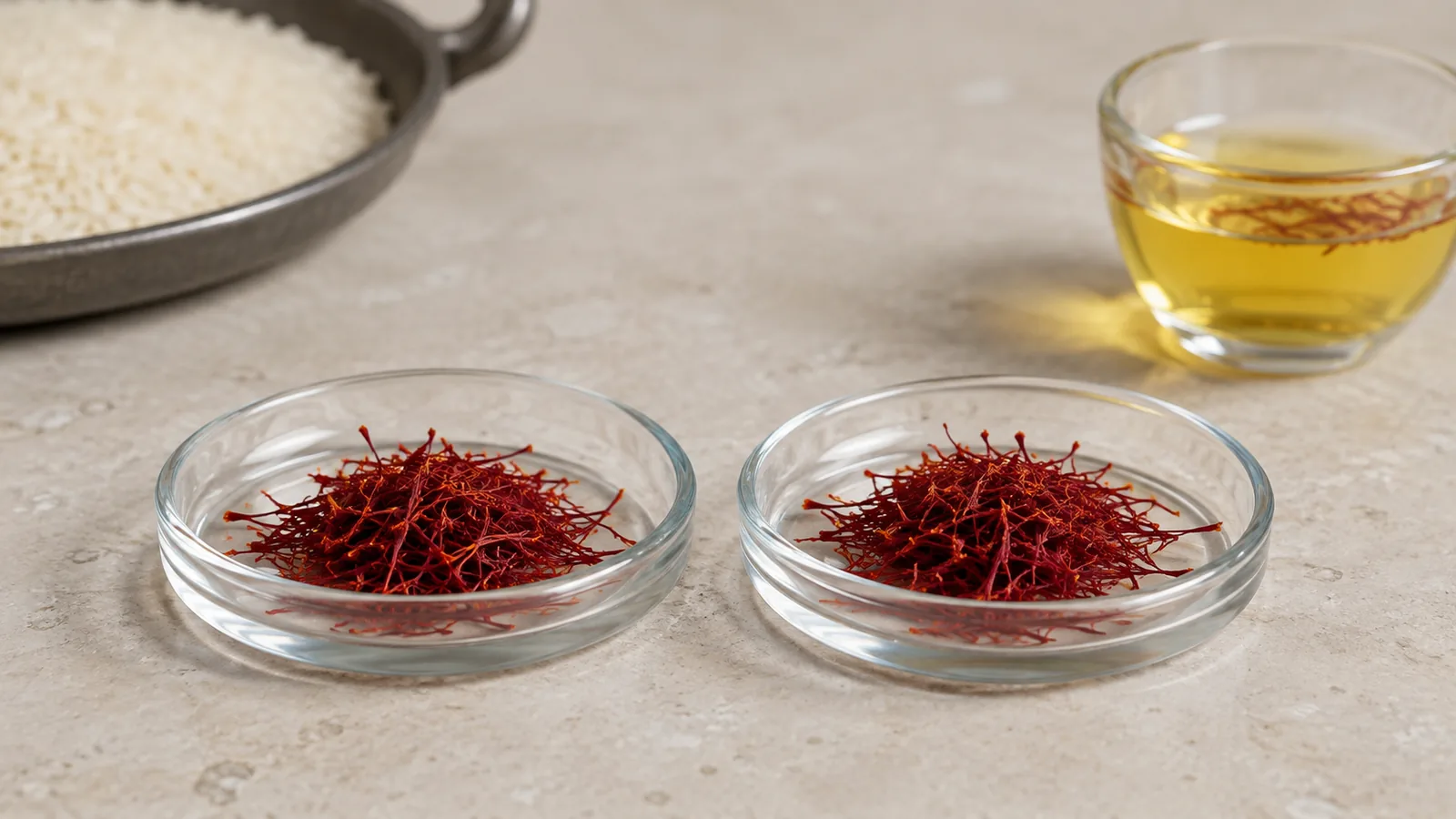
Spanish saffron vs Kashmiri saffron: the short answer
Choose a well-documented Spanish saffron when you want a traceable regional product and a profile suited to dishes such as paella. Choose a well-documented Kashmiri saffron when its origin, fresh aroma and colouring performance are more important to you than easy availability. If one batch has been stored badly or described inaccurately, its famous origin will not rescue it.
“Kesar” is a common South Asian word for saffron, so Spain kesar and Kashmiri kesar are still the same botanical spice: the dried stigmas of Crocus sativus. The differences buyers notice come from growing conditions, selection, drying, storage and the individual batch.
What Spanish saffron means
Spain has a long saffron tradition, but “Spanish saffron” is a broad market description. It is not the same thing as the protected name Azafrán de La Mancha. Spain’s Ministry of Agriculture lists the La Mancha protected designation of origin, its competent authority and the current product specification. Only saffron that meets that scheme’s origin and certification requirements can use the protected designation.
A legitimate Spanish batch may have deep-red threads with some natural orange colouring toward the ends. Drying practice influences aroma, and the finished spice is closely associated with Spanish rice, seafood and stew cookery. Those traditions help explain its reputation, but they do not prove that every product packed or sold in Spain was grown in La Mancha—or even grown in Spain. Read the origin statement precisely.
What Kashmiri saffron means
Kashmiri saffron is grown in Jammu and Kashmir and is valued for its limited production and regional identity. Its mountain climate and labour-intensive harvest are part of that story, and genuine supplies can be rare in some markets. India’s official Geographical Indications registry records Kashmir Saffron as a registered GI, with the Directorate of Agriculture Kashmir as the applicant and Jammu and Kashmir as the geographical area.
Good Kashmiri threads can show a rich red colour, expressive aroma and strong performance in an infusion. They are often described as floral, while Spanish saffron is often described as earthy or gently sweet. Treat those words as tasting tendencies, not guarantees. Harvest timing, drying and storage can make two batches from the same region taste less alike than their labels suggest.
Does Kashmiri saffron have more crocin?
You may see claims that Kashmiri saffron always has higher crocin and therefore unmatched colouring power. That conclusion needs a batch test. Crocin is associated with saffron’s colour, but its measured level varies with the crop, processing, moisture, age and analytical method. A regional name alone is not a laboratory certificate.
The same caution applies to claims that Spanish saffron always has the strongest aroma. Safranal contributes to aroma, while picrocrocin is associated with bitterness and flavour. The balance can shift during drying and storage. Ask for a recent, traceable analysis if exact chemical strength is central to the price.
A practical saffron quality comparison
Colour
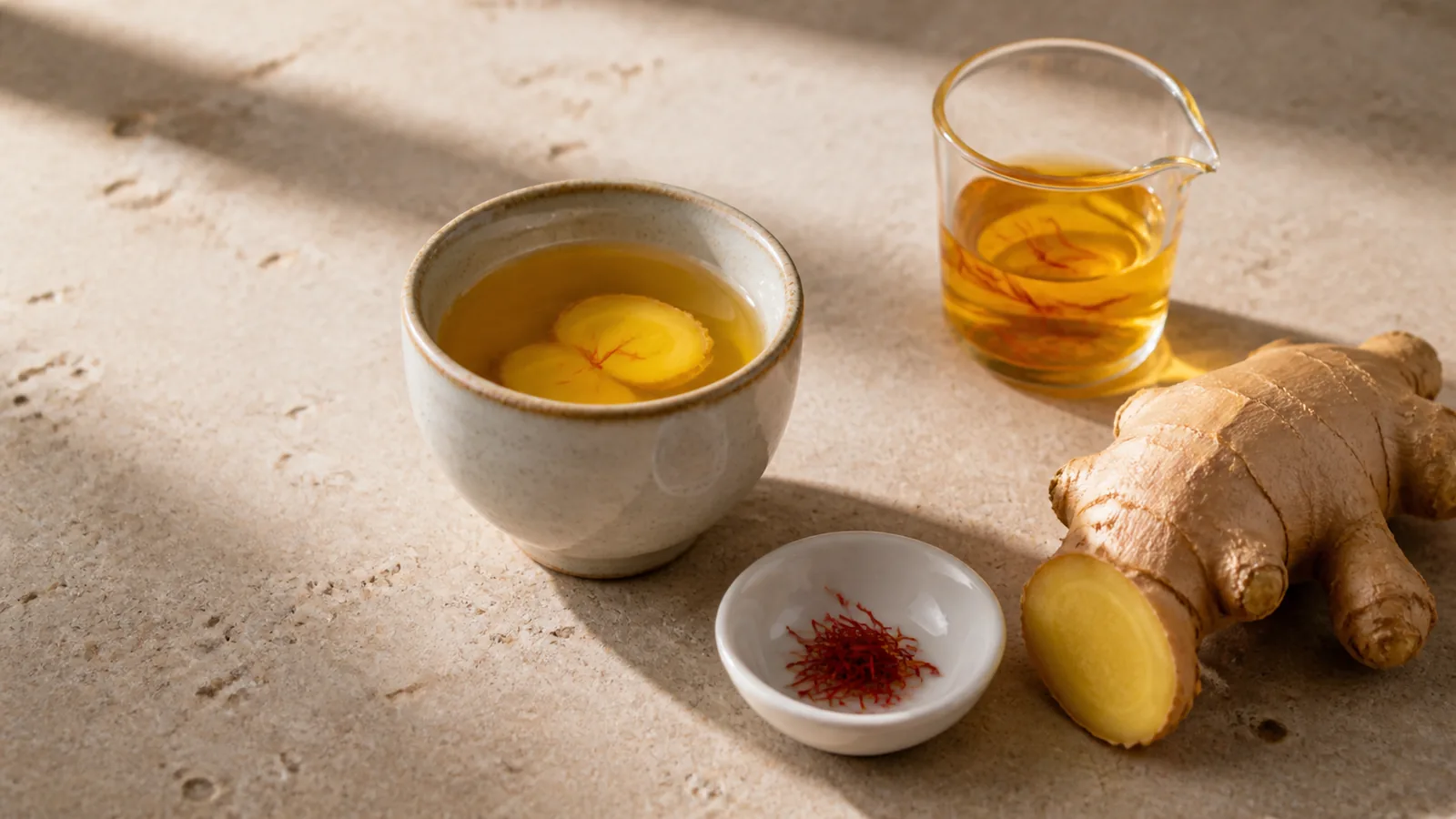
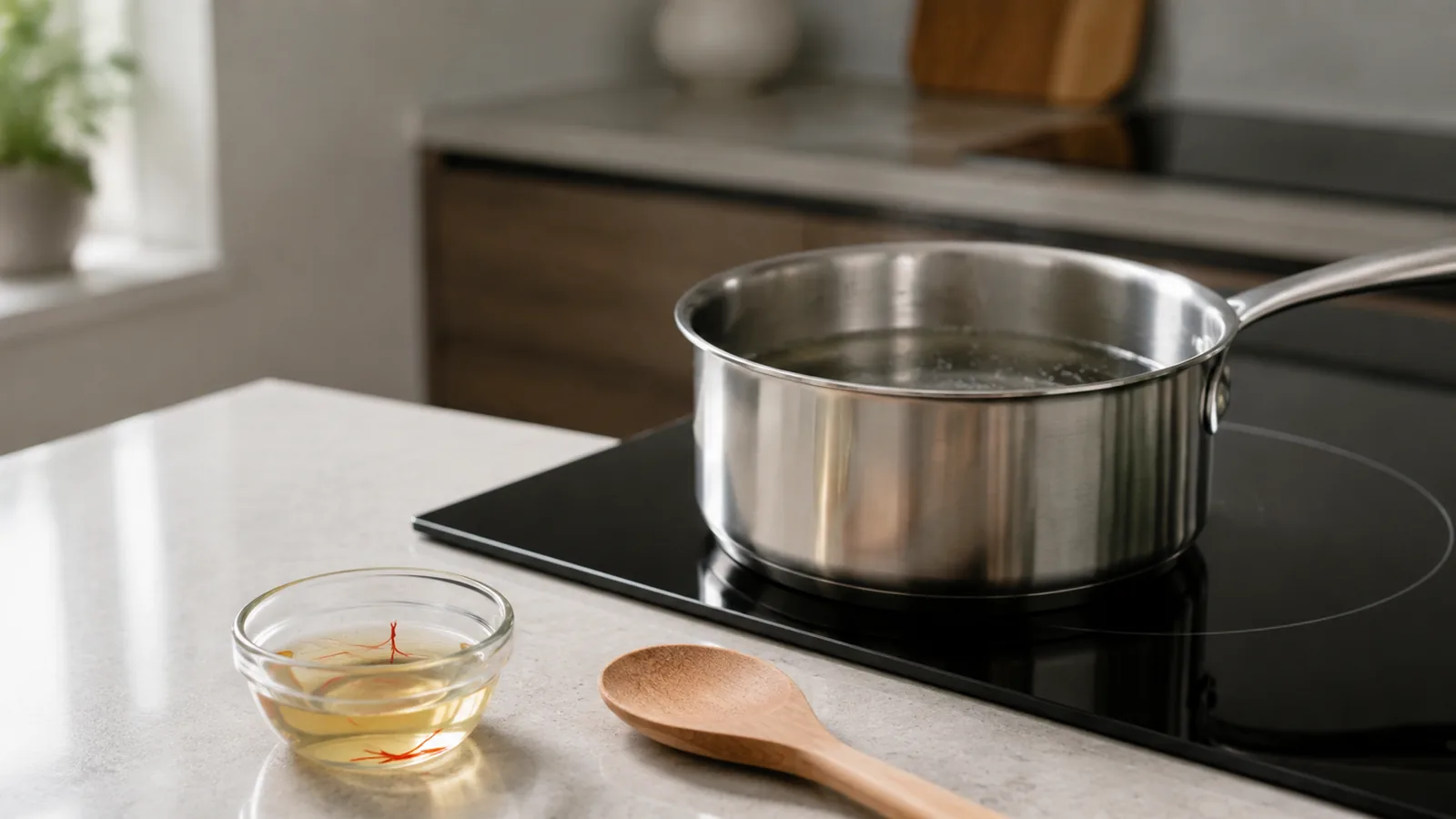
Do not judge by redness alone. Look for recognisable, dry stigmas and observe how a measured pinch colours warm liquid over time. Both origins can produce a clear golden infusion. Artificially coloured material can also look vivid, so colour is one clue rather than proof.
Aroma and flavour
Open a small quantity away from strong kitchen smells. Good saffron has a distinctive, complex aroma rather than a generic perfume. Brew equal weights under the same conditions if you want a fair comparison. One batch may suit a savoury rice dish; another may work better in milk, sweets or tea. Personal taste matters.
Thread cut and condition
Long red stigma portions generally carry a premium over a cut with more pale style. Broken threads are not necessarily fake, but powder gives you fewer visual clues. Threads should be dry and protected from moisture, light and heat.
Origin and traceability
A protected geographical name has value only when the product is actually certified for it. Look for a clear net weight, batch or lot reference, accountable seller and an origin claim that distinguishes where the saffron was grown from where it was packed.
Price and availability
Kashmiri saffron can be harder to find outside India because production is limited. Spanish saffron is widely distributed, though certified La Mancha saffron can command a premium. Compare the delivered price per gram and the evidence supplied, rather than assuming the most expensive jar is the best.
What about Iranian, Persian and Indian saffron?
Indian saffron often means Kashmiri saffron in this comparison, while Persian saffron usually means Iranian saffron. They are not different plant species. Iran is the largest producer, and high-quality Iranian batches can compete strongly on colour, aroma and value. For that specific comparison, read our guide to Iranian saffron versus Spanish saffron.
No honest answer can name one country as the universal winner. A carefully handled Iranian batch may outperform a tired Spanish jar; a genuine GI Kashmiri batch may outperform both for one cook’s preferred aroma. The reverse can also be true.
How to choose between the two
- Decide whether protected regional origin matters to you or whether culinary performance is the priority.
- Compare threads with threads, using the same net weight and delivered price per gram.
- Check the precise origin, batch details, trusted supplier’s identity and storage guidance.
- Prefer a small first purchase, then compare equal-weight infusions at home.
- Keep the winner in an airtight container away from heat, moisture and direct light.
If you are comparing commercial cut names as well as origins, see what the highest saffron grade means. Our products page lists the origins and pack details currently available from Rowhani; it should not be read as a claim that every regional variety discussed here is in stock.
Which is better?
Spanish saffron and Kashmiri saffron each have a serious tradition and protected regional examples. For cooking, the better choice is the authentic, fresh, carefully stored batch whose aroma and colouring strength suit the dish. Use origin as part of the evidence, not as a shortcut for quality.