The challenges of growing saffron are often misunderstood. A few healthy corms can be fairly easy for a home gardener in a sunny, well-drained place. Producing a dependable commercial crop is hard because flowering is brief, each flower yields only three threads, harvesting and separation are still delicate, and one wet or diseased patch can damage years of planting stock.
Why is saffron so hard to grow?
Saffron is not difficult because it needs constant attention every day. The plant follows a distinct seasonal cycle and can tolerate conditions that many vegetables cannot. The difficulty is getting several things right at the right time: sound corms, drainage, seasonal water, weed control, pest and disease monitoring, fast flower collection, careful stigma separation, controlled drying and dry storage.
The Royal Horticultural Society actually rates garden saffron as easy and recommends a bright, sunny site with rich but well-drained soil. Its saffron growing and harvesting guide is a useful corrective to the idea that the plant itself is impossible. Scale and consistency are what turn a small planting into a demanding crop.
Saffron starts from corms, not ordinary seed
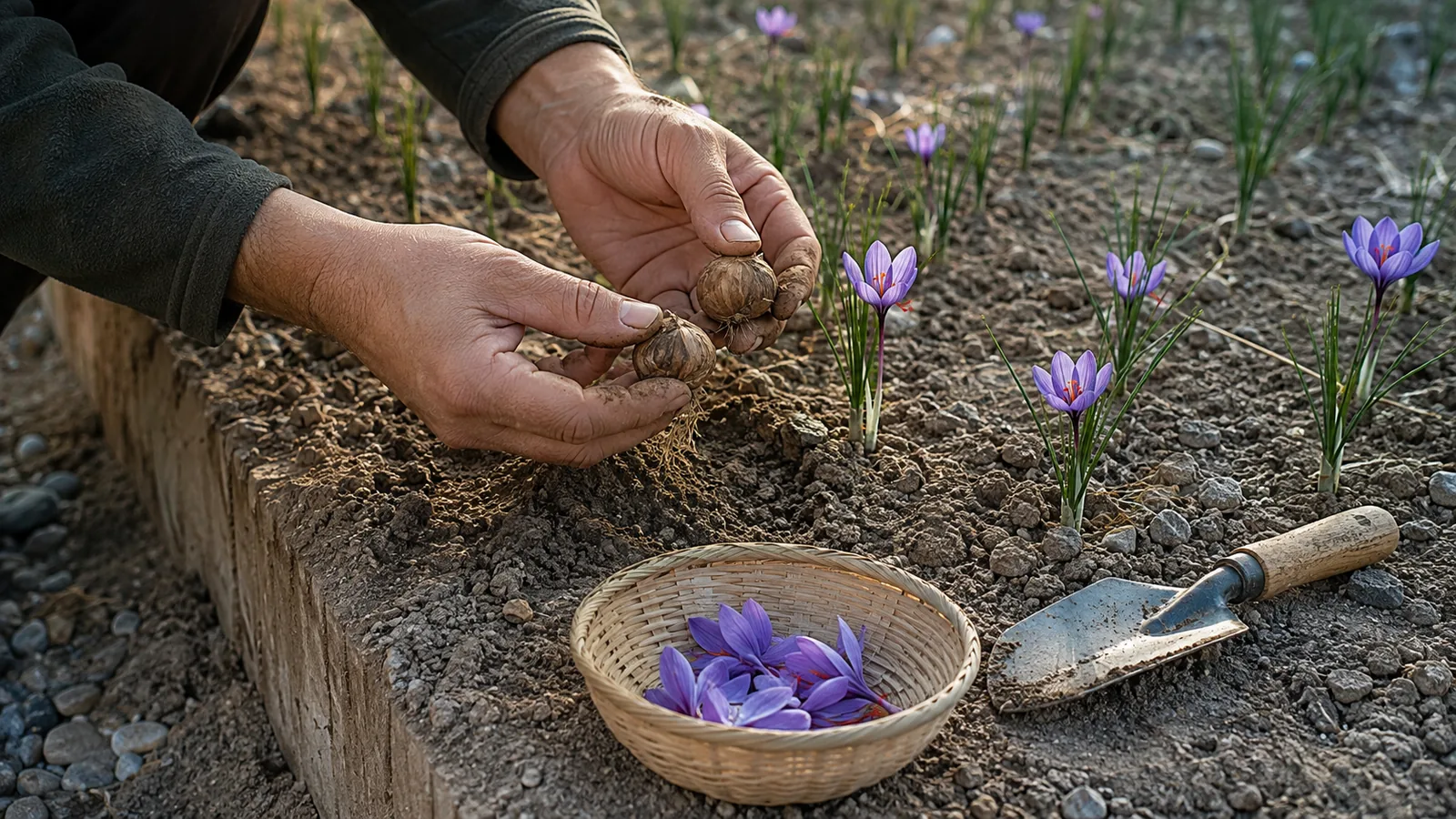
Crocus sativus is sterile and is propagated vegetatively. Growers plant corms, which are swollen underground stems often casually called bulbs. A corm stores the energy that supports the next growth and flowering cycle, then produces replacement corms and cormlets.
This makes starting material unusually important. A small corm may produce leaves but no flower, while an infected or damaged corm can introduce a problem into the bed. Commercial growers need enough healthy, flowering-size stock to plant an area economically, yet they cannot simply buy seed and raise genetically diverse replacements.
Inspect corms before planting. They should be firm and free from soft areas, extensive wounds, mould and suspicious discolouration. Keep lots separate when their health is uncertain, and obtain them from a supplier that correctly identifies Crocus sativus. Other autumn crocuses are not substitutes; some plants sold under confusing common names are poisonous.
Climate requirements are seasonal, not simply “mild”
Saffron commonly grows where summers are warm and relatively dry and the active season is cooler. It flowers in autumn, carries narrow green leaves through winter and spring, then becomes dormant as the foliage dies back. Exact timing changes with location and year.
A site does not have to copy one famous producing region, but it must support that cycle. Persistent summer wetness, waterlogged soil during active growth, or warm humid conditions with poor air movement can raise disease pressure. At the other extreme, a newly planted bed may not establish well if it receives no water when the corms need it.
Local weather matters more than a universal rainfall number. A grower should consider when rain falls, how quickly the bed drains, winter cold, summer soil temperature and whether flowers can be harvested during a concentrated autumn period.
Drainage is the first soil test
Saffron needs a fertile growing medium, but more fertiliser cannot compensate for standing water. The underground corm has to remain alive across several seasons. Dense soil, a low spot or excessive irrigation can keep it wet long enough for tissue damage and rot.
University of Vermont Extension warns that standing water or excessive moisture can rot corms in its practical article on growing saffron as a high-value spice. It also notes that mulch may attract rodents, which is a reminder that one practice can solve a temperature or weed problem while creating another.
Before planting a large area, observe the site after heavy rain. Improve drainage where feasible or use a raised, well-structured bed appropriate to the climate. Test the soil rather than adding nutrients by guesswork. Balanced fertility supports leaves and replacement corms; excessive amendments can waste money or create imbalance.
Watering needs change through the cycle
Saffron should not sit in continuously wet soil, but “keep it dry” is not a complete irrigation plan. Water demand changes with establishment, flowering, leaf growth and dormancy. Rainfall, soil texture, bed depth and temperature determine how much supplemental irrigation is needed.
Water deeply enough to reach the root zone, then allow drainage. Do not keep applying a calendar amount when the soil is already wet. A summer dry period may match saffron’s natural dormancy in many producing climates, but dryness is not a universal switch that causes flowering. Before autumn growth, locally appropriate moisture can support emergence; the correct timing is regional, so a new grower should use nearby extension or research guidance.
Corm rot can spread through valuable planting stock
Corm rot is not one simple disease with one universal cure. A peer-reviewed review of saffron corm-rot epidemiology and management describes a disease complex involving several fungal pathogens. It identifies infected corms, wounds, waterlogging, field history and cultural practices as important parts of the problem.
That is why prevention begins before a symptom appears. Start with healthy material, avoid injuring corms, provide drainage, clean tools and containers between lots, and do not move suspect soil or corms into a clean bed. Remove and isolate soft or decaying corms rather than planting them among healthy stock.
If losses spread, obtain a diagnosis through a local plant-health or extension service. A generic internet pesticide recipe may be ineffective, illegal in the location or unsafe for a food crop. Treatment should follow the identified problem and the product label.
Rodents, insects and weeds add local risk
Rodents can dig for corms, especially where habitat and loose mulch give them cover. Mites and other underground pests may injure corm tissue. Aphids can occur on foliage, but seeing one insect does not prove it caused a failed crop. Inspect both above and below ground and identify the organism before choosing a control.
Weeds compete during the long leafy season and can make flower harvest slower. Because saffron foliage is narrow and easy to damage, late aggressive cultivation may harm the crop along with the weeds. Start with a clean bed, monitor frequently and choose mechanical, cultural or labelled controls that suit the production system.
The University of Vermont’s North American saffron production resources collect guidance on planting depth and density, corm handling, harvesting, drying and postharvest practice. Those details should be adjusted to the grower’s climate rather than copied as a universal recipe.
The harvest is the real labour bottleneck
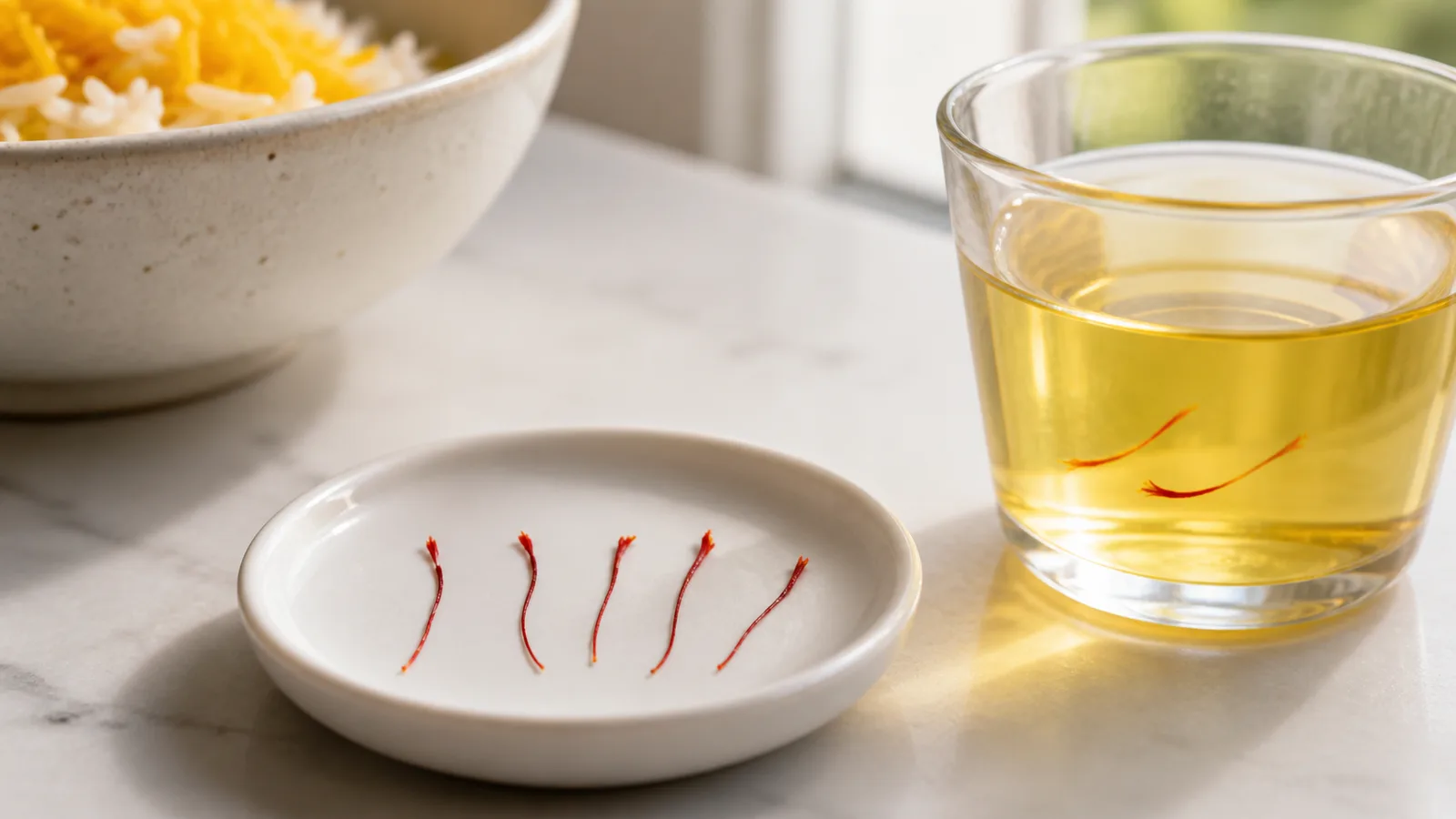
Each saffron flower carries three red stigmas. The RHS estimates that about 150 flowers are needed for one gram of dry saffron. That means tens of thousands of flowers for a pound, and every flower opens within a short seasonal window.
Flowers need to be collected while they are in good condition, then handled without crushing or contaminating them. The red stigmas must be separated from petals and yellow stamens. A home gardener can process a small bowl at the table; a commercial field needs trained people ready when flowering peaks, even if the weather or labour schedule is inconvenient.
Precision matters, but the goal is not to preserve the decorative flower. The valuable product is the clean stigma. Slow separation lets flowers wilt and makes hygiene and quality harder to control. Our explanation of flowers needed for a kilogram of saffron shows why yield and labour estimates must be stated as ranges rather than promises.
Drying can preserve or waste the harvest
Fresh stigmas are not finished saffron. They must be dried promptly and evenly enough to become stable without scorching away the aroma or damaging colour and taste. Too little drying leaves excess moisture; too much heat or time can lower culinary quality.
A repeatable process controls batch size, temperature, airflow, time and final condition. Clean food-contact surfaces and traceable batch records matter. Once completely dry, the threads need an airtight container away from light, heat, moisture and foreign odours.
This postharvest work explains why a field full of flowers is not yet a saleable crop. Flower yield, dry stigma yield and packaged product are different measurements.
Why commercial saffron is costly even when the plant grows
Costs begin with healthy corms and prepared land, then continue through irrigation, weed control, monitoring and replacement of lost plants. Harvest concentrates labour into a short period. Separation, drying, grading, testing, packaging and storage add work after the flowers leave the field.
The high market price reflects that concentrated work and the small dry yield, not a guarantee of profit for the farmer. Finished saffron remains relatively rare beside ordinary spices because expanding a field also expands the corm, labour and postharvest requirements.
Yield is also uneven. Large corms can flower sooner than small cormlets, weather alters emergence, disease removes planting stock, and overcrowded daughter corms may eventually need lifting and replanting. A grower cannot calculate profit from the retail gram price alone.
Saffron is valuable because the usable dry spice is a tiny part of each flower and requires careful handling. The difficulty is not a mystical property of the plant, nor does rarity automatically make every batch high quality.
Is saffron hard to grow at home?
Not necessarily. A home gardener with a sunny, well-drained bed or deep container can start with a small number of healthy corms and learn the local cycle. The harvest may only flavour a few dishes, but the labour remains manageable at that scale.
Use our saffron planting guide for the complete sequence, then keep notes on planting date, corm size, rainfall or irrigation, emergence, flowers and disease symptoms. Leave healthy foliage in place until it yellows naturally so it can support replacement corms.
Commercial production is a different decision. Trial the site first, measure actual dry yield and labour, and carry the corms through more than one season before expanding. A successful first flowering does not yet prove that drainage, pests, corm multiplication and market quality are under control.
The real challenge is consistent quality
Saffron can be straightforward to plant and still difficult to produce well. The crop asks the grower to protect a perennial underground corm, respond to a seasonal water pattern, gather many short-lived flowers quickly and turn three delicate stigmas per flower into a clean, dry, traceable spice.
That work is demanding, but it is not a reason to treat saffron as impossible. Start small, prioritise drainage and healthy corms, plan the harvest before planting, and record what happens. For finished all-red threads rather than growing stock, the original all-red saffron selection remains available.