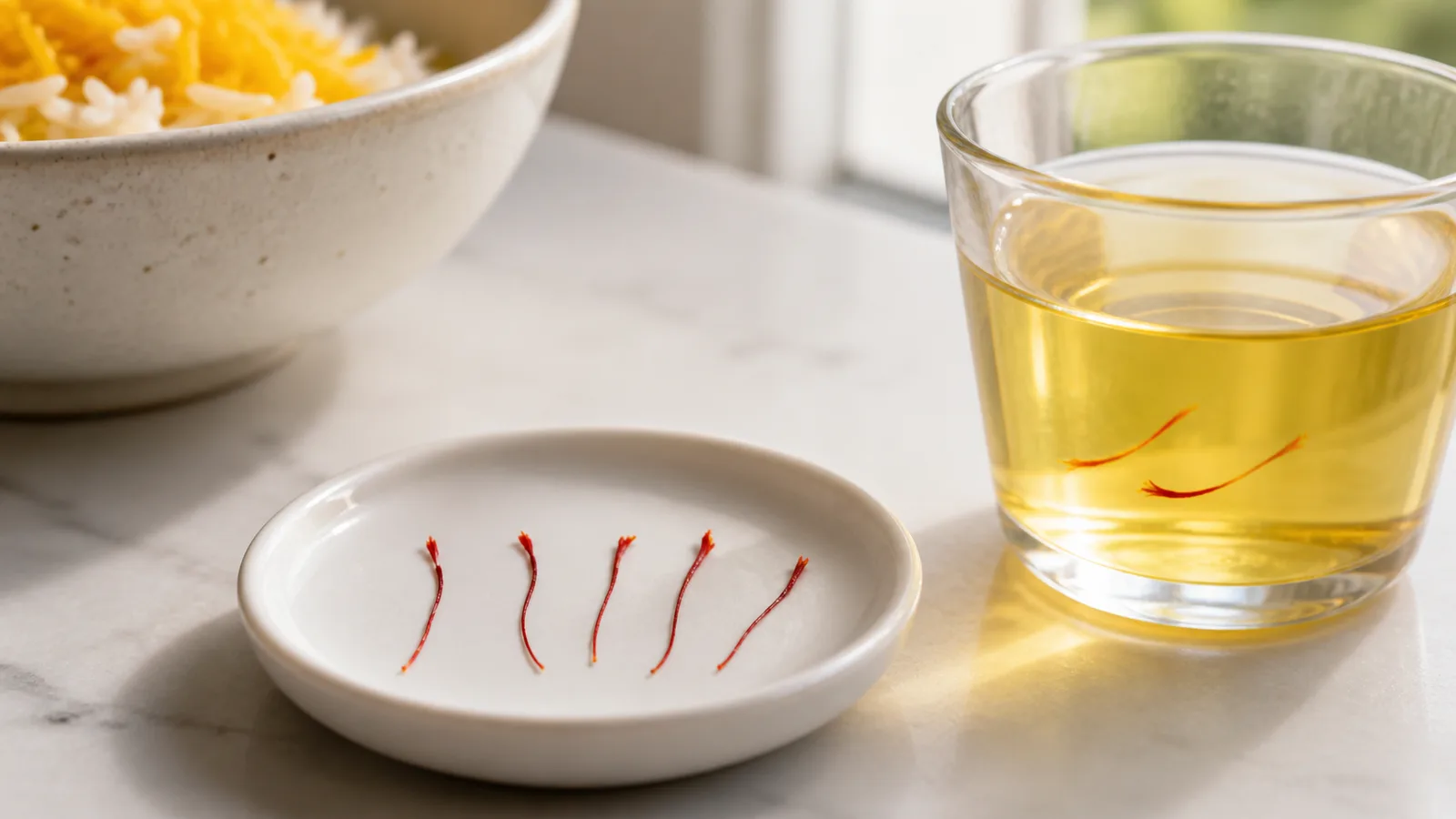
Iranians love saffron because it joins flavour, hospitality, memory and agricultural pride in one small ingredient. Saffron in Iran belongs to everyday food and culture, not only formal history. The Iranian saffron tradition is visible at ordinary family tables as well as weddings and holiday meals: a measured infusion colours rice, perfumes sweets and signals that care went into serving the food.
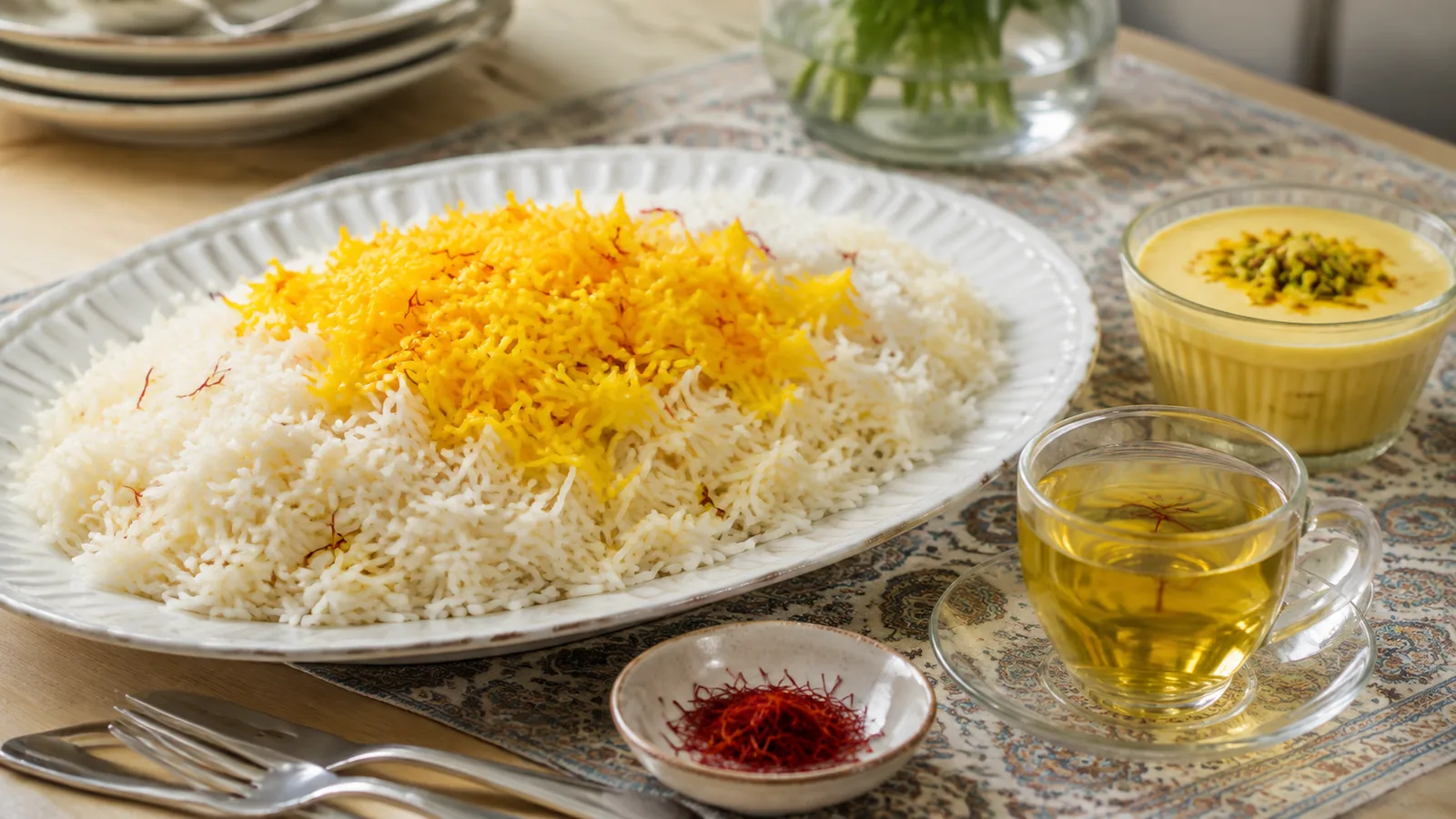
Saffron is part of the taste of home
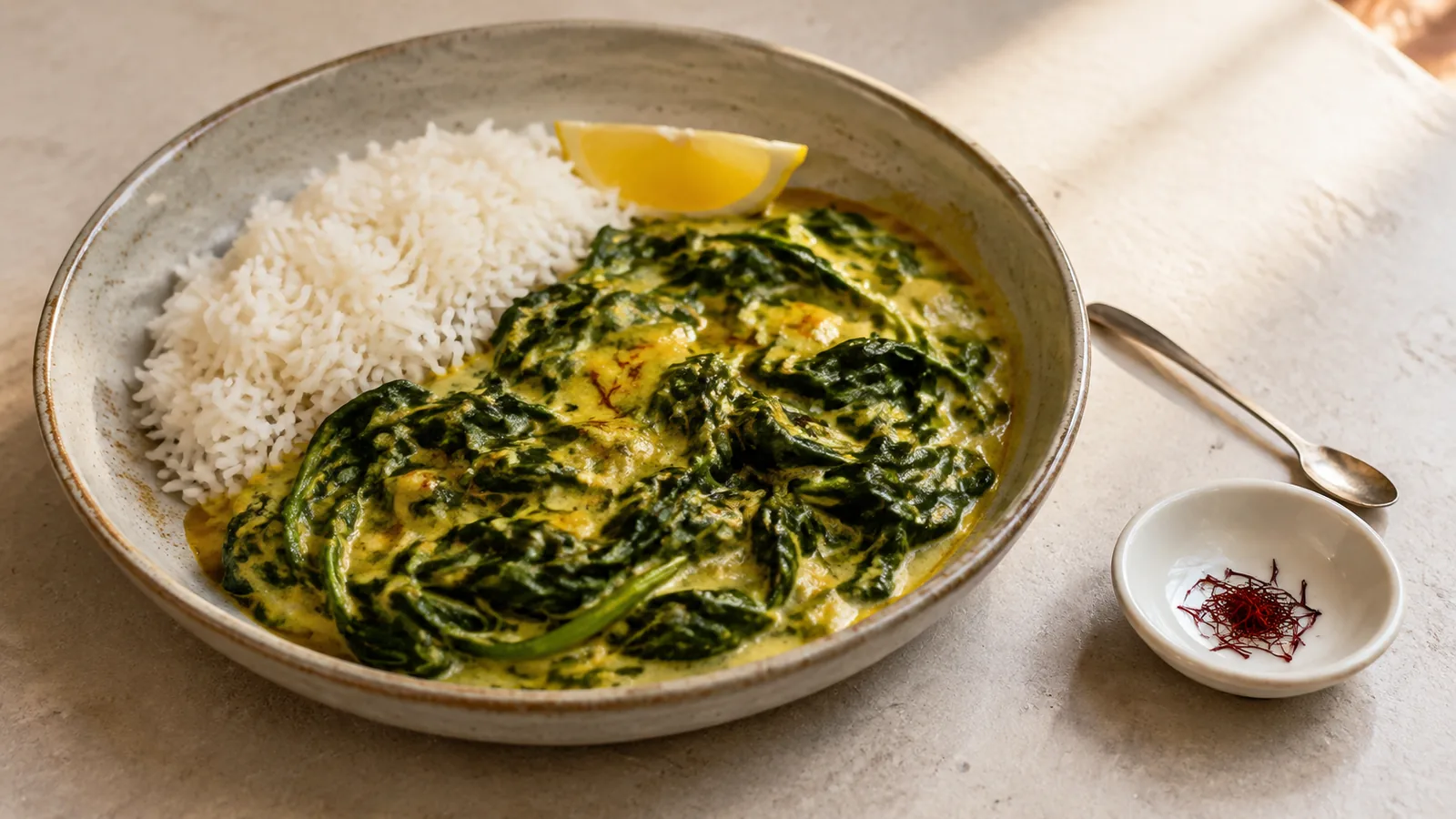
In Persian cooking, saffron is not reserved for one signature recipe. It appears in steamed rice, tahdig, khoresh, chicken, kebab accompaniments, drinks, ice cream, puddings and cakes. The thread running through those stews, desserts and beverages is aroma as much as color. Its flavor and fragrance matter together.
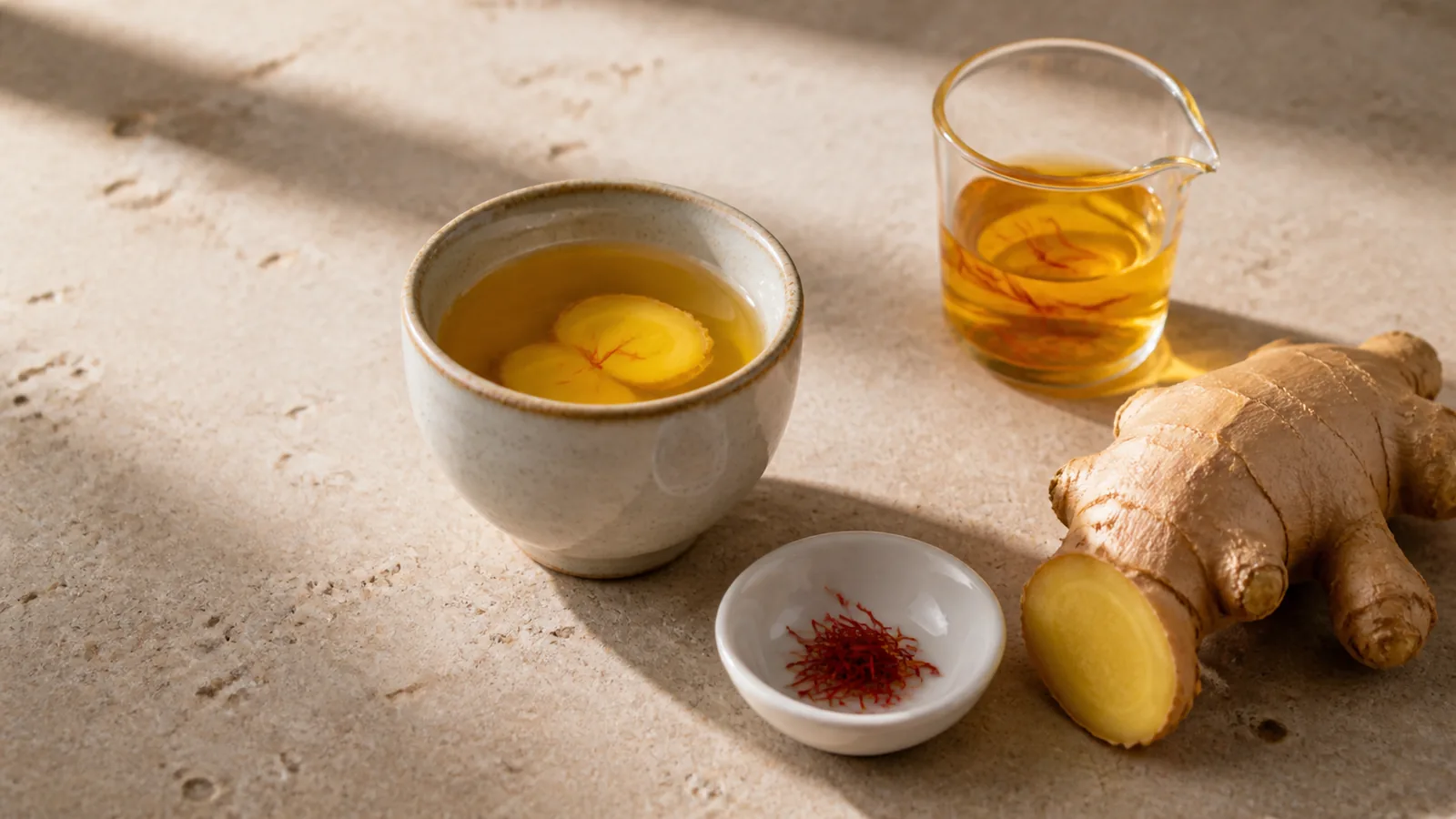
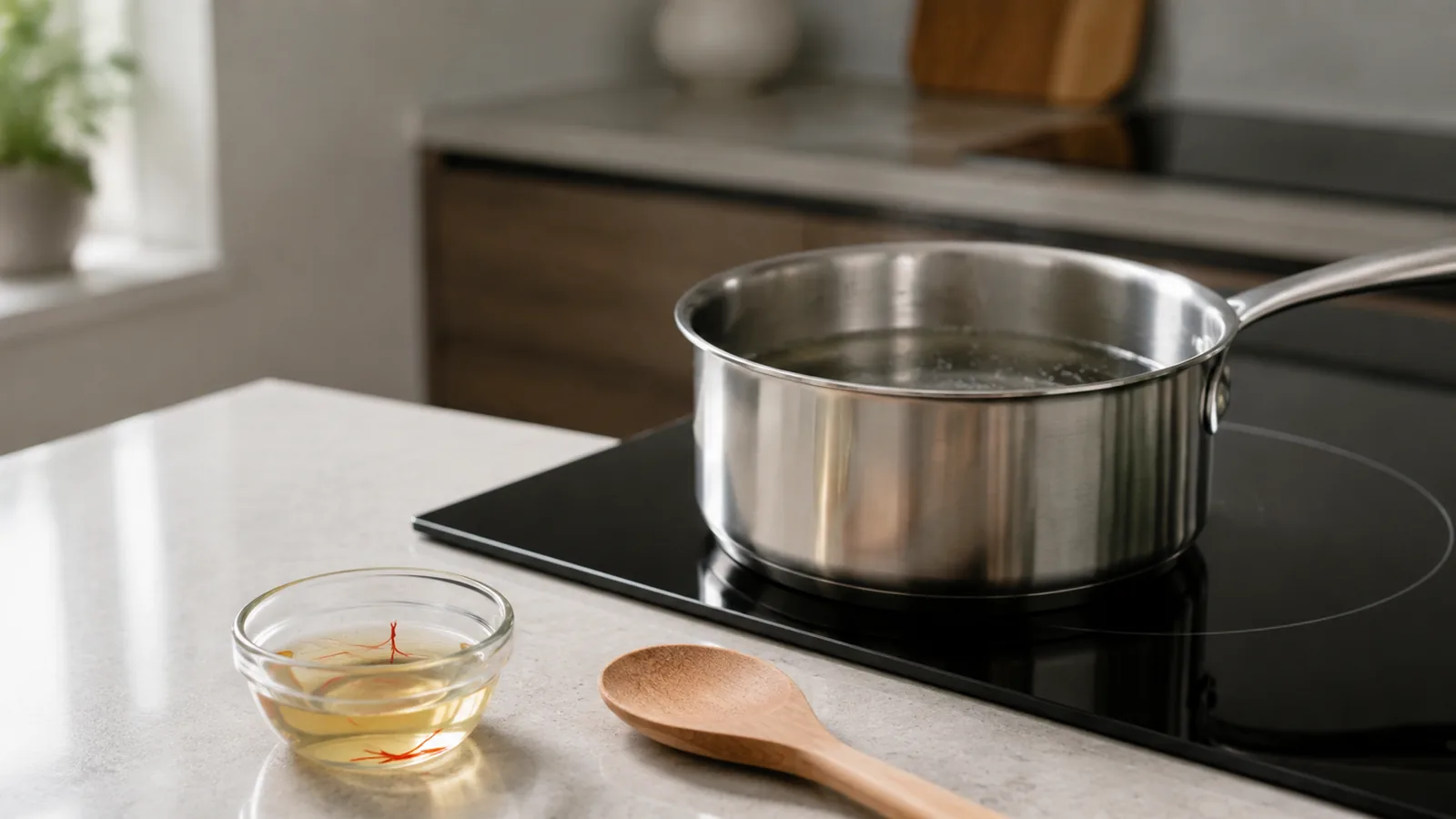
A small amount gives a floral, honey-like fragrance and earthy depth. Because the flavour is concentrated, the cook’s skill lies in extracting and distributing it rather than adding a large quantity. Crushing a few threads, steeping them and folding the infusion through part of the dish is a familiar kitchen rhythm.
Hospitality gives saffron meaning
Offering a guest fragrant rice or a carefully made sweet is a practical expression of welcome. Saffron suits that moment: it is valuable, but a small pinch can transform a shared dish. Its colour is easy to see, while its aroma reaches the table before the first bite.
That does not mean every Iranian meal contains saffron or that every family uses it in the same way. Regional cooking, budget, occasion and household preference all matter. Its cultural importance comes partly from appearing at moments people remember.
Celebrations and family occasions
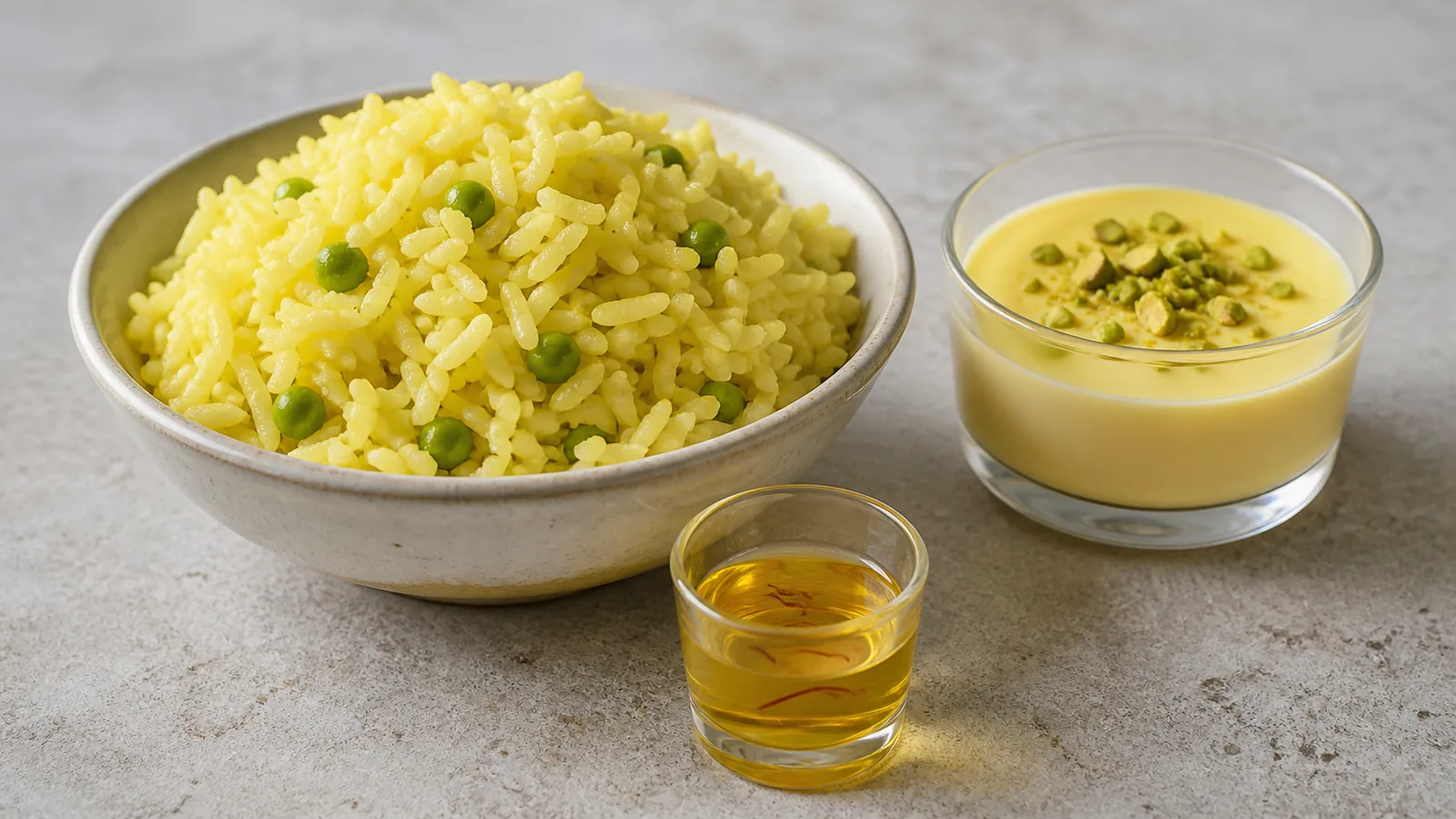
Saffron is associated with festive rice, sweets and drinks served for weddings, Nowruz gatherings, festivals, religious ceremonies and family celebrations. Depending on the household, it may be used in sholeh zard, bastani sonnati, halva, cakes or a saffron drink.
Words such as prosperity, joy and hospitality often accompany the spice, but symbols are not fixed rules. The meaning comes through use: time spent preparing a dish, sharing a prized ingredient and repeating a recipe learned from relatives.
A crop tied to place and work
Iran is the world’s leading saffron-producing country, with cultivation concentrated especially in Khorasan. Older descriptions often said Iran supplied over 80 percent of world demand; the cited FAO heritage profile now describes its production share as over 90 percent, so the date and source matter. For farming communities, saffron is not an abstract luxury. The relationship between people, land and harvesting is direct. It is a seasonal crop that requires coordinated picking, separation, drying and sale during a short harvest period.
The FAO’s profile of the Qanat-based Saffron Farming System in Gonabad recognises the connection between water management, local knowledge, livelihoods and cultural value. That official record is a stronger explanation of pride than a vague claim that one nationality simply “likes” a spice.
Knowledge passes through generations
Families involved in cultivation learn when flowers are ready, how quickly they should be collected, how the stigmas are separated and how drying affects quality. In kitchens, knowledge takes another form: how many threads a pot needs, when to make the infusion and which ingredients allow the aroma to remain clear.
Methods change. Farmers adopt equipment, laboratories assess quality, packaging improves and cooks use modern appliances. Tradition survives because the purpose is understood, not because every step is frozen in time.
Why Iranian cooks use saffron carefully
Price encourages restraint, but flavour does too. Excess saffron can make food bitter and waste an ingredient that works best in a modest dose. Many dishes colour only part of the rice or use a concentrated infusion as a final layer, creating contrast without seasoning every grain identically.
Careful storage is part of that respect. Dry threads are kept airtight, away from light, heat and moisture, then crushed in small amounts as needed. Aroma is the quality most easily lost through careless handling.
Colour, aroma and presentation
Saffron’s golden colour creates a visible contrast against white rice, pale desserts or yogurt-based accompaniments. Presentation matters in Persian cuisine, but the spice should still contribute flavour. Turmeric or colouring can make food yellow; neither replaces saffron’s aroma.
The finished dish often combines colour with texture: saffron rice beside plain grains, crisp tahdig under a soft interior, or pistachio against saffron ice cream. These details make the ingredient part of the whole meal rather than decoration added at the end.
Traditional medicine is part of the history, not a cure claim
Traditional Persian medicine has described saffron in relation to mood support, digestive aid and other concerns. That history helps explain the spice’s cultural status, but traditional use does not prove that a food portion treats a condition. Culinary enjoyment and medical evidence are different questions.
People should not increase intake to pursue a health claim. Concentrated supplements and medicinal use require separate safety considerations, particularly during pregnancy or alongside medicines.
Iranian saffron and national pride
Pride is connected to both scale and skill. Iran supplies most of the world’s saffron, while growers and processors carry detailed knowledge of the crop. A 2025 FAO account of farms and processing in Khorasan describes quality work alongside the cultural heritage surrounding harvest.
Country of origin alone does not guarantee the quality of every pack. Thread cut, harvest, drying, cleanliness, storage and traceability still need to be assessed lot by lot. Cultural pride and honest quality control belong together.
A living tradition beyond Iran
Iranian families abroad carry saffron recipes with them, adapting to local ingredients and kitchens. Restaurants and home cooks introduce the flavour to new audiences. The tradition therefore continues through use, not only through stories about the past.
For the longer historical arc, see our account of the history of Iranian saffron. A practical overview of food and non-food traditions appears in uses of Iranian saffron.
The short answer
Iranians cherish saffron because it tastes and smells distinctive, belongs to memorable dishes, expresses hospitality and connects urban kitchens with farming communities. Its place in celebrations, family recipes and Khorasan’s agricultural heritage gives the spice an emotional weight far beyond its colour or price.