Real saffron is identified by several consistent clues, not one dramatic trick. Inspect the shape of the dry stigmas, smell them, watch a few release colour in warm water, and check the seller’s traceability. Any one observation can mislead; together they make authentic saffron verification much more useful.
If you want to know how to tell if saffron is real at home, begin with whole threads. Powder hides the structure and is much harder to assess without laboratory analysis.
How to identify original saffron by sight
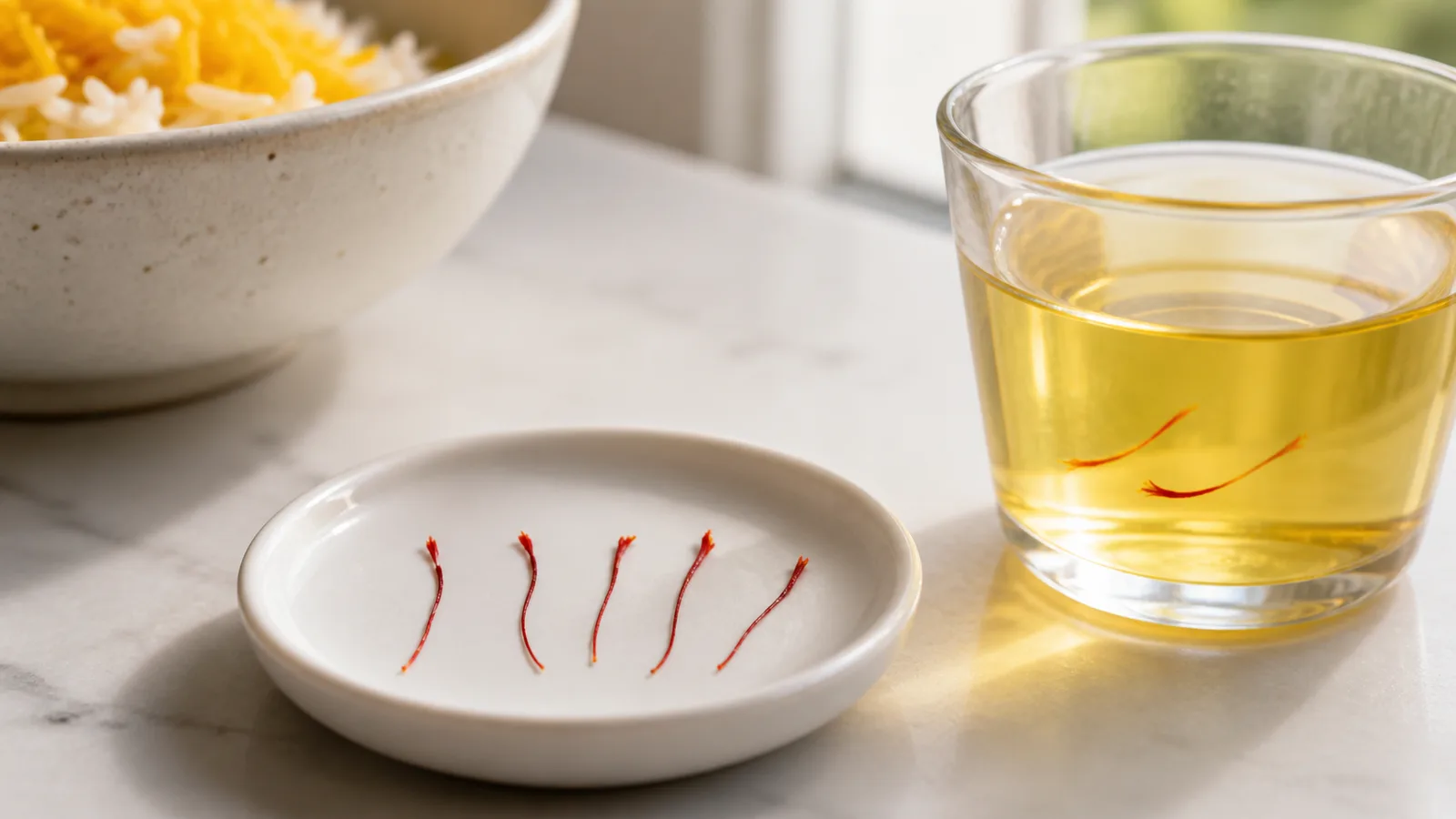
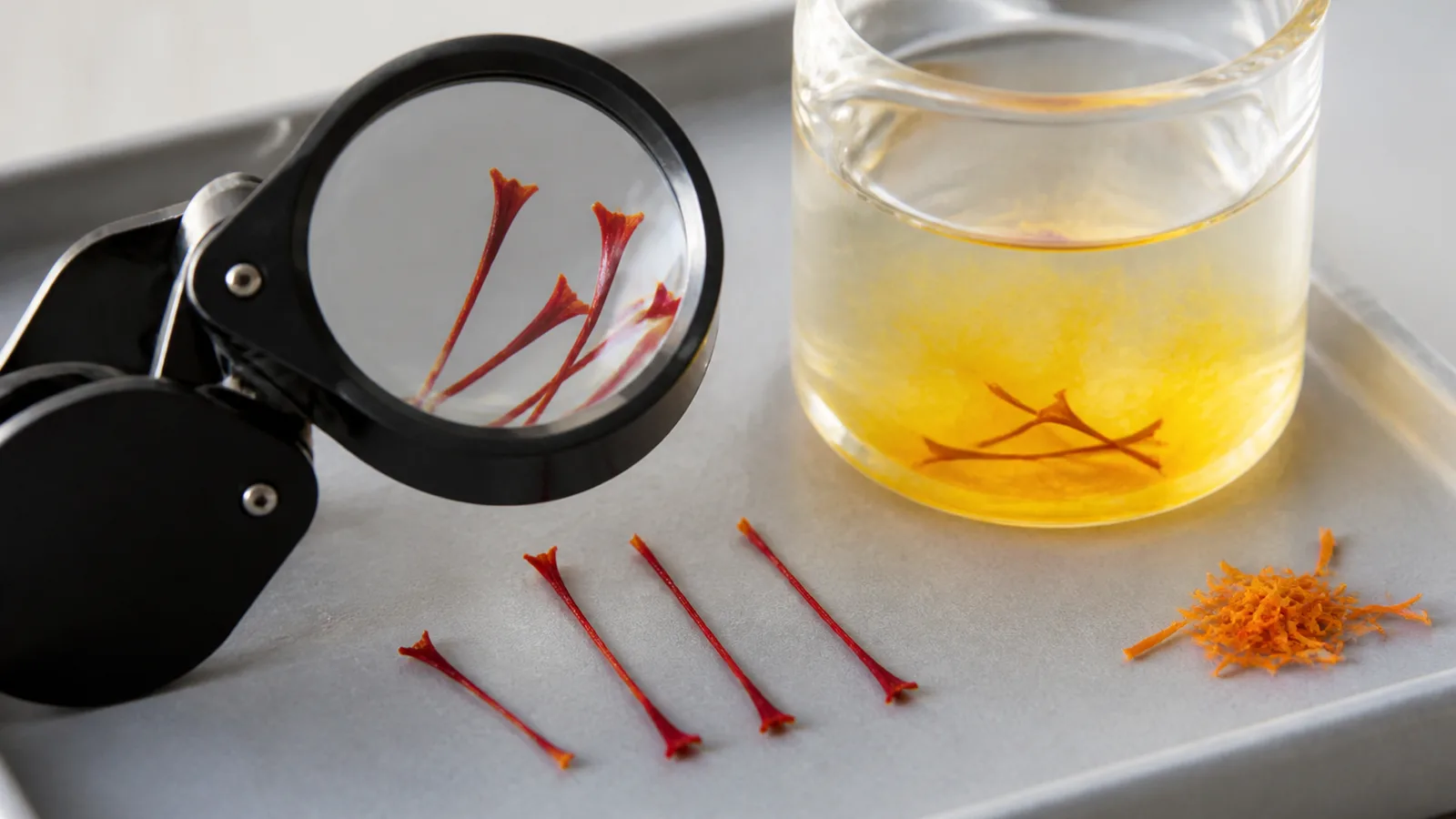
A genuine saffron stigma is thin and usually widens into a small trumpet-like end. Dry threads are brittle rather than soft like fabric. Good lots are predominantly deep red, sometimes with an orange-red tip or a small amount of lighter style attached.
Variation is normal. Threads do not need to be perfectly long, straight or identical, and some breakage occurs during handling. Be cautious when every fibre looks unnaturally uniform, when many pieces are flat like cut paper, or when the packet contains abundant yellow or white plant material.
This visual check helps answer how to check original saffron, but appearance alone cannot confirm geographic origin, freshness or laboratory grade. Sophisticated substitutes can be coloured and shaped to look convincing.
Smell before you taste
Genuine saffron has a complex aroma often described as floral, hay-like, warm and faintly honeyed. A chemical perfume, mustiness or no scent at all is a warning, though weak aroma can also mean old or badly stored genuine saffron.
If you taste one thread, expect bitterness. The aroma may suggest sweetness, but the thread itself should not taste sugary. Do not consume an unknown sample merely to authenticate it; sight, aroma, traceability and a water check give safer information.
A real saffron test in warm water
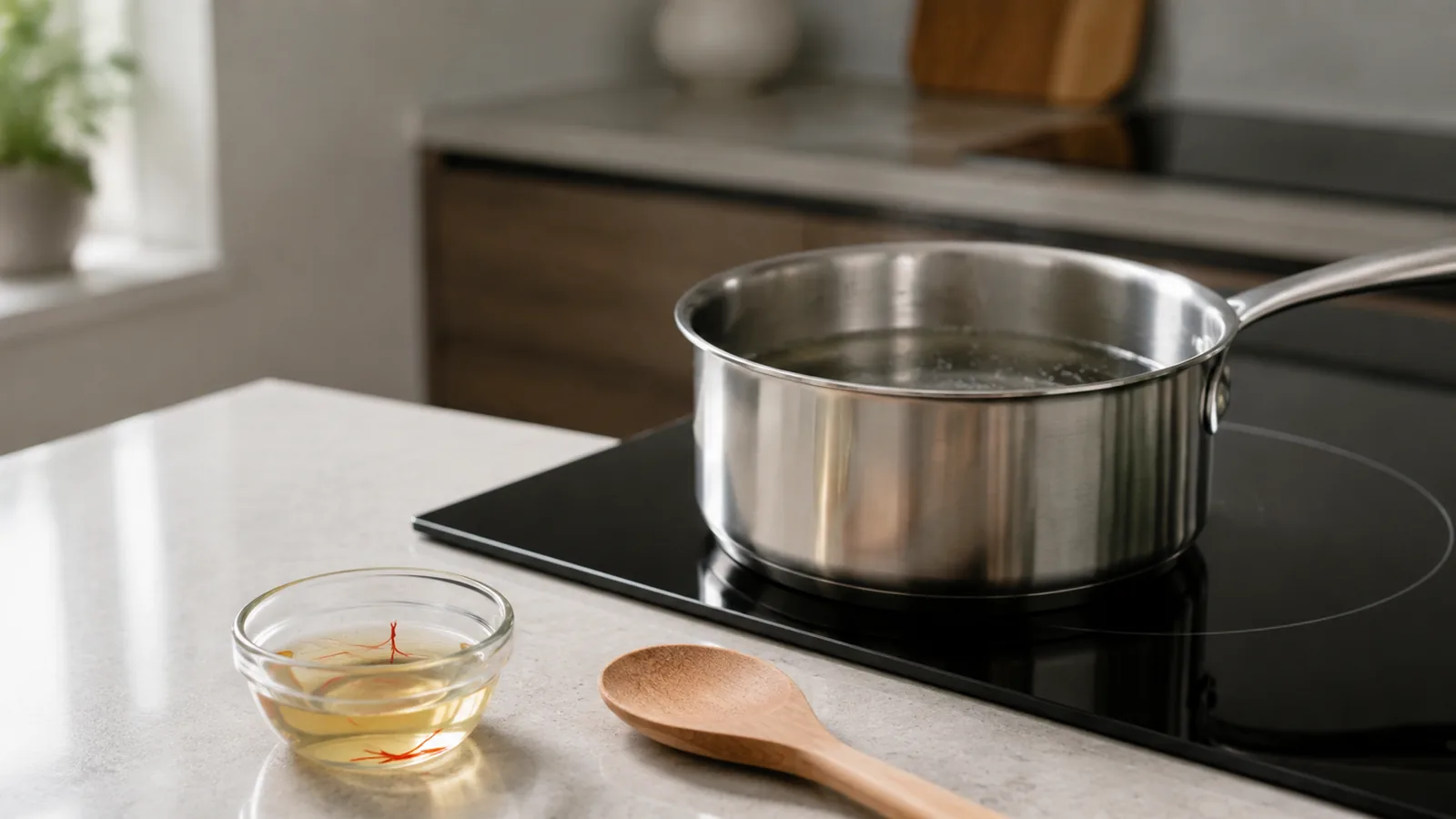
- Put a few threads in a clear glass.
- Add warm, not aggressively boiling, water.
- Watch for several minutes without stirring at first.
- Observe both the water and the thread structure.
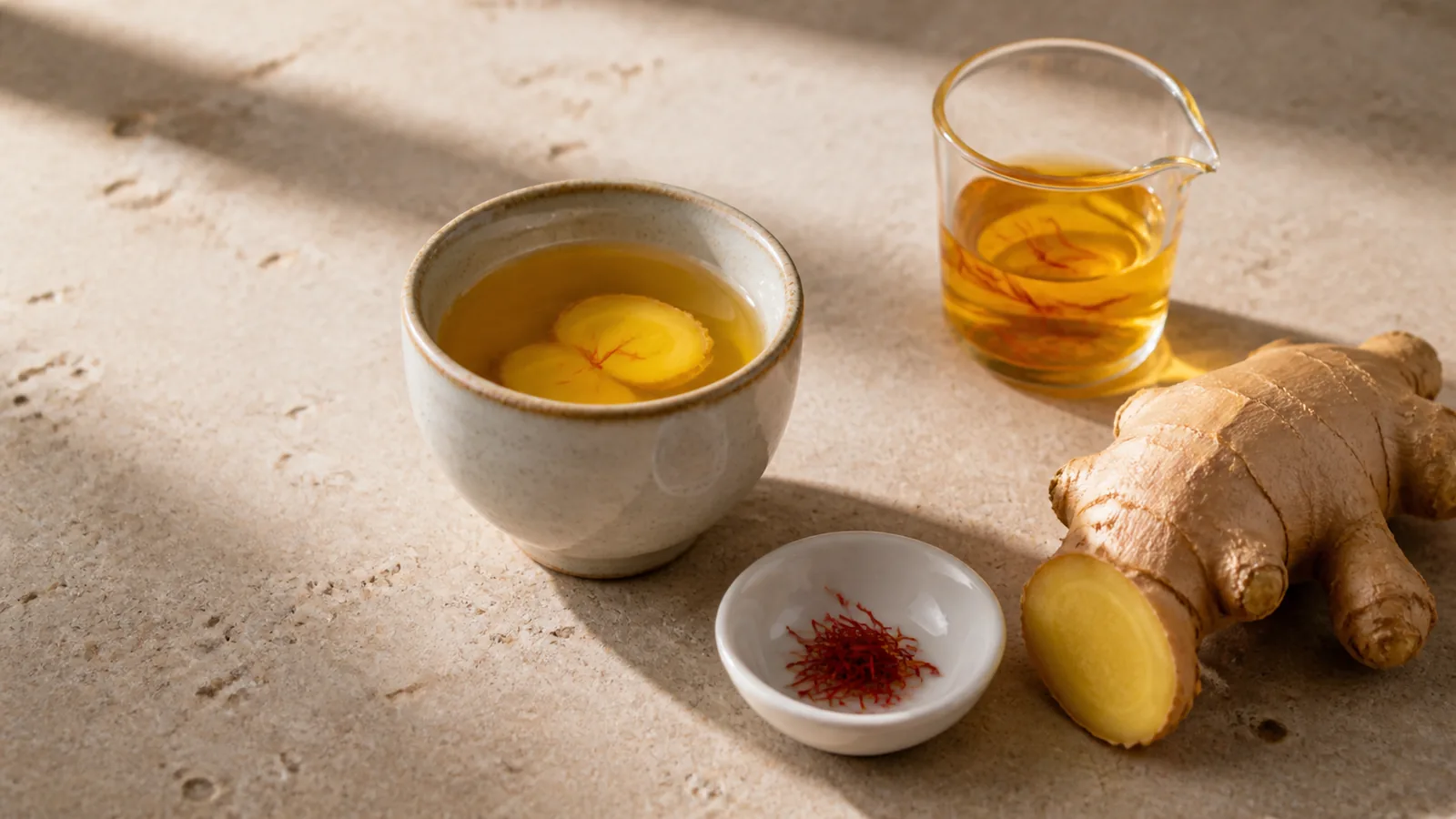
Real saffron gradually produces a golden-yellow infusion. The red threads may lighten over time but remain recognisable. An immediate harsh red cloud, obvious surface dye or fibres that quickly disintegrate is suspicious.
How to test real saffron is often presented as a rigid timer or colour rule, but extraction changes with temperature, crushing, quantity and steeping time. A fast result is not automatic proof of fraud, and a slow golden result does not prove every aspect of quality. Compare the whole pattern.
How to identify good quality saffron
Authenticity and quality are related but different questions. A product can be genuine yet old, poorly dried, weak or rich in lighter style. Once the material appears authentic, judge its aroma, red-stigma proportion, storage, lot information and performance in a recipe.
A meaningful saffron quality test for trade uses standardised laboratory methods rather than a kitchen glass. The ISO 3632-1:2025 saffron specification defines categories and requirements for dried saffron. If a seller cites an ISO category or crocin value, ask which batch was tested, by whom and under which standard.
Shortcuts that do not prove saffron is real
- Price: a very low price is a warning, but a high price can still be charged for a poor product.
- Country name: origin cannot be established from colour or aroma alone.
- Perfect red colour: dyed substitutes can look vivid in a dry packet.
- One water photo: lighting, vessel colour and camera processing can distort the result.
- Seller guarantees: a promise is useful only when the seller and product are traceable.
Check the package and source
Look for a clear net weight, origin information, a responsible seller, and batch or lot details where available. The container should protect the threads from moisture, light and strong odours. A small first purchase lets you judge performance without committing to a large quantity.
Our all-red saffron page shows whole threads that can be inspected before use. “All red” describes the preparation; it should not be confused with a universal guarantee that every harvest has identical strength.
How to know if saffron is real
Use a sequence: inspect the trumpet-shaped stigmas, check the floral hay-like aroma, confirm the bitter taste only if the source is known, watch for gradual golden colour in warm water, and verify the seller’s traceability. That is a more dependable answer than searching for a single saffron-real trick. For high-value or commercial decisions, laboratory analysis remains the strongest verification.