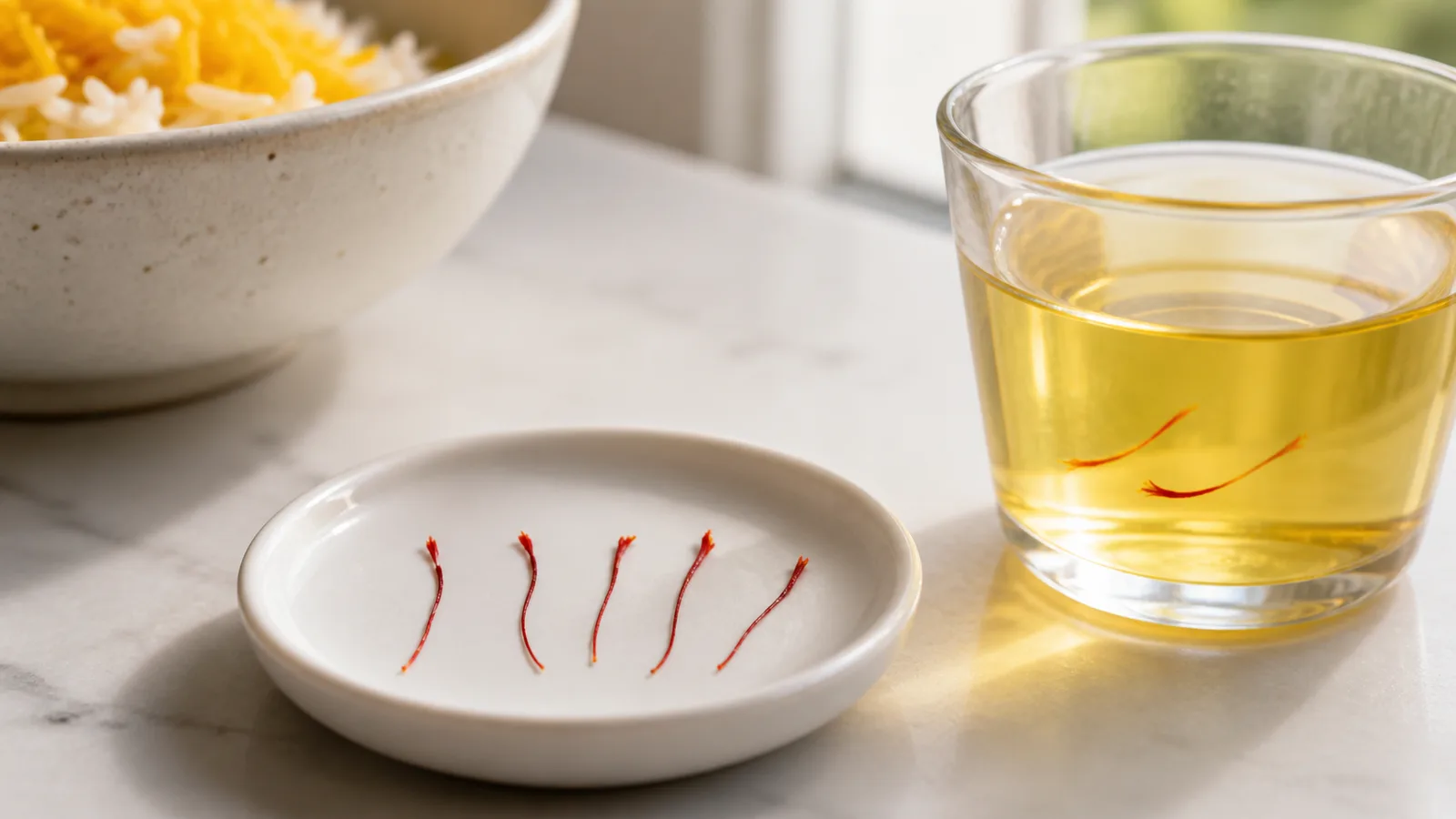
Saffron consumption by country cannot be read from one perfect global scoreboard. The clearest comparable measure is reported import value: in the World Bank’s 2024 trade data, Spain was the largest individual-country importer of saffron, while the European Union’s separate bloc total was higher. Imports are not the same as final household use, so both parts of that answer matter.
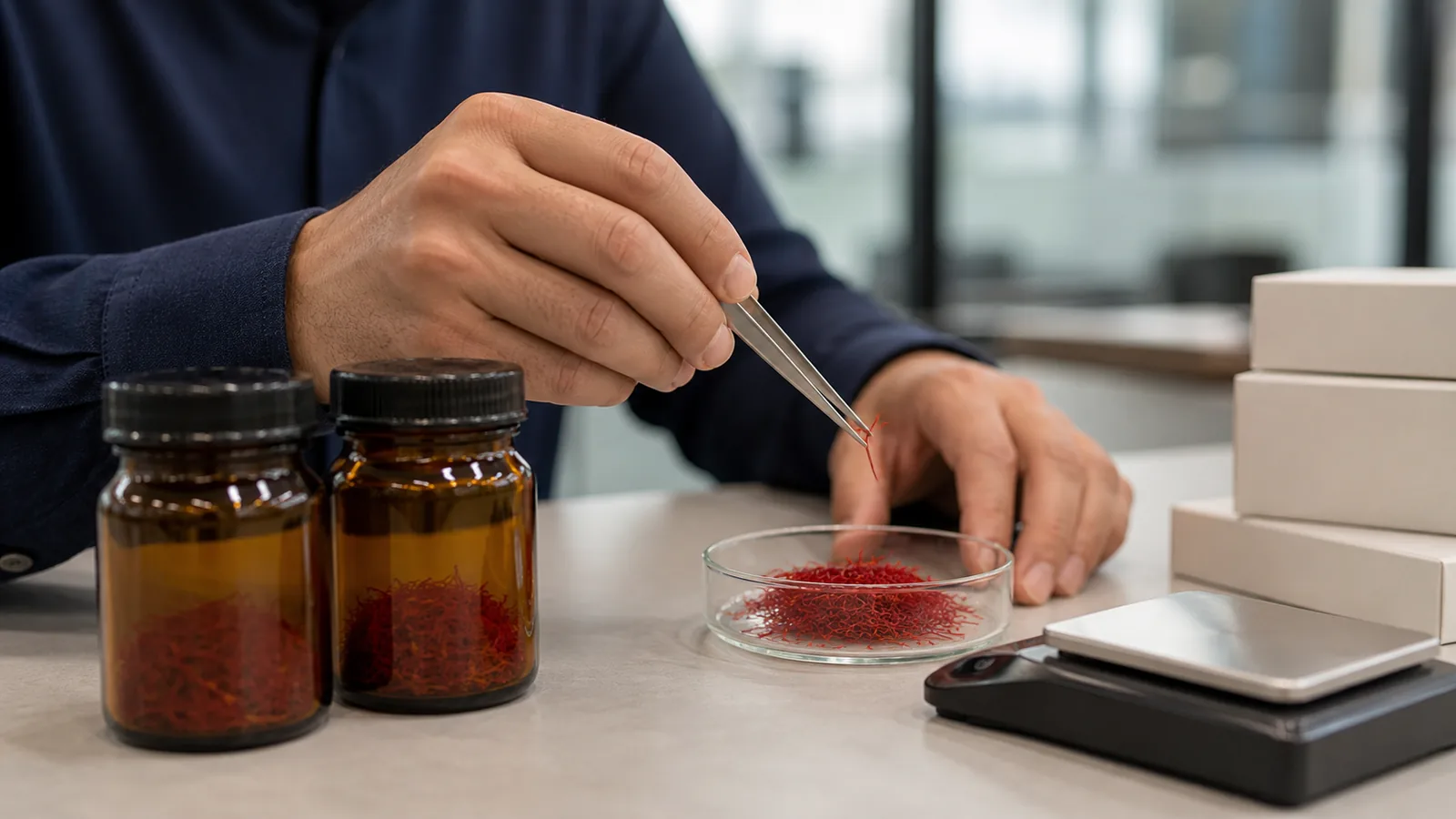
Who buys the most saffron in the world?
Among individual reporting countries, Spain recorded the highest 2024 saffron import value at about US$56.3 million. India followed at about $37.7 million. Italy, Saudi Arabia, the United States and China were also large reported markets by value.
The European Union appears above every country on the same source at about $77.1 million, but it is a regional aggregate, not another country to add to Spain, Italy and France. The figures come from the World Bank’s World Integrated Trade Solution presentation of UN Comtrade data for 2024 saffron imports under HS 091020.
This supports a precise answer to “who buys saffron?” in international trade. It does not prove that Spanish households personally consume more than people in India or the Gulf. Imported saffron can be processed, packed, held in inventory or exported again.
What saffron trade data actually measure
Customs data record goods crossing a border. “Import value” is the declared value of those flows. “Import quantity” can be useful, but quantities may be missing, reported in different supplementary units or affected by classification errors. For a high-value, low-weight spice, implausible quantity-to-value relationships deserve caution.
The World Bank page identifies the product as HS 091020 and notes that its figures are gross imports. It also displays the EU aggregate alongside member countries. For those reasons, this article uses country-level import value to compare buyers and does not sum the list into a supposed world-consumption total.
Final consumption would require consistent retail, food-service, manufacturing and household-use data in every country. No such complete public series sits behind a simple claim that one population “uses the most.” Trade value is the defensible answer available here, with its limits stated.
The leading saffron import markets in 2024
The country rows in the 2024 WITS/UN Comtrade summary place these markets near the top by reported import value:
- Spain: approximately US$56.3 million;
- India: approximately $37.7 million;
- Italy: approximately $20.1 million;
- Saudi Arabia: approximately $19.3 million;
- United States: approximately $18.2 million;
- China: approximately $16.4 million;
- France: approximately $11.8 million.
These are rounded reported values for a specified year, not forecasts and not permanent rankings. Sweden, Oman, Germany, Kuwait, the United Kingdom, Switzerland and Qatar also appear as substantial country reporters in the same data. Late reporting, revisions, prices and trade routes can change positions from one year to the next.
Europe saffron market: more than household cooking
The Europe saffron market includes direct culinary use, restaurant and food-manufacturing demand, specialist spice businesses, packing operations and onward trade. The EU aggregate was the largest market row in the 2024 WITS summary. Within the individual-country rows, Spain ranked first, followed by Italy among the largest European buyers; France, Sweden and Germany also reported meaningful imports.
Spain deserves special care in interpretation. It grows recognised domestic saffron and has a deep culinary association with dishes such as paella. It is also a major importing, packing and trading centre. Therefore Spain’s customs value cannot be described simply as Spanish diners eating every imported thread.
Italy likewise has regional saffron traditions and a large recorded import value. Elsewhere in Europe, demand ranges from traditional seasonal baking to restaurant kitchens and retail spice sales. Those uses explain why Europe is commercially important without requiring the unsupported claim that demand rises every year in every market.
India’s role in saffron consumption and trade
Saffron has established culinary, ceremonial and traditional cultural uses in India, while Kashmir is itself a producing region. The 2024 trade summary nevertheless places India second among individual-country importers by value. Domestic production and imports can coexist when a large market needs different origins, grades, pack sizes or supply at different times.
Saffron demand in India should not be inferred from imports alone. Locally grown Kashmir Saffron does not cross an international border when sold elsewhere within India, so it is absent from import totals. Imported volume may also pass through wholesalers before reaching food businesses or households.
The United States saffron market
The United States reported roughly US$18.2 million of saffron imports in 2024, placing it among the major country markets by value. Demand includes home cooking, restaurants, food manufacturers, specialist grocers and online retailers serving many culinary traditions.
The original version of this article attributed US growth to “medicinal benefits.” Trade figures cannot establish that cause, and popularity does not prove a health effect. Culinary use, a diverse population, restaurant demand and broader product availability are more responsible explanations to discuss without turning a market article into medical advice.
GCC saffron market and Middle Eastern traditions
The GCC saffron market is commercially important and culturally varied. Saffron appears in rice dishes, sweets, coffee and hospitality traditions across the Gulf. Saudi Arabia was the fourth-largest individual country in the 2024 WITS ranking by value, at about US$19.3 million.
Oman, Kuwait and Qatar also reported notable imports in that year, while Bahrain appears further down the country list. The United Arab Emirates remains relevant to regional saffron trading and distribution, but a trade hub should not automatically be labelled the largest final consumer. Missing or differently timed reporter data can also make year-to-year comparisons misleading.
When discussing the Saudi Arabia saffron market or UAE saffron buyers, separate three audiences: residents and food-service businesses using the spice, importers supplying the local market, and traders moving products onward. All buy saffron, but they answer different commercial questions.
China and other growing markets
China reported approximately US$16.4 million in saffron imports in 2024. Its market includes culinary products as well as regulated non-culinary channels. That figure places China among the leading importers by value, but it should not be converted into a claim about individual consumption without population-level use data.
Canada, Australia, Japan and several European and Gulf countries also appear in the international trade record. Their smaller totals do not necessarily mean weak retail opportunities. Market size, product positioning, regulation, distribution cost and the number of specialist buyers all affect commercial potential.
The largest producer is not automatically the largest buyer
Iran is the dominant saffron producer. FAO’s profile of the Qanat-based Saffron Farming System in Gonabad identifies Iran as the world’s largest producer and reports more than 90% of global production. That is a supply-side fact, not an import ranking.
A producer may consume much of its own crop without importing it. Conversely, a country with modest production may import saffron for domestic use, processing, packaging or re-export. Our guide to saffron quality by country explains why production scale and product quality are also separate questions.
Who buys saffron inside each market?
National trade data combine several kinds of buyer whose needs are not identical:
- Importers and distributors buy commercial lots, manage customs and supply smaller businesses.
- Packers and private-label brands may clean, grade or divide bulk saffron into retail packs.
- Restaurants and food manufacturers need consistent flavour, colour, food safety and delivery.
- Specialist retailers serve cooks who care about origin, thread type and freshness.
- Households usually buy tiny packs and may use saffron for everyday dishes, celebrations or gifts.
The phrase “who uses saffron the most?” usually points to the last group, while “who buys the most?” may point to importers or countries. A useful market analysis states which one it means.
Why saffron market rankings change
Import value can rise because more saffron was bought, because the average declared price increased, or both. A harvest shock, currency movement, shipping route, sanction, inventory decision or change in reporting can alter a country’s row. Re-exports can make the same saffron appear in more than one border flow.
Saffron’s high price also means that a relatively small physical shipment can carry a substantial customs value. The labour and flower yield behind that price are explained in our guide to why saffron is so expensive.
Quality mix matters too. One market may import small quantities of expensive, tested threads; another may report larger quantities at a much lower unit value. Comparing only dollars or only kilograms can therefore give different answers.
For a current commercial decision, use the latest complete reporter data and inspect several years. Treat market-size forecasts from private reports as estimates built from a stated method, not as customs facts. The global saffron market is real, but a large rounded forecast is not automatically more reliable than documented trade.
How to use these figures as a buyer or seller
A seller choosing a market should look beyond rank. Check import rules, food labelling, pesticide and contaminant requirements, documentation, customer segment, pack size, local pricing and the cost of a reliable distributor. A buyer should ask for a traceable lot, product origin and evidence relevant to purity and strength.
The current international specification, ISO 3632-1:2025, defines requirements for dried saffron in thread, cut-thread and powder forms. A country-level trade total says nothing about whether one pack meets those requirements.
So, who buys the most saffron in the world? On 2024 reported import value, Spain leads the individual countries and the EU is the larger separate bloc entry. For final consumption, the honest answer is less absolute: Spain, India, the United States and Gulf markets are all important, but customs records alone cannot crown one population as the largest user.
For current product pricing, see our unchanged saffron price page. If you are sourcing a retail pack, browse our saffron products and check the origin and pack details shown for the item.