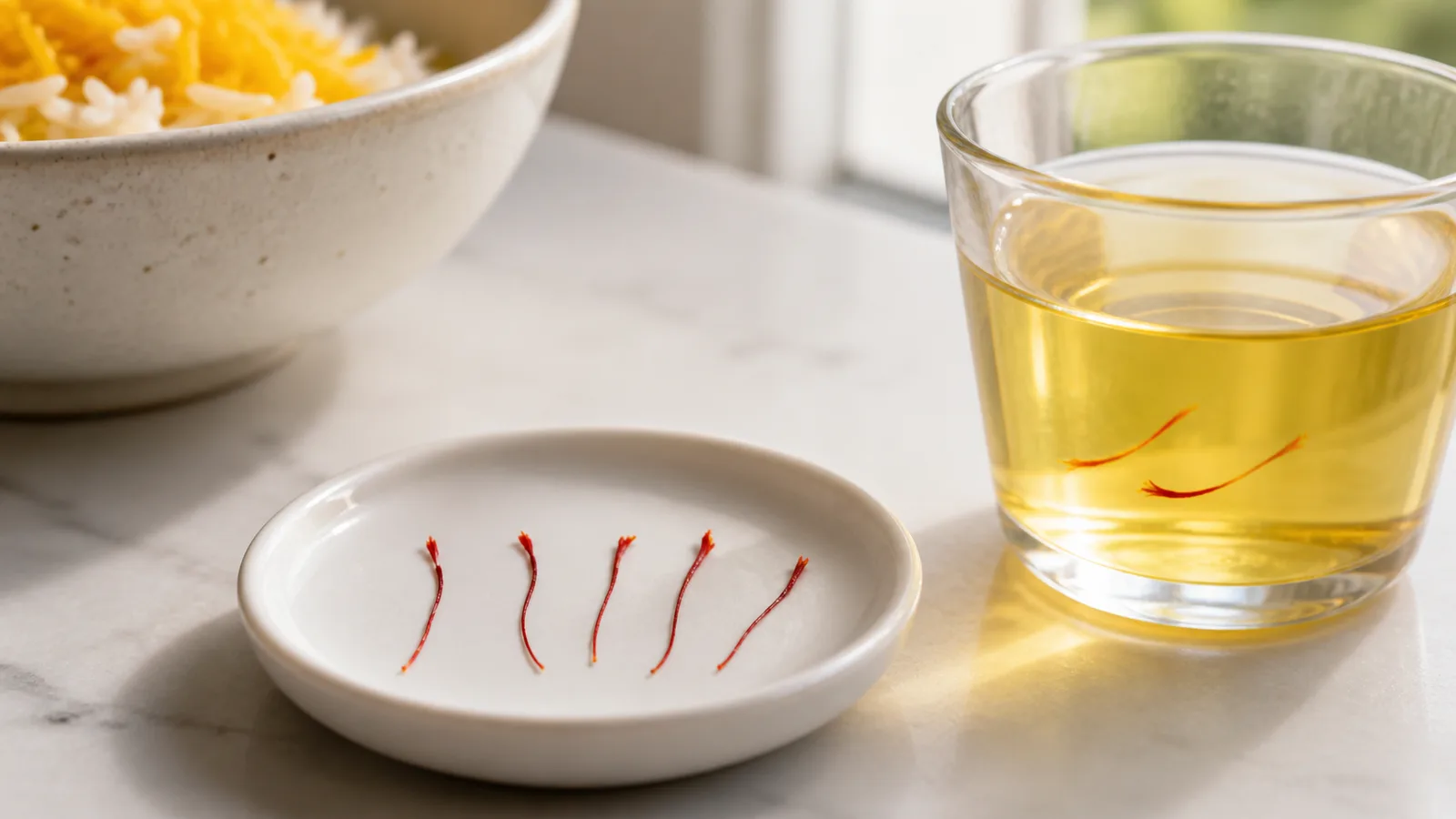
There is no country that produces the best quality saffron in every harvest and every pack. Iran is by far the largest producer and supplies outstanding saffron, but excellent, traceable batches also come from Kashmir in India, Spain, Greece, Afghanistan and parts of Italy. The safest answer is to judge origin and batch quality together.
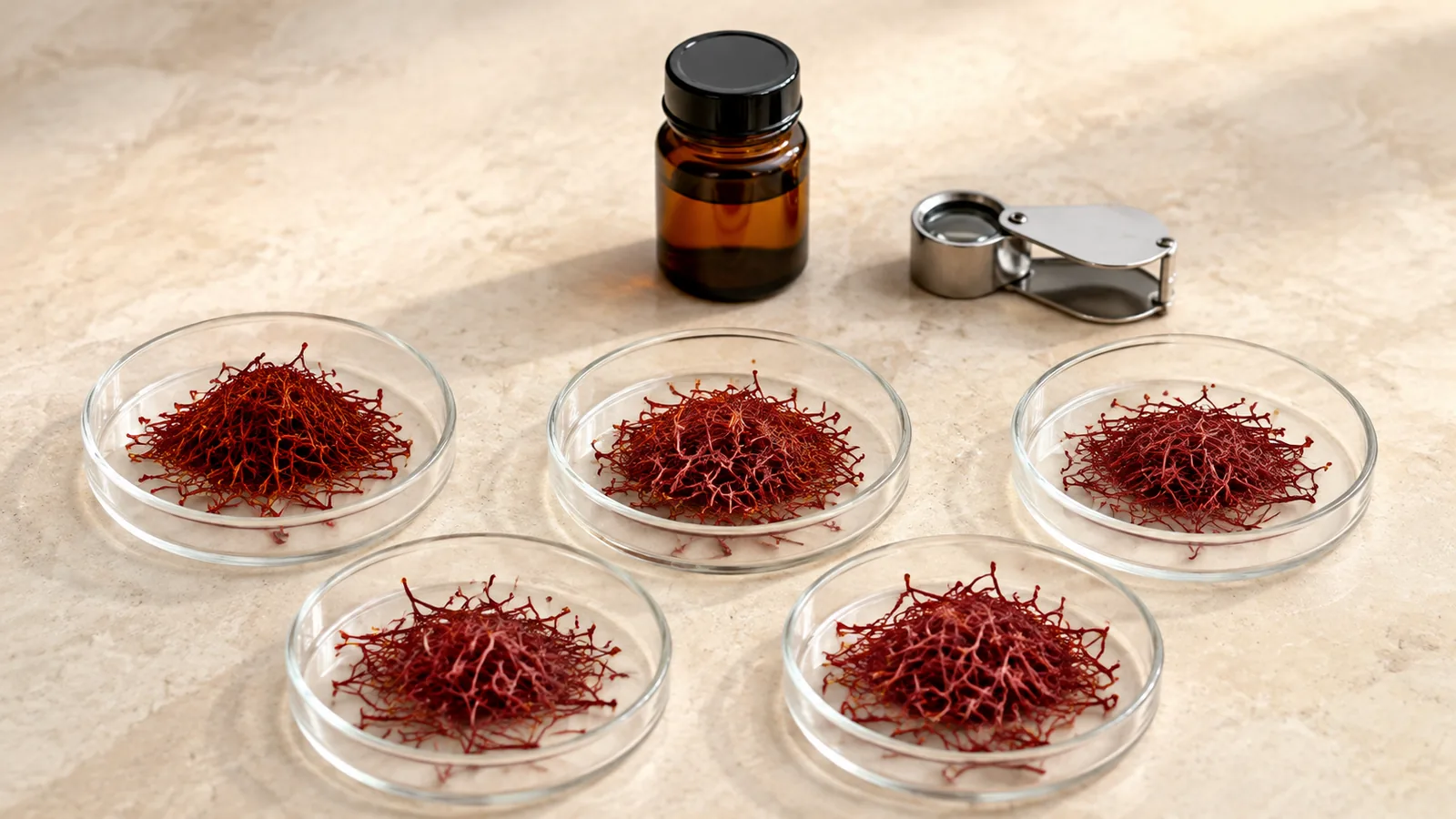
Which country has the best quality saffron?
For a buyer who wants a direct recommendation, high-quality Iranian saffron is a strong choice because Iran combines long experience, a large producing base and a wide selection of thread grades. Origin alone is not a guarantee, however. A carefully harvested and properly dried batch from another established region can be better than poorly handled or adulterated saffron carrying a famous country name.
The current ISO 3632-1:2025 specification applies to dried saffron in filaments, cut filaments and powder. It defines product requirements rather than declaring a winning country. The official ISO 3632-1 saffron specification is therefore a better starting point for quality claims than a country leaderboard.
Country of origin and saffron quality are different questions
“Where was it grown?” is an origin question. “How clean, pure, dry, aromatic and colour-rich is this lot?” is a product-quality question. Climate, soil and local practice matter, but so do the harvest date, the portion of the stigma retained, separation, drying, storage, packaging and protection from moisture and light.
Country names can also describe different things on a retail pack: the crop’s growing origin, the place where it was processed, or the place where it was packed. Look for an explicit country of origin and a traceable producer or lot. A protected geographical indication can substantiate a regional name, but it still does not let a buyer assume that every unrelated pack from the same country has identical strength.
Iran: the largest saffron producer
Iran is the biggest producer of saffron in the world. The UN Food and Agriculture Organization’s profile of the Qanat-based Saffron Farming System in Gonabad reports that Iran accounts for more than 90% of world production. That figure describes production scale; it is not a laboratory grade for every Iranian batch.
Much Iranian saffron is associated with Khorasan, though production is not confined to one locality. The region’s dry summers, cold season and established hand-harvest knowledge support the crop. Iranian suppliers also offer different commercial thread cuts, including forms sold as Negin, Sargol and Pushal. Those names describe presentation and retained parts of the stigma; they should not replace purity, moisture and strength evidence.
Good Iranian threads are typically clean and red, with a clear characteristic aroma and strong performance in infusion. The buyer should still check the actual pack, because weak storage, excess floral material or false labelling can undermine an otherwise respected origin.
Kashmir, India: a protected regional origin
India’s best-known producing area is Kashmir. Kashmir Saffron is a registered geographical indication, with the Agriculture Production Department of Jammu and Kashmir named as proprietor in the official Intellectual Property India record. That registration protects an origin-linked name; it is not evidence that an untraceable product described only as “kesar” came from the registered area.
Kashmiri saffron can have excellent colour, aroma and taste. Its comparatively limited and region-specific supply also makes traceability important. Check the producer, certification details, lot information and package integrity rather than paying a premium for the word Kashmir alone.
Spain: recognised saffron with a defined PDO
Spain has a long saffron tradition, particularly in La Mancha. Azafrán de la Mancha is a protected designation of origin for saffron threads produced within the defined Spanish area and according to its specification. The current EU record for Azafrán de la Mancha PDO sets origin, physical, chemical and labelling conditions and refers to standardised analysis.
Traditional roasting and drying can give La Mancha saffron a distinctive culinary character, but “Spanish saffron” on its own is broader than the PDO name. Read the origin statement closely. A company location or Spanish-style package is not the same as certified La Mancha origin.
Greece: Krokos Kozanis PDO
Greece produces smaller volumes than Iran, but Krokos Kozanis has a protected designation of origin. The European Commission’s Krokos Kozanis PDO profile links the product to the Kozani region and describes controlled harvesting, drying, moisture checks and packaging.
That makes a genuine PDO-labelled pack a meaningful option for someone seeking traceable Greek saffron. It does not establish that Greece defeats every other origin in a blind quality test. It shows that a specific product name, place and production method are connected and controlled.
Afghanistan: established production centred on Herat
Afghanistan is an important saffron-producing country, with much of the best-known production associated with Herat. FAO’s profile of Herat-Bastan Saffron describes strong red threads and the colour, aroma and bitter-taste components considered in its origin-linked product definition.
Afghan saffron has gained international attention, but awards and national reputation should be tied to the named product, year and judging method. For an everyday purchase, traceable origin, a sealed pack and lot-specific evidence remain more useful than an undated “world’s best” badge.
Italy and other saffron-growing countries
Italy has respected small regional production, including protected names such as Zafferano di San Gimignano. Morocco and other Mediterranean or Central Asian regions also grow Crocus sativus. These producers matter even though global volume is dominated by Iran.
This is why a “top 5 saffron producing countries” list needs a definition. By volume, Iran stands apart. Below it, positions can change with the year and source, while production, export and packing statistics are often mistaken for one another. The practical group to know includes Iran, India, Afghanistan, Greece and Spain, with Italy and Morocco also having genuine producing traditions. That is a guide to origins worth investigating, not a permanent numerical league table.
What makes the best quality saffron?
The best saffron is genuine Crocus sativus, cleanly separated, dried correctly and protected after processing. Look for evidence across several points rather than trusting the deepest red colour or strongest smell by itself.
- Traceable origin: the pack identifies the growing country, responsible business and lot, not merely a style or packing address.
- Whole threads when possible: filaments let you see shape, red stigma and unwanted plant matter more clearly than powder.
- Clean appearance: there should be little dust, debris, yellow style or unrelated material. Bright artificial-looking colour is not proof of quality.
- Controlled moisture: threads should be dry and the package free from condensation or clumps. Extra water adds weight and threatens stability.
- Lot-specific analysis: a credible report identifies the tested lot, laboratory, date, method and result. A generic certificate copied across products proves much less.
- Sound packaging: a sealed, food-suitable container protects the spice from moisture, light, heat and foreign odours.
- Useful dates: harvest or production details, packing date and best-quality guidance help the buyer judge freshness.
ISO describes strength through analytical measures associated with colour, aroma and taste, while also addressing purity and moisture. A seller who states an ISO category should be able to connect it to a current test report for the lot. The label “premium,” by contrast, has little value without a defined specification.
Does darker red always mean better saffron?
Red stigma tissue is desirable, and a high proportion of red thread generally matters. Yet colour alone cannot identify the best saffron. Lighting, photography, age, moisture and deliberate colouring can all change what a buyer sees. Similarly, a very strong aroma can reflect storage and processing as well as origin.
Use visual and sensory clues as screening tools, then check traceability and testing. Our guide to identifying pure saffron explains what home observations can and cannot establish. A home water test is not a substitute for laboratory analysis.
How to choose between Iranian, Spanish and Kashmiri saffron
Choose according to the dish, the evidence supplied and the batch in front of you. A cook seeking strong colour, flavour and aroma may prefer a recent, high-strength Iranian thread lot. Someone preparing a regional Spanish recipe may value certified Azafrán de la Mancha. A buyer interested in a protected Himalayan origin may choose verified Kashmir Saffron.
Do not assume that one country always tastes “bold” and another always tastes “delicate.” Drying, ageing, cut and brewing method can create differences within the same origin. If possible, compare small quantities under the same conditions before buying a large pack.
A country claim should help you verify the pack
The country with the most saffron is Iran; the country with the best saffron depends on the particular lot and the buyer’s purpose. Start with a respected producing origin, then require clean whole threads, a sealed pack, honest labelling and evidence that follows the batch. That approach recognises the strengths of Iranian, Spanish, Kashmiri, Greek, Afghan and Italian saffron without turning geography into an unsupported guarantee.
To compare available formats and traceable product information, visit our saffron products. Our guide to types of saffron explains thread styles and the parts of the stigma they retain.