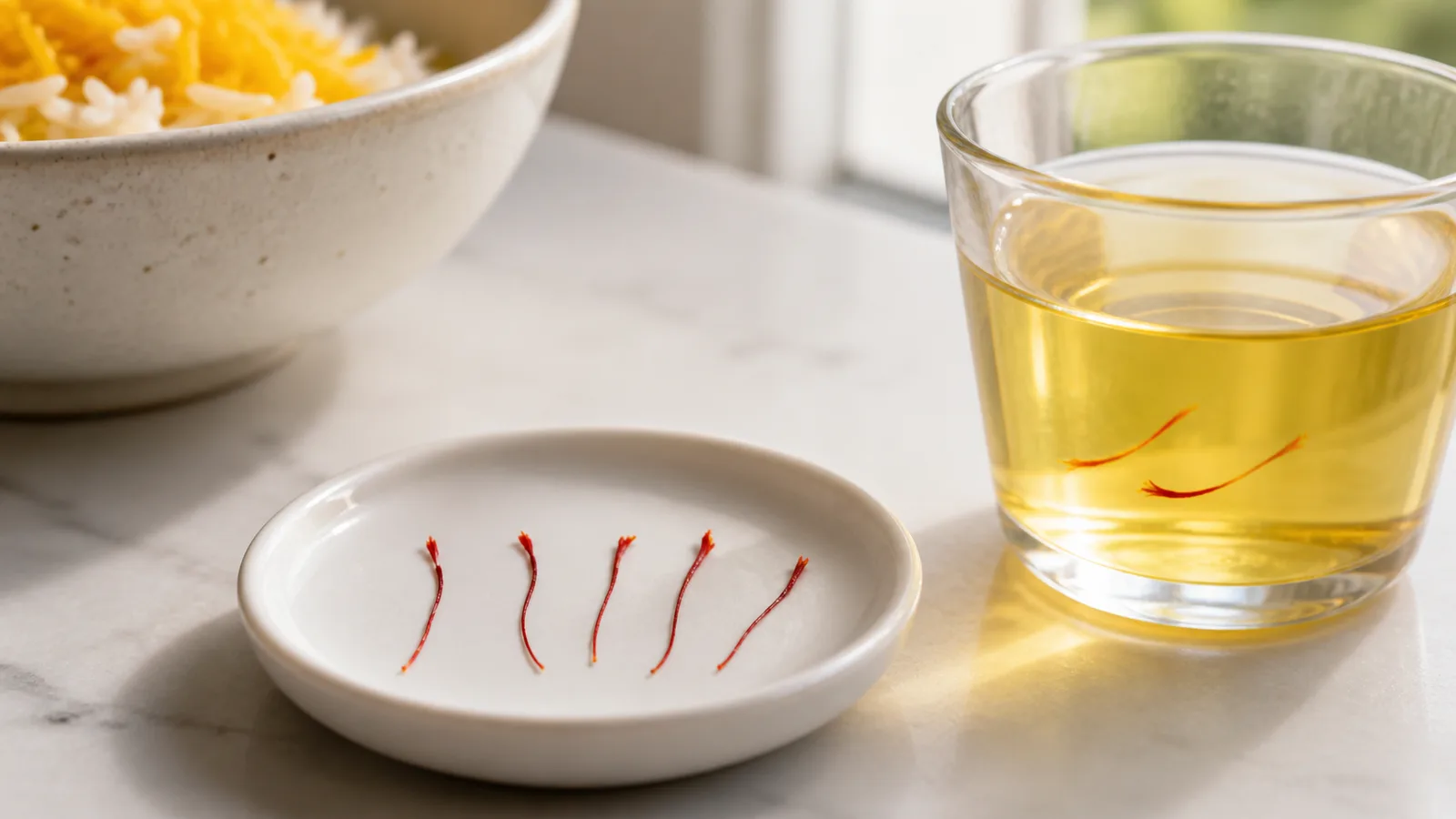
Iran is the top saffron producing country by a very wide margin. In September 2025, the UN Food and Agriculture Organization said Iran produces more than 90% of the world’s saffron. That makes Iran the clear answer to “Which country has the most saffron?”—but it does not mean every Iranian batch is automatically better than saffron grown elsewhere.
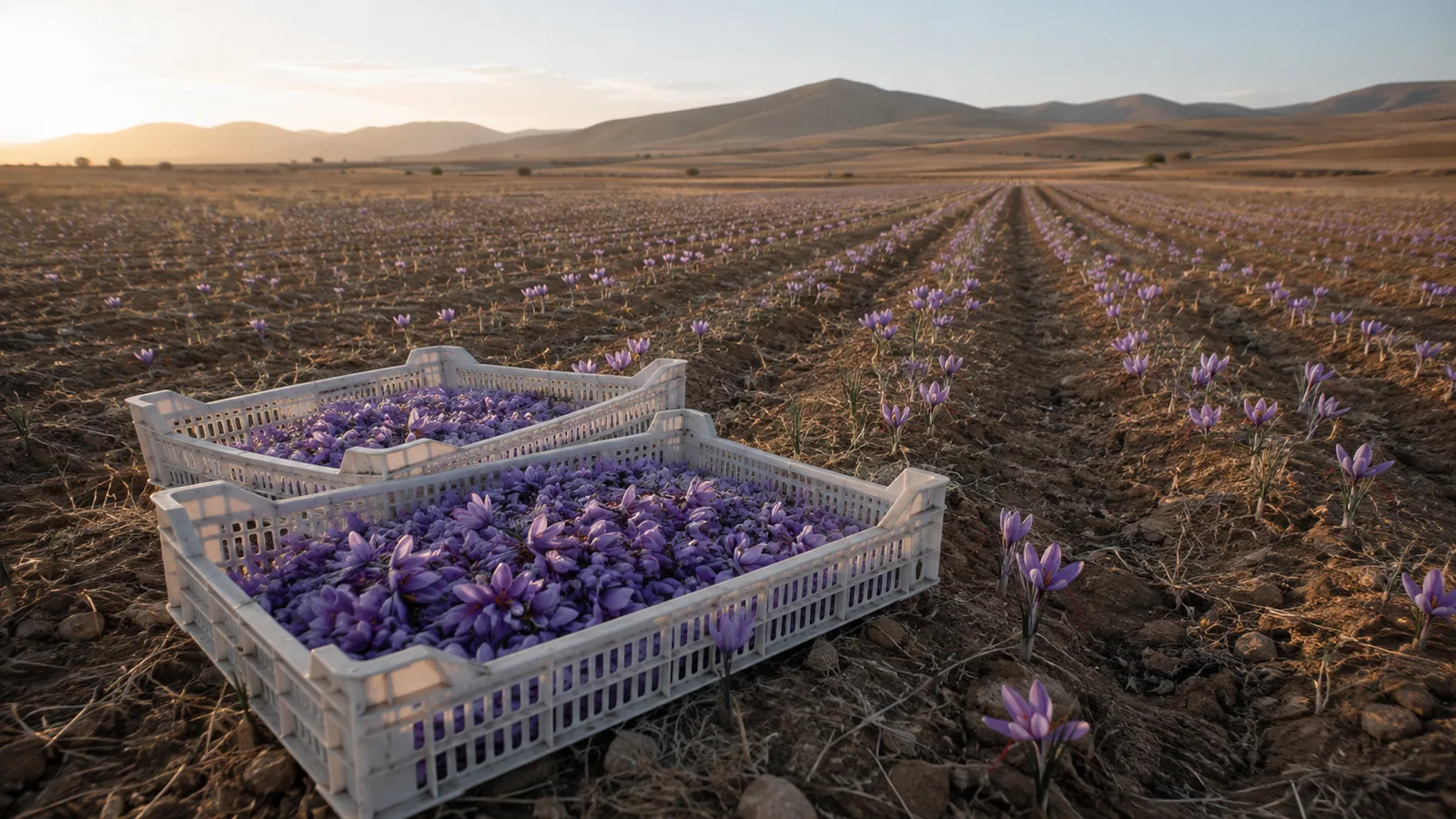
Why Iran is the top saffron producing country
Iran’s lead comes from a combination of scale, suitable growing regions, experienced labour and an established supply chain. The main producing provinces are Khorasan Razavi, South Khorasan and North Khorasan. Cultivation knowledge has accumulated there over generations, from selecting and planting corms to picking flowers quickly and separating the delicate red stigmas by hand.
The FAO’s 2025 account of Iran’s saffron sector places the country above 90% of world production. It also identifies authenticity and post-harvest handling as continuing concerns. In other words, production volume is impressive, but careful processing and testing still matter after a flower leaves the field.
Why saffron thrives in parts of Iran
Crocus sativus suits the seasonal rhythm of several Iranian growing areas. The corms rest through a hot, dry summer, begin active growth as conditions cool and flower in autumn. Many farms operate in arid or semi-arid landscapes where water must be used thoughtfully and the soil must drain rather than remain saturated.
Gonabad offers a useful example. The FAO recognises its qanat-based saffron farming system as a Globally Important Agricultural Heritage System. Underground qanats provide a managed water source in a dry region, while local growers bring long practical experience to planting, care and harvest.
Climate and soil help make cultivation possible; they do not guarantee colour, aroma or flavour on their own. Corm health, harvest timing, stigma separation, drying, storage and protection from moisture and light all influence the finished spice.
Which other countries produce saffron?
Saffron-growing countries include India, Spain, Afghanistan, Morocco, Greece and Italy, among others. Their industries are much smaller than Iran’s, yet several have important regional traditions.
- India: Kashmir is known for saffron grown on the Pampore plateau and nearby areas. Its origin and local production tradition are distinct from Iranian saffron.
- Spain: La Mancha has a long-established saffron culture. Spain is also a major centre for saffron packing and trade, so a Spanish brand or packing address does not by itself establish where the crocuses were grown.
- Afghanistan: Saffron has been developed as a high-value crop, particularly around Herat.
- Morocco: Taliouine and its surrounding area are closely associated with Moroccan saffron production.
- Greece and Italy: Both maintain smaller regional industries with protected or strongly local identities.
A neat ranking of every country can be misleading because production estimates may cover different harvest years and use different methods. If you are comparing top saffron producing countries in 2025 or 2026, check the date and definition behind the figures. The latest official FAO statement cited above still leaves Iran firmly in first place.
Production and exports are not the same measure
The largest producer is the country where the saffron is grown and harvested. The leading exporter is the country recorded as sending it across a border. Those measures can differ because saffron may be imported in bulk, graded, packed and then re-exported.
This distinction matters when reading a label. “Packed in” tells you where the package was prepared; it is not necessarily a statement of agricultural origin. A useful seller should be able to say where the saffron was grown, identify the lot and explain how its quality was assessed.
Does the largest producer also make the best saffron?
There is no honest country-only answer to which nation has the “best” saffron. Iran’s scale and expertise allow it to produce excellent saffron, but a country name cannot replace an assessment of the actual lot. A well-handled batch from another established growing region can be better than an old, damp or adulterated batch from the world’s largest producer.
Useful comparisons look at thread condition, sensory character, storage and traceability. Laboratory assessment may also measure compounds associated with saffron’s colour, taste and aroma, including crocin, picrocrocin and safranal. For a focused comparison of two familiar origins, see our guide to Iranian and Spanish saffron.
Why Iranian saffron is so prominent in world markets
Each flower produces only three red stigmas, and the harvest cannot be mechanised like an ordinary grain crop. Flowers must be gathered and processed within a short seasonal window. Iran combines that labour-intensive method with extensive cultivated area and a mature network of growers, processors and traders.
These realities help explain both Iran’s output and the cost of genuine saffron. Our article on why Iranian saffron is expensive follows the work from corm and flower to dried threads.
How to buy authentic saffron from any country
Origin is useful context, not a complete authenticity test. Before buying, look for information that can be checked rather than relying on broad claims such as “premium” or “the finest.”
- Confirm the stated country or region of cultivation, not only the packing location.
- Choose a seller that provides a clear net weight, lot identity and contact details.
- Look for dry, recognisable saffron threads rather than unexplained coloured powder.
- Expect the aroma and colour to develop in warm water over time; instant clouds of harsh dye are a warning sign.
- Store the threads airtight, away from heat, moisture and direct light after opening.
You can review the formats and pack sizes on our saffron products page. The practical question is not simply which flag appears on a packet, but whether the seller can connect that packet to a real growing origin and a well-handled batch.
The short answer
Iran is the world’s largest saffron producer and, according to the FAO’s September 2025 statement, supplies more than 90% of global production. India, Spain, Afghanistan, Morocco, Greece and Italy also grow saffron on a smaller scale. When choosing what to buy, use country of origin as one part of the evidence, then judge the actual saffron by its traceability, handling, freshness and condition.