Water saffron thoroughly after planting, then water again only when the root zone is becoming dry and rainfall is not doing the job. Keep the soil lightly moist—not constantly wet—while leaves are actively growing. Once the foliage yellows and the corms enter summer dormancy, keep them much drier.
A saffron watering schedule must follow the plant
There is no reliable rule such as “twice a week” for every garden. A sandy raised bed in a dry autumn loses water much faster than heavy ground during a rainy week. The useful schedule follows three things: the plant’s growth stage, the moisture several centimetres below the surface and the weather forecast.
Saffron is drought-tolerant once established, but that does not mean active plants never need water. Its corms are far more vulnerable to persistent waterlogging than to a brief dry surface. The aim is moisture with air in the soil, not soggy ground.
During autumn and early winter, slightly moist, aerated soil supports active growth. Both excessive water and too little water can cause trouble: prolonged wetness raises the risk of root rot and mould, while sustained drought can contribute to weak flowering.
Water well when you plant the corms
Plant Crocus sativus corms in well-drained soil in late summer or early autumn, then water the bed well once. This settles soil around the corms and begins the growing cycle. The Royal Horticultural Society’s saffron-growing guidance likewise advises planting in a bright, well-drained site and watering in well.
After that first watering, do not add more on the calendar alone. Check beneath the top layer. If the root zone is still cool and moist, wait. If it is drying and no useful rain is expected, water slowly enough to reach the corm depth.
Water during autumn flowering and winter leaf growth
Saffron flowers in autumn, then carries narrow green leaves through winter and into spring. Those leaves supply energy to the daughter corms that will support later flowers. In a dry climate or under cover, irrigate when the root zone approaches dryness. In a rainy climate, natural precipitation may be enough for long periods.
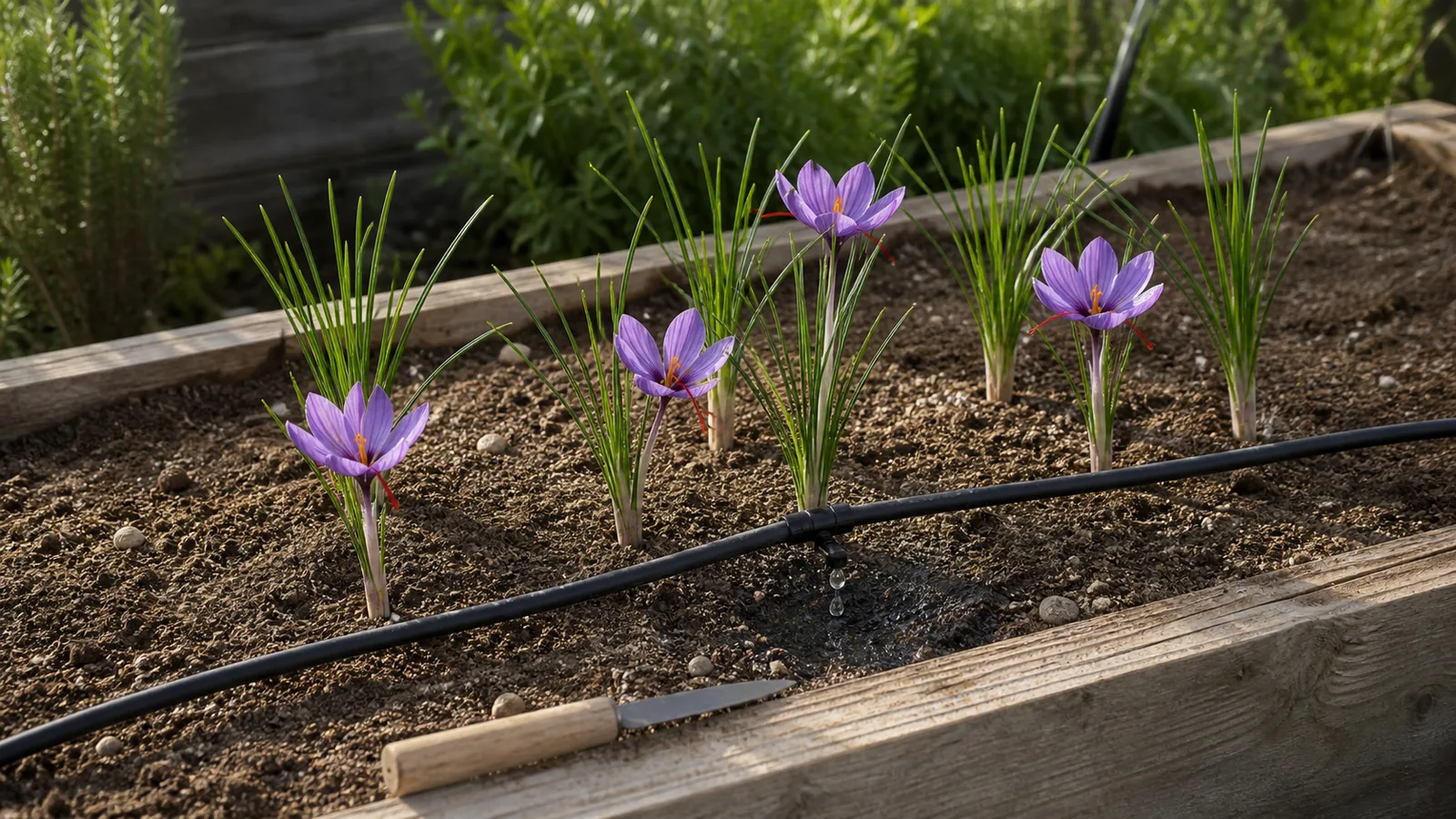
Check the bed about once a week; that is an inspection interval, not an instruction to water. Push a finger or narrow trowel 5–8 cm into the soil away from a corm. Water when it feels only slightly damp to dry at that depth. Skip irrigation when it is clearly moist.
A light surface sprinkle encourages shallow wetting and tells you little about the corm zone. Apply water slowly, let it soak in, and stop before runoff or pooling. Containers should drain freely through open holes.
Do saffron plants need water in spring?
Yes, if spring is dry and the leaves are still green. The active foliage is building replacement corms, so withholding all moisture too early can restrict growth. Water according to the soil check until the leaves naturally begin to yellow.
Do not keep foliage green artificially by saturating the bed. Yellowing in late spring is a normal move toward dormancy. Let the leaves finish and dry naturally before removing them.
Watering during summer dormancy
Once the foliage has yellowed and died back, saffron corms need a dry summer rest. In regions with dry summers, stop routine irrigation. In wetter climates, good drainage, a raised bed or a sheltered container position may matter more than any watering decision.
“No summer water” is a sound default, not a reason to let a container bake indefinitely in extreme heat or to ignore unusual local conditions. The main risk is repeated moisture around dormant corms. Keep automatic lawn irrigation and regularly watered summer crops away from the bed.
How often should I water saffron?
- At planting: water once, deeply enough to settle the soil.
- During autumn growth and flowering: inspect weekly and irrigate only if the root zone is drying.
- Through winter: let rainfall do the work unless plants are protected from rain or conditions are unusually dry.
- During green spring growth: prevent prolonged drought while leaves are feeding new corms.
- After leaves die back: stop routine watering and protect dormant corms from persistent wetness.
Penn State Extension presents a particularly dry-site approach—water once after planting—while other systems need active-season irrigation. The difference is why soil and rainfall should overrule a copied calendar.
Signs of too much water
- water remains on the surface long after rain or irrigation;
- soil at corm depth stays sticky, airless or sour-smelling;
- corms become soft, discoloured or mouldy;
- growth collapses despite the soil being wet;
- a container sits in a saucer of water.
These signs can point to corm rot or poor drainage, but do not diagnose a disease from one symptom. Stop unnecessary irrigation, improve drainage and examine a representative corm. Moving a bed or changing the growing medium is more useful than simply watering less into soil that never drains.
Signs saffron may be too dry
Dry soil well below the surface, slow emerging growth and early leaf stress during an active season can indicate too little water. Check first: rodents, damaged corms, planting depth, temperature and disease can produce similar symptoms. A dormant summer bed that looks empty is not automatically thirsty.
Best way to irrigate a saffron bed
For a small garden, careful hand watering close to the soil with a can or low-flow hose is practical. For a larger planting, drip irrigation can deliver water without keeping flowers and foliage wet. Place emitters so the whole active root zone receives moisture rather than creating one saturated point beside each corm.
If overhead watering is the only option, use it early enough for leaves and flowers to dry. Avoid late-evening overhead irrigation during cool weather, when surfaces can remain damp for hours. Whatever the method, well-draining soil is the first control.
The University of Vermont’s saffron planting guidance warns that corms in standing water for an extended period will rot. Our saffron corm guide explains how healthy planting stock changes through the season.
Containers need closer checks
Pots dry faster than ground, yet their lower layers can stay wet after the surface looks dry. Use a deep container with unobstructed holes, empty any saucer and test moisture below the top few centimetres. Water thoroughly, let excess drain, then wait for the root zone to approach dryness before repeating.
Water supports growth; it does not guarantee thread quality
Sensible irrigation helps a plant form leaves, flowers and vibrant red stigmas. It cannot by itself guarantee the quality or quantity of saffron threads, colour, aroma or flavour. Corm size, soil, climate, nutrition, harvest timing, drying and storage all contribute.
For the full planting-to-harvest sequence, see how to grow saffron at home. If you are still deciding whether your site can provide the necessary drainage and seasonal rhythm, start with the basic saffron-growing requirements.
The practical rule
Water the corms in after planting, monitor rather than irrigate by habit, support green active growth when rainfall is insufficient, and keep summer dormancy dry. A precise saffron watering schedule is not a fixed set of weekdays; it is a repeatable soil check followed by the smallest useful response.