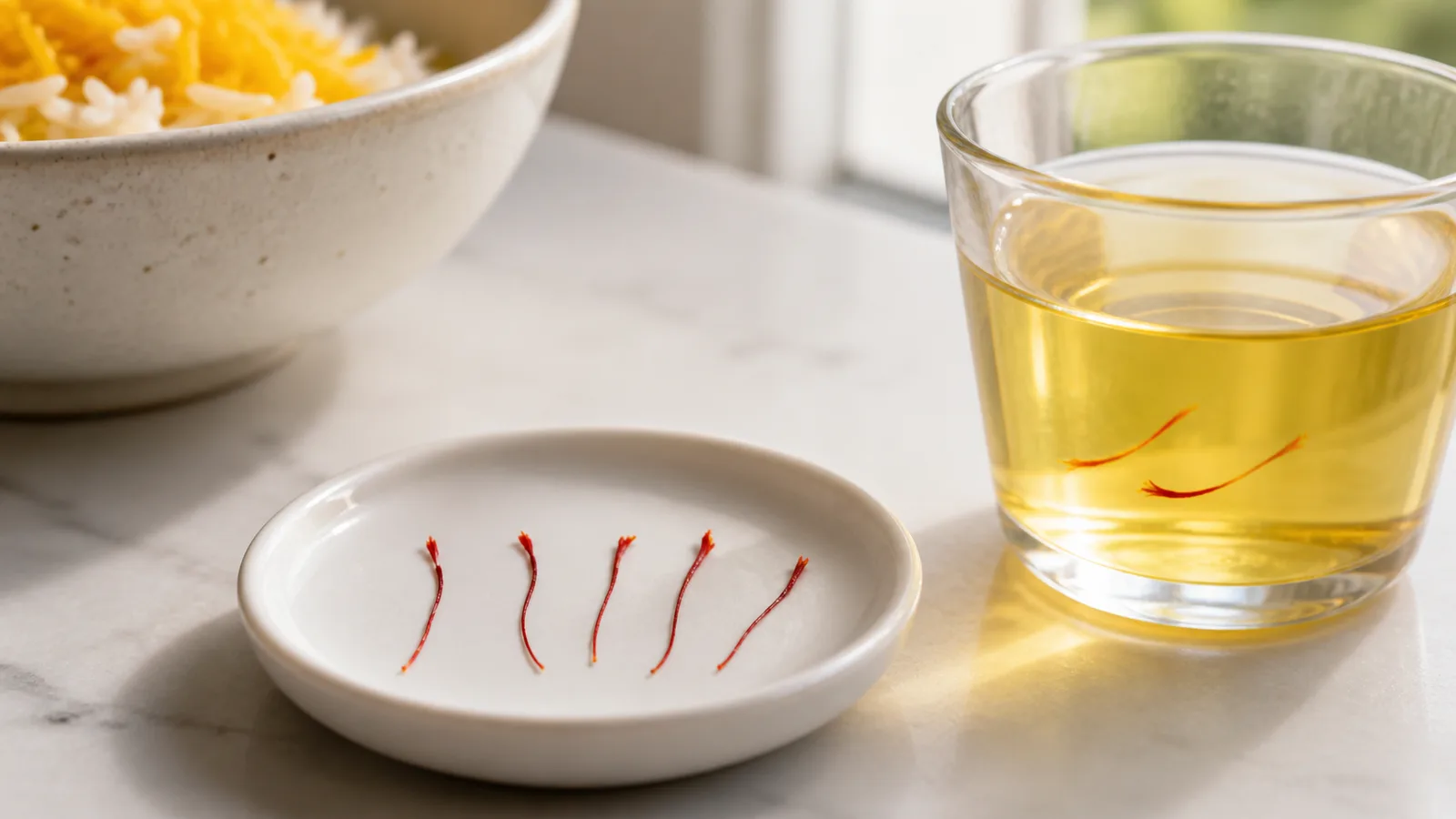
There is no single place that can guarantee the best saffron in the world. If one region must be named, Iran’s Khorasan provinces have the strongest case: they sit at the centre of the world’s largest saffron industry and produce many excellent lots. Still, origin is only the first clue. Harvesting, drying, storage, purity and the condition of the individual batch decide what reaches your kitchen.
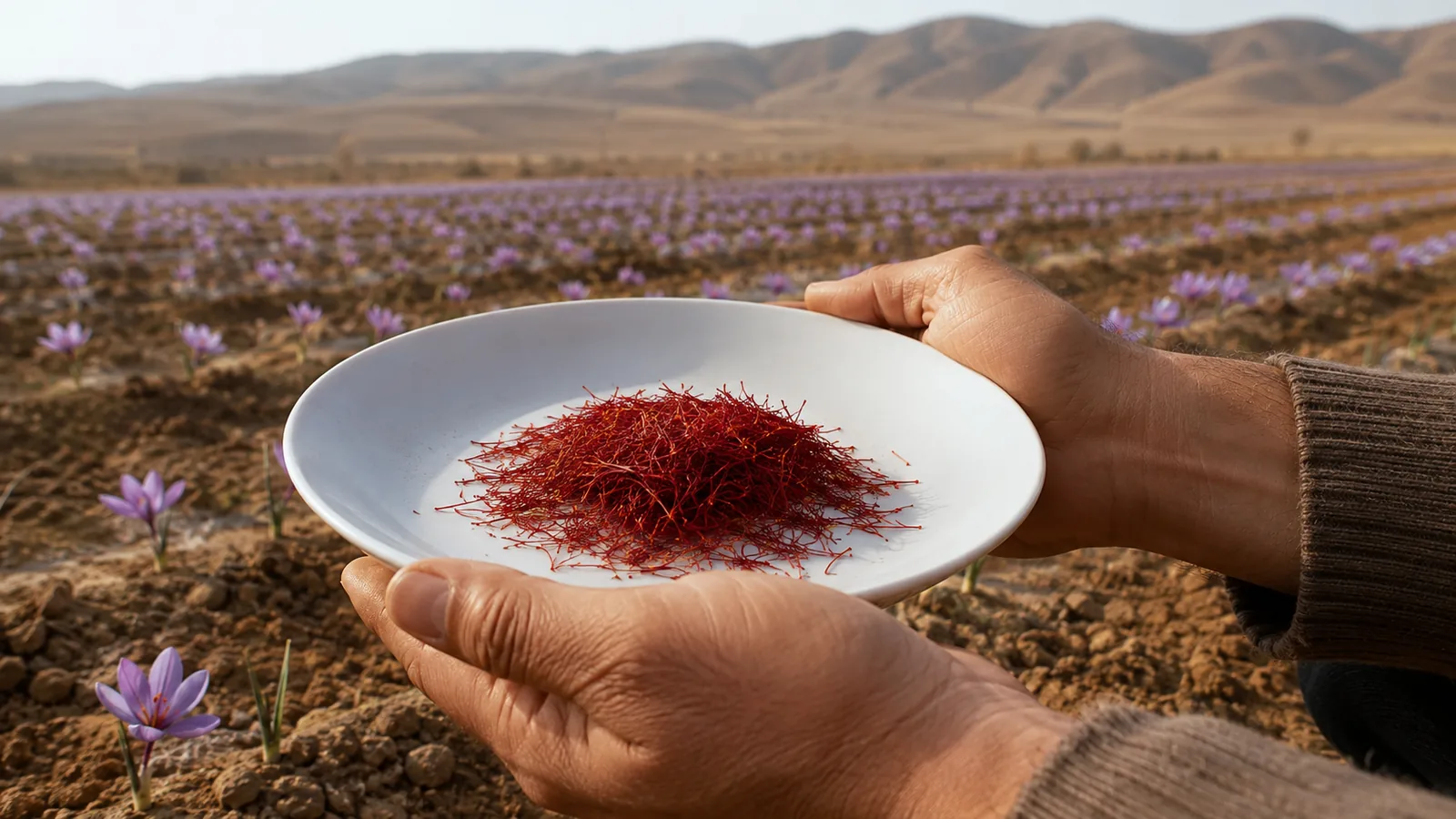
Why Khorasan is often called the best saffron region
Khorasan is not one farm or one grade. The name covers a broad area in eastern Iran, including the major saffron-producing provinces of Khorasan Razavi, South Khorasan and North Khorasan. Within it are thousands of growers, different fields and many levels of sorting and processing.
The region’s importance rests on both environment and experience. Saffron’s summer-dormant corms suit the hot, dry season found in much of the area. Autumn flowering brings a short, labour-intensive harvest, when flowers are collected and their three red stigmas separated by hand. Generations of growers have learned how to manage planting stock, limited water, harvest timing and drying at commercial scale.
Across this broad region, conditions vary by elevation and field, but hot, dry summers, cold winters and generally well-drained soils suit the crop’s dormancy and cool-season growth. A loamy soil can work well when it drains freely; it does not by itself enhance colour or aroma.
That scale is exceptional. A September 2025 FAO account says Iran produces more than 90% of the world’s saffron and identifies the three Khorasan provinces as its main producing areas. This makes Khorasan the most influential saffron location in the world, but the same FAO account also points to risks from adulteration and inconsistent post-harvest handling. A famous origin does not remove the need to assess the lot.
What “best” should mean when comparing saffron
“Best” is useful only when the buyer defines it. A cook may want a clean floral-hay aroma and balanced bitterness. A restaurant may care about reliable colour release from one delivery to the next. A retailer may place more weight on traceability, laboratory records and consistency between lots.
Saffron’s familiar properties are associated with several naturally occurring compounds: crocins contribute colour, picrocrocin contributes bitterness and safranal is important to aroma. International trade commonly refers to ISO 3632 testing, although the FAO notes that routine tests do not capture every subtle quality difference or every sophisticated form of adulteration. Scores can inform a comparison; they do not tell the whole sensory or handling story.
For an ordinary buyer, a strong batch should be recognisable as saffron threads, dry but not dusty, protected from light and moisture, and sold with a clear origin and lot identity. Vibrant red threads can be appealing, but colour alone is not proof of authenticity. Its aroma should be characteristic rather than musty or perfumed, and its colour should infuse gradually when the threads are steeped.
Other places known for high-quality saffron
Iran is not the only credible answer to where the best saffron is grown. Several smaller origins have their own protected names, production methods and loyal buyers.
Kashmir, India
Kashmir has a distinctive saffron tradition centred around Pampore and neighbouring areas. “Kashmir Saffron” is a registered geographical indication in India; the official Intellectual Property India record identifies Jammu and Kashmir as its geographical area. Limited production and a recognised name can make genuine lots costly, but neither scarcity nor a protected origin makes every package equally fresh or pure.
La Mancha, Spain
La Mancha is Spain’s best-known saffron region and has a protected designation of origin. The Spanish Ministry of Agriculture’s register identifies the competent authority and current product specification for Azafrán de La Mancha. Spain is also an important packing and trading centre, so “packed in Spain” and “grown in La Mancha” should not be treated as identical claims.
Afghanistan and Morocco
Afghanistan, particularly the area around Herat, and Morocco, especially Taliouine, also produce respected saffron. Their smaller industries can offer appealing lots with a clear local identity. As with saffron from Iran, India or Spain, the grower’s decisions after harvest and the seller’s storage practices can protect or diminish what the region produced.
Iranian, Spanish and Kashmiri saffron are not fixed flavour categories
People often describe one origin as sweeter, another as earthier and another as more powerful. Such descriptions may reflect real samples, but they should not be turned into universal country rules. Cultivar material, field conditions, the ratio of red stigma to yellow style, drying temperature, age and storage can all change what a person smells and tastes.
A side-by-side comparison is meaningful only when the samples are authentic, similarly fresh and brewed at the same weight, water volume and temperature. Otherwise, the result may say more about preparation than geography. Our guide to Iranian versus Spanish saffron explains that narrower comparison without treating nationality as a quality certificate.
The country with the most saffron is not automatically the country with the best batch
Iran is the world’s dominant producer. That fact answers a production question, not every quality question. High output brings deep expertise and access to excellent material, while also producing a broad commercial range. A carefully selected Iranian lot can be outstanding; a poorly stored one can be disappointing.
If your question is about volume rather than quality, see which country produces the most saffron. Keeping those two questions separate avoids a common mistake: using national production figures as proof that one unopened packet tastes better than another.
How to choose the best saffron for you
- Check the agricultural origin. Look for where the crocuses were grown, not just where the spice was packed.
- Ask for lot-level information. A harvest period, batch number or recent analysis is more useful than a generic superlative.
- Examine the cut. Mostly red stigmas may suit buyers seeking a concentrated thread product, while some traditional regional styles deliberately retain a portion of the yellow style.
- Consider freshness and storage. Airtight, light-protected packaging matters because aroma fades and moisture can spoil the spice.
- Buy a sensible quantity. A smaller fresh pack is often a better choice than a large amount kept open for years.
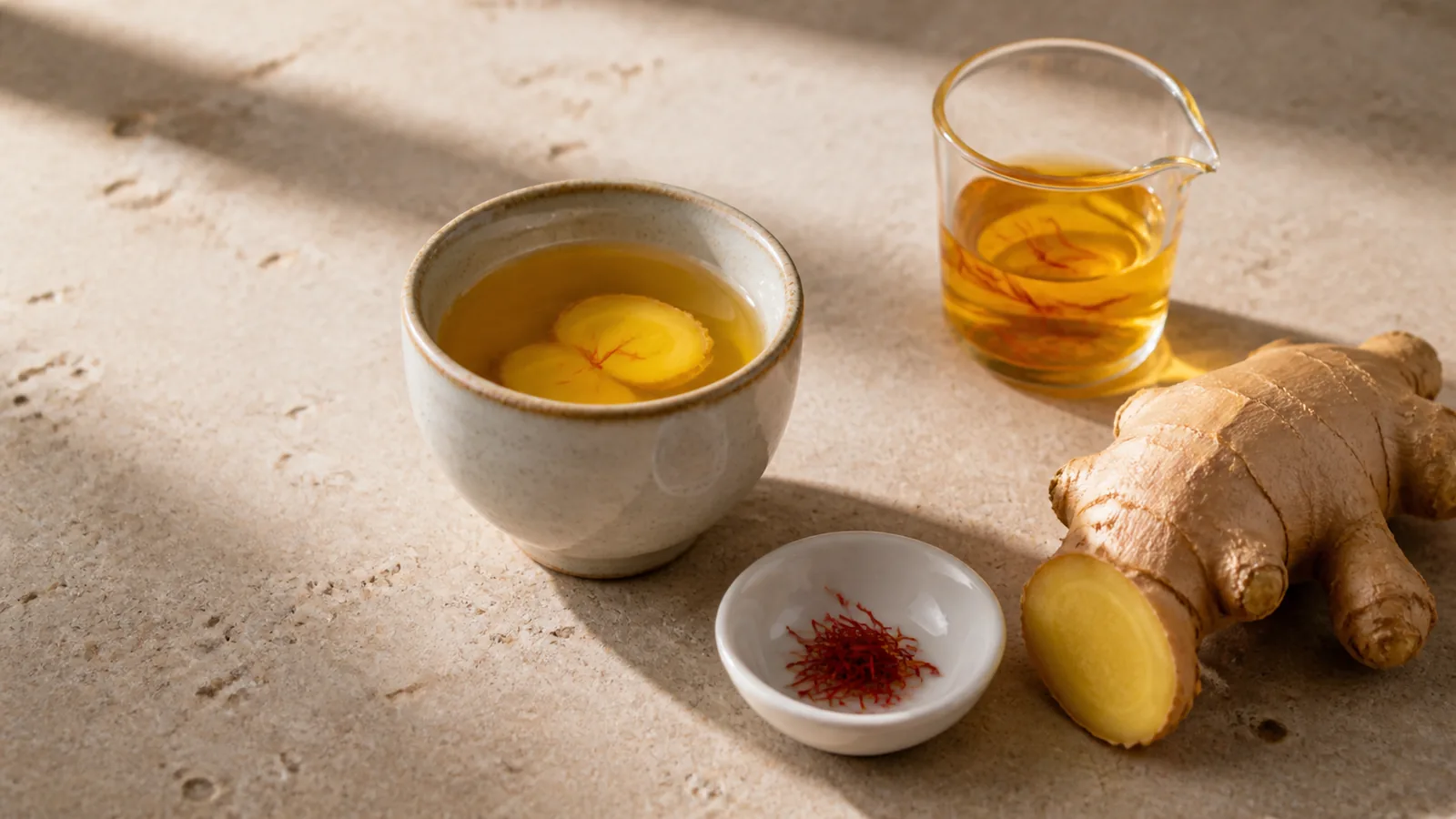
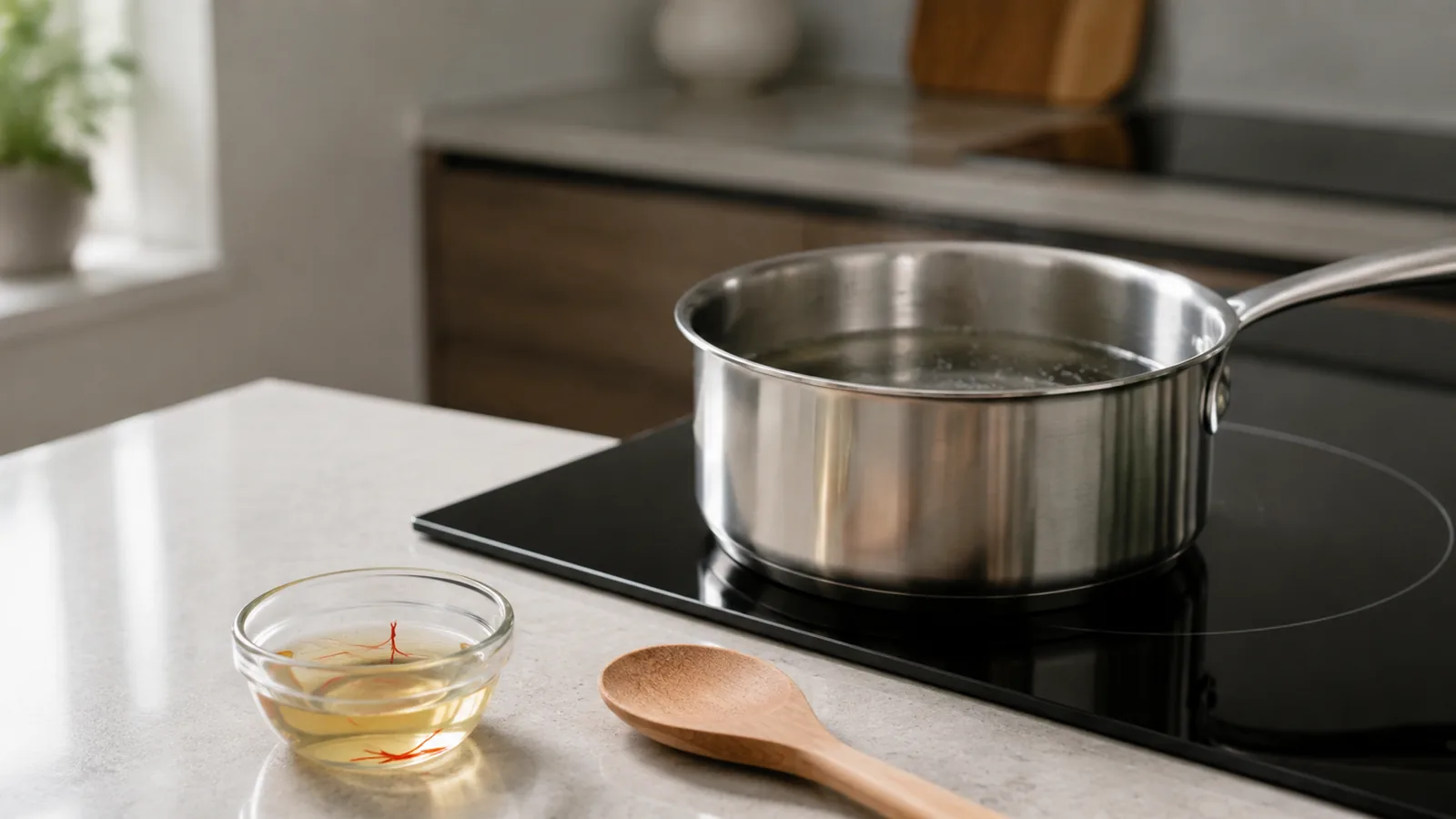
- Test it consistently. Compare equal weights in warm water and allow enough time for the threads to infuse.
Our saffron products page shows the available cuts and pack sizes. Product descriptions should help you understand what is in a pack; they should never require you to accept “world’s best” without supporting detail.
So, where is the best saffron from?
Iran’s Khorasan region is the most defensible single answer because of its unrivalled concentration of production, long cultivation knowledge and ability to supply exceptional saffron. Kashmir, La Mancha, Herat and Taliouine are also serious saffron origins. The more accurate answer, though, is that the best saffron comes from a traceable harvest that was separated, dried, stored and sold with care—wherever that harvest took place.