Saffron is not especially hard to grow when its basic needs are met: strong sun, freely draining soil, healthy corms and a dry summer rest. The difficult part of saffron cultivation is matching its unusual annual cycle and harvesting many delicate flowers in a short period. So, is it difficult to grow saffron? Usually not on a small scale; producing a saleable quantity is a different undertaking.
How hard is it to grow saffron?
The plant itself is more forgiving than its price suggests. Crocus sativus grows from a corm, not a true bulb. It flowers in autumn, sends up narrow leaves that remain active through the cooler months, then dies back and rests below ground during summer.
Once established in a suitable site, a corm can produce daughter corms and gradually increase the planting. The real difficulty is avoiding conditions the plant dislikes. Persistent wetness can rot corms; deep shade weakens growth; removing green leaves too early reduces the energy available for the next cycle. Warm, humid summers are more challenging than dry ones unless drainage and shelter are excellent.
The four conditions that make saffron cultivation easier
1. Full sun
Choose the brightest practical position. Saffron can tolerate some light shade, but its leaves need enough winter and spring light to replenish the corms. Avoid a spot that becomes shaded by a building or dense evergreen growth during the cool season.
2. Soil that drains quickly
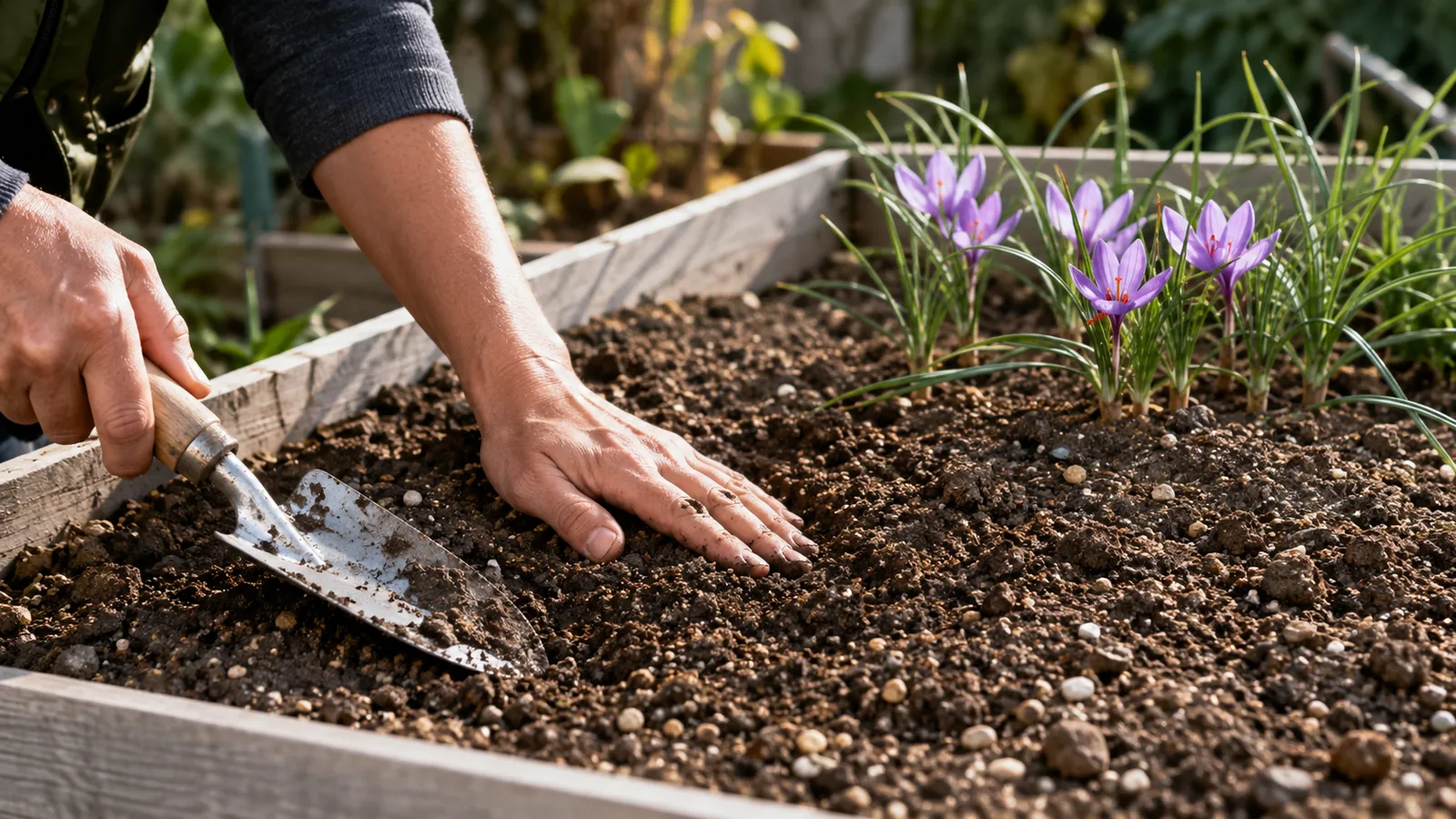
Well-drained soil is the central requirement. A sandy or loamy soil can work, but the label matters less than what happens after heavy rain: water should move through rather than sit around the corms. Heavy ground may need a raised bed and coarse mineral material worked through the root zone. Simply placing gravel at the bottom of a wet planting hole can create a sump.
The Royal Horticultural Society recommends a sunny, well-drained site for growing saffron and suggests containers as an option where garden conditions are unsuitable.
3. A seasonal watering rhythm
Water well after planting, then let soil and rainfall guide the next decision. Active plants should not remain severely dry for long, yet the root zone should never stay soggy. Once leaves yellow and summer dormancy begins, keep the corms much drier and away from automatic lawn irrigation.
Saffron uses less water than many thirsty garden crops, but “drought-tolerant” does not mean “never water.” Our saffron watering guide follows the plant from planting through flowering, leaf growth and dormancy.
4. Healthy planting stock
Large, firm corms generally have more stored energy than small or damaged ones. Reject material that is soft, badly cut, mouldy or foul-smelling. Buy Crocus sativus from a traceable supplier; other autumn crocuses may look similar in a catalogue but will not produce culinary saffron.
When and how to plant saffron corms
Plant in late summer or early autumn, before active growth begins. Exact timing depends on climate and when sound corms become available. The top of the corm points upward and the flatter basal plate sits below. A practical planting depth is around 10–15 cm, adjusted for corm size, soil and winter conditions, with enough space for daughter corms to develop.
The University of Vermont’s saffron planting factsheet describes raised beds, spacing and the danger of standing water. Its guidance is aimed at a particular growing system, so local soil and climate should still shape the final layout.
Water the newly planted bed thoroughly once to settle soil around the corms. Then wait for the root zone to approach dryness before adding more. Mark the bed; dormant saffron is easy to disturb when there is nothing visible above ground.
What to expect in the first year
Autumn flowers may appear within weeks of planting, but a new bed does not always deliver a dramatic first harvest. Corm size, planting date, transit stress and local weather all affect the result. Leaves without many flowers are not necessarily a failure; keep the foliage healthy and allow it to die back naturally.
Over following seasons, daughter corms can crowd the planting. Flowering may eventually decline if the bed becomes congested. During dormancy, lift and divide crowded clumps, discard unhealthy material and replant the best corms with fresh spacing. Our guide to saffron corms explains what is happening below the soil.
The real challenge is the saffron harvest
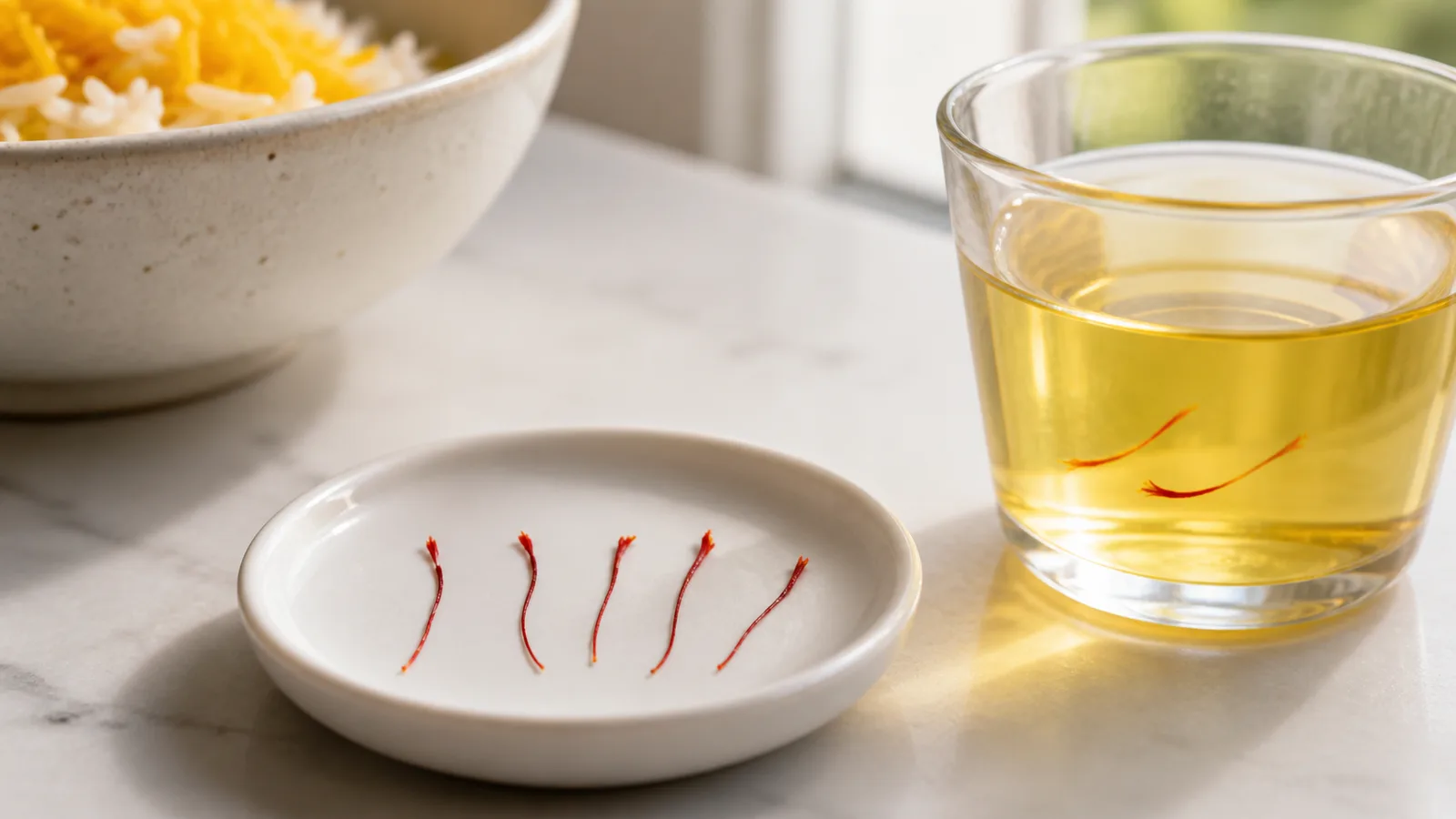
Each flower carries only three red stigmas. They must be separated from the rest of the flower and dried carefully, so even a modest jar represents a large number of blossoms. Tens of thousands of flowers are commonly required for one kilogram of dried saffron, although the exact count varies with flower and stigma size.
On a home scale, picking a few dozen fresh flowers is pleasant. On a farm, many flowers can open together and the useful harvest window is short. Growers often pick early in the day while blooms are fresh and closed or only partly open; “at dawn” is a working preference, not a biological deadline that makes saffron unusable later that morning.
Separating stigmas by hand is slow, and poor drying can undo careful field work. Too much heat can damage aroma and color; too little drying leaves moisture that shortens storage life. This time-consuming manual process is one reason saffron is often described as the most expensive spice in the world.
Can saffron grow outside Iran, Spain or India?
Yes. Iran, Spain, India and Greece have long production histories, but saffron can grow in many places with cold-to-cool winters, a suitable autumn and dry or controllably dry summers. Successful plantings also exist in other parts of Europe, North America, North Africa and western Asia.
Sunny, semi-arid climates naturally provide much of this seasonal pattern. Once settled in a suitable bed, saffron can be surprisingly hardy, although local winter limits still matter. In long-producing regions, the crop is also part of a living cultural heritage rather than only a high-value commodity.
A climate label is only a starting point. A sunny raised bed in a cool rainy region may outperform a low wet site in a nominally ideal zone. In a very cold climate, planting depth, snow cover and winter protection matter. In a humid-summer climate, lifting dormant corms or growing under cover may be safer.
Common reasons a saffron bed fails
- The corms are the wrong plant. Confirm the botanical name Crocus sativus.
- The site stays wet. Improve drainage before planting rather than trying to rescue rotting corms later.
- The bed is too shady. Leaves need light during their long cool-season growth.
- Summer crops are watered beside it. Dormant saffron is easily kept wetter than intended.
- Leaves are cut while green. Wait until they yellow and dry naturally.
- Corms are too small or crowded. Start with sound stock and divide a congested bed during dormancy.
- The first harvest is overestimated. A new planting needs time to settle and multiply.
Is growing saffron worth trying at home?
It is worth trying if you have a sunny, well-drained space and enjoy a crop with a different rhythm from ordinary vegetables. Start with a small marked bed or deep container. That keeps the cost and labour manageable while showing how the corms respond to your winter rain, summer humidity and soil.
Do not expect a household supply from a handful of corms. The reward in the first season may be a few flowers and enough threads for one dish. For a complete practical sequence, read how to grow saffron at home.
The short answer
Saffron is not difficult to keep alive in the right site. Good saffron cultivation depends on sun, drainage, healthy corms, sensible active-season moisture and a dry summer rest. Harvesting and processing are the demanding parts: three stigmas per flower, a brief picking period and careful drying turn a straightforward crocus into a labour-intensive spice.