Which country eats the most saffron? Iran is the strongest answer: it produces most of the world’s saffron and uses the spice deeply in everyday Persian cooking, tea, desserts and celebrations. However, there is no current, standardised global dataset that measures the saffron actually eaten in every country. Import figures show major markets such as Spain, India, Italy, Saudi Arabia and the United States, but imports are not the same as domestic consumption.
Which country eats the most saffron?
Iran is widely regarded as the largest consumer of saffron as well as its dominant producer. That conclusion is plausible because Iranian households and food businesses use saffron across rice, stews, sweets and drinks, while a substantial part of the crop remains within the country. It is not possible, though, to attach a trustworthy current tonnage or per-person figure to that claim from an internationally comparable consumption table.
This distinction matters. A country may grow saffron and eat much of it without recording an import. Another country may import large quantities for packing and re-export rather than for local kitchens. When someone asks who uses saffron the most—or simply who eats the most saffron—the careful answer is therefore:
- Iran is the leading overall candidate because of its enormous production base and extensive culinary use.
- Spain and India are major saffron markets and food cultures, but the available trade figures do not prove that either ranks second in consumption.
- Italy, Saudi Arabia and the United States are also important import markets in recent international trade data.
What current trade data can—and cannot—tell us
The World Bank’s World Integrated Trade Solution publishes UN Comtrade records under the dedicated saffron code HS 091020. Its 2024 saffron imports by country show the European Union as an aggregate leading market by value. Among individual reporting countries, Spain recorded about $56.34 million, India $37.65 million, Italy $20.07 million, Saudi Arabia $19.27 million and the United States $18.21 million in saffron imports.
Those figures are useful evidence of active markets. They are not a table of saffron consumption by country. Import values depend on price and quality as well as quantity. Reported shipments can be processed, packed or sold onward, and countries with substantial domestic crops may import less than residents actually use.
Production and exports answer different questions too. The UN Food and Agriculture Organization identifies Iran as the largest producer, with more than 90% of world saffron output in its account of the Qanat-based saffron farming system in Gonabad. That strong production evidence supports Iran as the most likely consumption leader, but it does not by itself measure every gram eaten domestically.
Top saffron-consuming countries and how they use it
The following countries belong in any serious discussion of saffron consumption because the spice has culinary, cultural or commercial importance there. The order after Iran should not be read as a measured league table.
1. Iran: the strongest answer for saffron consumption
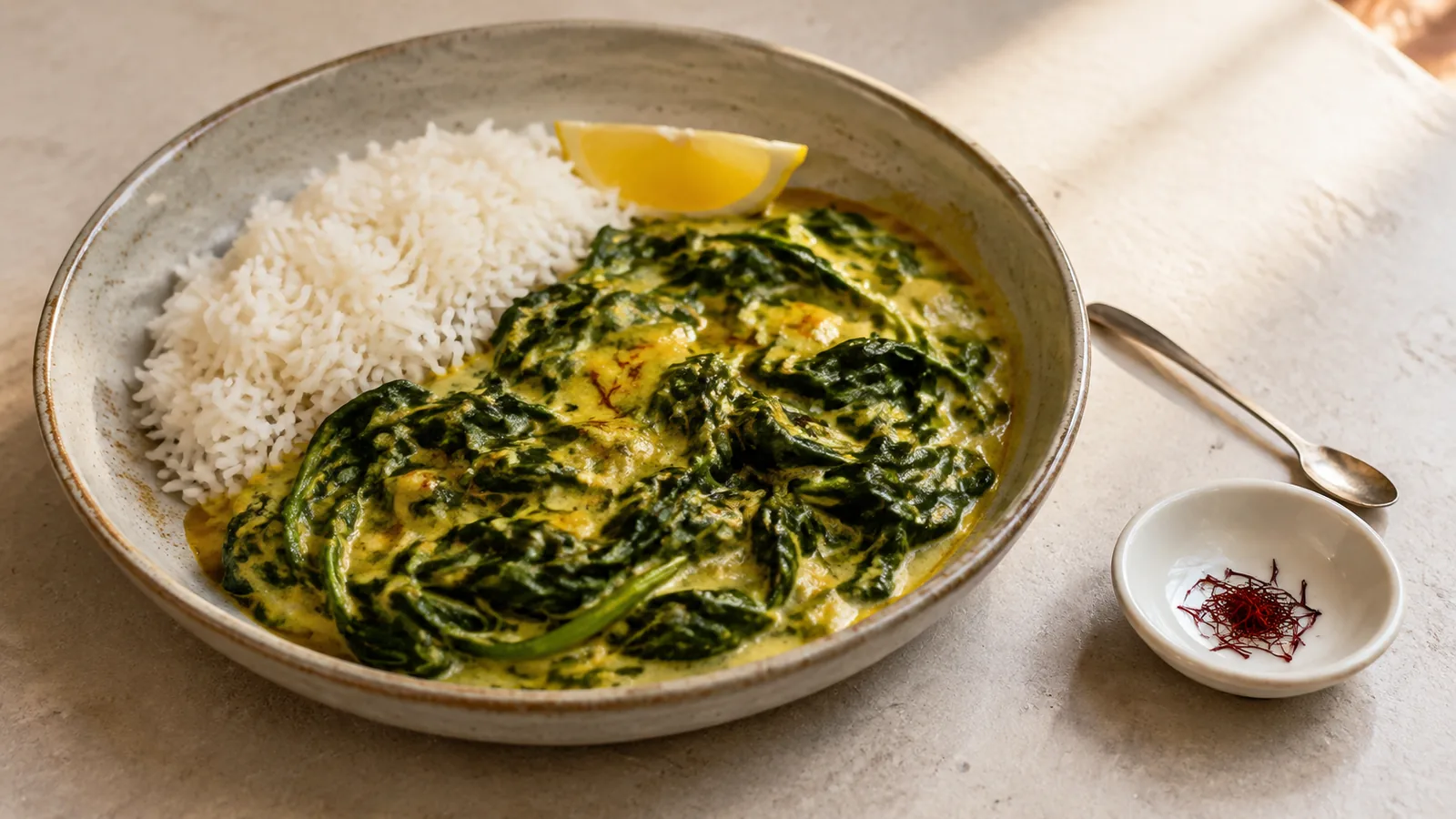
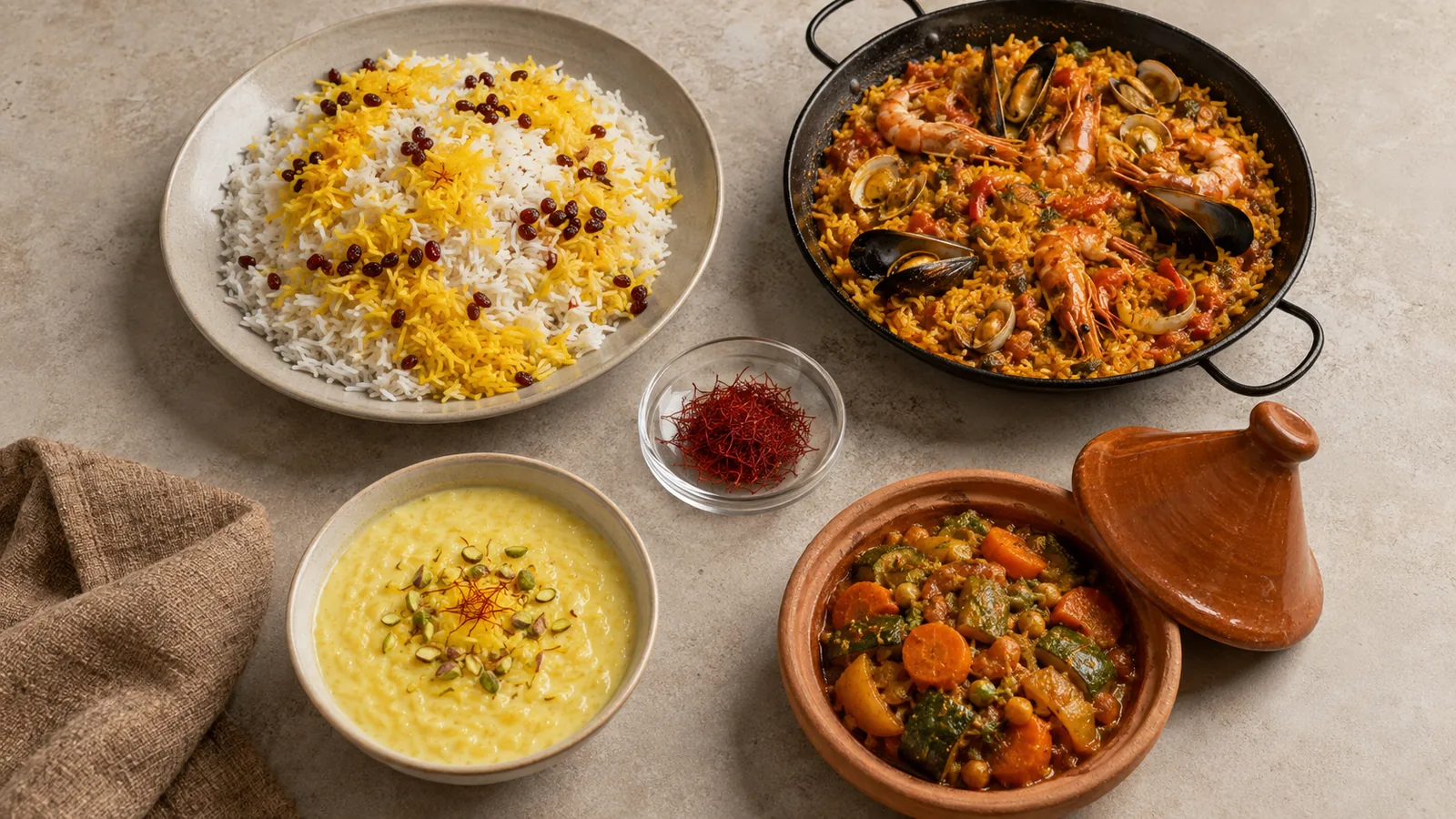
In Iran, saffron is not reserved for one famous restaurant dish. It perfumes steamed rice and tahdig, colours dishes such as zereshk polo, enriches stews, and appears in sweets, ice cream and sholeh zard. Saffron tea and saffron-flavoured drinks also place it beyond the main meal. Families use it in everyday meals and hospitality as well as weddings, Nowruz and other special occasions.
Iran’s scale as a producer makes saffron available through a domestic supply chain that import statistics cannot capture. The statement that many Iranians drink saffron tea every day should not be converted into a national frequency claim without survey data; the safer point is that saffron tea is an established part of the country’s food culture.
2. India: biryani, sweets and Kashmiri kesar
India is a large saffron importer and also grows Kashmir saffron. The spice—called kesar in several Indian languages—appears in biryanis, kheer, kulfi, gulab jamun, milk drinks and festive sweets. It can also have ceremonial and religious uses, so its role is broader than a single regional cuisine.
India’s official Geographical Indications registry lists Kashmir Saffron as a registered GI. That protects a geographic identity and supports traceability; it does not provide a national consumption total or prove that India is a statistically measured “close second” to Iran.
3. Spain: paella, rice cookery and an important trade role
Saffron is closely associated with Spanish rice dishes, especially paella, and it also appears in soups, seafood cookery and regional sweets. Spain is both a producer and a major importer and exporter, so its trade volume includes more than the saffron served in Spanish homes and restaurants.
Azafrán de la Mancha—often typed without the accent as azafran—has a Protected Designation of Origin. The current EU specification for Azafrán de la Mancha requires the saffron to be grown, harvested and dried in its defined region and sets production, certification and labelling rules. This helps explain Spain’s continuing cultural association with saffron without turning PDO output into a consumption statistic.
4. Morocco: tagines, couscous and regional production
Moroccan cooks use saffron in selected tagines, couscous, rice, soups and sweets. Taliouine and its surrounding area are particularly associated with Moroccan saffron farming. The spice is valuable and used selectively, often in dishes for guests or occasions rather than indiscriminately in every meal.
It is fair to call Morocco an important saffron culture. It is not sound to say that Moroccan consumption is “growing steadily” or that the country holds a specific world rank without a consistent time series measuring domestic use.
5. Afghanistan: a growing saffron industry
Afghanistan has developed a recognised saffron industry, particularly around Herat. Afghan saffron reaches both local and export markets and is used in rice, tea and sweets. The UN Food and Agriculture Organization has documented the crop’s potential as a rural livelihood and alternative agricultural product in its guide to saffron production in Afghanistan.
Carefully grown and handled Afghan material can be high-quality saffron, but production growth does not automatically mean Afghanistan is one of the five largest consuming countries. It belongs here because it was part of the established article and because local use matters, but the evidence supports “rising producer and market” more strongly than a numbered consumption rank.
Other important saffron markets
A five-country list leaves out several places visible in recent trade data and food traditions:
- Italy uses saffron in dishes such as risotto alla milanese and reported a high import value in 2024.
- Saudi Arabia and other Gulf markets use saffron in rice, coffee, tea, desserts and hospitality, while Saudi Arabia ranked among the leading individual import markets by value in the 2024 WITS data.
- Sweden has a distinctive seasonal association with saffron buns, especially around St Lucia celebrations.
- The United States is a large commercial import market with demand spread across restaurants, diaspora cuisines, specialty retail and home cooking.
These examples show why “most” can mean different things: total domestic use, use per person, import value, import weight or cultural frequency. A country can rank highly under one measure and not another.
Why Iran, India and Spain are difficult to rank precisely
Domestic production is partly invisible to trade statistics
Iran and India both grow saffron. A domestic sale from farmer to packer to household never appears as an international import. Spain also produces saffron while importing material for its wider processing and trading sector. Comparing import tables alone would undercount local crops and overcount saffron that is later exported.
Value is not the same as quantity
Saffron prices vary with origin, cut, tested quality, packaging and market conditions. A country can import a smaller weight of higher-priced material and appear large by value. Another can receive more kilograms at a lower declared value. Our guide to which type of saffron is best explains why origin and commercial grade should not be mistaken for identical batch quality.
Re-export and packing can inflate apparent demand
Spain is a clear example of a country with strong culinary use and an international saffron trade. Part of what it imports may be packed or sold onward. Import totals therefore describe the national border crossing, not the dining table where the saffron is finally consumed.
What is saffron used for in these countries?
Across cuisines around the world, saffron performs three closely related jobs. Its crocins give food a golden color, picrocrocin contributes bitterness, and volatile compounds including safranal contribute aroma and flavor. Although often called a luxurious spice, only a small quantity is needed to change rice, broth, milk, dough or syrup, so a household does not need a large jar to use it meaningfully.
Common uses include:
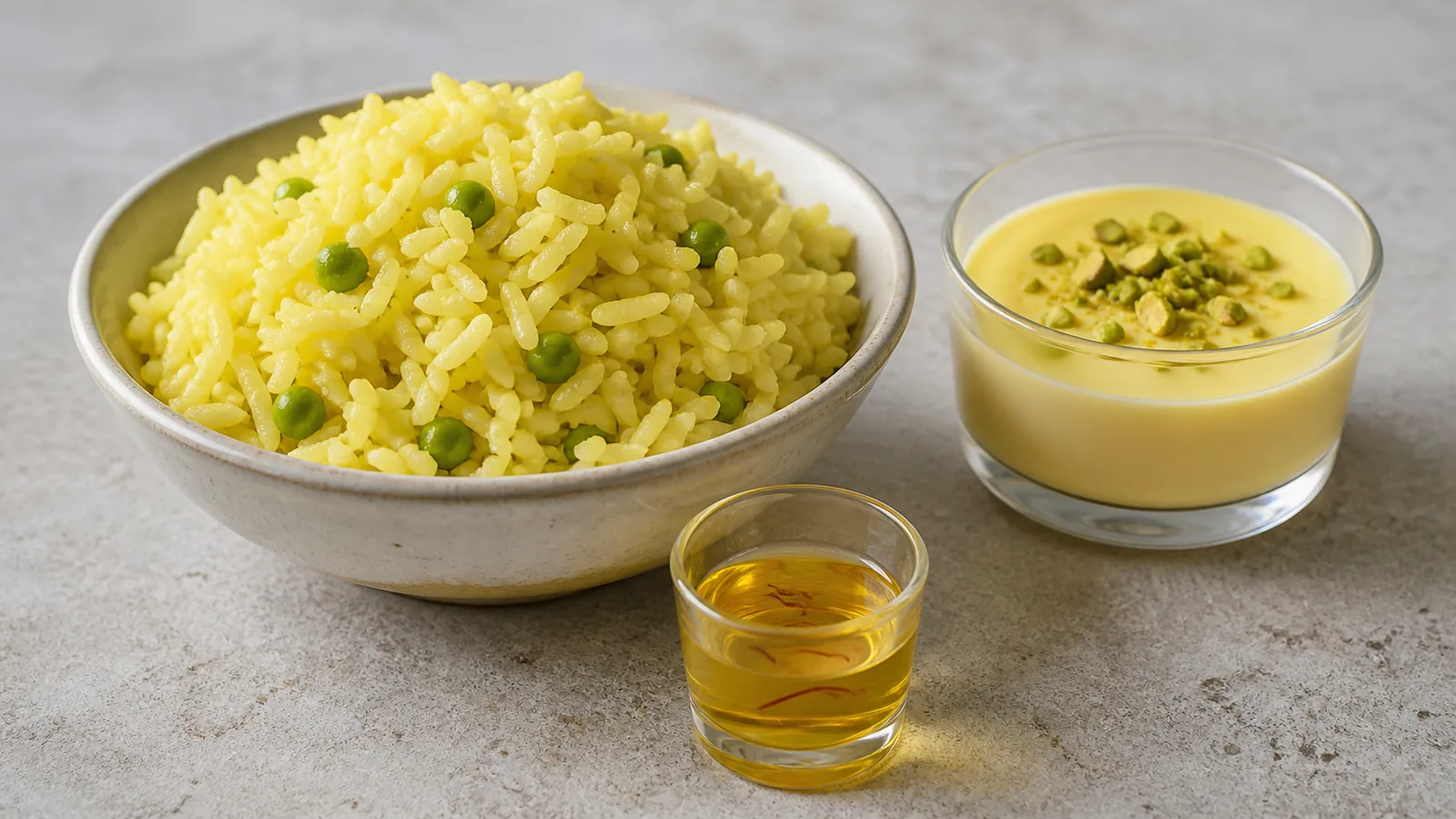
- rice dishes such as Persian pilaf, biryani, paella and risotto;
- stews, soups and selected tagines;
- kheer, kulfi, sholeh zard, saffron buns and other desserts;
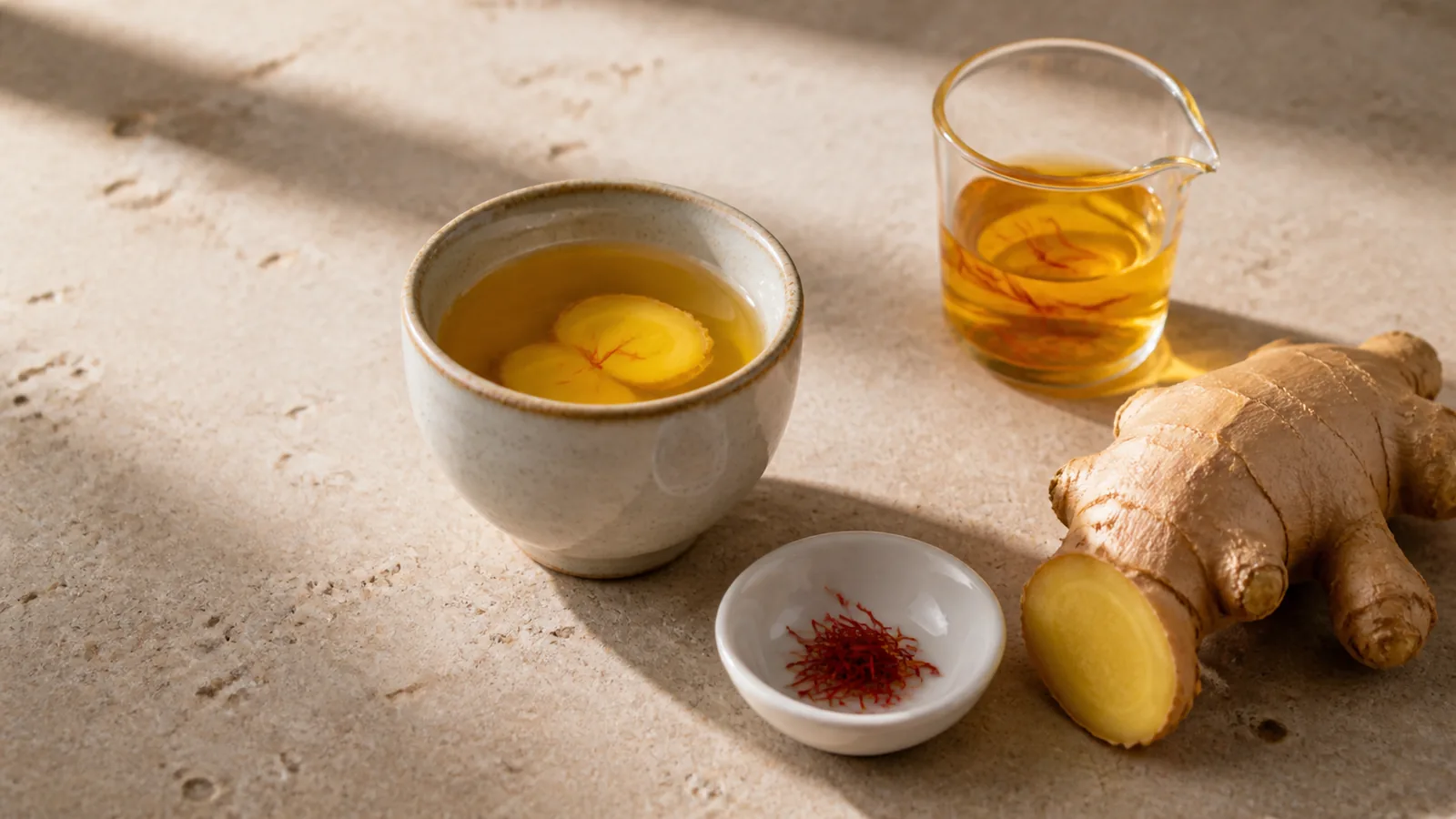
- tea, milk drinks, coffee and other infusions;
- celebration foods, hospitality and culturally significant preparations.
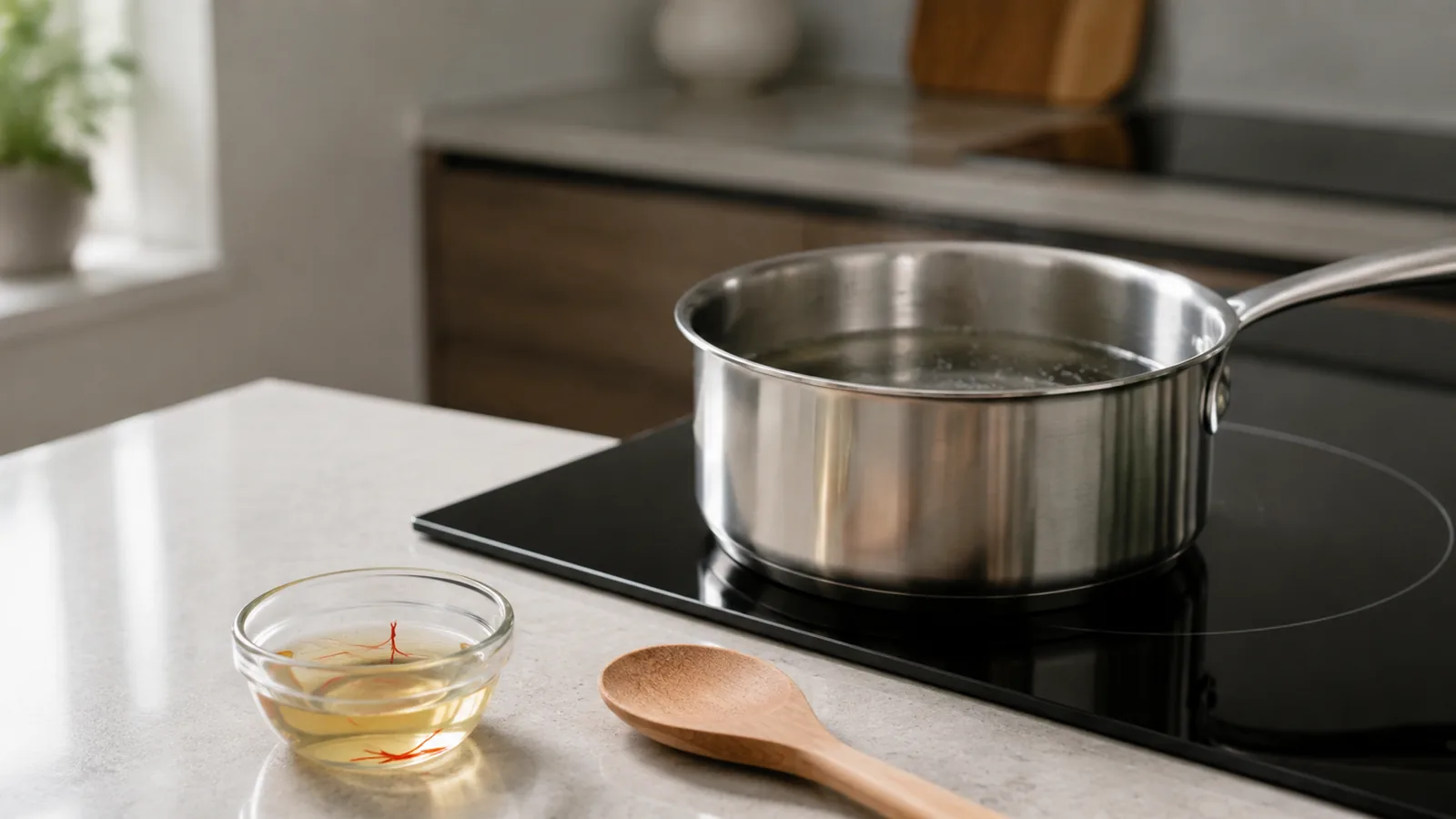
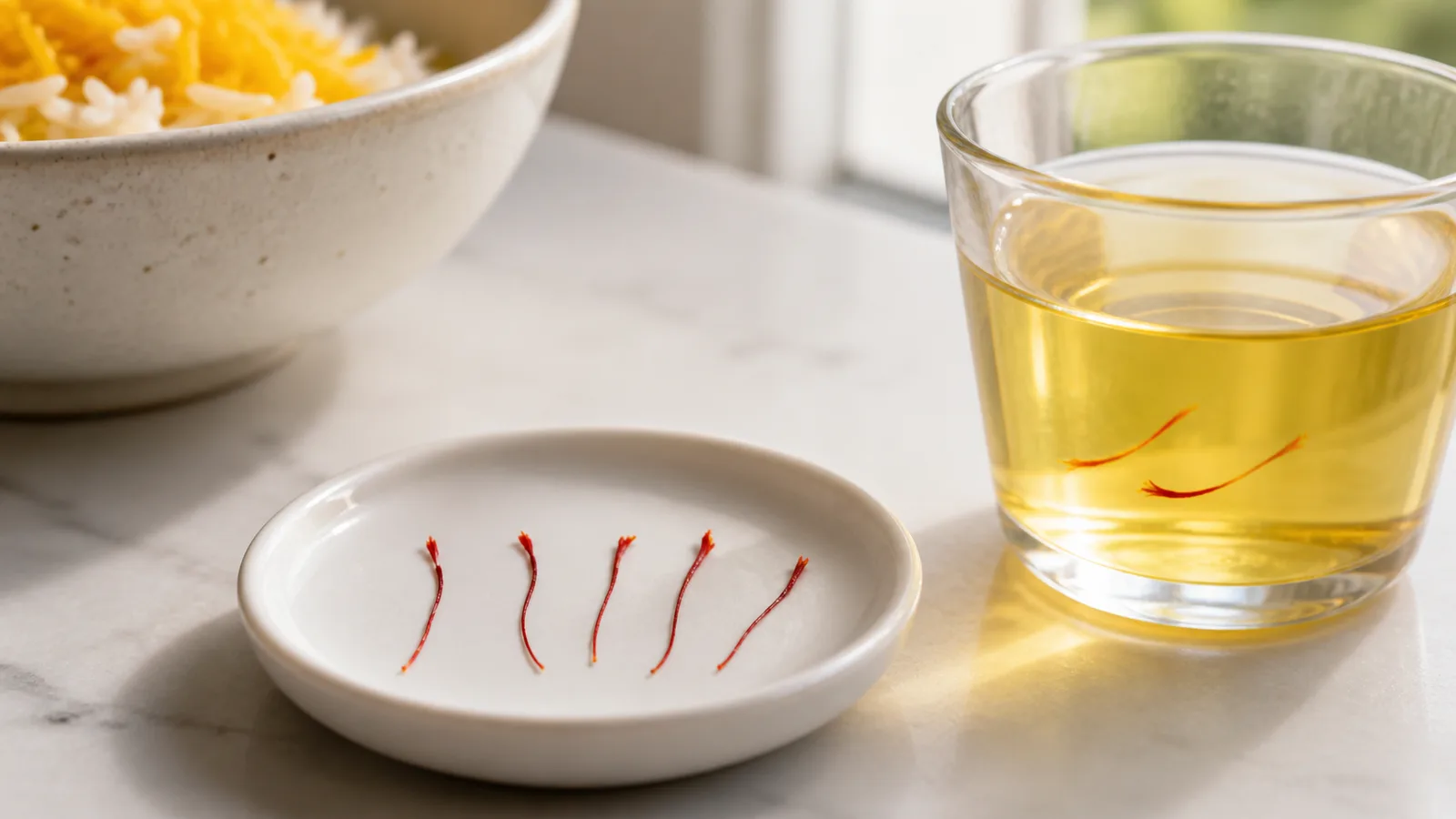
Preparation matters because poorly bloomed threads can leave much of their colour and flavour unused. The best way to brew saffron is to crush a measured amount gently and let it release into a modest quantity of warm liquid before adding it to the dish.
Consumption is different from production and exports
The largest saffron-producing country is Iran. The biggest exporter can vary by year, value, reporting method and whether re-export is counted. The leading importer is not necessarily the largest consumer. Those statements may sound similar in a search result, but each requires a different dataset.
That is also why the countries that produce saffron extend beyond the countries most associated with eating it. Crocus sativus is cultivated in Iran, India, Afghanistan, Spain, Morocco, Greece, Italy and smaller emerging regions. Each flower supplies only three stigmas, and harvesting remains labour-intensive; the guide to why saffron is hard to grow and harvest explains the process.
The clearest answer
Iran is the best-supported answer to “Which country eats the most saffron?” because it combines the overwhelming majority of global production with widespread culinary use. India and Spain are major saffron-consuming cultures and important markets, while Morocco and Afghanistan have meaningful regional traditions. Current import data also highlights Italy, Saudi Arabia and the United States.
A precise numbered world ranking beyond that would claim more than the data can show. For a sound comparison, state the year and measure—domestic consumption, consumption per person, import value or import weight—and do not use one as a substitute for another.