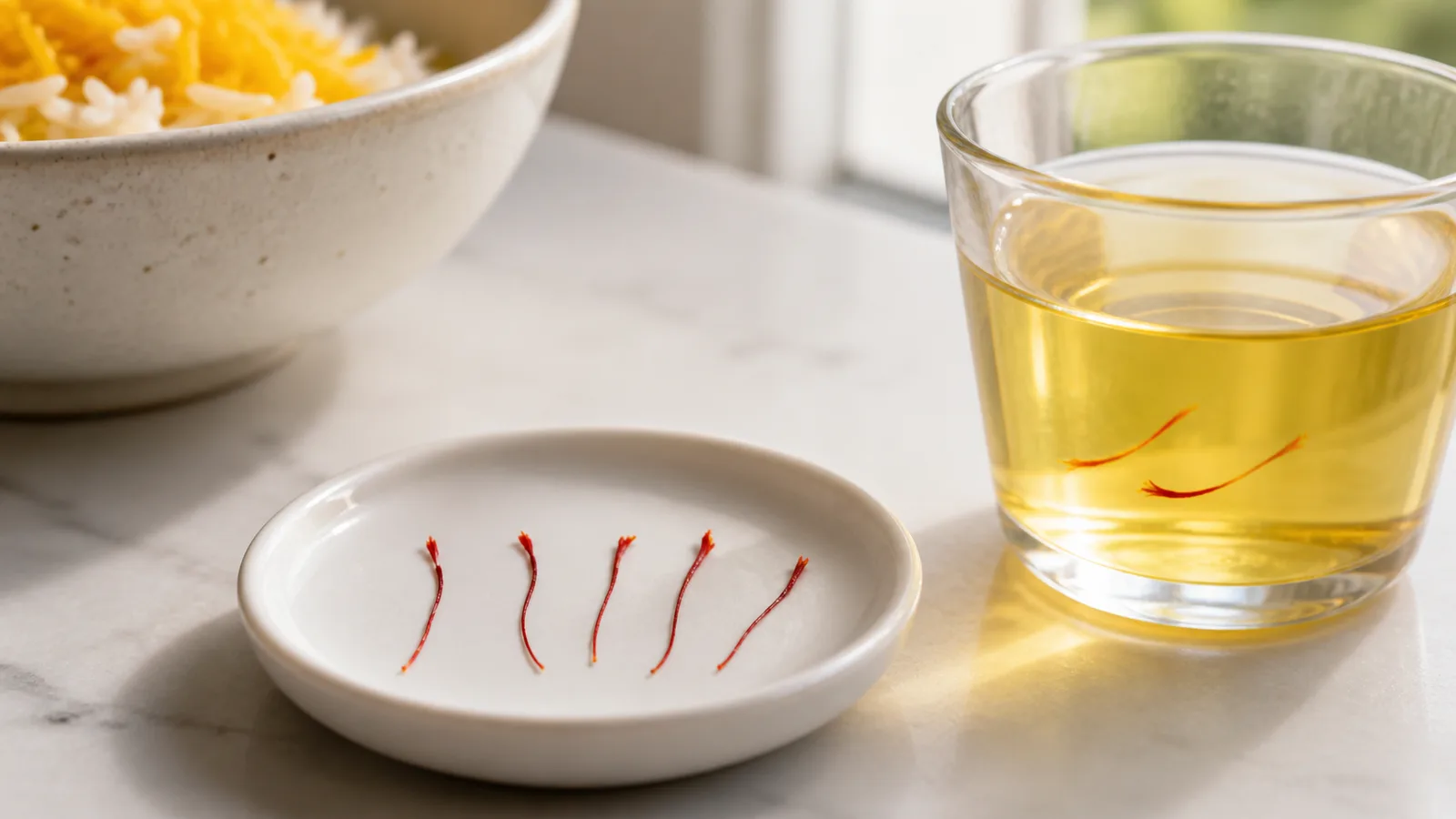
The stigma of saffron is the red, receptive tip of the female part of a Crocus sativus flower. Each flower has three red stigmas. Once separated and dried, these red threads become the saffron used to colour and season food; this is where much of their culinary value comes from.
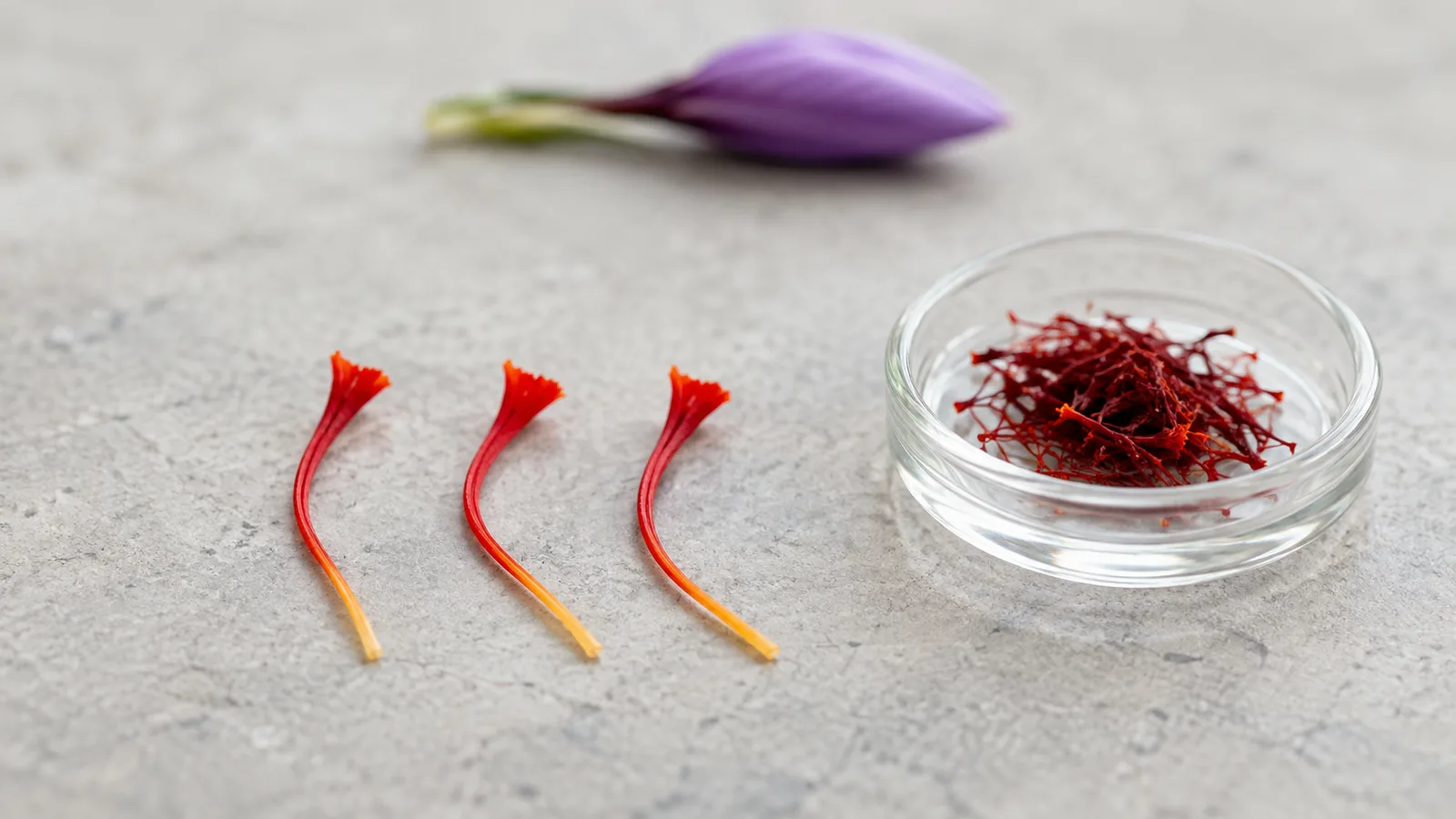
Saffron stigma explanation in plain language
Inside the purple flower is a pistil, the female reproductive structure. Its lower ovary connects to a slender style, which divides near the top into three saffron-red stigmas. In botany, a stigma is the surface that receives pollen. In the spice trade, “stigma” often describes the valuable red part that buyers want to see in a thread.
The flower also has three yellow stamens. These are the male pollen-bearing structures and are not culinary saffron. The six purple petal-like parts are tepals. Keeping those parts distinct matters because yellow stamens or purple floral fragments should not be sold as red saffron stigmas.
What does a saffron stigma look like?
A genuine stigma is deep red to reddish orange, narrow at the base and broader toward its trumpet-shaped or slightly frilled end. Natural threads vary in length, curl and thickness; they should not look like identical machine-cut fibres. Some products retain a short yellow-orange portion of style, while all-red cuts remove most or all of it.
The Codex Alimentarius list of food standards includes CXS 351-2022 for dried saffron. That standard defines the stigma as the upper part of the pistil and the style as the section between the stigma and the ovary. It also distinguishes filaments, which may include part of the style, from cut filaments whose styles have been removed.
Why are the red stigmas the spice?
The dried stigmas contain the compounds that create saffron’s familiar sensory qualities. Crocins are closely associated with the golden colour released into water. Picrocrocin contributes bitterness and flavour, while safranal is an important aroma compound that develops strongly during drying and storage.
A current peer-reviewed review of saffron phytochemistry and quality control describes crocin, picrocrocin and safranal as principal compounds in saffron stigmas. It also notes that composition changes with soil, climate, location, agronomy, harvest time, processing and conservation. The red part is essential, but appearance alone cannot tell you the exact potency of a batch.
Does a longer stigma mean better saffron?
Not necessarily. Long, intact threads are attractive and give buyers more visual information than powder, so they often sell for a premium. Their length or uniformity does not by itself prove stronger colour, aroma or flavour. A broken but authentic, well-stored stigma can perform better than an impressive-looking thread that is old, damp or badly dried.
Commercial cut names mainly describe which part of the dried stigma and style is present. They are useful when comparing like with like, but measurable quality and authenticity still depend on the batch. Our guide to the highest grade of saffron explains why familiar labels should not be treated as a complete laboratory result.
How saffron stigmas are harvested
- Flowers are collected during the short autumn bloom, commonly early in the day.
- The three red stigmas are separated from each flower by hand or with carefully controlled processing.
- The fresh stigmas are dried promptly to reduce moisture and develop a stable aroma.
- The dried threads are protected from light, heat, humidity and contamination.
A flower yields only three stigmas, so making a gram requires roughly a hundred and fifty flowers, with natural variation in flower and thread size. Producing a kilogram requires on the order of 150,000 flowers—not thousands of flowers for a single gram. That correction is important when explaining saffron’s cost.
Harvesting is only the beginning. Separation, drying, sorting, packing and storage all affect the finished product. This labour-intensive chain helps explain the price, but a high price does not automatically prove high quality.
Stigma, style and common commercial cuts
- All-red cut: predominantly red stigma, with little or no visible pale style.
- Stigma with style: red stigma attached to a yellow-orange or pale portion of the style.
- Filaments: whole dried pieces that may remain joined at part of the style.
- Powder: crushed saffron, which can be useful in cooking but is harder to inspect visually.
A little style is not an unsafe contaminant; it changes the proportion of red stigma in the purchase. Honest labelling and price should reflect that. Yellow stamens, petals, unrelated plant fibres and added colour are different matters and should not be confused with legitimate style.
How to recognise useful saffron threads
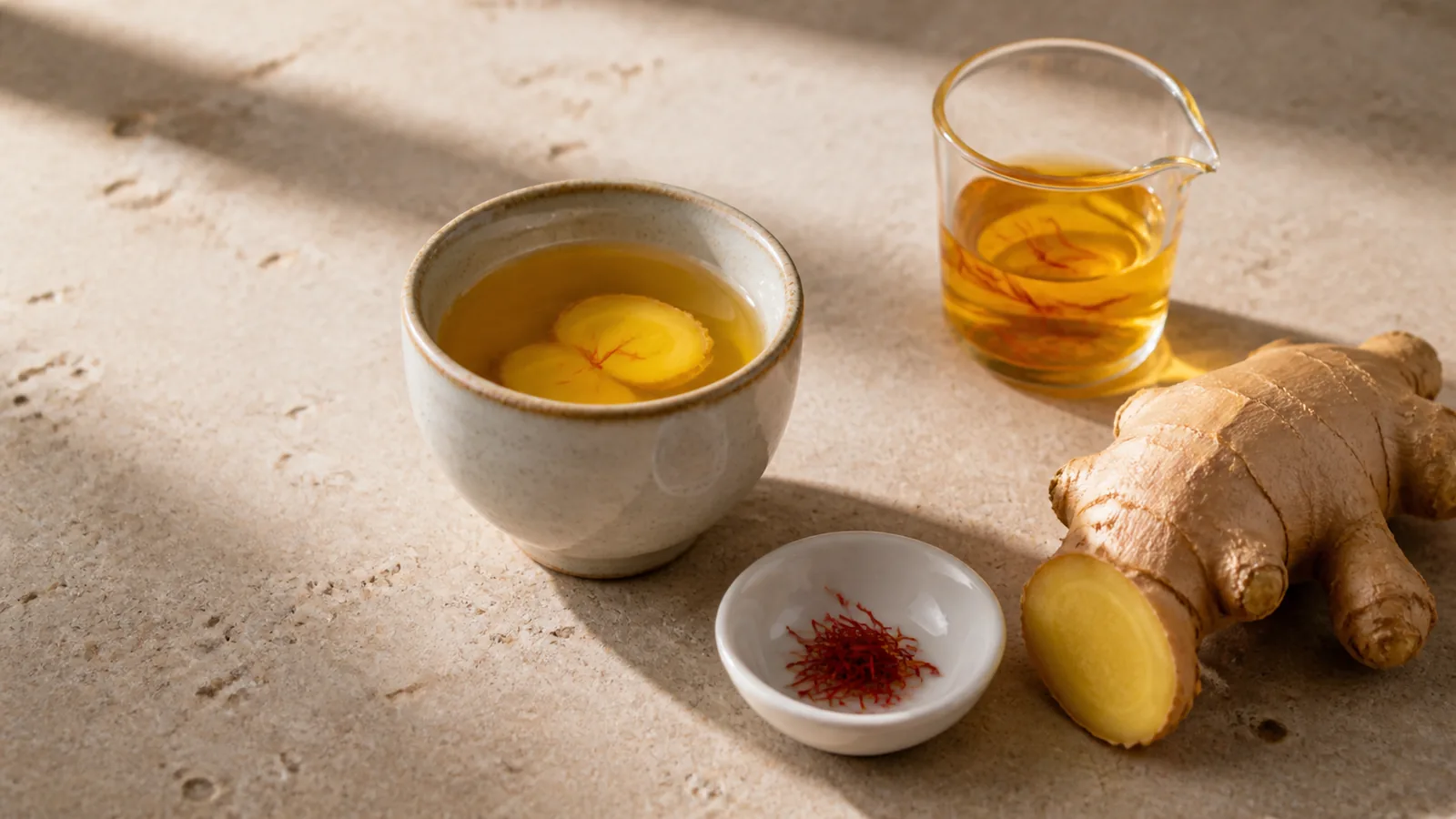
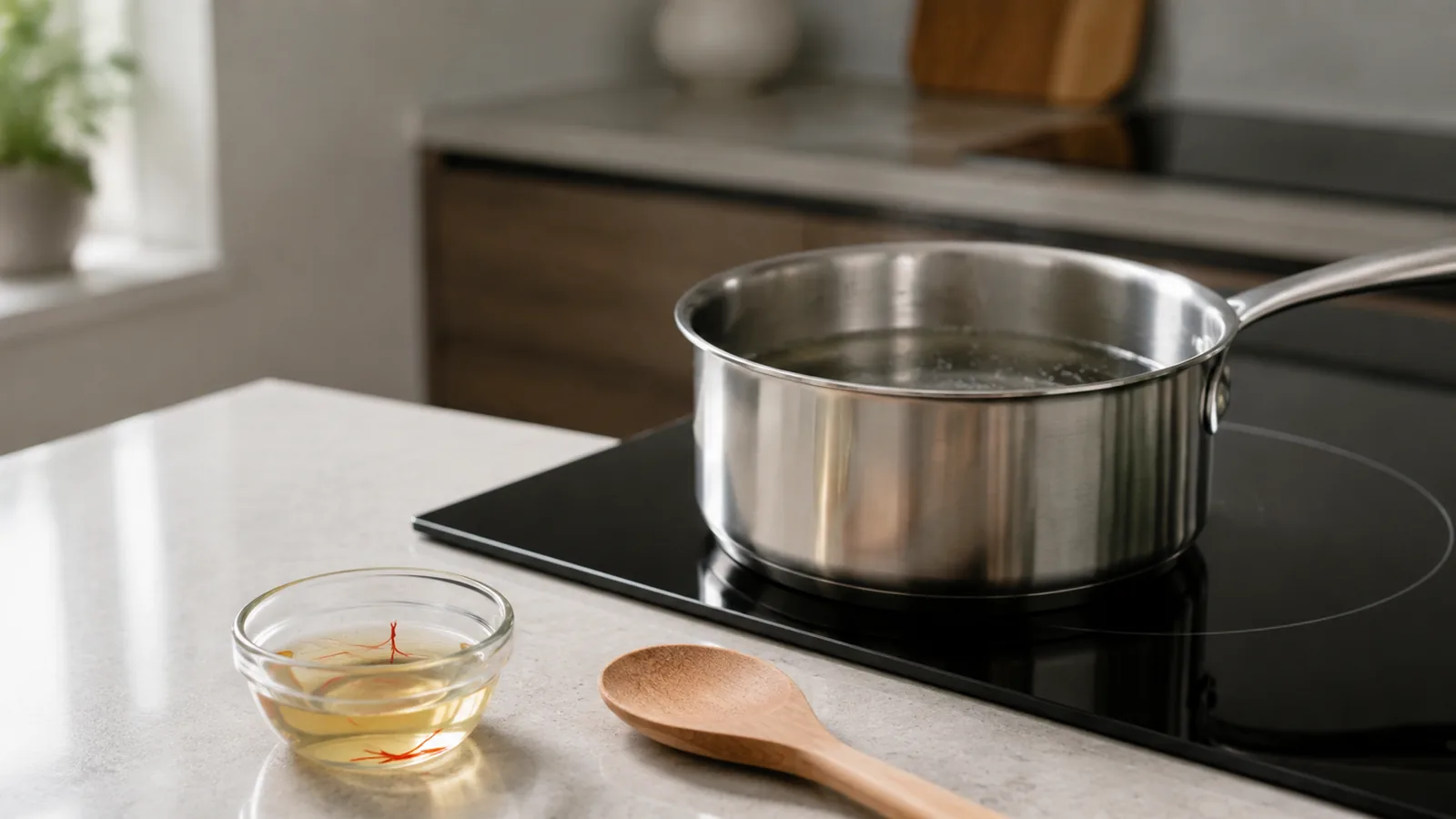
Look for dry, recognisable red stigmas with naturally varied shapes and a characteristic aroma. When infused in warm water, they should release a golden colour over time rather than simply behaving like soluble dye. These observations can expose an obvious problem, but they cannot certify authenticity or chemical strength.
For a home grower, seeing the flower makes the anatomy much clearer. Our guide to whether you can grow saffron covers planting, flowering and the careful collection of the three red stigmas. Buyers can compare the current thread cuts and pack details on the products page.
Why the saffron stigma is valuable
The saffron stigma is valuable because it is a tiny, hand-collected part of a seasonal flower and the source of the spice’s characteristic colour, aroma and flavour. Three stigmas per flower, a narrow harvest window and careful drying create real production costs. The best purchase is not simply the longest or reddest thread; it is authentic saffron from a trusted supplier that has been harvested, dried, described and stored well.