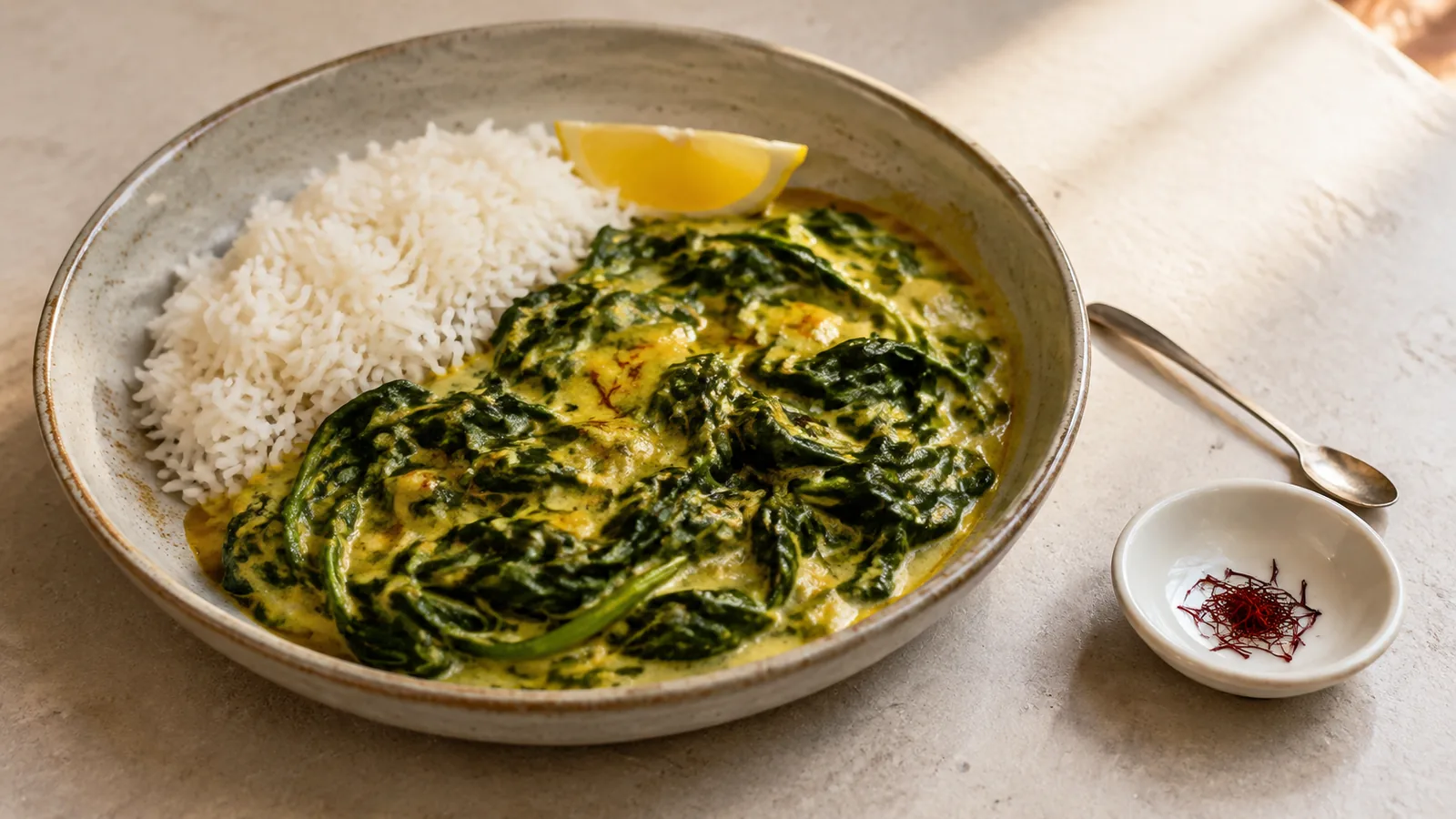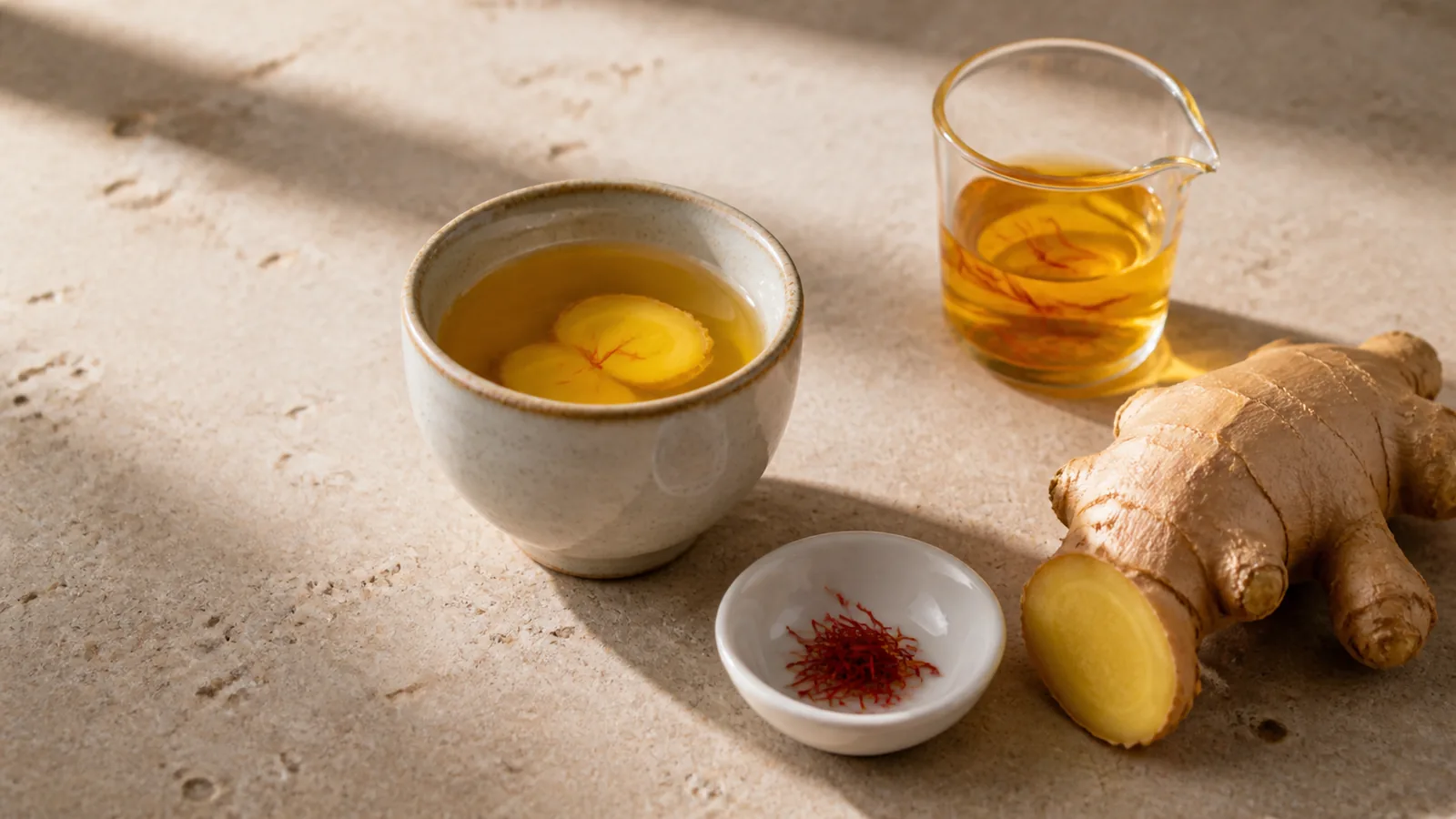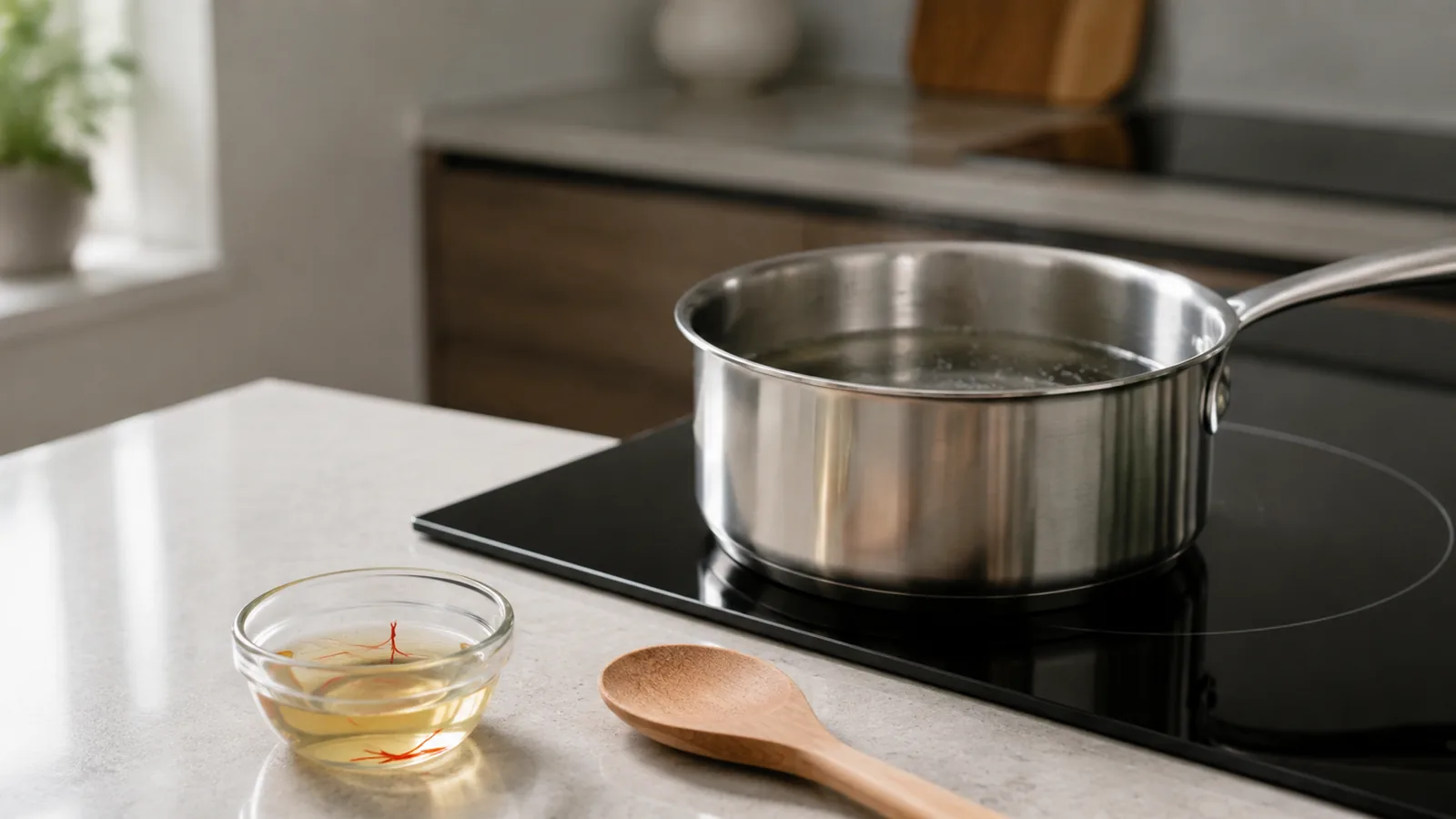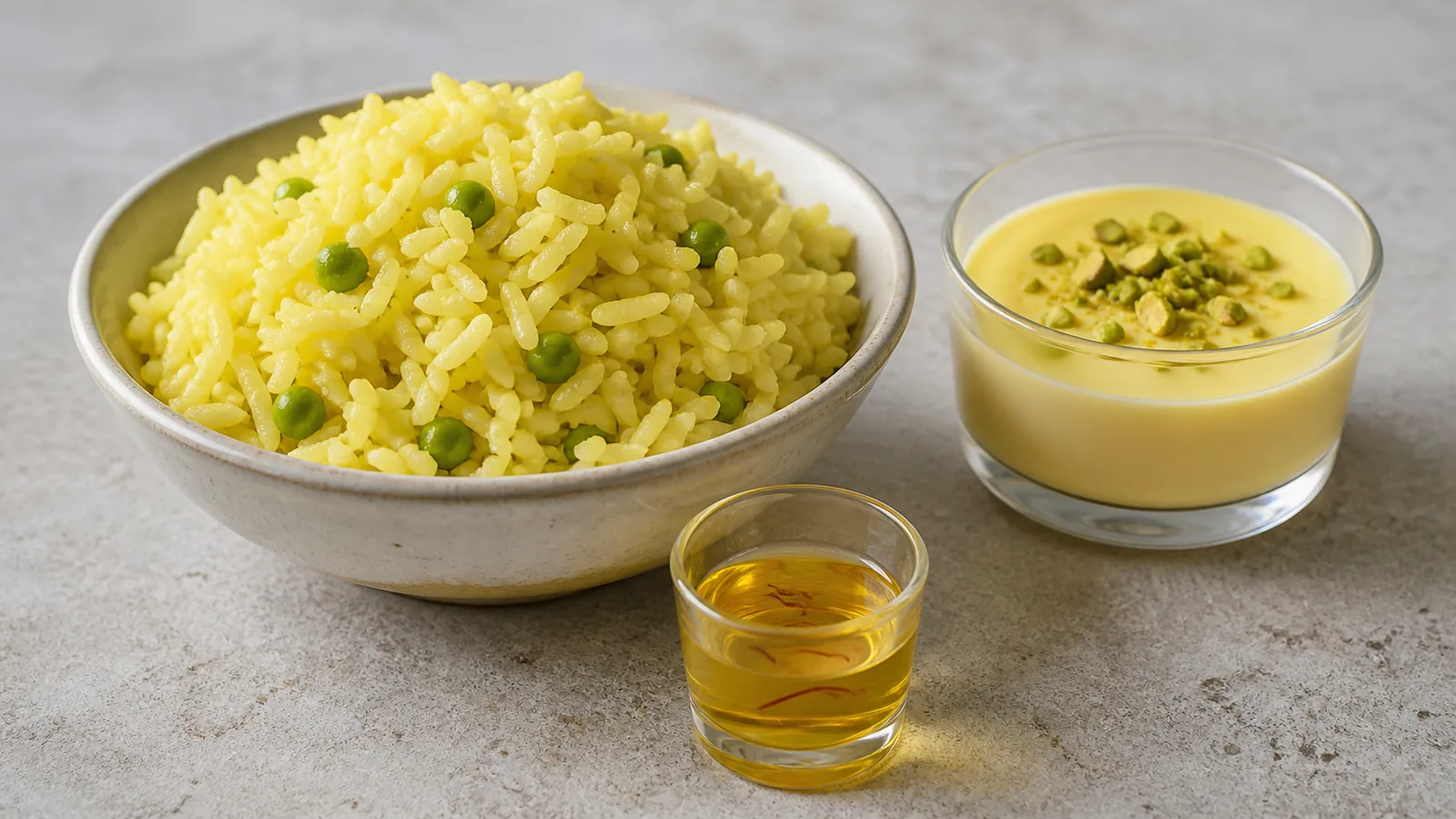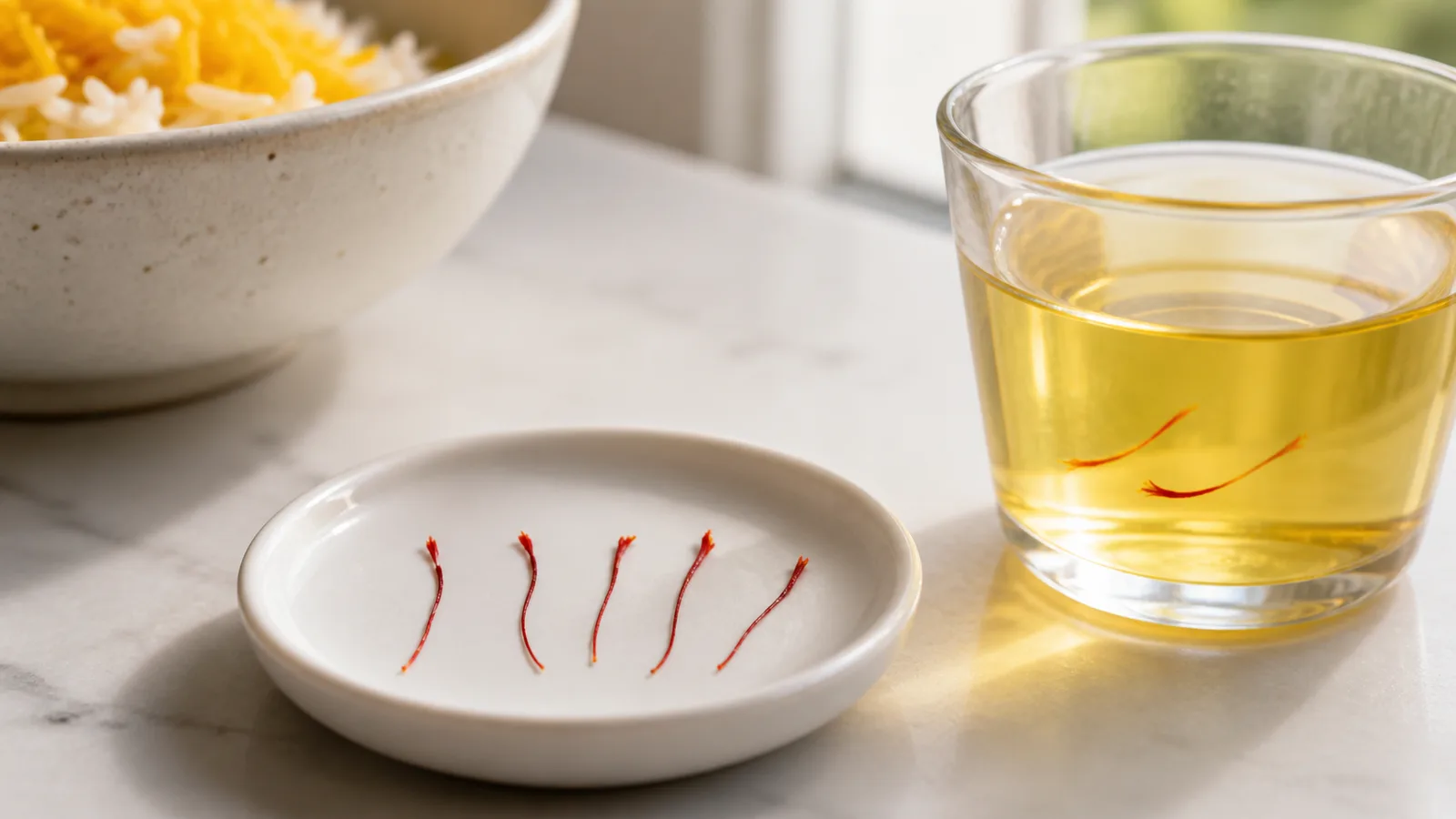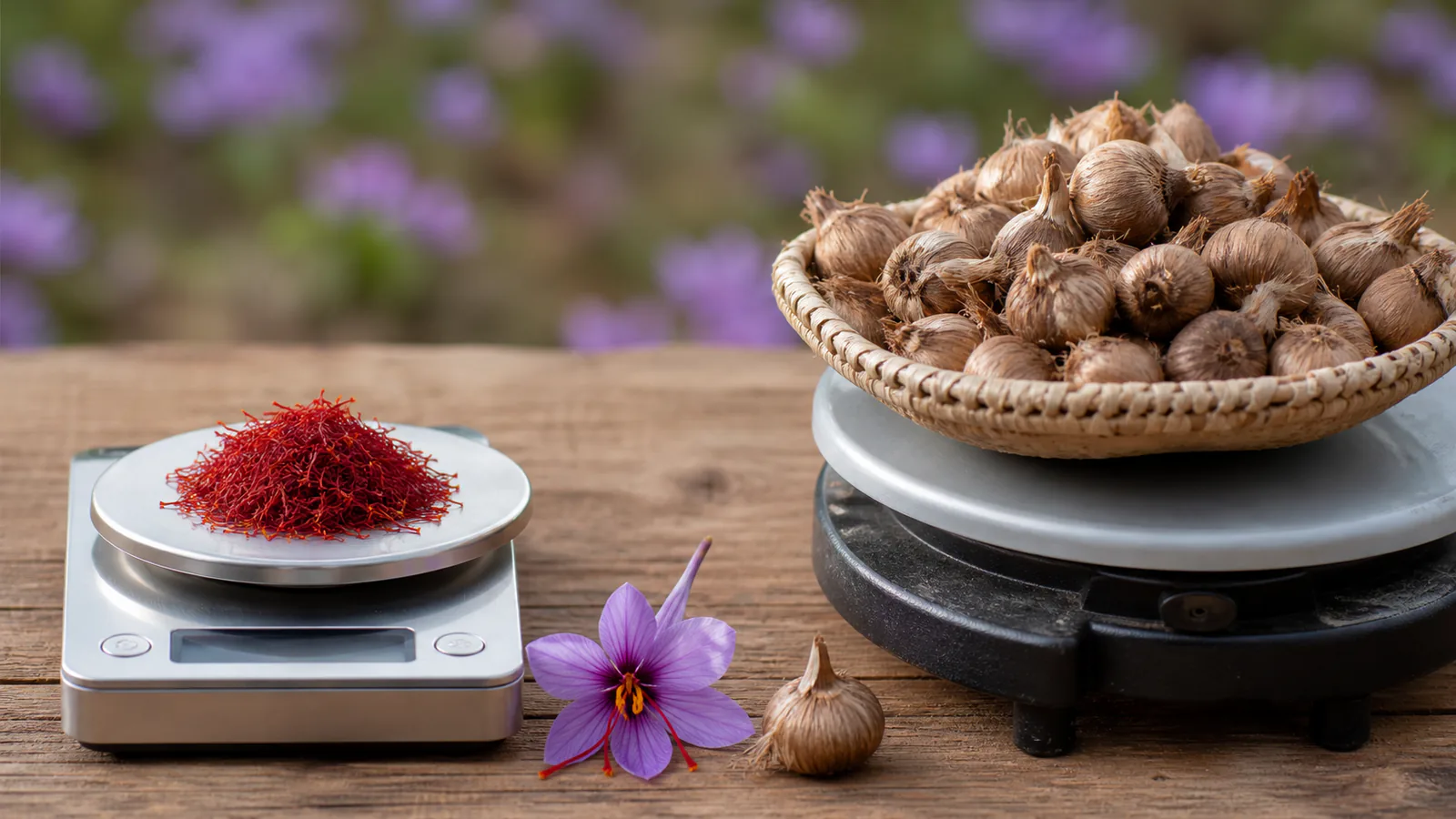
One gram of saffron contains roughly 450–500 individual red stigmas, or about 150–165 three-stigma flower sets. This is why answers to “How many saffron are in 1 g?” often appear to conflict. Some sellers call each individual stigma a thread; others count the connected or associated set from one flower as one strand.
The exact count varies. Thread length, how much yellow style remains, breakage, drying, and moisture all change the weight. For recipes and trade, weighing saffron is more consistent than counting threads.
Why the old answer said 150–200 threads
The earlier version of this page gave 150–200 threads per gram. That range is plausible only when “thread” means approximately one flower’s three-stigma set or another relatively heavy cluster. It is too low if every separate red stigma is counted as one thread.
Each Crocus sativus flower has three red stigmas. A field study of saffron grown at three alpine sites reported about 6.06–6.71 milligrams of dried stigma material per flower. Dividing 1,000 milligrams by that range gives about 149–165 flowers. Multiplying by three gives roughly 447–495 individual stigmas. The study and its measured values are available in Agronomy.
This is an evidence-based estimate, not a packaging guarantee. A real gram can fall outside it.
What counts as a saffron thread?
Commercial language is not perfectly standardized. “Thread” may refer to one red stigma branch, several branches still joined near the style, or a visible piece broken during handling. Grades may also contain different amounts of yellow or pale style.
Before comparing thread counts, ask what the counter included:
- individual red stigma branches;
- the three branches from one flower as a set;
- broken fragments;
- red stigma plus attached yellow style.
Without that definition, two correct counts can look contradictory.
Why one gram varies from sample to sample
Long, intact stigmas usually produce fewer countable pieces per gram than short broken material. Extra style adds weight without adding another red stigma. Moisture also matters: a sample that has absorbed humidity weighs more, so fewer pieces may make up one gram.
Origin alone is not enough to predict the number. Statements that every Kashmiri thread is heavier than every Spanish or Iranian thread ignore cultivar material, field conditions, separation style, grade, drying, storage, and lot-to-lot variation.
How to measure saffron accurately
Use a scale that resolves at least 0.01 gram for kitchen work. Place a small container on the scale, tare it to zero, and add the threads. A coarse kitchen scale that shows only whole grams cannot measure saffron reliably.
Counting can help with a repeated household recipe when the same lot is used, but it is not a dependable way to compare products. For consistent flavour and colour, note the weight and the infusion method.
How to use a weighed portion
Gently crush the measured saffron, add a small amount of warm—not vigorously boiling—water, and let it infuse before mixing it into rice, sauce, dessert, or a drink. The useful amount depends on the recipe, number of servings, saffron strength, and personal preference.
A one-gram package can flavour many dishes; there is no need to treat the full gram as one serving. Culinary measurement should not be converted into a medical dose, and a thread count is not a universal health recommendation.
How many saffron corms are in 1 kilogram?
The absorbed source asked a different but related counting question. Saffron “bulbs” are botanically corms: solid underground storage organs used to propagate the sterile plant.
If a batch averages 5–10 grams per corm, one kilogram contains approximately 100–200 corms. At an average of 7 grams, the calculation is 1,000 ÷ 7, or about 143 corms.
That range describes a 5–10-gram lot, not every planting lot. Saffron corms can be much smaller or larger. A recent experiment, for example, deliberately compared 5–10 g, 10.1–15 g, and 15.1–20 g groups, with average weights of 8.3 g, 12.8 g, and 18.2 g. Its methods and results are reported in a controlled corm-size and planting-depth study.
Corm count examples
The arithmetic is simple once the average corm weight is known:
- 5 g average: about 200 corms per kilogram;
- 7 g average: about 143 corms per kilogram;
- 10 g average: about 100 corms per kilogram;
- 12.5 g average: about 80 corms per kilogram;
- 20 g average: about 50 corms per kilogram.
These figures assume exactly 1,000 grams of usable corms. Soil, loose tunic, damaged material, and scale tolerance can change the received count.
What determines corm size?
Corm age is only part of the answer. Starting size, growing conditions, field density, soil, irrigation, nutrition, disease, daughter-corm competition, harvest timing, and storage can all affect final weight.
Research generally finds an early production advantage from larger mother corms, but “larger produces more flowers” is not an unconditional guarantee. A three-year study covering mother corms from 0.5 to 43.5 grams found that corm weight influenced flowering and daughter-corm production while also showing why size classes, planting density, and multiple seasons matter.
How to estimate a real corm lot before planting
Take a random sample from different parts of the lot, not only the largest corms visible on top. Count the sample, remove loose soil, weigh it, and divide sample weight by sample count to find the average. Then divide the lot’s net corm weight by that average.
For planting plans, count usable corms after rejecting diseased, badly damaged, or undersized material. A kilogram figure by itself does not tell you the planting density, expected flowering rate, or future spice yield.
Threads and corms should never be confused
One gram of saffron threads is a culinary spice measurement. One kilogram of saffron corms is a planting-material measurement. The objects, units, and buying decisions are different.
For threads, expect roughly 450–500 individual stigmas or 150–165 three-stigma flower sets per gram, then rely on weight for actual use. For a 5–10 g corm lot, expect roughly 100–200 corms per kilogram, but sample and weigh the lot before planning a field.