Choosing saffron is easier when you separate what you can inspect from what a label merely promises. Look first for intact red stigmas, a clean complex aroma, useful batch information and a seller who explains the product clearly. Price and country of origin can add context, but neither proves quality by itself.
This guide to selecting high-quality saffron gives you a practical order of checks, whether you are buying a small jar for home cooking or comparing larger quantities.
Start with whole threads
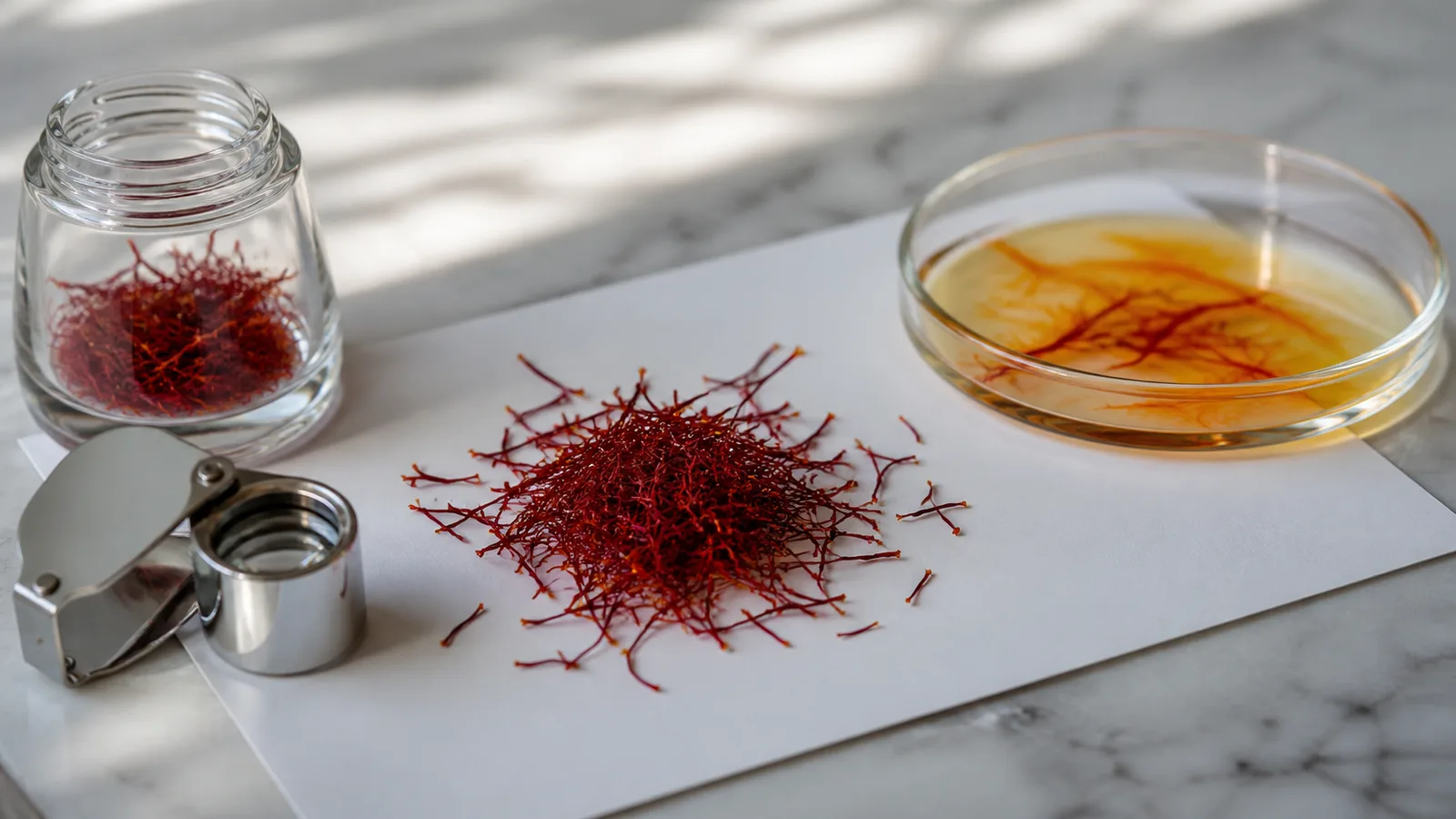
Whole saffron is easier to assess than powder. A stigma usually widens slightly at one end, giving it a fine trumpet-like shape. Many good threads are deep red with slightly lighter tips; abundant pale-yellow or white style lowers the proportion of the aromatic, colouring part you are paying for.
Do not insist that every thread must be perfectly long and identical. Normal handling creates some breakage, and natural stigmas vary. An unnaturally uniform product may deserve as much caution as a jar full of crumbs. The meaningful question is whether the contents look like clean saffron stigmas rather than mixed plant fibres.
Use aroma and taste carefully
Fresh saffron has a layered scent often described as floral, hay-like, warm and faintly honeyed. It should not smell musty, damp, strongly perfumed or chemically sweet. A small amount tastes bitter; it is not sugary on the tongue.
Aroma naturally weakens with age and poor storage, so a quiet scent can mean stale saffron rather than a fake. Conversely, a strong smell alone does not prove purity. Use it as one part of the inspection, not the whole verdict.
Check how it behaves in warm water
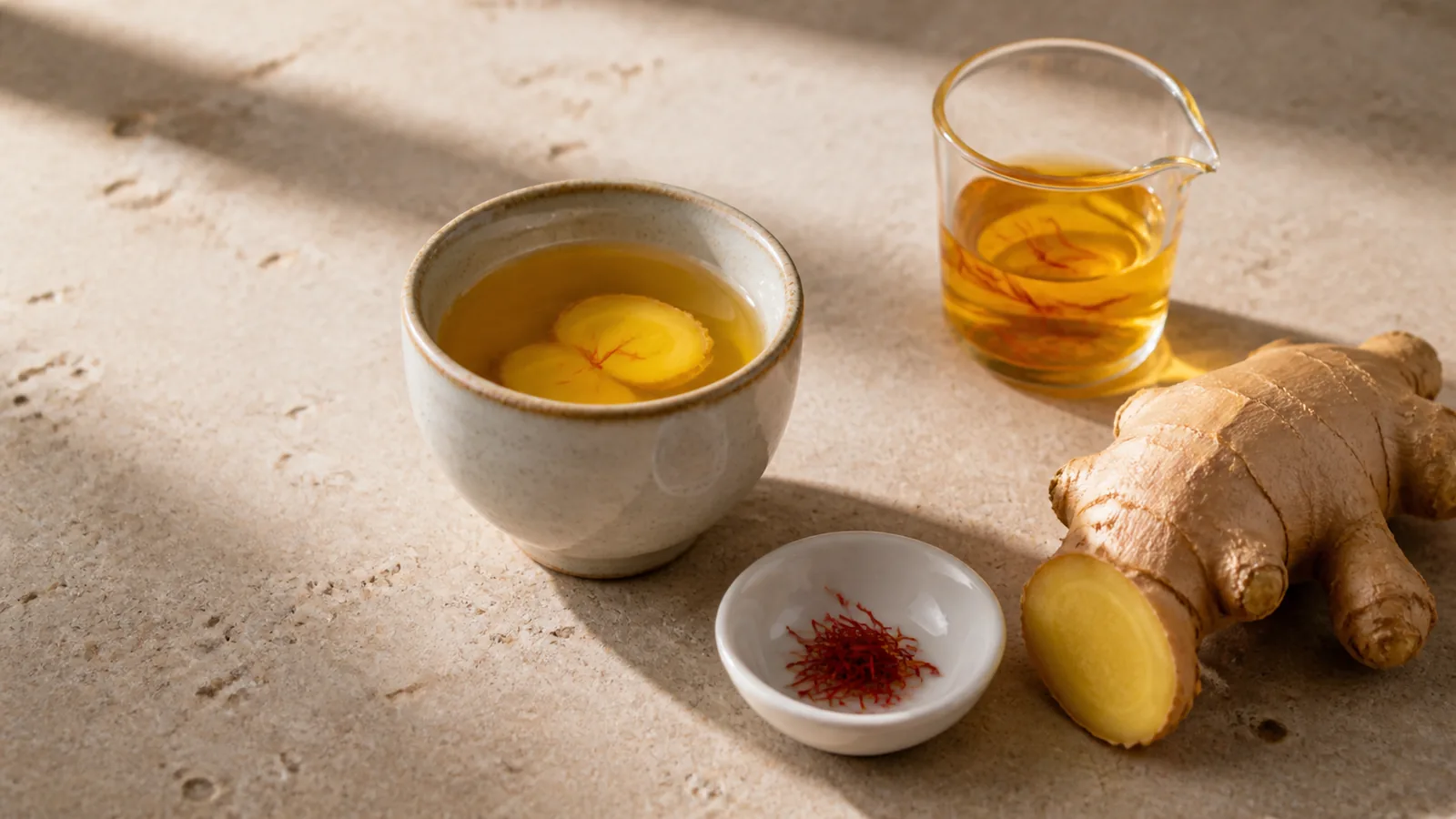
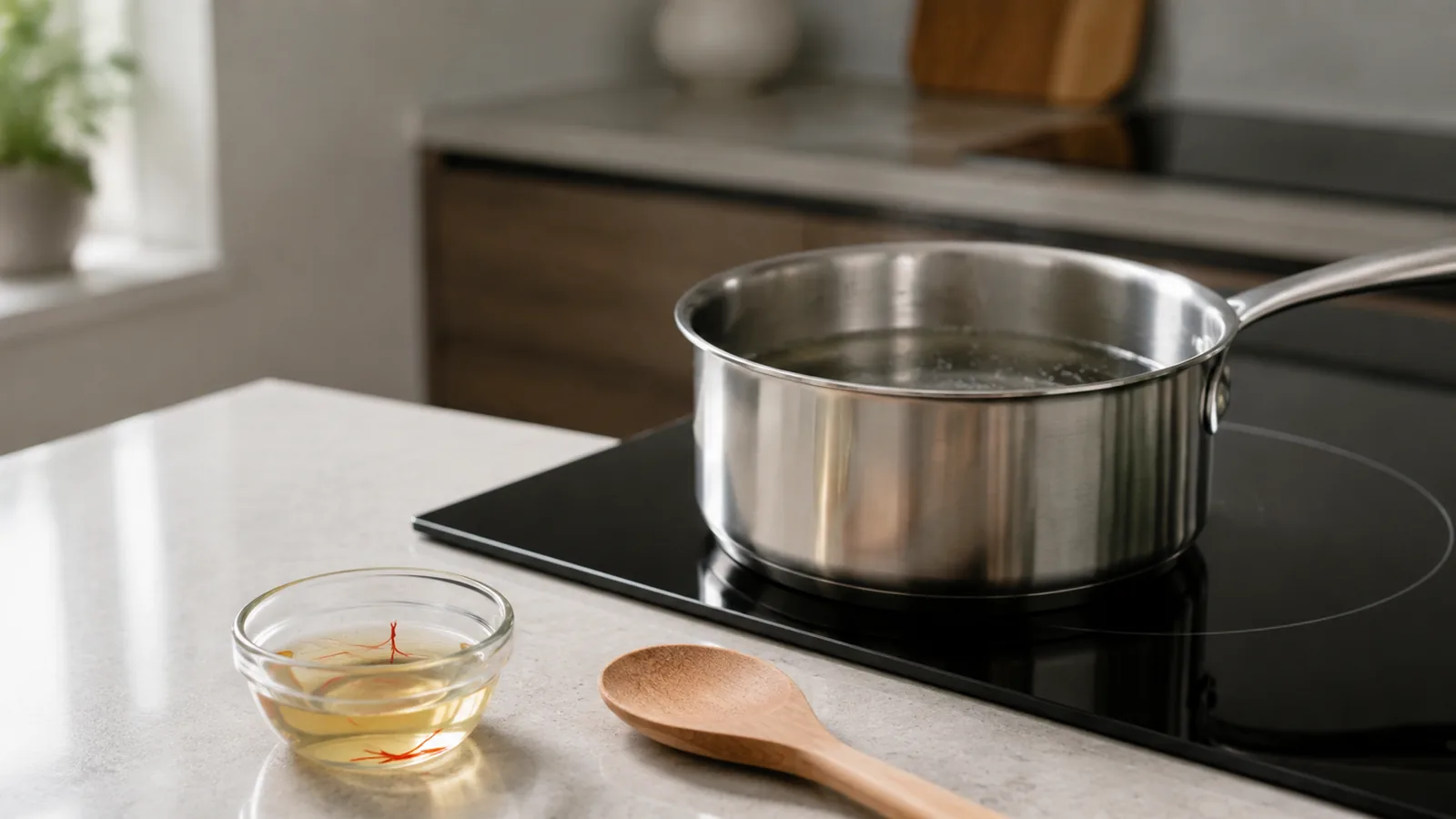
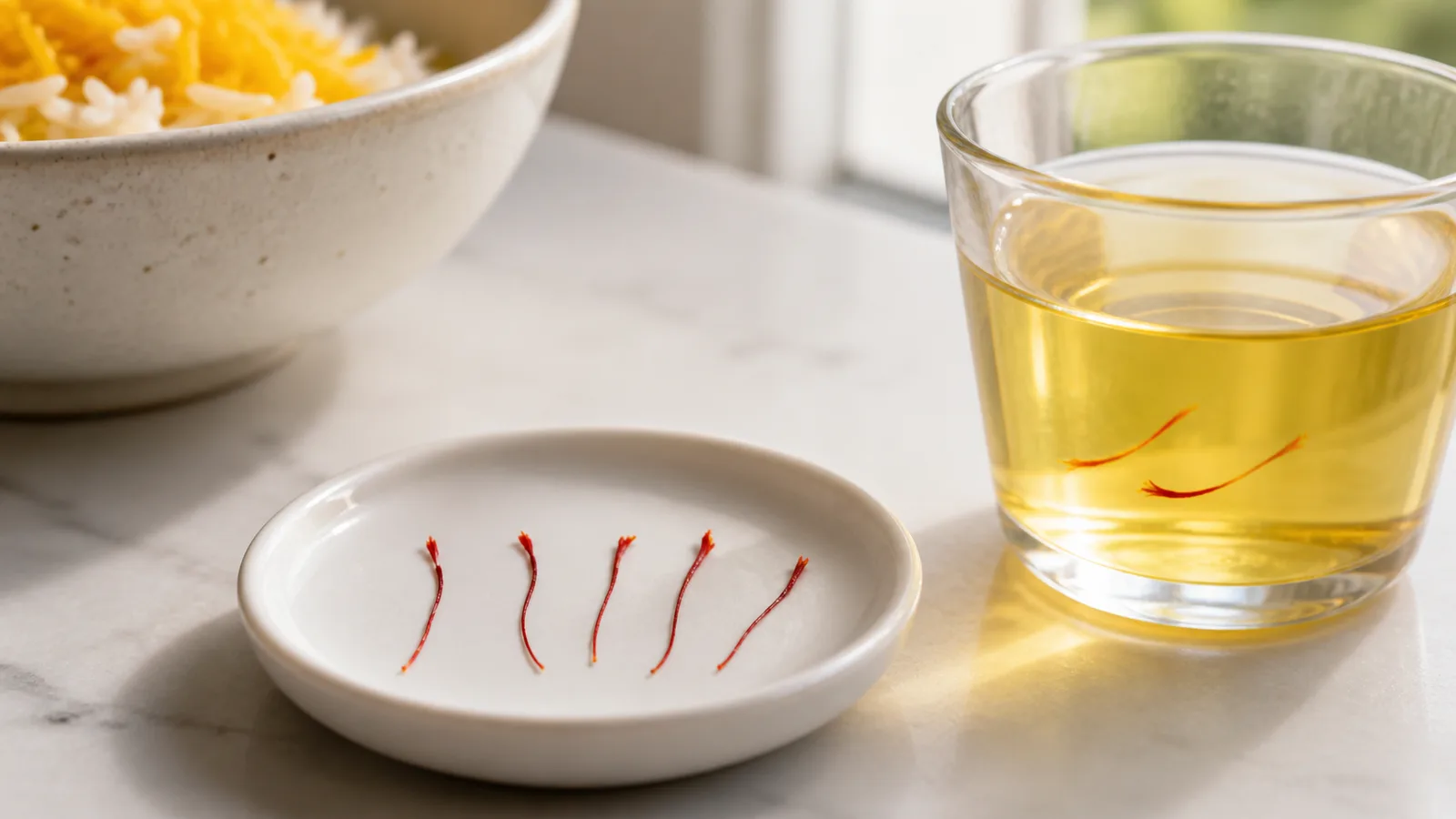
Place a few threads in clear warm water and watch over several minutes. Genuine saffron gradually colours the water golden yellow while the threads remain recognisable. Material that releases an intense red cloud immediately or falls apart like coloured paper is suspicious.
This kitchen check can expose crude dyeing, but it cannot confirm grade, geographic origin or every form of adulteration. Water temperature, crushing, thread quantity and steeping time all change the result. Laboratory analysis is the stronger evidence when a commercial decision depends on it.
Understand grades without treating them as universal
Names such as Negin, Sargol, Pushal and bunch describe familiar Iranian trade preparations, but sellers do not always apply the terms consistently. Negin and Sargol generally emphasise the red stigma; Pushal keeps more of the lighter style attached. The best choice depends on whether you prioritise visual presentation, colouring strength, traceability or price.
If you are looking for the best Iranian saffron, ask for the actual specification behind the grade name. A batch test, harvest information and clear photographs tell you more than “super premium” on its own.
The ISO 3632-1:2025 saffron specification defines categories and requirements for dried saffron. ISO testing can provide useful evidence about characteristics such as colouring strength, but a seller should identify the standard, laboratory, batch and result rather than dropping an unexplained crocin number into advertising.
Origin matters, but it is not a shortcut
Iranian and Kashmiri saffron both have respected traditions and can produce excellent threads. They can also vary by field, season, processing and storage. A geographic name is meaningful when it is traceable; it should not be used as a substitute for inspecting the product in front of you.
Origin claims are especially difficult to verify from appearance alone. If provenance is important, choose a supplier that can identify its source and lot rather than relying on a flag, a romantic story or the colour of the package.
Inspect the packaging and seller
- Net weight: it should be stated clearly so prices can be compared per gram.
- Protection: the container should keep out moisture, light and strong surrounding odours.
- Traceability: look for batch or lot details, origin information, meaningful certificates of authenticity or test reports where available, and a responsible seller.
- Product view: transparent or well-photographed whole threads are easier to assess than hidden powder.
- Claims: avoid sellers who guarantee cures, impossible potency or a home test that supposedly proves everything.
An extremely cheap offer is a reason to investigate, not automatic proof of fraud. It may reflect a lower grade, old stock, more style material, broken threads or a larger wholesale quantity. Compare equivalent weights and preparations before deciding.
Choose according to the job
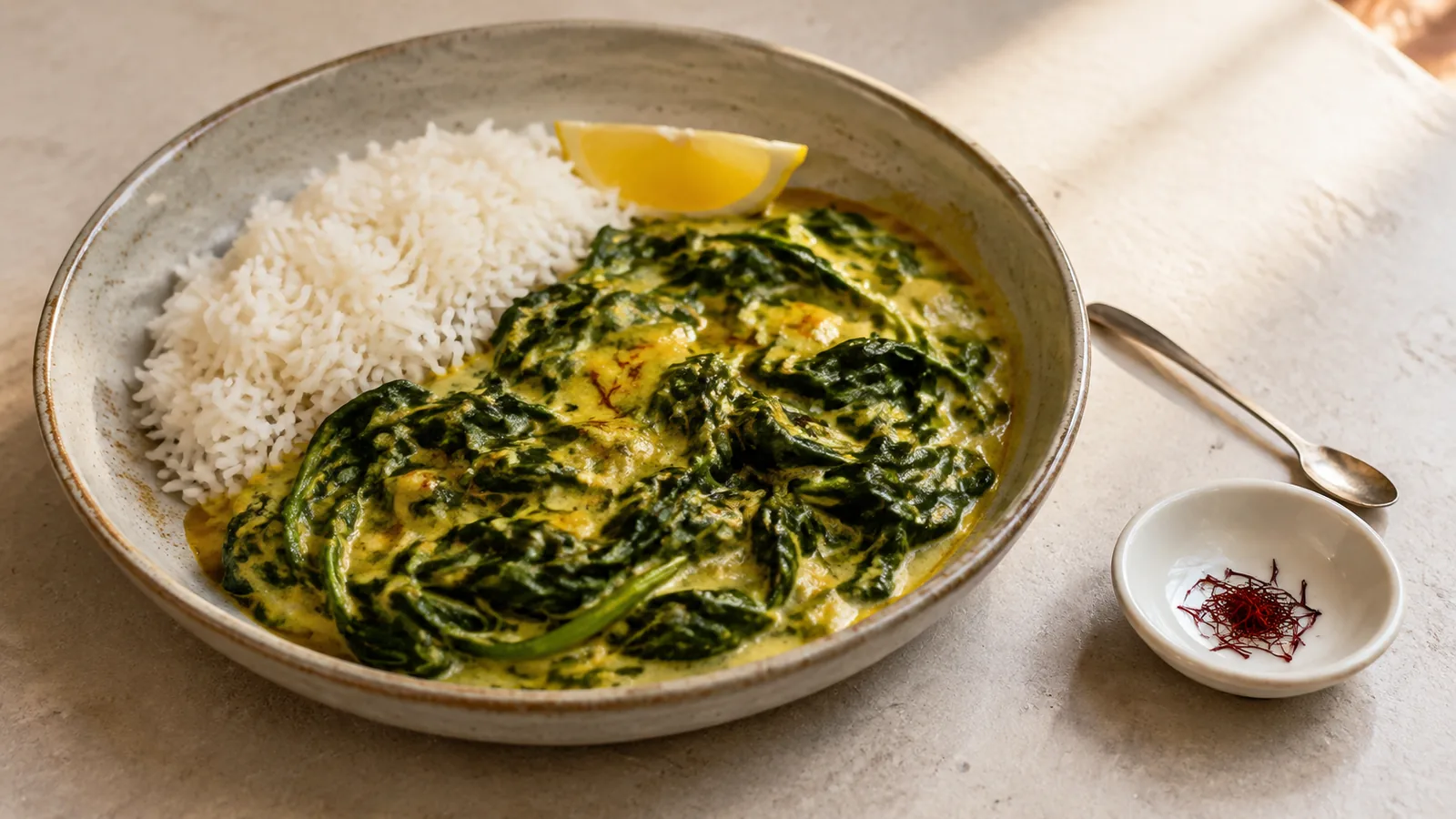
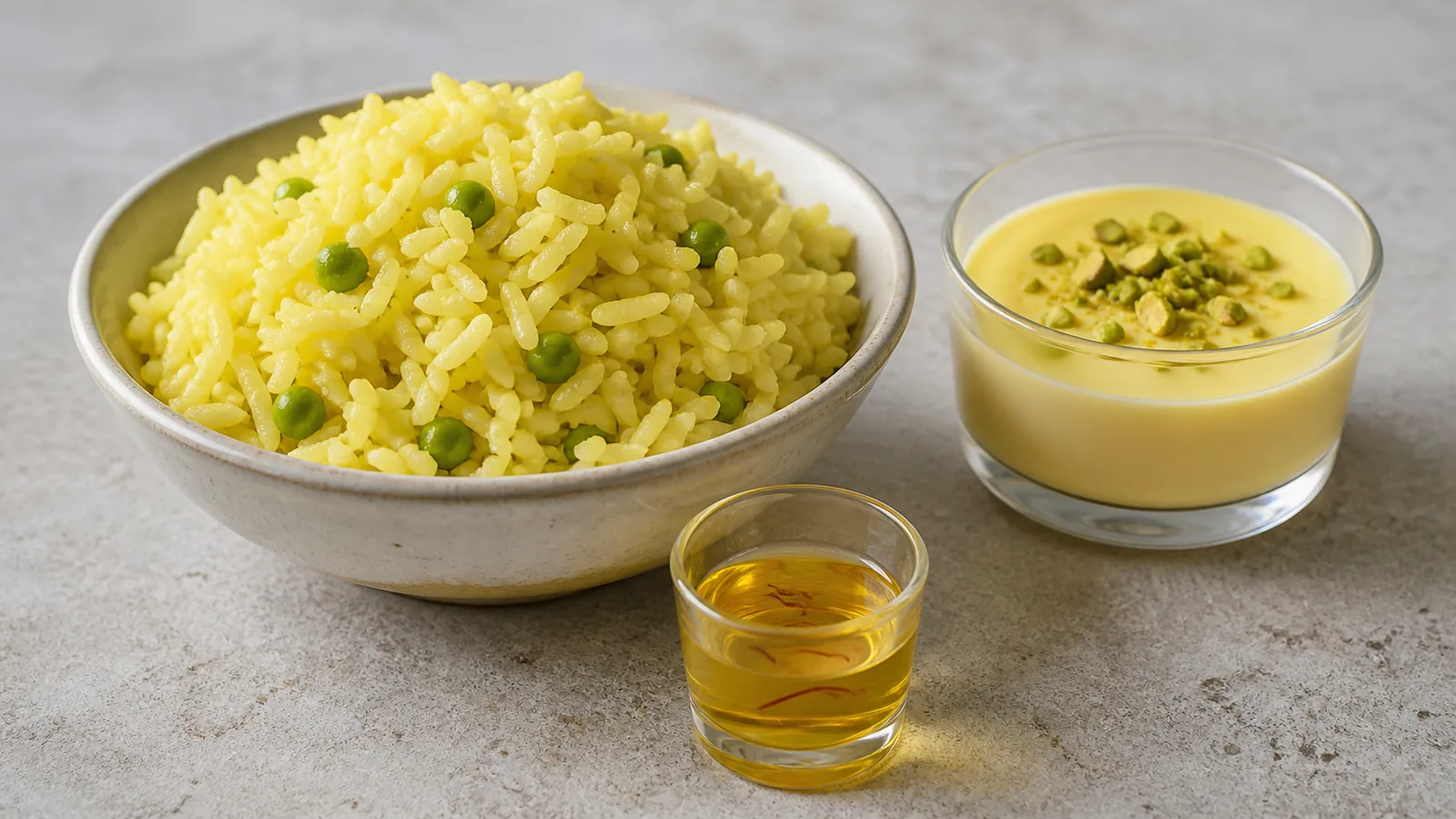
For pale rice, custards and clear drinks, strong colouring power and a clean aroma may matter most. For garnish, intact attractive threads have extra value. For everyday cooking, a sound red-stigma product with good traceability can be a better purchase than the most elaborate retail grade.
Buy a modest amount the first time. Bloom it in warm water, cook with it, and judge the aroma, colour and flavour in the finished dish. Store the remainder sealed, dry, cool and dark so the comparison stays fair.
A reliable buying sequence
When selecting high-quality saffron, inspect whole threads first, then aroma, packaging, traceability and any test documentation. Treat origin and grade names as useful descriptions that still need evidence. Our saffron products show the available thread formats and current details, so you can compare the product rather than relying on a superlative.