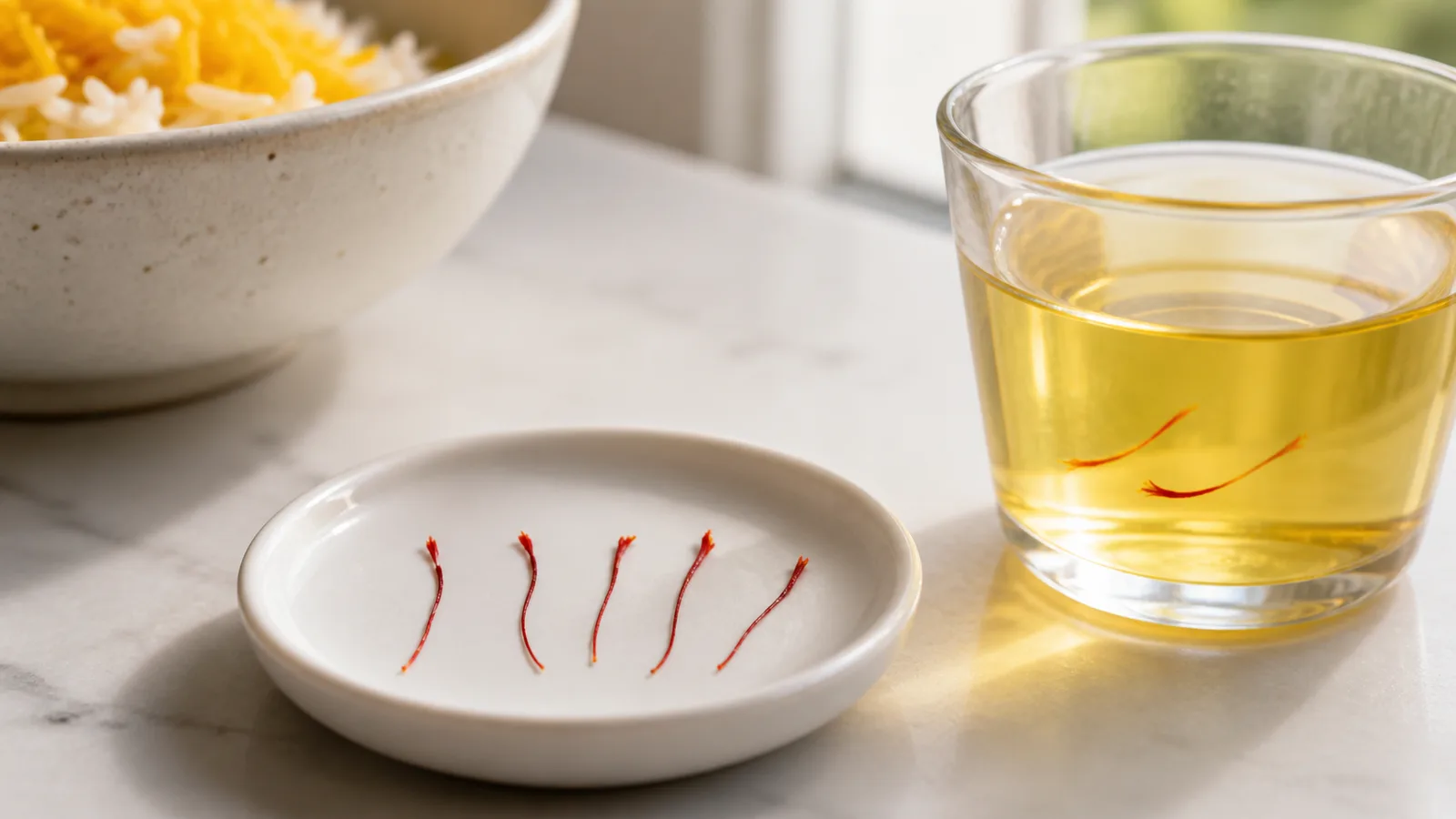
There is no official number one saffron in the world. A high-grade Iranian Sargol can be an excellent all-purpose choice, but country and trade name are only part of the answer. Whether a buyer calls it the “no 1 saffron in the world,” the “world’s best saffron” or the “worlds finest saffron,” the soundest choice is a pure, fresh, well-stored batch with documented origin and quality that suits the way it will be used.
What “Top Saffron in the World” Should Mean
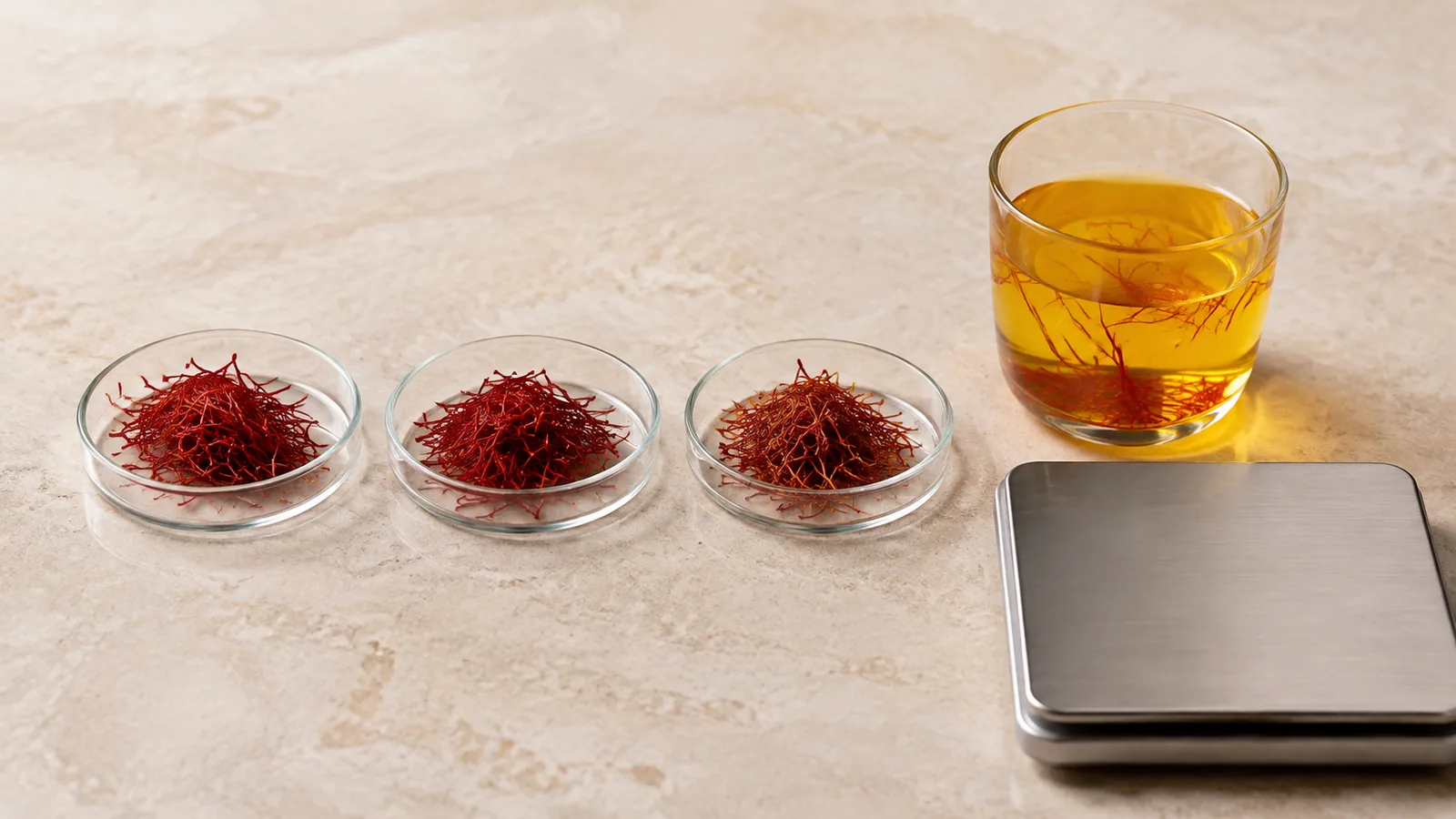
A useful comparison has to separate three questions. Origin tells you where the saffron was grown. A regional or trade grade describes how the stigmas were trimmed and presented. Laboratory results assess measurable characteristics such as coloring strength, aroma-related compounds, flavor-related compounds, moisture and foreign material.
Those are not interchangeable. “Persian,” “Kashmiri” or “Spanish” is not a laboratory grade, and a beautiful all-red presentation does not prove purity. Nor does a Category I result identify one country as a permanent winner. Researchers have documented qualifying saffron from several origins.
Why Iranian Sargol Is Often Recommended
Iran has an established saffron industry and several familiar commercial presentations. Sargol consists of the separated red part of the stigma, generally without the pale style. Its compact, all-red appearance and coloring performance make it popular with cooks and buyers who want strong color without paying for style by weight.
A study on the classification of Iranian saffron types describes Sargol as the red part of the stigma and distinguishes it from Negin, Pushal and bundled saffron. That is a description of the cut, not a guarantee that every packet labelled Sargol has superior aroma, purity or freshness.
So is Iranian Sargol the best saffron in the world? It is a strong practical answer when the batch is authentic and properly handled. It should still be judged on evidence from the actual lot rather than reputation alone.
How Saffron Quality Is Compared
Saffron’s color, bitter flavor and aroma are associated with crocins, picrocrocin and safranal. ISO 3632-based testing also considers matters such as moisture and extraneous material. This is much more reliable than declaring a winner from a photograph or a home water test.
The European Commission used the relevant ISO saffron standard in its coordinated control work on herbs and spices. A separate authentication study examined traceable saffron from Iran, Spain, Greece, Morocco, France and Italy that met ISO quality criteria. Its findings show why quality and geographical authentication are related but distinct questions.
When a seller cites a test, ask for the laboratory, batch number, test date and result. “ISO quality” without a document tied to the jar is only a claim.
Iran, Kashmir and Spain Offer Different Buying Signals
Iranian saffron offers familiar cuts such as Sargol and Negin and can deliver strong color, aroma and flavor. What matters is whether the stated grade, origin and current batch can be verified.
Kashmir saffron has a legally registered geographical indication in India. The official Kashmir Saffron GI record identifies the protected geographical area and registration. That protection is valuable for provenance; it does not make an unverified use of the word “Kashmir” trustworthy.
Spain has its own protected regional tradition. The European Union records Azafrán de la Mancha as a protected designation with a defined specification. Some products sold or packed in Spain may use saffron grown elsewhere, so check cultivation origin rather than assuming that the packing country answers the question.
What About Saffron From Uzbekistan?
Saffron from Uzbekistan can also be a legitimate culinary product. The same rule applies: a country name by itself does not establish that a particular lot is the world’s finest saffron. Look for the producer, cultivation origin, harvest or packing date, thread composition and credible batch testing.
Newer or less familiar origins should not be dismissed, and famous origins should not receive a free pass. A well-documented fresh sample can outperform an old or poorly stored packet from a celebrated region.
What High-Quality Threads Look and Smell Like
Whole saffron should have recognizable Crocus sativus stigmas. They are usually deep red, slender through the body and wider or flared near the end. A little variation in length and curve is natural. Lots of pale yellow style lower the proportion of red stigma, though the exact presentation depends on the named cut.
Fresh threads have a clean, complex fragrance that can seem floral, hay-like, honeyed or earthy. The taste is characteristically bitter, not sweet. Mustiness, dampness or a flat aroma can indicate poor storage or age.
Warm water should gradually draw a clear golden-yellow infusion from a few threads. Immediate opaque red dye is suspicious, but genuine stigmas do not have to turn white, and one cup cannot certify origin or detect every adulterant. The guide to identifying high-quality saffron explains how to combine visual, aroma and infusion checks without treating any one of them as proof.
Choose the Best Saffron for the Dish
For cooking, teas and clear drinks, coloring strength and a clean aroma may lead the decision. A delicate broth, dessert or custard can expose stale or harsh notes that a heavily spiced stew would mask. In a recipe where the threads remain visible, an intact Negin-style presentation may appeal more than shorter Sargol pieces even when both are good.
Compare samples at the same weight and steep them under the same conditions. A larger pinch is not evidence of a stronger spice. Dose, water temperature, steeping time and storage history all affect what reaches the cup or dish.
A Practical Buying Checklist
- Confirm that the ingredient is Crocus sativus stigma, not a vague “saffron blend.”
- Check the country of cultivation separately from the country of packing.
- Ask what the regional or trade grade means for thread composition.
- Prefer a traceable batch with a lot number and current test information.
- Choose packaging that limits light, moisture and air.
- Compare price per gram for the same grade and level of evidence.
The guide to buying saffron by country provides more detail on separating origin from quality. If you are comparing the available saffron products, apply the same checks to the individual package rather than relying on a superlative in its name.
The Best Answer Is a Verified Batch
For an everyday recommendation, genuine high-grade Iranian Sargol belongs among the top saffron in the world. It is not an automatic global champion, and neither are Kashmir saffron, La Mancha saffron or any emerging origin. The most defensible number one is the batch that combines purity, freshness, suitable thread grade, good storage and evidence you can actually inspect.