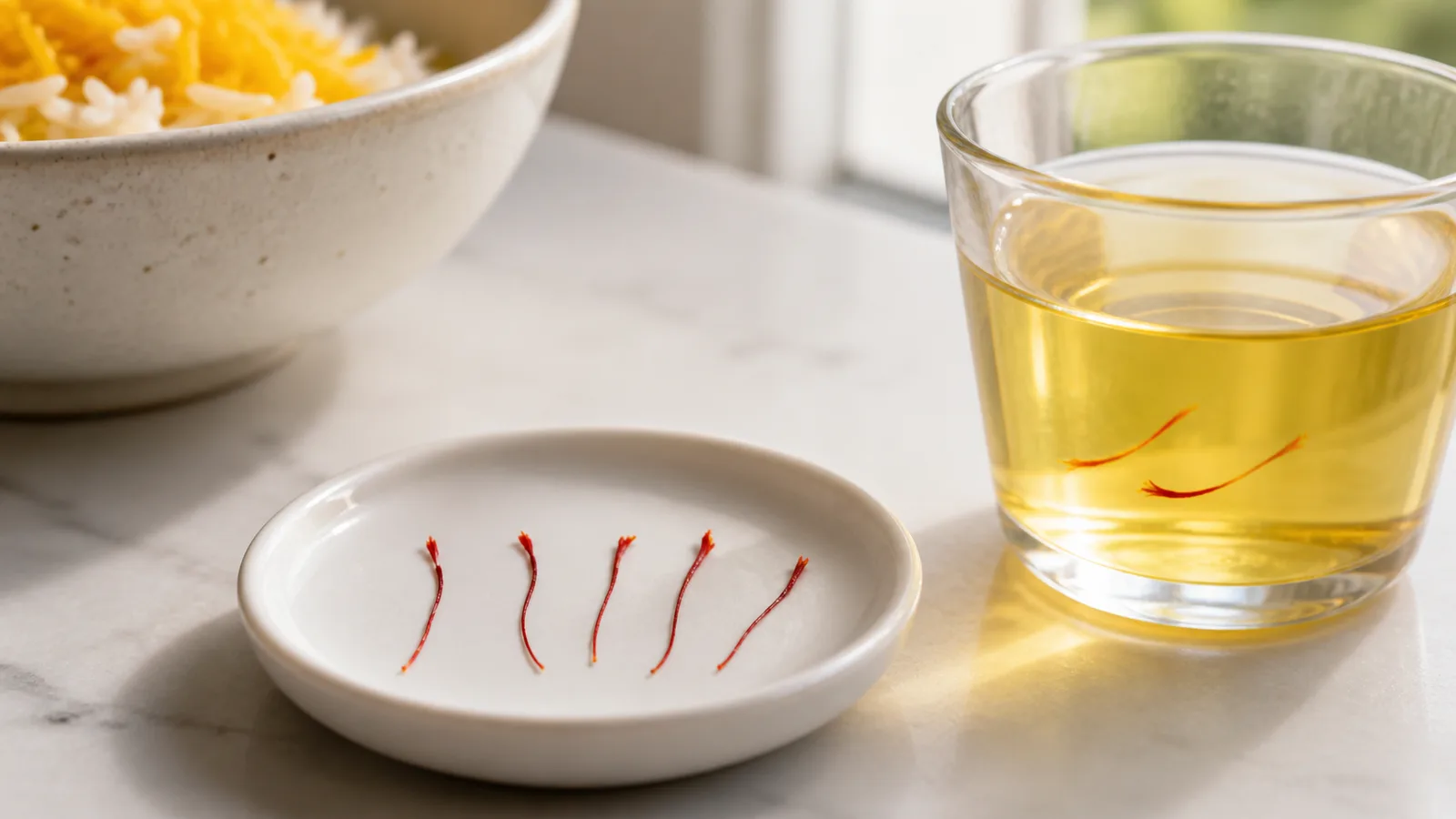
No single ingredient has the closest flavor to saffron in every sense. What spice is similar to saffron? The answer changes with the flavour, aroma, colour or appearance you need. The saffron flavor profile combines floral aroma, earthy depth, a honey-like impression and restrained bitterness. Turmeric, annatto and safflower can copy some colour or earthiness, but none reproduces that complete taste.
Choose a saffron substitute by the job it must do
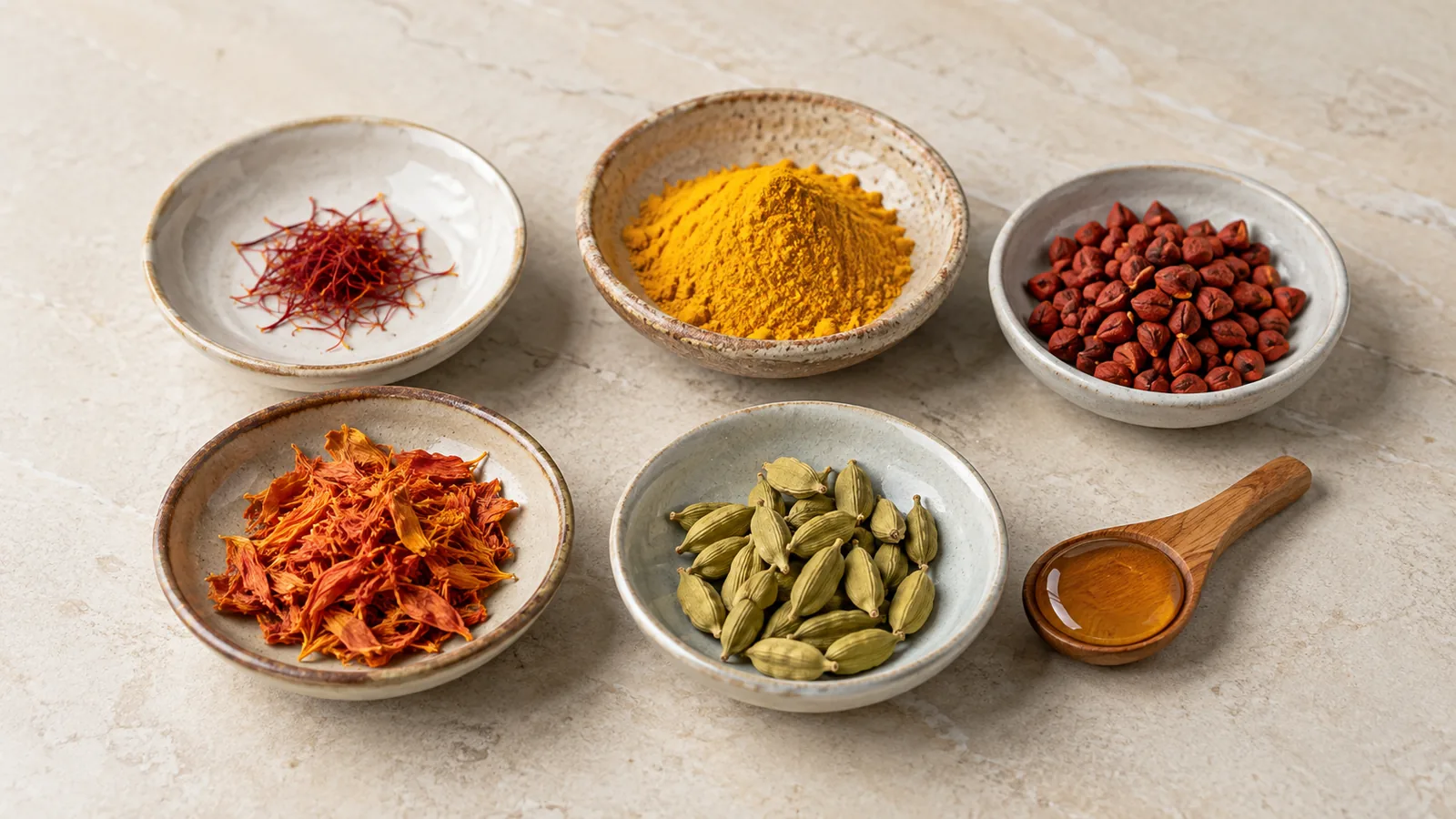
The best alternative for saffron depends on why the recipe uses saffron. These saffron alternatives solve different problems, so a useful saffron replacement begins with the recipe’s purpose. Decide whether the priority is flavour, aroma, golden colour or visual threads. One alternative may help with color and make the dish taste less like the original. Each saffron substitution needs that trade-off stated clearly.
- For colour: turmeric or annatto can make food yellow to orange.
- For mild earthiness: a very small amount of turmeric may help.
- For a floral impression: a restrained aromatic ingredient can add fragrance, but it will be its own flavour.
- For thread-like appearance: safflower petals can provide a visual cue with much less aroma.
If the recipe depends on saffron as its main identity, a substitute changes the dish. That may still taste good; it should simply be described honestly.
What can I use instead of saffron?
The most practical answer is often a tiny pinch of turmeric for colour, used with realistic expectations. For a less yellow and more orange result, annatto can work. Safflower may suit a garnish or infusion where visual threads matter. In some sweet foods, a little cardamom or honey can replace part of the aromatic warmth, though neither tastes like saffron.
Do not combine every alternative at once. A mixture of turmeric, annatto, cardamom and honey can become busy and still fail to taste like saffron. Match one or two functions to the recipe.
Turmeric as an alternative to saffron
Turmeric is an inexpensive, familiar spice substitute for saffron when color is the main goal. It brings an earthy, slightly bitter flavour, so a small amount is enough. Too much makes the dish taste clearly of turmeric and can produce a dense yellow colour unlike a delicate saffron infusion.
It works best when appearance matters more than saffron aroma: everyday rice, soups or sauces where other seasonings lead. Start with less than you think you need, mix it through the cooking liquid and adjust visually.
Annatto vs saffron
Annatto seeds provide yellow-orange colour and a mild earthy or peppery note. They are useful in fats, rice and sauces, but their flavour is not a copy of saffron. The hue can also lean more orange.
Infuse whole seeds in oil or water according to the recipe, then strain where appropriate. Do not present annatto-coloured food as saffron food when no saffron is present.
Safflower vs saffron
Is safflower the same as saffron? No. Saffron threads are stigmas, while safflower provides petals. Safflower comes from Carthamus tinctorius; saffron comes from the stigmas of Crocus sativus. The plants, aromas and culinary strengths are different.
Safflower can add yellow-orange colour and petal-like strands, which explains names such as “false saffron.” Its taste is much quieter. It may help visual presentation but is not an authentic saffron flavor substitute.
Can cardamom and honey make a closer flavour?
They can echo two descriptors people use for saffron, not recreate the spice. Cardamom supplies a bright aromatic note; honey supplies real sweetness. Saffron’s “honey-like” quality is mainly an aroma impression, so sweetening a savoury dish may move it farther away.
In milk desserts, a little cardamom can make a satisfying alternative profile. In rice or seafood, it may be inappropriate. Let the cuisine and recipe decide.
Substitutes for saffron in rice
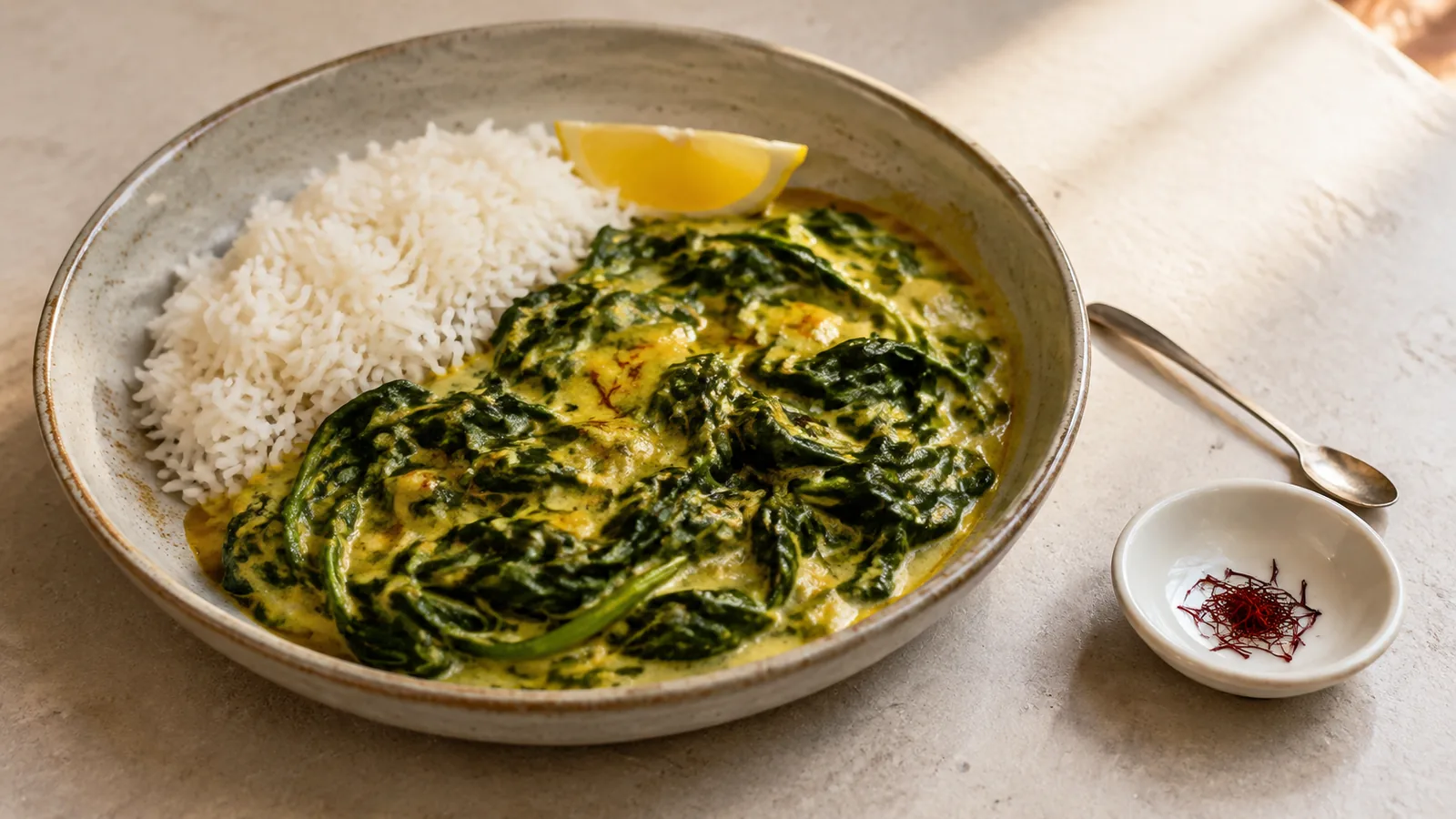
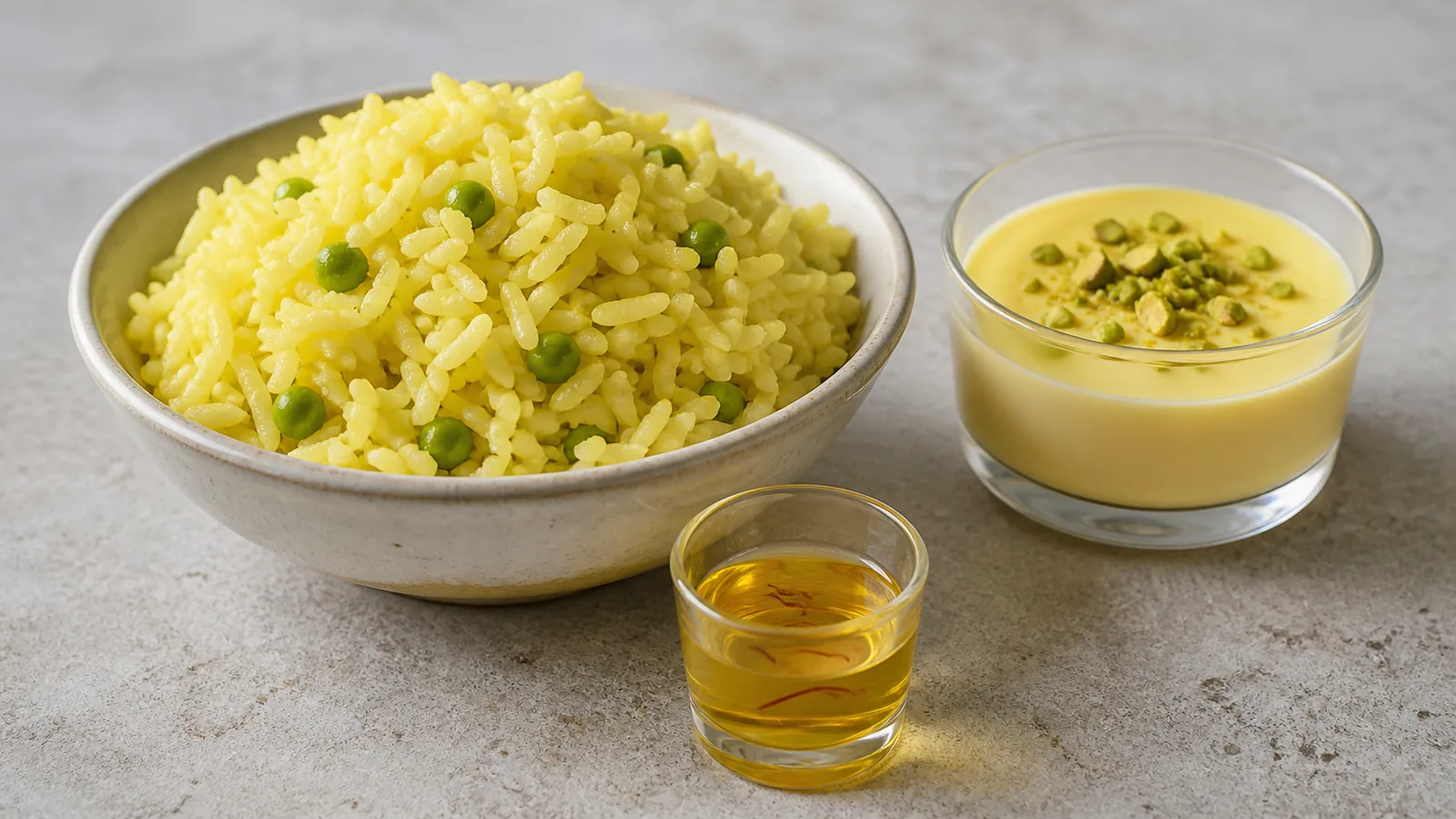
For colour in plain rice, use a very small turmeric pinch or annatto-infused liquid. Add it evenly to part or all of the rice. Neither supplies the floral, hay-like aroma of saffron.
If the dish is paella, biryani, tahchin or another recipe with a strong identity, the substitution affects more than colour. Other ingredients may still make an excellent meal, but the result should not be expected to match the original.
A saffron substitute for soups and sauces
Turmeric is often the easiest choice in a savoury liquid because it disperses well. Annatto can colour oil-based sauces. Use either sparingly and taste the base before adding another aromatic spice.
If seafood or a light broth relies on saffron’s fragrance, there is no neutral replacement. It may be better to omit it and let the broth taste clean than to force in an unrelated floral flavour.
Replacing saffron in desserts
Colour can come from a tiny turmeric amount, but even a little may be noticeable in a mild custard. Cardamom, vanilla, citrus zest or rosewater can create a different fragrant dessert. Use one clear direction rather than calling the result saffron-flavoured.
Can you stretch a small amount of real saffron?
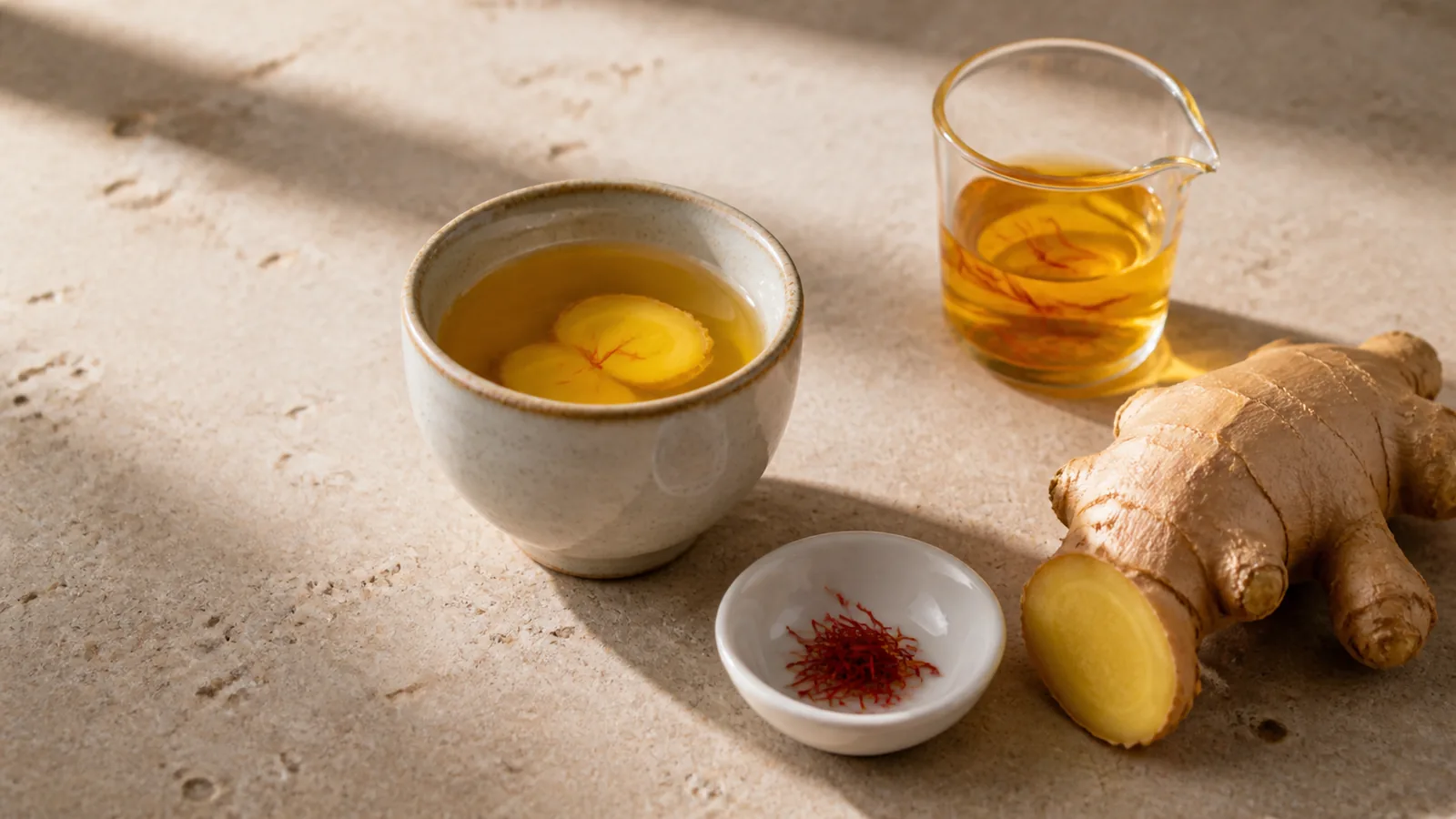
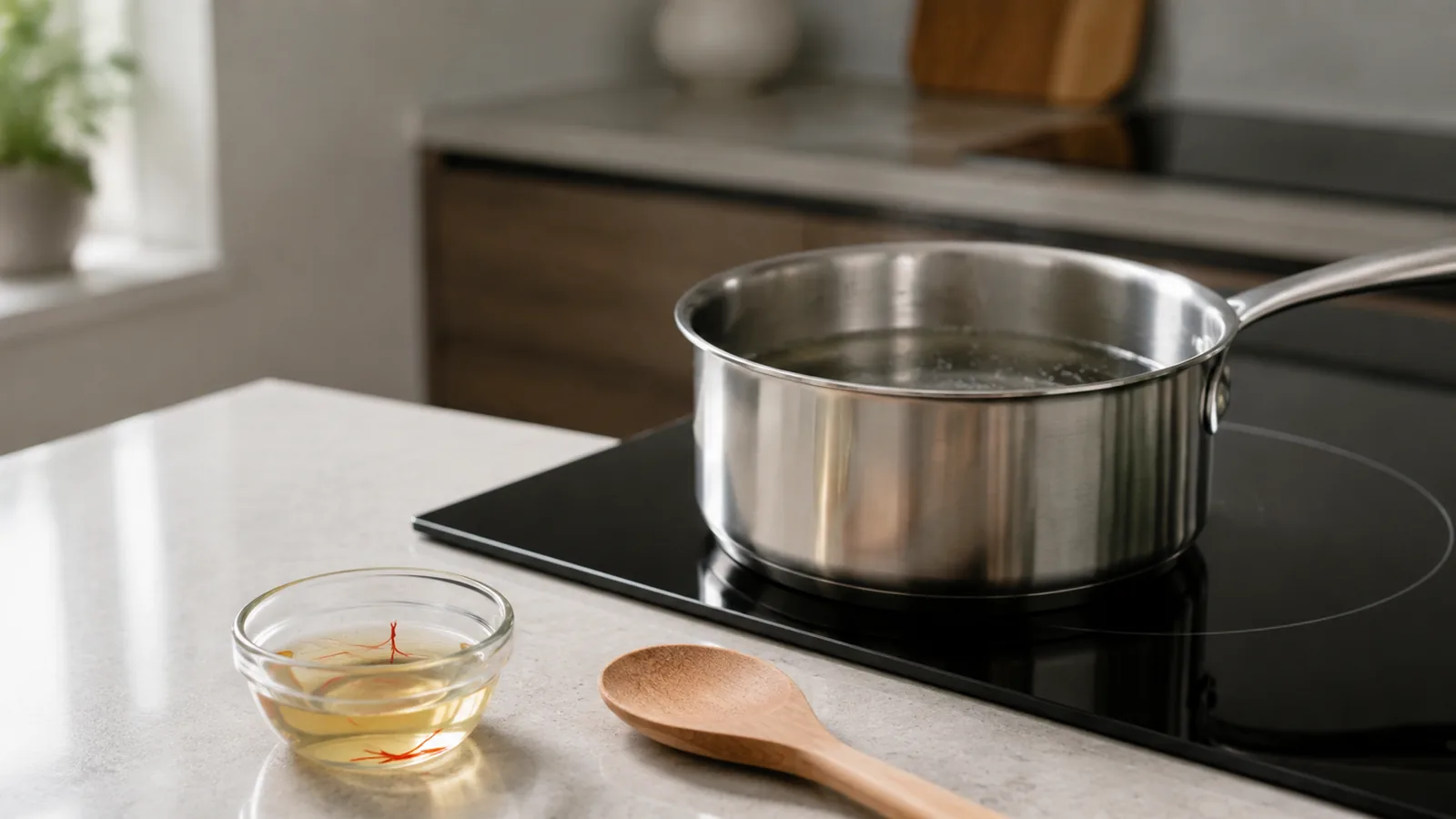
Improve extraction before adding a substitute. Lightly crush the threads, bloom them in warm water or milk, cover the cup and distribute the infusion evenly. That preserves the authentic aroma better than diluting it with a strongly coloured spice.
When only colour needs reinforcement, a carefully measured alternative may be added separately. Keep the ingredient description transparent, especially when serving customers or guests with allergies.
Why the closest flavour is still saffron
What is the flavor of saffron that they fail to copy? Saffron flavours a dish with a joined floral, earthy and lightly bitter profile. Other ingredients can copy one part of the experience. What they lack is the same balance of dry floral aroma, earthiness and gentle bitterness. For a fuller comparison, read what saffron’s flavour is similar to.
If your main need is a working recipe substitution rather than a sensory explanation, our saffron substitute guide compares options by cooking function.
The short answer
Turmeric is the closest common option for saffron’s colour and some earthiness; annatto gives golden-orange colour; safflower gives visual strands; cardamom or honey can echo selected aromatic impressions in suitable sweets. None is the same as saffron. Choose a substitute according to the job the spice performs, use it lightly and expect a different flavour.