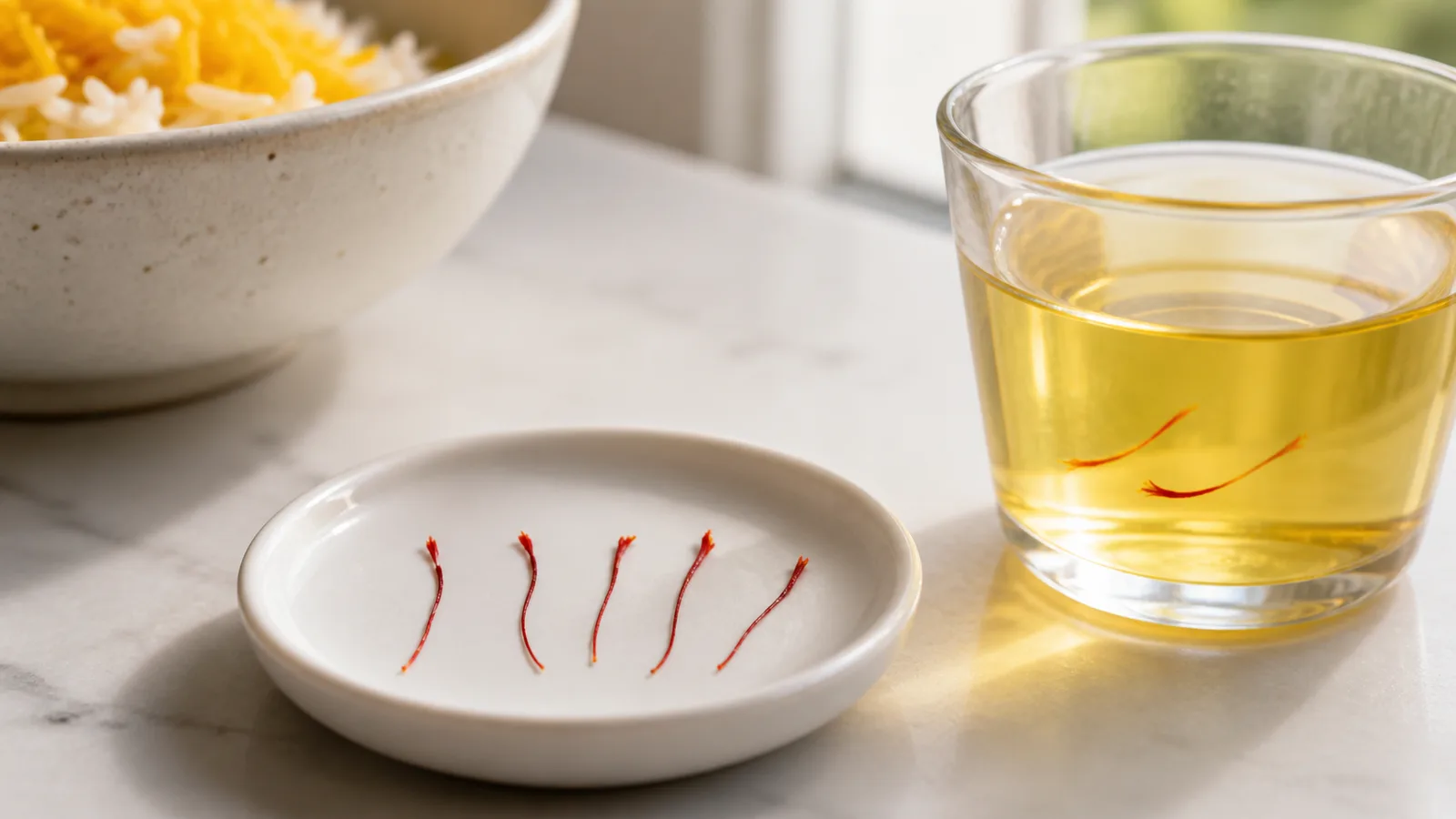
No ordinary flower reliably costs more than gold when both are compared by the same weight. Saffron is often given as the answer, but saffron is the dried stigma of the Crocus sativus flower, sold as a spice. It is extraordinarily expensive for a crop; investment gold is normally far more expensive per gram at modern market prices.
Why saffron appears in “more expensive than gold” stories
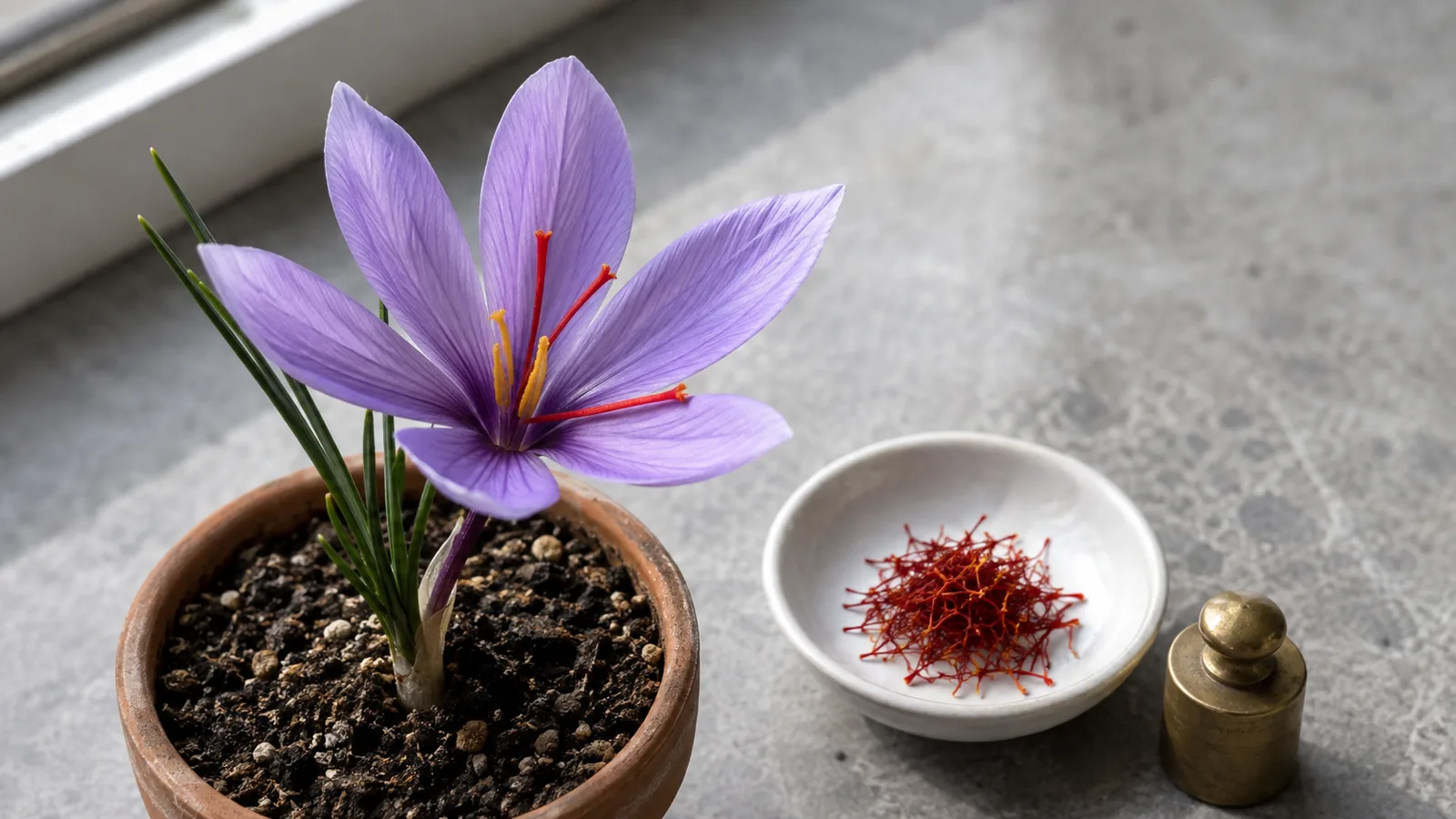
Saffron’s red stigmas come from inside a purple crocus and become the familiar dried red threads. Each flower carries only three stigmas. The flowers open during a short season in a limited set of major growing regions, must be gathered promptly, and the delicate stigmas are separated and dried. A saleable kilogram therefore represents many thousands of flowers and a great deal of concentrated work.
That makes saffron one of the world’s most valuable flowers in an agricultural sense, although the thing being priced is the dried spice rather than a whole bloom. The nickname “red gold” describes rarity, colour and value; it is not a live commodity quotation.
Saffron versus gold: compare the same unit
A fair comparison needs the same date, currency, weight and market level. A tiny retail jar of saffron includes packaging and handling. A wholesale crop price does not. Gold prices move daily and differ by purity and product form.
When ordinary culinary saffron and investment gold are compared per gram on the same day, gold normally costs more. Historic anecdotes may reflect another period, an unusual grade, a luxury retail package or mismatched units.
Our detailed article on whether saffron is actually worth more than gold explains the unit problem and why the phrase persists.
Is saffron a flower or a spice?
The plant is a flower: Crocus sativus. Culinary saffron is the dried red stigma harvested from that flower. Calling saffron “the most expensive flower” is understandable shorthand, but “one of the most expensive spices by weight” is more precise.
The petals themselves are not the premium spice. A photograph of a field may show thousands of valuable blooms, yet the final culinary product is the small red portion collected from each one.
Why saffron commands a high price
- each bloom supplies only three stigmas;
- the flowering and harvest window is short;
- picking and separation require careful labour;
- fresh stigmas lose weight as they are dried;
- sorting, testing, packing and traceability add cost;
- quality, harvest, origin and pack size vary widely.
The result is valuable because production is demanding, not because every thread is equally good. Old, damp, adulterated or poorly dried material may have little culinary value even if its label calls it authentic or uses a prestigious grade name.
For a field-to-pack explanation, see why saffron is so expensive.
What about rare orchids?
Individual orchids have reportedly sold at spectacular auction prices. The Shenzhen Nongke orchid is frequently cited because a cultivated specimen was associated with a sale for hundreds of thousands of dollars after eight years of development. That is a price for a rare plant or one auction lot, not a stable price per gram for all flowers of that kind.
Wild endangered orchids are a different matter. Rarity does not make illegal trade acceptable, and conservation restrictions mean “what could it sell for?” is the wrong measure of value.
What about the Juliet rose?
The Juliet rose is often described online with a large “price,” but the figure usually refers to years of breeding and development, not the retail price of one cut rose. Repeating that development cost as a flower price creates a misleading comparison with gold or saffron.
Commercial roses can still be expensive when a cultivar is scarce, a stem is out of season or an arrangement requires extensive labour. Those are market circumstances, not evidence that rose petals have a commodity value above gold.
Several meanings of “most valuable flower”
The answer changes with the question:
- Highest price for one specimen: an exceptional auction can set a one-off record.
- Most valuable crop product by weight: saffron is a leading example among spices.
- Largest total market: common flowers can generate more trade than a rare specimen.
- Cultural or ecological value: no sensible price captures it fully.
Without defining the unit and category, lists of expensive flowers combine unrelated numbers.
Does saffron’s culinary use affect its value?
Yes, in a practical sense. Saffron is repeatedly purchased and consumed in rice, seafood, sweets and drinks. Aroma, flavor and colouring strength influence demand and cooking quality. Its use in traditional wellness practices is part of its history, but unproven medicinal benefits should not be added to a price argument.
How to read an expensive-flower claim
Ask four questions before accepting it:
- Is the price for one bloom, a plant, a breeding programme or a kilogram?
- Is it an ordinary market price or a single auction?
- What date and currency does the figure use?
- Is the comparison with gold based on the same weight and date?
This simple check removes most sensational comparisons while leaving saffron’s real production story intact.
The short answer
Saffron is the famous flower-derived product called “more expensive than gold,” but the modern literal claim is generally false. Culinary saffron is among the costliest spices by weight because each crocus supplies three stigmas and harvesting is labour-intensive. Rare orchid auctions and rose-development costs are different kinds of value and should not be compared as if they were everyday prices per gram.