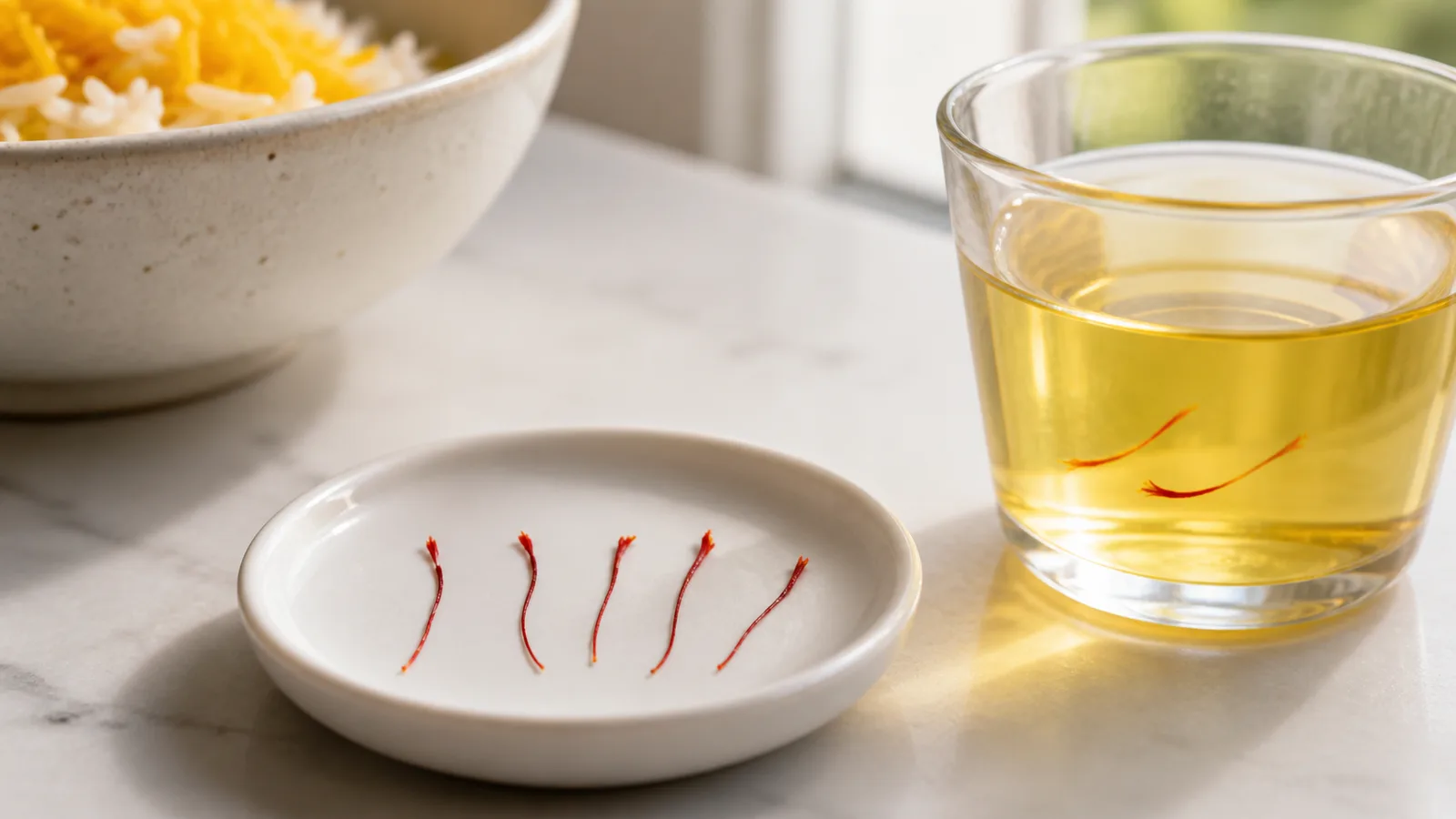
Turmeric is the most practical saffron substitute spice when a recipe mainly needs golden colour, but it does not taste like saffron. Annatto can supply a warmer orange-yellow tone, while safflower petals add colour with very little saffron-like aroma. There is no true one-for-one replacement: choose the alternative according to what saffron was meant to do in the dish.
What spice is similar to saffron?
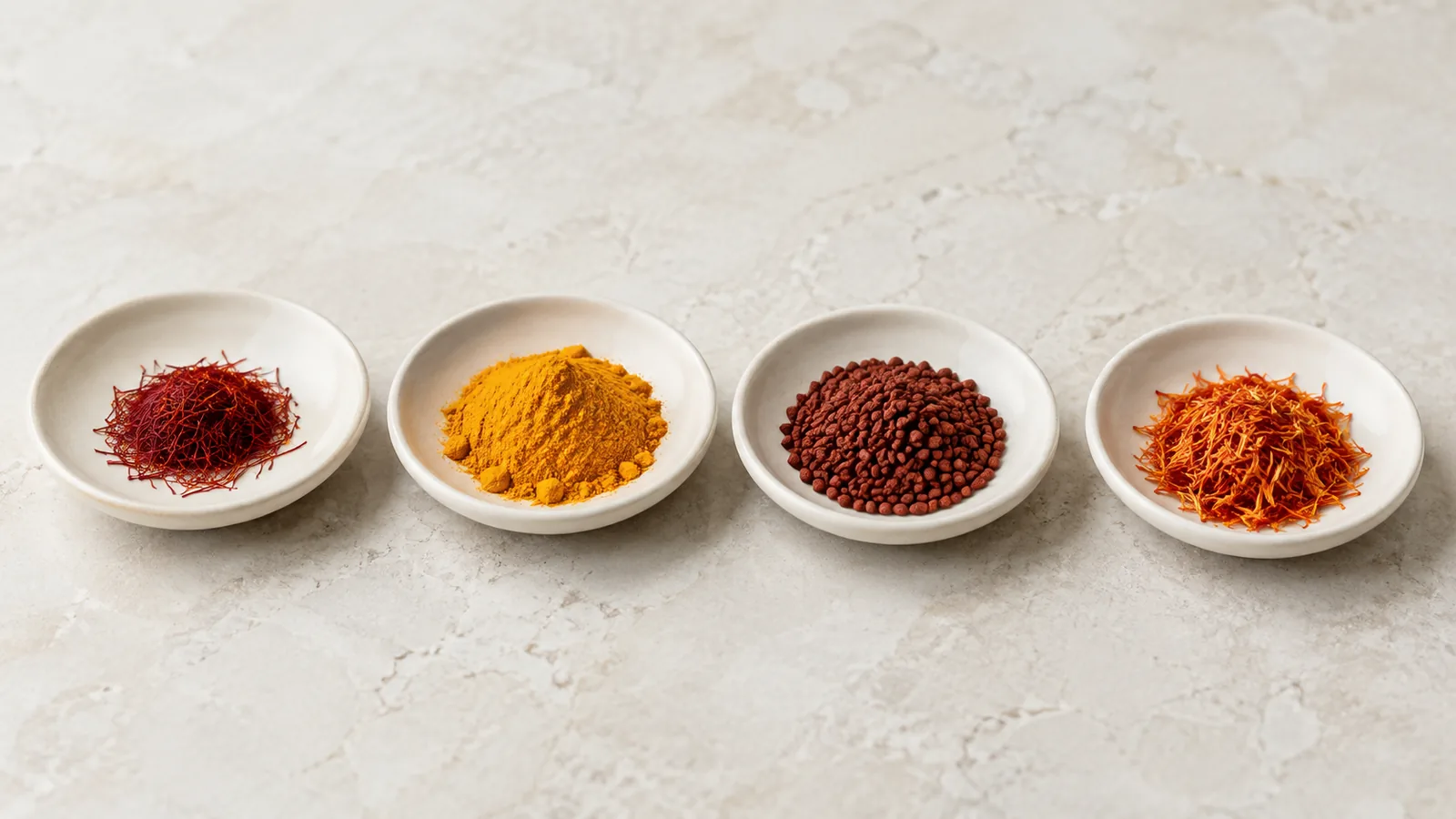
No spice is similar in every respect. Saffron combines a golden infusion with a floral, hay-like aroma and gentle bitterness. Turmeric, annatto and safflower can imitate part of the appearance, yet each brings a different flavour—or almost none at all.
Before substituting, decide whether the recipe needs colour, aroma, bitterness or simply a warm visual accent. That choice matters more than finding an ingredient that happens to be yellow.
Turmeric: the easiest saffron alternative for colour
Turmeric is widely available, inexpensive and powerful. A very small pinch turns rice, soup or sauce yellow, which is why it is the first answer many cooks find when looking for an alternative to saffron.
The flavour is not a match. Turmeric is earthier, more peppery and often more obviously bitter than saffron. Too much can make a pale dish taste dusty or dominate dairy and delicate desserts. Start with a fraction of the amount you would normally use as a seasoning, then judge the colour and taste before adding more.
The US Food and Drug Administration lists both turmeric and saffron among ingredients used for colouring food in its overview of colour additives in foods. That shared colouring role explains the substitution; it does not make their aromas equivalent.
Annatto: useful when the dish needs a warmer orange-gold colour
Annatto comes from the seeds of Bixa orellana. Depending on how it is prepared, it gives food a yellow-orange to reddish-orange colour and a mild earthy, slightly nutty character. It is familiar in Latin American and Caribbean cooking.
Choose annatto when a warm colour suits the recipe and a faint savoury flavour will not be distracting. It can work in rice, stews, oils and some sauces. It is less convincing in a recipe where saffron’s perfume is central. The FDA identifies annatto extract as a yellow colour additive derived from a natural source.
Safflower petals: a visual substitute, not a flavour substitute
Dried safflower petals are sometimes sold under names such as “false saffron” or “Mexican saffron.” They may lend a yellow-to-orange or red-gold appearance, depending on the product and preparation, but their taste is mild. They do not reproduce saffron’s floral-hay aroma or persistent bitter warmth.
This distinction is important because safflower can also be a saffron look-alike. Petals sold honestly as safflower are a separate ingredient; petals passed off as genuine saffron are adulteration. Read the botanical or ingredient name rather than relying on a market nickname.
Paprika is not a saffron replacement on its own
Paprika brings red colour and a sweet, earthy or smoky flavour depending on the variety. It can be useful in a dish that already belongs in that flavour family, but it will not create saffron’s yellow-gold infusion. Smoked paprika is especially easy to overuse in paella or rice because smoke can hide the delicate ingredients the original recipe was designed to show.
Some cooks combine a tiny amount of turmeric with mild paprika. The mixture provides a broader colour and flavour than either alone, but it creates a turmeric-paprika profile, not synthetic saffron. Use it because it suits the meal, not because it passes as the real spice.
Best saffron substitute by recipe
Rice, biryani and pilaf
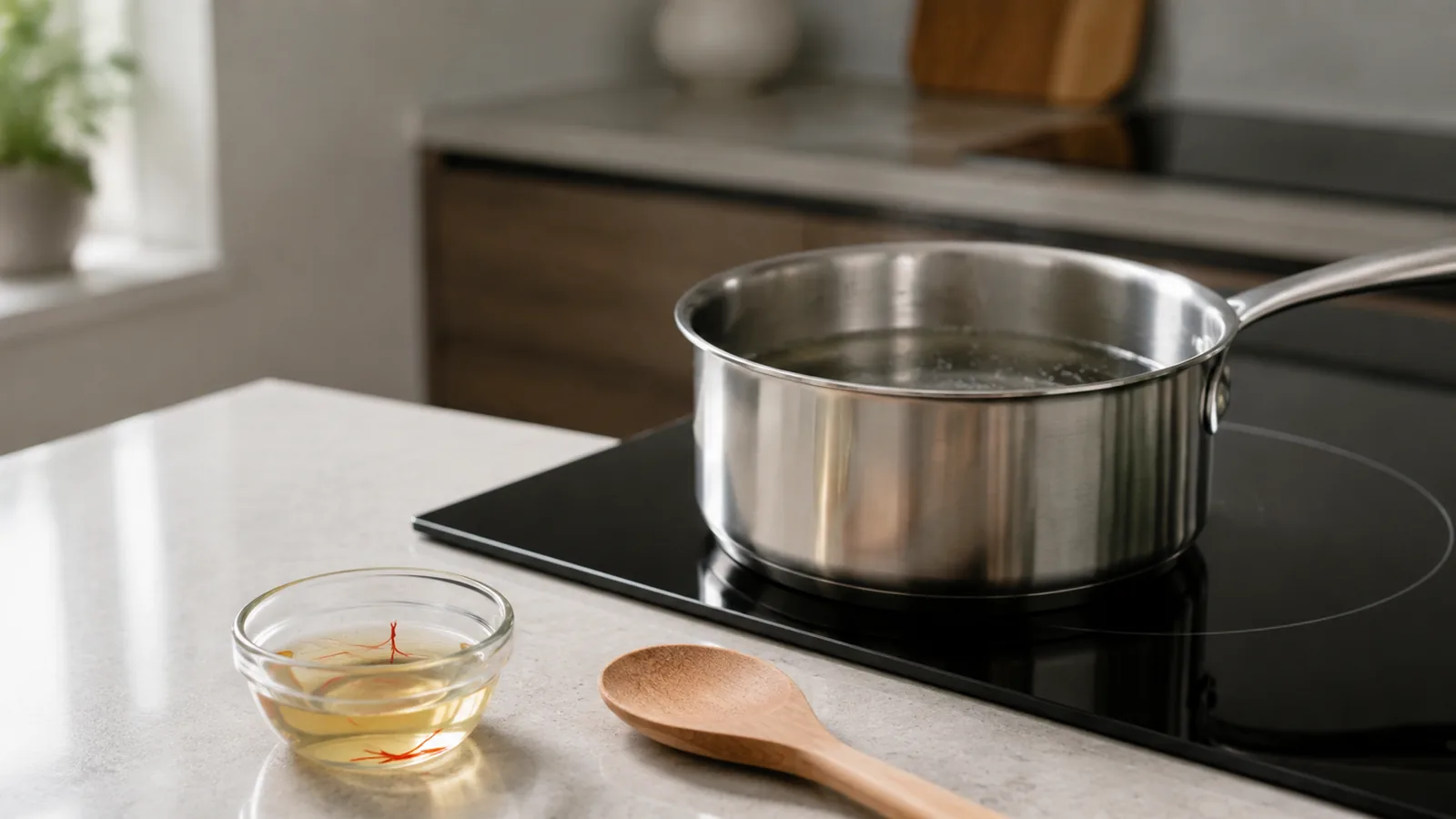
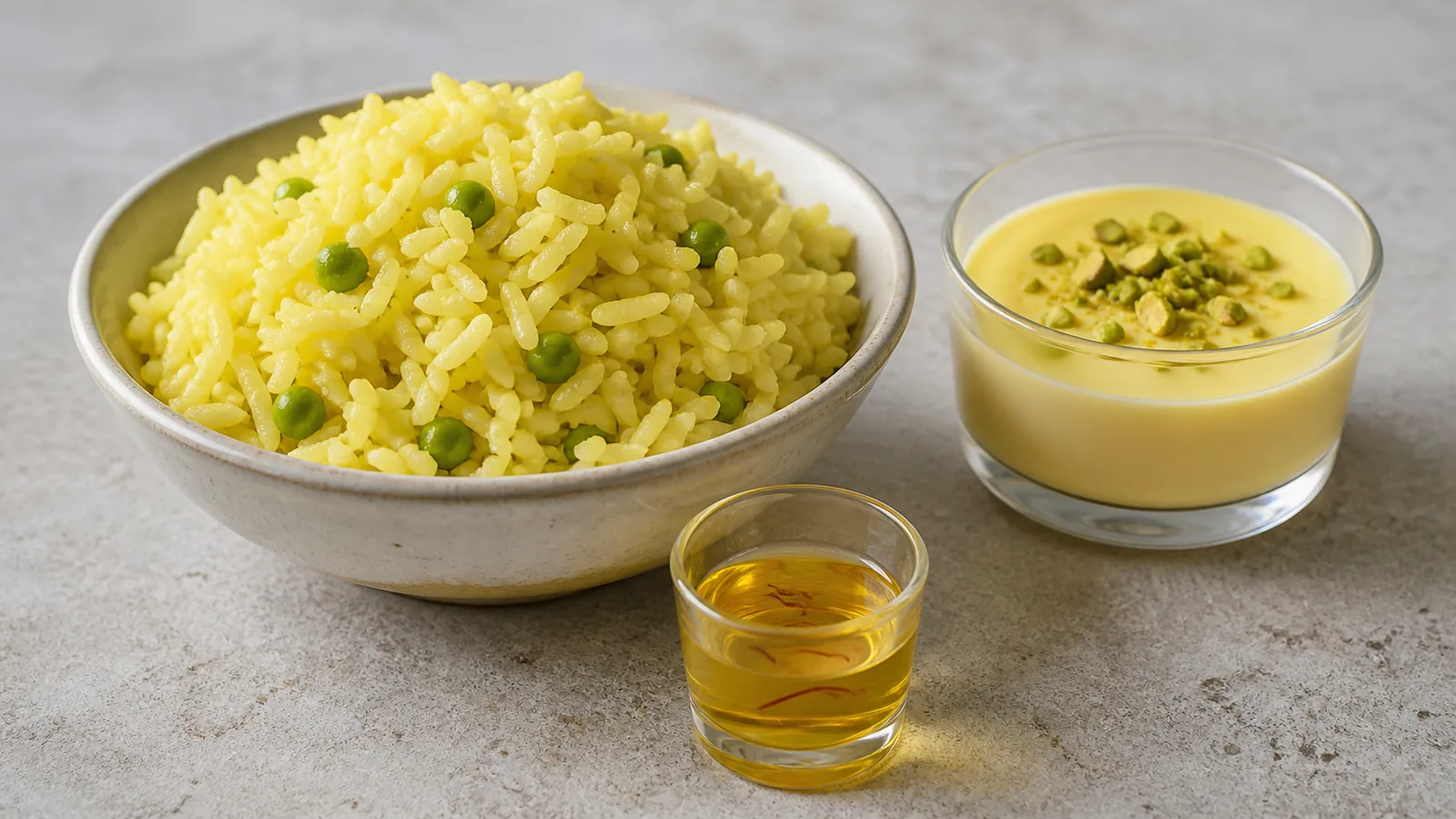
For yellow colour, begin with a very small pinch of turmeric dissolved in the cooking liquid. Annatto-infused liquid is another option when an orange-gold tone fits. Neither supplies saffron fragrance, so let the rice, stock and other aromatics carry the dish.
Paella
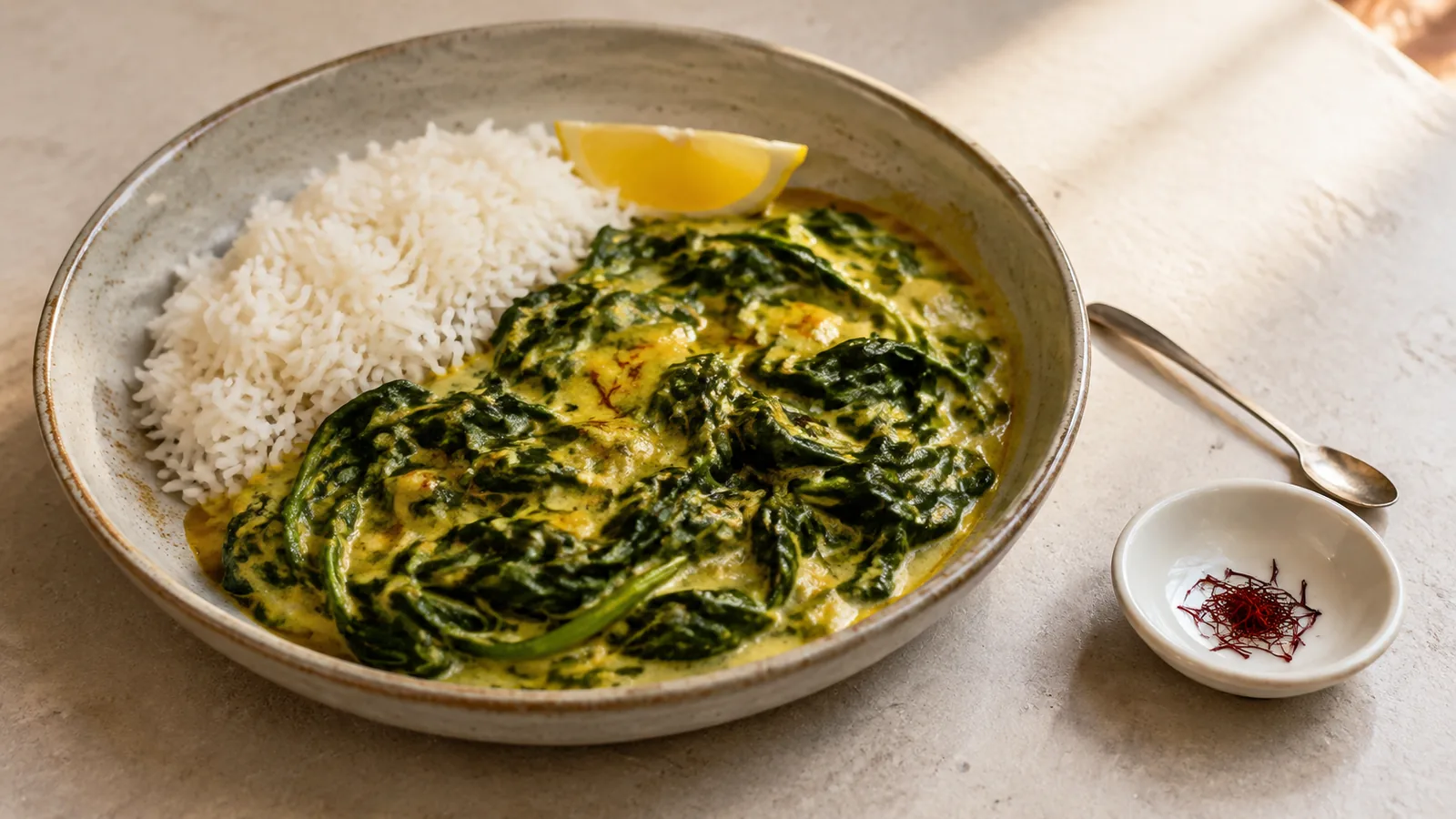
There is no faithful spice substitute for saffron in paella. A small amount of turmeric can colour the rice, but it changes the flavour. Annatto is visually useful in some cooking traditions, although it produces a warmer hue. Avoid adding several forceful spices merely to imitate complexity; the result can overwhelm the seafood, beans or stock.
Risotto
A pinch of turmeric can make risotto yellow, but the earthy note is more noticeable in a simple, creamy dish. If saffron is absent, it is often better to make a good risotto around another ingredient—lemon, squash, mushroom or cheese—than to promise saffron flavour that is not there.
Soup and stew
Turmeric works when the broth already contains robust vegetables, legumes or spices. Annatto can colour oil or liquid without becoming the main flavour. Safflower petals are the mildest visual option, though the result will be less aromatic.
Baking and desserts
A saffron substitute in baking needs special care. Turmeric colours batter strongly and can taste savoury if overused. For a cake, custard or biscuit, use only a speck for colour, then build a compatible aroma with ingredients already natural to the recipe, such as vanilla, citrus zest, cardamom, rose or honey. Those flavours do not become saffron; they simply make a deliberate dessert.
How much substitute should you use?
Do not replace saffron by equal teaspoons. Saffron is used in threads or tiny pinches, while powdered turmeric and paprika spread differently and vary in strength. Begin below the amount you think you need. It is easy to deepen colour; it is difficult to remove an earthy or bitter taste once it has taken over.
- Turmeric: add a small pinch to the liquid, stir, then wait before deciding on more.
- Annatto: follow the product form; seeds are often infused in warm oil or water and then removed, while prepared powders vary.
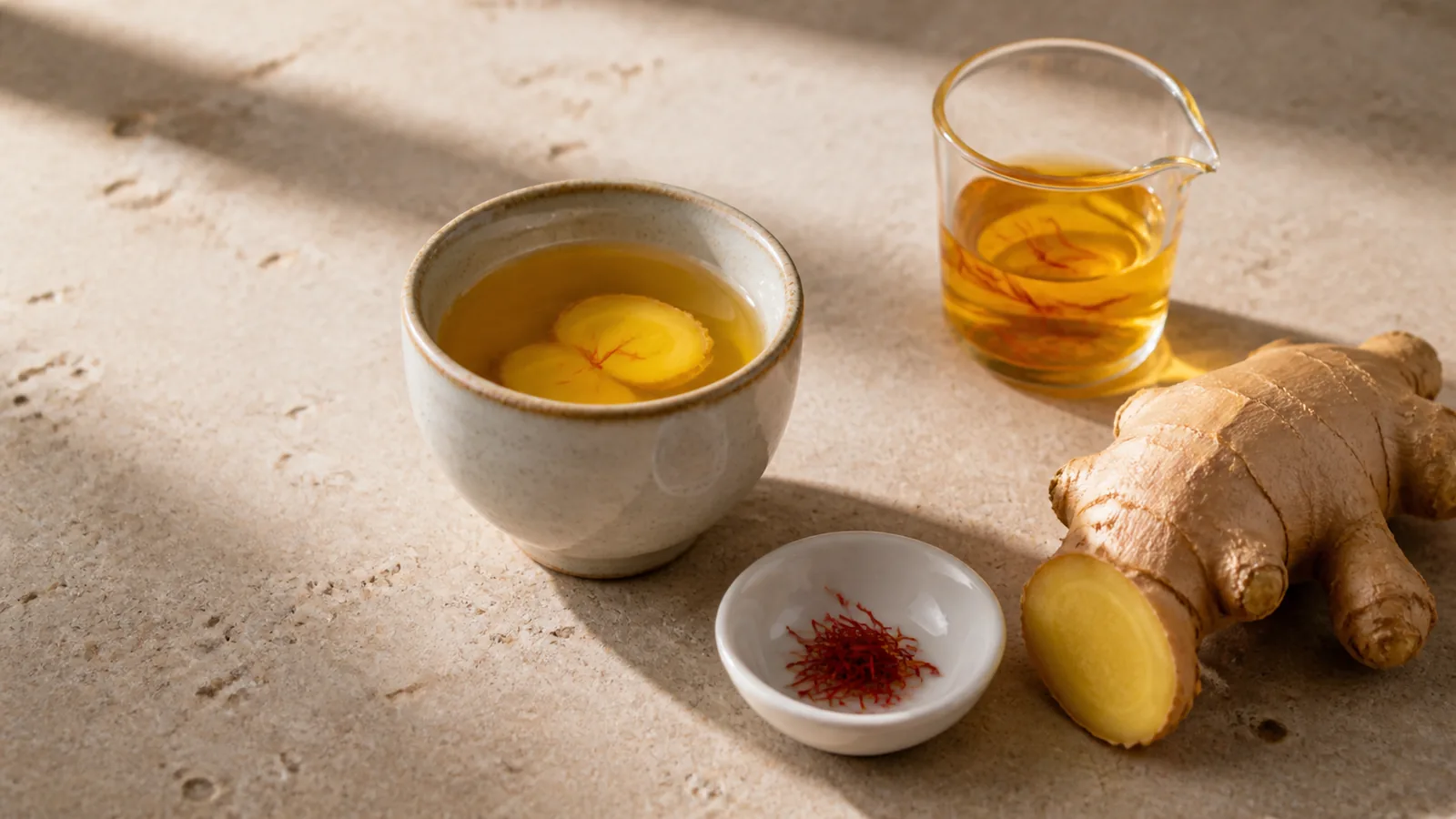
- Safflower: steep the petals and judge the colour, expecting very little saffron-like flavour.
- Paprika: use only where its own sweet, earthy or smoky character belongs.
The colour of a substitute may intensify during cooking. Test a small portion when the appearance of a pale sauce, custard or cake matters.
What cannot be substituted
A saffron flavor substitute can suggest warmth, floral aroma or bitterness, but no common spice supplies the same balance. The compounds behind saffron’s colour, taste and aroma are part of the stigmas of Crocus sativus; changing the plant changes the profile.
If flavour is the reason saffron appears in the recipe, use real threads or make a consciously different dish. Our guide to what saffron tastes like separates the honey, hay, earthy and bitter comparisons so you can decide which quality matters most.
How to avoid buying a look-alike by mistake
A substitute is useful only when it is labelled honestly. Safflower petals, turmeric powder and annatto seeds should be sold under their own names, not mixed into a package represented as pure saffron. Authentic saffron consists of slender red stigmas, not flat petals or uniform yellow powder.
When you do want the real ingredient, buy a sensible amount from a seller that states the origin, net weight and product form. The Rowhani Saffron products page shows genuine thread options, while our cooking guide explains how to get more from a small quantity.
The short answer
Use turmeric when colour matters most, annatto for a warmer orange-gold tone and safflower for a mild visual effect. None is a true replacement for saffron threads or aroma. The best saffron alternative is the ingredient that performs the specific job your recipe needs without pretending to be saffron.