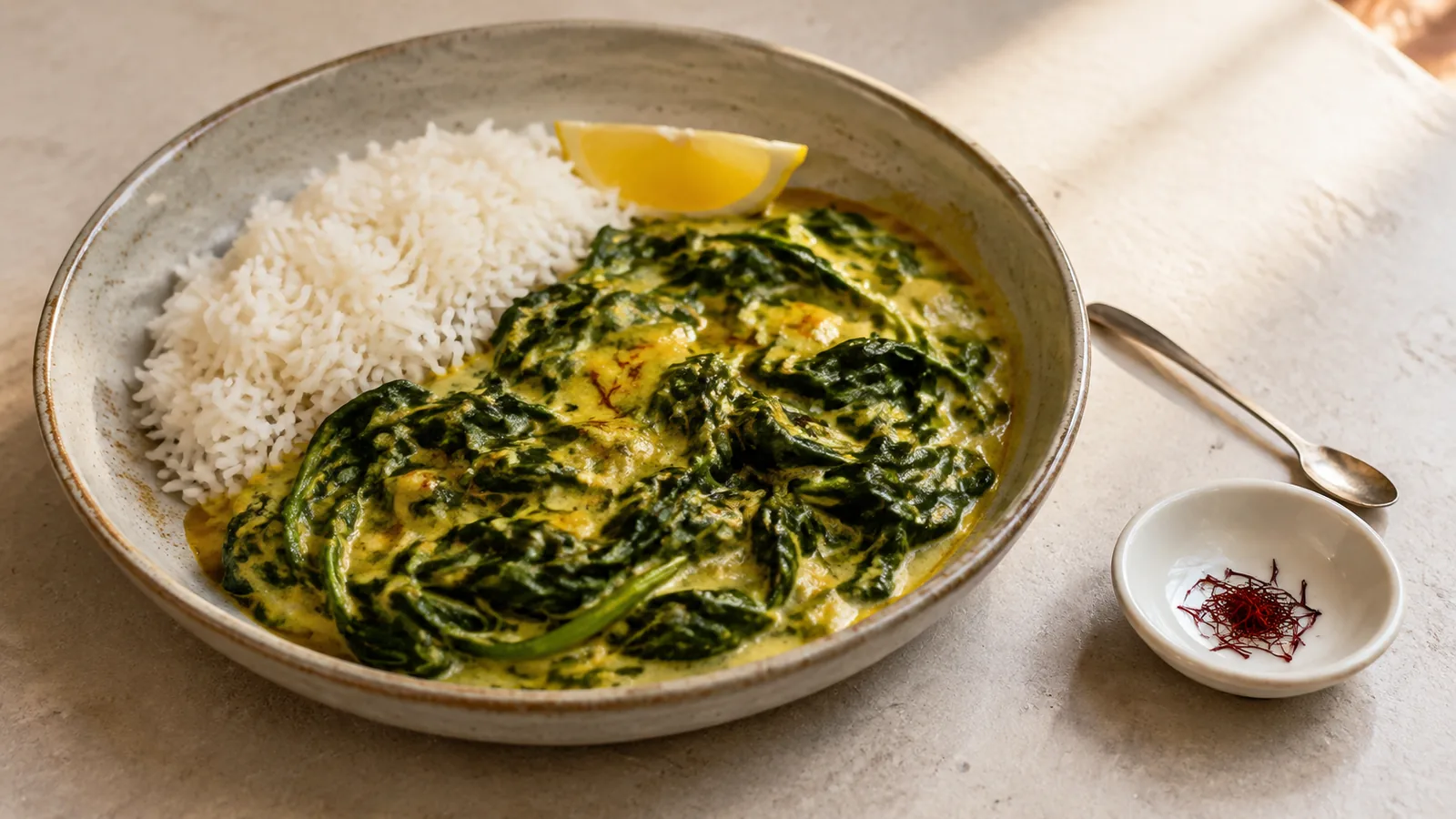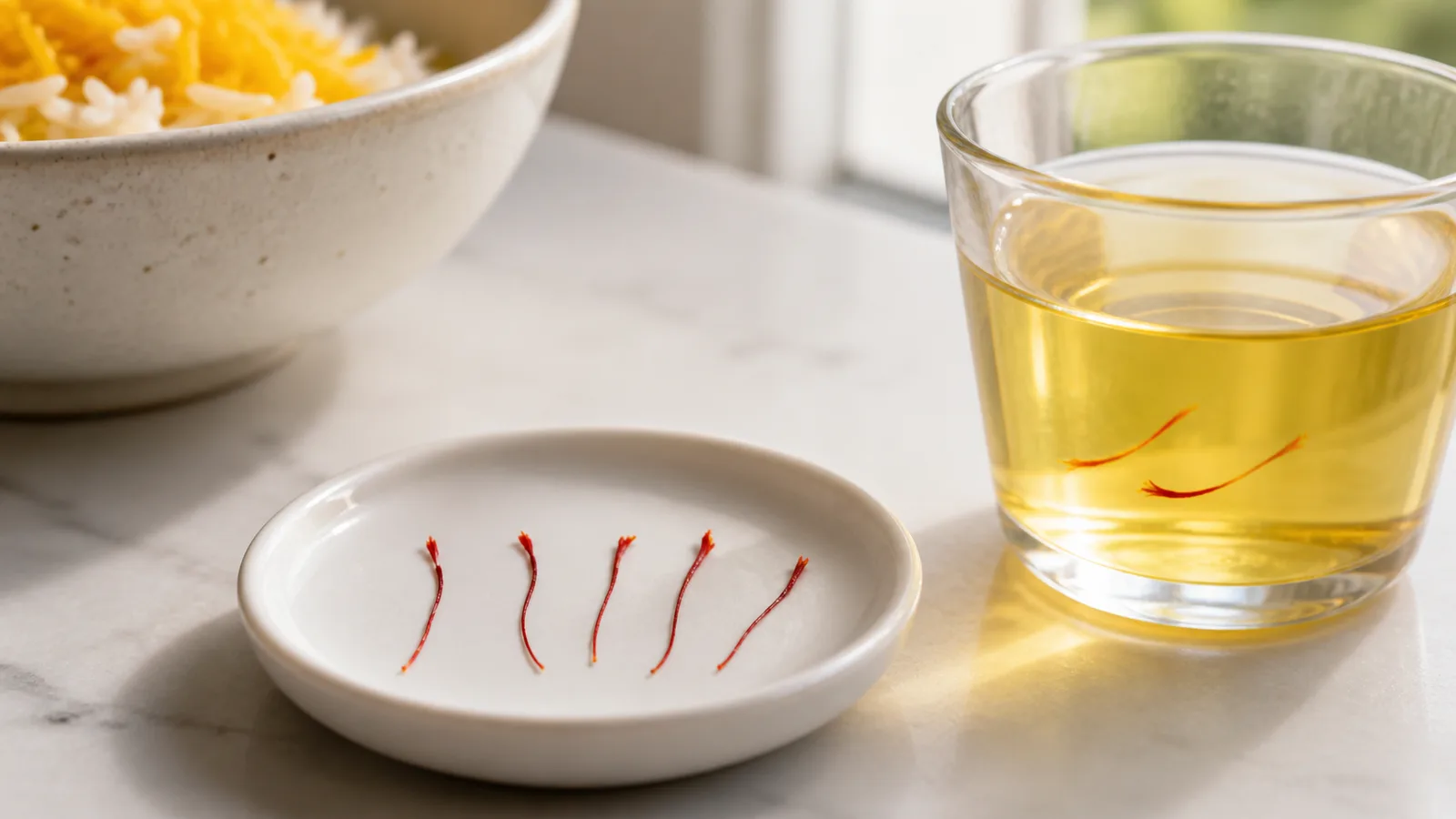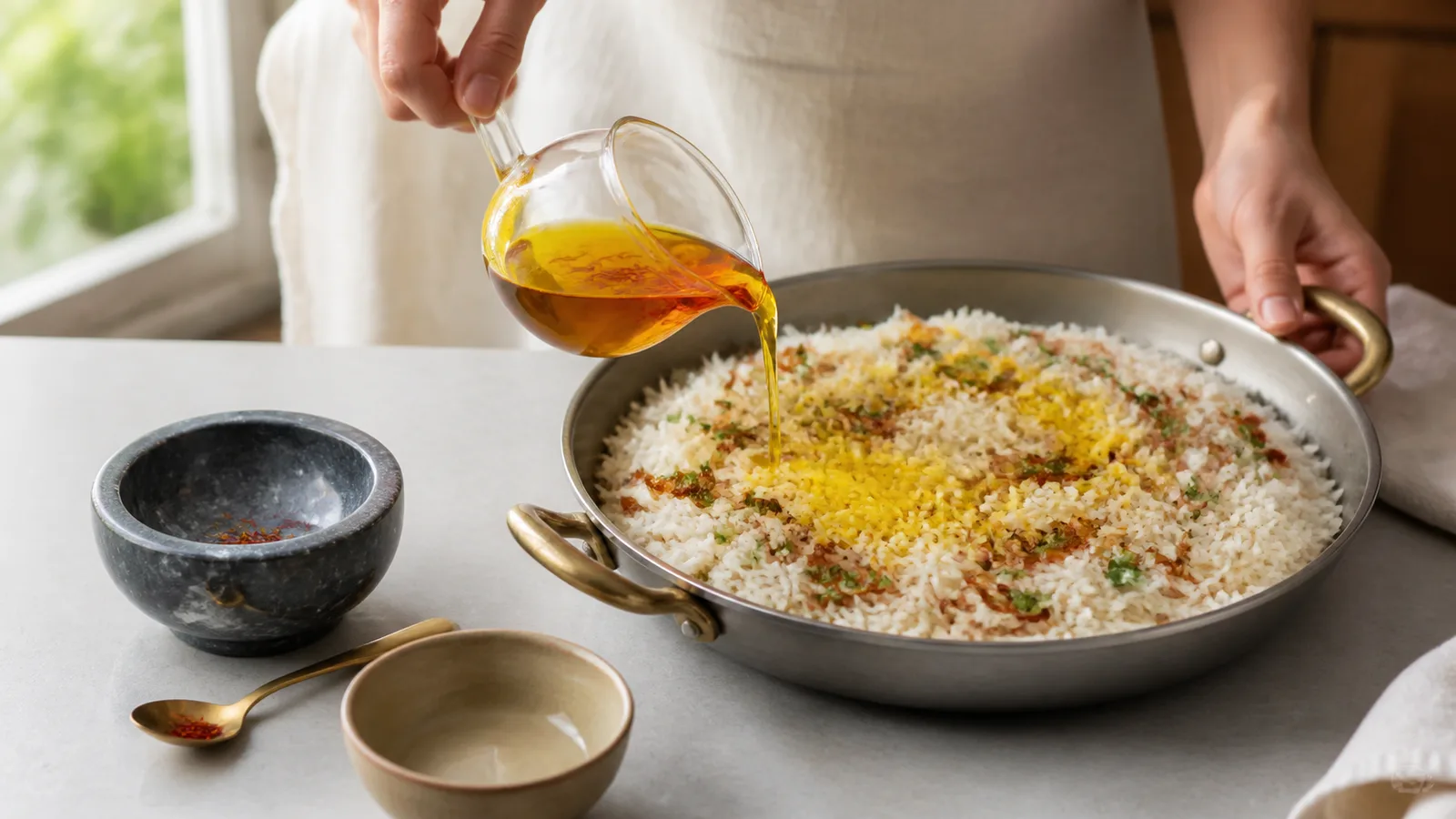
What is the best way to consume saffron? For most people, the best method is culinary: lightly crush good whole threads, steep them in a small amount of warm water, broth or milk, then add the coloured liquid and threads to food. This spreads saffron’s colour, aroma and flavour more evenly than dropping dry threads into one corner of a dish.
Among the best methods to consume saffron, the right choice changes with the goal. Rice needs even distribution; tea needs a clean infusion; a milk drink benefits from both water and fat; a clinical supplement requires label-specific care. There is no single preparation that “maximizes health benefits” for everyone.
Best way to consume saffron in food
1. Measure a small amount
Saffron is powerful, and more is not automatically better. For a family-size rice dish, sauce or dessert, begin with a small pinch—often around 10 to 20 threads, depending on their size and the recipe. You can increase the amount next time if the flavour is too quiet. Counting threads is only a kitchen approximation, not a medical dose.
2. Crush the threads just before use
Place the threads in a small mortar and break them into coarse fragments or a fine powder. A tiny pinch of sugar or salt can give the pestle some grip if either belongs in the recipe. Crushing increases the surface area that meets the liquid. Do not grind a large batch for storage; light, air and moisture gradually reduce saffron’s quality.
3. Bloom saffron in a little liquid
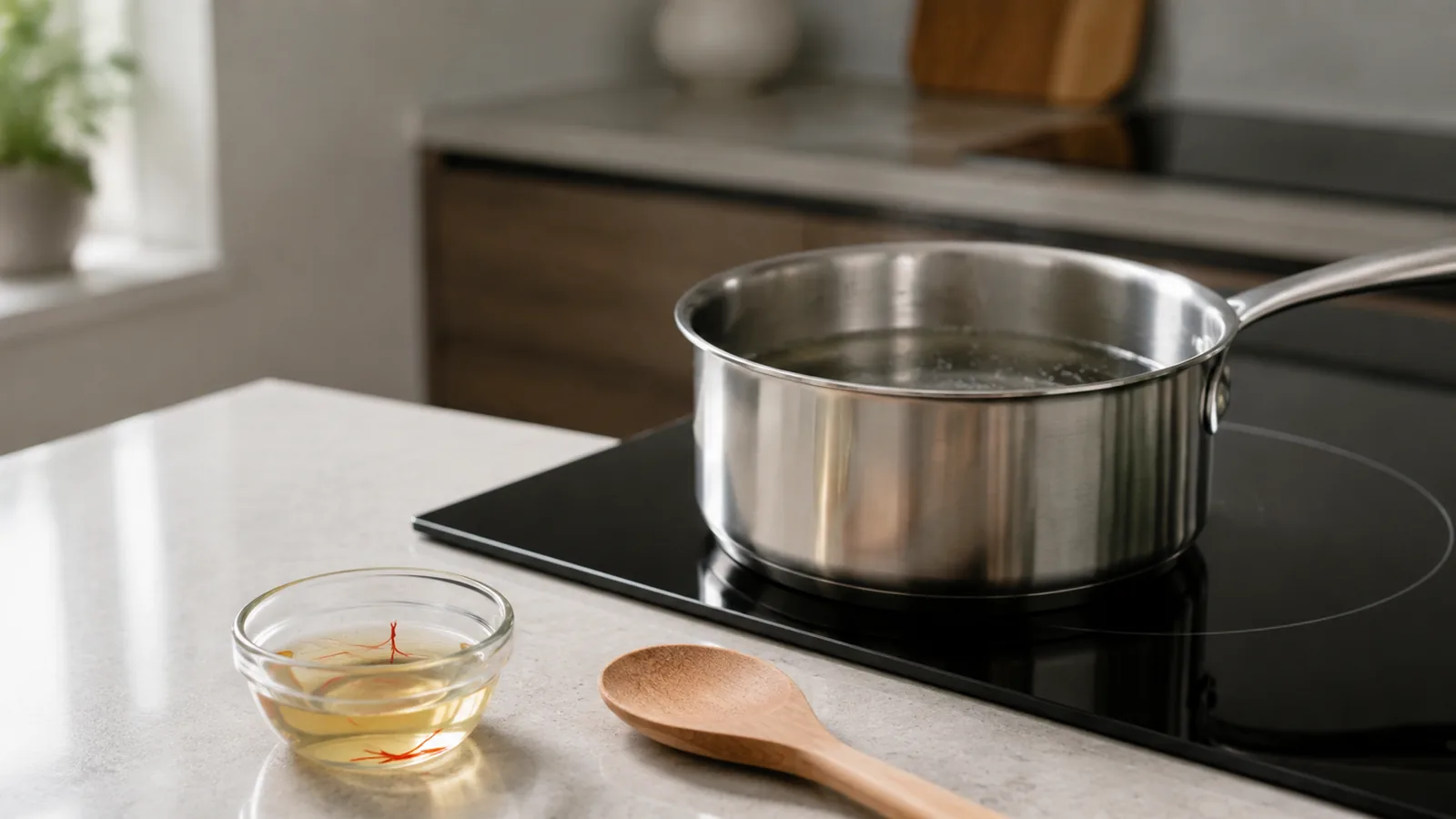
Add two or three tablespoons of warm water, stock or milk to the crushed saffron and leave it for about 10 to 15 minutes. The liquid should be hot enough to extract colour but does not need to boil. Crocins, the pigments responsible for saffron’s golden colour, disperse well in water. Safranal, an important aroma compound, also behaves differently in water and fat, which helps explain why milk and dishes containing some fat can carry a rounded aroma.
A 2024 extraction study found that crocins and picrocrocin were favoured in water, while safranal was enriched in the oil phase and at lower temperatures. Kitchen recipes are more variable than a laboratory system, but the finding supports using a small water-based infusion and avoiding needless prolonged heat when aroma matters.
4. Add the infusion where it can spread
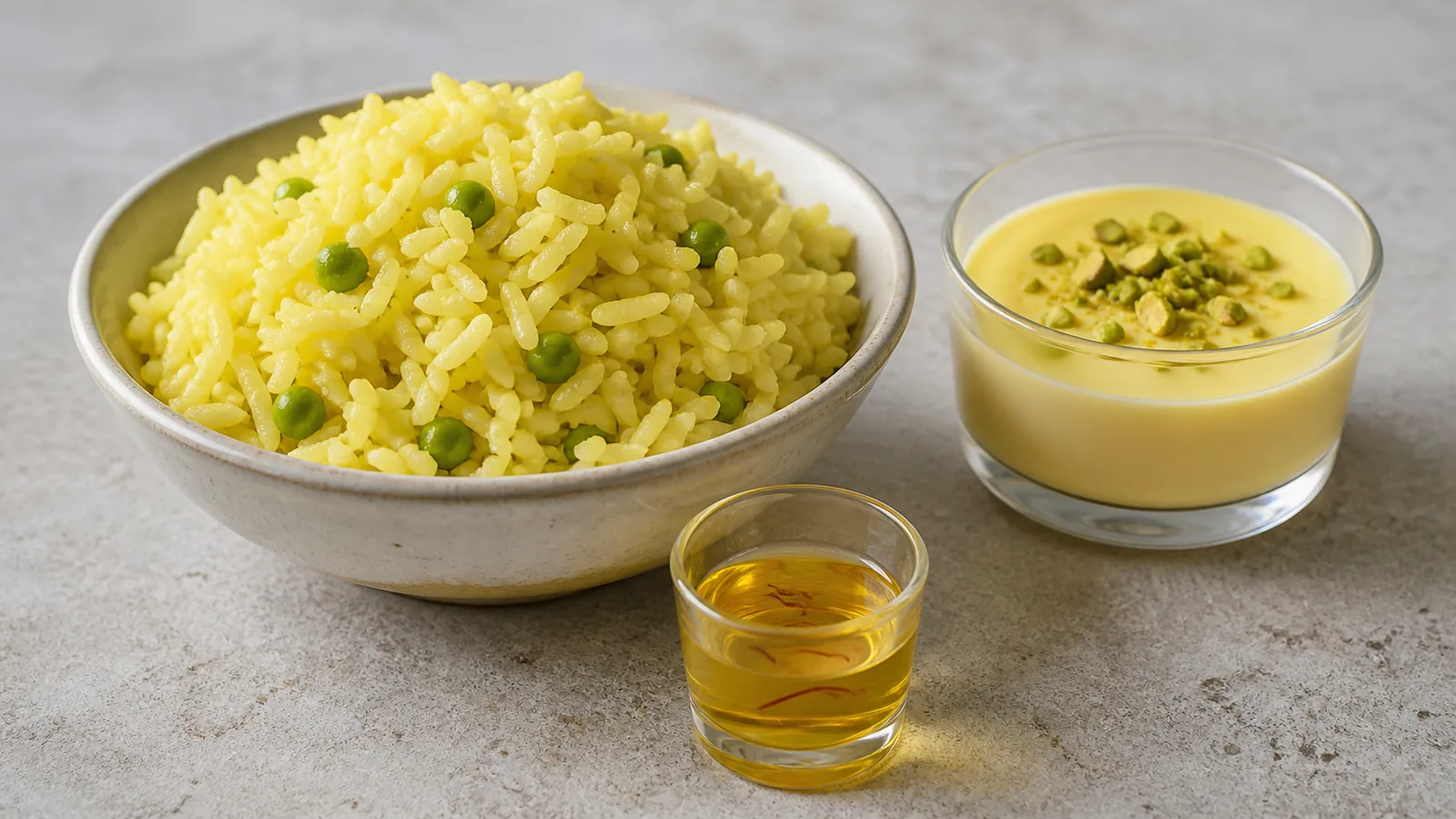
Pour the infusion over rice before the final steaming stage, stir it into a sauce, or blend it into milk, custard or batter. In a soup or long-cooked dish, add at least part of the saffron later so its aroma is not exposed to the longest heat. Research on culinary boiling found that extended heat reduced crocin and safranal concentrations.
You do not have to strain out the threads. They are edible and can remain in the finished dish. Our detailed guide to preparing and blooming saffron compares the practical water and ice methods.
How to eat saffron or kesar
Kesar is another name for saffron. If you are wondering how to eat kesar or how to eat saffron, use the infused spice as part of an ordinary recipe: rice, stew, soup, bread, custard, yoghurt or a warm milk drink. Eating a dry clump gives uneven flavour and does not provide a proven health advantage.
Questions such as how to consume kesar, how to ingest saffron or how to intake saffron lead to the same practical choice: use threads in food or a drink for culinary enjoyment, and treat a concentrated supplement as a separate health decision.
For the first use in a new dish, keep the supporting flavours simple. Saffron works well with rice, dairy, almonds, pistachios, cardamom, citrus, honey, seafood and light broths. Strong smoke, heavy chilli or too many competing spices can make it hard to taste what the saffron contributed.
How to drink saffron
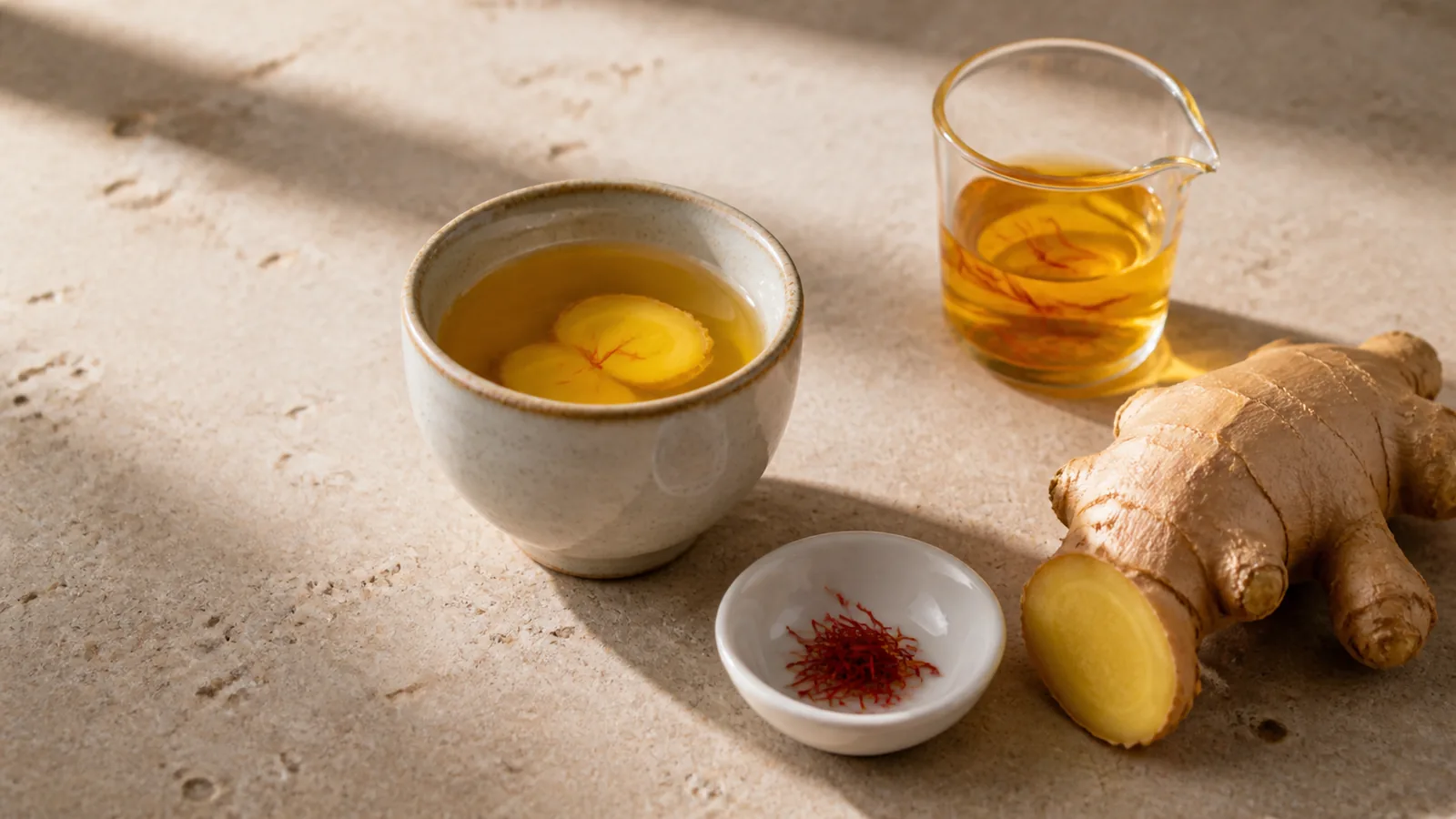
To make a simple cup, lightly crush a few threads, cover them with hot water and steep for roughly 5 to 10 minutes. Taste before adding more. Lemon, honey, ginger or cardamom can be added for flavour, but none is required for absorption. See our saffron tea recipe for a measured version.
Saffron can also be infused in warm milk. Milk should be heated safely but need not be kept boiling with the threads. Smoothies are possible, although blooming the saffron first helps prevent dry fragments from remaining concentrated in one sip.
How to consume saffron daily
If saffron is part of your normal cooking, rotate it through meals rather than treating it as a daily medicine. A culinary serving can be enjoyed for flavour and colour, but it should not carry promises about sleep, mood, skin, weight or another health outcome.
How to have saffron every day is also a safety question. A cup of lightly infused tea is not equivalent to a concentrated extract, and the total amount matters. If you are pregnant, giving it to a child, preparing for surgery, managing low blood pressure or taking regular medicine, read who should not take saffron supplements without review.
How to use saffron for health benefits
There is no preparation method proven to deliver every claimed benefit. Human trials study a defined outcome, participant group, product, amount and duration. A culinary infusion may be an enjoyable part of the diet, but it should not be presented as equivalent to a standardized research extract or as treatment for a health condition.
If health is the goal, start with the evidence for that exact outcome and then check whether the studied preparation resembles the product you have. “Drink saffron daily” and “take saffron for best results” are not evidence-based instructions by themselves.
How to take saffron threads versus a supplement
Whole threads are a food ingredient. Capsules and liquid extracts are dietary supplements with a stated serving and, sometimes, a standardized constituent. Milligrams of one extract cannot be converted reliably into a number of threads, and a trial using one named preparation does not establish that every product works the same way.
If your goal is a specific health outcome, ask whether human evidence exists for that outcome, population, product and duration. The US Food and Drug Administration explains that supplements are not approved for safety and effectiveness before sale and should not replace prescription medicine or a varied diet. Check the complete label and discuss the exact product with a pharmacist or clinician when health conditions or medicines are involved.
How to use saffron for best results: choose and store it well
Choose dry, deep-red threads with a recognisable origin and lot or quality information. Whole threads make visual inspection easier than anonymous powder, which can hide fillers. A strong colour alone is not proof of purity.
Keep saffron tightly sealed in a cool, dry, dark cupboard. Steam from a saucepan introduces moisture, so use a dry spoon or take the threads away from the stove before opening the container. Buy an amount you can use while the aroma is still vivid.
Common mistakes
- using so much saffron that the dish becomes bitter or medicinal;
- leaving whole dry threads unevenly concentrated in one place;
- boiling the infusion for a long time when aroma is the goal;
- assuming a tea, food serving and standardized capsule deliver the same exposure;
- using a supplement as a substitute for prescribed treatment;
- storing threads beside heat, moisture or direct light.
Bottom line
The best way to take saffron for flavour is to crush a small amount, bloom it in warm liquid and distribute the entire infusion through the dish. For a drink, steep a few threads and adjust to taste. For a supplement, “best” depends on the specific evidence, label and personal safety—not on a universal thread count or a promise of maximum benefits.
Culinary and safety evidence reviewed 28 August 2026.