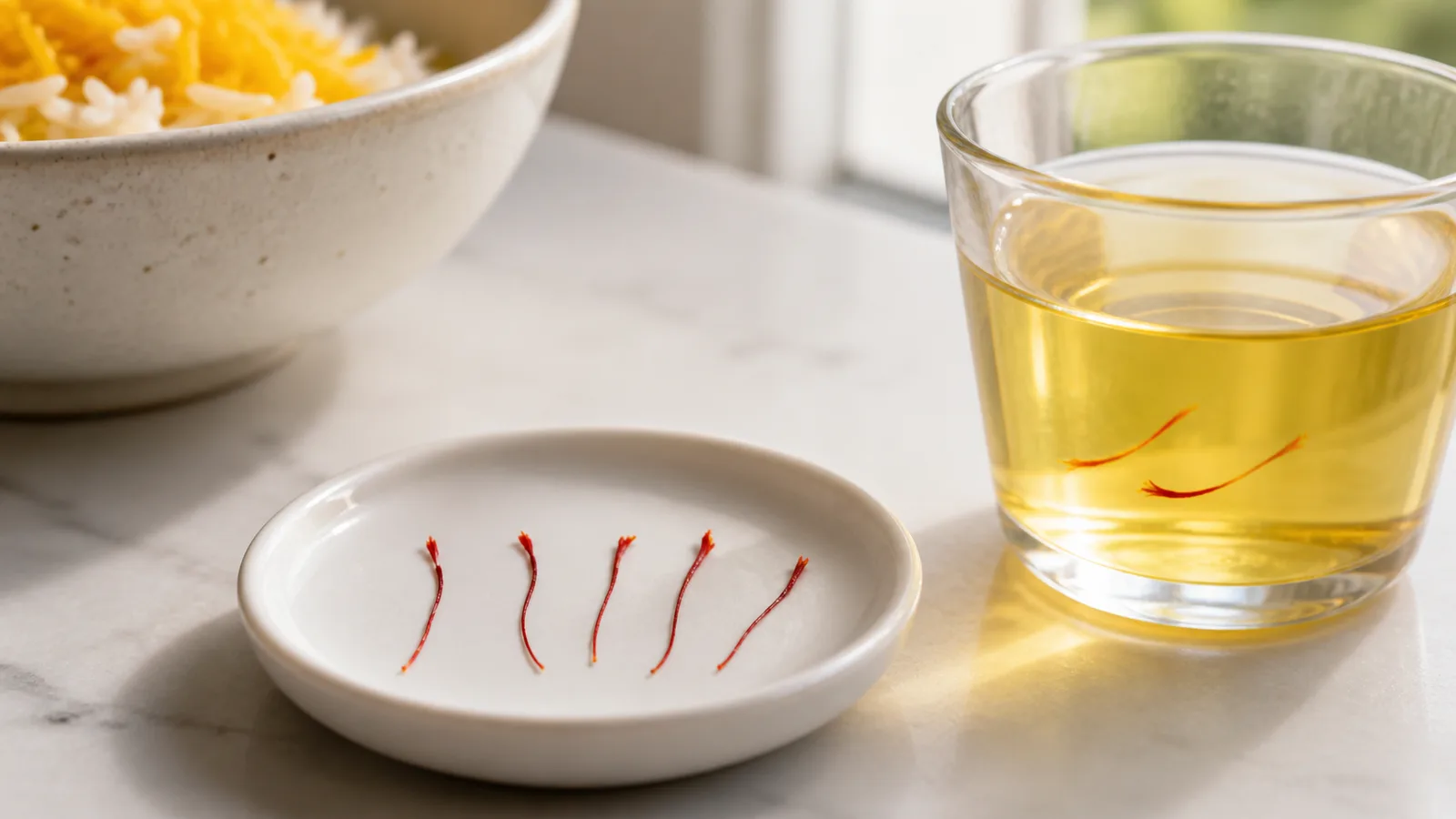
Who should not take saffron? Anyone with a known saffron allergy should avoid it. Pregnant people should not start a saffron supplement without guidance from their maternity clinician. Children, people preparing for surgery, and anyone taking regular medicine or managing a health condition should have a pharmacist or clinician review a concentrated saffron product before using it.
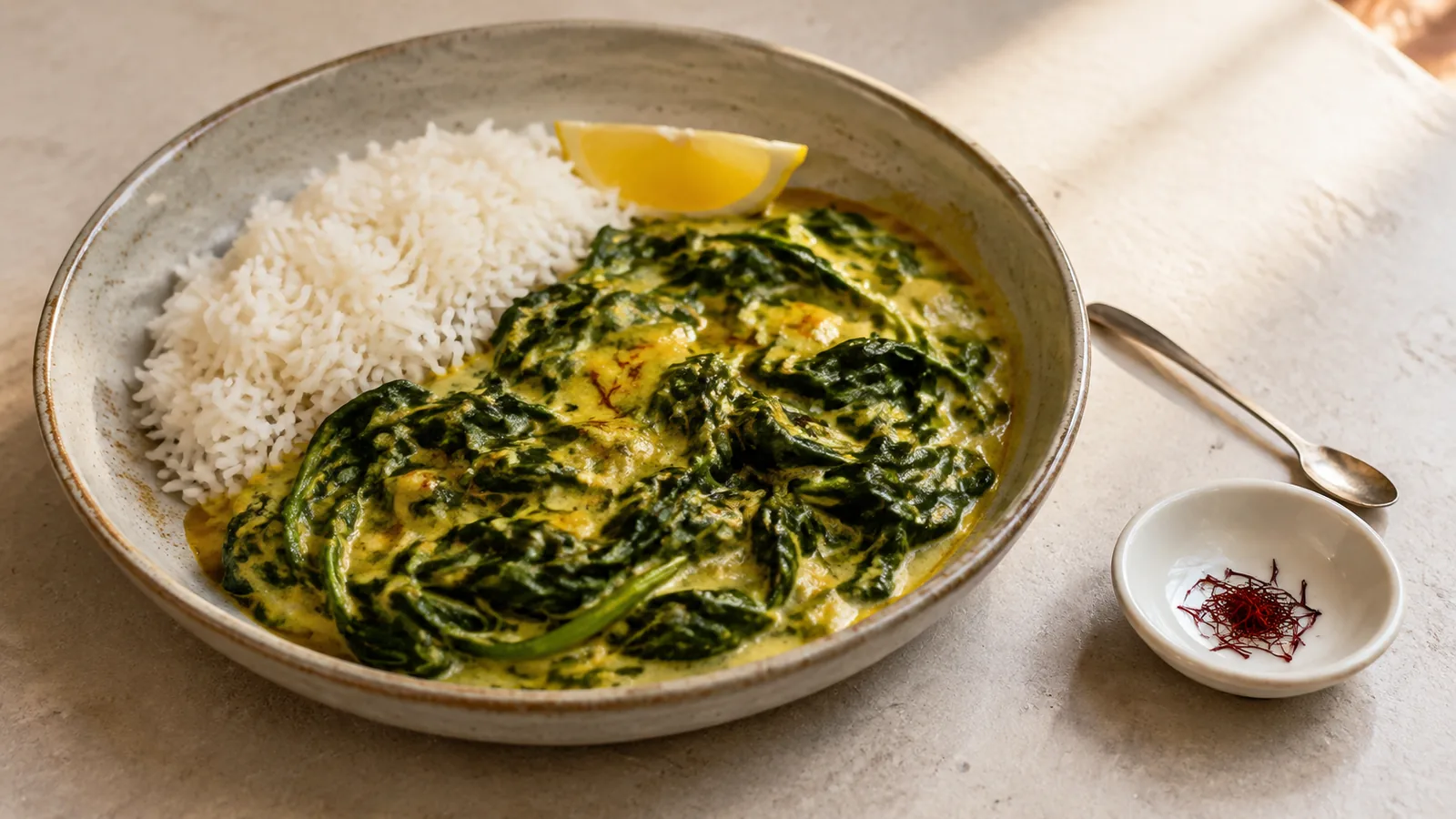
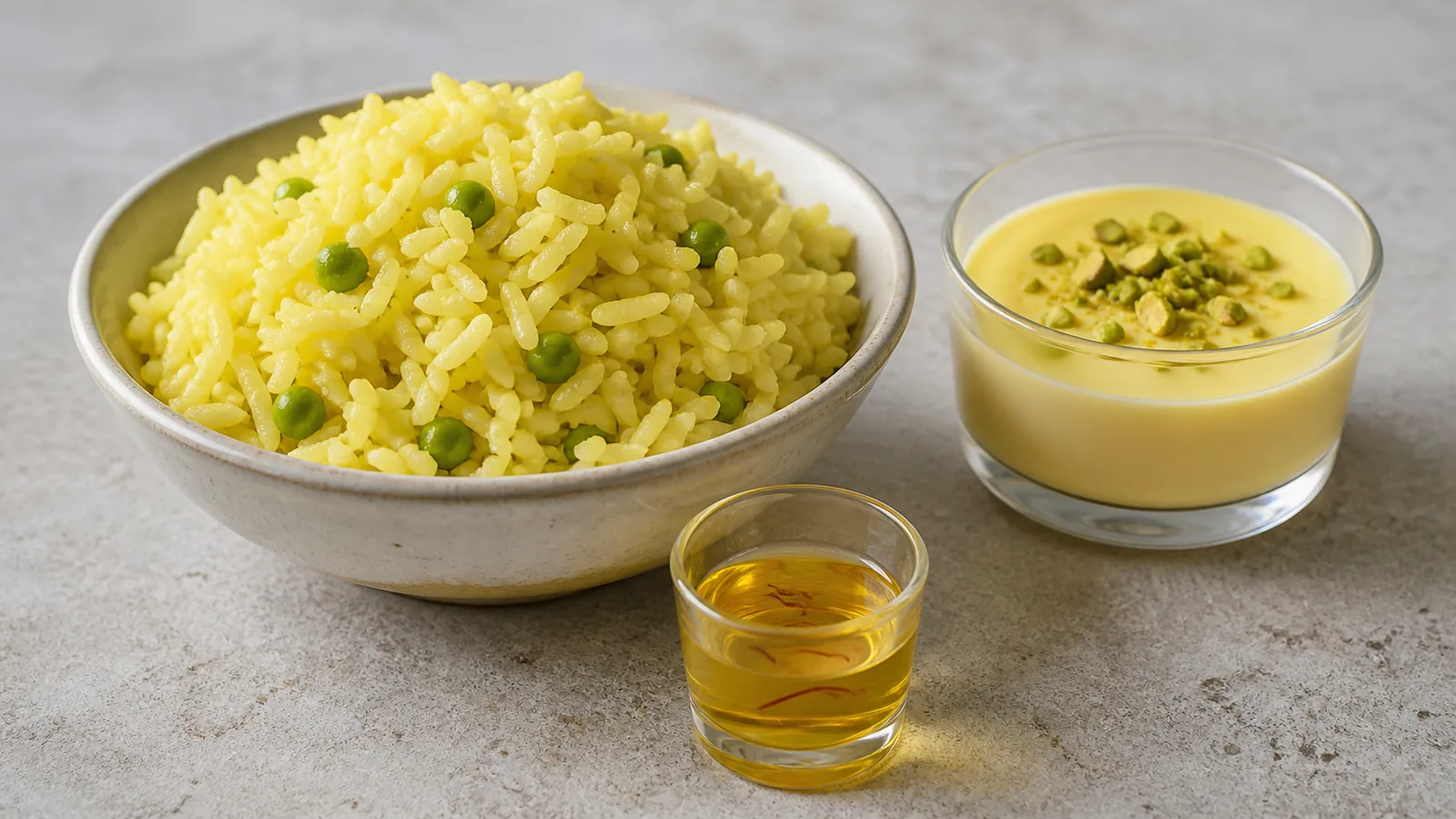
That does not mean every person in those groups must avoid the small amount of saffron used to flavour a meal. Saffron precautions and safety depend on distinguishing ordinary food use from a capsule, liquid extract or repeated high intake. The exposure, evidence and risk are not the same.
Who should avoid saffron completely?
People with a known allergy
Do not use saffron again if a clinician has identified it as the cause of an allergic reaction. Possible warning signs include hives, swelling of the lips, tongue or throat, wheezing, trouble breathing, vomiting, dizziness or collapse. Breathing difficulty, widespread swelling or faintness is an emergency.
An allergy to another spice or plant does not prove that you are allergic to saffron, but it is a reason to be careful. Do not test a suspected allergy at home with a larger serving.
Anyone advised to avoid the product by their clinician
A person’s diagnosis, medicines and planned procedure matter more than a generic online list. If a clinician has told you not to use a botanical supplement, follow that advice. A different brand or “natural” label does not remove the underlying concern.
Who should not take saffron supplements without a review?
Pregnant or breastfeeding people
Pregnancy safety evidence is limited and inconclusive. A 2026 review of saffron use in pregnancy found that the clinical evidence was still too limited to establish maternal and fetal safety. Traditional warnings about uterine stimulation generally concern medicinal or high exposure; they should not be turned into a precise “miscarriage dose.”
For that reason, avoid self-prescribing a saffron extract during pregnancy. Ask the maternity team about the amount used in food, especially if the pregnancy is high-risk. The same caution applies while breastfeeding because infant exposure and supplement safety have not been adequately studied. Our pregnancy guide explains the difference between culinary use and supplements in more detail.
Children and teenagers
A child may eat a family dish seasoned with saffron unless an allergy or another individual restriction applies. A concentrated supplement is a different decision. Some saffron extracts have been tested in small paediatric trials, but that does not establish a general dose, long-term safety or suitability for every child. Use one only with the child’s qualified clinician, particularly when the child takes medicine.
People who take prescription or over-the-counter medicine
Interaction data for saffron remain incomplete. That uncertainty matters most when a medicine has a narrow safety margin or already affects mood, alertness, blood pressure, blood sugar or bleeding. Bring the exact supplement label to a pharmacist rather than asking about “saffron” in the abstract; extracts can have different strengths and specifications.
Do not stop an antidepressant, ADHD medicine, blood-pressure medicine, diabetes treatment, anticoagulant or antiplatelet drug in order to try saffron. A pharmacist or prescriber should decide whether the combination is reasonable and whether monitoring is needed.
People with low blood pressure or dizziness
Saffron is sometimes described as strongly blood-pressure lowering. The measured average effect is much smaller. A meta-analysis of eight randomized trials found small reductions that the authors said might not be clinically important. Even so, someone who already has low blood pressure, faints, becomes dizzy on standing or uses pressure-lowering medicine should not experiment with a concentrated extract without advice.
People with a bleeding disorder or an upcoming operation
Web articles often call saffron a “blood thinner,” but strong clinical interaction evidence is lacking. That is not a reason to assume there is no risk. If you have a bleeding disorder, take warfarin or another anticoagulant, use antiplatelet medicine, or have surgery or a dental procedure planned, show the product to the responsible clinician. Follow the surgical team’s instructions about when to stop supplements rather than choosing a date yourself.
People managing a mood disorder
Saffron extracts have been investigated for mood symptoms, but a supplement is not a substitute for diagnosis or prescribed care. If you live with bipolar disorder, have experienced mania or hypomania, or take psychiatric medicine, discuss saffron with the treating clinician before use. Seek prompt help for marked agitation, very little need for sleep, unusual risk-taking, suicidal thoughts or a sudden worsening of mood.
Older adults with several medicines or conditions
Age alone does not make saffron forbidden. The issue is that an older adult is more likely to take several medicines, have low blood pressure, or be more affected by dehydration and gastrointestinal side effects. A medication review is more useful than an arbitrary age cutoff.
What side effects should make you stop?
The most comprehensive recent systematic review of saffron adverse events included 102 clinical trials and one case report. It estimated that adverse events related to saffron occurred in about 17.5% of participants; gastrointestinal problems were reported most often and were usually minor and self-limiting. The review nevertheless recommended clinical monitoring for medicinal use at higher doses or for longer periods.
Stop the supplement and seek advice if you develop persistent nausea, vomiting, diarrhoea, poor appetite, headache, dry mouth, dizziness, unusual bruising, bleeding or a new rash. Get urgent help for breathing trouble, facial or throat swelling, fainting, severe confusion or any other rapidly worsening reaction. For a fuller symptom guide, see the possible negative effects of saffron.
Saffron safety measures before using a supplement
- Define the purpose. A vague promise such as “wellness” is difficult to judge. Know which symptom or outcome you expect to change.
- Separate food from supplementation. A few threads in a shared meal cannot be treated as equivalent to a standardized daily extract.
- Check the complete label. Record the saffron form, amount per serving, other ingredients, suggested use and batch or quality information.
- Review medicines and conditions. Show the label to a pharmacist or clinician when any of the cautions above applies.
- Do not combine several new products. If a reaction occurs, you need to know what caused it.
- Set a review point. Do not continue indefinitely because the trial was uneventful. Long-term evidence is thinner than short-term evidence.
The US National Center for Complementary and Integrative Health notes that many supplements have not been tested in pregnant people, breastfeeding mothers or children, and that medical conditions and medicines can change whether a product is safe.
Bottom line
Who should not use saffron depends first on the form and amount. A known allergy is a clear reason to avoid it. Pregnancy, childhood, multiple medicines, low blood pressure, bleeding risk, surgery and complex health conditions call for product-specific professional review before a supplement—not a blanket claim that a trace of saffron in food is dangerous. Sensible safety measures begin with the label, the dose context and the person taking it.
Evidence reviewed 28 August 2026. This safety overview cannot replace individual medical advice.