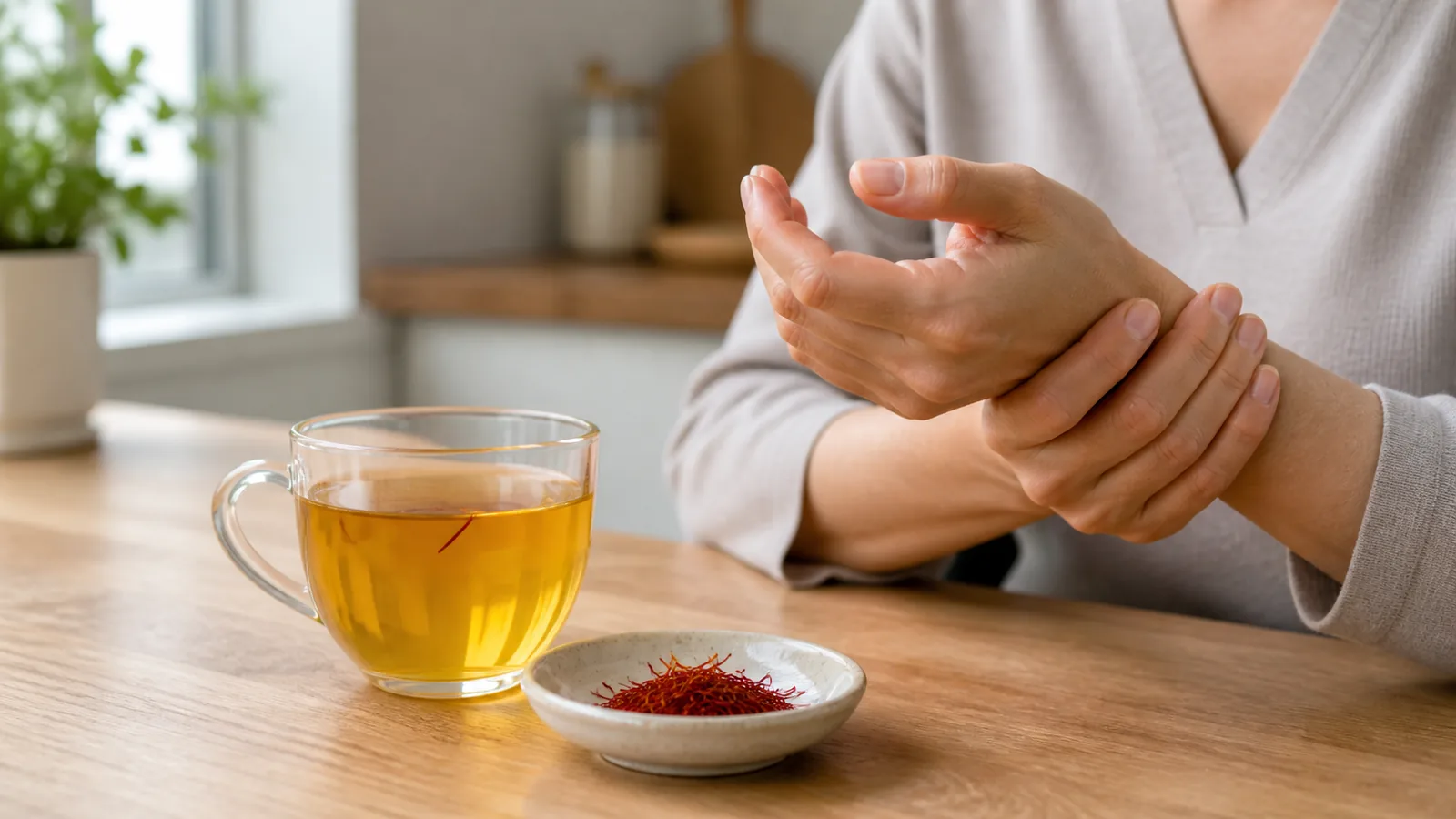
Saffron during pregnancy needs more caution than saffron used in an ordinary recipe. Concentrated extracts, supplements and deliberately large amounts should not be used without advice from the clinician responsible for the pregnancy. Human safety data are limited, and some evidence suggests that higher exposure can stimulate the uterus.
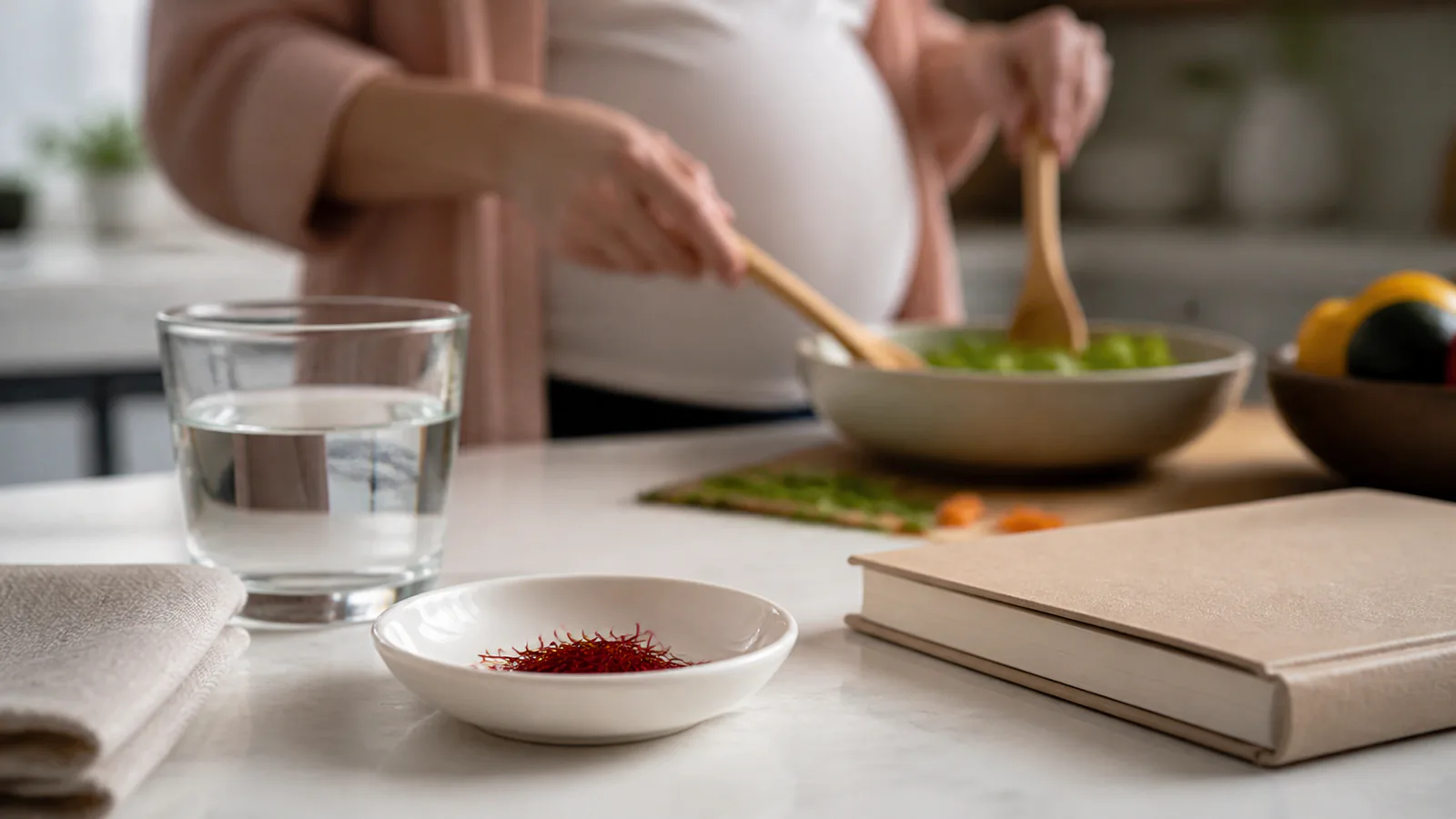
The old advice that pregnant women should not consume saffron at all is too broad. It treats a few threads in a shared meal, a cup made deliberately strong, and a standardized extract as if they were identical. They are not. At the same time, calling a small food amount safe for everyone would go beyond the available research. A person’s trimester, medical history, medicines and pregnancy complications all matter.
Food use and medicinal use are not the same
Saffron can be encountered in several forms:
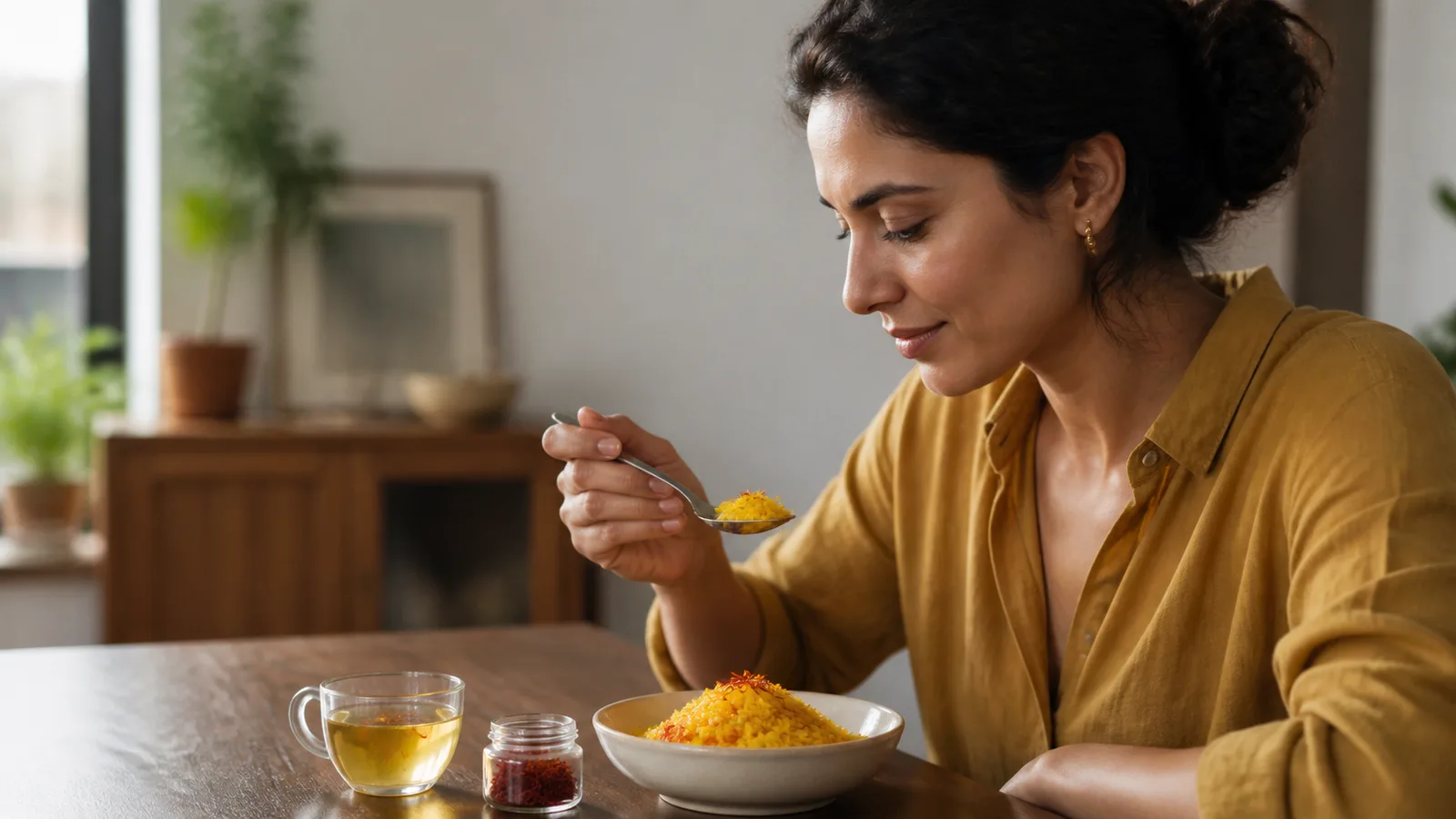
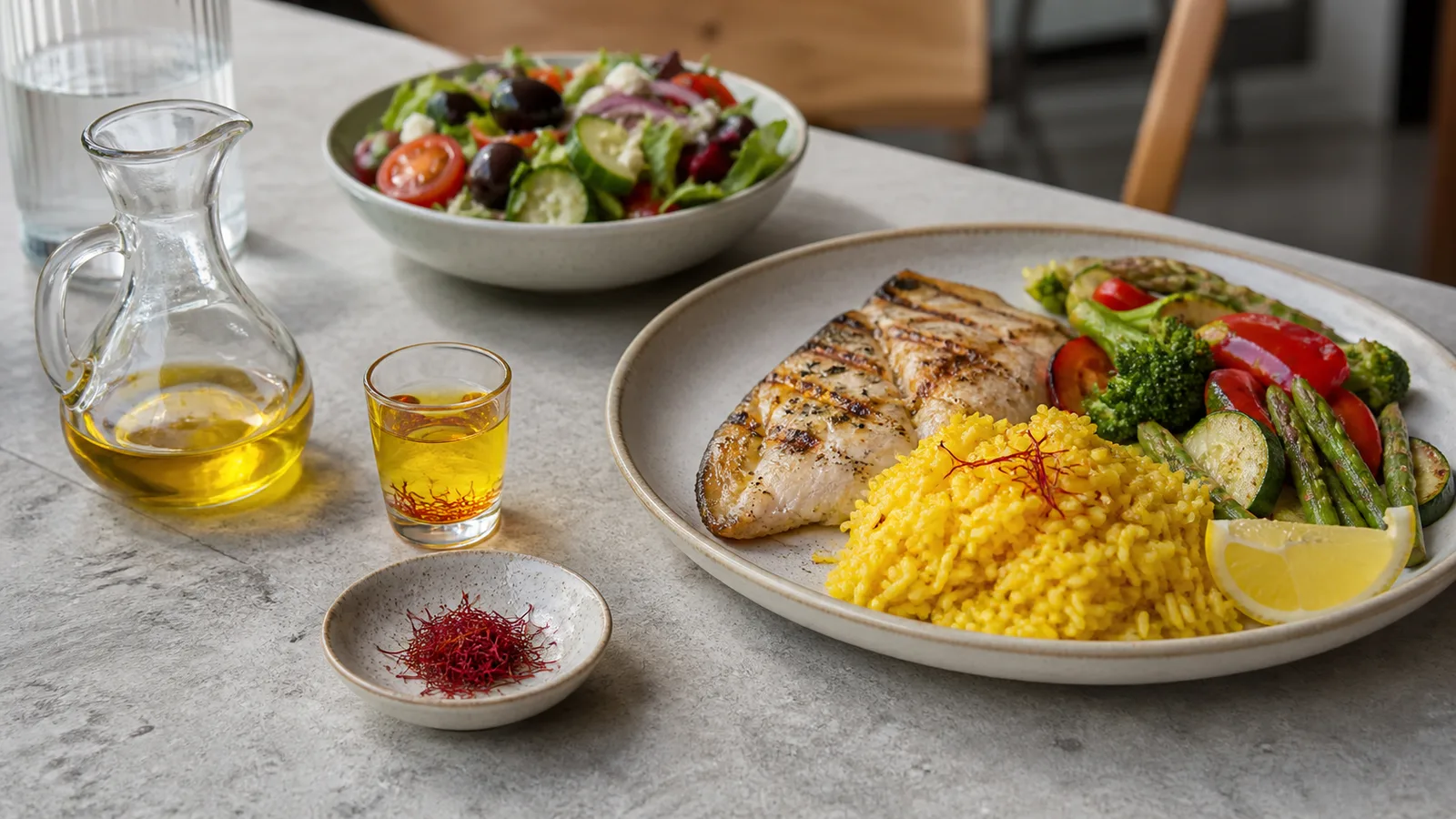
- Culinary use: a small amount of threads dispersed through a dish and divided among several servings.
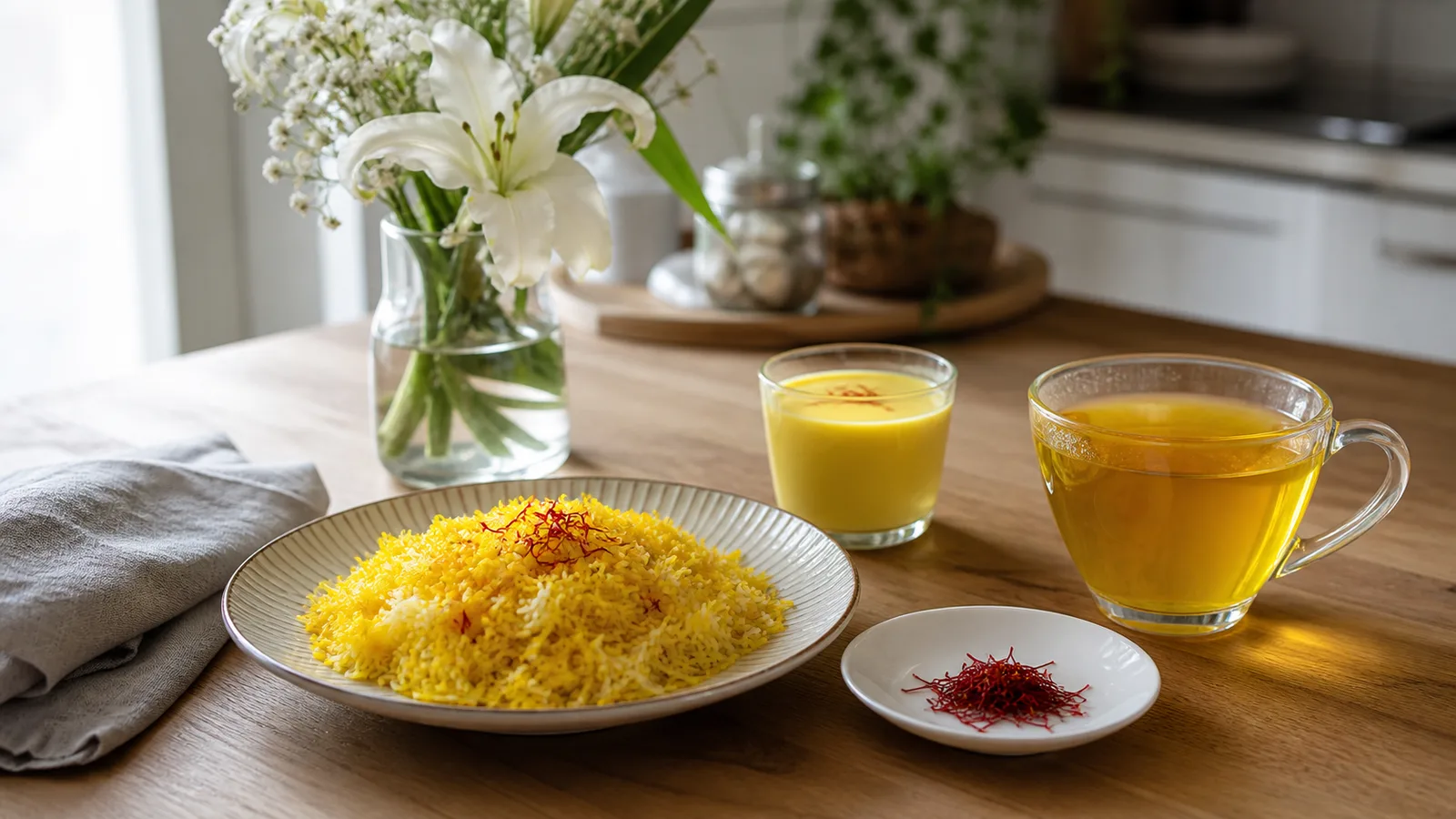
- Strong drinks: tea or infused water prepared specifically to deliver more saffron than normal seasoning.
- Supplements and extracts: capsules, liquids or powders that concentrate the plant and may provide an amount that is difficult to compare with food.
- Research preparations: measured products used under a defined study protocol, sometimes late in pregnancy and with clinical supervision.
A result from one form cannot automatically be transferred to another. Product strength and purity also vary. The US National Center for Complementary and Integrative Health notes that many dietary supplements have not been tested in pregnant women and recommends discussing complementary products with a healthcare professional.
Why is saffron treated cautiously in pregnancy?
Pregnancy research is necessarily limited, and the evidence is not strong enough to define a universal safe amount. Reviews have raised two main concerns.
Possible uterine activity
Saffron has a history of traditional use around menstruation and labor. Some small clinical studies have investigated measured preparations near term for cervical ripening or labor outcomes. That does not make saffron a home method for starting labor. It shows that the plant may have biological effects that deserve caution, especially earlier in pregnancy or when preterm labor is a concern.
A 2026 integrative review of saffron and pregnancy found that the overall clinical safety evidence remains limited and inconclusive. It described dose-dependent concerns, including uterine stimulation and reports linking higher or occupational exposure with miscarriage risk. The authors said standardized preparations and longer-term safety data are needed before clinical recommendations can be made.
Uncertain supplement strength and safety
“Natural” does not mean risk-free. Concentrated botanical products can have pharmacological effects, interact with medicines or contain a different quantity from the one a buyer expects. NCCIH advises anyone considering a non-vitamin dietary supplement in pregnancy to discuss it with a healthcare provider because safety may be uncertain.
A broad systematic review of adverse events in human saffron studies found that the herb was generally well tolerated in the studied populations, with gastrointestinal complaints most often reported. It also called for clinical monitoring when saffron is used medicinally at higher amounts or for longer periods. Most participants in those trials were not pregnant, so the finding cannot be used as proof of pregnancy safety.
What the evidence does not prove
Several claims repeated online are much more certain than the research allows.
- There is no good evidence that saffron changes a baby’s complexion.
- Small studies near the end of pregnancy do not prove that saffron is safe throughout the first, second and third trimesters.
- Observational reports cannot show that saffron alone caused a miscarriage or preterm birth, but they are a reason for caution rather than self-experimentation.
- A quantity tolerated by a nonpregnant adult is not a pregnancy recommendation.
- Differences in crocin or safranal between samples do not make one national origin automatically safe in pregnancy.
The original article referred to an experiment involving 150 pregnant women and combined claims about saffron and barberry. We could not identify a published study matching that description, so those figures should not be treated as established evidence.
Practical guidance if you are pregnant
Ask your obstetrician, midwife or pharmacist before using saffron as a supplement, strong tea or remedy. Show them the package and ingredient list, because “saffron” on a label may describe an extract or a multi-ingredient product rather than pure threads.
If saffron is simply part of a meal, the relevant question is the actual amount and your individual pregnancy. A clinician who knows your history can advise whether to avoid it. Extra caution is appropriate with bleeding, contractions, a history or risk of pregnancy loss or preterm labor, allergy, significant medical conditions, or medicines that could interact with supplements.
After taking a concentrated amount, seek prompt medical advice if you develop bleeding, painful or regular contractions, faintness, breathing difficulty, persistent vomiting, or another concerning symptom. Contact emergency services for severe symptoms. Do not try to induce labor with saffron at home.
A careful conclusion
Pregnant women should not consume saffron extracts, supplements or medicinal quantities on the strength of online claims alone. Ordinary food use is a different exposure, but research has not established one amount that is safe for every pregnancy. The sensible approach is to avoid concentrated use and ask the healthcare professional managing the pregnancy about any culinary use that causes concern.