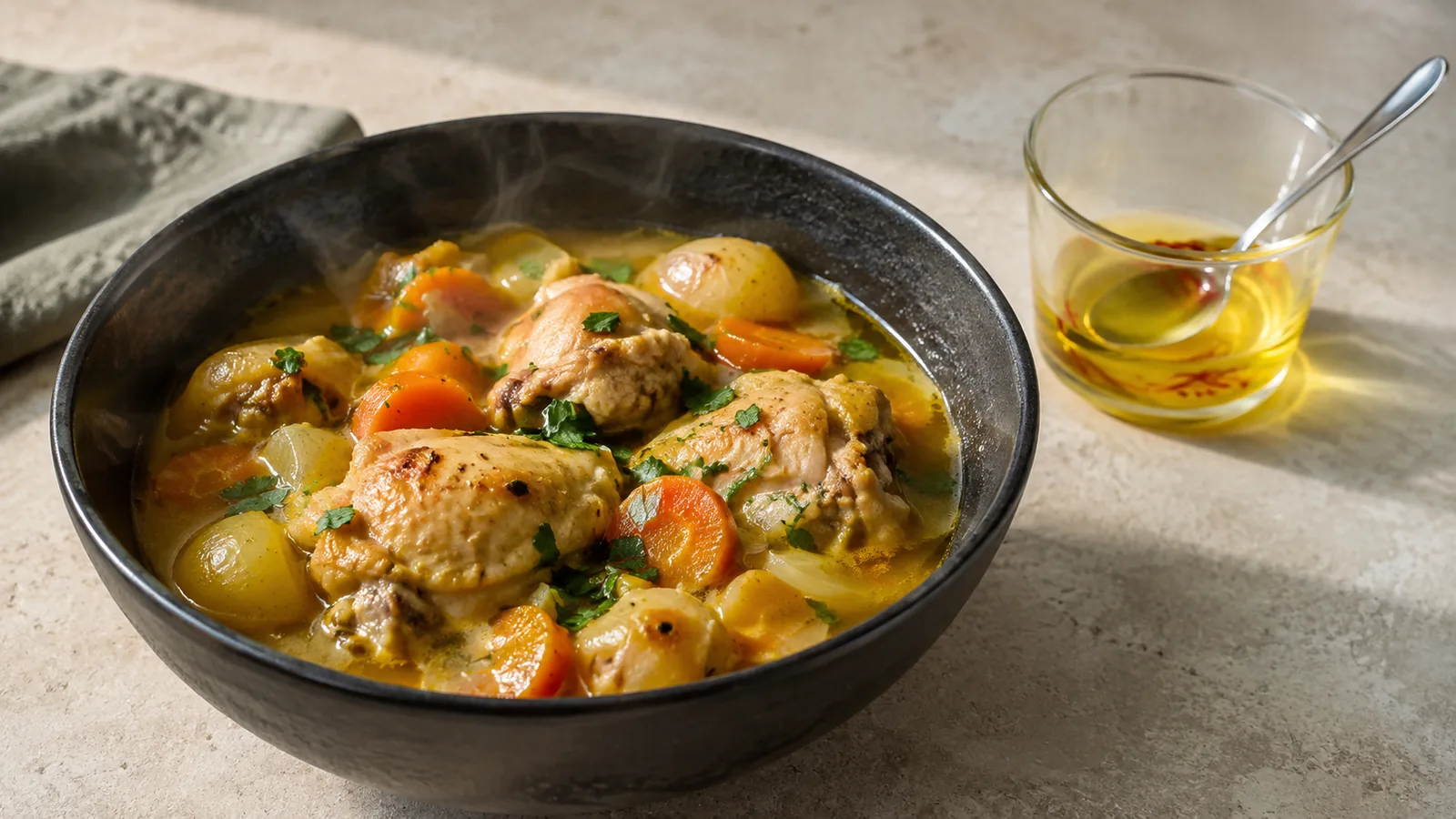
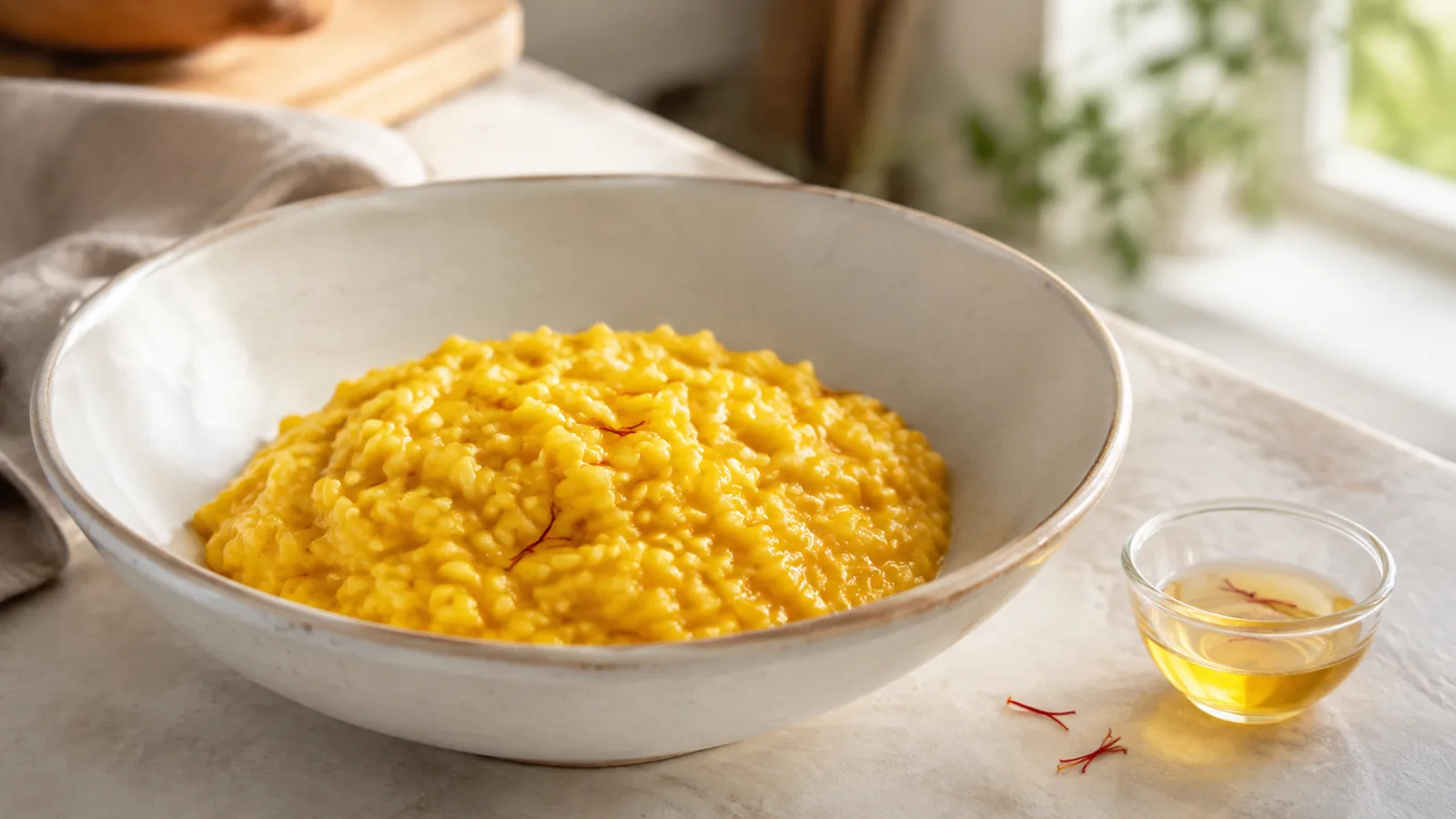
This Saffron Tea Recipe keeps the character of the original Iranian-style drink—black tea, saffron, cardamom and a little rose water—but corrects its mistranslated measurements. It makes two fragrant cups in about 15 minutes, with enough saffron to give the tea a warm golden colour without making it harsh or wasteful.
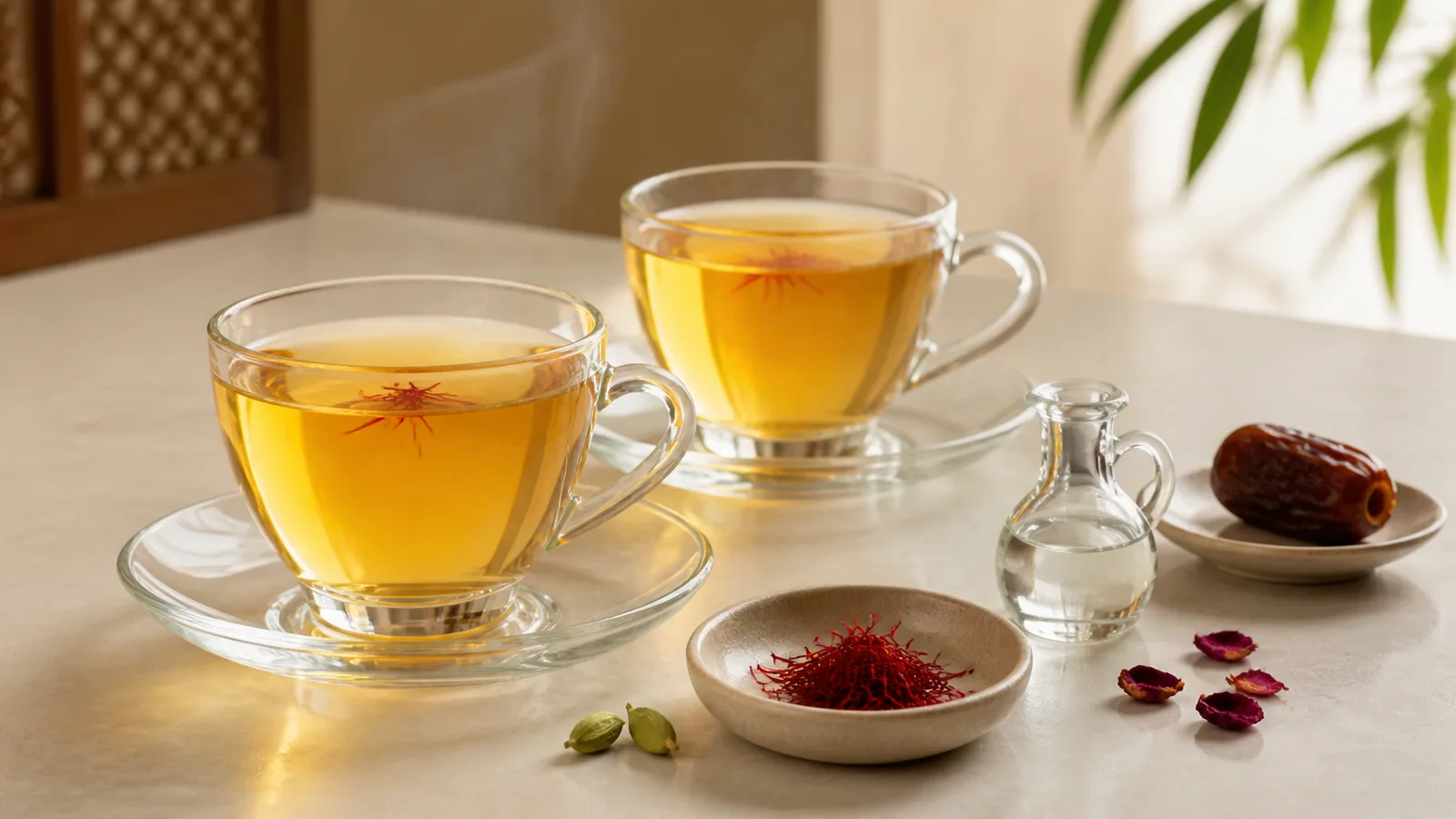
Saffron tea recipe at a glance
- Makes: 2 cups
- Preparation: 5 minutes
- Brewing: 5–7 minutes
- Flavour: floral, gently earthy and lightly spiced
Ingredients for two cups
- 2 cups (about 475–500 ml) fresh water
- 1 teaspoon loose black tea, or 2 black tea bags
- 10–15 saffron threads, lightly crushed
- 2 green cardamom pods, lightly cracked
- 1 teaspoon food-grade rose water
- Honey or sugar, optional
- Dates to serve, optional
The old version said “1 spoon” of black tea, which is best read as 1 teaspoon for two cups. It also listed “2 grams” of levigated saffron. Two grams is far beyond what this small pot needs for flavour or colour, so the working recipe uses a modest culinary pinch. “Pushes” in the translated ingredient list appears to refer to the cardamom pods named in the method.
How to make saffron tea
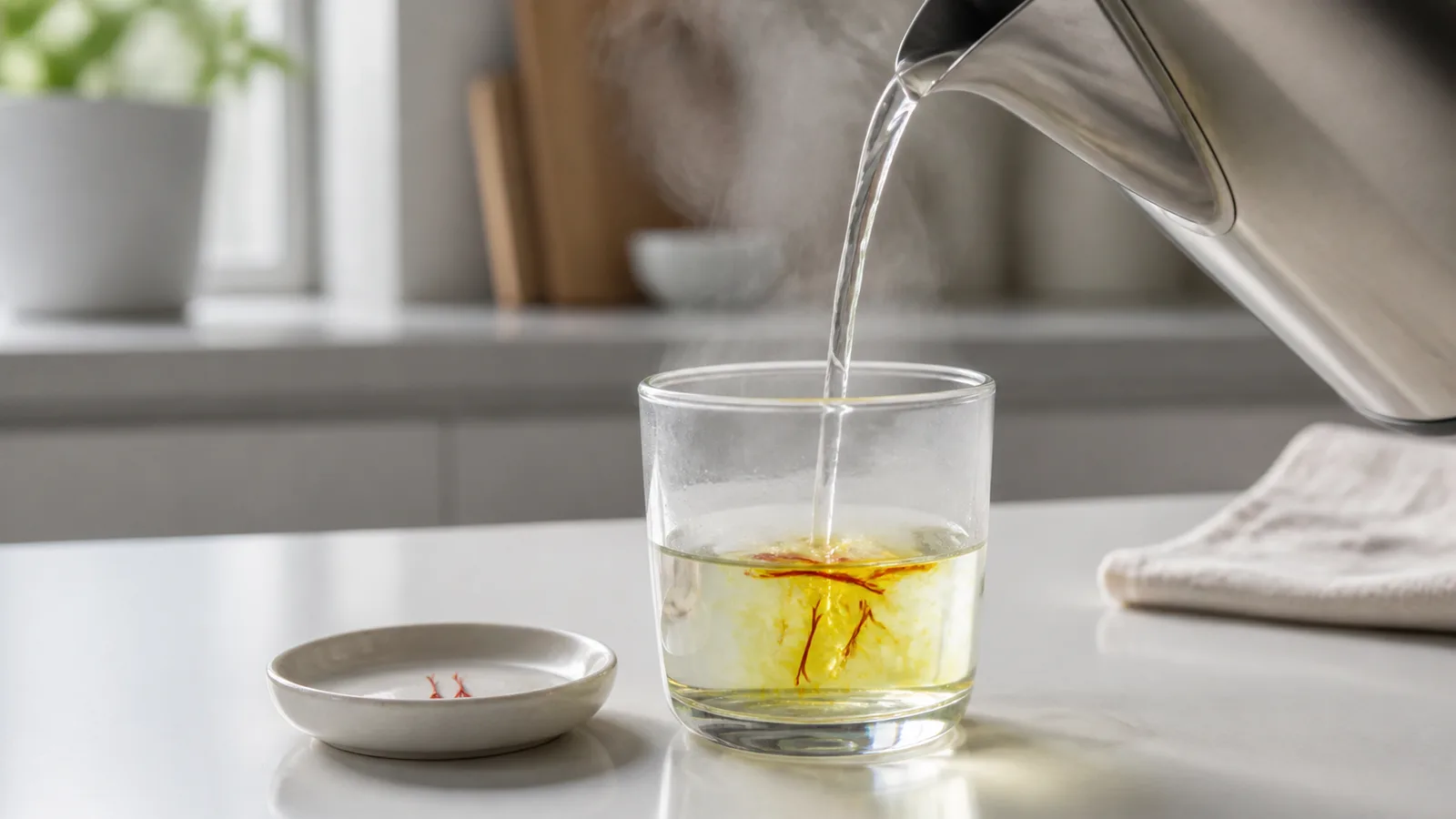
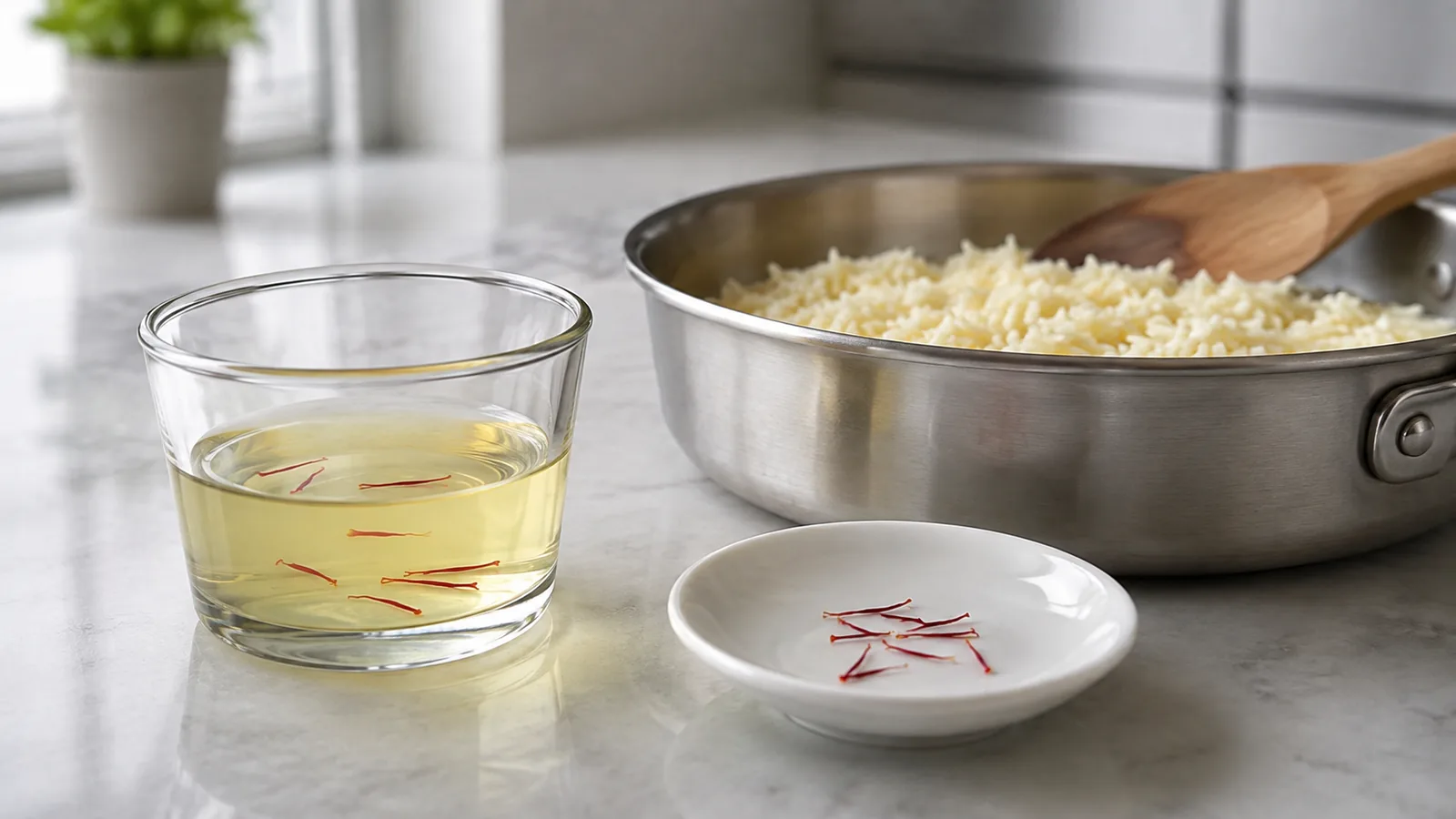
- Bloom the saffron. Put the lightly crushed saffron threads in a small cup. Add 2 tablespoons of hot water and leave them for 5–10 minutes, until the liquid turns deep gold.
- Heat the water. Bring the remaining water to a boil, then let it settle for about 30 seconds.
- Fill the teapot. Add the black tea and cracked cardamom pods to a clean teapot. Pour in the hot water, followed by the bloomed saffron and its liquid.
- Steep. Cover and brew for 4–5 minutes. The original method used 10 minutes; that produces a much stronger black tea and can taste bitter, so extend the time only if that is the flavour you enjoy.
- Add rose water. Stir in 1 teaspoon during the final minute. Keeping it near the end preserves more of its delicate aroma.
- Serve. Strain into two cups. Drink it plain or sweeten lightly with honey or sugar. A date on the side gives sweetness without changing the whole pot.
How much saffron should you use in tea?
For two cups, 10–15 good threads are enough to make a recognisable saffron tea. If the threads are very small, use a small pinch rather than trying to measure a fraction of a gram on an ordinary kitchen scale.
When choosing saffron for tea, look for whole red threads with a clean, distinctive aroma. This recipe for saffron tea uses the threads directly, so their condition is easy to see before they go into the cup.
Start modestly. You can add a few more threads next time, but an overloaded cup becomes medicinal and bitter rather than more aromatic. Grinding the threads lightly and blooming them in hot water is more useful than pouring a large dry quantity straight into the teapot.
Can you make saffron tea without black tea?
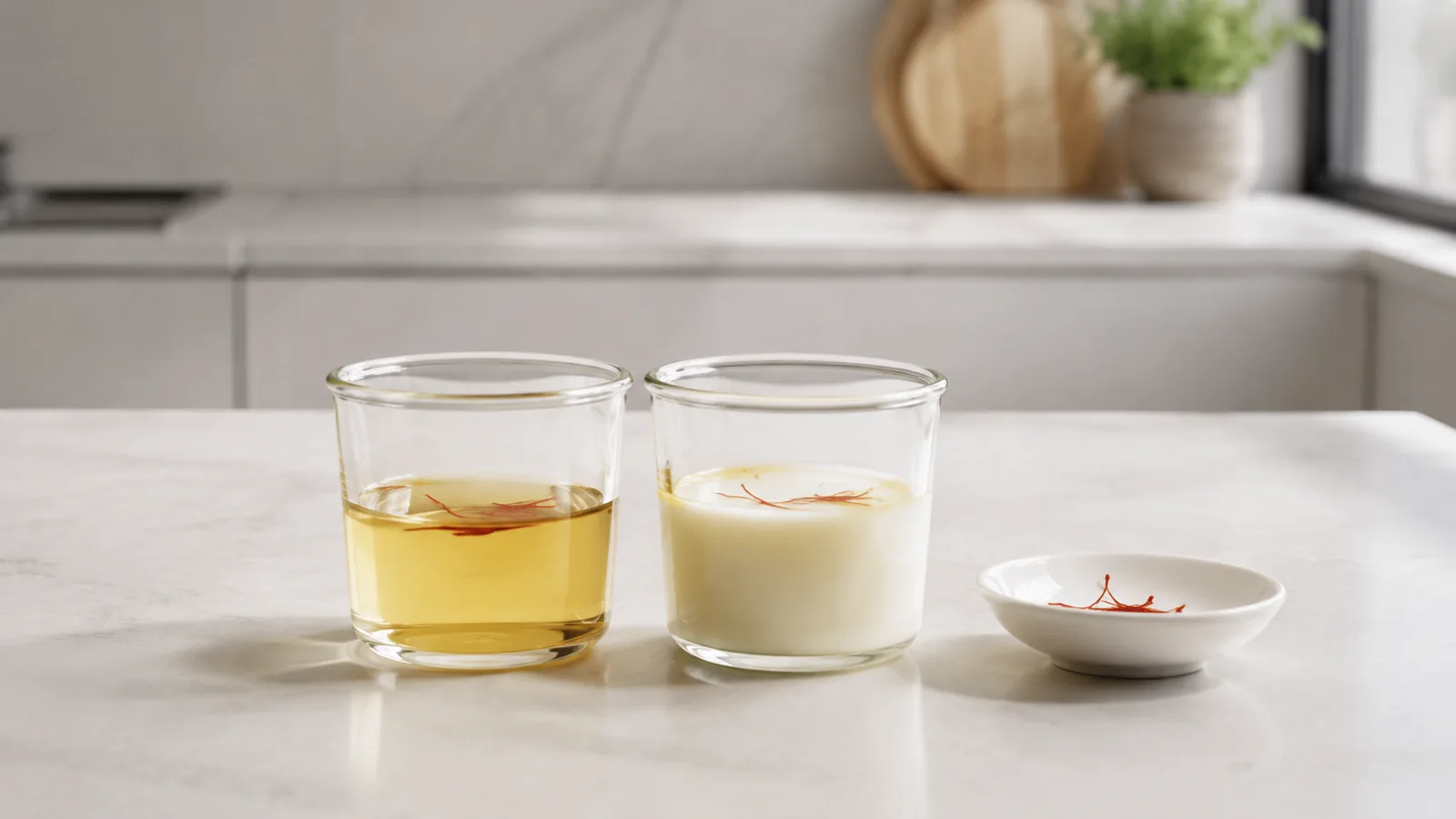
Yes. For a caffeine-free saffron infusion, leave out the black tea and steep the bloomed saffron with cardamom in the full two cups of hot water for 8–10 minutes. Add rose water at the end. The result is lighter, more floral and closer to the pure aroma of saffron.
You can also make green tea with saffron. Use 1 teaspoon of green tea and water below a full boil, then steep for 2–3 minutes so the leaves do not become astringent. Add the already-bloomed saffron to the pot.
Useful variations
Saffron honey tea
Stir honey into the cup after brewing, when the tea is hot but no longer bubbling. Begin with half a teaspoon per cup so the honey does not cover the saffron and rose aromas.
Saffron milk tea
Brew the black tea and saffron with 1½ cups of water. Warm ½ cup of milk separately and divide it between the finished cups. Rose water is optional in this version, and a small amount works better than a heavy pour.
Tea with saffron but no rose water
Simply omit the rose water. Cardamom and saffron make a complete drink on their own. If you also omit cardamom, use the pure infusion method so the saffron remains the central flavour.
Why blooming and timing change the cup
Saffron releases colour and aroma into water. Lightly crushing and pre-soaking the threads gives them time to infuse before the black tea reaches its ideal strength. This matters when making black tea with saffron because the two ingredients work on different clocks: saffron benefits from a longer infusion, while black tea can become bitter when left too long.
Rose water is volatile and easily dominates. One teaspoon for two cups supports the saffron; much more can make the drink taste perfumed. Cardamom should be cracked, not powdered, so it infuses cleanly and is easy to strain.
About the “hot and dry” description
The original article described saffron as having a “hot and dry nature” and black tea as “cold,” saying the two balance each other. Those are categories from traditional Persian dietary thought. They are preserved as cultural context, not presented as modern medical measurements or a reason to treat symptoms with tea.
This recipe is a drink, not a sleep, weight-loss or health treatment. Concentrated saffron products are different from a culinary pinch in two cups. If a clinician has advised you to avoid saffron or a particular ingredient, follow that advice.
How to get a clear, aromatic saffron tea
- Use red, fragrant threads rather than anonymous yellow powder.
- Crush the saffron gently; do not pulverise it into dust.
- Bloom it before brewing the black tea.
- Keep the rose water restrained and add it late.
- Strain the tea before serving.
- Adjust sweetness in each cup rather than sweetening the entire pot.
Made this way, Iranian saffron tea is simple: a clear golden cup, a gentle cardamom note and a floral aroma that remains recognisably saffron.
Recipe basis and safety note
The black tea, saffron, rose water, cardamom, honey, sugar and dates come from the recipe preserved in the original post. Quantities and timing were corrected for two ordinary cups; the old 2-gram figure is retained above for transparency rather than repeated as an instruction. This page makes no therapeutic claim and is not a substitute for individual medical advice.