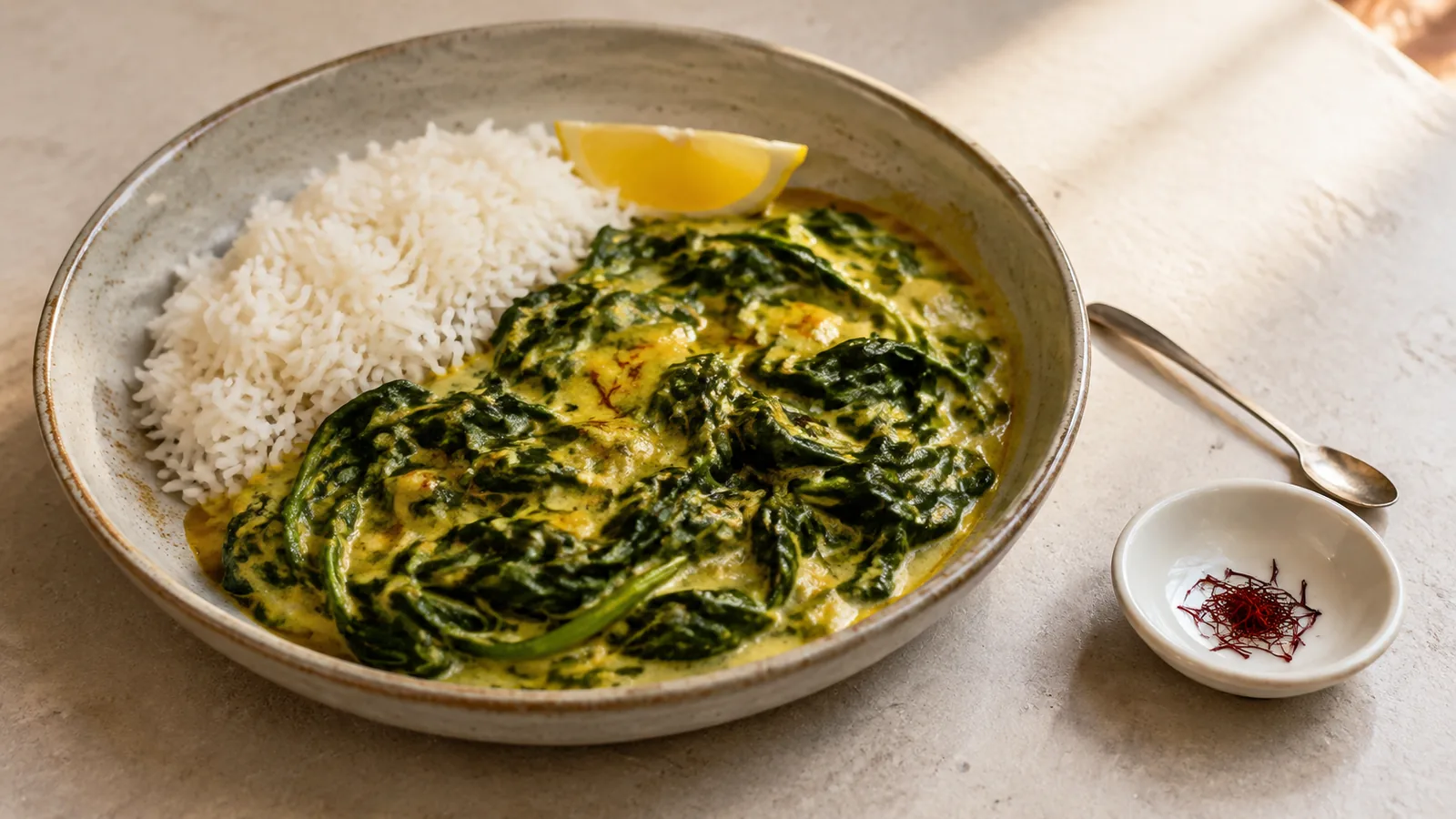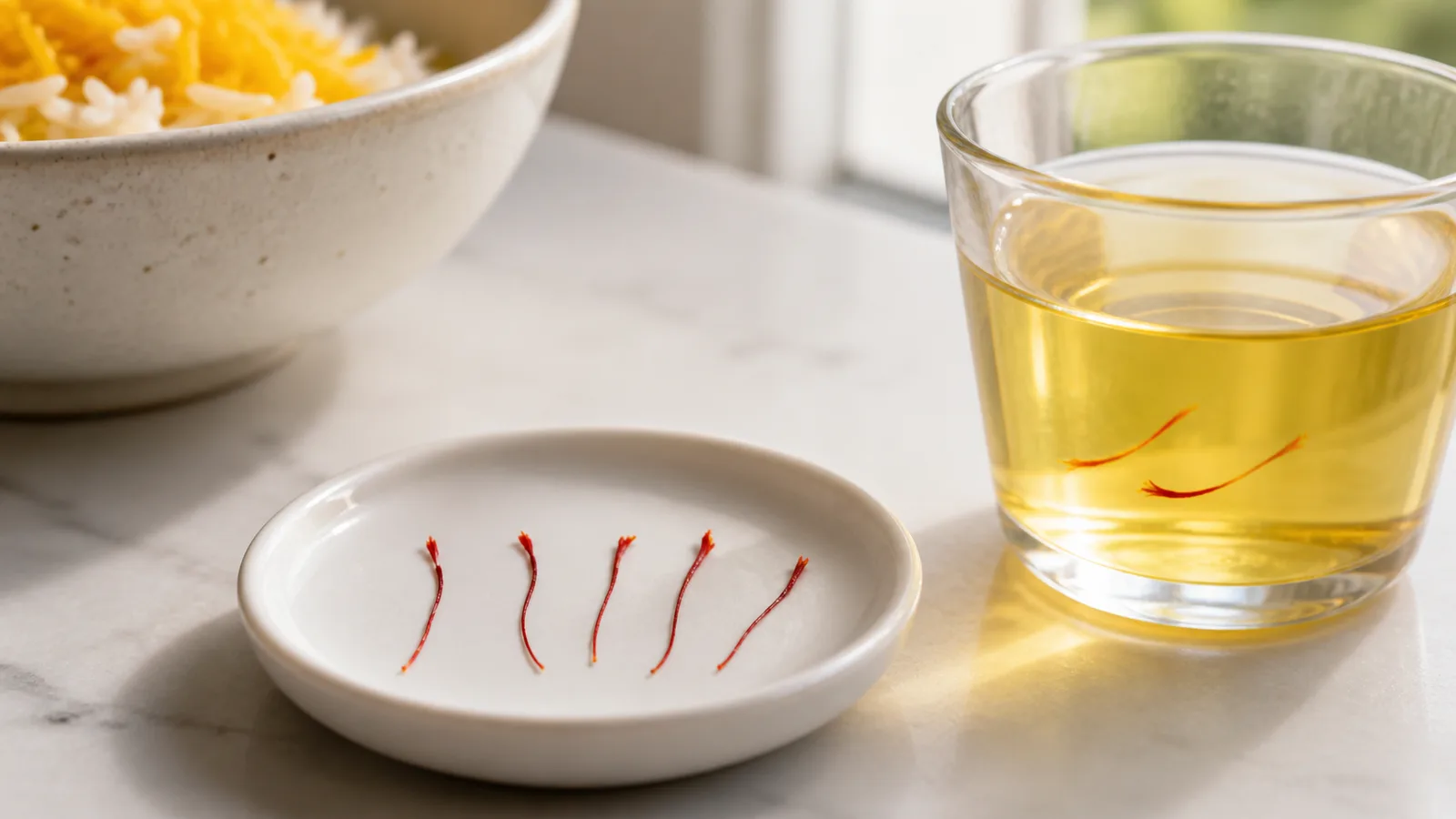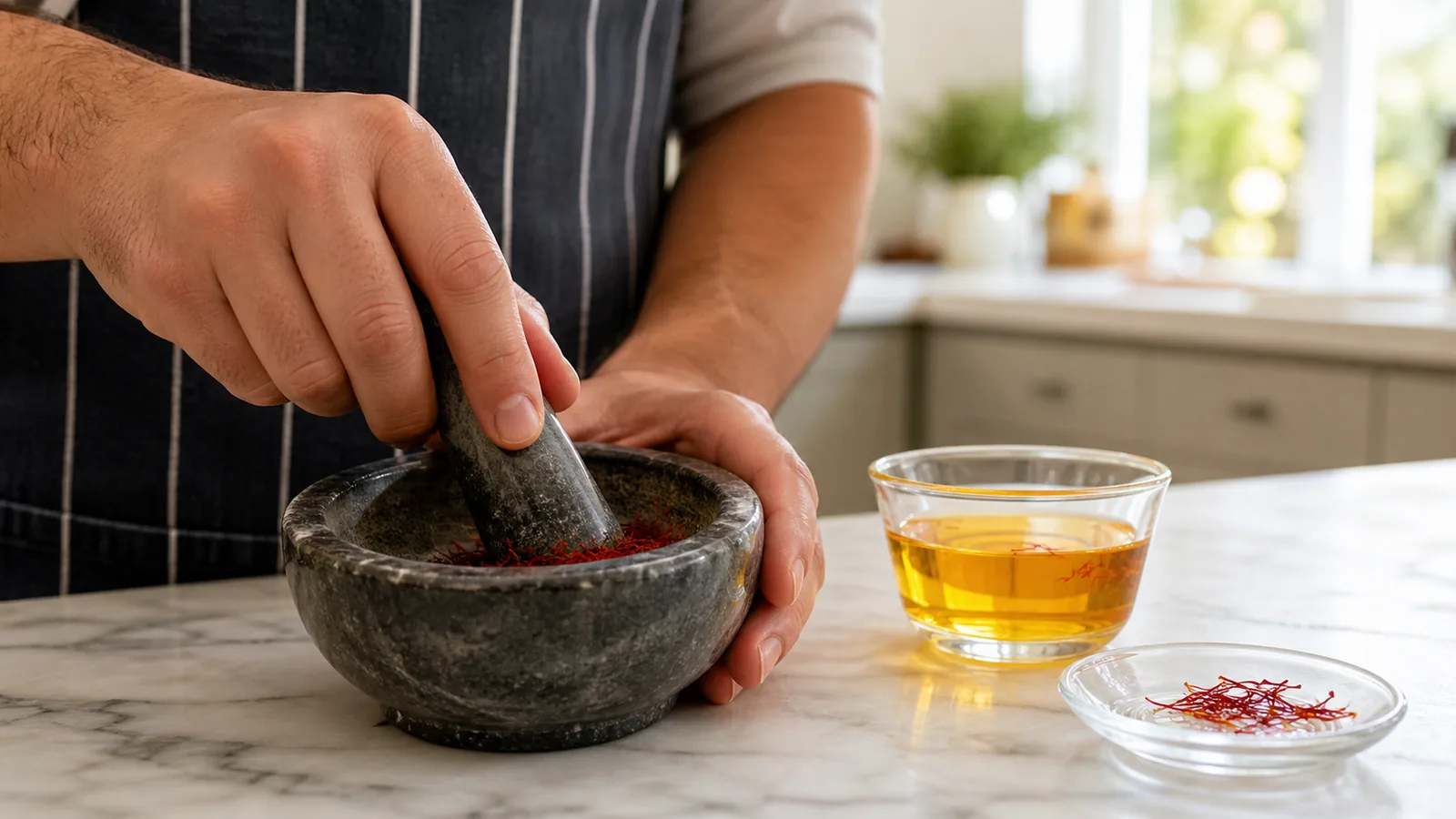
The most reliable way to prepare saffron is to crush a measured pinch, bloom it in a small amount of warm liquid for 10–15 minutes, and add the entire infusion to the dish. This spreads the colour and aroma more evenly than dropping dry threads into a large pot.
For a typical four-to-six-serving rice dish, sauce, or stew, start with about ¼ teaspoon of loosely packed threads. Saffron varies by lot and teaspoons are imprecise, so treat that as a culinary starting point—not a universal dose—and adjust in a future batch after tasting the finished dish.
First, make sure the saffron is credible
Preparation cannot rescue adulterated spice. Buy from a seller that identifies the product as Crocus sativus, provides origin and lot information, protects it from light and moisture, and can explain its quality testing. Whole threads are easier to inspect than powder, where fillers and added colour are harder to see.
Fraud is a real supply-chain problem, not merely a historical rumour. In the European Commission’s first coordinated survey of herb and spice authenticity, 11% of sampled saffron was considered at risk of adulteration. The programme looked for substituted botanical material, fillers, and unauthorised dyes.
A logo or “standard” claim on a package is not proof by itself. Traceability, tamper-evident packaging, a realistic price, and testing that applies to the specific lot are stronger signals.
What genuine saffron threads look and smell like
Whole saffron consists of dried stigma material from the saffron crocus. The threads are irregular rather than machine-identical, usually deep red with a slightly wider or flared end; some grades retain a small amount of yellow or orange style. Safflower petals, dyed fibres, shredded beet, and other substitutes often lack that stigma shape.
Genuine saffron has a strong, distinctive aroma and a bitter taste. Those sensory cues are useful screening tools, but neither proves authenticity. Storage, age, grade, and moisture change aroma, while clever adulteration can imitate colour or smell.
If you place a few threads in warm water, genuine saffron releases a clear golden colour while the material remains visible. An immediate cloud of harsh red dye or threads that turn white at once is suspicious. A water test still cannot identify every filler, prove origin, or assign a quality grade.
Laboratory testing is the real standard
ISO 3632-2 specifies test methods for dried saffron in filaments, cut filaments, and powder. The current ISO 3632-2:2010 page notes that the standard was reviewed and confirmed in 2022. Laboratory methods can assess identity, extraneous matter, moisture, ash, pigments, and characteristic compounds in ways a kitchen test cannot.
The source article referred to Iranian colour standards and market inspections by a National Saffron Council. Its claims were undated, named no verifiable programme, and cannot establish the current status of a package in another market. Consumer education helps, but a sensory checklist should never be described as equivalent to accredited analysis.
Step 1: measure the saffron for the dish
For a family-size recipe, begin with roughly ¼ teaspoon of threads, often around 0.1 gram depending on thread length, packing, and attached style. A 0.01-gram scale is better when repeatability matters. A few threads may tint a cup of tea, but the old recommendation of three to five threads is usually too little for an entire pot of rice.
Use less for a subtle cream sauce or individual drink; use a tested recipe for a large dessert or ceremonial batch. Do not convert a culinary amount into a supplement or medical dose.
Step 2: crush the threads gently
Put the measured saffron in a small dry mortar and grind it to coarse flakes or a light powder. Crushing increases the surface area exposed to liquid. There is no need to reduce it to invisible dust.
If the quantity is too small for the pestle to catch, add a pinch of the recipe’s sugar or salt as an abrasive—sugar for desserts, salt for savoury food. Alternatively, fold the threads in clean parchment and press them with the back of a spoon. Avoid handling them over a sink or hot stove where the light pieces can be lost.
Step 3: bloom saffron in warm liquid
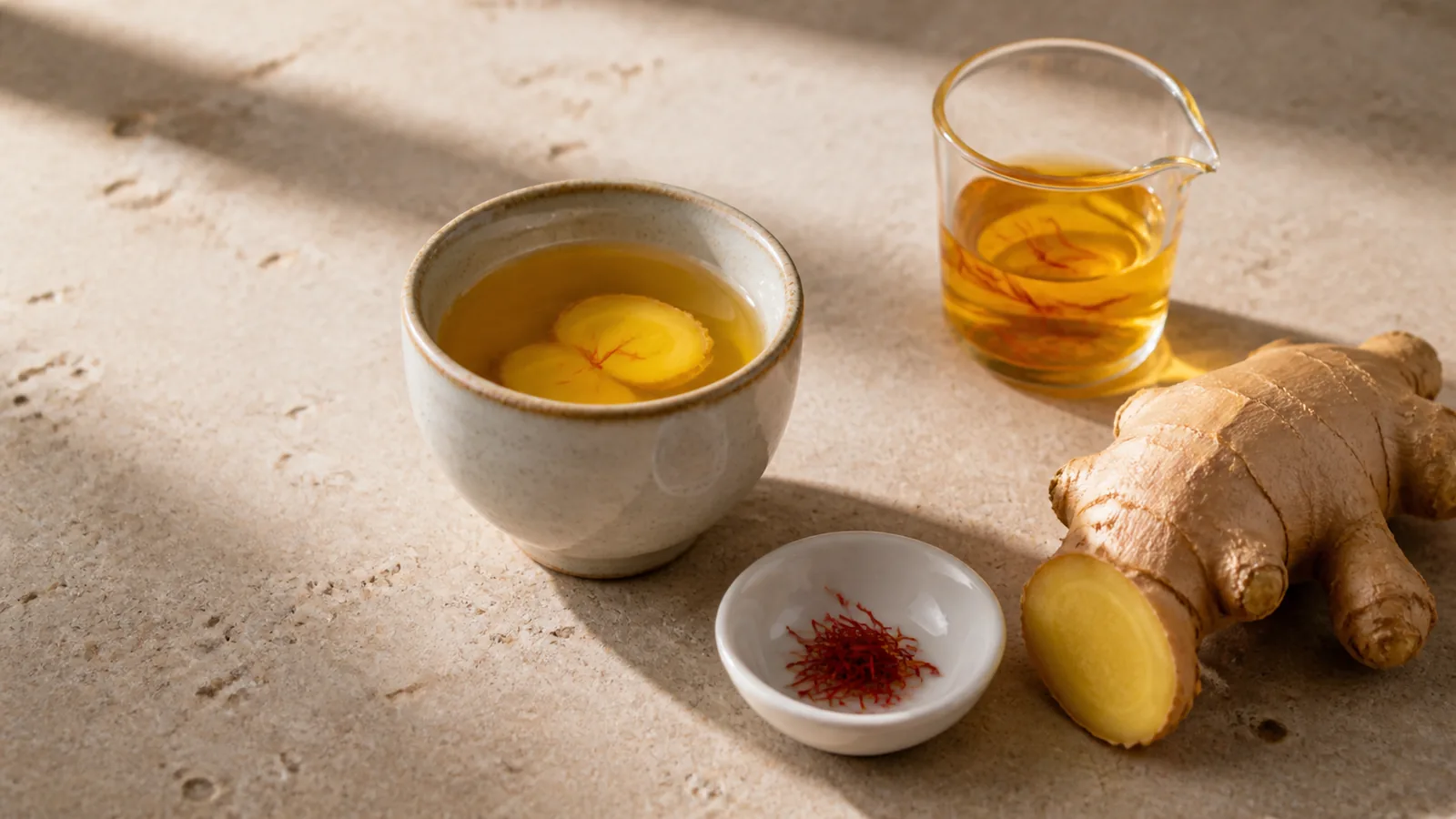
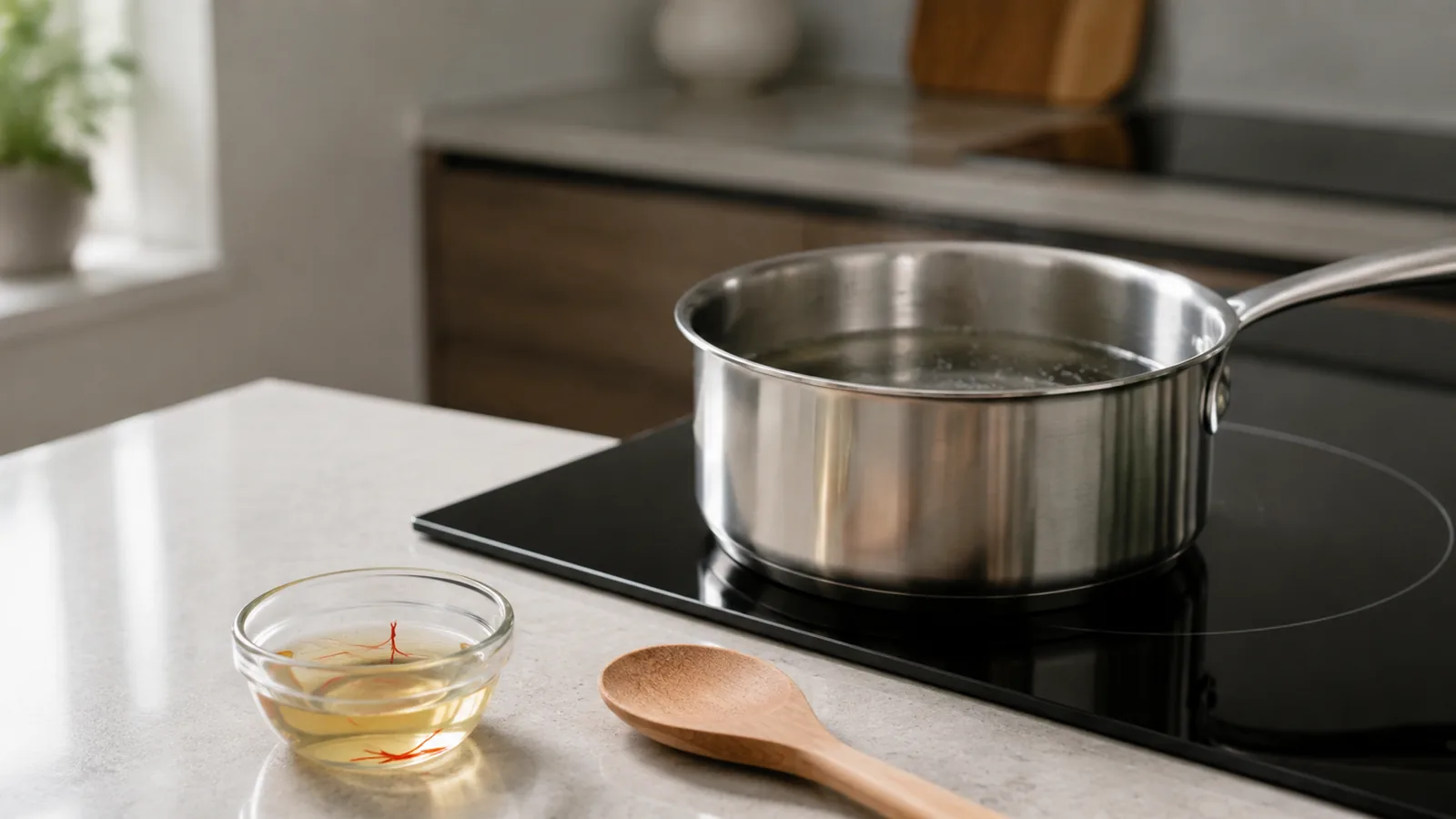
Transfer the crushed saffron to a small heatproof cup. Add two to four tablespoons of warm water, milk, or unsalted broth that suits the recipe. The liquid should be comfortably hot and steaming is fine; a violent boil is unnecessary.
Cover and leave it for 10–15 minutes. A clear golden-red infusion and rising aroma show that extraction is under way. Use both the liquid and the softened saffron particles.
The ice-cube method also extracts colour as the ice melts, but it is slower and not inherently superior. Warm liquid is more predictable when cooking on a schedule.
Step 4: add the infusion at the right time
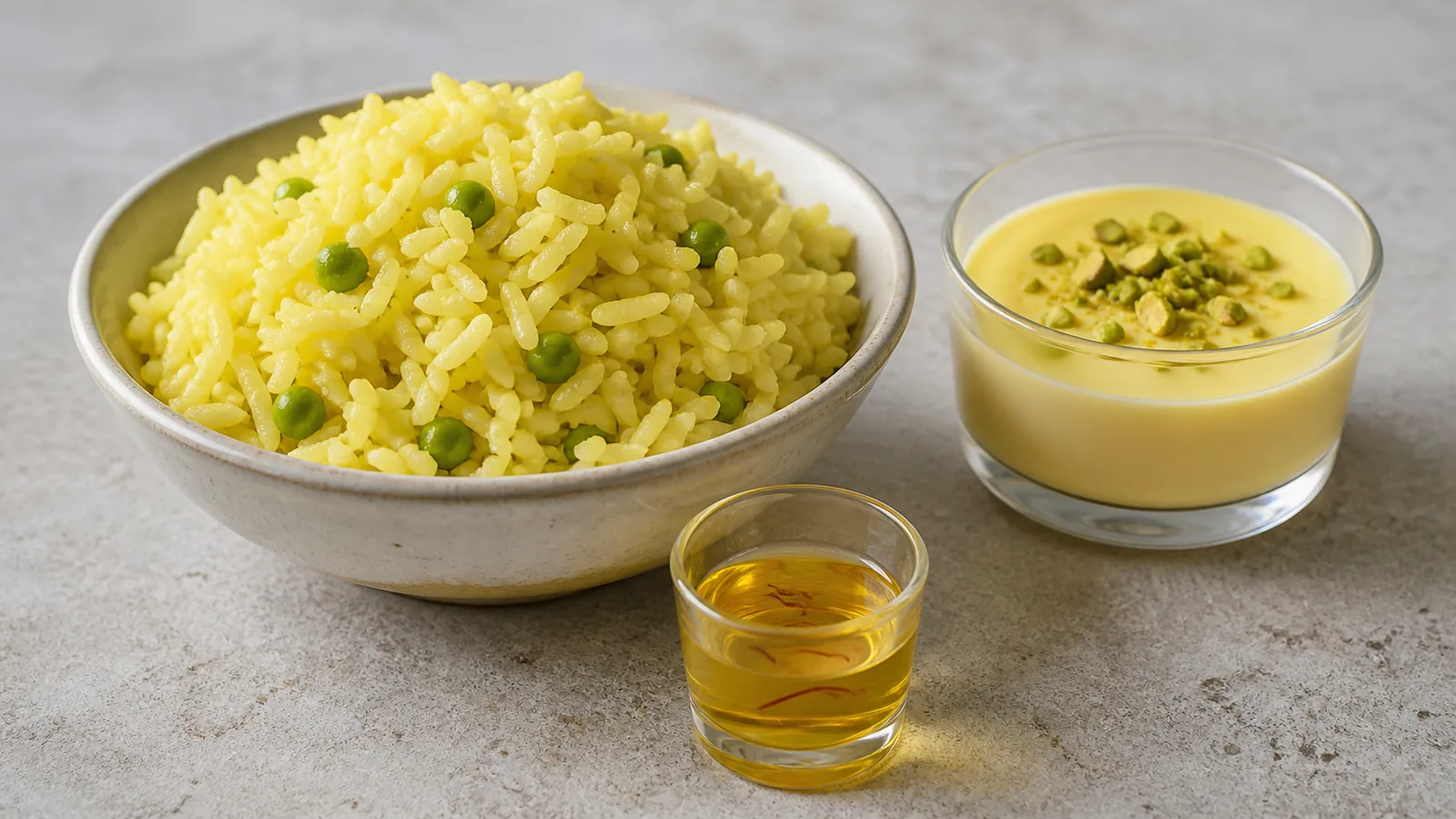
For rice, mix the infusion with a portion of cooked rice for a concentrated golden layer, or stir it through the pot near the end. For soup, stew, or sauce, add it late enough that the aroma is not cooked away for an hour, but early enough to distribute evenly.
For baked goods, combine the infusion with a measured liquid ingredient so the batter’s hydration remains balanced. For custard or dairy desserts, let the infusion cool slightly before adding it to eggs or cultured dairy.
Avoid pouring saffron into a single spot and leaving it unstirred. Uneven dark patches can taste bitter while the rest of the dish receives little aroma.
Should saffron be toasted first?
Dry toasting is optional and easy to overdo. Saffron threads are thin, low in moisture, and can burn in seconds. Burned saffron loses its floral character and cannot be repaired.
For most home cooking, skip the pan and bloom the spice directly. If a tested recipe calls for warming, use the lowest heat for only a few seconds, keep the threads moving, and remove them before the colour darkens or the aroma smells smoky. Never toast ground saffron unattended.
How to prepare saffron for common dishes
- Persian rice: bloom the saffron, then mix it into a small portion of cooked rice before folding or arranging that rice over the white grains.
- Risotto or paella-style rice: stir the infusion into the cooking liquid or add it during the later part of cooking so it disperses without prolonged boiling.
- Soup and stew: add the infusion during the final 10–20 minutes and taste after it has mixed through.
- Milk, tea, or coffee: bloom a small pinch in a few tablespoons of warm liquid, then combine it with the full drink.
- Custard, ice cream, and pudding: infuse saffron in part of the warm dairy and follow the recipe’s chilling and egg-safety steps.
- Bread and cake: count the blooming liquid as part of the recipe’s total liquid.
Common preparation mistakes
- Using too much: an intense bitter or medicinal note often means the quantity was excessive, not that the dish needs more sugar.
- Using too little liquid: dry pockets do not extract or distribute evenly.
- Boiling for a long time: colour may remain while the more delicate aroma fades.
- Measuring packed powder by spoon: density varies widely; weigh it for repeatable batches.
- Adding fake colour: artificial dye may make a dish yellower but cannot reproduce genuine saffron aroma or identity.
- Trusting one home test: appearance, taste, aroma, and water behaviour are screening clues, not certification.
Store the remaining threads correctly
Close the package tightly and keep it in a cool, dry, dark cupboard away from steam and strong-smelling spices. Do not leave saffron beside the cooker or repeatedly open a large container over a steaming pot. A smaller working jar can protect the main supply.
Label the purchase or opening date and use clean, dry utensils. If the threads become damp, develop an off odour, or show visible mould, discard them.
A concise preparation method
Measure about ¼ teaspoon for a family-size dish, crush it gently, cover it with two to four tablespoons of warm recipe-compatible liquid, steep for 10–15 minutes, and add all of the infusion near the later part of cooking. Start modestly and adjust the next batch.
Before that process, inspect the threads and the seller’s traceability; laboratory testing, not a single taste or water trick, is the strongest evidence of authenticity. Our saffron products are intended for culinary use, and the same careful measuring and blooming method applies to each recipe.