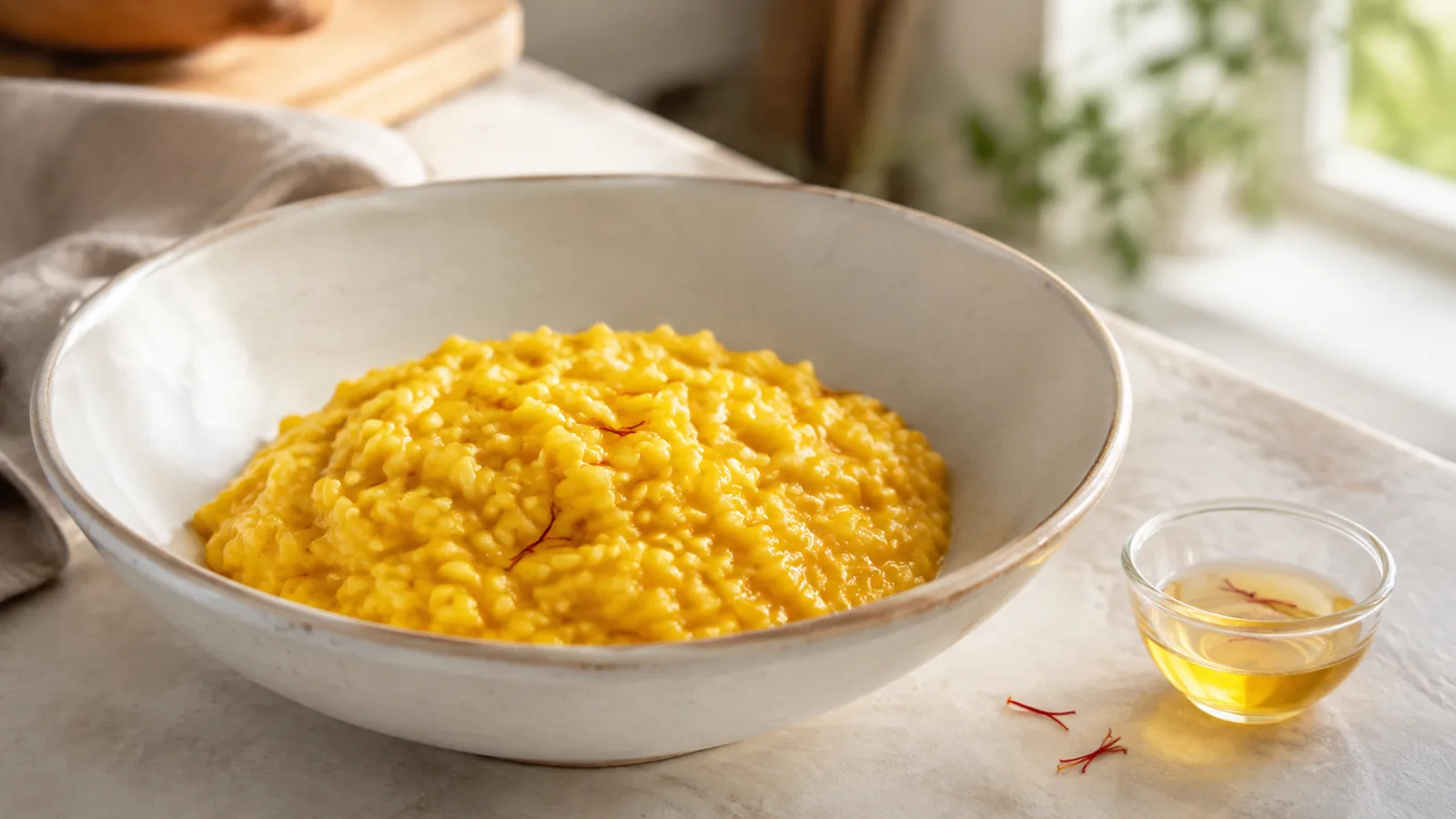
Good foods to add saffron to include rice dishes, seafood stews, chicken and lamb, vegetable soups, lentil and chickpea dishes, custards, rice pudding, ice cream, breads and warm drinks. Saffron works best where a small infusion can spread through retained liquid, grains, dairy or batter.
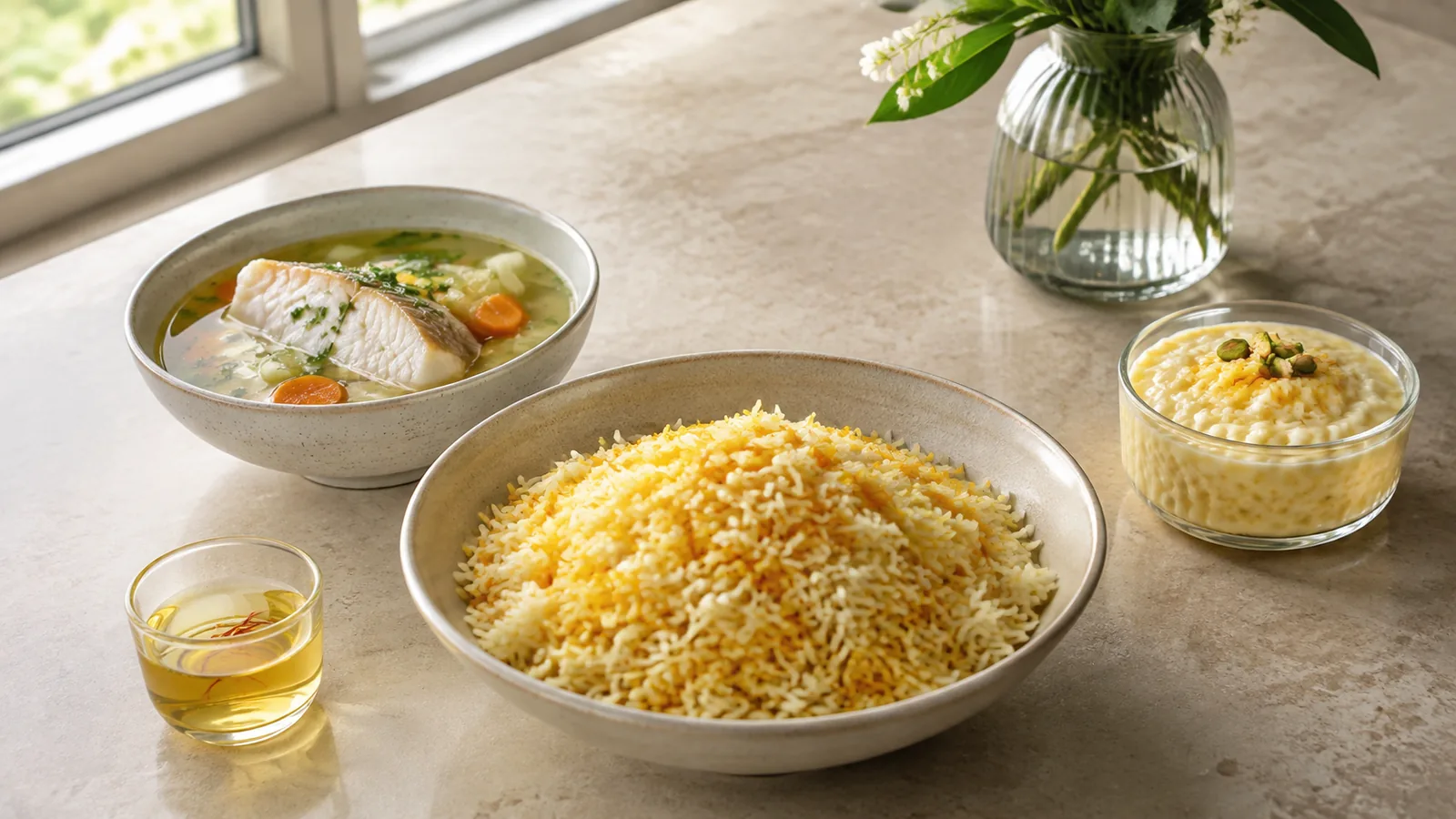
Foods to Add Saffron To: Enhance Flavor and Color
Saffron can contribute a golden colour, warm aroma and a flavour often described as floral, honeyed or slightly earthy. The food does not need to be elaborate. A plain pot of rice or a simple milk pudding may show the spice more clearly than a heavily seasoned dish.
The impression changes with the base: saffron can bring a unique aroma and vibrant color to rice, while milk or fruit may make its delicate flavor, perceived subtle sweetness and floral notes easier to notice.
This guide focuses on actual foods and recipes that can carry saffron well. If you are deciding which other ingredients belong beside it, use the separate guide to foods that pair with saffron.
What Foods Have Saffron in Them?
Some of the best-known examples come from regions where saffron has a long culinary history. Not every version uses the spice, and family recipes differ, but these are useful places to begin:
- Persian rice: chelow, polo, tahdig, tahchin and zereshk polo may use a saffron infusion for colour, aroma or a golden crust.
- Indian and South Asian cooking: biryani, pulao, kheer and festive milk drinks often include saffron.
- Spanish rice: many paella recipes use saffron in the stock.
- Italian rice: risotto alla Milanese is known for its saffron colour and aroma.
- Seafood soups and stews: saffron appears in some Mediterranean fish broths, including versions of bouillabaisse.
- Breads and buns: Swedish saffron buns, often called lussekatter, use the spice in enriched dough.
- Desserts: saffron rice pudding, custard, ice cream and Persian sholeh zard are familiar examples.
Saffron with Rice and Grains
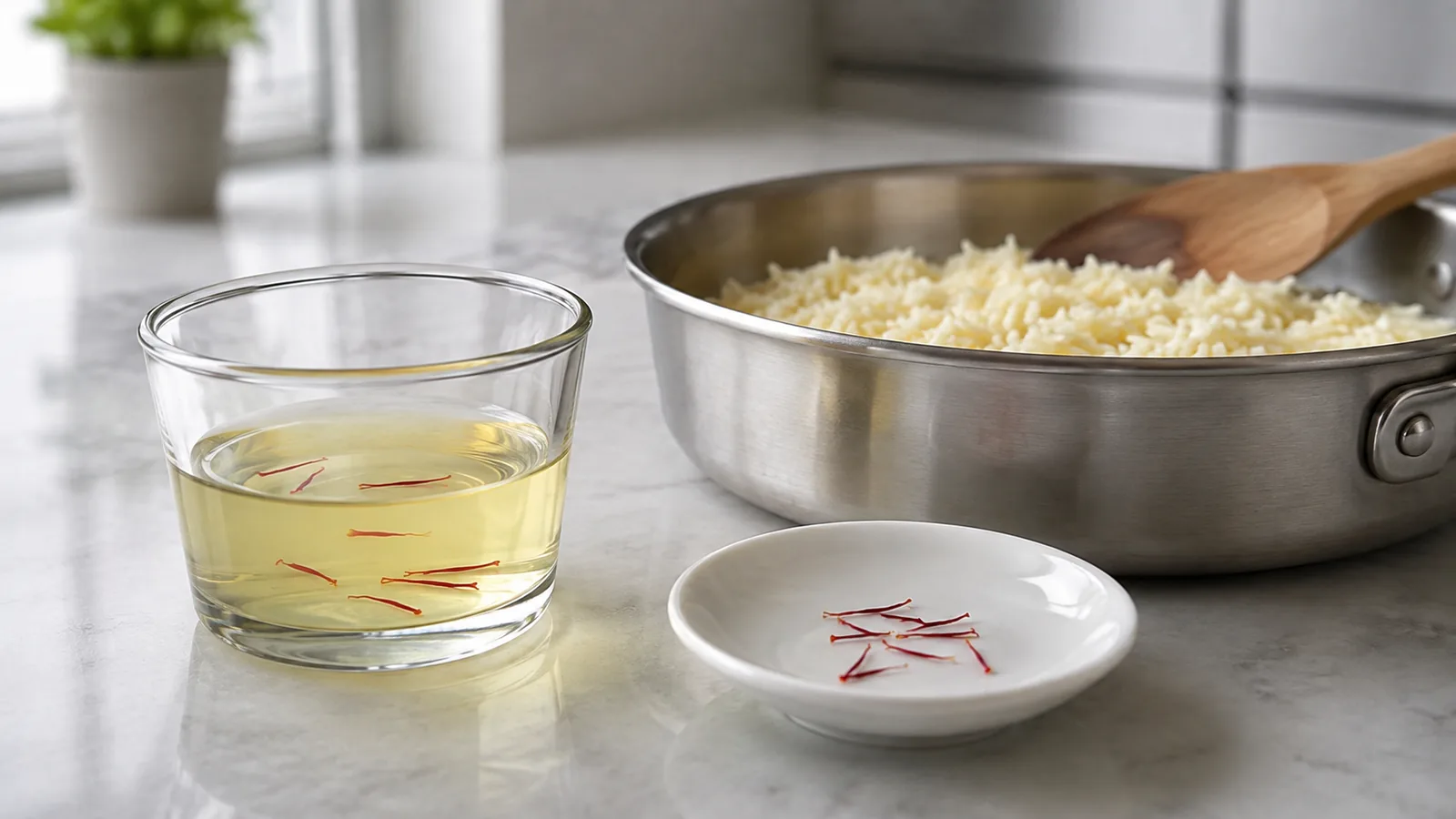
Rice remains the most versatile base. Biryani uses the infusion in selected layers; paella carries it through stock; risotto adds it while the rice is absorbing liquid. Persian rice may use saffron in part of the cooked rice, which is then arranged over white grains for contrast, or in the yoghurt-and-egg mixture for tahchin.
Quinoa, couscous, barley and bulgur can also take saffron. Put the prepared infusion into the measured cooking liquid, then pair the grain with vegetables, herbs, nuts, meat or seafood. Do not add it to water that will later be drained away.
For a broader look at these traditions, read our guide to Iranian dishes with saffron.
Saffron with Meat and Seafood
Chicken and Lamb
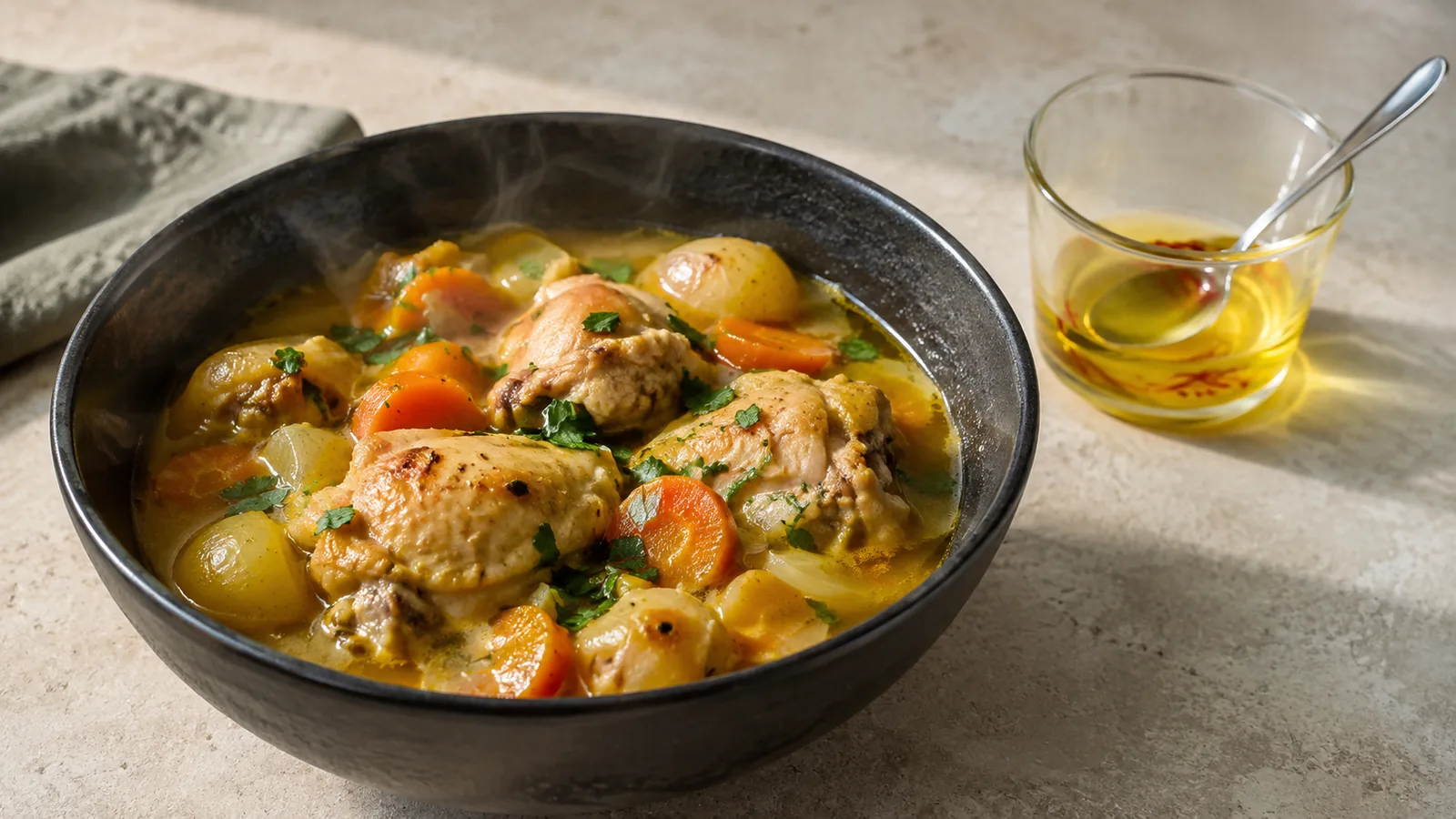
Saffron suits chicken in a braise, curry, kebab marinade, yoghurt sauce or rice dish. Add it through stock, marinade or a small infusion during the moist part of cooking. For roast chicken, use it in butter, yoghurt or pan juices rather than scattering dry threads over the skin.
Lamb can carry saffron in a stew, sauce, marinade or pilaf. Onion, lemon, yoghurt, apricot, prune and mild warm spices can support it. Because lamb has a fuller flavour than chicken, keep competing spices measured so the saffron remains noticeable.
Fish and Shellfish
White fish, prawns, mussels, clams and scallops work well in saffron broth, sauce or rice. Prepare the infusion before the seafood goes in; fish cooks quickly, and it should not be held over heat simply to give dry saffron more time.
Tomato, fennel, leek, garlic and citrus can build the base. Add cream only if it suits the dish, and avoid making the sauce so rich that it hides both the seafood and the spice.
Saffron with Vegetables and Legumes
Carrots, peas, bell peppers and potatoes are easy additions to saffron rice, soup or stew. Pumpkin, squash, cauliflower, fennel and leeks also take the flavour well. Root vegetables can be dressed with a small saffron infusion and oil before roasting, while soup vegetables absorb it through the broth.
Lentils and chickpeas give saffron a mild earthy base. Use it in lentil soup, chickpea stew, pilaf or a warm grain-and-legume salad. Lemon, yoghurt or fresh herbs at serving time can brighten the result.
The spice does not replace seasoning. Saffron will not make an under-salted soup taste complete, and adding more will not repair a flat sauce. Balance salt, acidity and texture first.
Saffron in Desserts and Beverages
Custards, puddings, ice creams and milk-based desserts carry saffron evenly because the spice can be infused in part of the dairy. Kheer and rice pudding give it both milk and starch, while sholeh zard uses water, rice, sugar and aromatic additions for a different texture.
In baking, saffron belongs in a recipe liquid before the batter or dough is mixed. It works in enriched buns, cakes and biscuits. A short warm infusion prevents dry threads from gathering in one part of the bake.
Tea, saffron-infused milk and lattes are straightforward uses. Ginger, cardamom, citrus or a small amount of honey can support the drink, but the saffron should be infused rather than used as a thick dry topping.
How to Add Saffron to These Foods
- Measure the amount before crushing.
- Lightly crush the threads in a dry mortar.
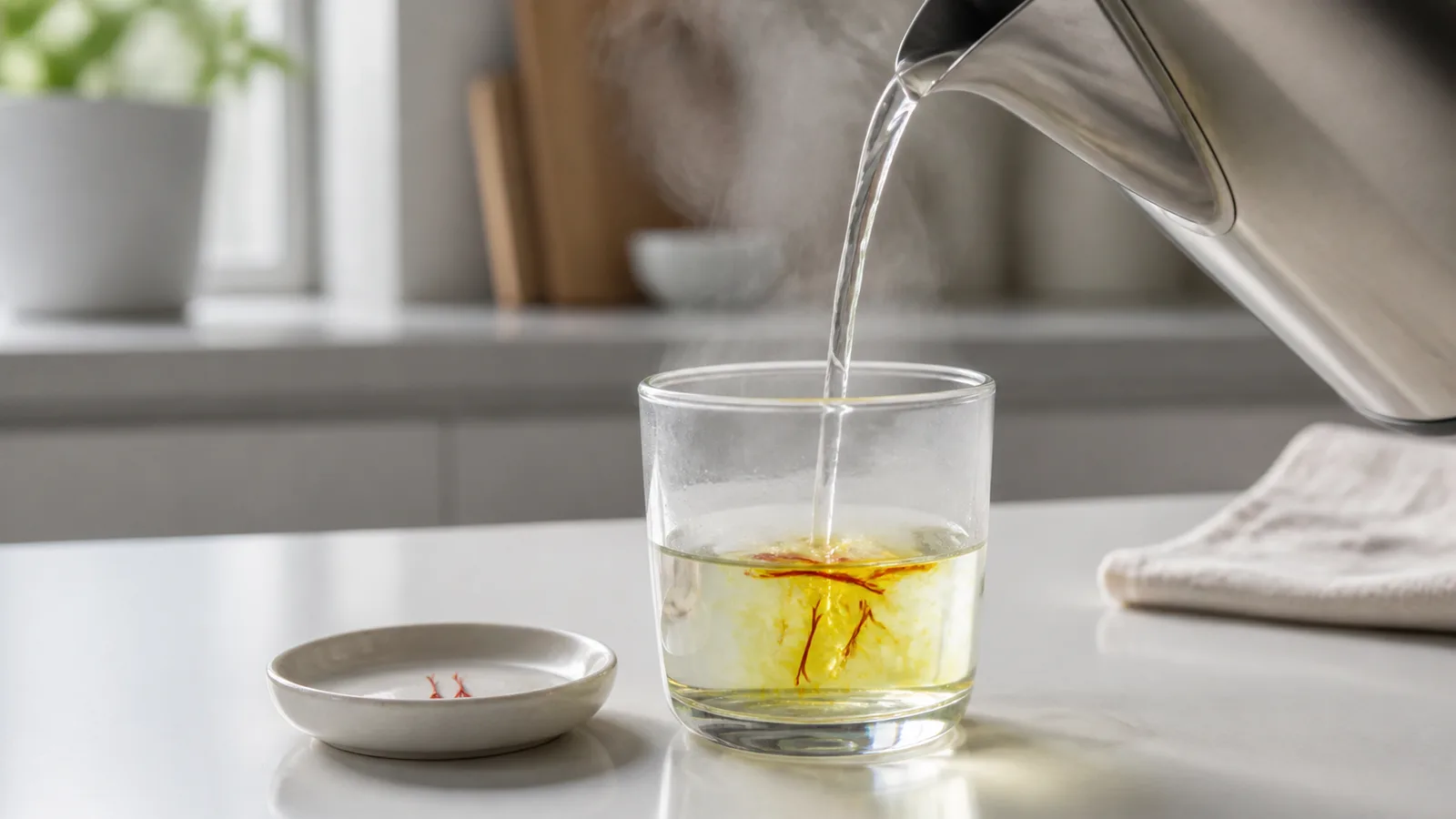
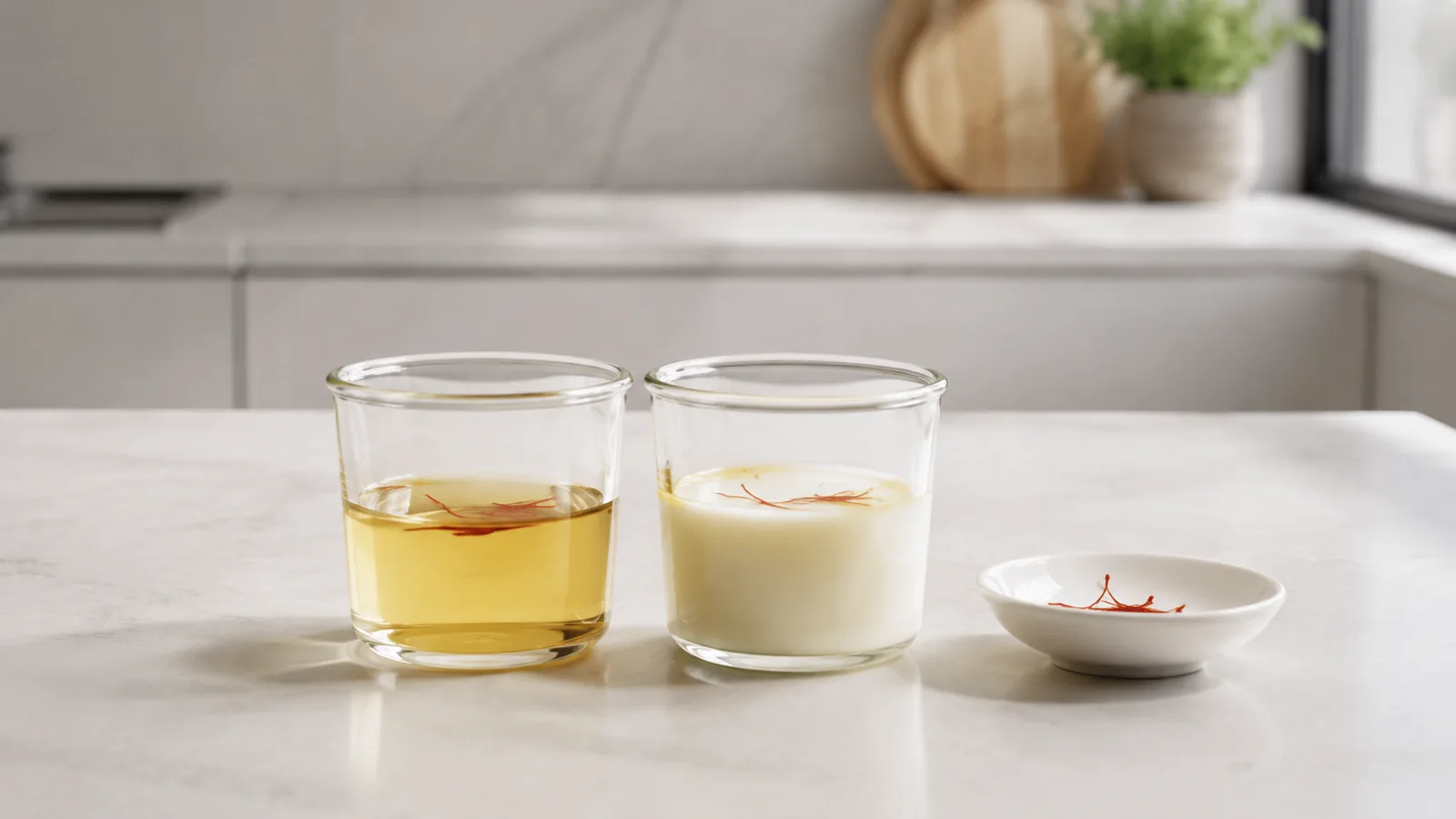
- Cover them with a few tablespoons of warm water, stock or milk.
- Steep under cover for 10 to 15 minutes.
- Add the complete infusion to a moist stage of the recipe.
- Allow it to distribute before deciding whether the next batch needs more.
Choose the liquid already present in the food. Water is versatile, stock suits savoury dishes, and milk works for custard or drinks. The detailed method for adding saffron to a dish explains timing and quantities for different recipes.
Foods Where Saffron Needs More Care
Very smoky barbecue sauces, intensely hot chilli mixtures, strongly bitter greens and heavily aged cheeses can cover saffron’s delicate aroma. The combination is not impossible, but the spice may contribute little beyond colour.
Deep frying is another awkward place for a water-based infusion. Put saffron into a batter, sauce, rice or garnish component instead of dropping wet saffron into hot oil. For a dish with little liquid, mix the infusion through butter, yoghurt, egg or another retained ingredient before it reaches the heat.
How Much Should You Use?
Use the recipe’s tested measurement when one is available. For four servings of a dish where saffron is one of several flavours, roughly 0.05 gram is a sensible trial amount; a saffron-led recipe may use closer to 0.1 gram. Thread counts vary too much for precise batch cooking.
More is not automatically better. An excessive dose can taste bitter or medicinal. Record the weight and infusion liquid when a recipe works, which makes the next batch easier to repeat.
Conclusion
Foods to add saffron to range from biryani, paella and risotto to chicken, fish, lentils, chickpeas, custard, ice cream, bread and tea. Choose a dish with retained moisture, prepare a small infusion, and add it where the flavour can spread without unnecessary boiling. Whole threads for cooking are available on our products page.