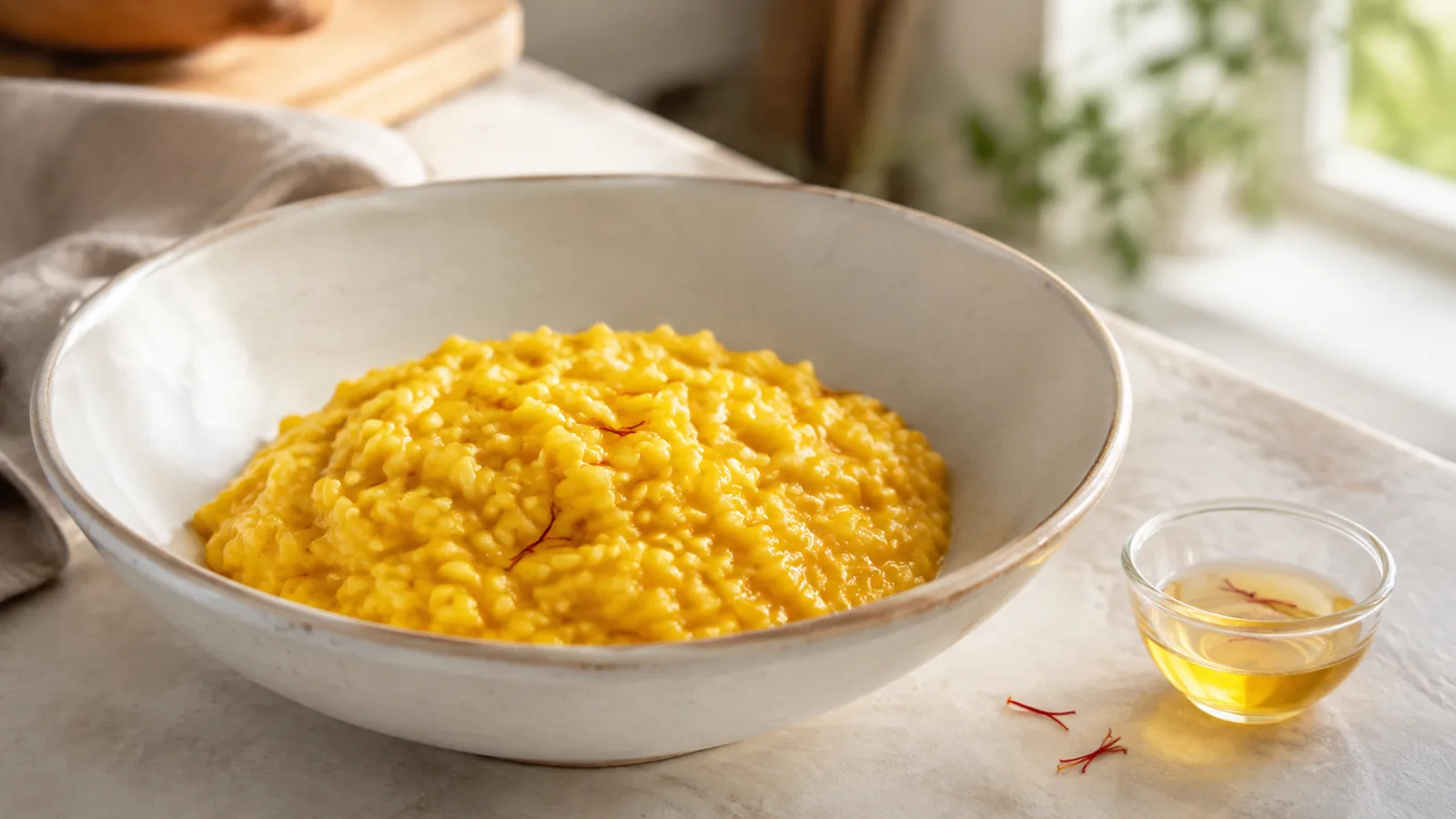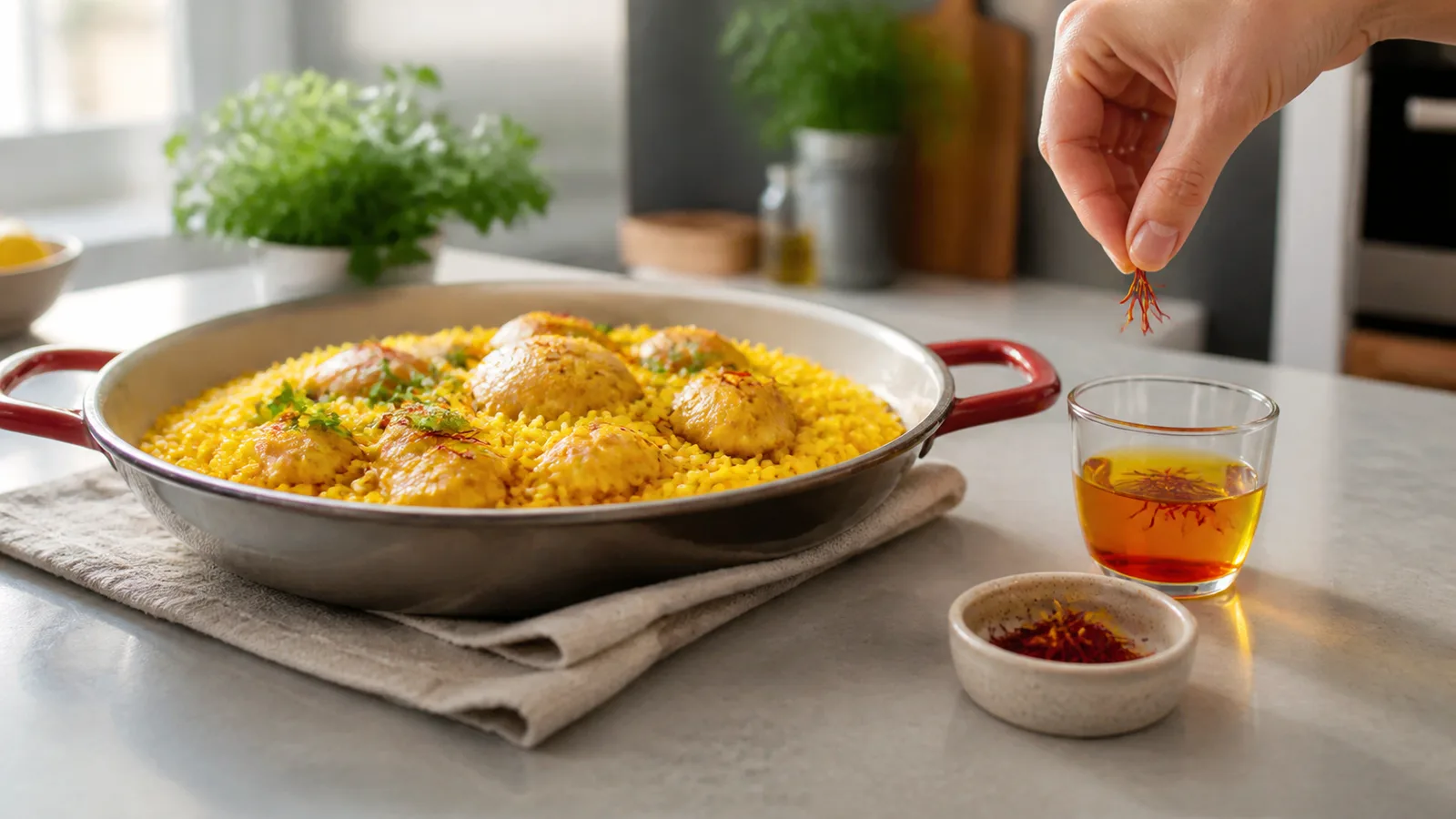
For most home cooking, start with a small pinch of threads rather than a spoonful. As a practical guide, 10 to 15 threads per serving can provide noticeable colour and aroma, although the right saffron quantity for food depends on the dish, the number of servings and the strength of the saffron. It is easier to add a little more infusion than to rescue food that has become bitter.
Saffron does not need to dominate a recipe. Its job is usually to bring a warm floral aroma, a honeyed-earthy note and a clear golden colour while leaving the rice, seafood, dairy or vegetables recognisable.
How much saffron to add to food
Use these amounts as starting points, not rigid rules:
- One serving: about 10 to 15 threads is usually enough for rice, porridge, soup or a milk-based dessert.
- A dish for four: begin with one small pinch, roughly 20 to 30 threads. Bloom it, taste the dish and adjust the next time you cook it.
- A large pot for six to eight: two small pinches may be appropriate when the saffron is spread through plenty of rice, broth or sauce.
- A delicately flavoured drink or custard: start below the general range. A few well-bloomed threads can be more balanced than a heavy dose.
Thread counts are approximate because strands differ in length, thickness and moisture. A loose pinch also varies from one hand to another. For repeatable professional recipes, weighing saffron is more consistent; at home, a modest pinch and a tasting note are often more useful.
Match the amount to the dish
Rice, paella and grains
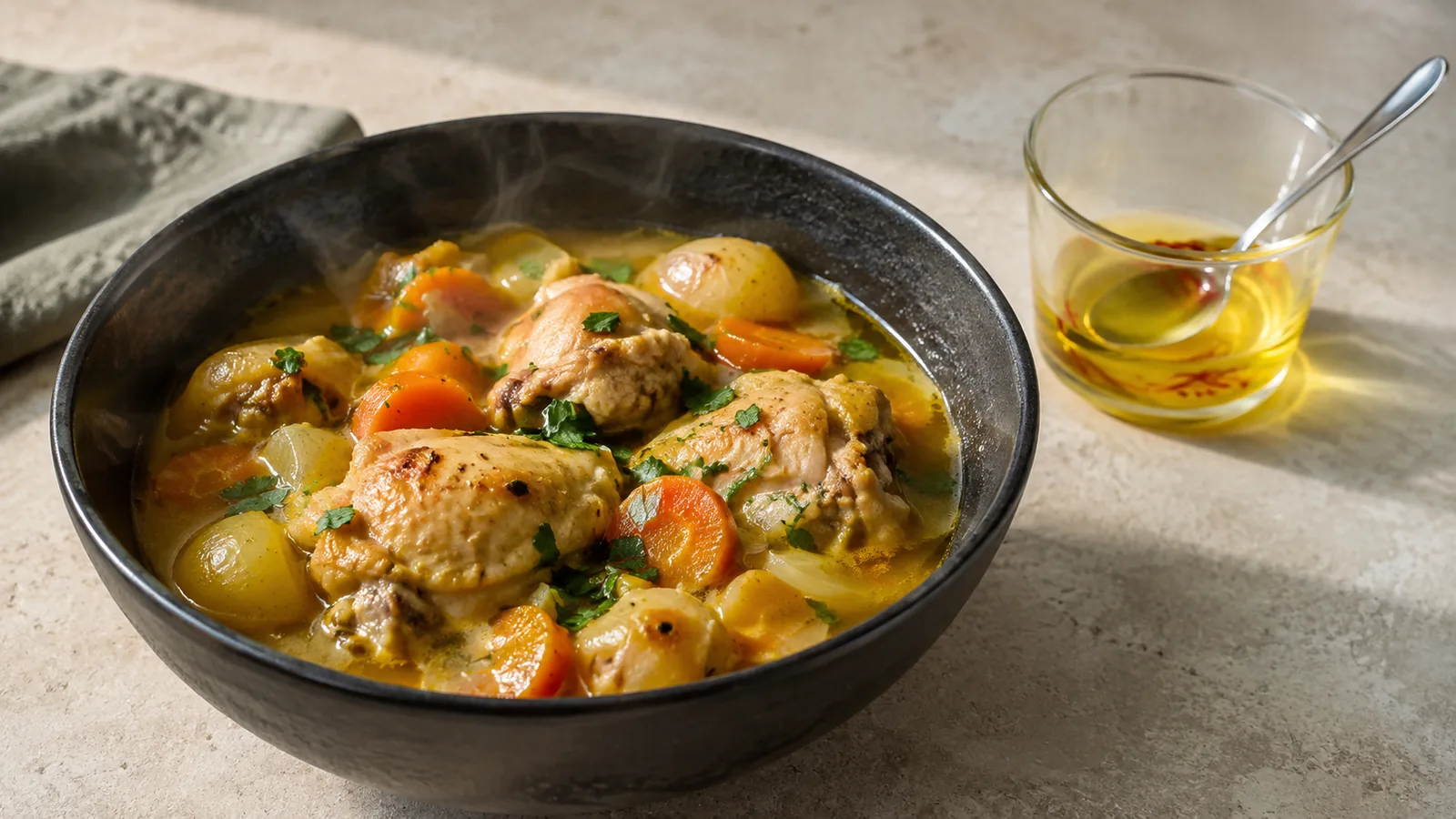
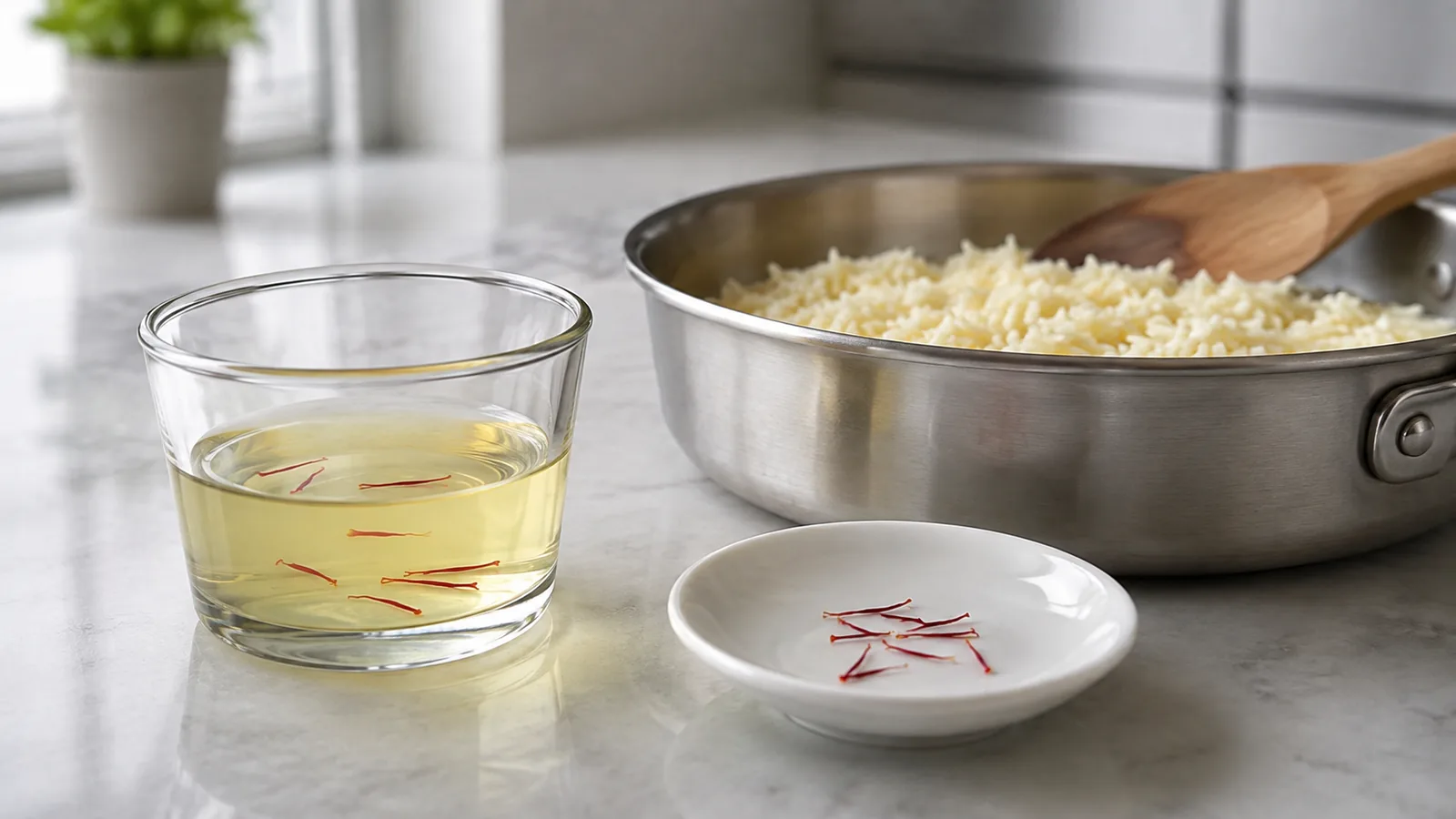
Rice can carry saffron well because the infusion spreads through many grains. For a pan serving four people, begin with a small pinch. Mix the bloomed liquid into the cooking water or drizzle it over part of the cooked rice when you want a marbled effect. Strong stock, smoked paprika or a large amount of tomato may require a little more saffron than plain basmati rice, but increase it gradually.
Soups, stews and sauces
Start conservatively, especially in a concentrated sauce. Add the saffron infusion after the main liquid is in the pan so it disperses evenly. Long cooking will not make a weak batch endlessly stronger, and hard boiling can flatten the most delicate aroma. Stir some infusion in during cooking and reserve a small portion for the final minutes if fragrance is important.
Desserts and dairy dishes
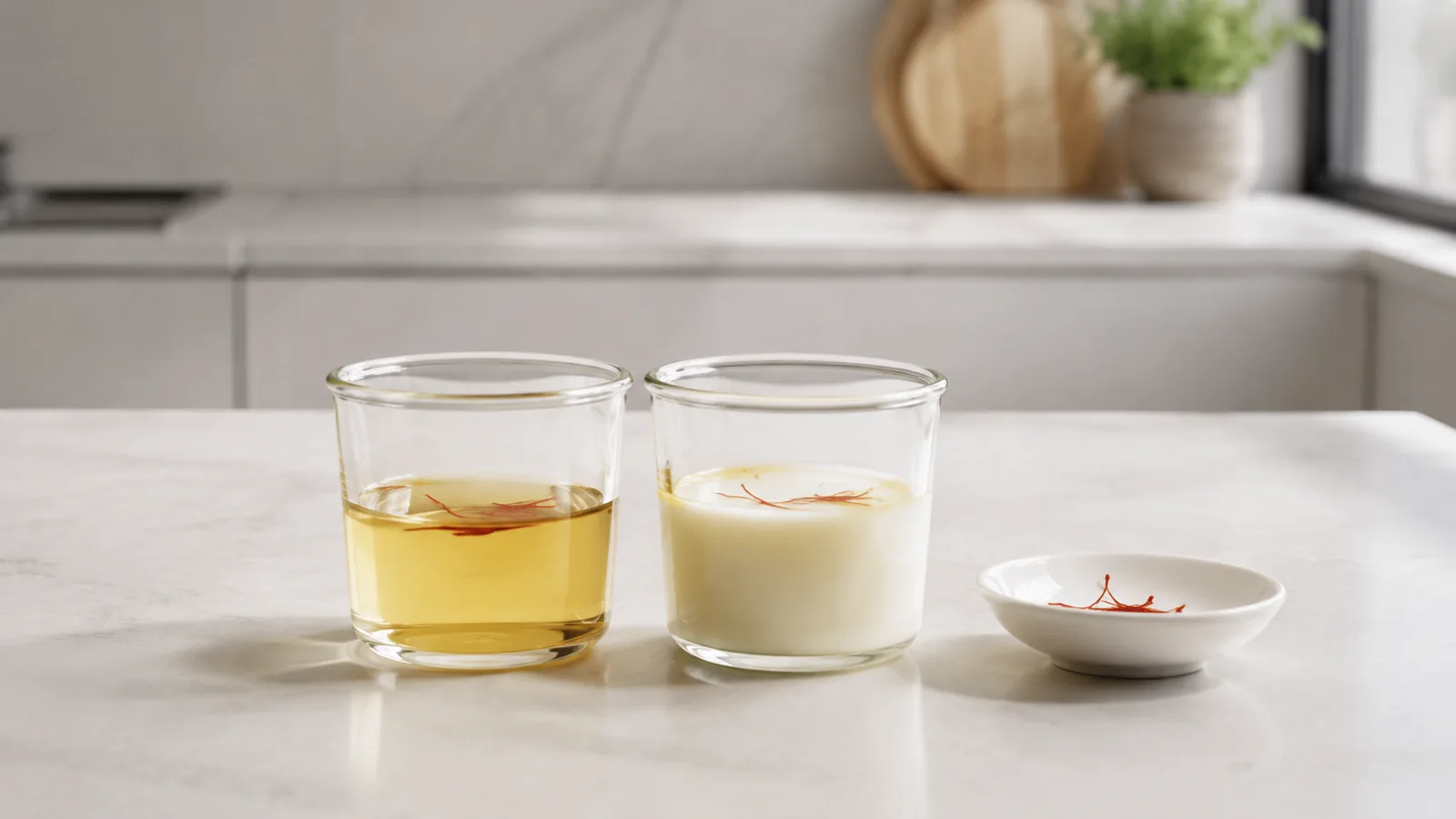
Milk, cream, rice pudding and custard make saffron easy to notice. A few threads per serving may be enough. Blooming in warm milk keeps the flavour integrated and avoids dark strands gathering in one spoonful. Cardamom, rose water and vanilla can all work with saffron, but heavy use of all three can blur their individual character.
Tea and other drinks
For one cup, try three to five threads and allow them time to infuse. The liquid should develop a golden hue and a clear aroma without tasting medicinal. Add more on a later brew if needed rather than crowding the first cup with threads.
Bloom the threads before adding them
Blooming extracts the spice more evenly, so a small amount seasons more food. It also makes the result easier to judge before it reaches the pan.
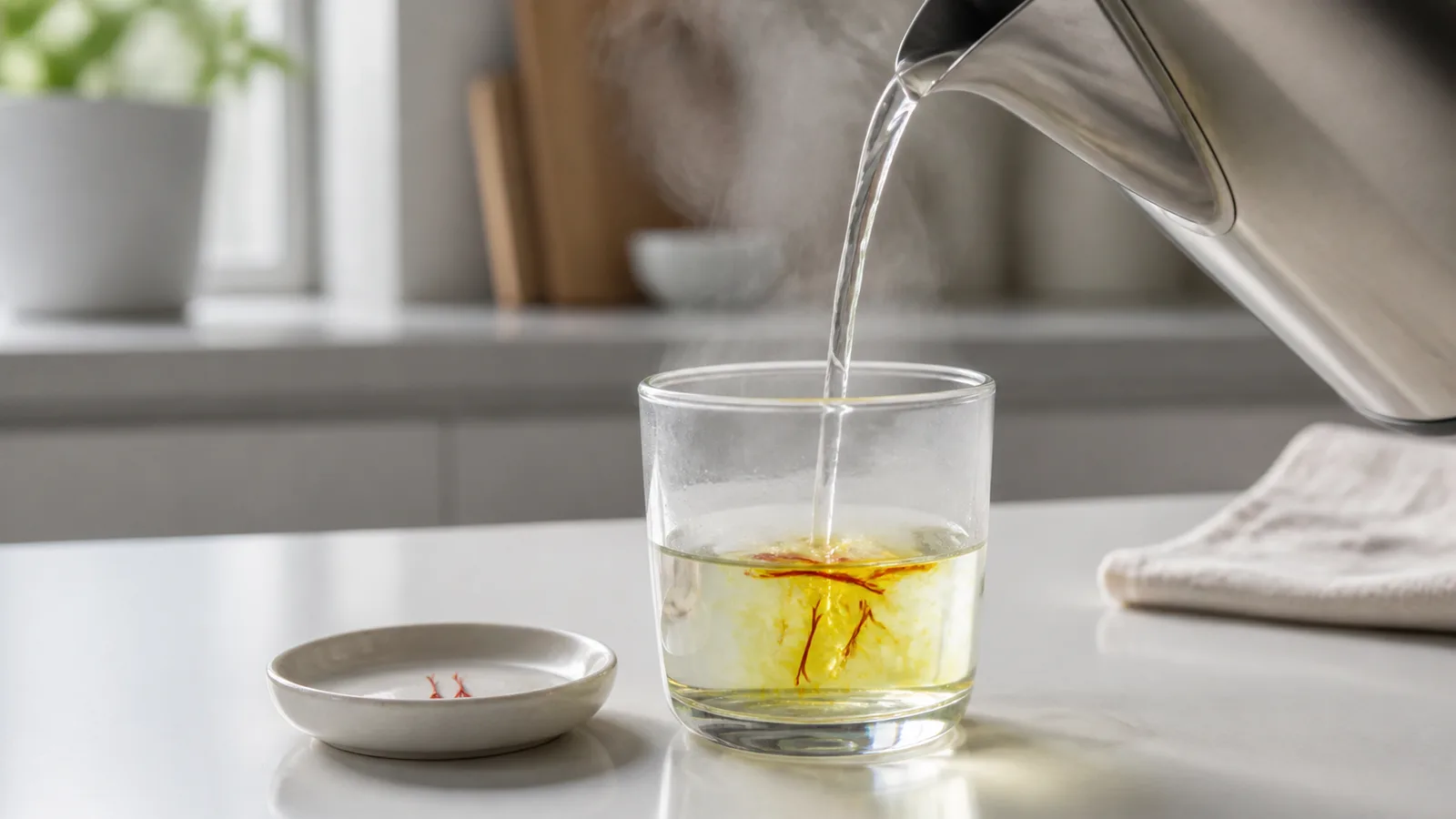
- Lightly crush the measured threads between clean fingers or in a small mortar. Aim for short pieces, not a fine powder.
- Place them in a cup with two to four tablespoons of warm water, milk or unsalted broth.
- Leave the mixture for 10 to 15 minutes. The liquid should become fragrant and turn gold to orange.
- Add both the liquid and the softened threads to the dish, distributing them across the pan rather than pouring everything into one spot.
The liquid should be warm, not aggressively boiling. If the recipe contains very little liquid, bloom the threads in a tablespoon or two and account for that addition when balancing the final texture.
How to tell whether you used enough
Look at aroma and balance before chasing a particular shade. Properly used saffron smells floral and warm, and its flavour sits behind the main ingredients. A pale dish can still carry plenty of aroma, while a very orange dish is not proof that more saffron was needed.
If the food tastes sharply bitter, medicinal or metallic, the amount may be too high, the threads may have scorched, or another ingredient may be responsible. Diluting the dish with more unsaffroned rice, stock or dairy can soften an over-concentrated batch. Next time, reduce the starting pinch and bloom it more thoroughly.
Whole threads, powder and quality
Whole red threads make quantity and authenticity easier to assess. Powder disperses quickly, but its strength is harder to predict and it is easier to overuse. If a recipe gives an amount for threads and you have powder, begin below that visual volume and follow the producer’s directions.
Fresh, well-stored saffron may need less than an older jar. Keep it sealed, dry and away from heat and light. When a familiar recipe suddenly needs much more spice, first check the saffron’s age, aroma and storage rather than automatically doubling the quantity.
A reliable way to find your preferred amount
Make one measured batch, note the number of servings and record the pinch or weight you used. On the next attempt, change only the saffron amount. This small habit is more dependable than treating any universal thread count as perfect for every recipe.
If you are new to the spice, our guide to using saffron in cooking explains the basic handling methods. You can also browse our saffron products when choosing threads for your next dish.