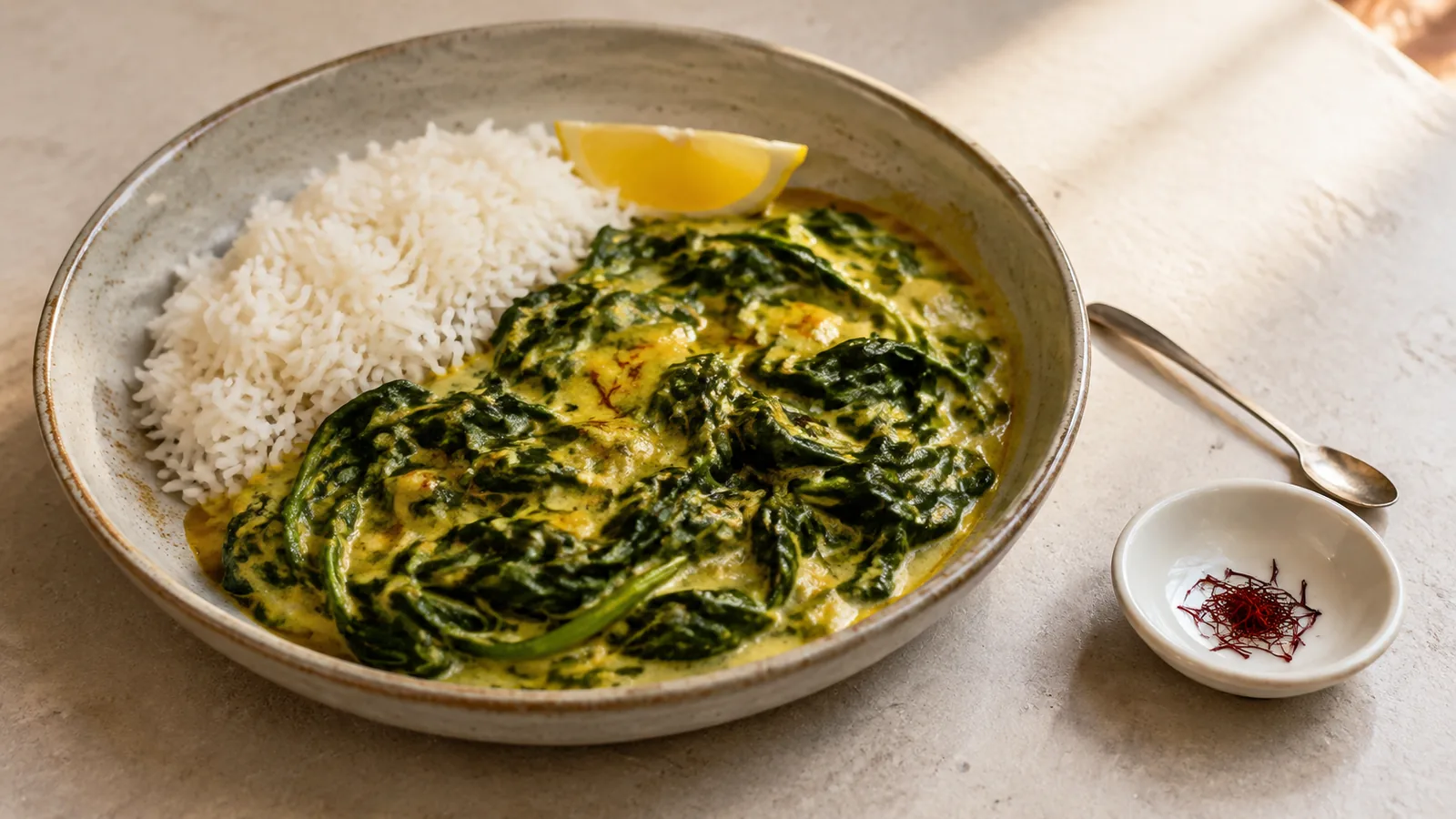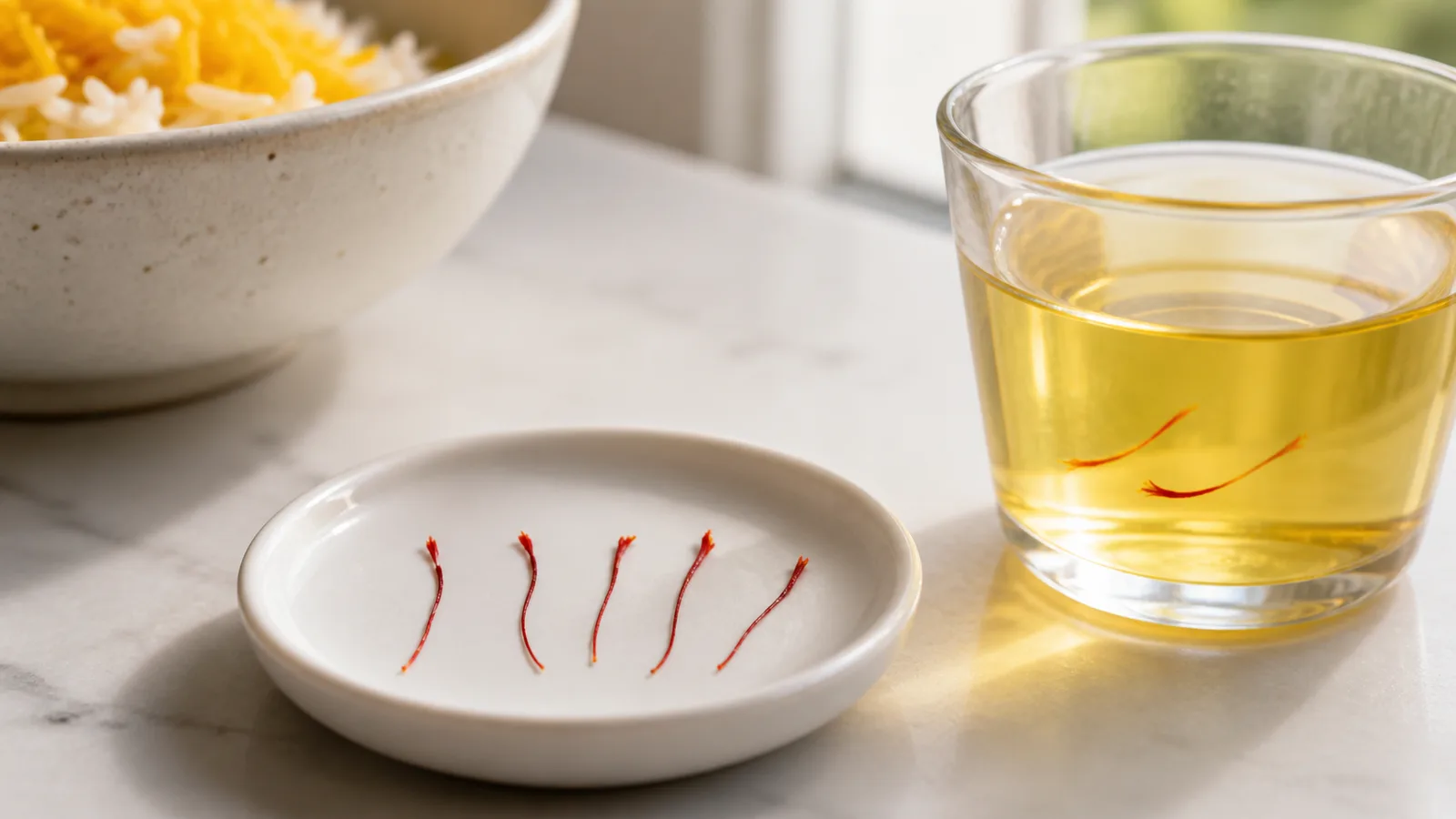
Yes, culinary saffron threads can be eaten directly in a small recipe amount. They are the same dried stigmas used in rice, drinks, and desserts. However, chewing dry threads is not the best way to experience saffron: the flavor is concentrated and slightly bitter, while much of the color and aroma remains trapped until the threads meet warm liquid.
For most people interested in eating saffron directly, the more useful choice is to add a few identifiable threads to food or bloom them in water, milk, or tea. That is culinary use—not a reason to create a daily thread quota or replace the spice with a supplement.
Whether you ask “Can you eat saffron?”, “Can you eat saffron raw?”, or “Can you eat saffron threads?”, the practical answer is the same: yes in a modest food amount, with blooming usually producing the better result.
Can I eat raw saffron?
Yes. Saffron is dried rather than cooked before sale, and the threads do not require further cooking to be edible. Can saffron be eaten raw straight from the container? It can, provided it is food-grade saffron from a source you trust and the amount is the small quantity normally used to season food.
“Raw” does not make saffron more potent, healthier, or easier to absorb. A dry thread tastes sharper and releases less of its character than one that has been allowed to infuse.
Can I eat saffron threads directly?
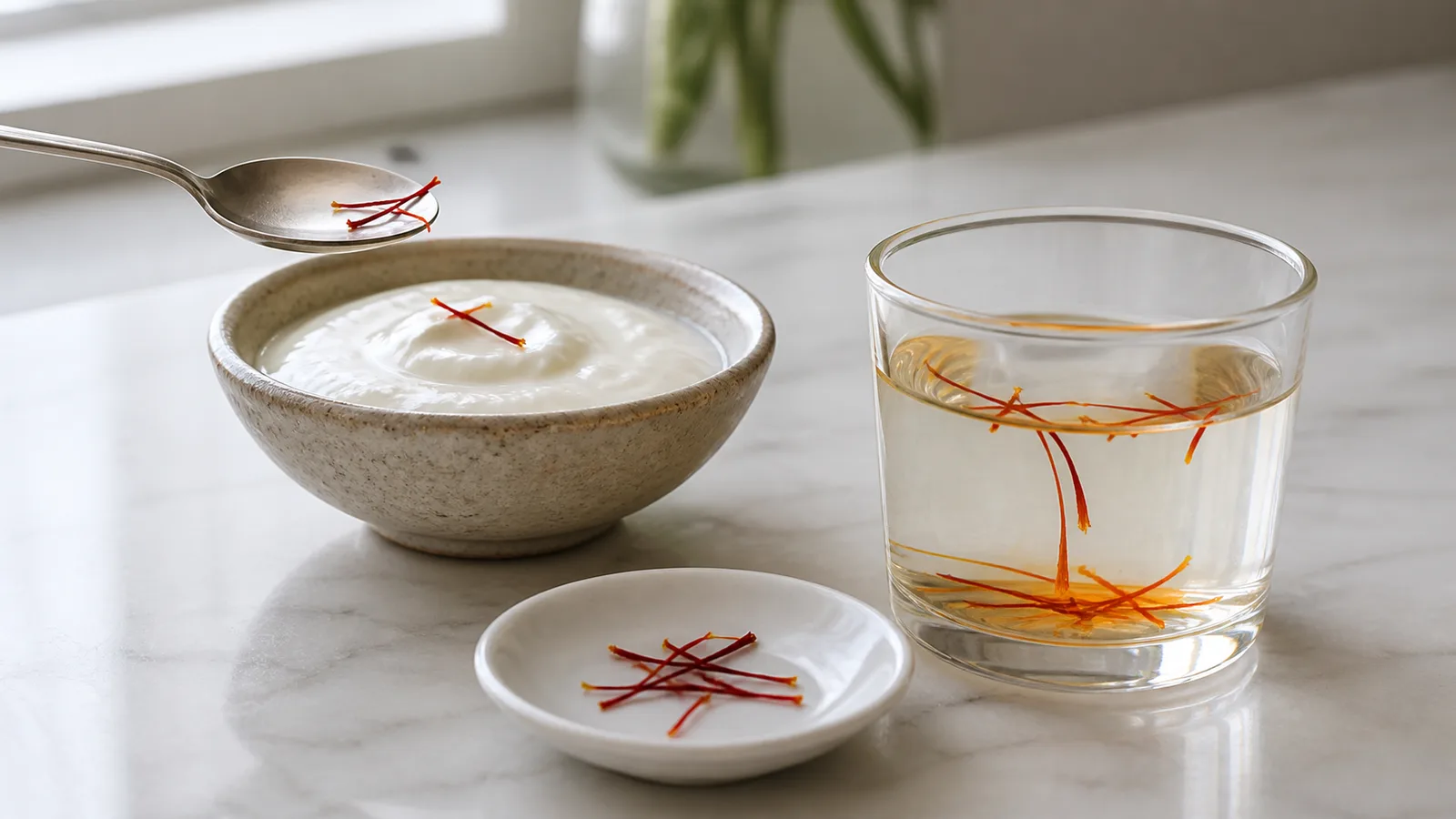
You can eat saffron threads directly by placing two or three on yogurt, porridge, rice pudding, or another moist food. Let them soften for a few minutes if possible. The dish provides the moisture needed to start releasing color and aroma, and you still see the threads you are using.
If you are asking, “Can you eat raw saffron threads?” the answer remains yes in a modest culinary context. Do not assume that counting out “fewer than ten” creates a scientifically established daily dose. Threads vary in size and strength, and there is no nutritional requirement to eat saffron every day.
Can you swallow saffron threads?
A few threads used in food can be swallowed. They do not need to be chewed into a paste. Still, swallowing dry threads offers no clear advantage over using them in a dish or infusion, and it encourages the unhelpful idea that saffron should be taken like a pill.
Never swallow an unknown powder or a product whose label and concentration you cannot identify. Whole culinary threads, ground stigma, tablets, and standardised extracts are different forms and cannot be compared through a strand count.
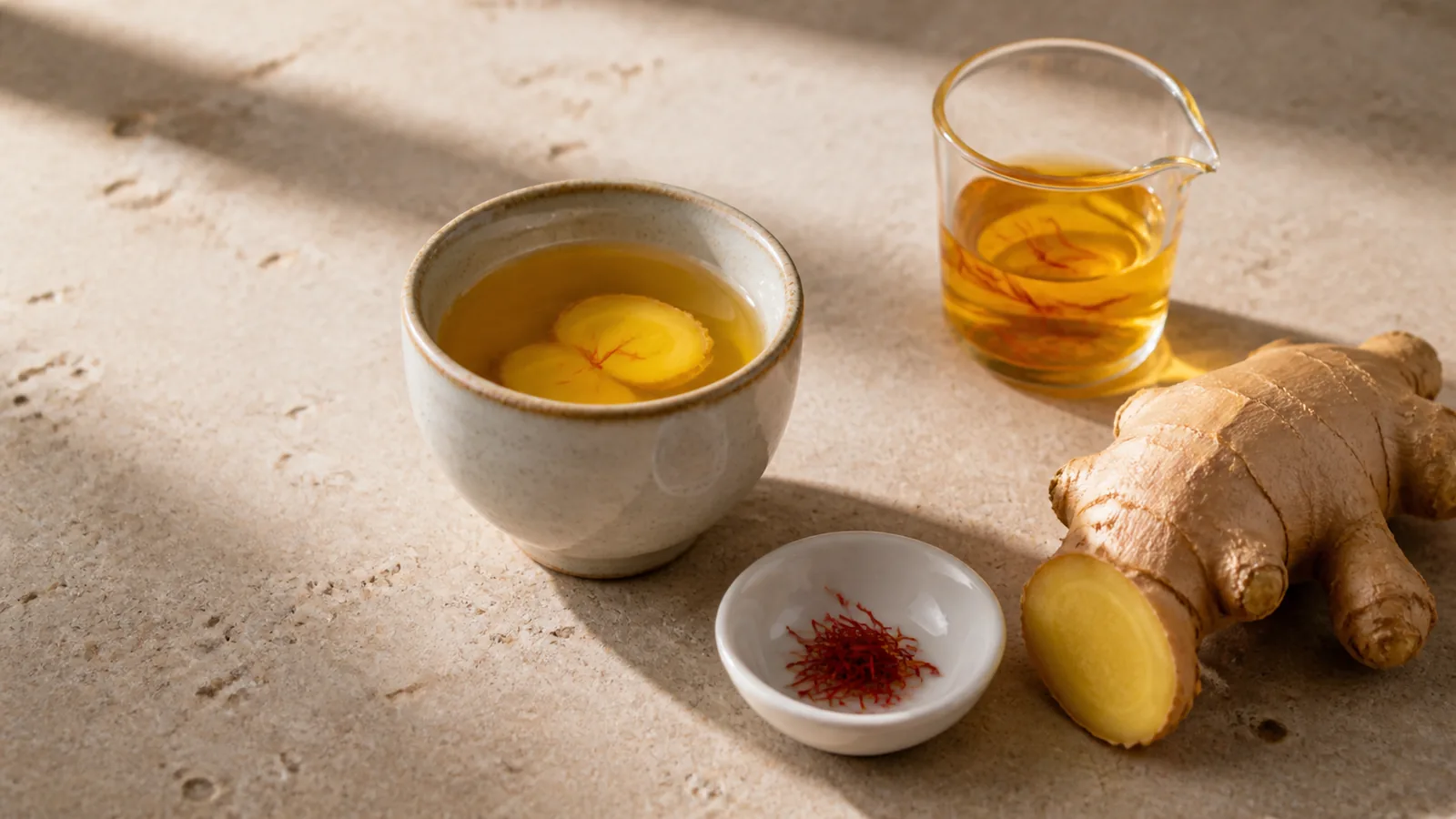
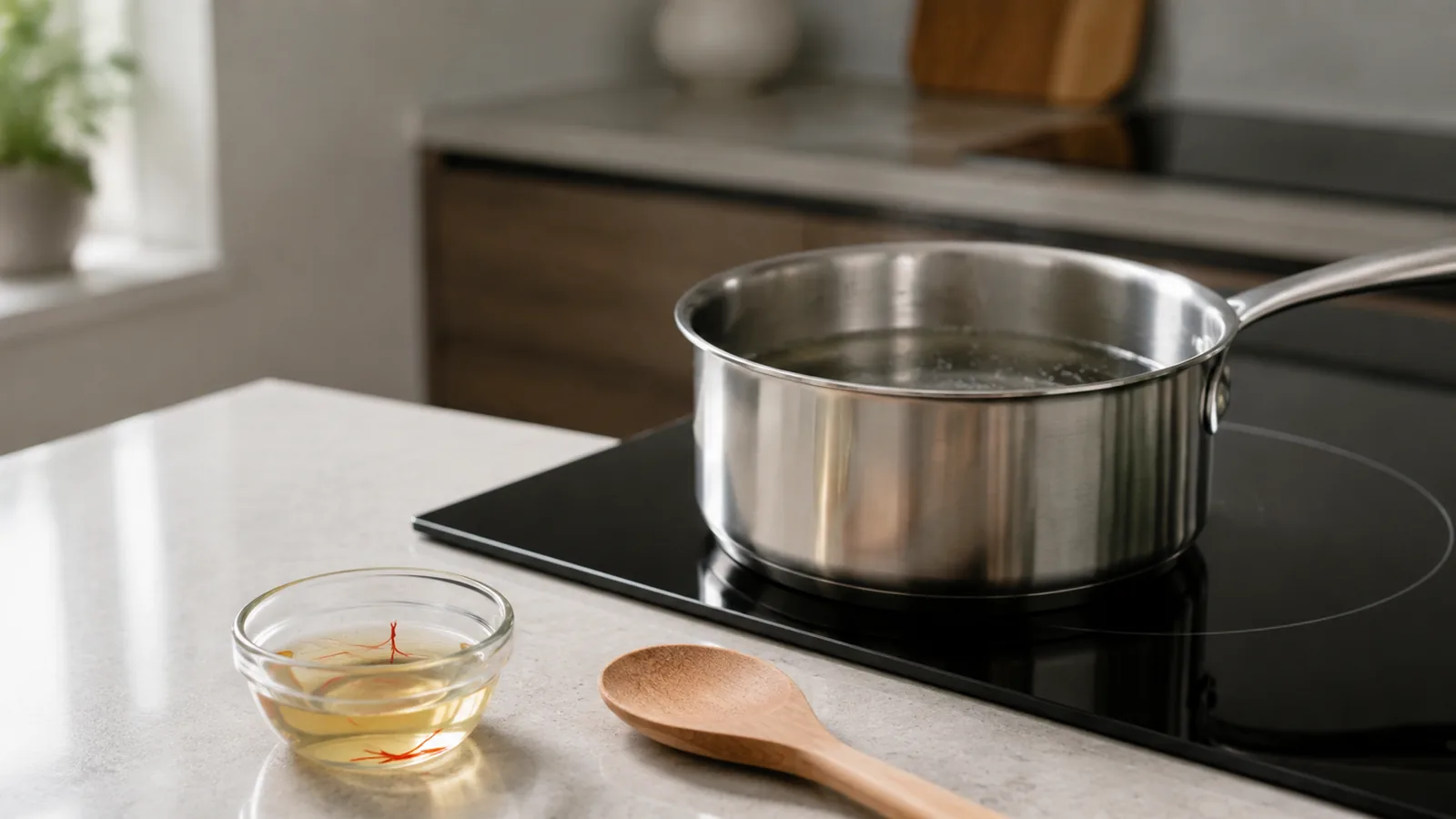
How to bloom saffron instead
- Take a small pinch of saffron threads and lightly crush two or three.
- Place all the threads in a small cup.
- Add a few tablespoons of warm water, milk, stock, or tea. The liquid should not be boiling aggressively.
- Cover and leave it for 10 to 15 minutes.
- Use both the golden liquid and the softened threads.
Blooming is especially useful for rice, soup, stew, milk drinks, custard, and cake batter because it spreads a modest amount through the whole recipe. Count the blooming liquid as part of the recipe when moisture affects texture.
Other easy ways to eat saffron
- Yogurt: bloom the threads in one teaspoon of warm milk, cool briefly, then stir into plain yogurt.
- Milk or tea: steep a few threads before sweetening so you can judge the flavor.
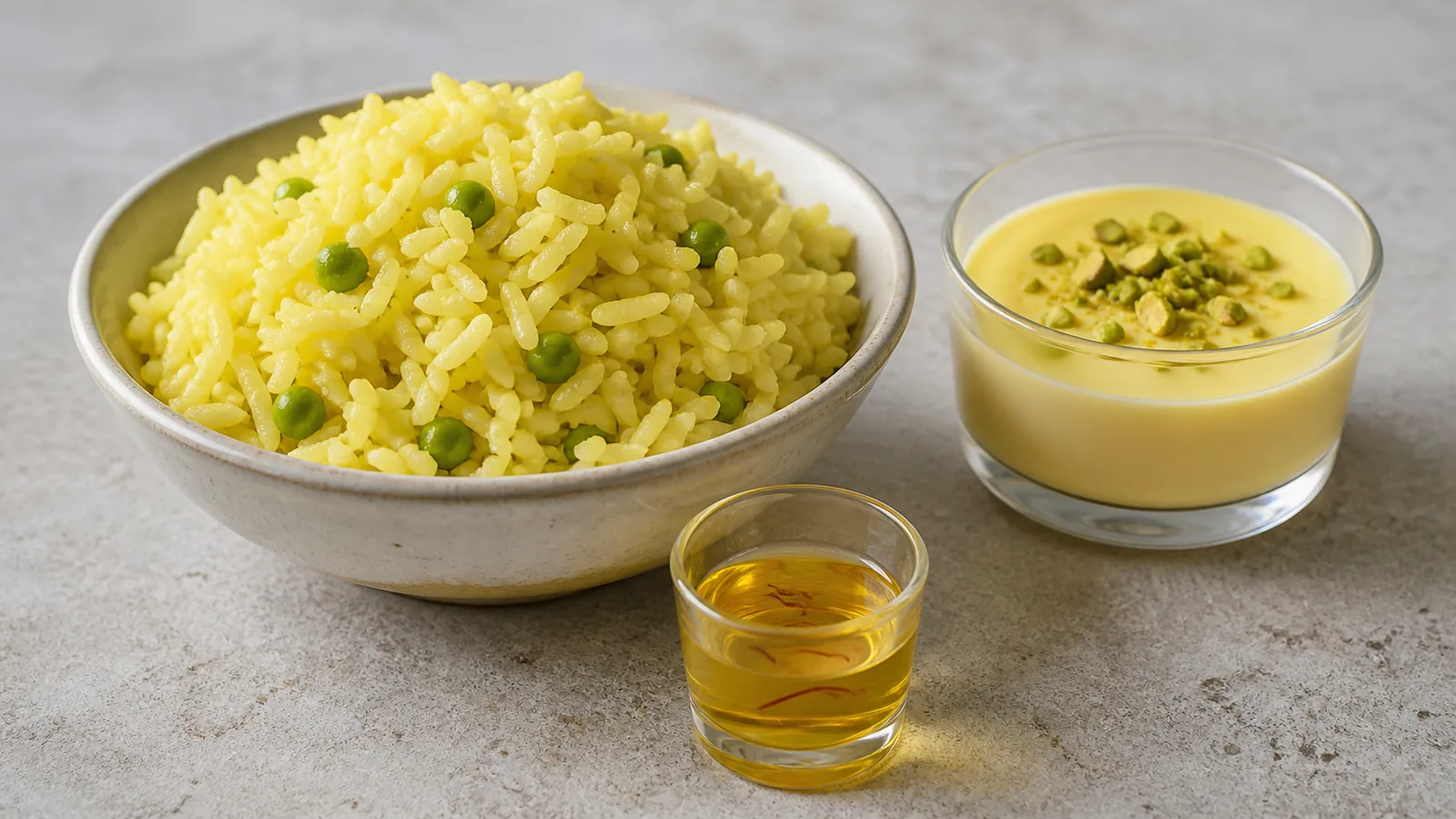
- Rice: add a warm infusion to the cooking liquid or drizzle it over layered rice.
- Dessert: mix the infusion into custard, pudding, ice cream base, or batter.
- Smoothies: bloom first; dry threads can remain uneven and hard to taste.
How much is “a small amount”?
For one serving of food or drink, a few threads are a practical recipe starting point, not a medical dose. For a shared dish, use a small pinch and adjust future batches according to the saffron’s strength and the recipe. If the flavor turns medicinal or sharply bitter, use less next time.
Do not convert a clinical-study amount into a number of threads. Products vary, and research may involve tablets or extracts rather than the loose culinary saffron in a kitchen jar.
What does the safety evidence say?
A 2026 systematic review of saffron adverse events examined 102 clinical trials and one case report. The authors found saffron preparations generally well tolerated, but estimated related adverse events in about 17.5% of participants, most often minor gastrointestinal problems. They advised monitoring for higher-dose or prolonged medicinal use.
That review covers varied preparations and populations. It does not establish that a certain number of raw threads provides antioxidant or mood benefits, nor does it turn direct eating into a better delivery method.
When to be more cautious
Ask a qualified clinician or pharmacist before using saffron as a supplement or in medicinal amounts during pregnancy or breastfeeding, for a child, before surgery, with a significant health condition, or alongside medicines. If you swallow a large or unknown amount or feel unwell, stop taking it and contact a healthcare professional or local poison service; severe symptoms need urgent care.
For ordinary food use, choose dry, fragrant threads and store them sealed away from light, steam, and stove heat. You can browse our products page for culinary saffron.
So, can we eat saffron directly? Yes, in the same modest quantities used to season food. But blooming the threads is usually more flavorful, easier to distribute, and a better fit for the way saffron works in the kitchen.