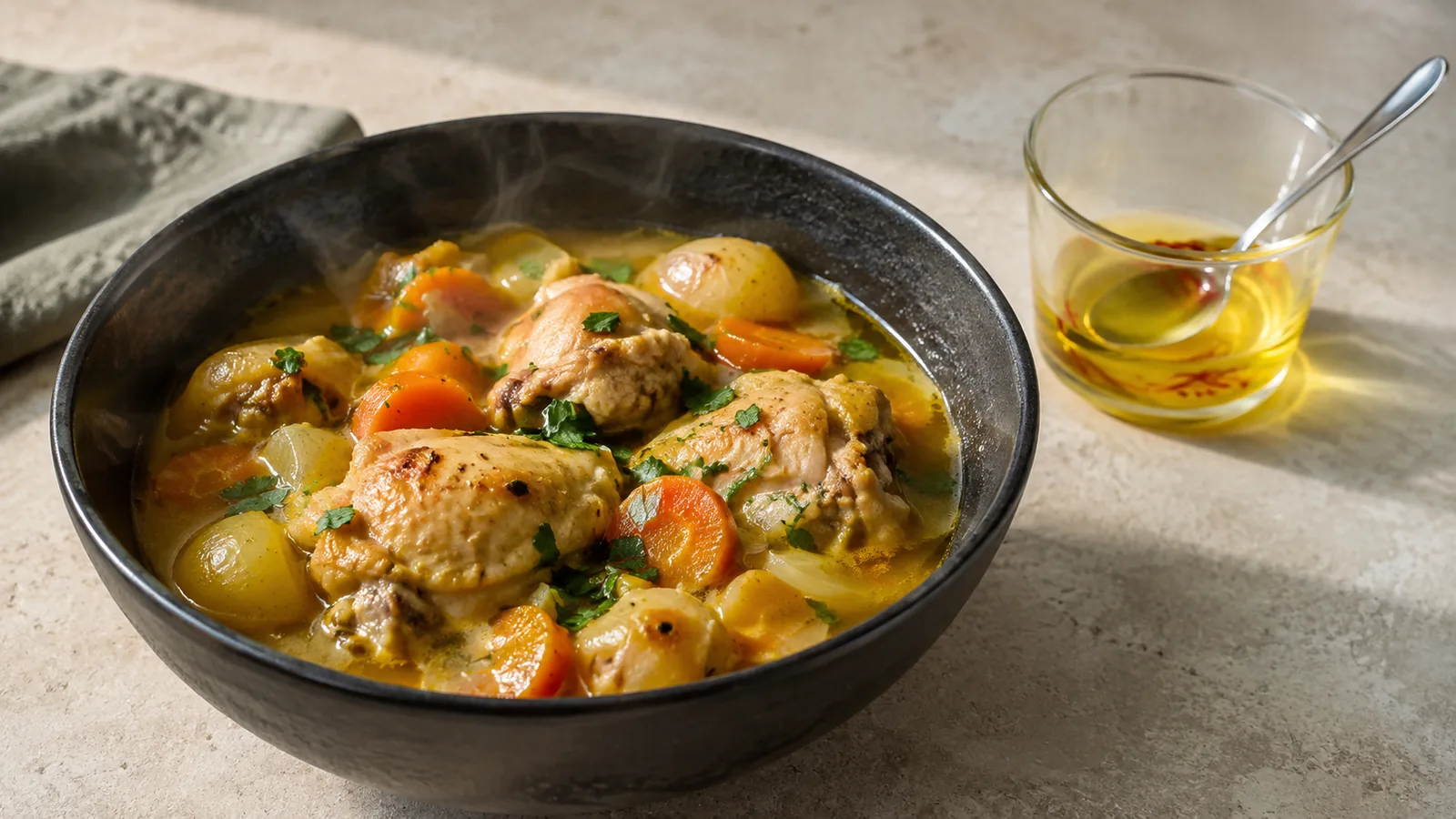
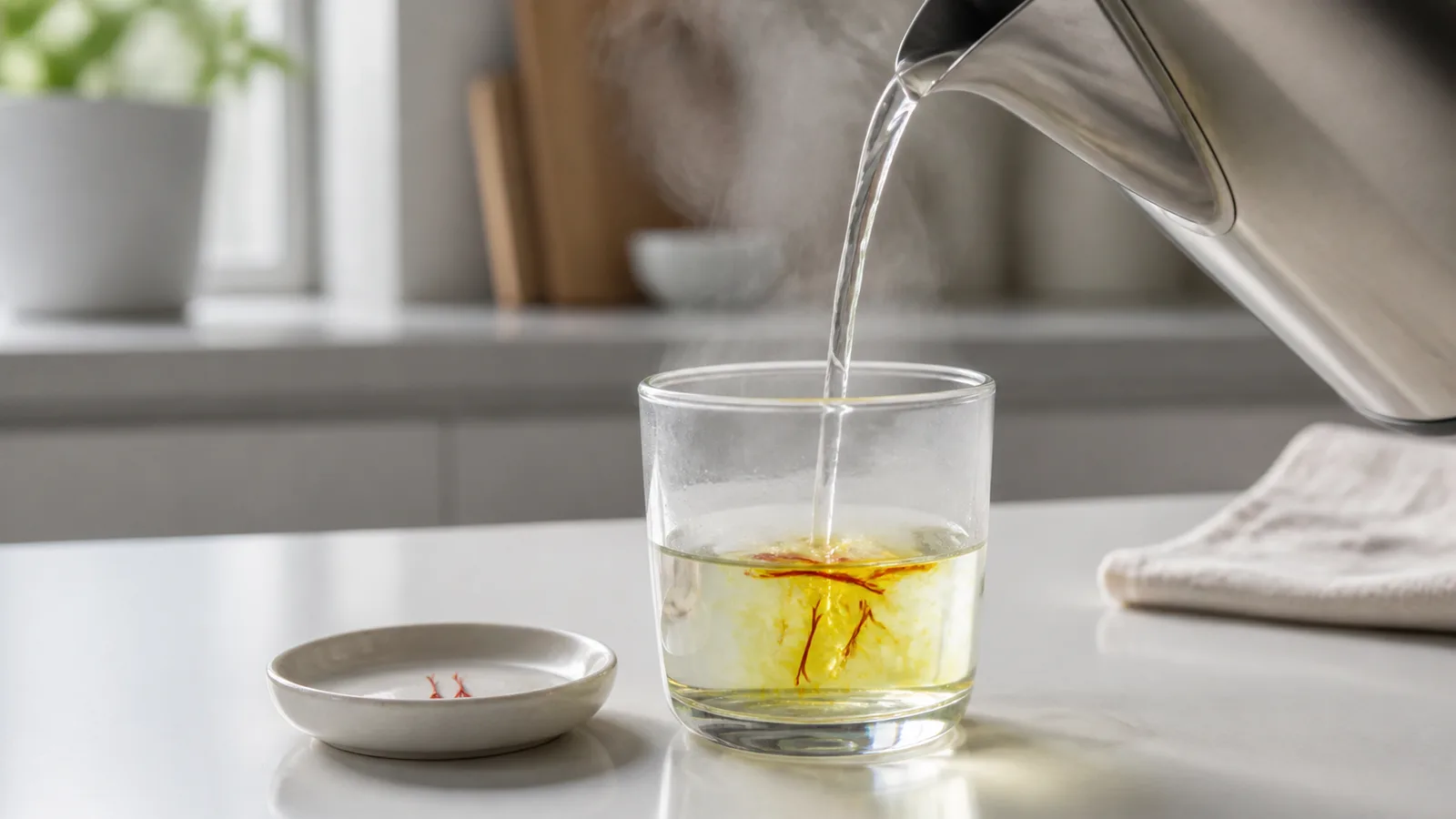
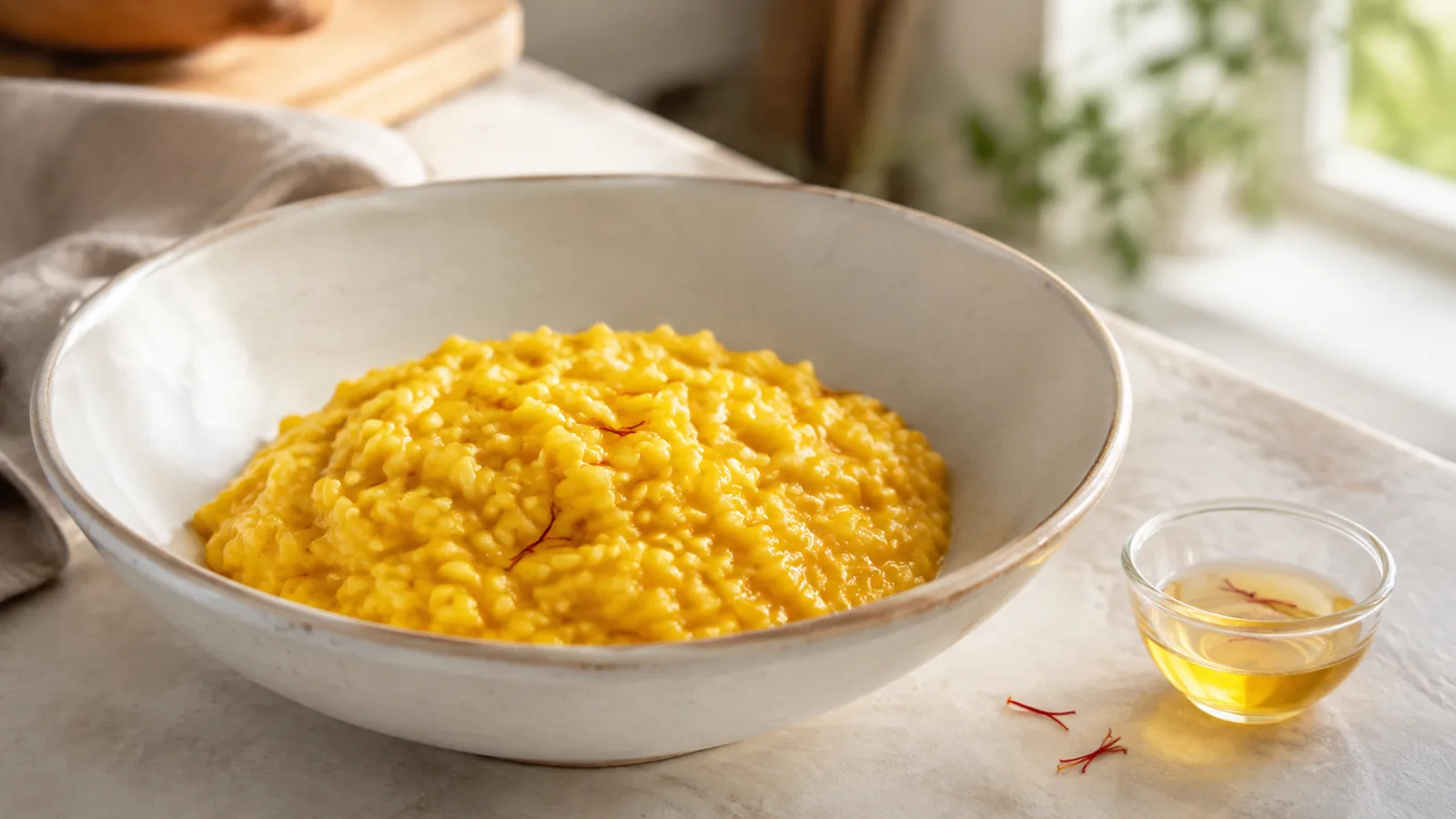
Yes, you can add saffron to hot water. Lightly crush the measured threads, cover them with a few tablespoons of hot water, and steep for 10 to 15 minutes. Add the golden liquid and softened pieces to the food or drink. The water should be hot enough to extract efficiently, but the saffron does not need to sit in a rolling boil.
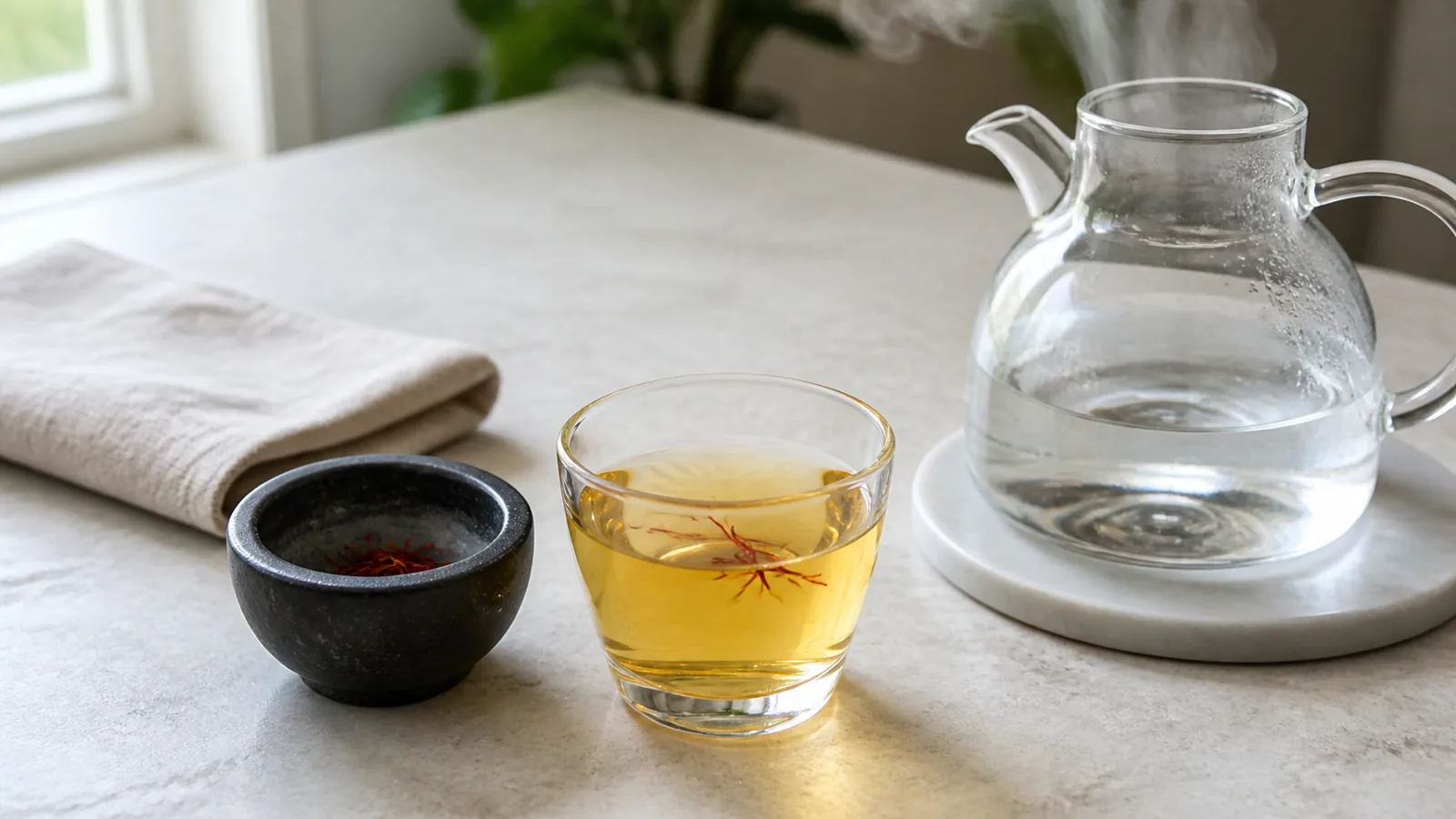
Adding Saffron to Hot Water: How to Infuse Flavor and Color
Adding saffron to hot water creates a small, concentrated infusion that is easy to distribute through rice, sauces, desserts and drinks. It works because important saffron colour compounds are water-soluble; a 2024 culinary study found that water-rich conditions favoured crocin extraction.
The technique is simple, but three details matter: measure before crushing, use only as much water as the recipe can accept, and keep the vessel covered while it steeps. This produces a more controlled result than scattering dry threads through a finished dish.
Why Use Hot Water?
Hot water helps saffron’s pigments, aroma compounds and flavour move into a liquid that can spread evenly. It does not “release natural oils,” as the old explanation sometimes claims. Saffron’s familiar golden colour comes largely from crocins, while volatile compounds contribute to its aroma.
Warm water can also work, but hot water develops the infusion quickly. The useful distinction is between a short covered steep and prolonged boiling. A brief hot-water infusion is controlled; an hour in a hard-boiling pot is not.
How to Prepare a Saffron Infusion
- Measure the saffron required by the recipe.
- Put the threads in a clean, dry mortar and crush them lightly into coarse pieces.
- Bring fresh water to the boil, then take it off the heat.
- Wait briefly and pour two to four tablespoons over the saffron.
- Cover the cup or bowl and steep for 10 to 15 minutes.
- Stir, then add both the liquid and thread pieces to the dish.
The exact water volume should follow the recipe. A soup can accept a looser infusion; cake batter, custard or a reduced sauce needs a smaller amount so its texture stays balanced.
How Hot Should the Water Be?
Freshly boiled water that has rested briefly is practical for a home kitchen. There is no universal magic temperature because the cup, room and water volume change how quickly it cools. You are looking for a clear hot infusion, not a violent boil around the threads.
If you pour boiling water directly over saffron, the spice is not instantly ruined. The greater concern is extended high heat. Research examining saffron during boiling found adverse changes in crocins and safranal with prolonged cooking. For the narrower boiling question, read can you add saffron to boiling water?
What Should the Infusion Look and Smell Like?
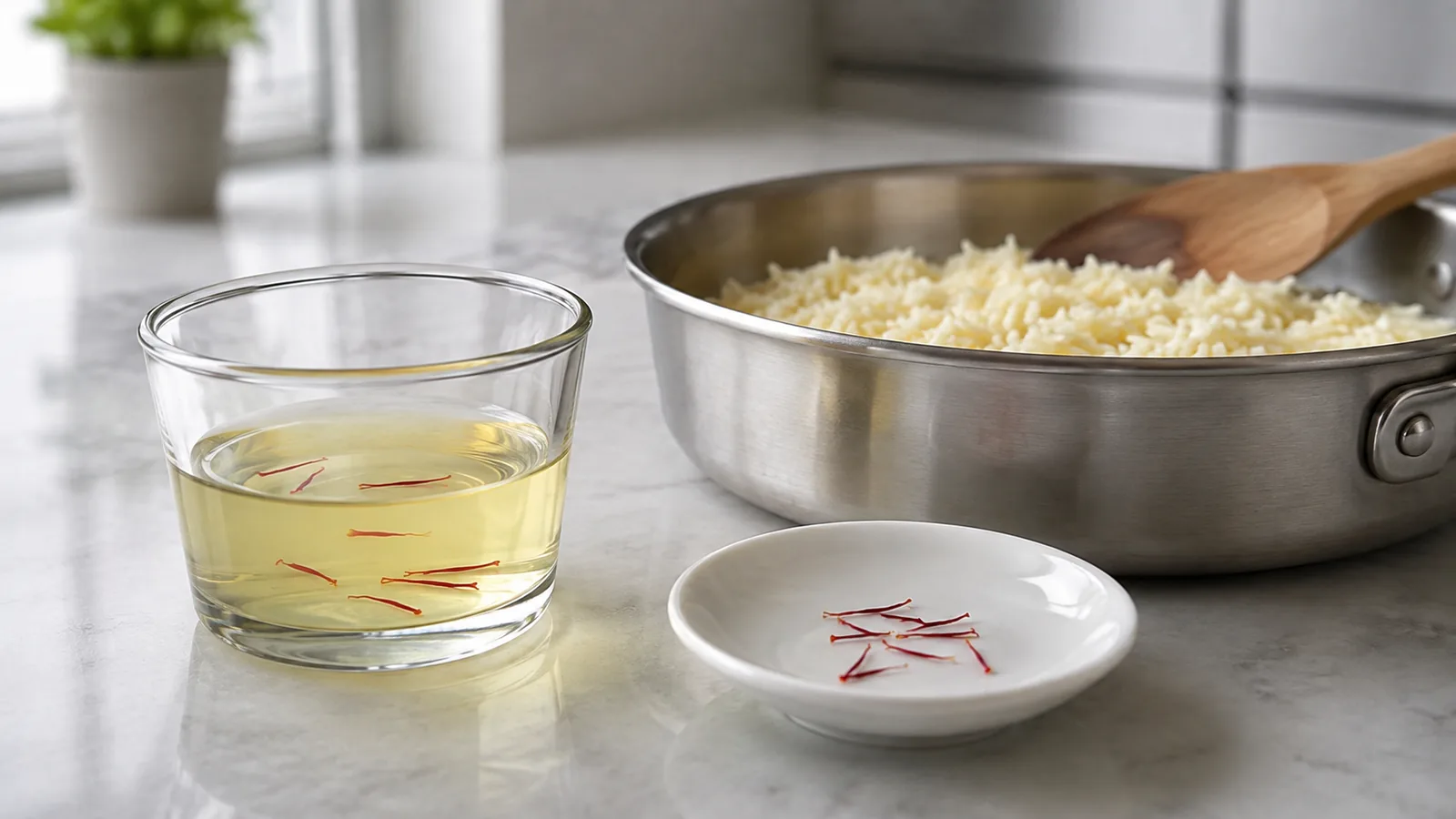
The water usually moves from pale yellow to a clear golden-yellow or orange-gold, depending on the quantity, thread strength, vessel and steeping time. Darker is not automatically better. A tiny cup with more saffron will look deeper than a larger cup using the same dose.
The aroma should be recognisable but not harsh. Saffron is often described as floral, hay-like, honeyed or slightly earthy, with a gentle bitter edge. Instant dark red colour is not the goal, and colour alone cannot confirm quality.
Using the Infusion in Food
Rice, Biryani and Paella
For biryani, drizzle the infusion over selected layers before the final covered cooking stage. For paella or another stock-cooked rice, mix it into the measured liquid before the rice sets. If rice will be boiled and drained, save the saffron for the retained steaming stage instead of losing it in discarded water.
Soup, Sauce and Savoury Cooking
Stir the saffron water into a moist part of the dish where it can disperse. A soup, stew or sauce can take it during a later simmer; chicken and seafood dishes often use it in stock, yoghurt, marinade or finishing sauce. Avoid pouring a water infusion into hot oil by itself.
Custard, Pudding and Baking
Custards and puddings need precise liquid balance, so keep the infusion concentrated and count it as part of the formula. In cakes, buns and biscuits, mix it into milk or another wet ingredient before adding that component to the batter or dough.
Saffron Tea and Other Drinks
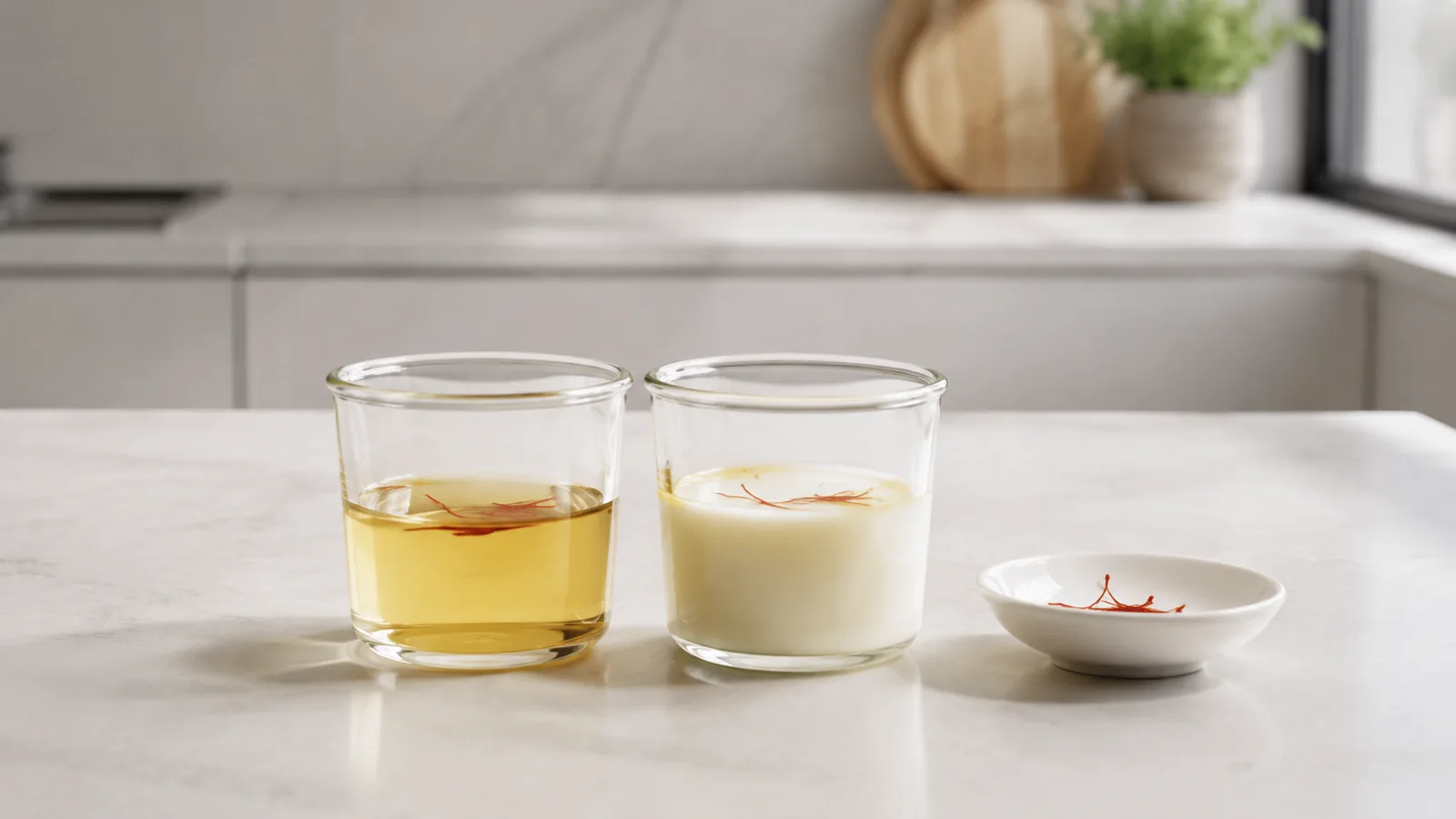
For saffron tea, the infusion can become the drink itself or be combined with black tea, green tea, ginger or citrus. For a milk drink, steep in a small amount of warm milk instead when extra water would dilute the texture.
When to Add the Saffron Water
Add it early enough to spread, but avoid more high-heat exposure than the recipe needs. A rice dish may require the infusion before steaming, while a long stew can take it near the end. Baking is different: the infusion must enter with the wet ingredients so it distributes before the structure sets.
“Always add it at the end” is therefore too rigid. Match the moment to the food, remaining cook time and ability to stir. The fuller guide to when to add saffron during cooking covers each method separately.
Hot Water, Warm Water or Ice?
Hot and warm water are both dependable. Hot water is faster; warm water is easy to prepare ahead of the final cooking stage. Ice is sometimes promoted as inherently superior, but a slow melt is a different method rather than a guaranteed upgrade.
For routine cooking, measurement, light crushing, water-rich extraction and a covered steep matter more than chasing a theatrical technique. Choose a method that fits the dish and that you can repeat.
Tips for Best Results: Common Mistakes to Avoid
- Using too much water: keep the infusion concentrated for recipes sensitive to liquid.
- Boiling the threads for a long time: use a short steep or add the infusion later.
- Leaving the vessel uncovered: cover it while the aroma develops.
- Adding it to liquid that will be discarded: use a retained stage of the recipe.
- Judging by colour alone: taste and aroma are part of the result.
- Guessing the dose: measure before crushing so the next batch can be repeated.
Conclusion
Adding saffron to hot water is a practical way to develop and distribute its colour, aroma and flavour. Crush a measured portion lightly, steep it under cover for 10 to 15 minutes, and use the complete infusion in a part of the recipe that remains. Hot water helps; prolonged hard boiling is unnecessary. Whole threads suitable for cooking are available on our products page.