Saffron’s rate is high because a very small harvest requires many flowers, fast hand work, careful separation and controlled drying. Quality testing, purity, packaging, crop risk and the trading route add further cost. The price is not simply a luxury mark-up: most of the finished weight comes from three tiny stigmas in each flower.
High Saffron Price: Reasons Behind Its Cost
The main factors affecting saffron price begin in the field and continue through processing, quality control and sale. They do not affect every lot equally. A large wholesale order at harvest time and a small retail jar in another country carry different costs even when both contain genuine saffron.
It also helps to compare saffron by use rather than by kilogram. A recipe normally uses a fraction of a gram, so the shelf price can look dramatic while the spice cost per dish remains much smaller.
1. Each Flower Produces Very Little Saffron
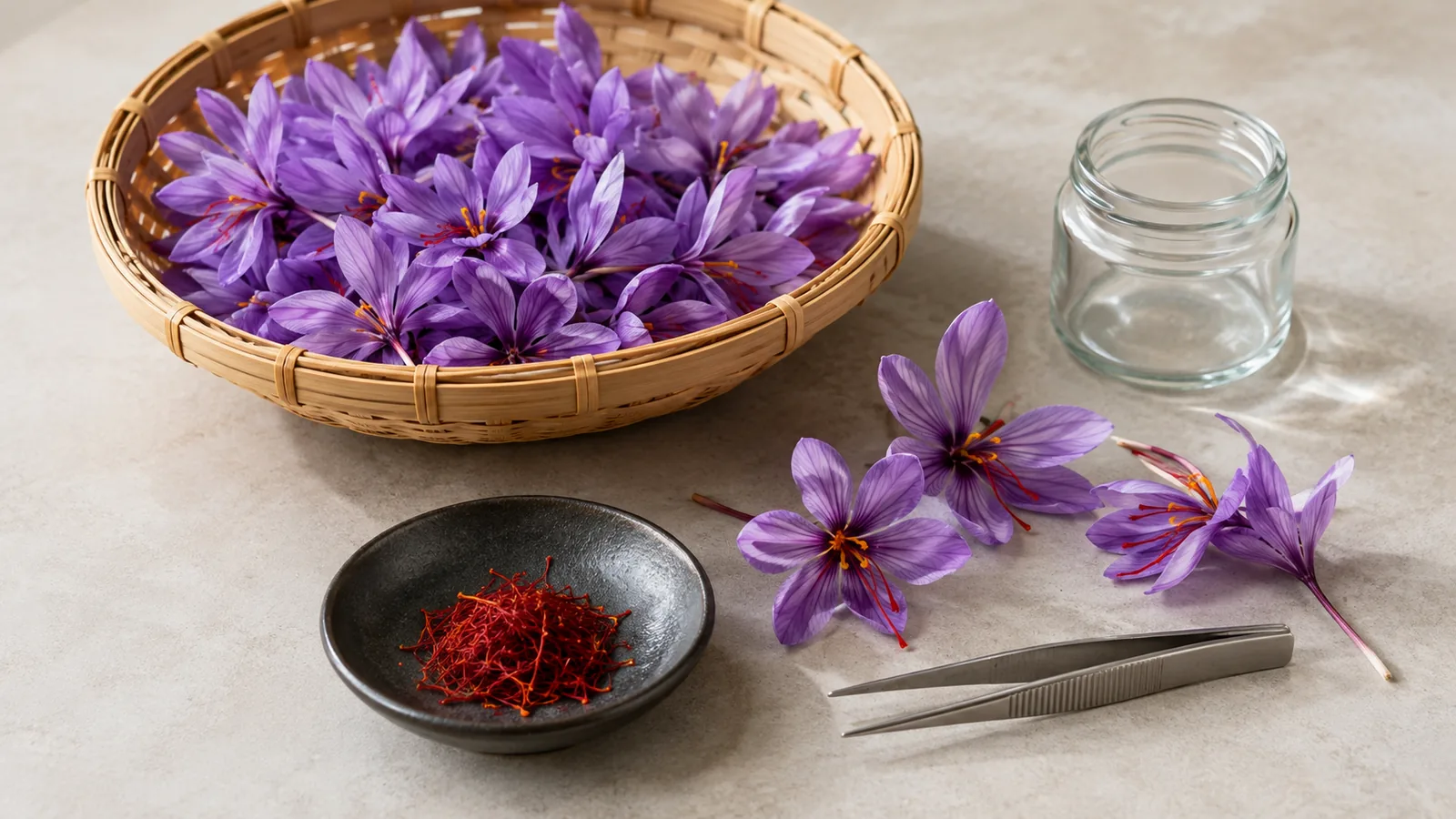
Crocus sativus produces three red stigmas in each flower. Those stigmas are the part collected, separated and dried as saffron. An FAO publication reports that workers must process roughly 150,000 to 170,000 flowers for one kilogram of finished spice.
This low yield explains why even a healthy field does not translate into a heavy crop. Flowers, petals and other plant material make up almost all of the harvested mass, while the saleable stigmas are tiny.
2. Harvesting and Separation Need Fast Manual Work
Flowers open during a short seasonal window and must be collected promptly. After harvest, the red stigmas are separated from the petals and unwanted style material. These steps require dexterity because careless handling can contaminate or damage the product.
Peer-reviewed research on saffron production describes both flower collection and stigma separation as time-consuming; one review estimates approximately 370 to 470 working hours across the operations needed for one kilogram. Labour conditions and wages differ by region, but the manual workload remains a central part of the price.
3. Fresh Stigmas Lose Weight During Drying
Fresh plant tissue contains moisture. Drying makes saffron stable enough to store and helps its characteristic aroma develop, but it also reduces the sellable weight. Producers therefore begin with substantially more fresh material than the final jar contains.
Drying must be controlled. Too much moisture can affect storage and unfairly increase weight; excessive heat or poor handling can damage colour, aroma and flavour. Equipment, trained attention, hygienic handling and rejected batches all carry costs.
4. Cultivation Has Yield and Timing Risks
Saffron can grow in more than one country, so “it grows in only one place” is inaccurate. Commercial cultivation includes Iran, India and Spain, as well as producers such as Afghanistan, Greece and Morocco; scale and methods vary. Production is nevertheless concentrated in regions with suitable seasons, soil, water management, corm health and an available harvest workforce.
Weather during flowering, disease, corm quality, field age, labour availability and the timing of harvest can change yield and quality. The crop also requires planning beyond one picking day: growers establish and maintain the field before a saleable harvest reaches the market.
5. Colour, Aroma, Flavour and Purity Affect Value
Not every saffron lot has the same composition or sensory strength. Thread condition, the amount of yellow style, moisture, foreign matter, drying and storage can all affect what the buyer receives. Intact deep-red threads may also be easier for a customer to assess visually than powder.
The current ISO 3632-1:2025 saffron specification covers requirements for dried saffron in filament, cut-filament and powder forms, with storage and transport recommendations. Testing and documented quality systems cost money, but they are more meaningful than vague labels such as “super premium” used without evidence.
6. Adulteration Risk Adds Verification Cost
Saffron’s value makes it a target for substitution, added material, artificial colour and excess moisture. Buyers and responsible sellers may use supplier controls, sampling and laboratory tests to manage that risk. ISO explains that the 3632 framework helps evaluate saffron’s purity, moisture and colour, aroma and flavour characteristics.
Testing does not make every claim on a package true, and appearance alone cannot prove origin or grade. It does, however, explain why traceable, tested lots may cost more than unidentified powder offered without supporting information.
7. Packaging Protects a Small, Sensitive Product
Saffron needs protection from moisture, light, heat and contamination. Food-safe containers, seals, labels, batch records and appropriate storage add little weight but real cost. Small jars are also more expensive to fill, label and handle per gram than a bulk container.
Good packaging should protect the spice rather than create unnecessary bulk. The customer is paying for the saffron and its verified handling, not for a decorative box alone.
8. Origin, Season and Supply Chain Change the Rate
The saffron rate can move with harvest size, quality distribution, local costs, exchange rates, freight, insurance, duties and the number of intermediaries. Retail prices also include the work of importing, testing, storing, packing and serving small orders.
Country of origin can affect reputation and market demand, but origin by itself does not prove quality. Two lots from the same region may differ because of harvest timing, drying, thread selection and storage.
Why Do Retail Prices Differ So Much?
First compare the same weight and form. A price for 0.5 gram of whole threads cannot be compared directly with a price for several grams of powder or a wholesale kilogram. Check whether tax and shipping are included and whether the product provides origin, lot and testing information.
Very low prices deserve scrutiny, but the highest price is not automatic proof of the best saffron. Look for clear weight, intact product information, sensible packaging, seller traceability and quality evidence rather than relying on dramatic marketing language.
How to Judge Value Without Wasting Money
- Compare price per gram at the same order size.
- Check whether the offer is threads, cut threads, powder or an extract.
- Look for a clear net weight, origin and batch identity.
- Ask what quality or purity evidence supports the description.
- Buy an amount you can keep airtight, dry, cool and dark.
- Measure recipes so an expensive ingredient is not lost through guesswork.
Does Expensive Saffron Cost a Lot per Dish?
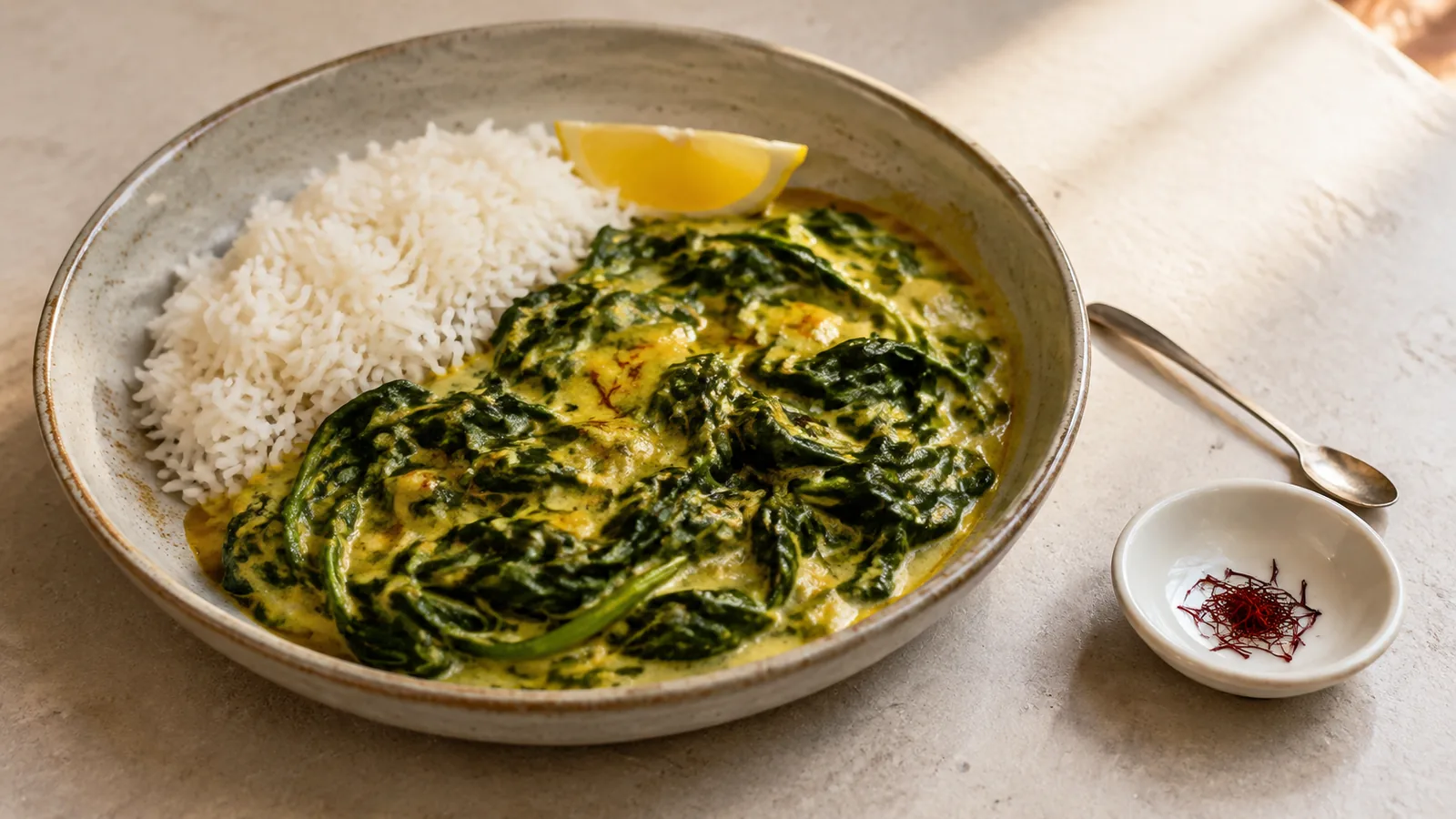
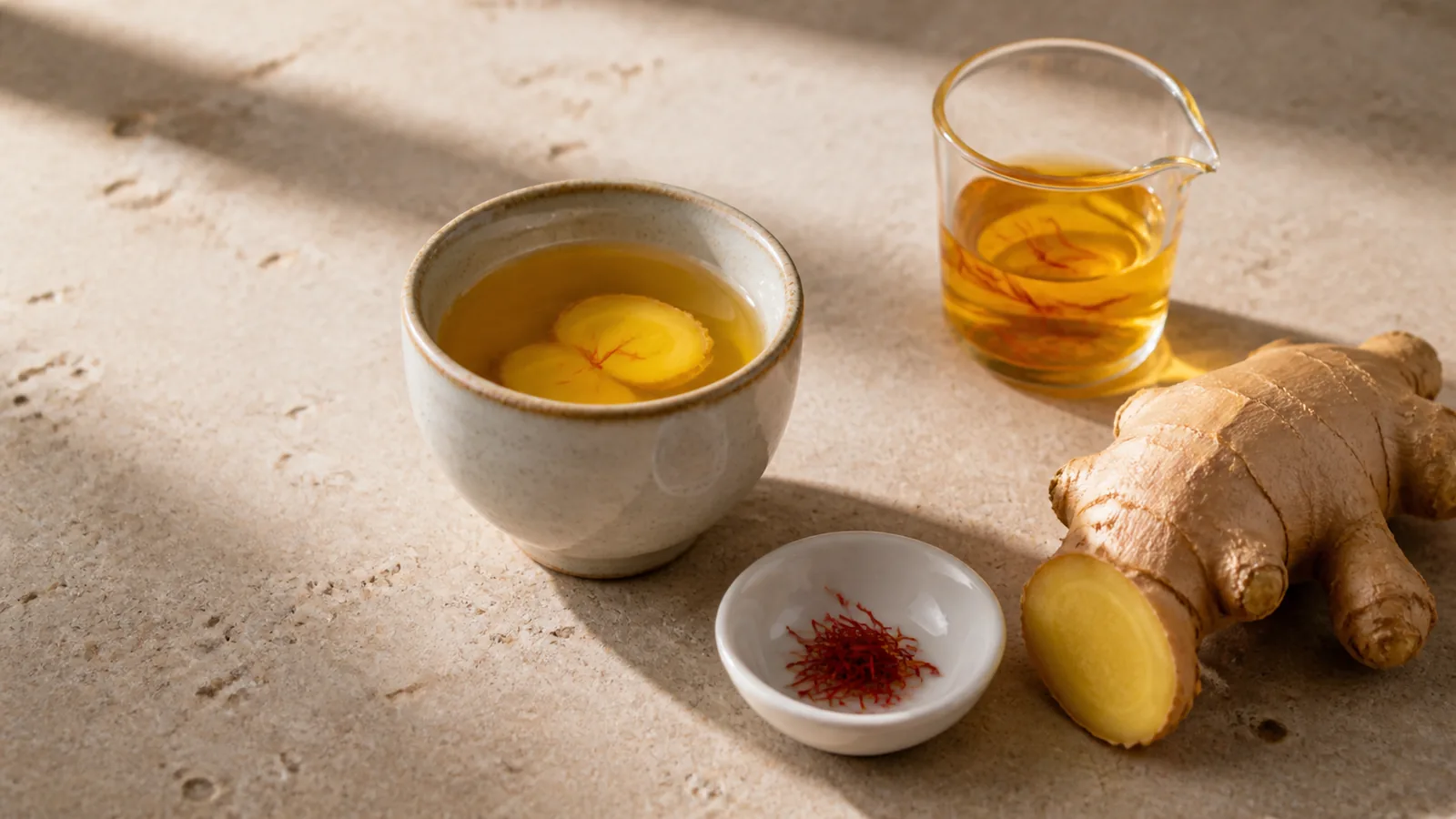
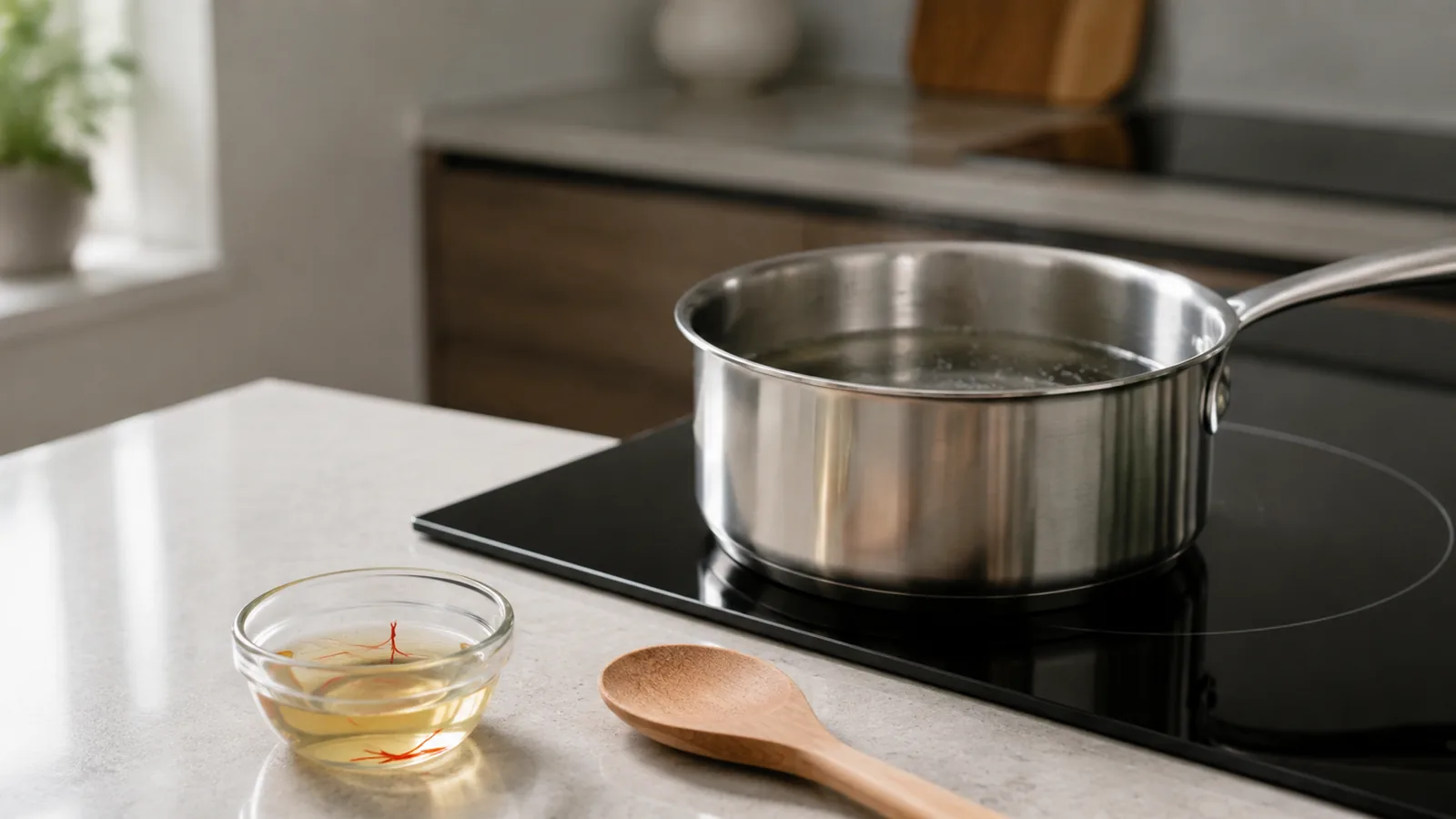
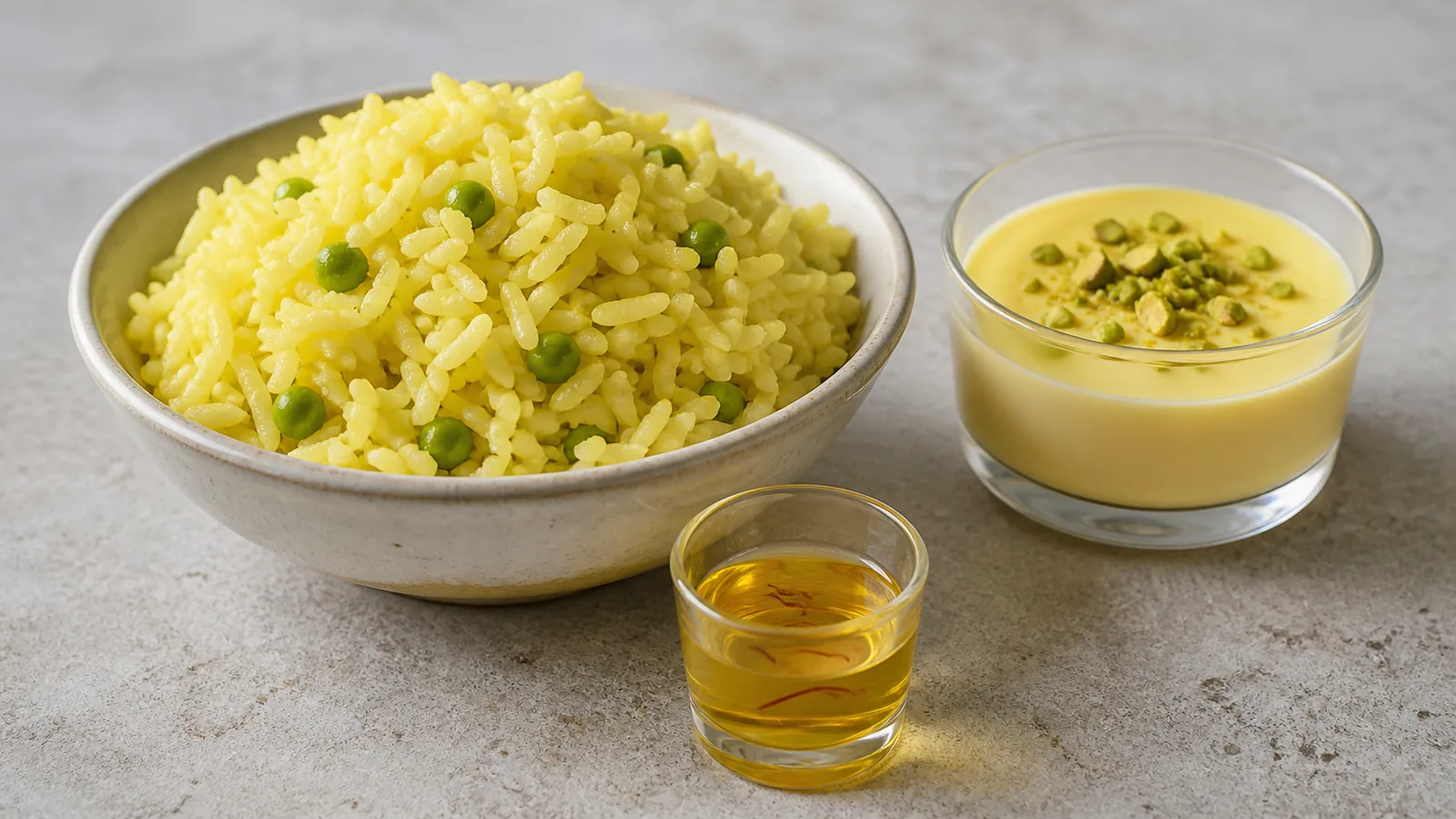
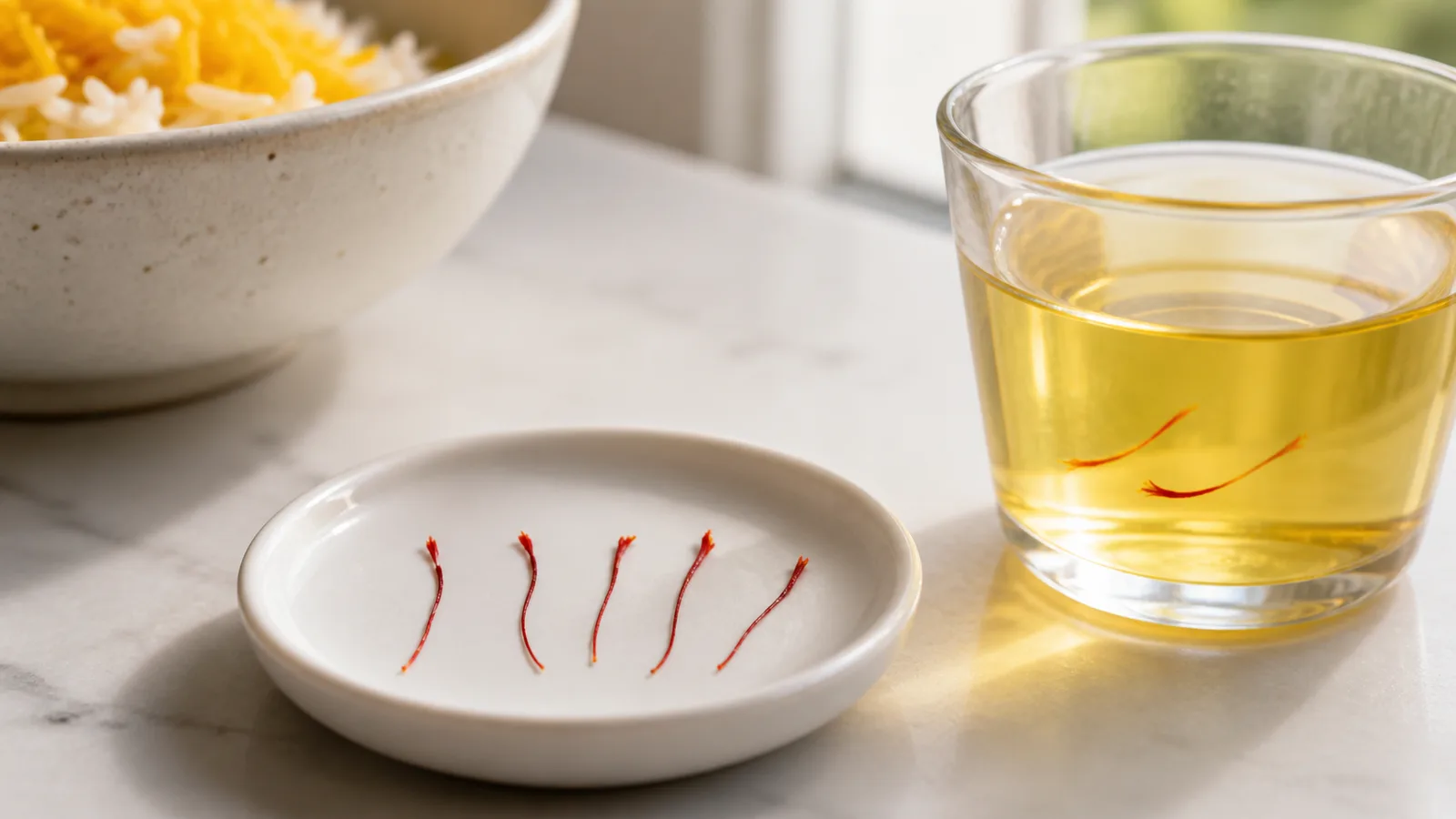
That depends on the recipe and purchase price, but normal culinary quantities are small. A family rice dish may use around 0.05 to 0.1 gram rather than a full gram. Measuring the spice, preparing an infusion and adding it to retained liquid helps the buyer get value from that amount.
Current offers change with the market, package and destination. For actual products rather than a static number in this article, use the site’s unchanged saffron price page.
Conclusion
The high saffron price reflects low yield per flower, concentrated manual labour, careful drying, agricultural risk, quality and purity controls, protective packaging and the supply chain. These factors explain the cost; they do not mean every expensive jar is equally good. Compare like with like, look for evidence behind quality claims and judge the cost at the quantity a recipe actually uses.