Fake saffron does not have one dependable smell. It may be almost odourless, musty, stale, sharply chemical, plastic-like, or perfumed with an added aroma. Genuine saffron usually has a layered dry, warm scent, but smell is only a screening clue—not proof that a sample is real or fake.
What does fake saffron smell like?
A fake saffron smell often feels flat or one-dimensional. Dyed plant fibres may smell like dry grass, paper, or very little at all. Poorly stored material can smell damp or musty. A product treated with colour or fragrance may have an obvious solvent, plastic, candy-like, or artificial-perfume note.
Those signs deserve attention, but none identifies the adulterant by itself. A stale smell can come from age or moisture damage rather than deliberate fraud. Conversely, a convincing saffron-like aroma can be added to an adulterated product.
What genuine saffron aroma is like
Real saffron from Crocus sativus has a distinctive aroma created by a mixture of volatile compounds. Safranal is an important contributor. Depending on the crop, drying, age, and storage, people may describe the overall scent as hay-like or grassy, honeyed, warm, earthy, floral, or faintly mineral.
No single descriptor is mandatory. A strong sample should smell natural and complex rather than like one added perfume. The aroma may become easier to notice after the threads are gently warmed in a closed hand or infused in warm water, but burning them is not a useful household test.
Our guide to what real saffron smells like explains why intensity varies even among genuine batches.
Why smell alone cannot identify fake saffron
Authenticity is more complicated than “strong smell equals real.” A peer-reviewed study of saffron authentication examined the addition of synthetic safranal to saffron and needed laboratory isotope analysis to distinguish natural from synthetic aroma material. A buyer’s nose cannot make that measurement.
Real saffron can also lose aroma through age, heat, light, air, or poor packaging. Powder is especially difficult to judge because its structure is hidden and fragrances or other plant materials can be blended through it. A faint sample may be old or low in aroma; it is not automatically counterfeit.
International quality work therefore considers more than odour. Saffron standards and laboratory methods assess identity, foreign matter, colour strength, bittering power, aroma-related measurements, moisture, and possible added colour. Sensory checks at home can tell you when to be cautious, but they cannot replace traceability or testing.
How to check saffron aroma at home
- Start with dry threads. Place a small amount in a clean, odour-free glass. Smell before rubbing or heating anything.
- Warm the closed glass in your hand. Body warmth can help the natural aroma collect without scorching the spice.
- Crush one thread gently. Compare the released scent with the whole material. Avoid contaminating the sample with soap, lotion, coffee, or another spice.
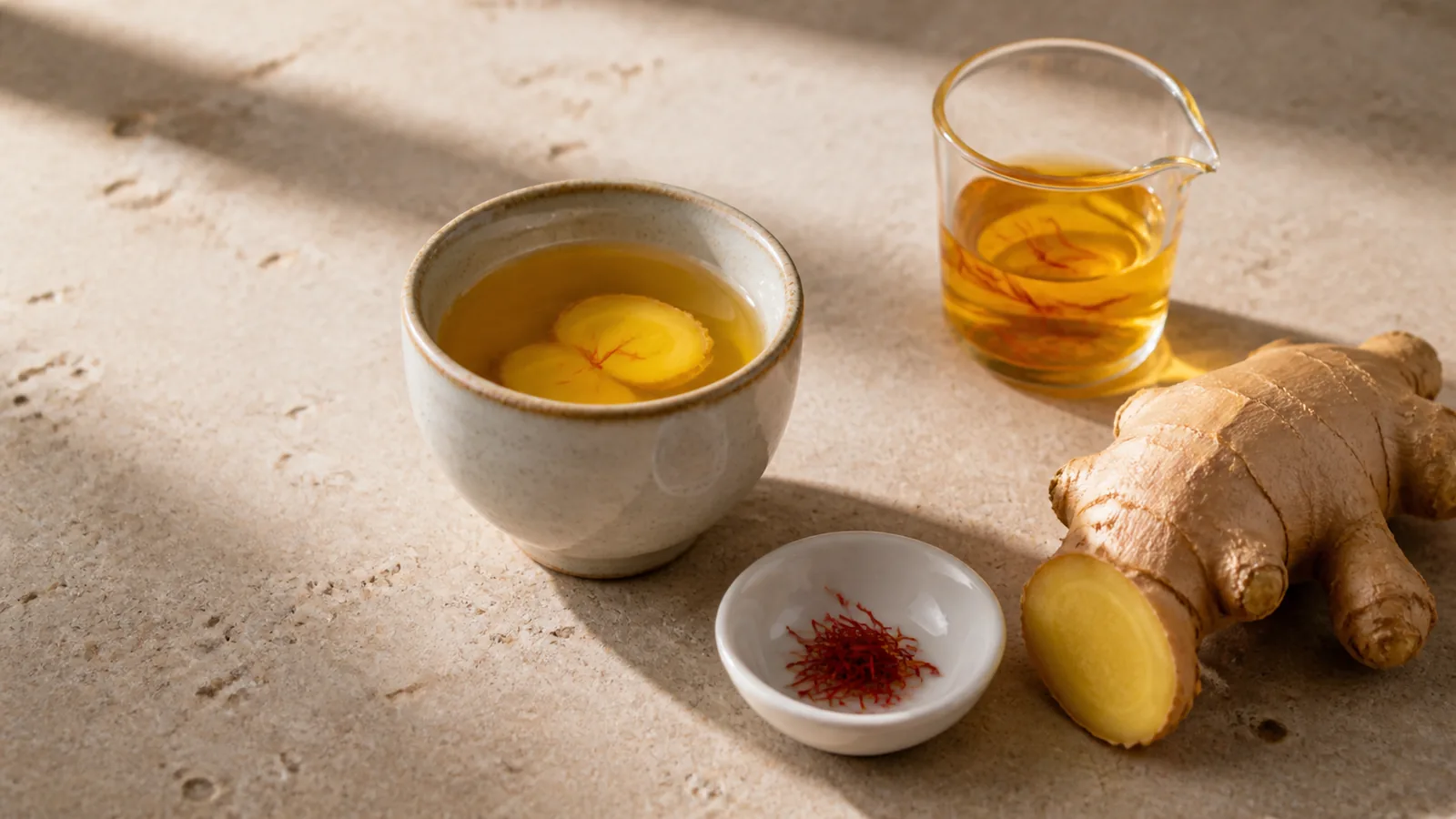
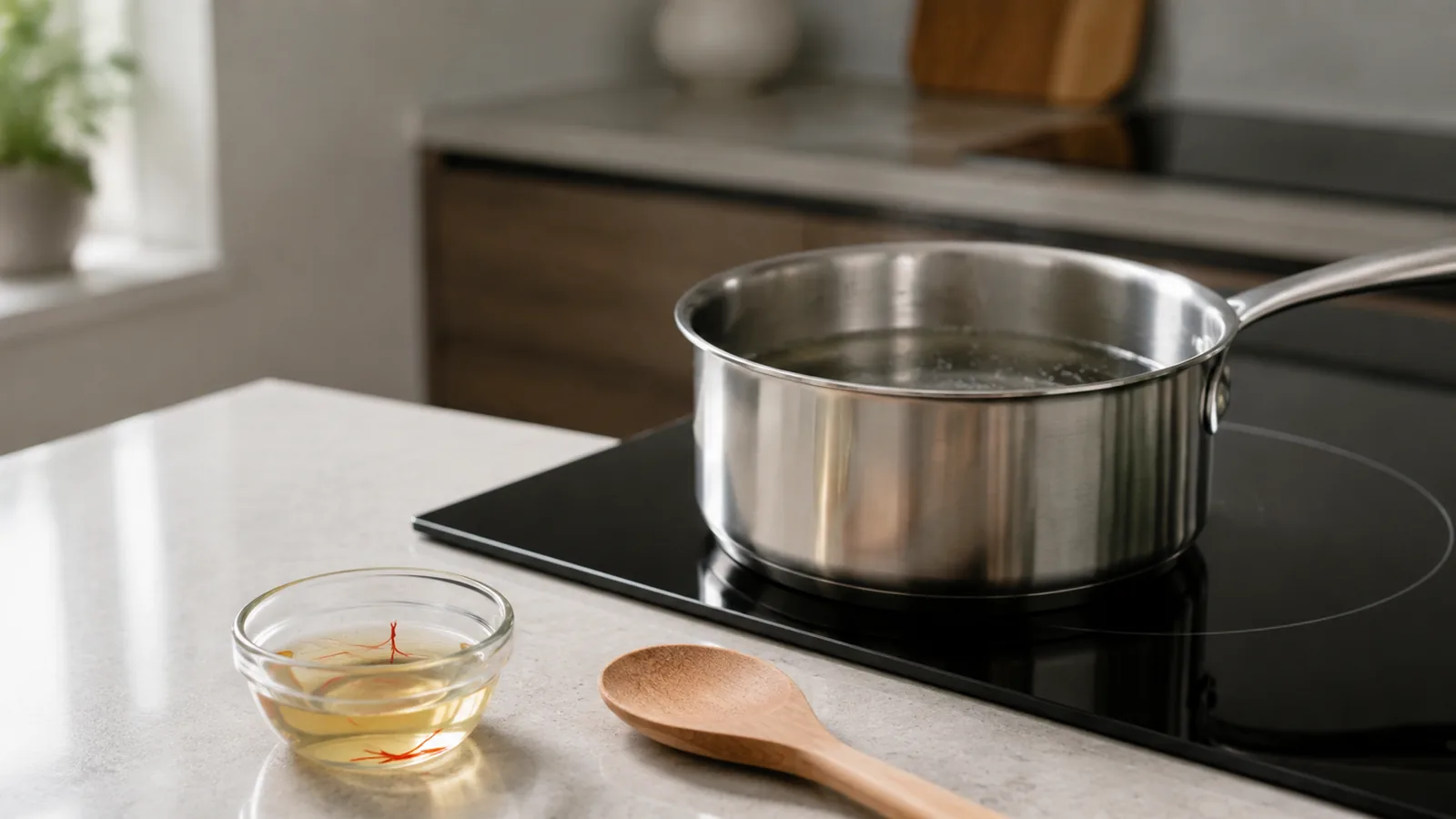
- Make a small warm-water infusion. Cover it for 10 minutes, then smell the liquid and the softened threads.
- Write down what you notice. Natural complexity, no smell, mustiness, and sharp synthetic notes are more useful observations than simply “good” or “bad.”
Do not inhale powder closely or taste a sample that smells of chemicals, plastic, mould, or contamination. Keep the package and batch information and contact the seller instead.
What if saffron smells or tastes like plastic?
If saffron tastes like plastic or gives off a plastic-like smell, stop using that batch. The cause could be unsuitable packaging, contamination, absorbed odours, artificial fragrance, or another material sold as saffron. The sensory sign does not identify which cause is responsible, but it is sufficient reason not to add more to food.
Check whether the inner package has its own strong odour and whether the threads were stored beside cleaning products, perfumes, or other pungent goods. Photograph the product and label, retain the receipt, and ask the supplier about the batch. A reputable seller should be able to discuss origin, packing, and quality controls rather than dismiss the concern.
Other signs to check with the smell
Thread shape
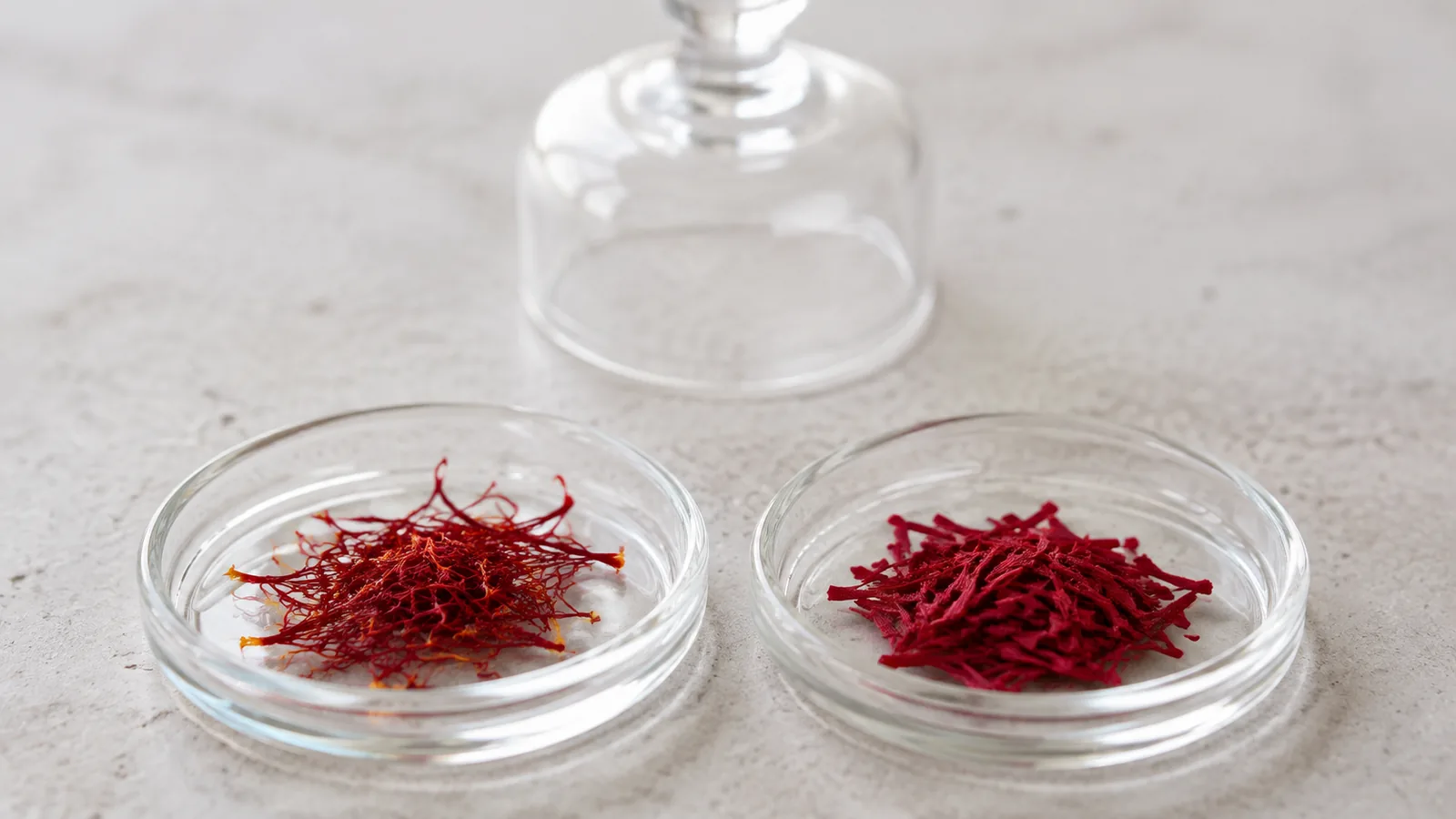
Genuine whole saffron consists of dried stigma filaments, often with a short part of the style attached. The threads are not perfectly identical. Many show a fine stem-like section and a wider, slightly flared end. Uniform red fibres, flat shreds, petals, or obvious strands of another plant need closer examination.
Colour release
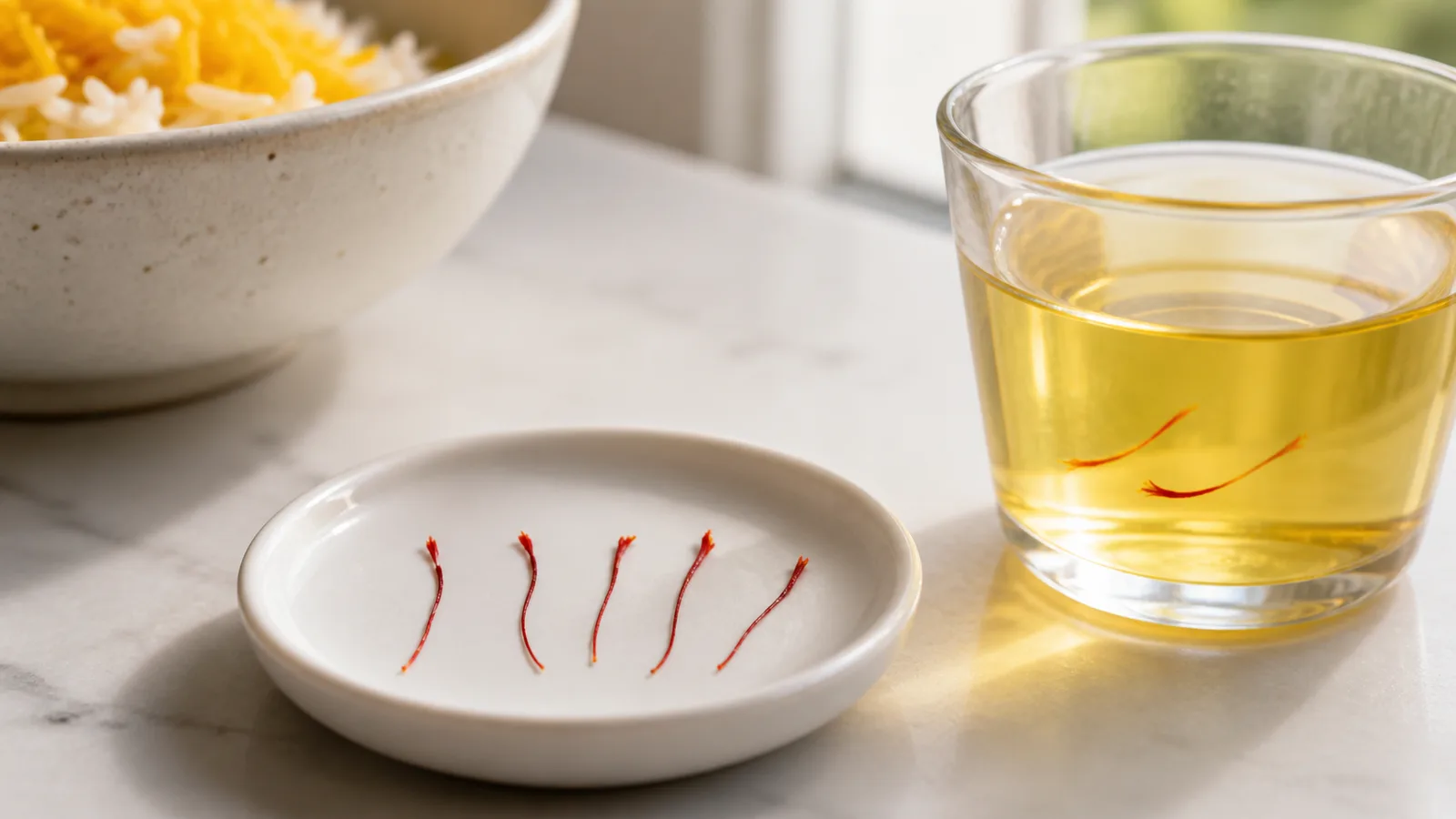
In warm water, genuine threads release a golden-yellow to orange colour gradually while retaining some red colour themselves. An immediate opaque red cloud can indicate added dye, but slow colour release alone does not prove purity.
Taste
Food-grade saffron is characteristically bitter and aromatic, not sugary. Sweetness on a dry thread can suggest a coating, while a harsh chemical or plastic taste is a reason to stop. Do not keep tasting suspicious material in an effort to authenticate it.
Package and seller evidence
Look for a clear product name, net weight, lot or batch identification, origin information, responsible business details, and intact food packaging. A price far below comparable saffron deserves scrutiny, although price by itself is not proof of fraud.
A better authenticity decision
Use aroma, thread structure, gradual colour release, packaging, and seller traceability together. Our complete guide to telling real saffron from fake saffron brings those checks into one process. For valuable or disputed lots, ask for appropriate laboratory documentation rather than relying on a home trick.
Storage matters after purchase too. A genuine batch can become dull or pick up foreign odours if it is exposed to heat, light, moisture, or air. The advice on storing saffron explains why a dry, airtight, dark cupboard is usually more useful than routine refrigeration.
The practical answer is cautious: fake saffron may smell weak, stale, musty, chemical, or plastic-like, but it may also be deliberately scented. Treat a strange smell as a warning and combine it with physical checks and traceability before deciding what the product is.