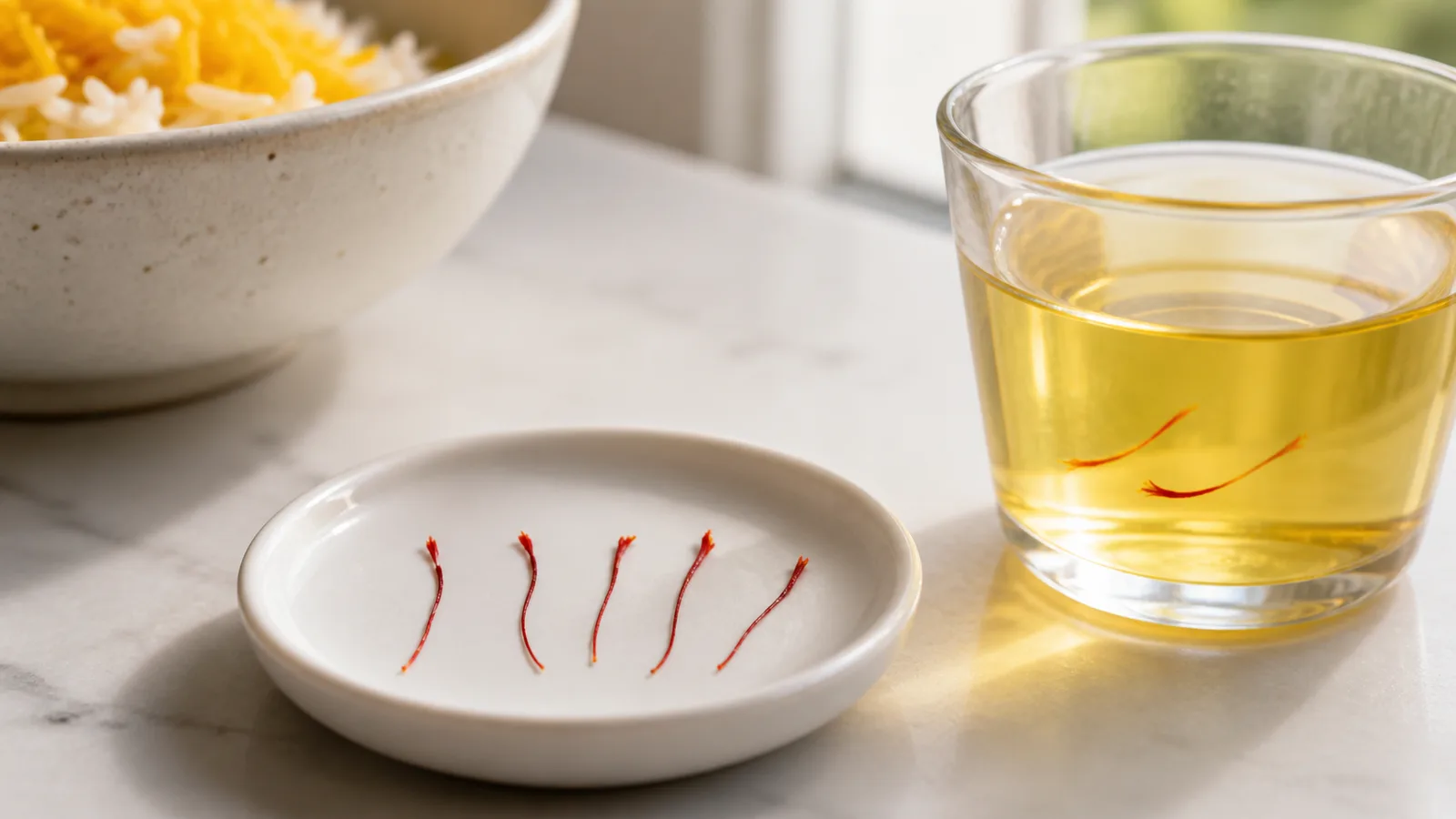
Does saffron smell? Yes. What does saffron smell like? Dry saffron has a distinctive but compact aroma: warm hay, honey, dried flowers and a slightly earthy or leathery note are common descriptions. Some people also notice a sharp edge that reminds them of tea, tobacco or the sea. It should not smell simply sweet, perfumed or musty.
Saffron aroma becomes clearer when the threads are gently crushed and infused. A sealed jar can smell much stronger than a few threads held in an open hand, so intensity depends on the amount, age, storage and temperature as well as personal perception.
Saffron Aroma: Does It Have a Strong Smell?
Is saffron strong? It is potent in the sense that a small culinary amount can shape a whole dish, but its scent is not loud in the way of garlic, cloves or synthetic perfume. Good saffron develops as you smell it: first warm and floral, then dry, grassy and faintly bitter.
What does saffron smell and taste like? The aroma and flavour overlap but are not identical. The flavour is subtly bitter and hay-like, while the aroma is rounder and more honeyed. Saffron is not supposed to taste sugary even when its fragrance suggests sweetness.
The Unique Scent of Saffron
Safranal is one of the best-known volatile compounds associated with saffron scent. Crocins contribute colour, and picrocrocin is linked with bitterness. Quality cannot be reduced to the highest possible level of one compound; harvest, drying, moisture, storage and time influence the final balance.
A freshly opened, well-stored pack may release an immediate aroma. Older threads can become muted as volatile compounds dissipate, especially after exposure to air, heat or light. Keep saffron in an airtight container in a cool, dark cupboard rather than over the stove or beside a sunny window.
Origin and growing conditions can shift the sensory profile, but a country name does not dictate exactly how every batch will smell. The current ISO 3632-1:2025 saffron specification recognises defined quality requirements for dried saffron; a sensory impression is useful, but it is not a complete laboratory grade.
How Saffron’s Aroma Affects Cooking
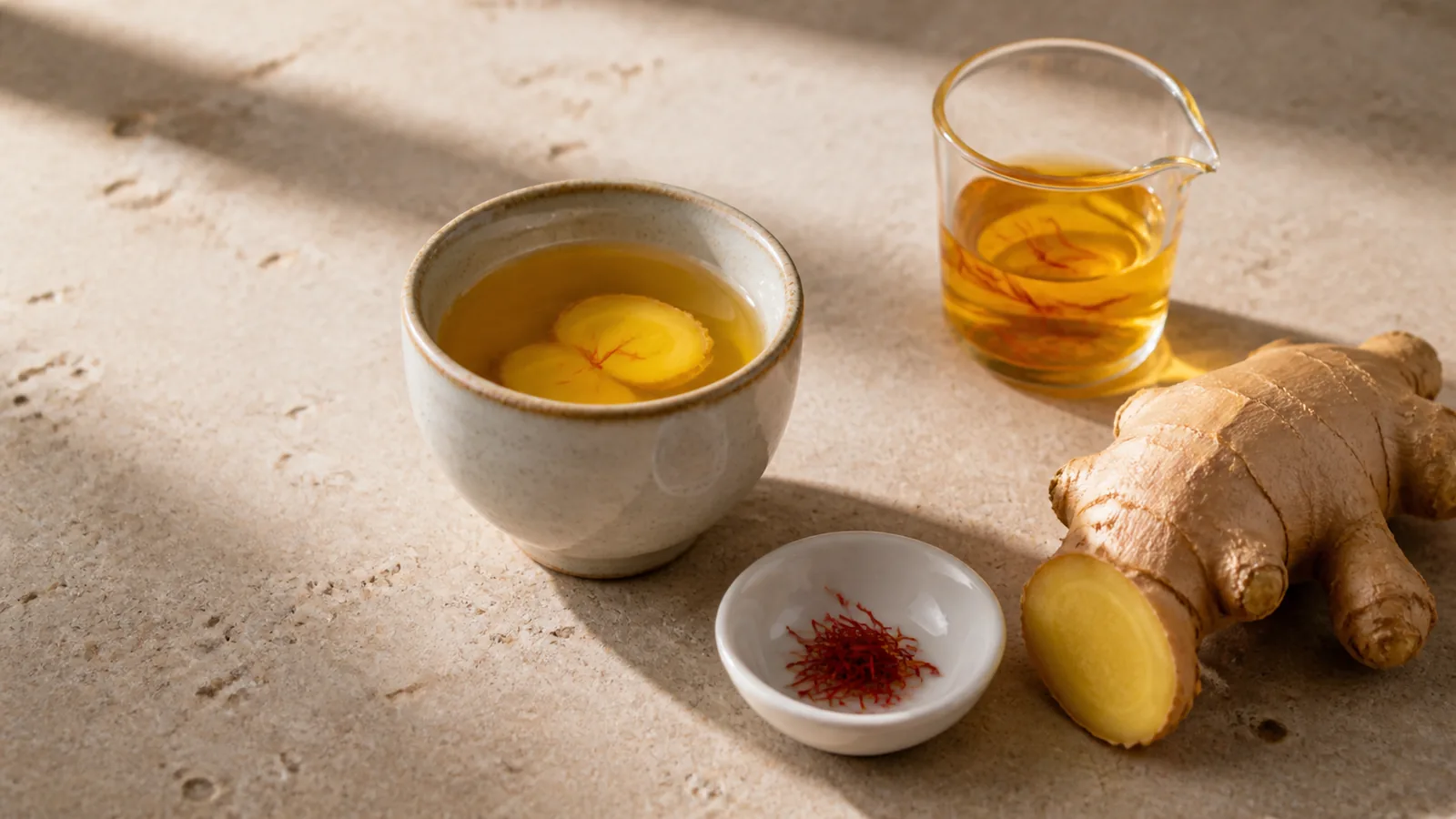
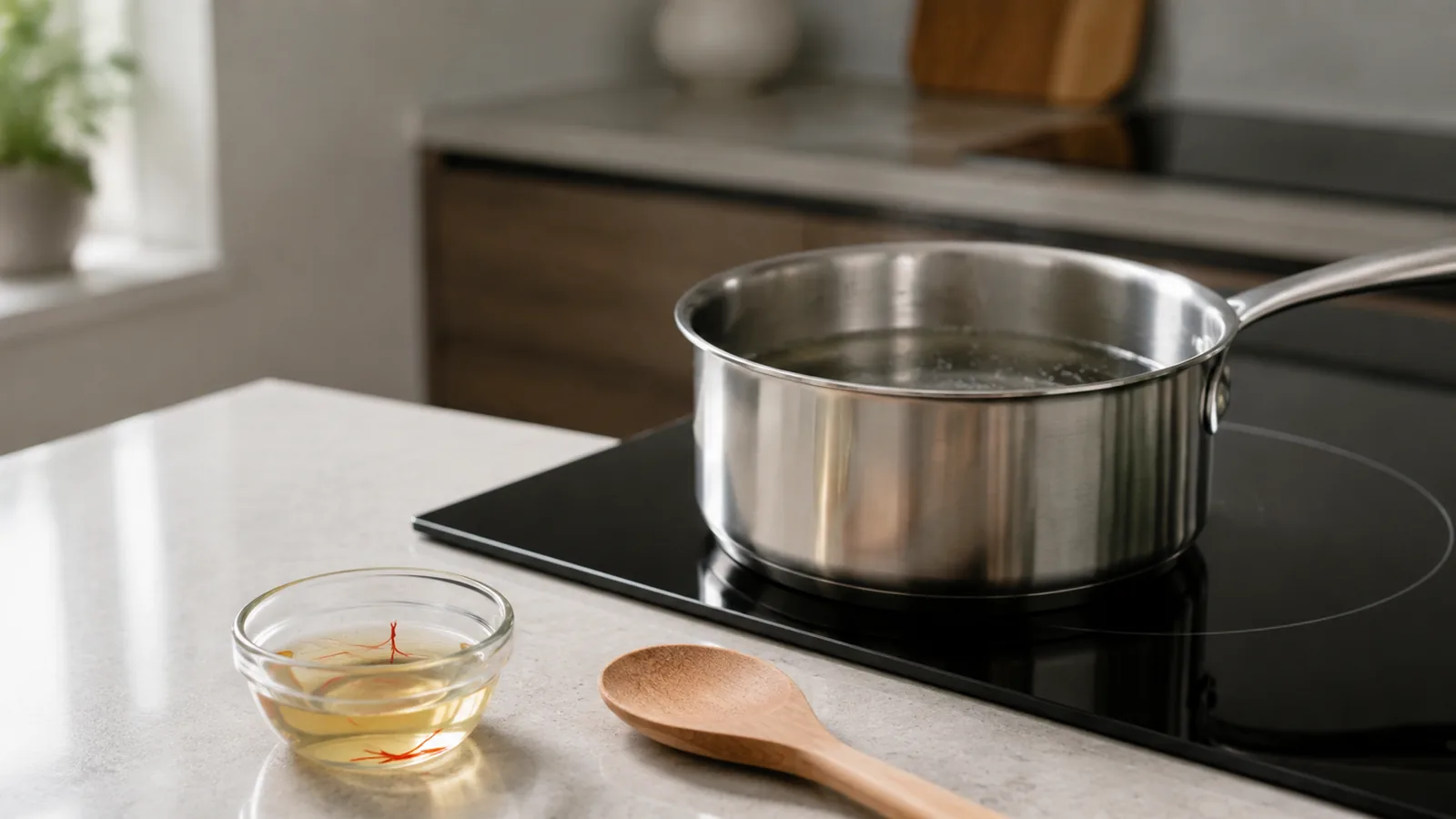
Warm water helps the aroma and colour disperse evenly. Crush a modest pinch between clean fingers or with a mortar, add warm—not aggressively boiling—water, and leave it for roughly 15 to 20 minutes. Add the infusion and softened threads at the stage the recipe recommends.
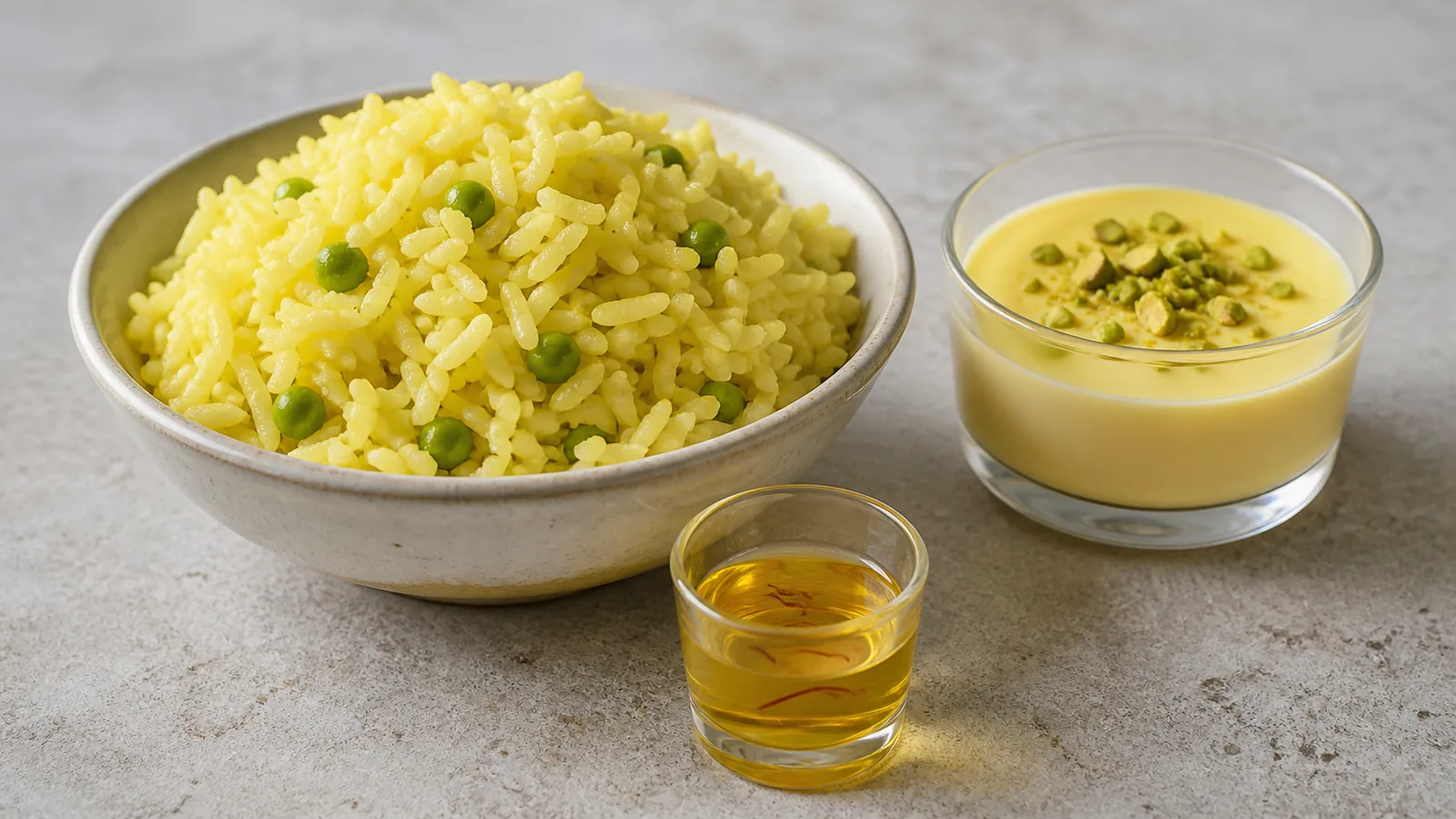
Too much heat for too long can flatten delicate volatile notes. In rice, paella, soups and sauces, part of the infusion may go in during cooking and a small portion later for a fresher top note. In custards, cakes and drinks, saffron works best when it has time to infuse into the liquid.
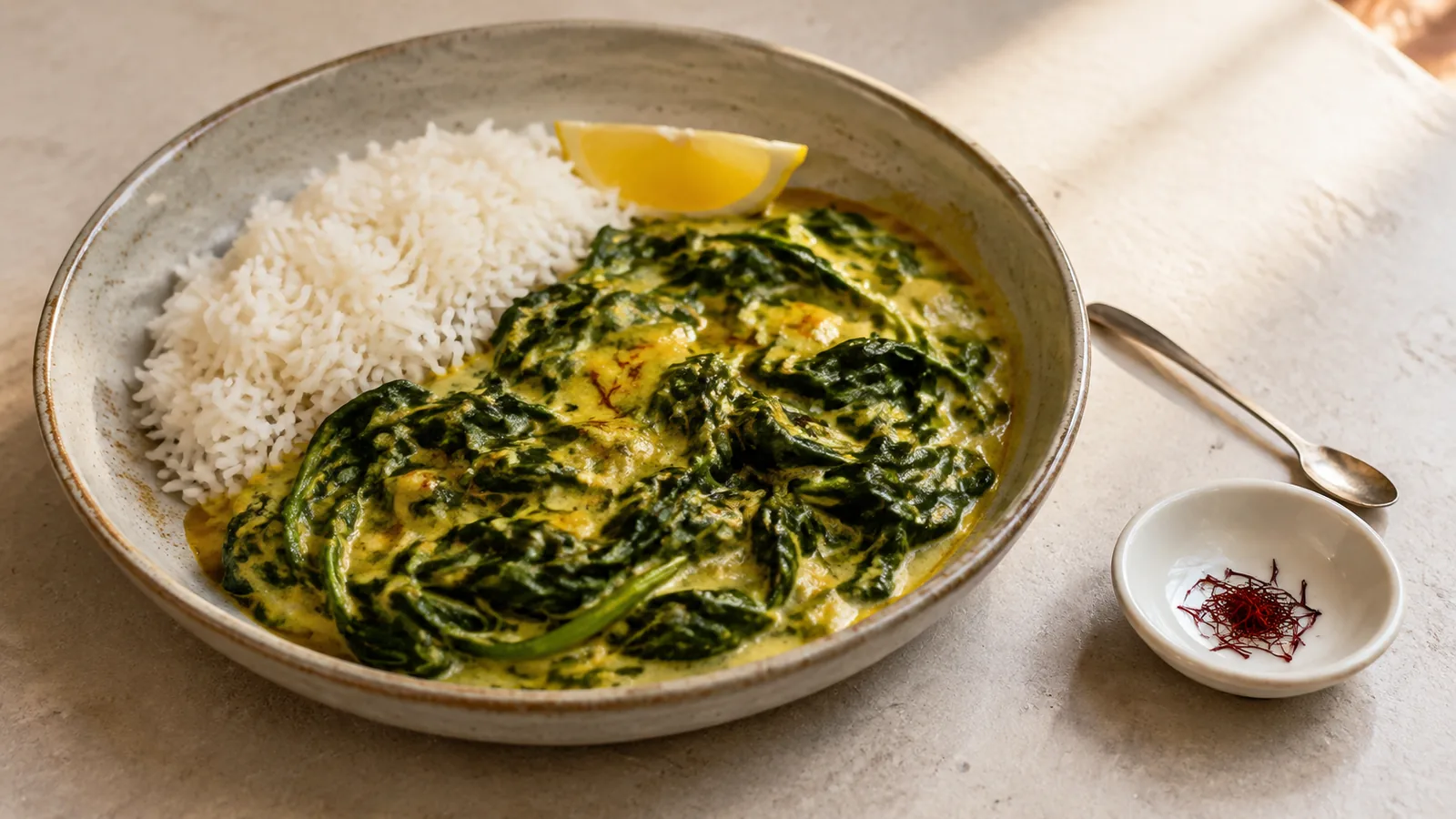
Saffron flavour also needs space. Heavy smoke, excessive chilli or a great deal of another floral spice can obscure it. Fat, dairy, stock, rice and gentle sweetness can carry the aroma without requiring an excessive quantity.
Why the Scent Matters
The smell of saffron helps a cook judge freshness, storage and how the spice will fit a dish. It cannot by itself prove purity. Added fragrance can imitate part of an aroma, while genuine saffron may smell quiet if the sample is tiny or cold. Check thread structure, packaging, traceability and, where important, test documentation as well.
Reject a pack that smells mouldy, damp, rancid or strongly chemical. An almost scentless old batch may be genuine but poor value because it has lost much of the quality a cook is paying for.
Claims that smelling saffron treats anxiety or provides reliable aromatherapy effects go beyond what an ordinary kitchen jar can establish. Its fragrance can certainly be enjoyable and may be part of a calming cooking ritual, but that personal experience is not medical treatment.
A Simple Way to Learn the Aroma
Smell a few dry threads, then compare them with the same threads after ten minutes in warm water. Return after another ten minutes and taste a drop of the infusion. This separates the dry aroma, released aroma and mild bitterness without wasting the spice.
Our saffron preparation guide explains infusion methods, and our products are packed for culinary use. Contact us for batch or storage questions.