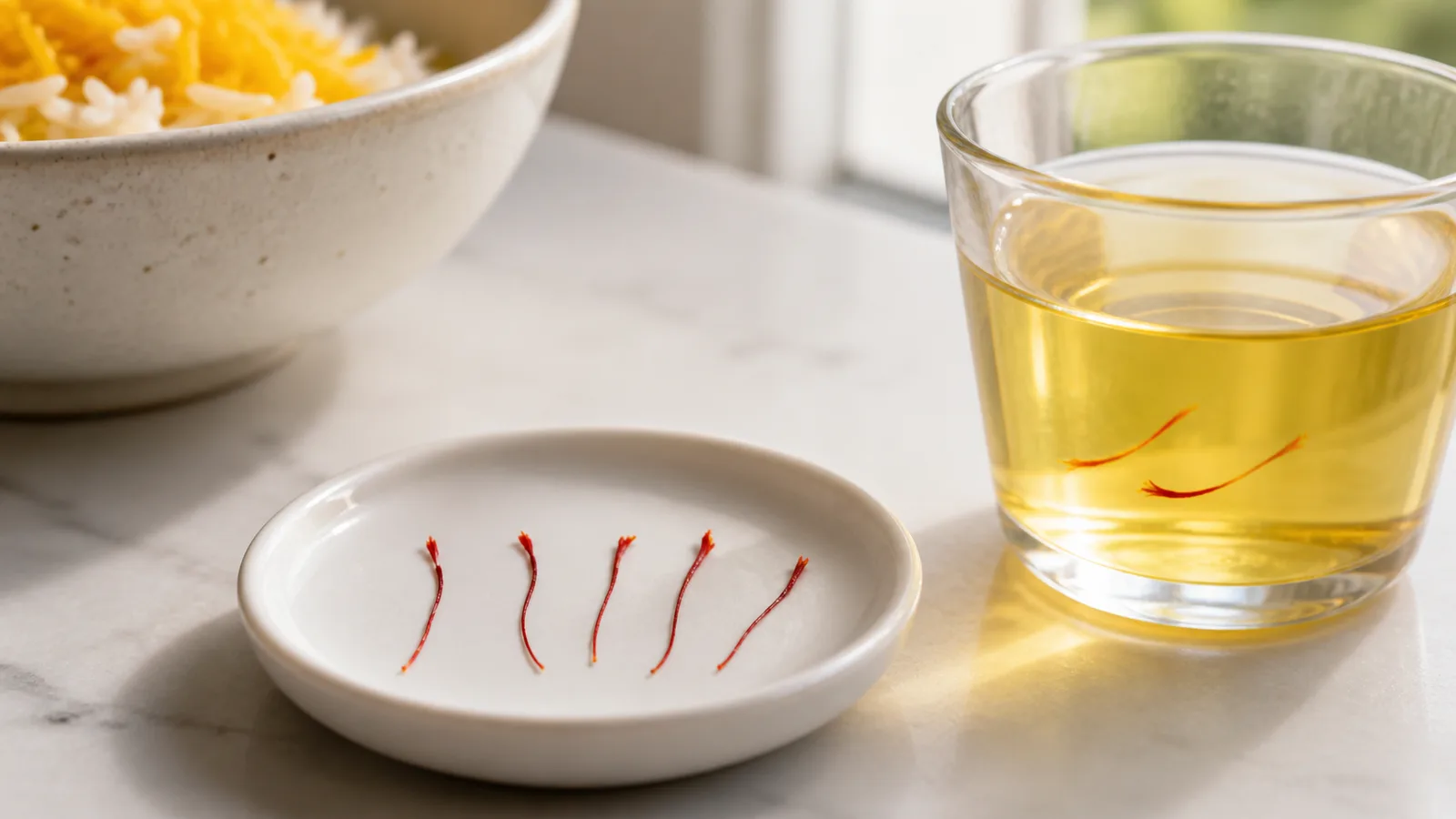
Saffron works in far more than rice. You can use it in paella, risotto, biryani, fish soup, chicken, pasta, bread, custard, ice cream and warm drinks. The best dishes that use saffron give the spice enough liquid and time to release its golden colour and aroma without burying it under too many stronger flavours.
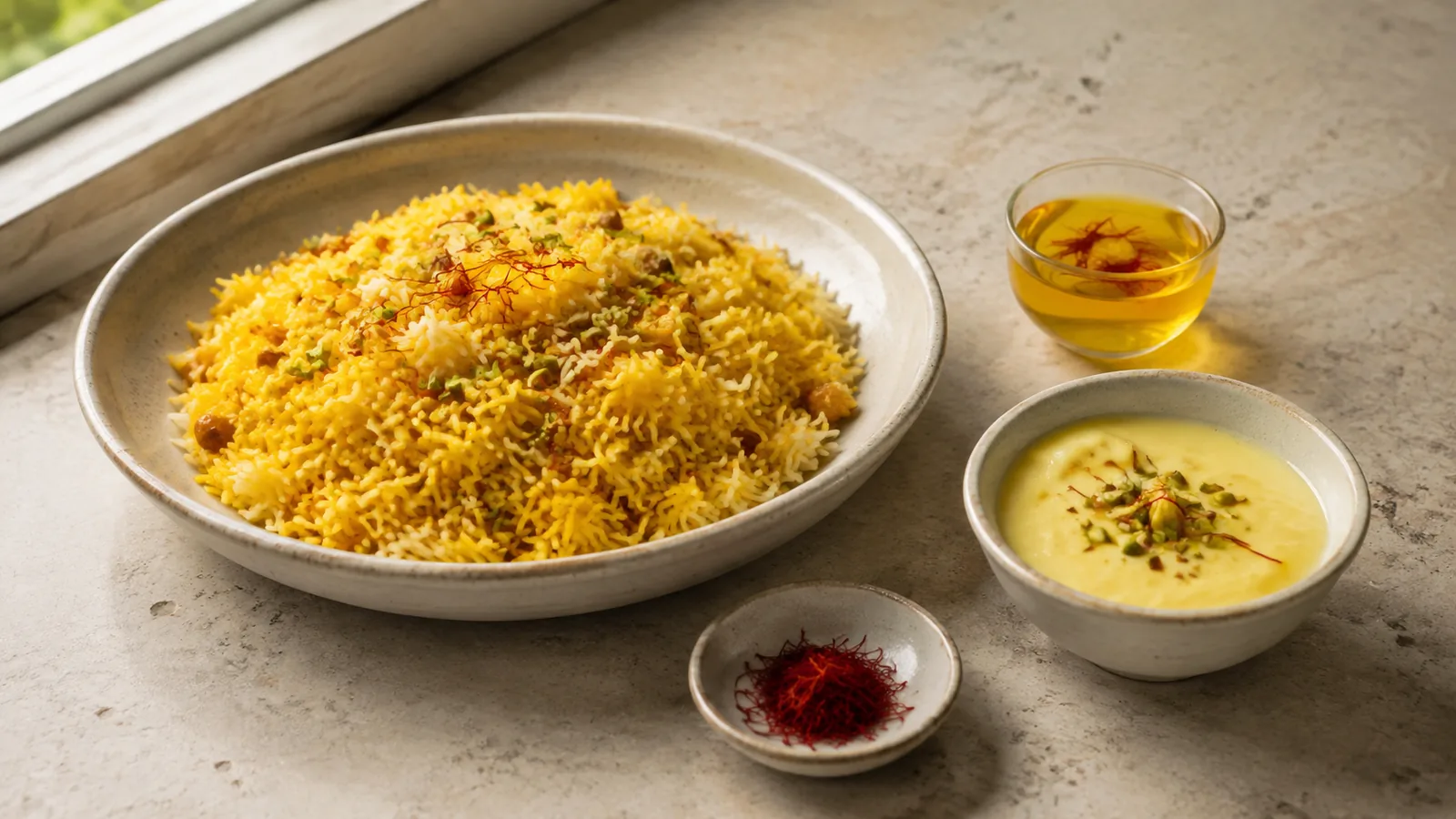
What dishes can I use saffron in?
Think of saffron as an aromatic seasoning rather than yellow food colouring. Its character is floral, hay-like and gently bitter, with a warm fragrance that becomes easier to notice when the threads are infused before they go into the pan. Research on saffron’s main quality compounds connects crocins with colour, picrocrocin with taste and safranal with aroma. A good dish makes room for all three.
The most natural uses fall into a few families: rice and grains, broths and sauces, gently seasoned proteins, dairy-based sweets, baked goods and drinks. You do not need a special occasion. A small, well-infused pinch is often more useful than a generous amount scattered in at the end.
Saffron rice dishes from several cuisines
Rice is the obvious place to begin because the grains spread both the infusion and the colour evenly.
Persian rice and tahdig
In Persian cooking, a saffron infusion can colour part of the steamed rice, which is then folded through the white grains or arranged on top. It also gives tahdig a fragrant golden layer. Barberries, pistachios, almonds, chicken and lamb all sit comfortably beside it, provided the spice is not overwhelmed by sweetness or heavy seasoning.
Paella and other Spanish rice
Saffron belongs in many traditional paella preparations, where it seasons the cooking liquid before the rice absorbs it. Seafood, chicken, rabbit and vegetables each produce a different dish, so saffron is part of the structure rather than a guarantee that every paella should taste identical.
Risotto alla milanese
This northern Italian risotto uses saffron against a creamy, savoury background. Add the infusion while the rice is still taking up stock so its colour spreads through the grains. The result should smell warm and distinct, not taste aggressively bitter.
Biryani and pilaf
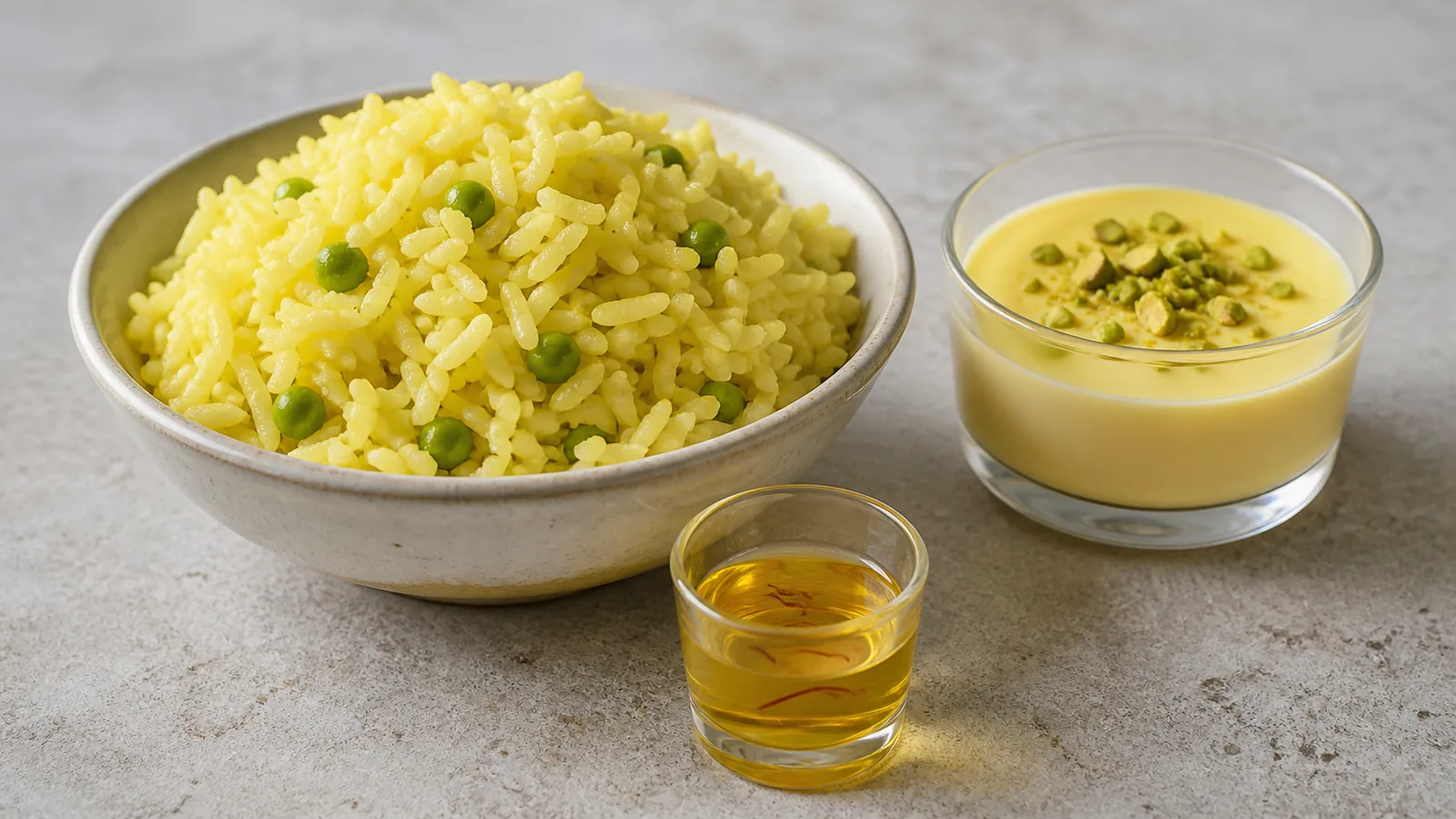
A small saffron infusion is often drizzled over layered rice before the final steaming. Cardamom, cinnamon, dried fruit or nuts may join it, but restraint helps the saffron remain recognisable. If you want a straightforward place to practise the technique, try this saffron rice method.
Soups, stews and sauces
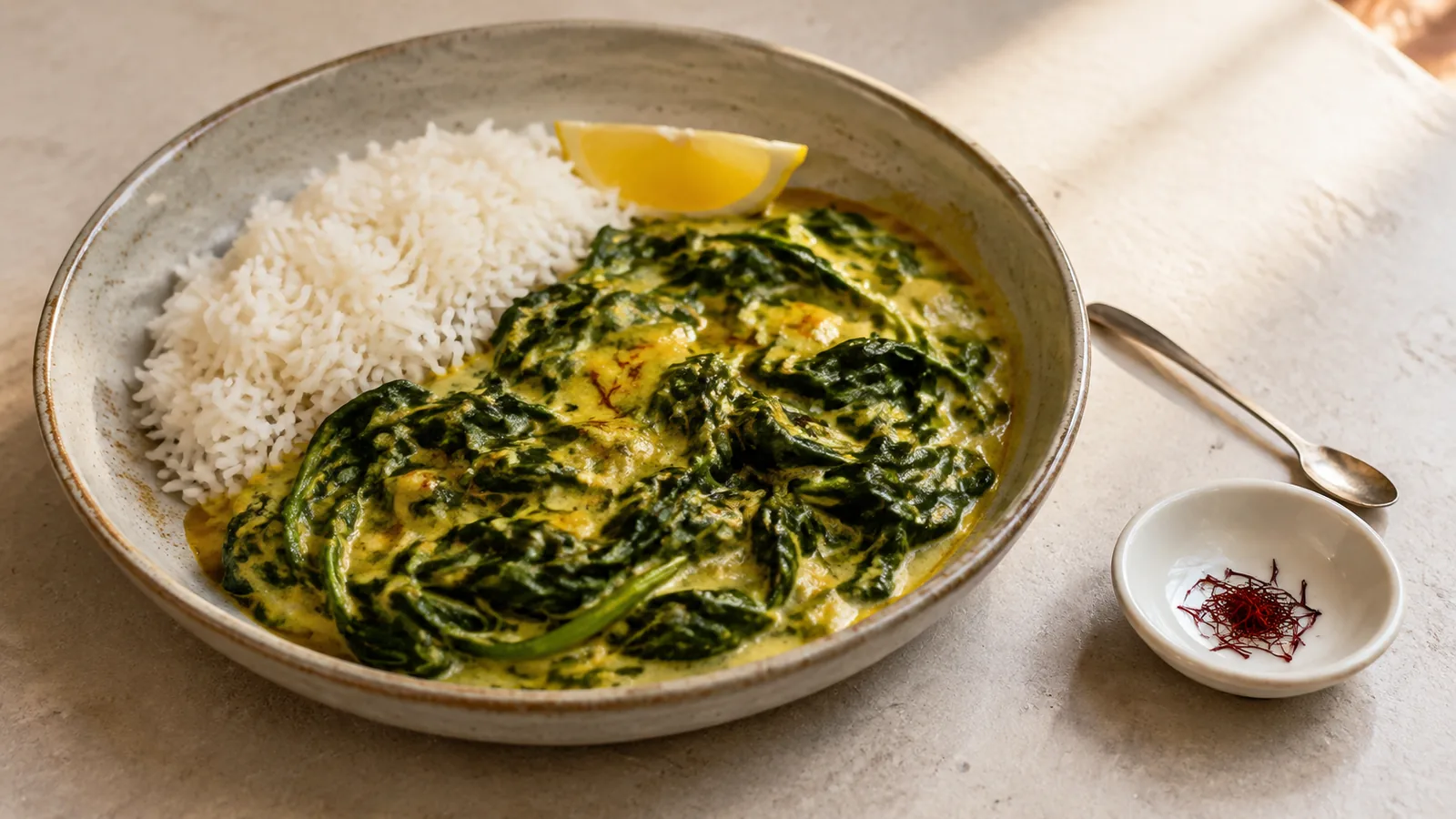
Saffron is especially useful in dishes with enough liquid to carry its aroma. Fish soups and shellfish stews are classic partners; bouillabaisse is the best-known example. Tomato, fennel, garlic and citrus can all work around it without turning the broth sweet.
It also suits lighter chicken stews, lamb tagines and vegetable soups built around leeks, potato, cauliflower or squash. Add it to stock or another warm liquid first. In a long-cooked stew, reserve at least some of the infusion until the middle or later part of cooking so the aroma is not lost entirely.
For sauces, saffron works well with cream, butter, olive oil, tomato or a light seafood stock. It can turn a simple sauce for fish, prawns, scallops, chicken or filled pasta into the main flavour of the plate. Keep the seasoning around it focused; very smoky or fiercely hot sauces tend to cover it.
Pasta, couscous and vegetables
Knead a concentrated infusion into fresh pasta dough for colour and a quiet saffron note, or stir it into a cream or seafood sauce for dried pasta. Couscous and bulgur absorb it readily, making them useful bases for roasted vegetables, chickpeas, chicken or fish.
Among vegetables, saffron is particularly comfortable with cauliflower, potato, fennel, onion, carrots and winter squash. It can go into a gratin, a purée or the liquid for braising. The aim is not to make every ingredient yellow; it is to give a mild base a fragrance it does not have on its own.
Saffron with chicken, seafood and other proteins
For chicken, mix infused saffron into yogurt, stock or melted butter and use it as a marinade or finishing liquid. Fish and shellfish need less time: add saffron to the broth or sauce rather than leaving delicate seafood in a strong marinade.
Eggs are another simple match. A few drops of concentrated infusion can season an omelette, scrambled eggs or a baked egg dish. With lamb, use saffron as one part of a balanced spice mixture rather than trying to make it compete with every spice in the cupboard.
Desserts and baking with saffron
Dairy and saffron work naturally together. Warm milk or cream draws the spice into custards, rice pudding, panna cotta, ice cream and kulfi. Cardamom, vanilla, rose water, honey, pistachio and almond can complement it, but choose two or three supporting flavours rather than all of them at once.
Saffron also appears in Persian sholeh zard, Indian kheer and shrikhand, and Swedish saffron buns. For cake, enriched bread or biscuits, infuse the threads in some of the recipe’s warm milk or water before mixing. That gives a more even result than dropping dry strands into flour.
Tea, milk and other saffron drinks
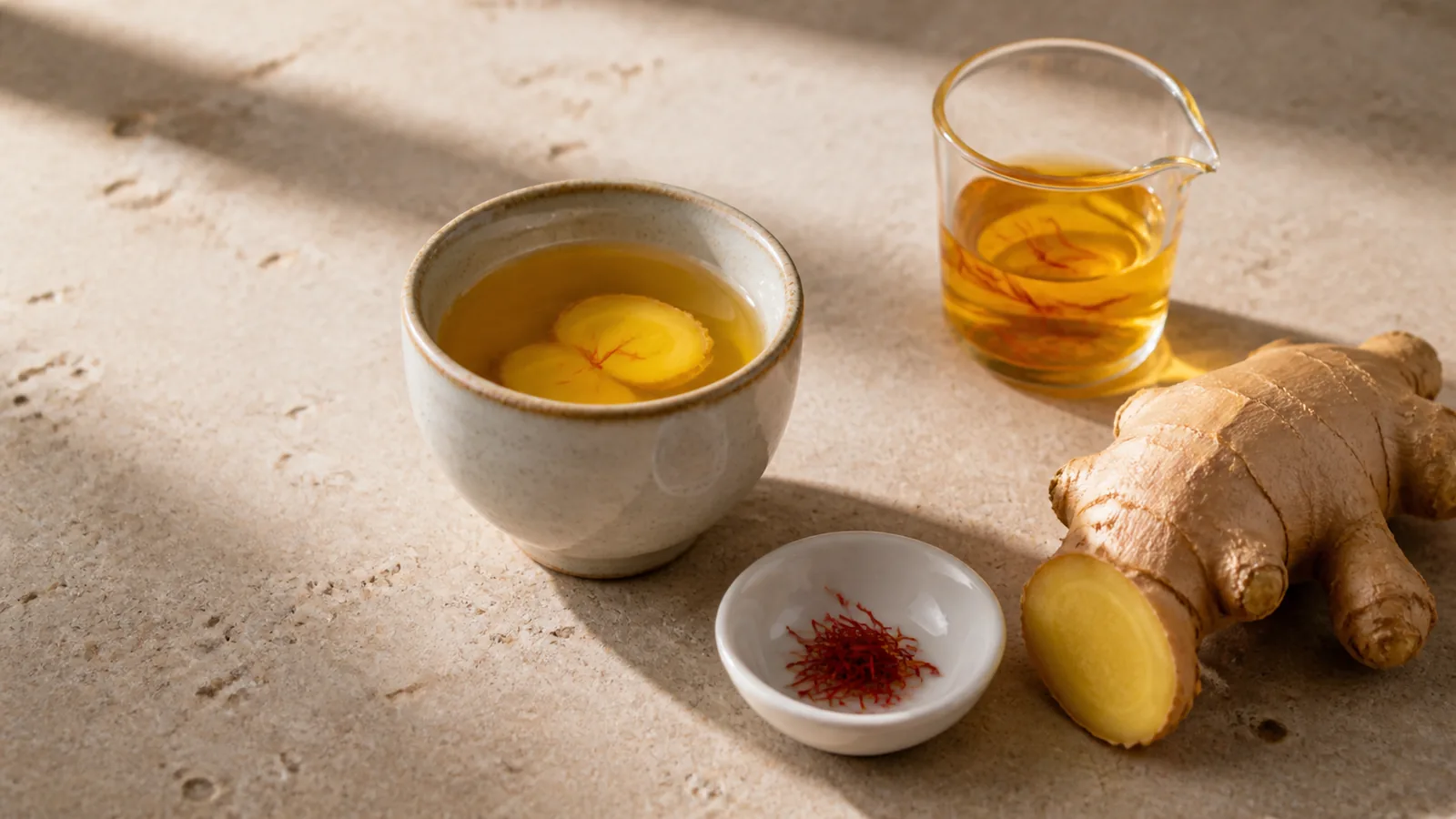
A simple saffron tea needs only hot water and a small pinch of threads; honey, lemon, mint or cardamom are optional. Saffron milk can be served warm or chilled, while lemonade gains colour and fragrance from a cooled infusion. These are flavour choices, not treatments, and there is no need to attach unsupported health promises to them.
How to add saffron so the dish tastes right
These saffron uses in cooking work best when the threads are infused and distributed rather than treated as a last-minute garnish.
- Use genuine threads and measure modestly. More saffron does not automatically mean better flavour.
- Crush the threads lightly. A mortar and pestle or the back of a spoon is enough; they do not need to become dust.
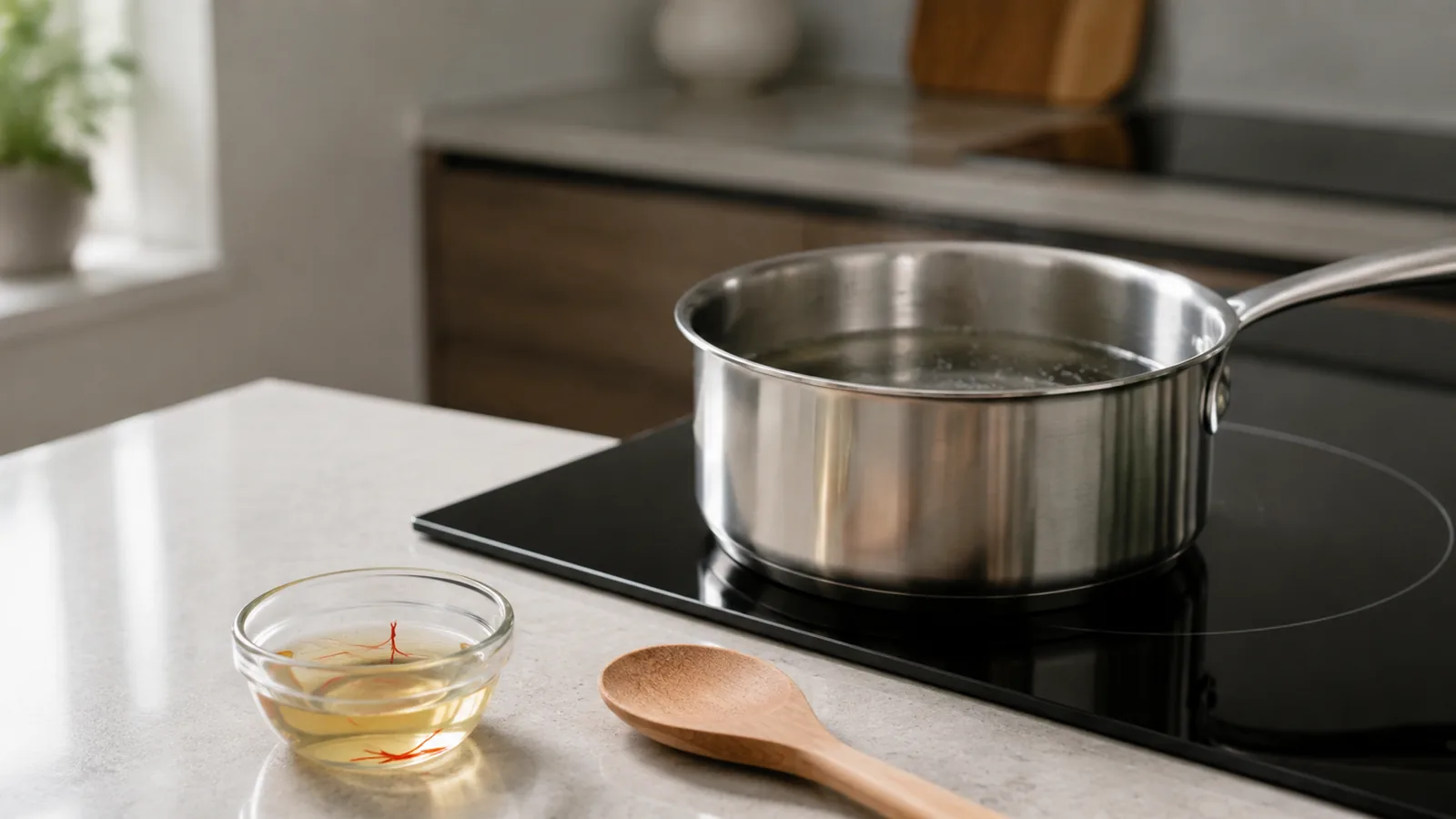
- Infuse in warm liquid. Water, stock or milk should suit the recipe. Let the colour and aroma begin to develop before adding it.
- Add the infusion where it can spread. Stir it into cooking liquid, sauce, rice or dough rather than leaving one intensely coloured patch.
- Taste the finished balance. Salt, acidity and stronger spices can change what you notice, so adjust the whole dish rather than adding another large pinch immediately.
If you are wondering what goes with saffron, begin with rice, risotto, a light chicken dish or a milk-based dessert. They make it easy to see what the spice contributes. Once you recognise its flavour, you can decide where else it belongs—and where a strongly seasoned recipe would simply hide it. For the underlying infusion method, see how to use saffron in cooking.