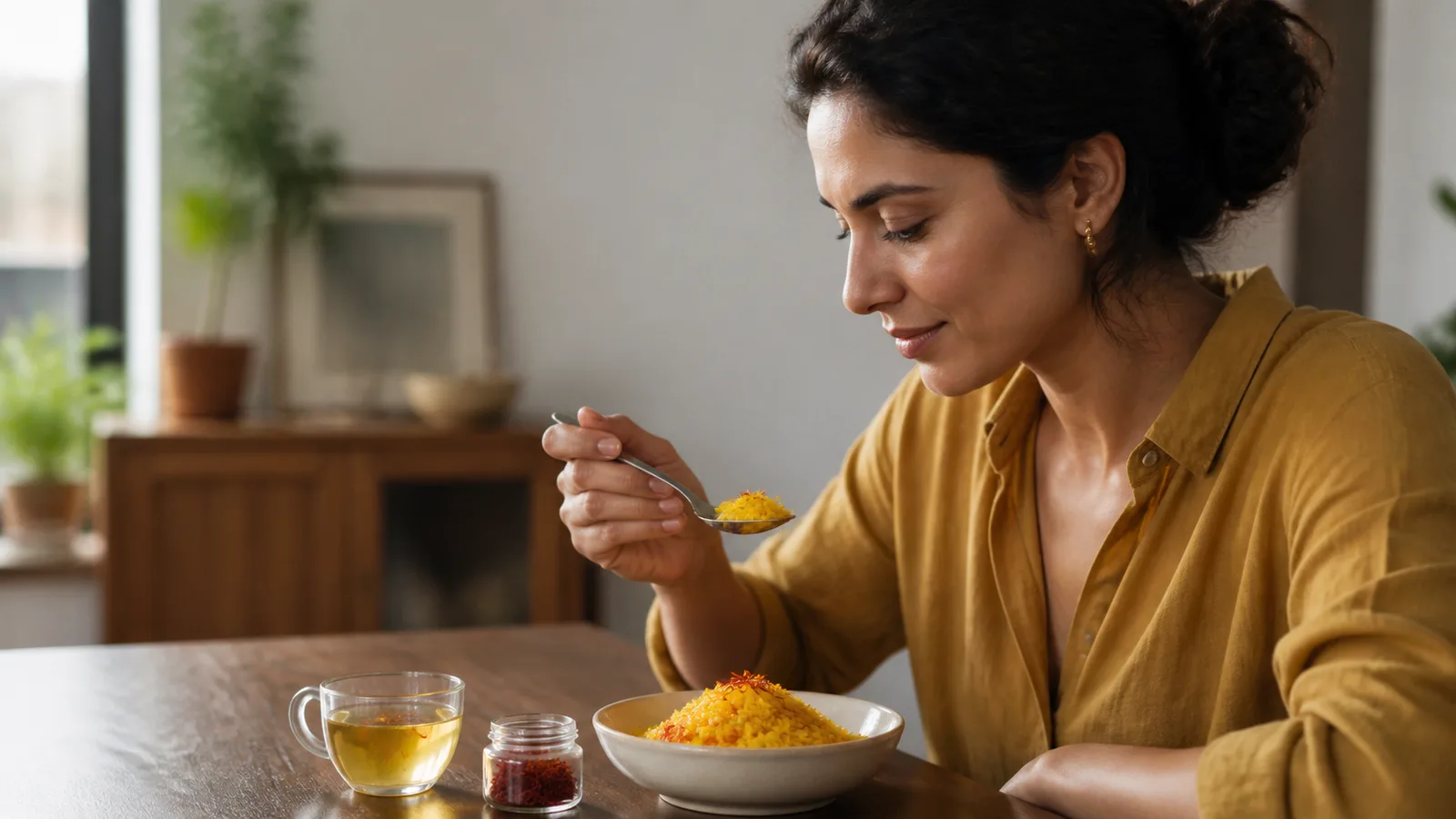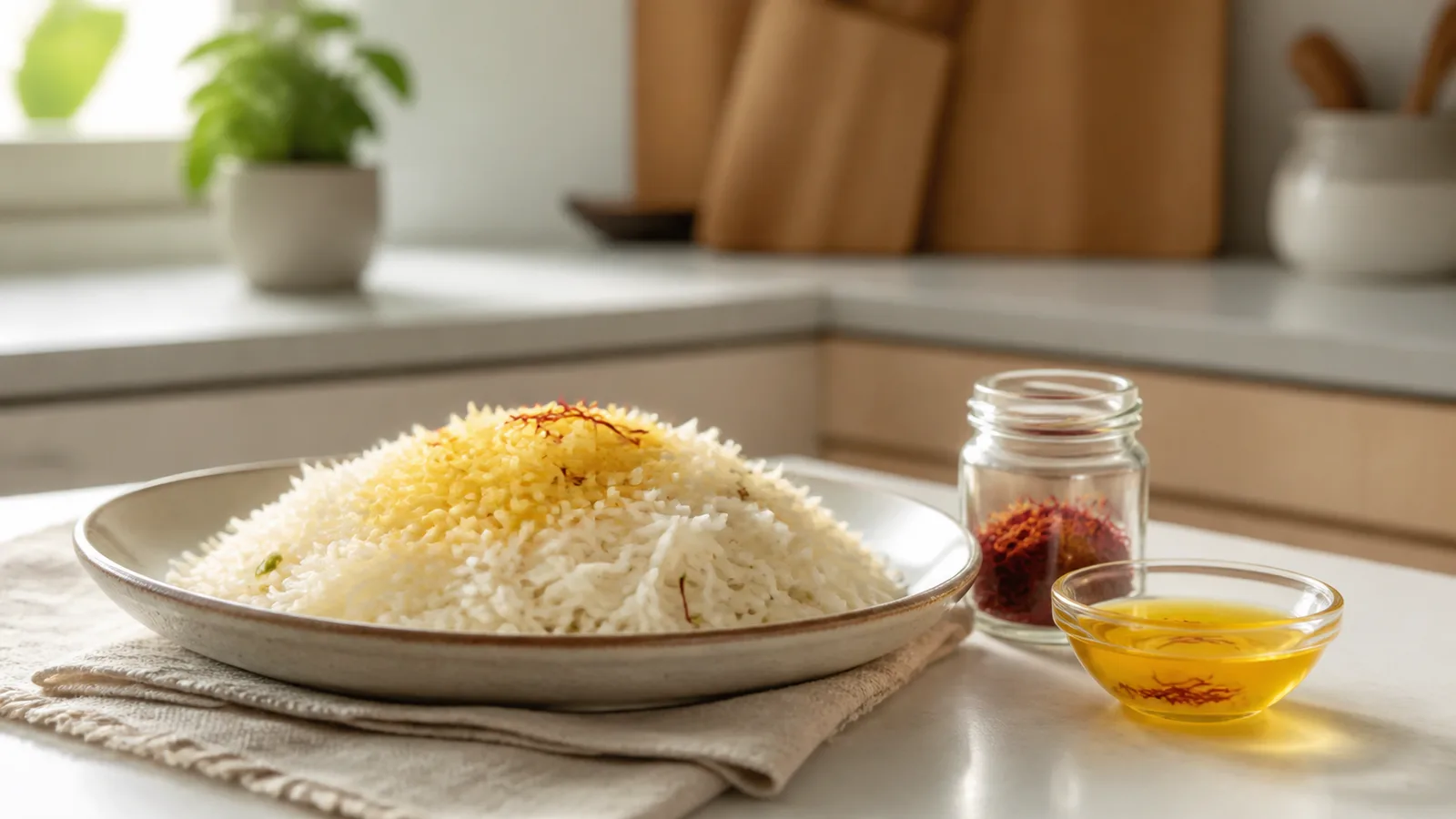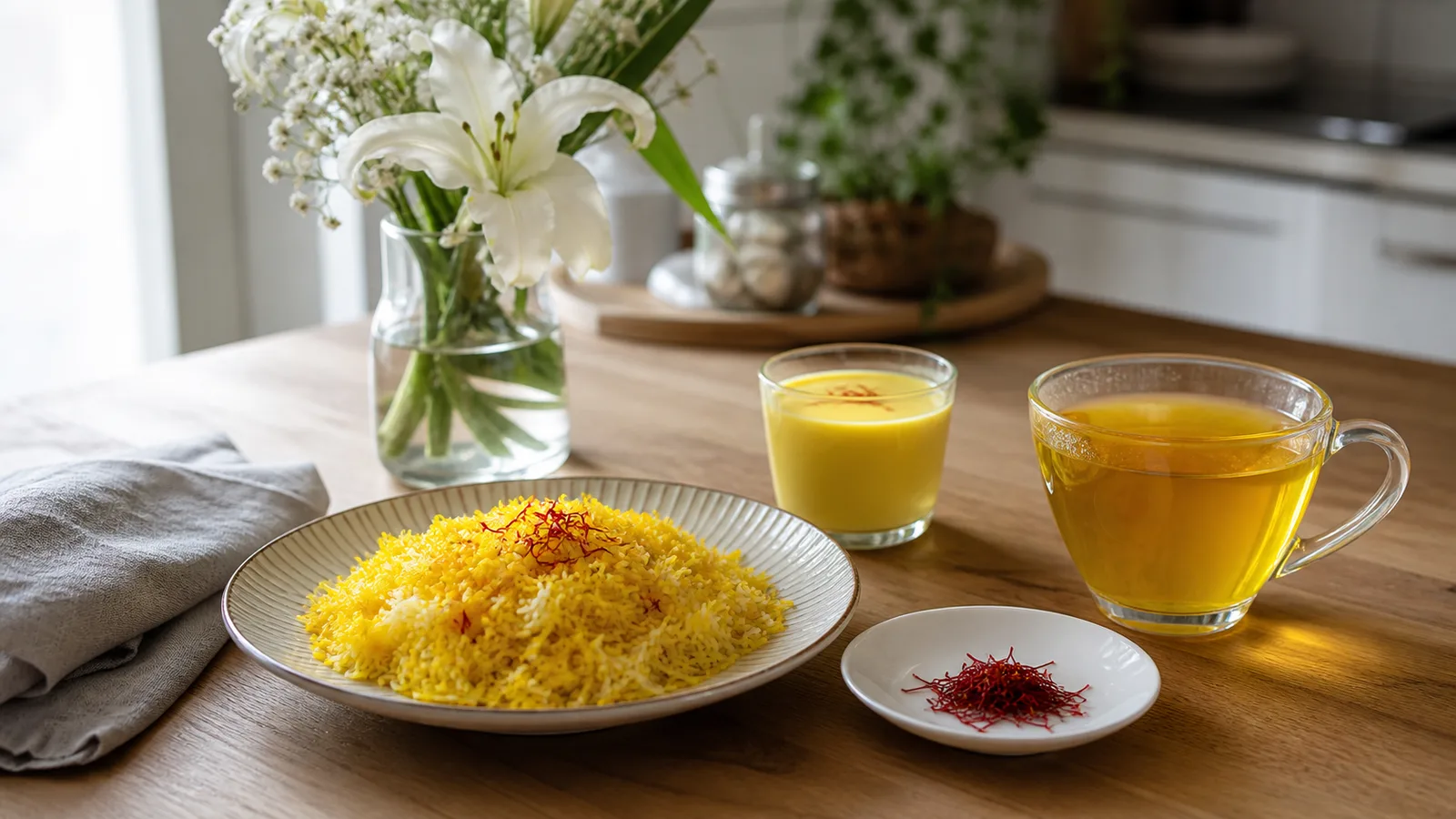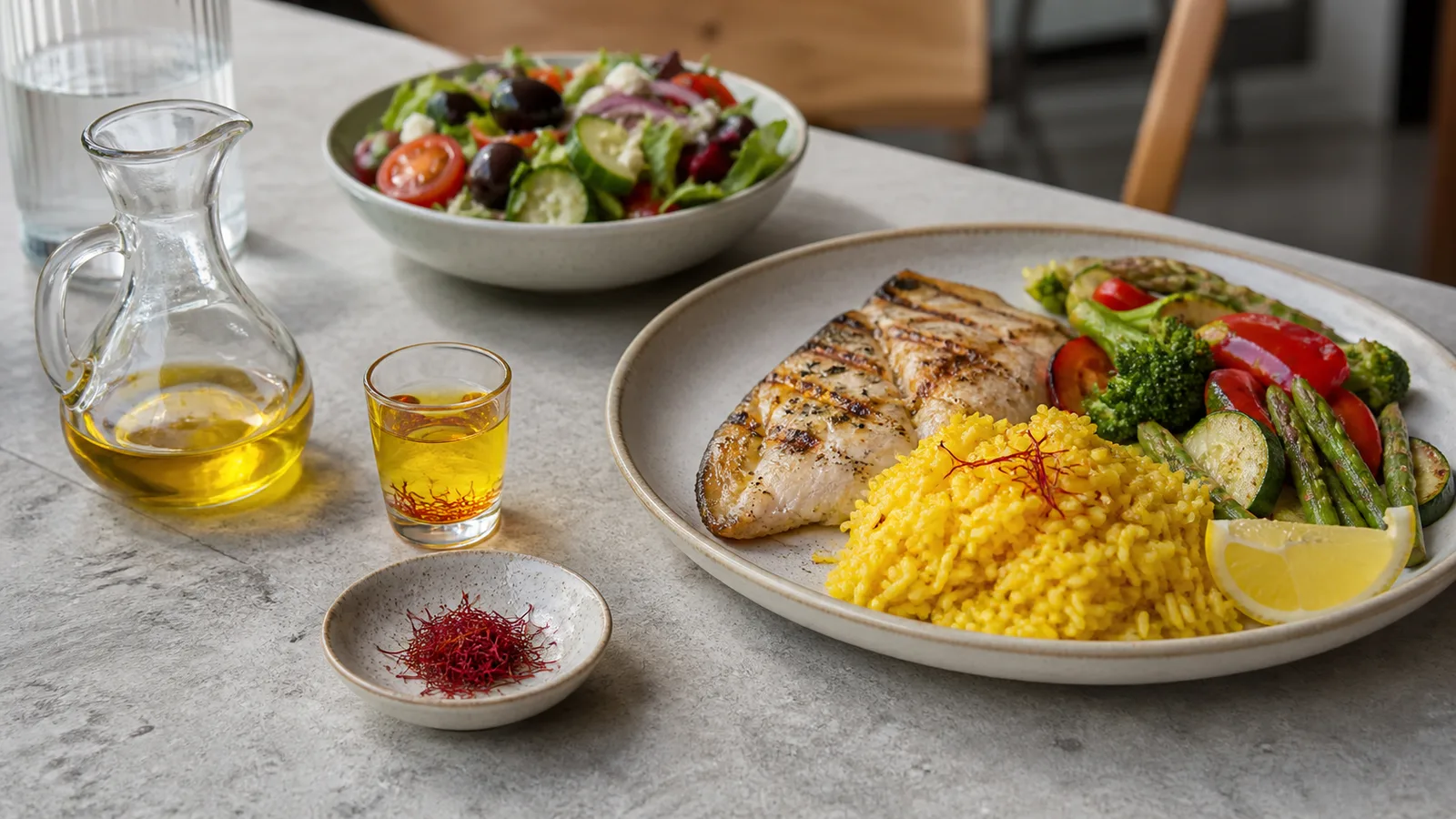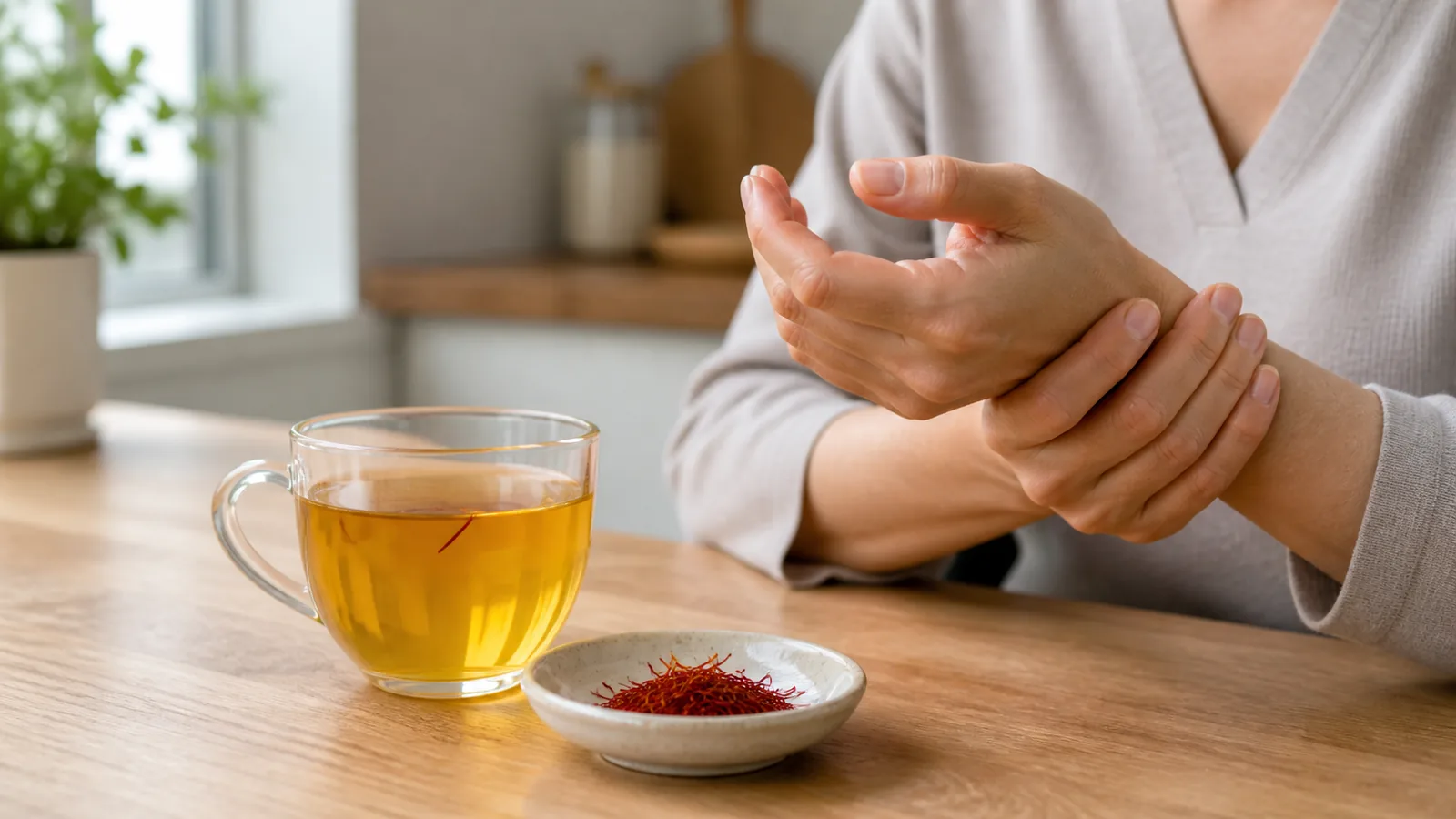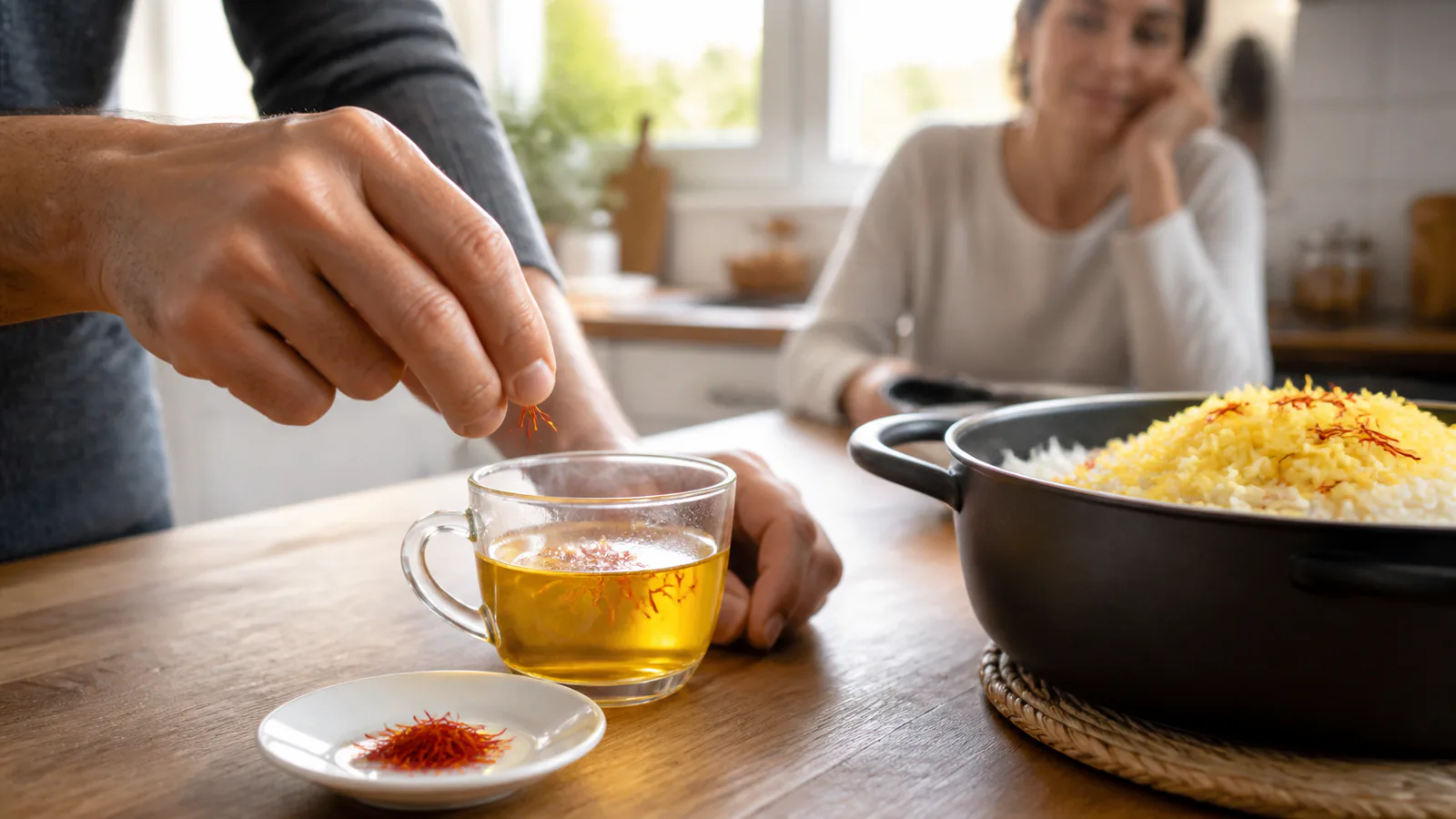
How saffron affects the body depends on the form, amount, and reason for using it. A few threads in food mainly add aroma, flavour, and colour. Most clinical studies instead test measured doses of saffron powder, extract, or isolated compounds for several weeks. Those results cannot be transferred automatically to a cup of tea or a serving of rice.
Human trials are most encouraging for some mood, premenstrual, and sexual-function outcomes. Research on blood pressure, blood lipids, and age-related macular degeneration is promising but does not make saffron a replacement for medical care. Claims about curing digestive disease, arthritis, colds, flu, or heart disease are not supported strongly enough.
What is active in saffron?
Saffron is the dried stigma of Crocus sativus. Its best-known compounds include crocins, which contribute colour; picrocrocin, associated with bitter taste; and safranal, an important aroma compound formed during drying and storage. Crocetin is a related compound produced as crocins are processed in the body.
These molecules show antioxidant and anti-inflammatory activity in laboratory models. That helps researchers propose mechanisms, but a mechanism is not the same as a proven benefit in people. The useful question is whether controlled human trials show a meaningful effect on a defined outcome.
Mood and symptoms of depression or anxiety
Saffron has been studied more often for mood than for many of its other popular uses. A 2026 GRADE-assessed meta-analysis of 34 randomized trials found improvements on some self-reported depression and anxiety scales. It did not find significant effects on several clinician-rated or other mood scales, and results varied considerably between studies. The authors rated the evidence as moderate and called for better trials.
That is a more accurate conclusion than saying saffron simply “increases serotonin” or works like an antidepressant with fewer side effects. Possible neurotransmitter mechanisms are still being studied. Anyone with persistent low mood, anxiety, suicidal thoughts, or a diagnosed mood disorder needs qualified care and should not stop prescribed treatment to try saffron.
Premenstrual symptoms and menstrual pain
The absorbed source promised menstrual-pain relief. There is some clinical support, but it needs careful wording. A 2025 systematic review and meta-analysis reported reduced premenstrual-syndrome and dysmenorrhea severity across a small group of studies. The estimated effect for menstrual pain was modest, and the reviewers noted that samples and follow-up were not large enough to rule out uncommon or long-term adverse effects.
Saffron may therefore be considered a possible complementary option after discussing symptoms and product choice with a clinician. Severe or changing pelvic pain, heavy bleeding, fainting, fever, or possible pregnancy should be assessed rather than self-treated.
Blood pressure, cholesterol, and heart claims
Some randomized trials report small changes in cardiovascular risk markers. A meta-analysis of eight blood-pressure trials estimated average reductions of about 0.65 mmHg systolic and 1.23 mmHg diastolic. A later review of 32 trials found modest reductions in several markers, including total and LDL cholesterol and systolic blood pressure, but substantial differences between studies.
These are group averages from supplementation studies, not proof that culinary saffron prevents plaque, strengthens the heart, or treats hypertension. Small changes in a laboratory or blood-pressure measure do not establish fewer heart attacks or strokes. Do not replace prescribed blood-pressure or cholesterol treatment with saffron.
Saffron and sexual function in men
The source also claimed better blood flow, libido, and erectile function. A systematic review and meta-analysis of five clinical trials found signals of benefit for some measures of sexual dysfunction in men and women. The evidence base was small, products and doses differed, and results did not prove that saffron corrects every cause of erectile difficulty.
Erectile dysfunction can be associated with cardiovascular disease, diabetes, medication effects, hormone problems, or psychological factors. A persistent change deserves medical assessment. Saffron may be studied as an adjunct; it should not delay diagnosis or replace an effective treatment.
Eye and retinal research
Small trials have tested saffron supplements in people with age-related macular degeneration. One double-blind trial of 60 participants reported changes in electroretinography after three months, while several findings were not sustained or did not differ significantly at six months. A longer study associated supplementation with preserved retinal responses but lacked a control group during its extension phase.
A 2024 review of saffron and age-related macular degeneration describes these results as encouraging while showing their limitations. They do not support claims that saffron improves night vision in healthy people, prevents blindness, reverses existing retinal damage, or replaces an eye examination and established AMD care.
Digestion, inflammation, colds, and flu
The earlier destination said saffron relieves bloating, indigestion, cramps, and arthritis by reducing inflammation and increasing bile. The absorbed source added cold and flu relief through improved circulation. These claims go beyond the clinical evidence available for the finished article.
Laboratory antioxidant activity and changes in inflammatory markers do not prove symptom relief for a specific digestive, joint, or infectious condition. Saffron is not an antiviral treatment, and feeling warm after a spiced drink does not mean the immune system is clearing a cold or flu faster. These uses can be described as traditional practice, but not as established effects.
What “warm and dry” means in traditional medicine
Persian traditional medicine classifies saffron as warm and dry and has used it for conditions interpreted through that system, including “cold-natured” discomforts. This is a historical medical framework with its own terminology. “Warm” does not mean that a clinical thermometer will show a higher temperature, and the classification is not a modern diagnosis or a substitute for evidence-based treatment.
The tradition is culturally important and may help explain how saffron was used. It should be presented as tradition rather than translated into unsupported claims about circulation, organ function, fertility, immunity, or pain.
Does saffron provide meaningful vitamins and minerals?
Nutrient tables for 100 grams of saffron list vitamin B6, vitamin C, magnesium, potassium, and iron. A normal culinary serving weighs only a tiny fraction of 100 grams, however. At that scale, saffron is not a practical source of daily vitamins or minerals.
Crocin and safranal are plant compounds, not vitamins. Calling saffron “rich in nutrients” without stating the serving size creates the wrong impression. Its culinary value is primarily sensory, while research extracts are studied for specific bioactive compounds.
Culinary use and supplement use are not equivalent
For cooking, use enough genuine saffron to flavour and colour the dish: crush a small portion, bloom it in warm water, and distribute the infusion through the recipe. There is no universal evidence-based rule that “20 to 30 threads daily” produces the health effects reported in trials. Threads vary in length, moisture, grade, and weight.
Clinical research usually uses a weighed, characterized product. An extract’s milligram dose cannot be converted reliably into a thread count unless its composition and standardization are known. More is not automatically better.
Side effects and when to ask a clinician
A 2026 systematic review of adverse events examined 102 clinical trials and one case report. Saffron preparations were generally well tolerated, but about 17.5% of participants experienced an adverse event considered related to saffron; gastrointestinal problems were the most common and were usually minor and self-limiting. The reviewers advised clinical monitoring for higher-dose or prolonged medicinal use.
Food-level use is different from taking a concentrated supplement. Before using saffron medicinally, seek individual advice if you are pregnant or breastfeeding, take prescription medicine, have a chronic condition, are preparing for surgery, or are considering it for a child. Stop and seek help for a serious reaction.
The practical answer
Saffron can affect the body, but the strongest responsible answer is selective rather than sweeping. Controlled trials support further interest in mood, premenstrual symptoms, sexual function, cardiovascular markers, and retinal function. The size and certainty of benefit differ by outcome, and most studies concern supplements rather than ordinary food.
Enjoying genuine saffron in meals is not the same as treating a disease. If the goal is flavour and colour, use it as a spice. If the goal is a health outcome, identify the condition, review the human evidence for that exact outcome, choose a characterized product, and involve a qualified clinician.