Health benefits of saffron tea are easy to overstate. A warm infusion can be fragrant, caffeine-free and enjoyable, while saffron research has found promising signals for mood, sleep and premenstrual symptoms. The important limit is that most clinical trials test a measured stigma powder or standardised extract—not a home-brewed cup.
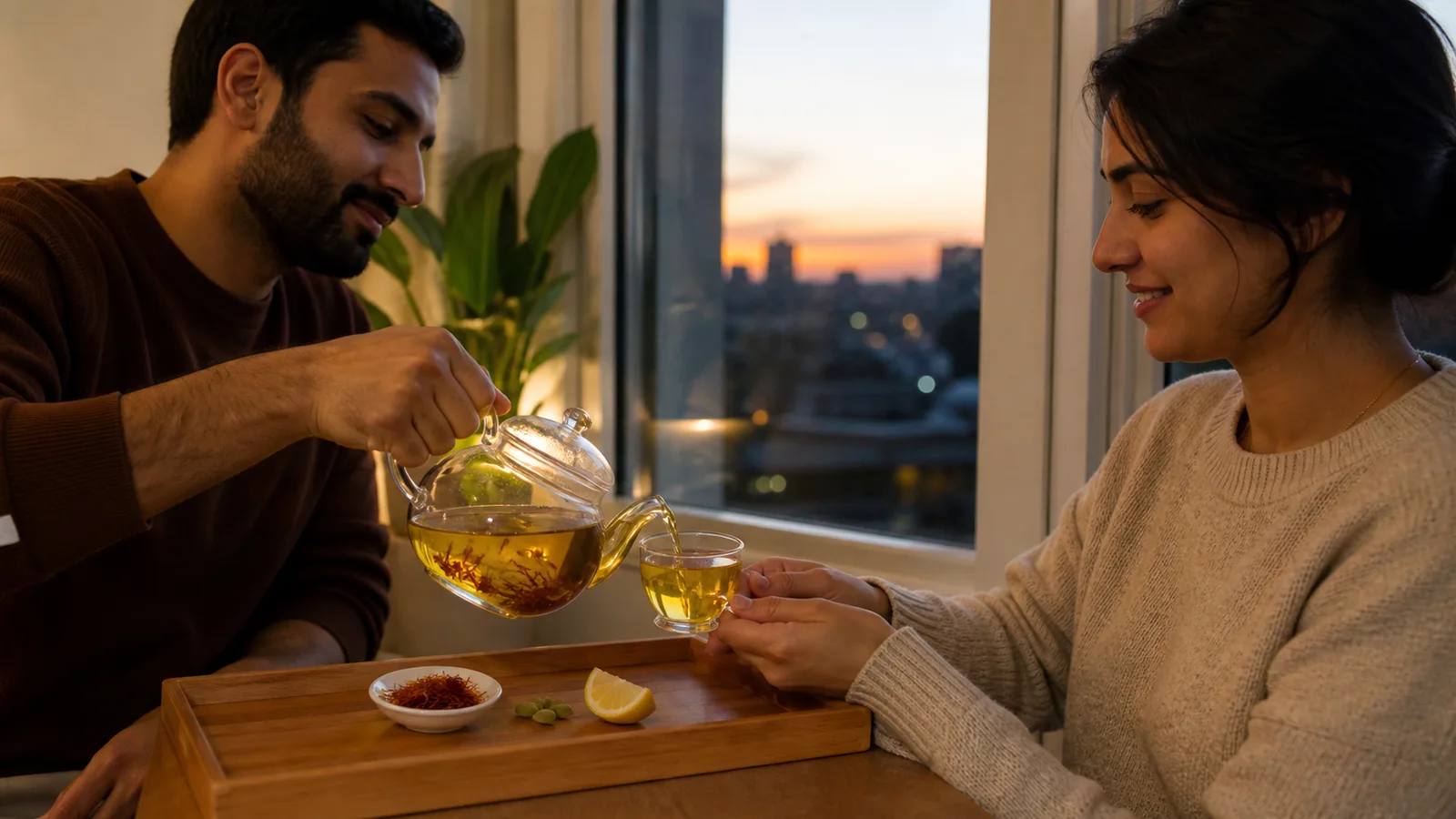
That difference does not make saffron tea worthless. It tells us which benefits are plausible, which belong to supplement research, and which have been promoted far beyond the human evidence.
What is saffron tea?
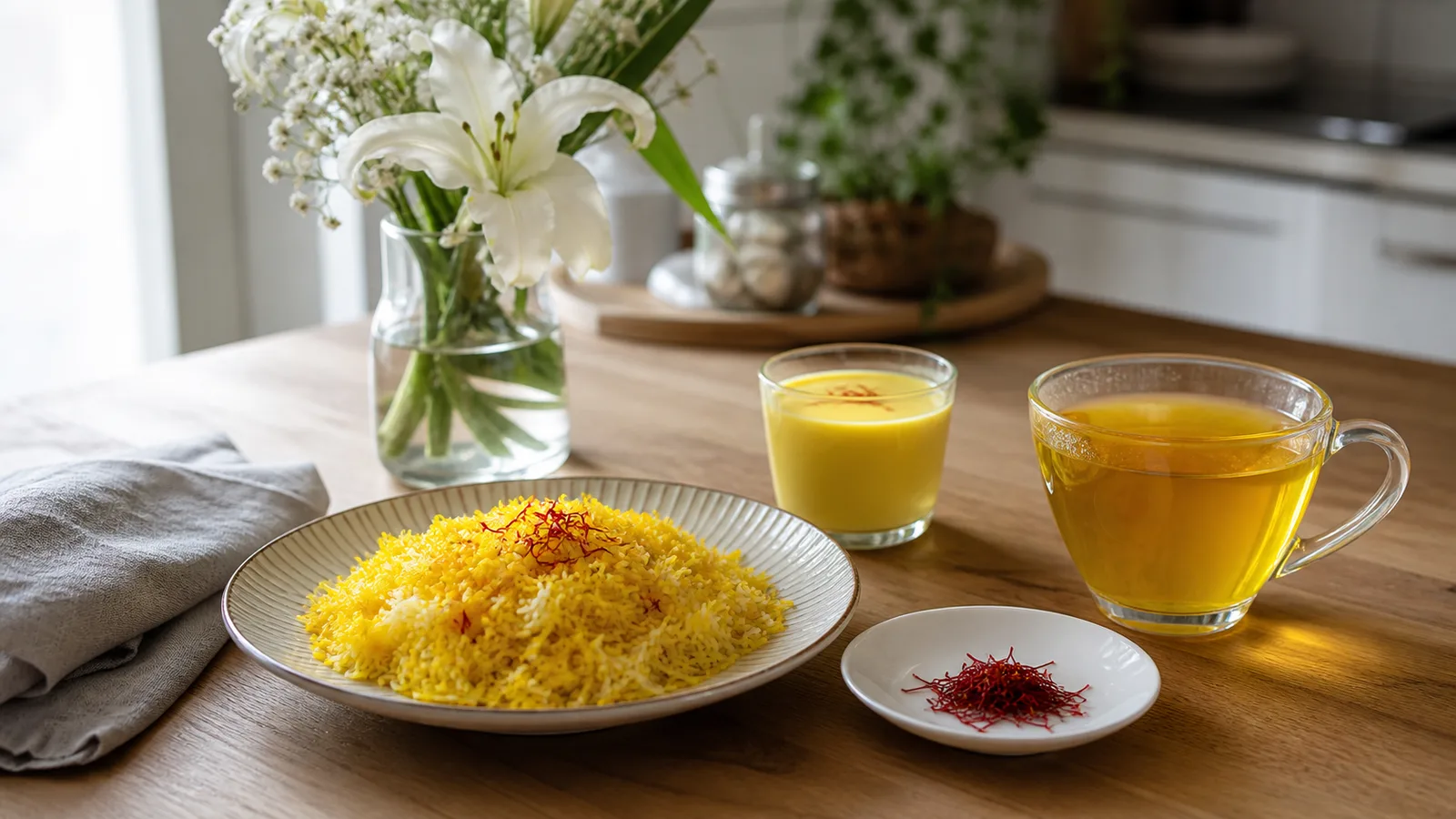
Saffron tea is an infusion of the dried red stigmas of Crocus sativus. Warm water extracts colour, aroma and soluble compounds from the threads. The drink may contain nothing else, or it may be combined with ingredients such as cardamom, cinnamon, ginger, lemon or a sweetener.
Its strength depends on the threads, amount, water, temperature and steeping time. That natural variation is one reason a cup cannot be assumed equivalent to the capsule or standardised extract used in a trial.
What is saffron tea good for?
As a beverage, saffron tea offers flavour, aroma, hydration and a quiet preparation ritual. It can also be a caffeine-free alternative when the blend contains no tea leaf, coffee or other stimulant. Those are direct, everyday benefits.
Clinical questions need a more careful answer. Human research on saffron suggests possible effects in several areas, but evidence about the spice does not prove that tea treats a condition. The sections below keep those two ideas separate.
Mood and saffron tea
A 2026 review of 34 randomised trials found improvements in self-reported depression and anxiety scores. Clinician-rated scales did not show the same consistent effect, and results varied considerably between studies.
These trials do not establish a cup of saffron tea as a natural replacement for fluoxetine or another antidepressant. Product, amount and duration matter. Tea may fit into a comforting routine, but persistent depression or anxiety needs qualified care.
Sleep quality
A systematic review of five randomised trials involving 379 people found initial support for better sleep quality or duration. This is a promising, still-small evidence base. It does not show that every infusion causes sleepiness or fixes insomnia.
A caffeine-free saffron drink can be part of a wind-down routine. If the blend includes black or green tea, however, it contains caffeine and may work against that goal.
Premenstrual symptoms and period pain
A 2026 meta-analysis found improvements in pooled premenstrual-syndrome scores and a smaller effect on dysmenorrhoea scores. The studies tested defined saffron interventions, not an unlimited range of tea recipes.
The PMS and dysmenorrhoea review supports further research; it does not make tea a substitute for evaluating severe pain, heavy bleeding or a sudden change in symptoms.
Heart health, cholesterol and blood sugar
Supplement trials have measured blood pressure, fasting glucose, HbA1c, cholesterol and triglycerides. Some pooled analyses report small average changes, while others find no effect on several of the same markers. The participants often already had a metabolic condition and continued their usual care.
Animal studies of cholesterol or diabetic rats cannot establish that saffron tea treats heart disease or diabetes in people. Do not change blood-pressure or glucose medicine because of a drink, and do not add large amounts in an attempt to force a stronger effect.
Memory and eye health
Small clinical studies have examined saffron in mild cognitive impairment, dementia and selected eye conditions. Reviews describe encouraging signals but call for larger, lower-bias trials. These findings come from measured interventions and diagnosed populations.
It is inaccurate to promise that tea improves learning in a healthy adult, treats Alzheimer’s or Parkinson’s disease, or prevents macular degeneration. New memory or vision problems warrant assessment rather than experimentation with a stronger infusion.
Sexual function
A meta-analysis of five small studies found changes in sexual-function scores. Some participants had dysfunction related to antidepressant medicine, and effects differed between dimensions. The evidence does not support describing saffron tea as a guaranteed aphrodisiac or alternative to medical care.
Appetite and weight control
Marketing often turns a few appetite or snacking studies into a weight-loss promise. Larger pooled analyses have not shown a dependable change in body mass index, and findings for waist circumference are inconsistent.
Unsweetened saffron tea contains little energy, which may suit someone who wants an alternative to a sugary drink. That is different from suppressing appetite or causing weight loss.
Cancer claims do not belong on a tea label
Crocin, crocetin and other saffron compounds have been studied in cells and animals. Such experiments can identify mechanisms for future research. They do not prove that saffron tea prevents cancer, destroys tumours, stops spread or makes chemotherapy work better in a person.
No one should delay screening or cancer treatment for an infusion. “Healing power” is a colourful title, not a clinical conclusion.
Chest, throat and respiratory claims
A warm drink can feel soothing on a dry throat, particularly when it is not too hot. That comfort does not show that saffron treats bronchitis, a respiratory infection or chest pain. Chest pain and difficulty breathing can be urgent symptoms and should not be managed with tea alone.
How to make a balanced cup
Use a modest culinary pinch of whole, traceable threads. Lightly crush them, add warm water and allow time for the colour and aroma to develop. Avoid treating a large measured weight as an ordinary serving.
Our tested saffron tea recipe provides proportions and optional flavour combinations. If you add another herb, check its own cautions; a blend inherits the risks of every ingredient.
Side effects and who should be cautious
A 2026 systematic review of adverse events found that saffron was generally well tolerated in human studies, but side effects occurred. Gastrointestinal complaints were reported most often and were usually mild. Headache, nausea, dry mouth, reduced appetite, dizziness and allergic symptoms have also been described.
Stop drinking the tea and seek urgent help for breathing difficulty, facial or throat swelling, fainting, severe confusion, unusual bleeding or another rapidly worsening reaction.
Pregnant or breastfeeding people should not start a concentrated daily saffron drink without professional guidance. A pharmacist or doctor should also review medicinal use if you take prescription medicine, are preparing for surgery, or have a bleeding, blood-pressure, glucose, mental-health, liver or kidney condition.
Tea versus a saffron supplement
A tea is variable and usually chosen as food. A supplement should state the preparation, amount, other ingredients and serving. Neither is automatically superior, and neither should borrow a clinical result from a different product without saying so.
For a topic-by-topic look at trial sizes and limitations, see the 20-claim saffron evidence guide. For a combined safety review, read saffron benefits and side effects.
The honest benefits of saffron tea
Saffron tea is a distinctive drink with real sensory value. It may deliver some of the compounds studied in saffron research, but a home cup has not been shown to reproduce every supplement result. Mood, sleep and premenstrual symptoms are the most reasonable areas to watch; cancer, heart-disease treatment, diabetes control and guaranteed weight loss are not tea claims.
Enjoy the aroma, colour and ritual. The best account of the health benefits of saffron tea is the one that leaves room for both promising evidence and the limits of the cup in your hand.