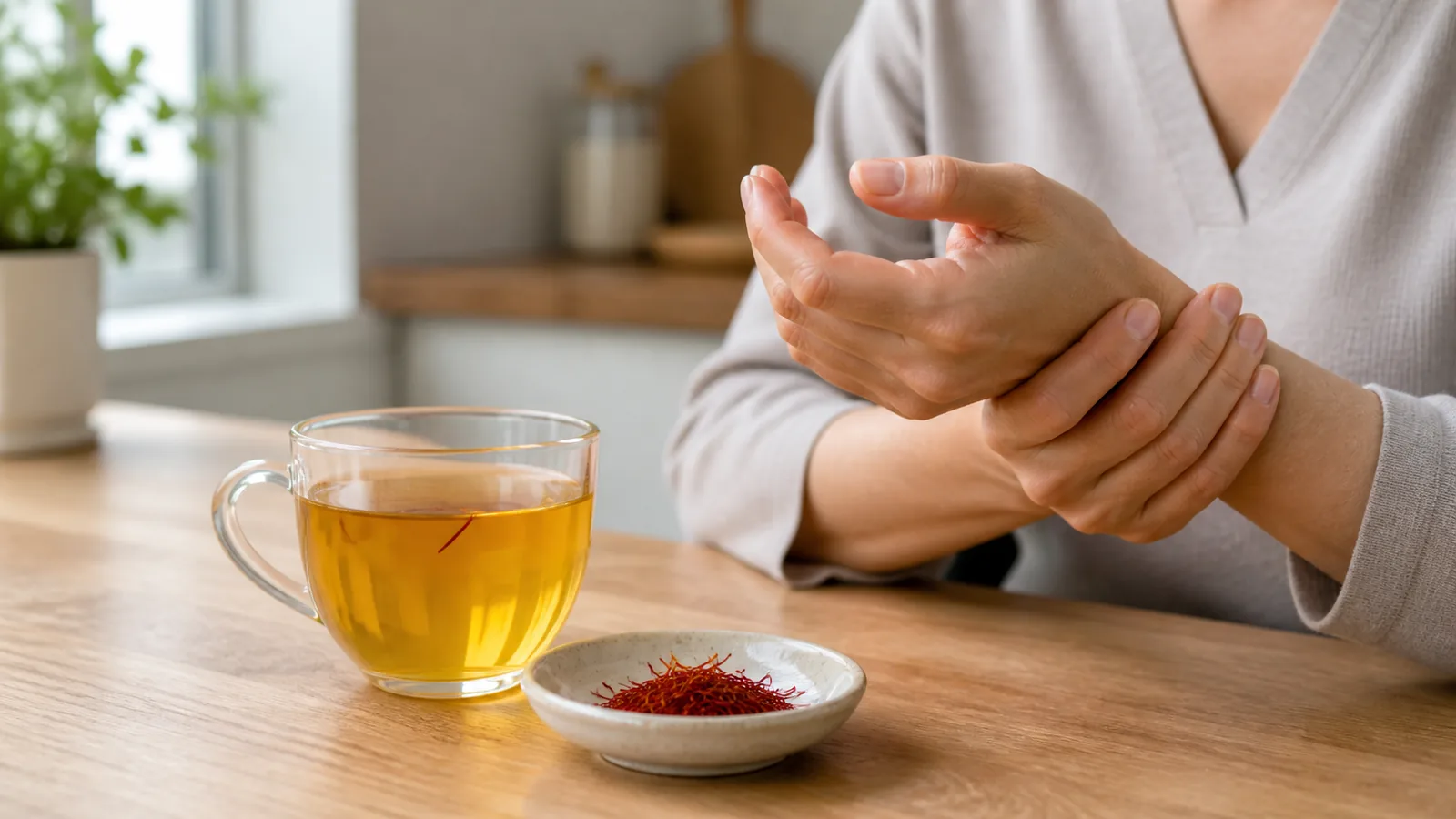
Saffron benefits and side effects belong in the same conversation. Human trials give the clearest positive signal for mood symptoms, with smaller bodies of evidence for sleep and selected metabolic measurements. Most people tolerate saffron in short studies, but stomach complaints and other adverse events occur, and concentrated or prolonged use deserves more caution than a few threads in food.

This guide explains what part of the plant the research tests, what benefits are reasonably supported, which claims go too far, and when saffron or kesar may be a poor choice.
Saffron flower, stigma, leaves and corm are not interchangeable
The culinary spice comes from the dried red stigmas of Crocus sativus. Each flower has three stigma branches. The plant grows from a corm, while narrow green leaves appear during its growth cycle.
Searches for “saffron flower benefits” often mean the red spice taken from the flower. Petals, leaves, styles and corms have different chemistry and are not substitutes for stigma saffron. Petals are being studied for possible uses, but a finding about a petal extract cannot be applied to saffron tea. Corms are planting material, not a culinary ingredient.
Traditional Persian writing associated saffron with joy and described it within a “warm and dry” system of medicine. That history helps explain its cultural reputation. It is not the same evidence as a blinded clinical trial.
Which saffron health benefits have human evidence?
Mood symptoms
Mood has the broadest trial base. A 2026 GRADE-assessed review of 34 randomised trials found lower self-reported depression and anxiety scores. Clinician-rated measures did not show the same consistent effect, and variation between studies was high.
Saffron may therefore be worth discussing as a complementary option. It should not replace counselling, prescribed medicine or urgent mental-health care. The studies also used measured products; they do not show that an occasional cup of saffron tea treats depression.
Sleep
A systematic review of five randomised trials reported initial support for sleep quality or duration. Five trials involving 379 participants are encouraging, but too few to make a universal promise. Persistent insomnia may have a medical, breathing, medication or behavioural cause that needs its own assessment.
Cardiometabolic markers
Some pooled trials report small changes in fasting glucose, HbA1c, cholesterol or blood pressure. Results differ by review and population. A laboratory number moving slightly does not prove that saffron prevents diabetes, stroke or heart disease, and it is not a reason to alter prescribed treatment.
Cognition and sexual function
Small trials in mild cognitive impairment or dementia and several studies of sexual dysfunction have produced positive signals. The evidence bases are limited and sometimes involve a particular diagnosed group or medication-related problem. Saffron is not an established dementia treatment or a guaranteed aphrodisiac.
For the study sizes, outcomes and uncertainties behind each topic, read our 20-claim saffron health evidence review.
Benefits that should not be promised
The old article described saffron as a pain reliever, anticonvulsant, blood builder, liver cleanser, kidney purifier, diuretic and treatment for cough, bronchitis and digestive problems. It also claimed that regular use brings happiness. Those statements are not established by strong human evidence and should not guide treatment.
Antioxidant activity is real chemistry, but it does not prove that eating saffron prevents cancer, protects every nerve cell or slows ageing. Inflammatory biomarkers have also produced mixed trial results. Mechanisms are useful for researchers; they are not a licence to turn every biological pathway into a customer promise.
Postpartum bleeding is particularly unsuitable for self-treatment. Heavy bleeding after birth is an emergency, not a reason to prepare a herbal drink.
What side effects of saffron have been reported?
A 2026 systematic review of saffron adverse events examined human trials, case reports and series. Saffron was generally well tolerated, while adverse effects did occur. Gastrointestinal problems were reported most often and were usually mild and self-limiting.
Studies and reviews have also recorded complaints such as headache, nausea, dry mouth, reduced appetite, dizziness or allergic symptoms. Not every event was necessarily caused by saffron, and rates cannot be transferred to every retail product. The practical lesson is to stop treating a concentrated botanical as risk-free simply because it is natural.
When to seek urgent help
Stop the product and seek urgent medical help for difficulty breathing, swelling of the face or throat, fainting, severe confusion, persistent vomiting, unusual bleeding or another rapidly worsening reaction. Contact a poison service or emergency clinician if a child or adult swallows a large unknown amount.
Bring the package with you. Its ingredient list, concentration, lot and any added botanicals may matter more than the word “saffron” on the front.
Pregnancy and breastfeeding
The blanket statement that every pregnant person must avoid every food containing saffron is too broad. The opposite claim—that any amount is safe—is also unsupported. Culinary exposure and concentrated medicinal use are different.
A 2026 review of saffron in pregnancy found that evidence remains limited and inconclusive, with concern around higher exposure and uterine effects. Pregnant or breastfeeding people should not begin a saffron supplement, tincture or concentrated daily tea without advice from their obstetric or maternity clinician.
Medicines, surgery and existing conditions
Interaction evidence is incomplete. Caution is sensible if you take medicine that affects bleeding, blood pressure, glucose, mood or sedation, or if you are preparing for surgery. That does not prove a dangerous interaction in every case; it means a pharmacist or doctor should assess the actual product and medicine list.
The same applies to people with liver or kidney disease, a bleeding disorder, low blood pressure, significant allergy history or an active mental-health condition. A clinician can distinguish a culinary amount from a supplement and check whether the goal conflicts with current care.
Saffron tea: benefit, side effect and dose context
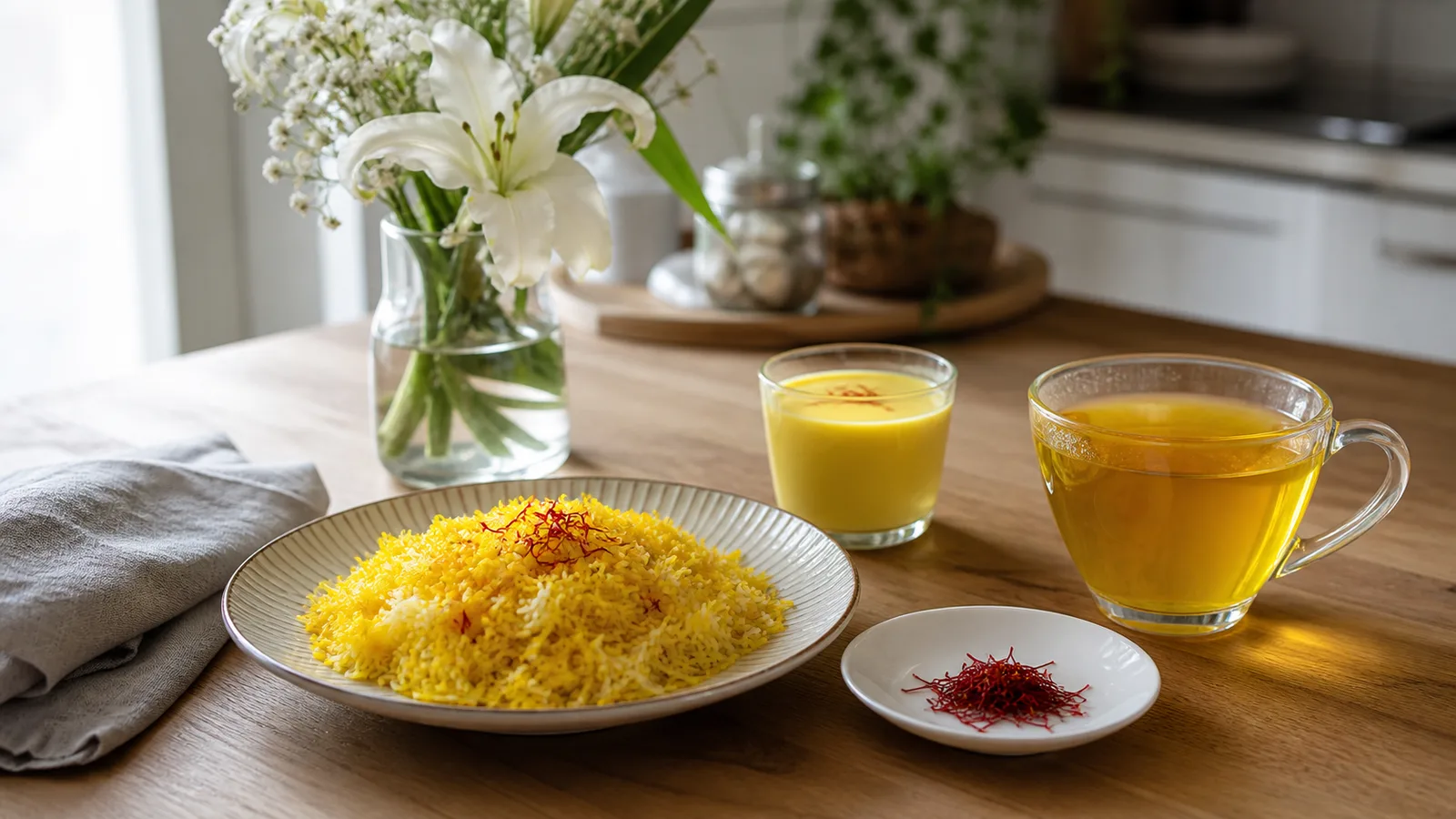
A mild saffron tea can be enjoyed as a beverage. The previous recipe used two grams in one litre and presented it as a routine tea; that is far beyond an ordinary culinary pinch and is not appropriate general advice. Clinical studies do not create one universal home recipe because they use different extracts, stigma products, amounts and durations.
Use a modest culinary amount for flavour rather than trying to reproduce a treatment dose. Our saffron tea recipe gives a food-focused preparation and does not claim to treat disease.
If tea causes nausea, dizziness, headache, unusual symptoms or an allergic reaction, stop drinking it. More is not necessarily more effective.
Why a homemade saffron tincture is a poor idea
The old instructions mixed saffron with high-proof alcohol, stored it for two weeks and offered the result for use without a concentration, dose, indication or safety check. That method has been removed. A homemade tincture can vary in extraction strength, contamination, alcohol content and serving size.
A standardised clinical product is not recreated by steeping threads in alcohol. Anyone considering medicinal use should discuss a clearly labelled, traceable product with a qualified professional rather than improvise a concentrated extract.
Powder, quality and storage
Powder exposes more surface area to air and is harder for a buyer to inspect than whole threads. Grinding a small amount immediately before cooking is usually more useful than making a large batch. An oven is unnecessary and can reduce aroma if the spice is overheated.
Keep saffron tightly closed, dry, cool and away from light and strong odours. The full saffron storage guide explains containers, moisture, refrigeration and signs of quality loss.
A practical benefit–risk check
- Decide whether you want culinary flavour or are trying to influence a health condition.
- For food, use a modest pinch from a traceable source and store it well.
- For a supplement, identify the exact preparation, amount and other ingredients.
- Check the claim against human trials, not a cell study or traditional list.
- Review pregnancy, medicines, surgery and existing conditions with a clinician.
- Stop and seek help if a significant reaction develops.
The balanced view is straightforward: saffron has genuine culinary value and promising clinical research, especially around mood. Its side effects are often mild in trials, but concentrated use is not automatically harmless. A good decision respects both halves of the title—health benefits and side effects of saffron—without turning either into fear or hype.