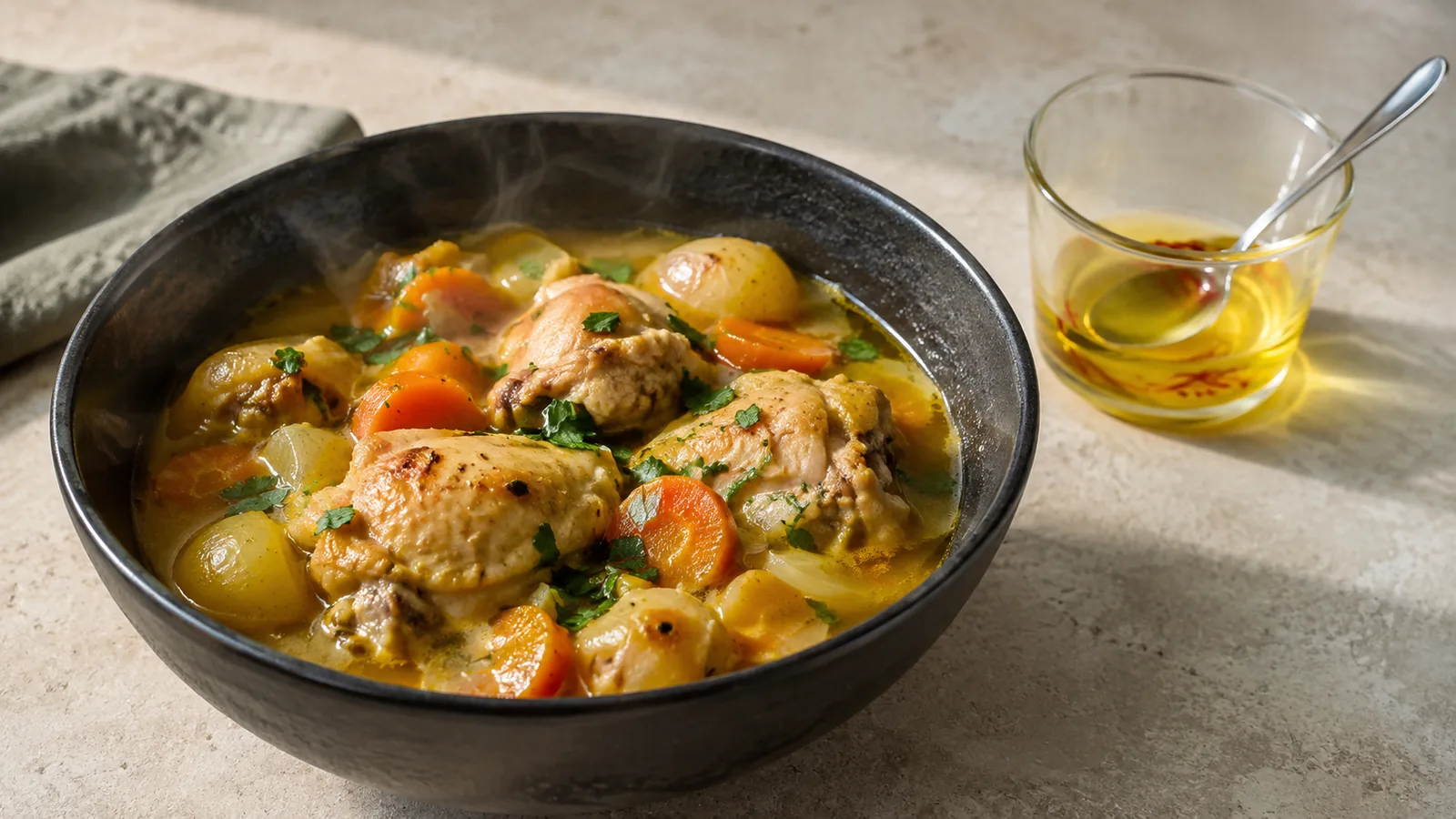
Real saffron should not have a distinctly fishy or rotting smell. Its normal aroma is complex—often described as floral, grassy, hay-like, earthy or warm—with a slightly bitter character in the infusion. Smell is subjective, though, so an unfamiliar note is a reason to inspect the saffron carefully rather than proof on its own that it is fake or spoiled.
Does saffron smell fishy?
Not as a defining saffron aroma. Trained sensory work uses descriptors such as overall saffron intensity, floral, grassy, fruity, bitter, astringent and pungent. Other research has reported lower-intensity notes including earthy, mushroom-like, caramel, citrus or vinegary. “Fishy” is not one of the usual headline descriptions.
That does not mean two people will describe the same jar in exactly the same way. Saffron contains many volatile compounds, and drying, age, storage and concentration affect what reaches the nose. A powerful dry thread can seem medicinal or sharp to someone encountering it for the first time. Judge the condition of the product as well as the word that first comes to mind.
The aroma characteristics of real saffron
Saffron aroma is easier to recognise as a combination than as one simple scent. You may notice dry hay or cut grass first, followed by floral, earthy and gently sweet-smelling notes. “Honeyed” describes an aromatic resemblance; pure saffron is not supposed to smell like added sugar or artificial perfume.
Safranal is strongly associated with saffron’s characteristic odour, while picrocrocin contributes to its bitter taste and crocins to its colour. A peer-reviewed chemical and sensory evaluation of saffron found that safranal concentration correlated with perceived odour intensity in the samples studied. It also shows why aroma is a quality clue, not a stand-alone identity test.
Why saffron might seem to smell fishy
Before deciding the saffron itself is responsible, consider its surroundings and condition.
- Transferred odour: a loosely closed packet can pick up smells from a cupboard, shipping carton or nearby strongly scented food.
- Packaging: a plastic pouch, adhesive, ink or previously used container can contribute an odour that is not coming from the threads.
- Moisture or contamination: damp storage can damage the spice and raises a food-safety concern, especially if there is visible mould, clumping or a musty, sour or decomposing smell.
- Old or badly processed saffron: aroma changes during drying and storage. Poor handling may produce an unbalanced scent, while very old saffron more often becomes weak or flat.
- Individual perception: people use familiar words for unfamiliar aromas. A sharp, earthy or fatty note may be called fishy even when another person would choose a different description.
None of these explanations can be confirmed by smell alone. They are prompts for a closer check.
How to check the smell without contaminating the sample
- Move away from cooking odours. Fish, onions, coffee, perfume and cleaning products can overwhelm a small spice sample.
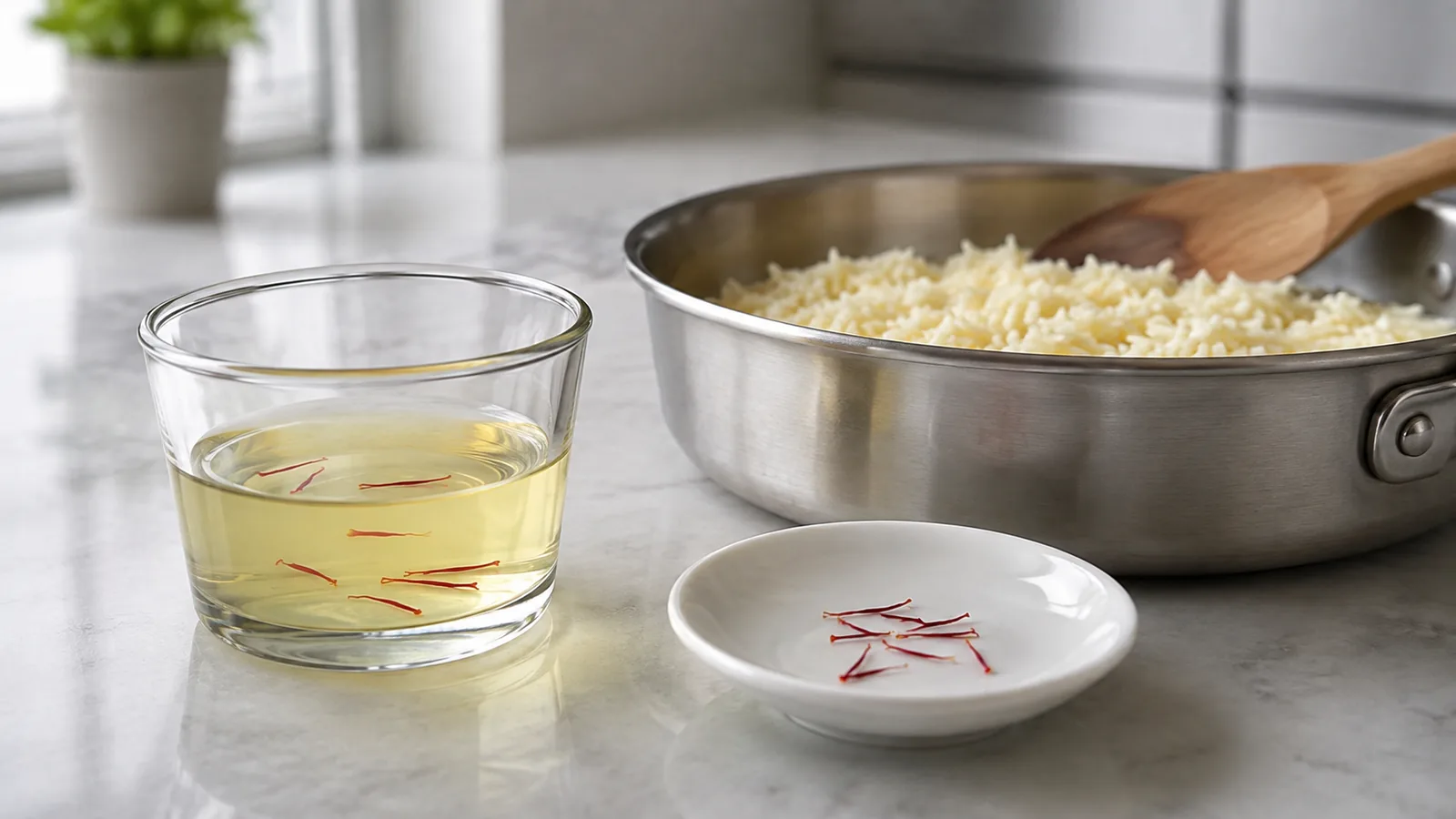
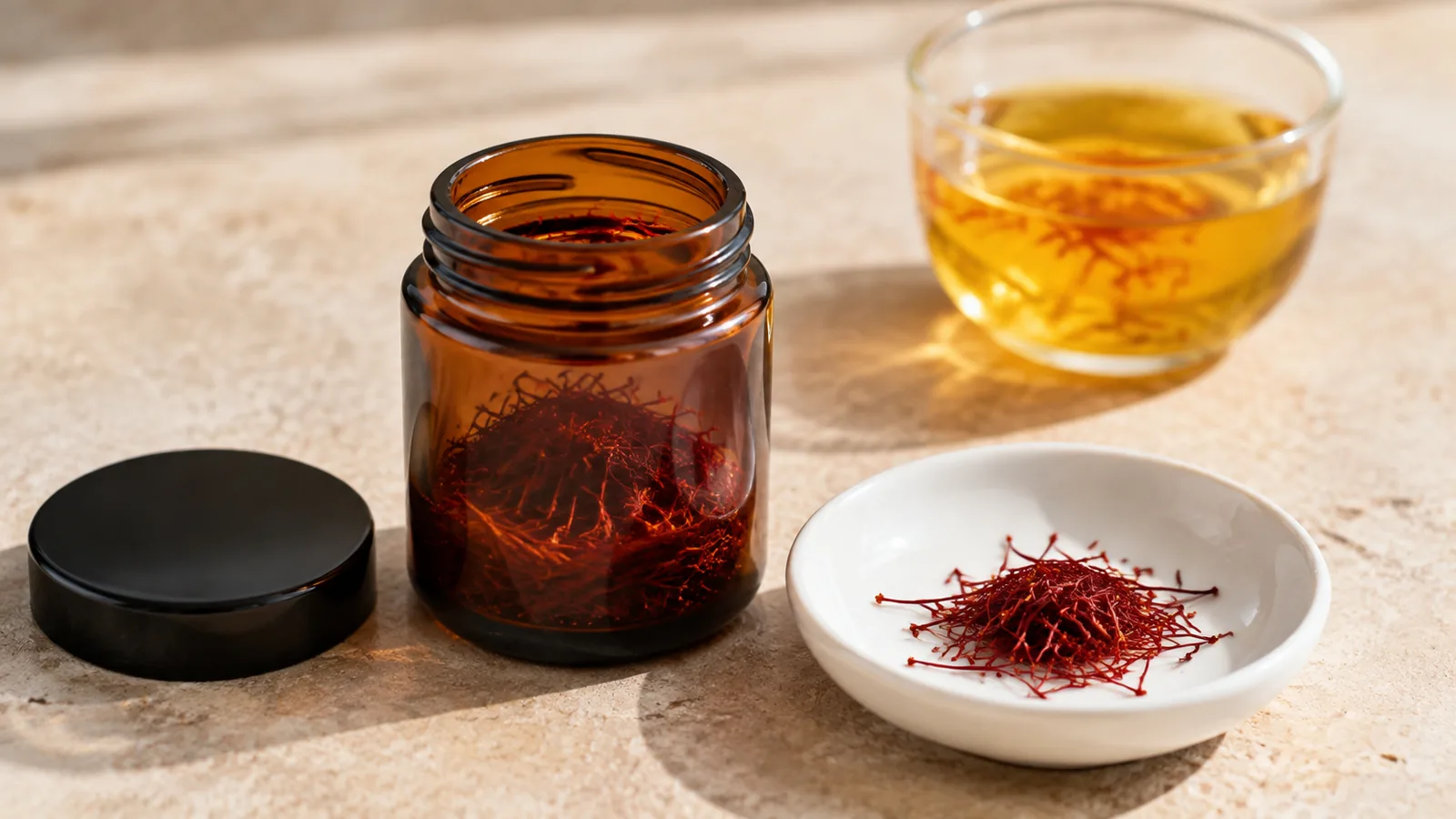
- Use a clean neutral container. Put a few dry threads into a clean glass or onto plain white ceramic. Smell the empty container first to make sure it has no odour of its own.
- Inspect the threads. They should be dry and recognisably fibrous, without visible mould, damp clumps, oily coating or foreign debris.
- Air briefly and smell again. Let the sample sit for a few minutes away from the original package. If the odd smell fades, the container may have contributed to it.
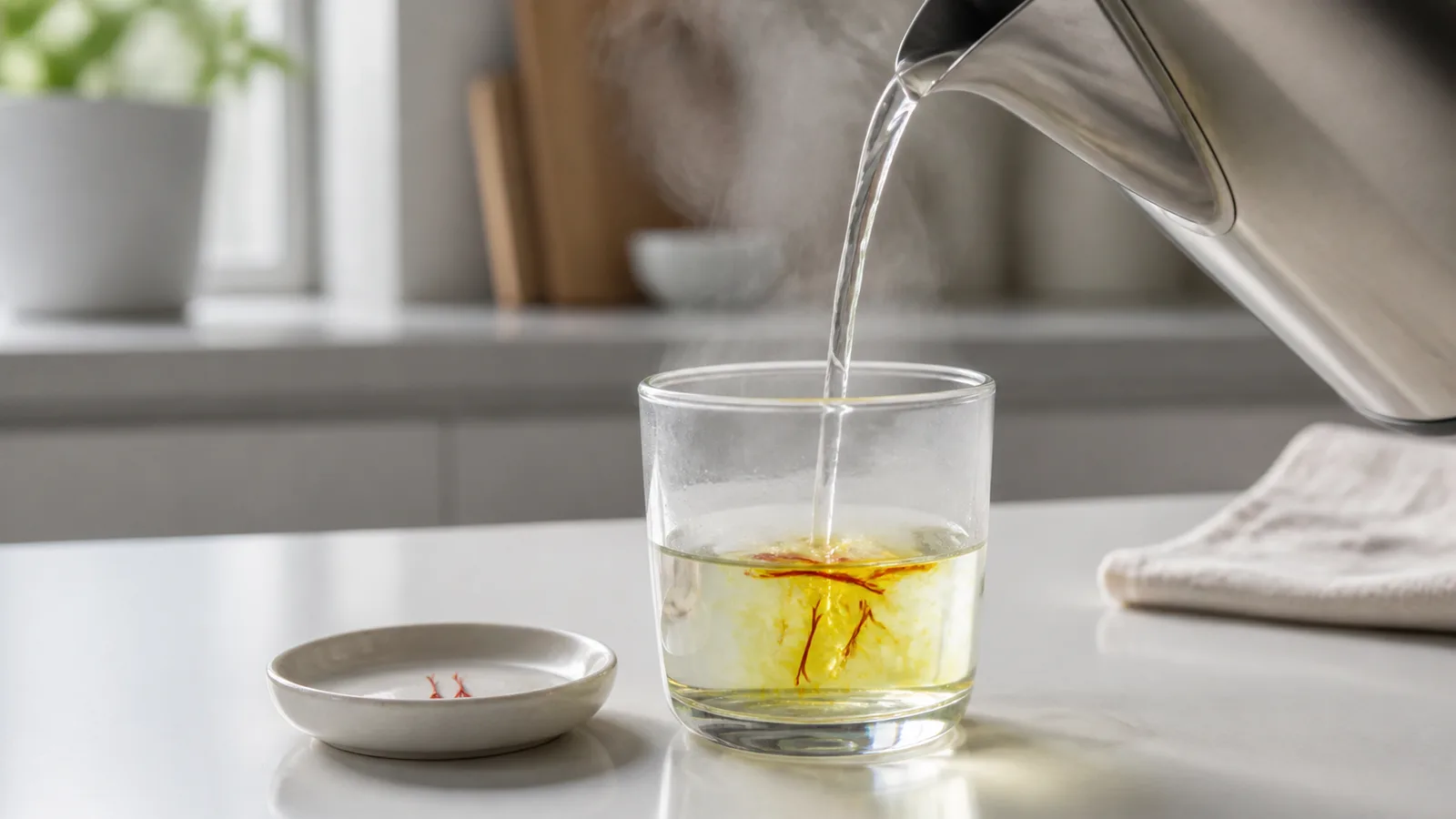
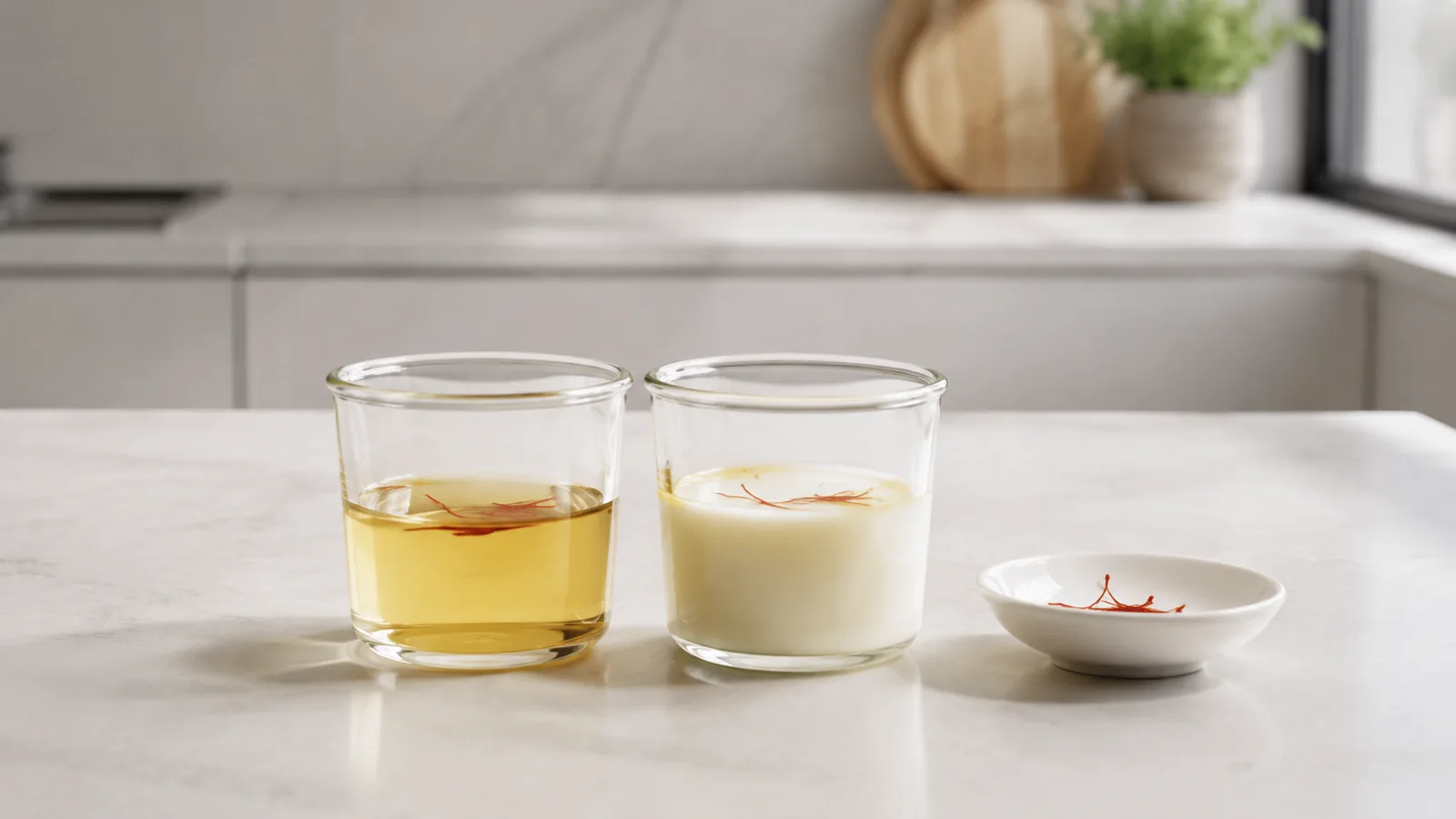
- Make a small infusion. Steep a few threads in warm water in a clean glass. Genuine saffron normally colours the water yellow-gold and produces a recognisable aromatic infusion, although this home check cannot prove purity.
- Compare only with a trusted sample. If possible, compare with a sealed, traceable batch you already know rather than an anonymous online description.
When not to use the saffron
Do not taste saffron that smells rotten, strongly chemical or persistently fish-like when you cannot account for the odour. Also reject it if the threads are damp, mouldy, slimy, visibly contaminated or stored in a damaged package. When food safety is uncertain, a home water test does not make the product safe.
If the pack is newly purchased, keep the label, batch number and receipt and contact the seller. A responsible supplier can check the lot and advise on replacement or analysis. Commercial buyers should quarantine a questionable batch and use appropriate laboratory or sensory-quality procedures rather than blending it with sound stock.
How to protect saffron’s natural fragrance
Store dry saffron in a clean airtight container, protected from light, moisture, heat and strong neighbouring odours. Open it only as long as needed and use a dry utensil. Avoid moving it into a jar that previously held another spice unless that container has been thoroughly cleaned and has no remaining scent.
For signs of age, moisture damage and storage-related decline, our guide to whether saffron goes bad provides a broader condition check.
So, does saffron smell fishy? A clearly fishy off-odour is not characteristic of good saffron and should be investigated. First rule out the package and surrounding smells, then inspect the dry threads and a small infusion. If the odour persists alongside any sign of contamination—or you simply cannot establish that the product is safe—do not use it.