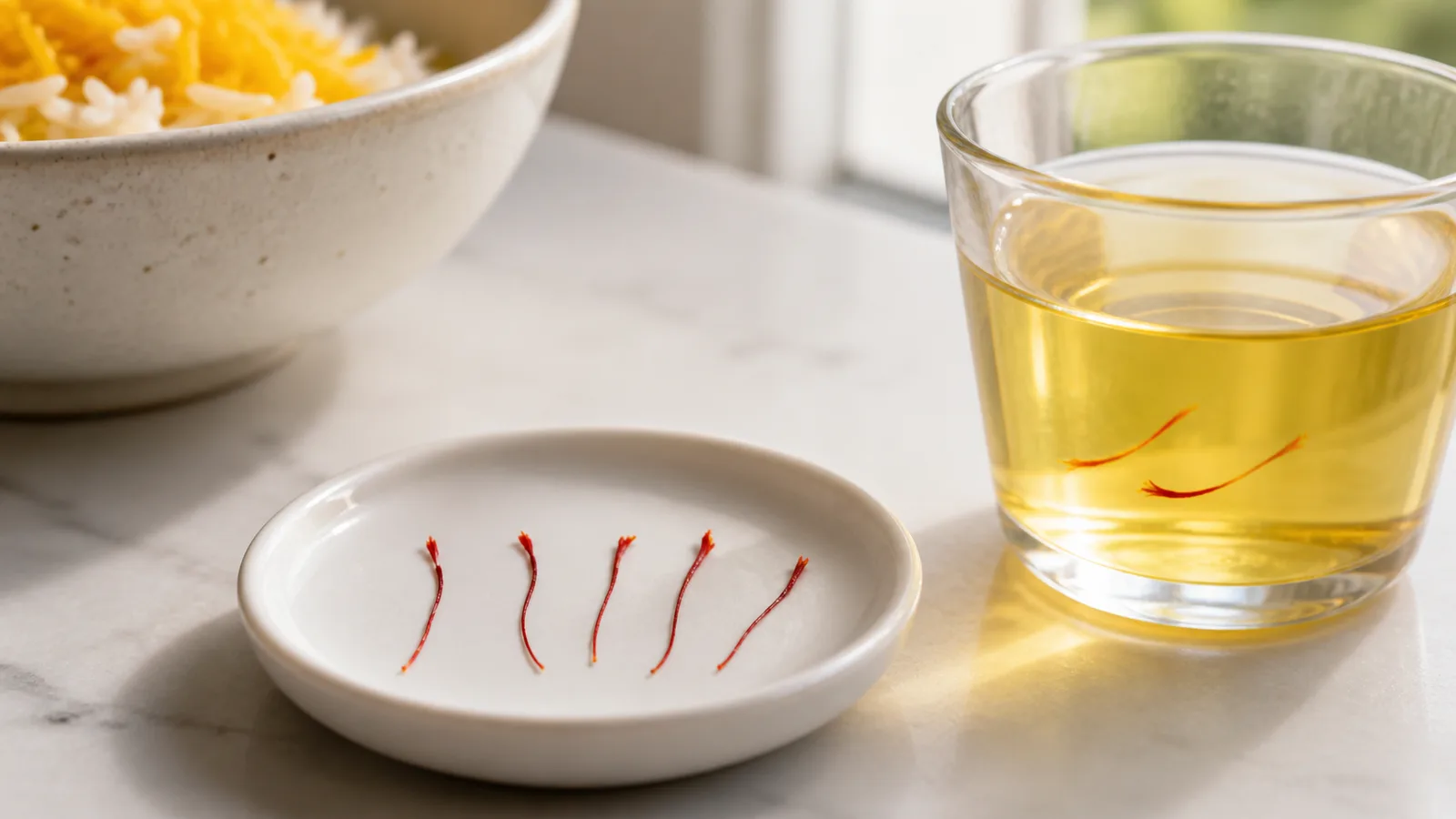
Saffron is not hot or spicy in the way chilli, cayenne or black pepper can be. It adds aroma, golden colour and a slightly bitter, complex flavour, but it should not create a burning or tingling sensation. Because “hot” can also mean serving temperature or a traditional description of food, it helps to separate those meanings.
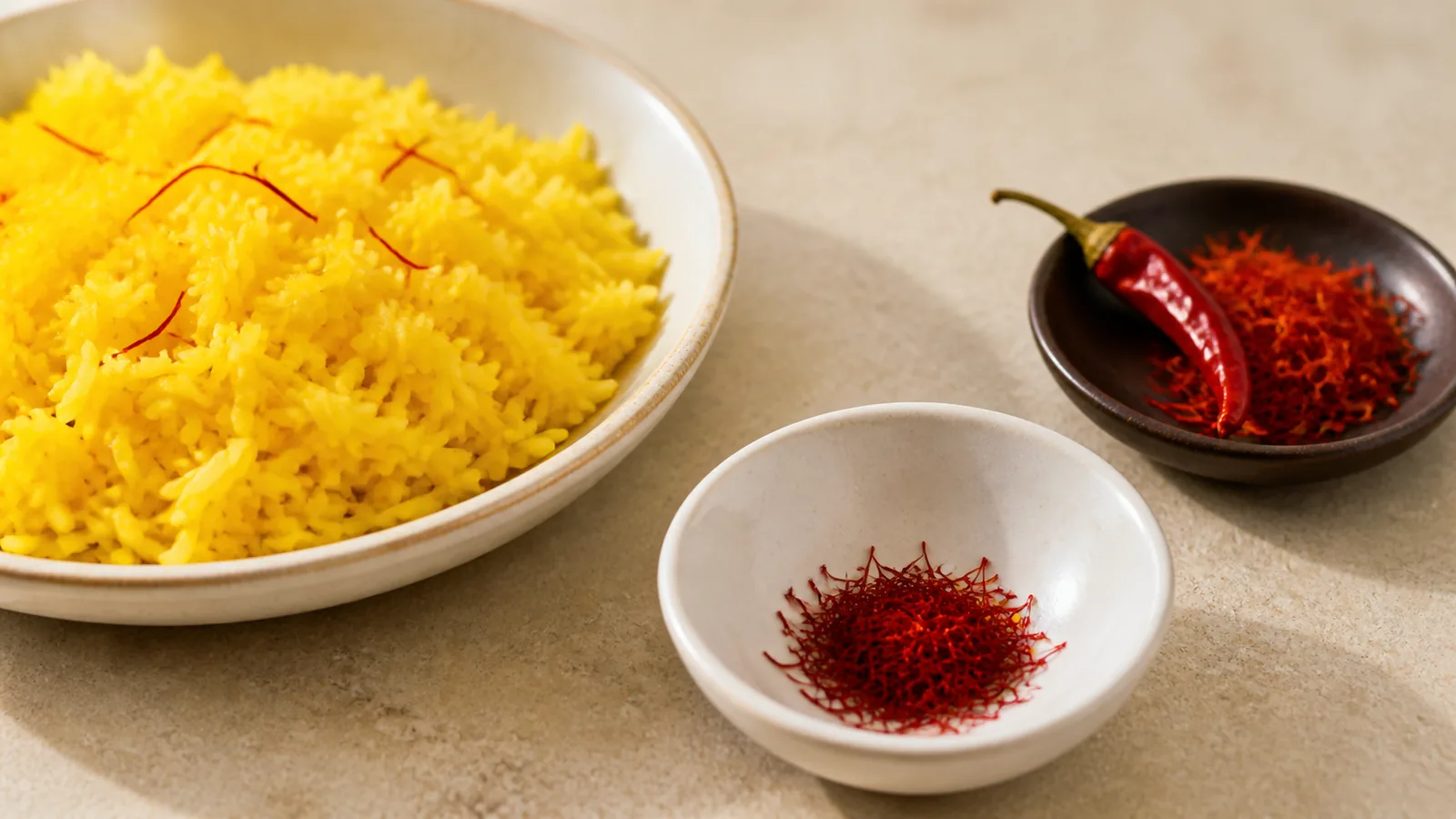
Is saffron spicy? The short answer
No. Saffron is a spice, but that does not make it spicy-hot. The word spice describes an ingredient used for flavouring; spicy often describes pungent heat. Saffron belongs in the first category without necessarily belonging in the second.
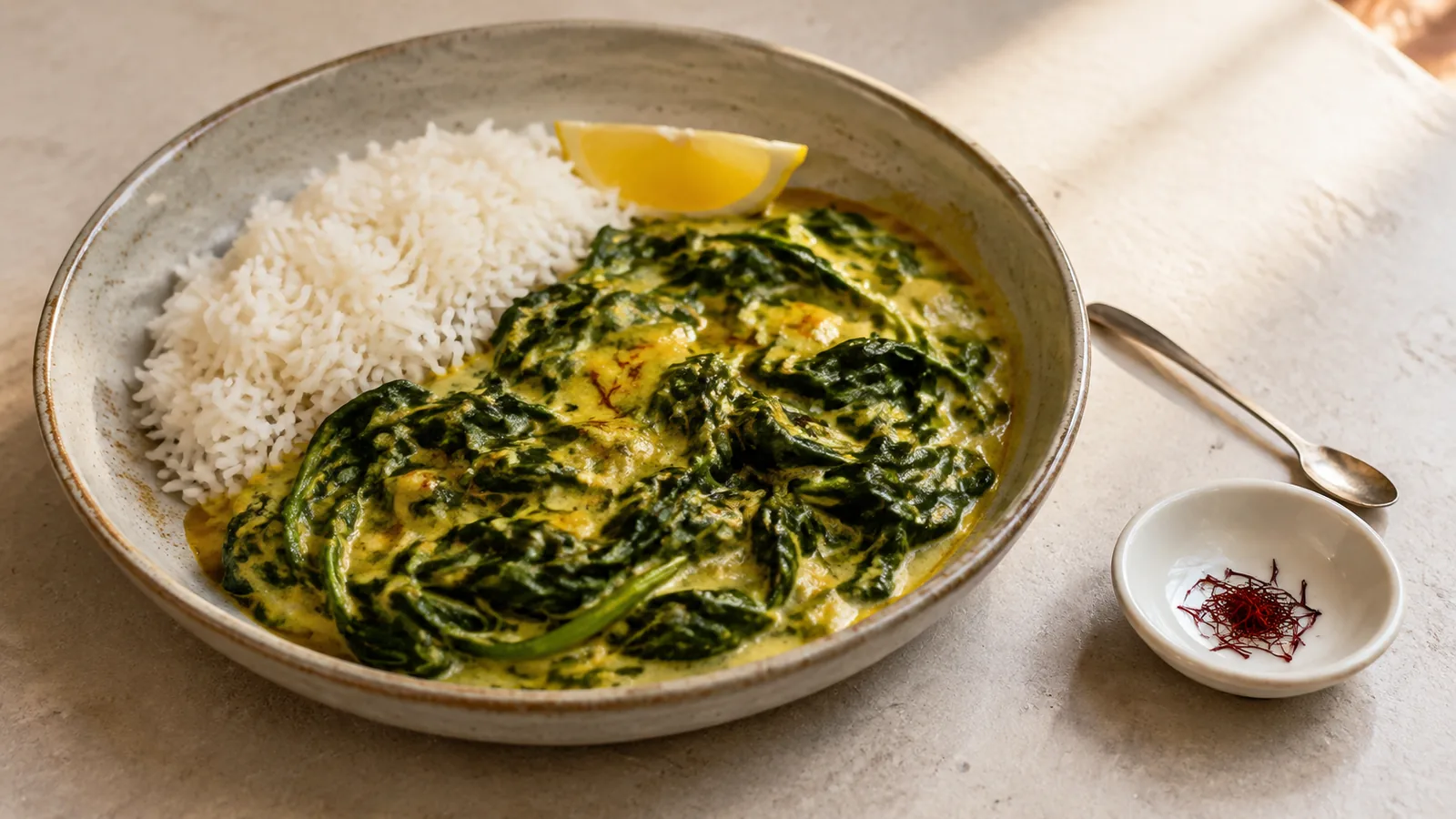
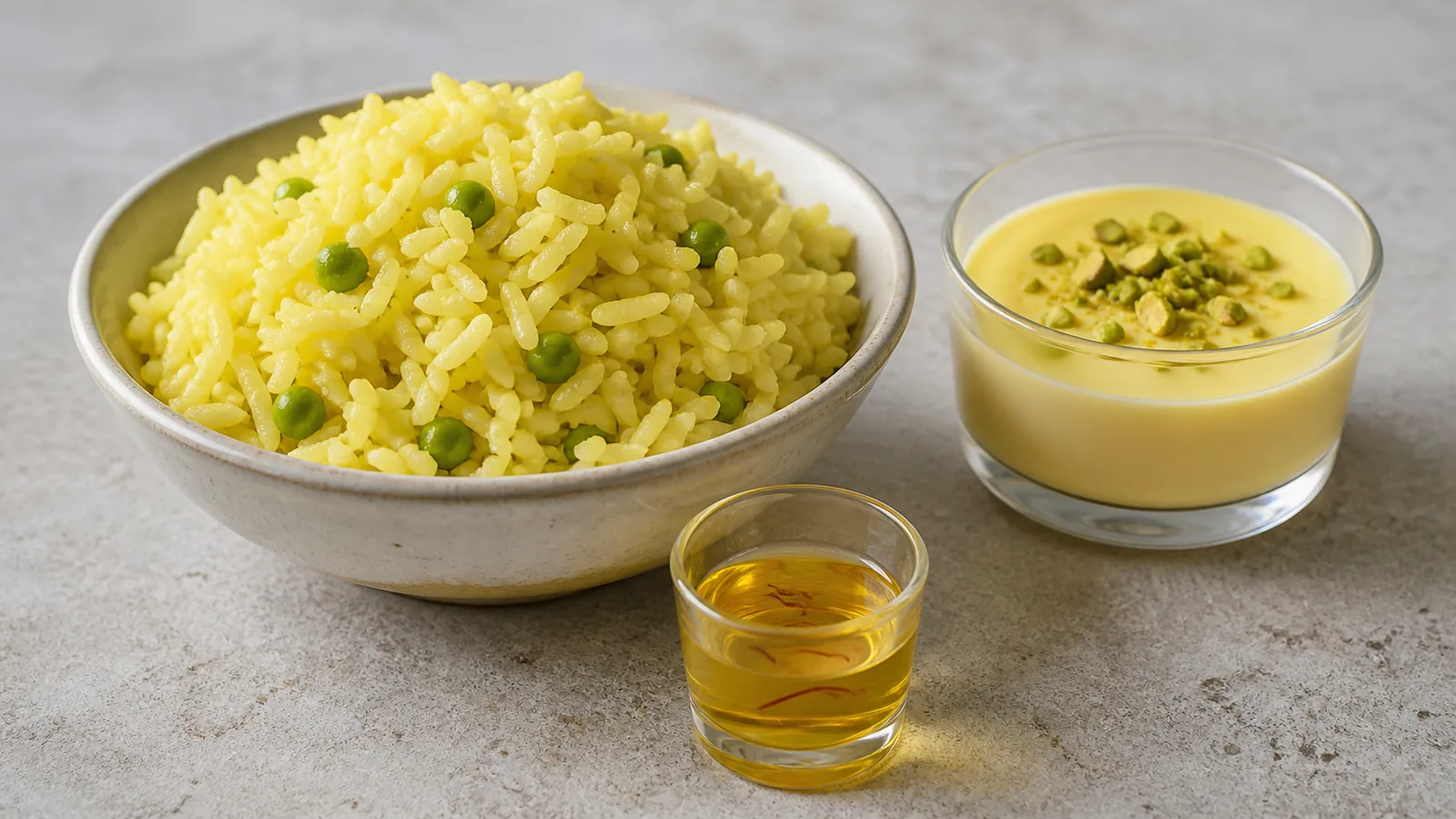
Chilli peppers produce a recognisable burning sensation. Black pepper has its own sharp pungency. Saffron does neither. In paella, risotto, biryani or a saffron cream sauce, its role is to bring colour and an aromatic savoury depth rather than a fiery kick.
What does saffron taste like?
Saffron’s flavour is commonly described as floral, earthy or hay-like, with a clear bitter edge. Depending on the food around it, you may also notice warm, honeyed or slightly metallic notes. Those descriptions are comparisons, not ingredients: pure saffron is not sweetened and does not contain honey.
Three groups of compounds help explain its sensory character. Crocins provide much of the golden colour, picrocrocin is associated with bitterness, and volatile compounds led by safranal contribute to its characteristic aroma. A peer-reviewed chemical and sensory study of saffron discusses those relationships and also shows why trained tasting considers the whole profile rather than one note.
Saffron can have a strong flavour without being spicy. A properly judged amount may seem delicate at first and become more apparent through the aroma of the finished dish. Too much can make food unpleasantly bitter or medicinal-tasting; that intensity is not chilli heat.
How spicy is saffron?
On a practical cooking scale, saffron contributes no chilli-style heat. If a “saffron” dish burns the mouth, look at its other ingredients. Fresh or dried chilli, cayenne, pepper paste, hot paprika, black pepper, mustard or ginger may be supplying the pungency.
The distinction matters when choosing ingredients that look similar. Silgochu, sometimes called Korean chilli threads, is finely shredded dried red pepper used as a garnish. It is not saffron. Chilli threads tend to be flatter and broader, taste peppery and can add heat; saffron stigmas are finer, irregular and used in much smaller quantities for their colour and aroma.
Is saffron hot or cold?
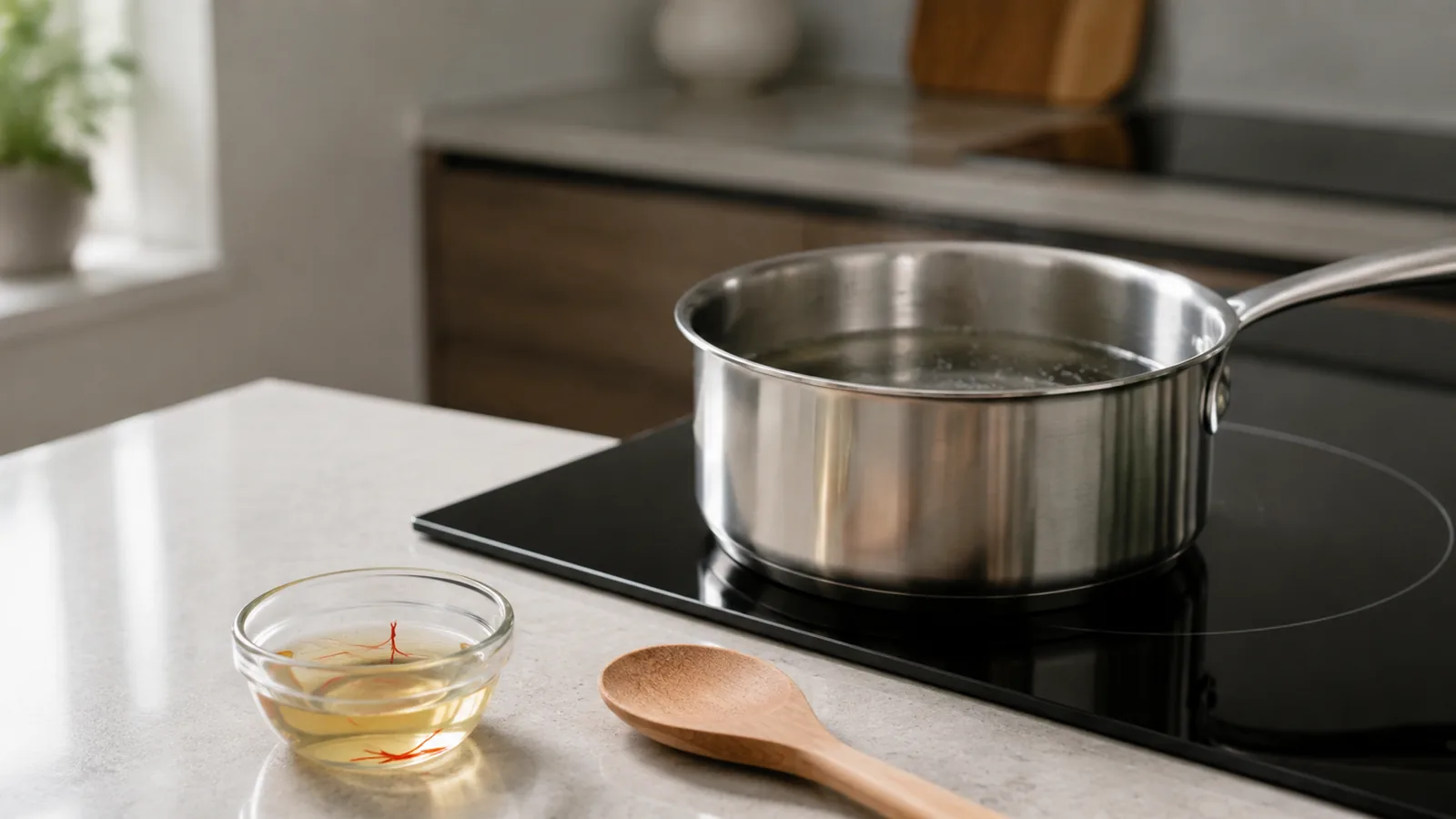
If you mean the temperature of the dish, saffron works in both hot and cold preparations. Heat is often used to extract its colour and aroma into water, milk or stock, but the infused liquid can then be cooled for desserts, drinks or sauces. Avoid prolonged harsh boiling, which can flatten the aroma.
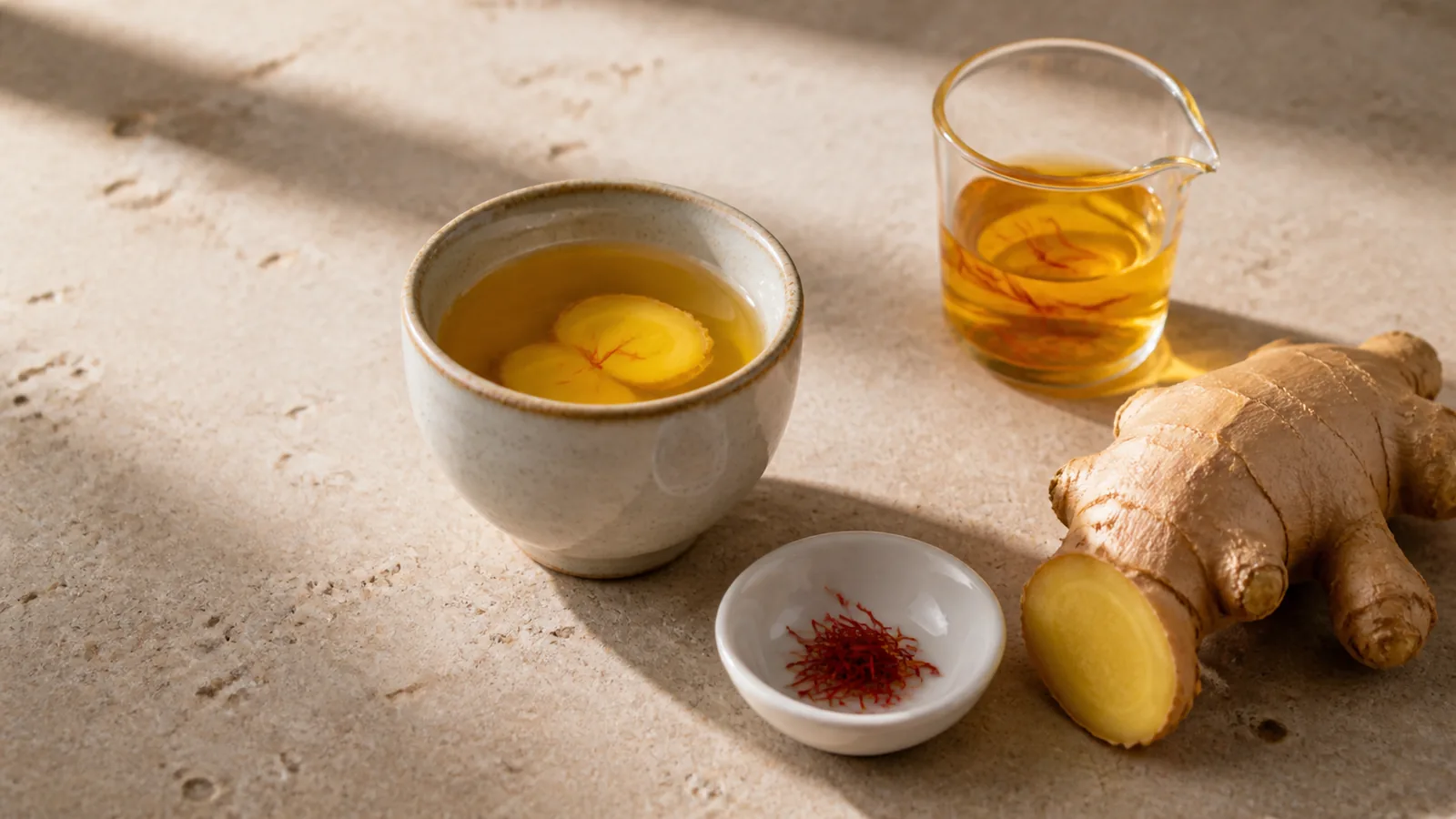
If you mean “hot in nature,” “heaty,” or whether kesar is hot or cold for the body, that language comes from traditional systems of classifying foods. It is different from culinary pungency and different again from a measured change in body temperature. Calling saffron “warming” in a traditional context does not mean it contains chilli heat, nor does it establish a medical effect. This article addresses flavour, not treatment advice.
How to use saffron without making the flavour harsh
A small, measured quantity is usually enough. Whole threads are easier to assess than powder and less likely to disappear unnoticed into a strongly seasoned dish.
- Crush lightly: break the threads between clean, dry fingers or with a mortar rather than reducing them to dust.
- Infuse: steep them in a little warm water, milk or suitable stock so the colour and flavour disperse evenly.
- Add with restraint: stir the infusion into the dish, taste after it has had time to spread, and only then decide whether more is needed.
- Balance the recipe: salt, acidity, fat and sweetness all influence how saffron is perceived. Do not try to correct excess saffron by adding chilli.
For a fuller description of its bitter, floral and earthy notes, see our guide to what saffron tastes like in food.
Why a saffron dish may still taste spicy
Recipes often pair saffron with ingredients that do bring heat. A biryani may contain fresh chilli; a seafood stew may use cayenne; a savoury sauce may include black pepper. Saffron can make the overall flavour seem richer, but it is not the ingredient causing the burn.
There is one more possibility: the red threads may not be saffron. Confusing saffron with chilli threads, or buying an unlabelled blend, changes both the taste and the level of heat. Check the ingredient list and look for whole Crocus sativus stigmas from a traceable seller when you need the genuine spice.
So, is saffron hot or spicy? In flavour terms, no. Expect an aromatic, earthy and slightly bitter seasoning that can be powerful when overused, but not the sharp heat of chilli or pepper. If a saffron recipe needs a kick, add the hot ingredient separately and keep the saffron dose focused on aroma and colour.