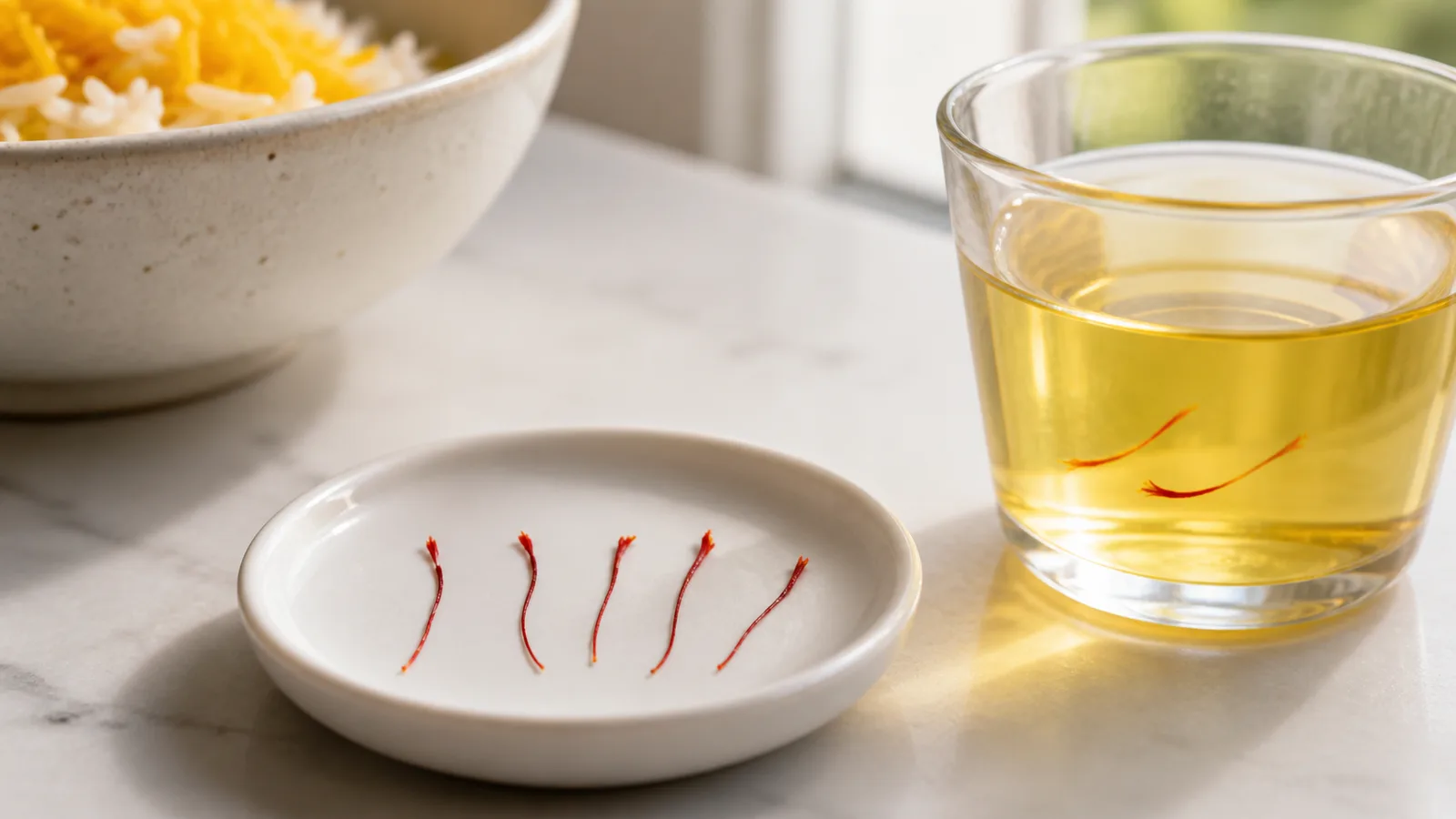
Saffron comes from Crocus sativus, the saffron crocus. The spice is not the whole flower: it is made from the three red stigma branches at the centre of each purple bloom. Growers separate those delicate parts and dry them to make the saffron threads used in food.
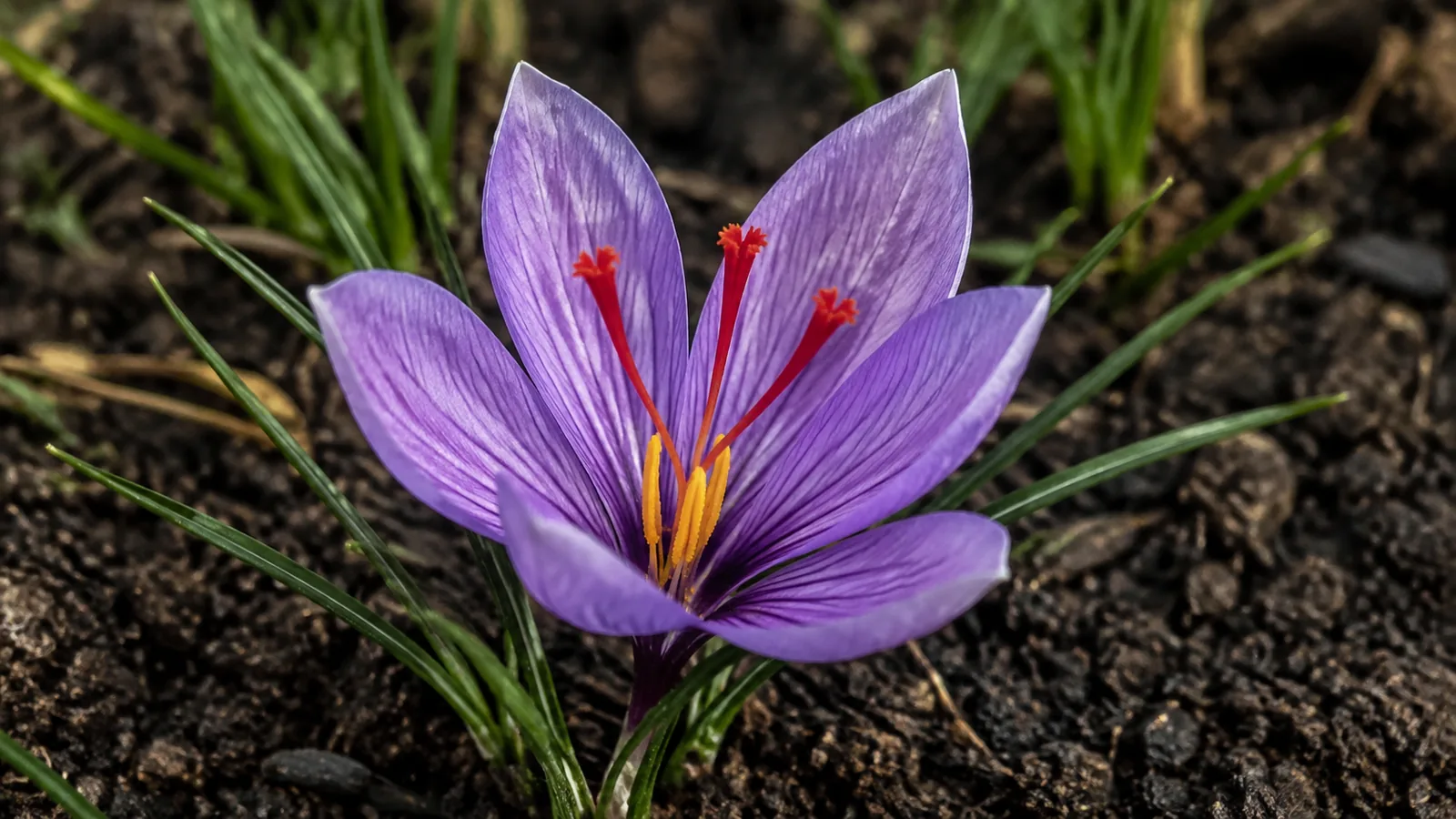
What flower does saffron come from?
The flower that produces saffron is Crocus sativus L., a member of the iris family, Iridaceae. The saffron plant name used in botany is Crocus sativus; its common name is saffron crocus. It is an autumn-flowering perennial that grows from an underground corm.
Each flower usually has six purple tepals, three yellow stamens and a style that divides into three red stigma branches. Only those red stigmas, sometimes with a small portion of the style attached, become the culinary spice. Purple petals and yellow stamens are not saffron threads.
What part of the plant is saffron?
Saffron is the dried stigma of the flower—the receptive part of its female reproductive structure. In everyday language people often say “the red threads,” because the stigma branches look like fine strands after drying.
It does not come from the leaves, roots, corm, petals or pollen-bearing stamens. That distinction answers related questions such as “what is saffron made from?” and “which part of the plant is edible?” In normal culinary use, saffron means the processed red stigmas, not the whole plant.
Fresh stigmas contain moisture and do not yet have the stable character of the finished spice. Careful drying reduces that moisture and develops the familiar aroma while preserving colour and bitterness. Processing matters, but it does not change which botanical part the spice comes from.
Is saffron a flower or an herb?
The words refer to different things. Crocus sativus is a herbaceous flowering plant. A purple saffron crocus is its flower. Saffron, as sold for cooking, is a spice made from one specific part of that flower.
Calling the product an “herb” is imprecise in culinary terms. Herbs are usually leaves or tender green parts; spices more often come from seeds, bark, roots, fruits or other aromatic plant structures. Saffron fits the spice category because its dried stigmas season and colour food.
Characteristics of the saffron plant
The saffron crocus has a seasonal growth pattern that differs from spring crocuses. Flowers emerge in autumn, often with narrow, grass-like leaves. The leaves continue growing after the short flowering period, support new daughter corms through winter and spring, then die back as the plant enters summer dormancy.
Crocus sativus is a sterile triploid crop. It does not maintain cultivated populations through ordinary fertile seed; growers propagate it by dividing and replanting daughter corms. A peer-reviewed review of saffron crocus genetics and origin explains this sterility and the evidence connecting the cultivated crop with forms of the wild relative Crocus cartwrightianus.
Where did the saffron plant originate?
“Origin of saffron” can mean either the crop’s deep botanical history or the country shown on a modern package. They are not the same question.
Current genetic and historical research points to domestication in ancient Greece, with Crocus cartwrightianus the most likely close wild ancestor or genomic source. Because cultivation is ancient and the crop has been moved through many cultures for millennia, older accounts sometimes propose other origins. It is more accurate to describe the evidence than to present every traditional claim as settled fact.
Commercial saffron is now grown in several regions, including Iran, India—especially Kashmir—Greece, Spain, Morocco and Italy. The country of origin on a package tells you where that lot was produced. It does not by itself prove purity or establish that every sample from one country is better than every sample from another.
Where does the saffron crocus grow?
Saffron performs best with abundant sun, freely draining soil and a climate that supports autumn flowering and summer dormancy. Planting calendars and water needs differ by region. A wet, poorly drained site can rot the corms, while an unsuitable seasonal cycle can reduce flowering.
The plant is cultivated in farm fields, raised beds and home containers. It can tolerate colder conditions than many brief summaries suggest; local soil, snow cover, pot exposure and winter wetness all influence survival. For a practical small-scale method, see our guide to growing saffron at home.
How the flower becomes saffron spice
- The corm flowers: mature corms produce autumn blooms during a concentrated seasonal window.
- Flowers are collected: growers harvest clean blooms promptly, often by hand.
- The stigmas are separated: the three red branches are removed from the petals and yellow stamens.
- The stigmas are dried: controlled drying reduces moisture and develops a stable aromatic spice.
- The threads are protected: finished saffron is stored away from light, heat, moisture and foreign odours.
The work is intensive because each flower contributes so little usable material. Producing a substantial weight requires tens of thousands of blooms, collected within a relatively short flowering period and processed carefully. That combination of biological yield and hand labour is a major reason saffron is valuable.
How to recognise the correct plant
Do not identify a plant for eating from flower colour alone. Several autumn-blooming plants have purple flowers, and common names create confusion. Meadow saffron or autumn crocus often refers to Colchicum autumnale, which is not Crocus sativus and is poisonous.
Buy corms labelled with the full botanical name from a specialist nursery, then confirm the characteristic flower structure before harvesting. If the identity is uncertain, do not consume any part of the plant. A photo comparison or a seller’s use of the word “crocus” is not a substitute for reliable botanical identification.
The simple answer remains precise: saffron comes from the saffron crocus, Crocus sativus, and the edible spice is made from its three red stigma branches. The plant’s purple flower, underground corm and narrow leaves are essential to the crop, but they are not the saffron threads in the jar.