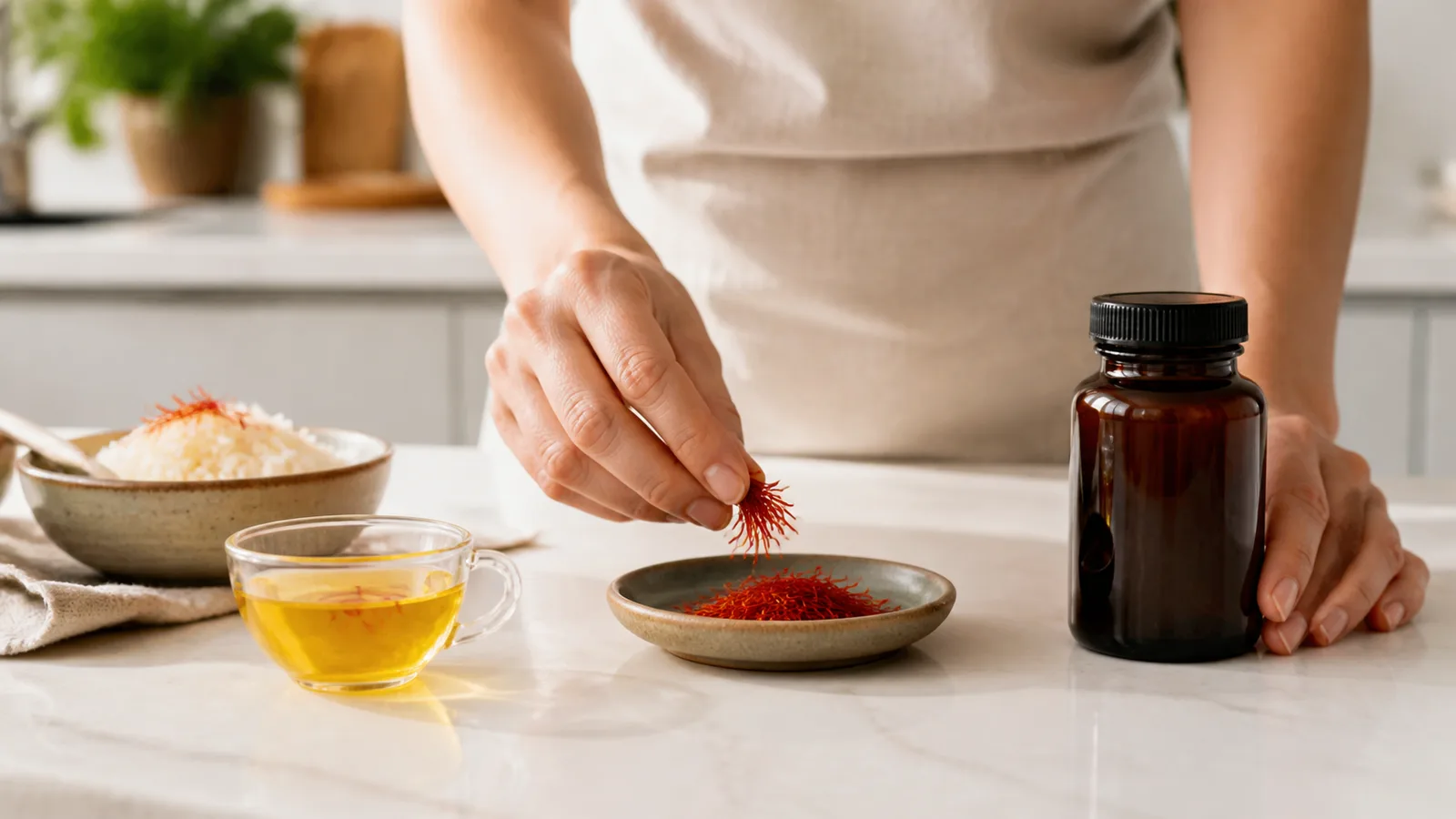
Who cannot consume saffron? Anyone with a known saffron allergy should avoid it. Other people—including those who are pregnant, have low blood pressure, take regular medication or are considering a concentrated supplement—should separate ordinary culinary use from medicinal dosing and ask a clinician about the latter.
Who Cannot Consume Saffron?
There is no single list of saffron consumption restrictions that applies equally to a few threads in rice, a strong daily infusion and a standardised extract. The amount and form matter. The US Food and Drug Administration recognises saffron as a food flavouring and colouring ingredient, while clinical research usually studies measured preparations that are not equivalent to seasoning a meal.
Questions about saffron contraindications therefore need a careful answer. A food allergy can make complete avoidance appropriate. In several other situations, the sensible boundary is to keep medicinal or repeated high-dose use out of self-treatment and obtain individual advice.
Pregnant Women
A pregnant person should not start a saffron supplement or deliberately take large amounts without guidance from their maternity clinician. Traditional claims about saffron in pregnancy are not reliable dosing advice. A 2026 review of pregnancy evidence concluded that the clinical evidence for efficacy and safety remains limited and inconclusive.
A small amount used as a spice is a different exposure from an extract or medicinal dose, but personal circumstances still vary. If a clinician has advised avoiding saffron, follow that advice. Do not use it in an attempt to influence labour or treat a pregnancy symptom.
People with Allergies
Do not consume saffron if you have previously had an allergic reaction to it. Stop eating and seek urgent help for trouble breathing, swelling of the lips, tongue or throat, faintness or a rapidly spreading rash. Less severe symptoms still deserve medical assessment before another exposure.
A pollen allergy or an allergy to an unrelated flower does not, by itself, diagnose a saffron allergy. The original claim that allergies to lilies, tulips or every member of the iris family predict a reaction was too broad, so that shortcut should not be used in place of an allergy history or clinical assessment.
Those with Low Blood Pressure
If you have symptomatic low blood pressure, monitor it under professional guidance and do not add a concentrated saffron product casually. The practical concern is not that every saffron-seasoned meal is dangerous; it is that an extract or repeated medicinal amount could have effects that matter alongside an existing condition or treatment.
Dizziness and fainting can have many causes. Do not assume saffron is responsible, and do not use it to adjust blood-pressure medication. Seek medical advice if symptoms are new, severe or persistent.
People Taking Certain Medications
Speak with a pharmacist or prescriber before taking saffron capsules, extracts or strong daily preparations alongside prescription medicine. This is especially sensible if treatment affects blood pressure, mood, bleeding or blood clotting, or if you are preparing for surgery. Evidence for specific saffron–drug interactions is not complete enough for an online list to replace a medication review.
Do not stop a prescribed medicine because you read about a possible interaction. Bring the product label and intended amount to the conversation so the clinician can assess the actual preparation rather than the word “saffron” alone.
What Side Effects Should You Watch For?
A systematic review of human saffron safety reports found that saffron preparations were generally well tolerated, although adverse effects occurred in some studies and gastrointestinal complaints were the most common. The review also called for clinical monitoring with higher-dose or prolonged medicinal use.
Possible saffron disadvantages depend on the person, product and amount. Nausea, stomach upset, headache or feeling unwell are reasons to stop a non-essential supplement and get advice. A product may also contain other ingredients, so check the full label rather than attributing every reaction to saffron.
If your aim is culinary, use a small recipe quantity of genuine food-grade threads. Our guide to taking saffron orally explains the difference between using it in food and treating it like a supplement.
Conclusion
Who cannot take saffron is not answered by a blanket ban. A known saffron allergy calls for avoidance. Pregnancy, low blood pressure, regular medication and medical conditions call for individual advice before concentrated or medicinal use. Normal seasoning and supplement dosing should never be treated as interchangeable.